Design of backdoor
Report On Design Of Back Door:
Objective:
- Use the styling surface to design the back door with appropriate design methodologies and provide the necessary reinforcements and embosses.
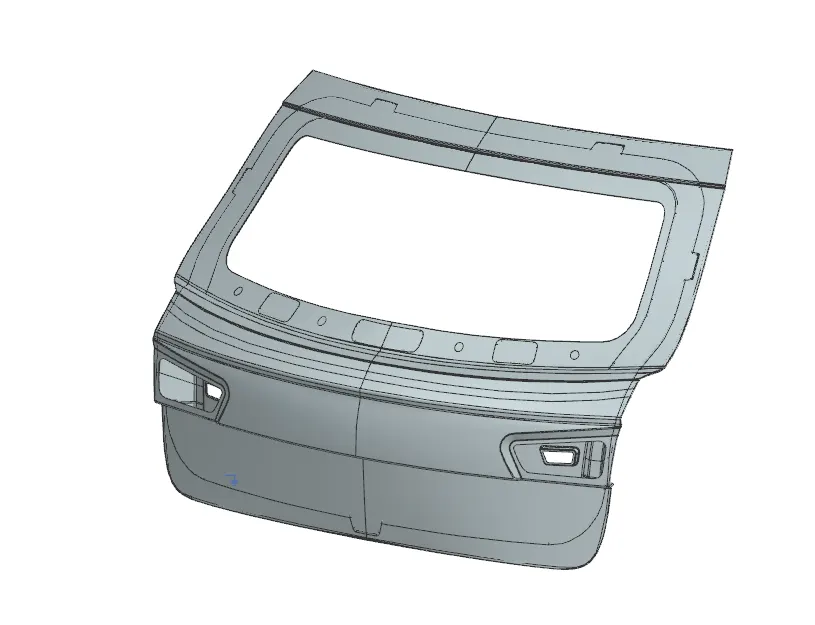
Software: Siemens Nx
Command Used:
- Project Curve,Trim Sheet,Law Extension,Offset in face,Datum Plane,Intersection Curve,Face Blend,Sew,Edge Blend,Bridge Curve,Emboss,Sketch,Extend Sheet,Through Cruve Mesh,Thicken.
Introduction:
- The back door of a car typically refers to the doors located at the rear of the vehicle, usually used by passengers to enter and exit the back seats. They're an essential part of most cars, providing access to the rear seats and cargo area. Some vehicles have a single back door, while others have two (one on each side). These doors are important for convenience and safety, allowing passengers to enter and exit the vehicle with ease.
- The Back Door of a car is the rearmost part of the vehicle which gives access to the trunk space of the vehicle. The rear door also supports the reinforcements and added weights of the Wiper Motor, Gas Stay, Tail Lamp, and Latch and Striker.
- The Backdoor/tailgate is one of the closure commodities in BIW sheet metal design. The backdoor has a lot of components inside and is designed to corporate them easily. It affects the rear visibility and luggage area.
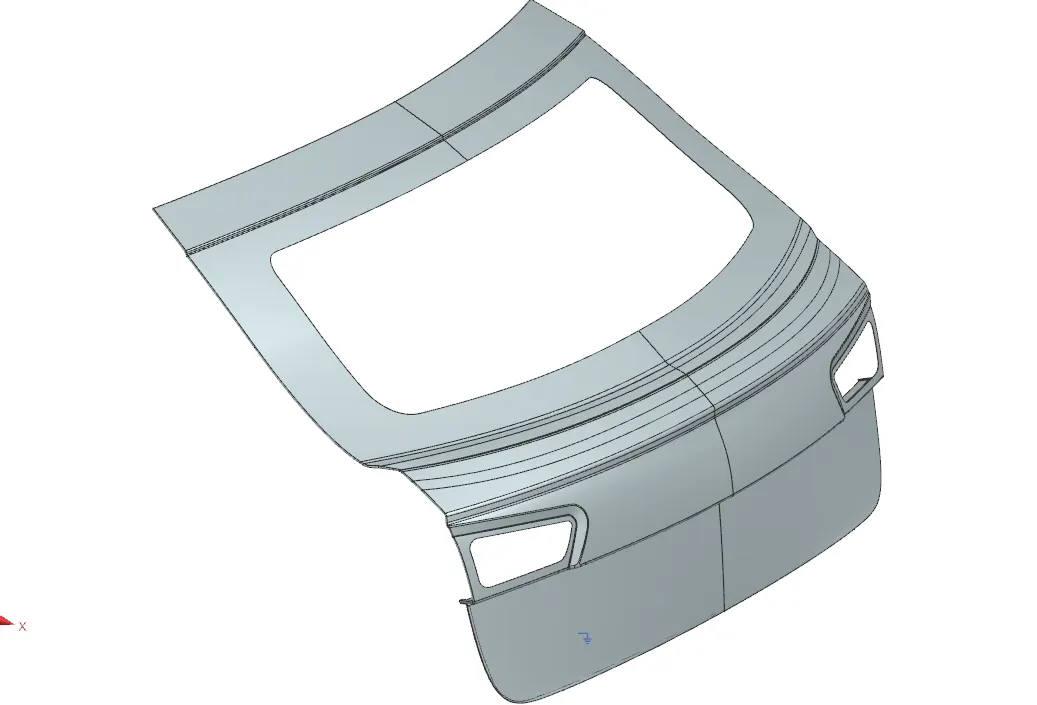
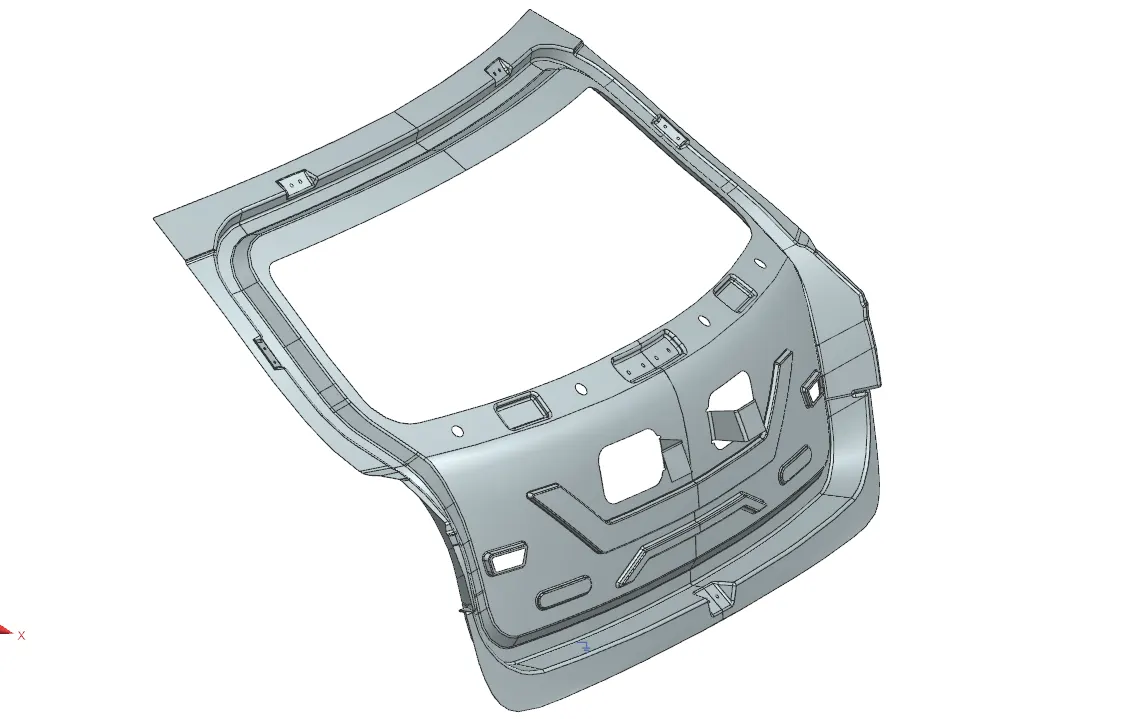
- Design of back door is also called as the Tail gate. A car back door which is consist of Inner panel, Outer panel. Basically the car parts are made of Steel or Aluminium based on the budget of the car.
- Using Aluminium improve the Strength where we can avoid the reinforcements. Aluminium parts are casted and we can very the thickness of the part, because of this avoid or reduce the number of parts as compared to Steel. Only drawback is the cost of aluminium, which is high cast As compared to steel.
- Steel Parts are stamped, we cannot vary the thickness of the part because of more number of parts are added. which could increase the weight of the part.
Components of the Back Door :
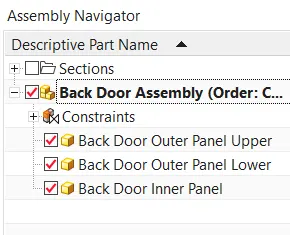
- Outer panel upper
- Outer panel Lower
- Inner panel
- Latch and Striker Reinforcement
- Hinge Reinforcement
- Gas stay Reinforcement
- Wiper motor reinforcement
Manufautring Methods used for Back Door:
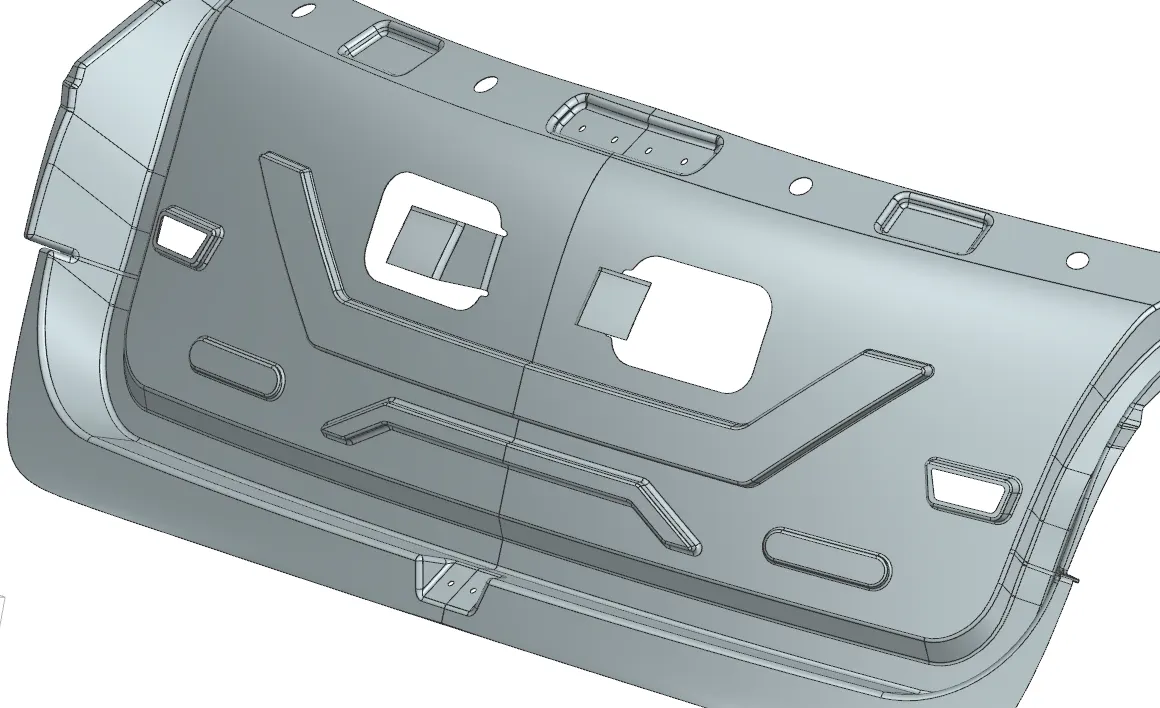
Embossing
- A decorative technique called embossing raises specific portions of a material to produce patterns or texture. Enhancing the aesthetic and practical properties of different surfaces, it is commonly used to offer visual interest and tactile appeal.
- When choosing an embossing type, material compatibility, functionality, appearance, and customer requirements are crucial considerations. Different materials demand specific embossing patterns, while intended functions like destacking, flatness enhancement, and brand recognition guide the selection process. The desired visual effect, whether full-surface, partial, logo, or seal edge embossing, also influences the decision. Ultimately, meeting customer specifications ensures the chosen embossing type aligns with the brand identity and enhances product appeal.
Hemming
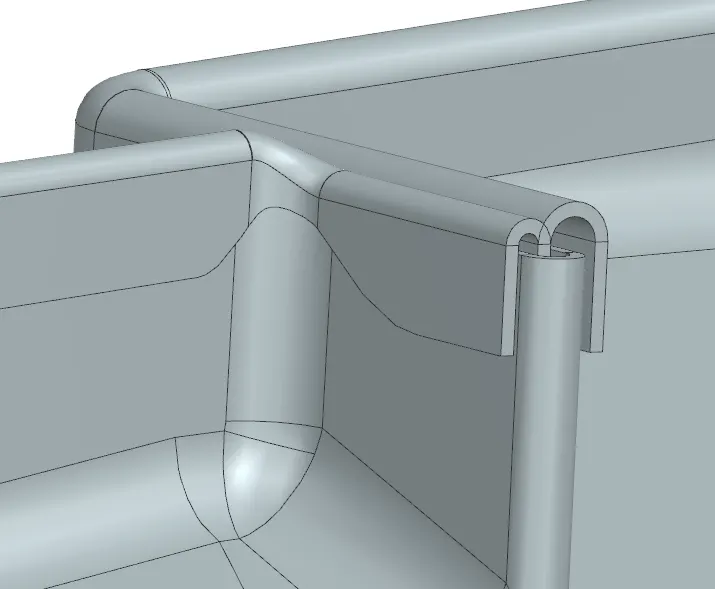
- In the mechanical joining processes described in the previous sections, an external element, such as a rivet or a screw, is inserted into the sheet stack to make the joint. In hemming, mechanical joining is done by simply folding the outer edge of one sheet over the outer edge of the second sheet. The hemming operation is usually a three-step process that includes flanging, prehemming, and hemming. The flanging operation bends the edge of the outer sheet to a 90° angle. This is followed by prehemming which decreases the bend angle of the outer sheet from 90 degrees to ~ 45 degrees. In the final step, the hemming tool folds the outer sheet completely around the inner sheet, thus creating a mechanical interlock between the two sheets, as shown in Fig.The hemming operation can be combined with adhesive bonding or spot welding to make the joint stronger.
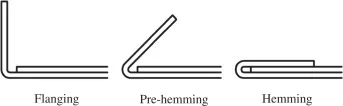
Figure : Steps in hemming operation. Flanging (left), pre-hemming (middle) and hemming (right).
- Hemming is essentially a metal forming operation and can be applied to joining dissimilar materials, provided proper precaution is taken to prevent corrosion between them. For hemming operation to work well, the outer sheet material must be press formable and exhibit high bendability without fracture. In general, steels have a higher hemming capability than aluminum alloys, and therefore, an aluminum inner sheet can be hemmed with an outer steel sheet much more easily than the other way around. Hemming is a common joining method for outer door panels with inner door panels or outer hood panel with inner hood panel.
Deep Drawing
- Deep drawing is a metal forming process used to create hollow, seamless parts with a depth greater than their diameter by drawing a sheet metal blank into a forming die with a punch. This technique involves applying a force to the metal sheet, causing it to stretch and form over the contours of a die, thus creating a deep, cup-shaped part.
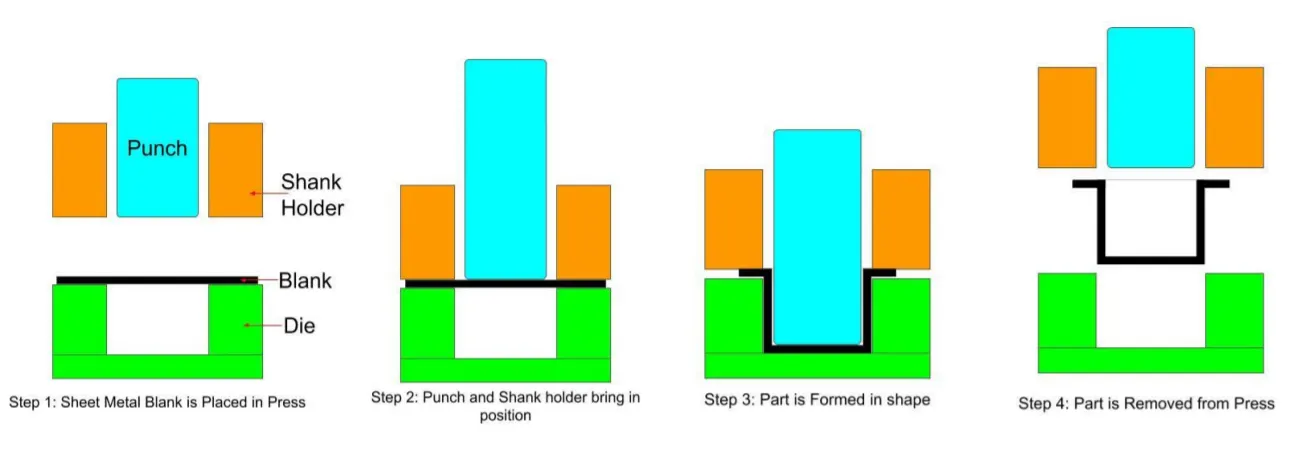
- Deep drawing is used in manufacturing to produce seamless, hollow-shaped parts with a high depth-to-diameter ratio, such as: automotive body panels, kitchen sinks, and metal containers. This process allows for the efficient production of complex shapes from sheet metal, minimizing material waste and enhancing part strength through work hardening. Deep drawing can be used to mass-produce precision-formed components that are both durable and cost-effective.
Design Considerations:
- Draft Angle is minimum 7°.
- Rear Visibility.
- Support structures like hinges and gas stay.
- Mounts for wiper motor, tail lamps, and other wiring loops.
- Fit and clearances.
- Boot space
- Rear crash regulations and requirements.
- Sealing and its functions.
- Joining techniques like hemming, spot welding, Mastic Sealent, etc.
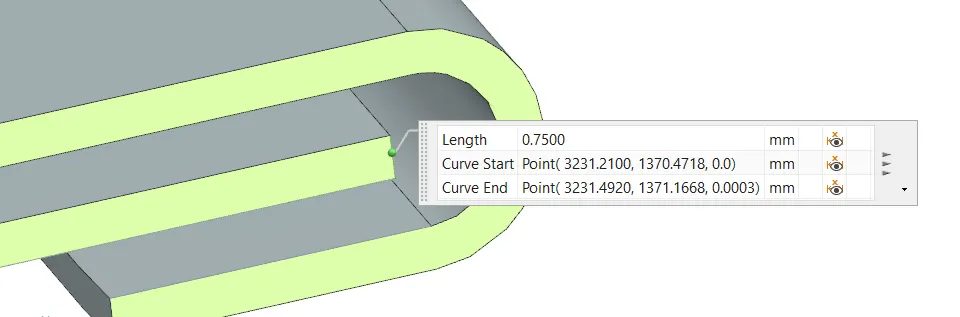
- Thicken Offset Distance is 0.75mm.
Inner Pannel:
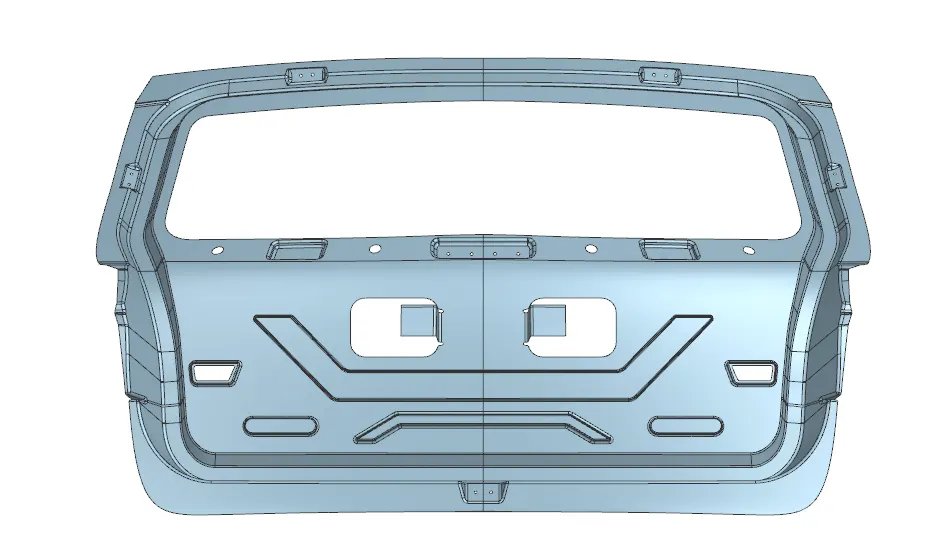
- Inner Panel is created from the class-A surface to support the outer panel and its reinforcements like hinge,gas stay,wiper motor,latchen striker.
- It is created in step like structure to increse the strength.
- The class-A surface is offsetted at a distance of 25mm using the offset command.
- Then law extension is created on the surface with respect to tooling axis at more than 7°.
- Trimmed the Unwanted surfaces.
- Same operations are done on the lower surface of the class-A surface and sewwed the both surfaces.
- The class-A surface is extracted using the extract surface command to design the windshield area.
- The surface is extended using law extension command at more than 7° with respect to tooling axis.
- Then trimmed the unwanted surfaces using trim command.
- Again extracted the class-A surface to create the lower surface .
- Then extend the surface using the law extension command w.r.t tooling axis.
- Trim the unwanted surfaces and sew the surfaces to create the inner panel.
- Mastic regions are created to support the outer panel.
- Mounts are created on the inner panel to support its features.
- Embosses and cutouts are created to reduce the back force and ensure the safety of passenger.
- Mirror the geometry using mirror geometry command.Then thicken the inner panel of offset distance 0.75mm.
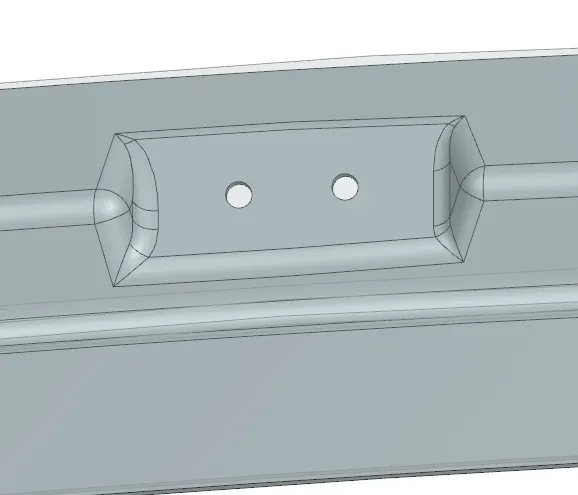
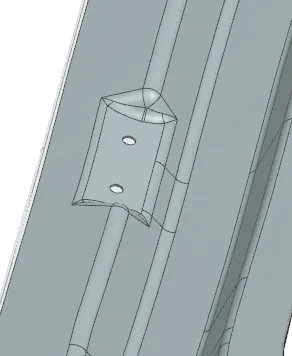
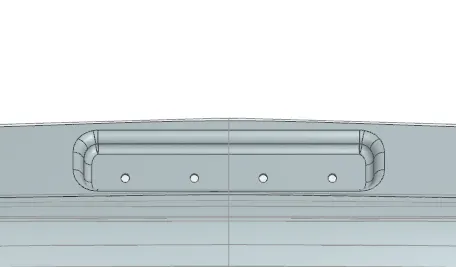
Hinge Mount Gas Stay Mount Wiper Motor Mount
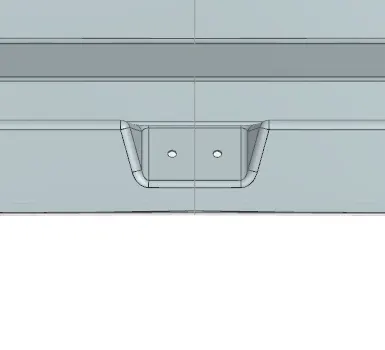
Latchen Striker Mount
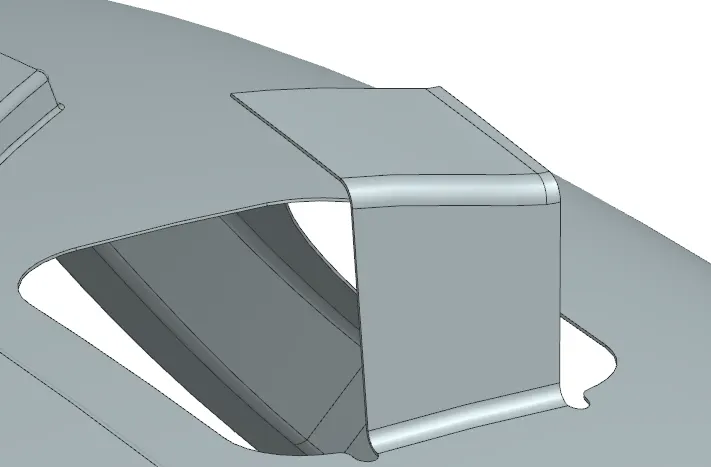
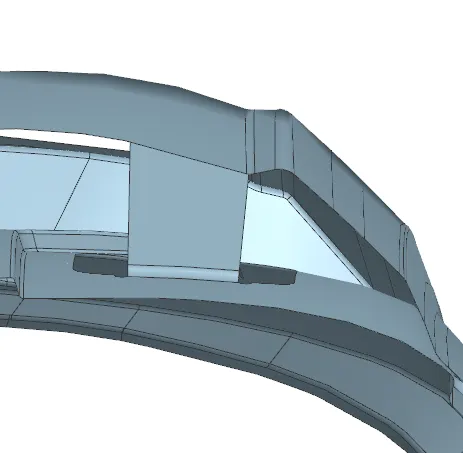
Mastic Region
Outer Panel:
- Upper Surface:
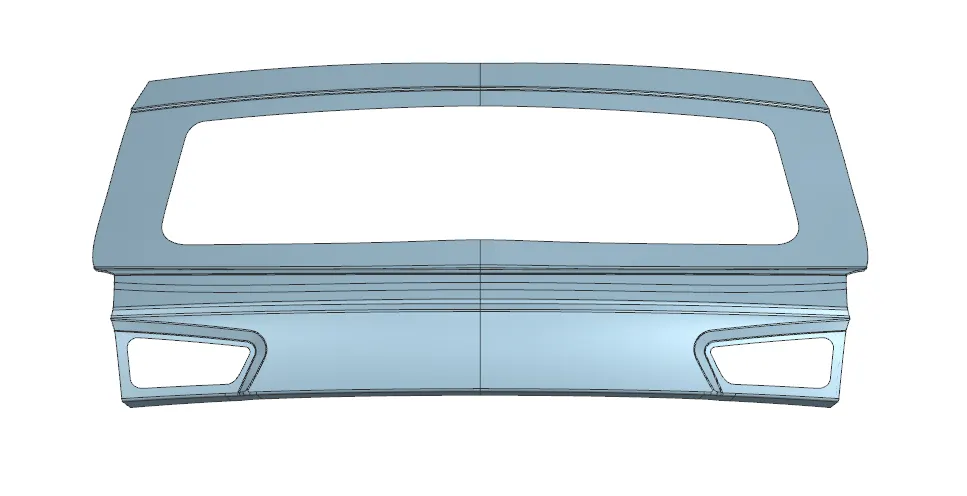
- Outer panel upper surface is extracted at distance of 2.65mm and offsetted the curve of distance 7mm using offset in face command then trimmed the unwanted surface.
- The surface is extended using law extension command at more than 7° with respect to the surface.
- And created the three-face blend using face blend command to form the hemm surface.
- Now mirror the geometry and thicken the outer panel upper surface to a distance of 0.75mm.
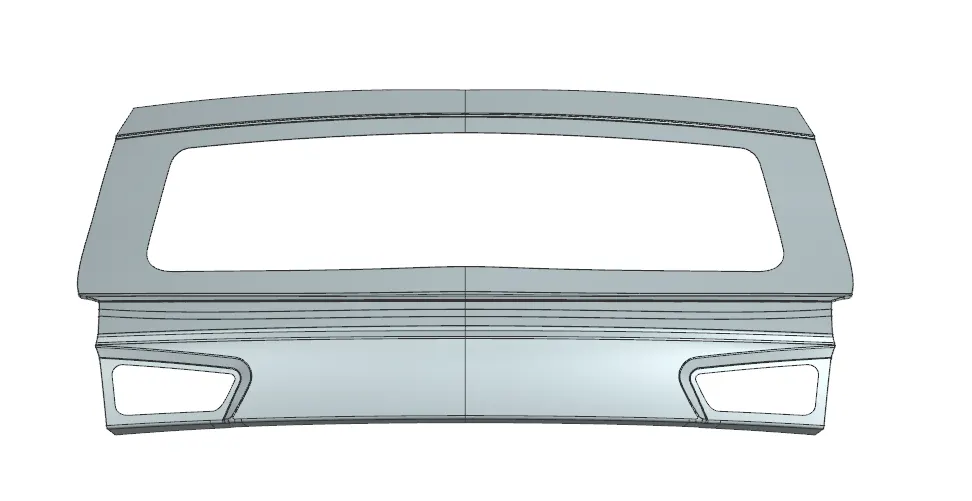
- Lower Surface:
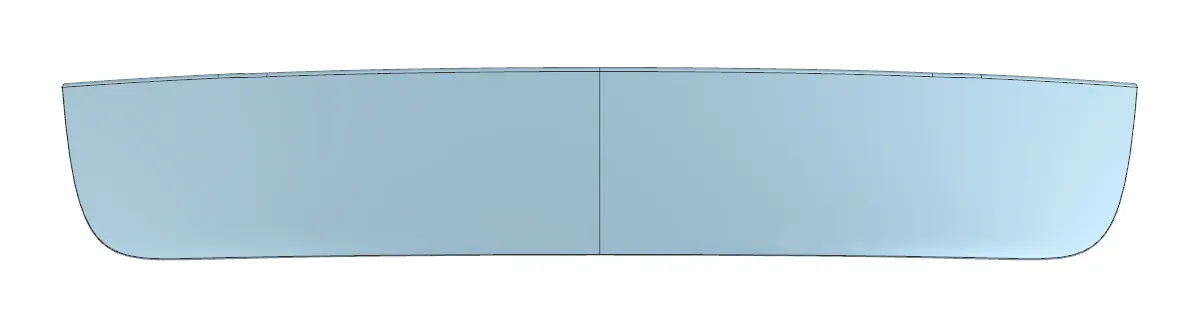
- Outer panel lower surface is extracted at distance of 2.65mm and offsetted the curve of distance 7mm using offset in face command then trimmed the unwanted surface.
- The surface is extended using law extension command at more than 7° with respect to the surface.
- And created the three-face blend using face blend command to form the hemm surface.
- Now mirror the geometry and thicken the outer panel lower surface to a distance of 0.75mm.
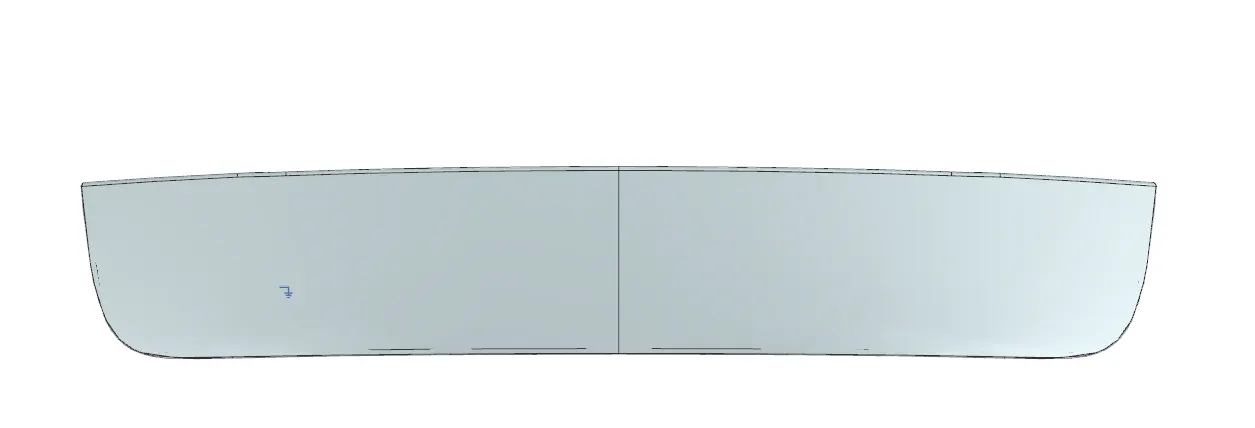
Draft Analysis:
- Draft Analysis of Inner Panel and Outer Panel is performed with respect to tooling direction of angle of 7° to study the behaviour of the product while removing from the die after deep drawing. If the colour of the surface in green colour then the it has positive draft,it means the part can be easily removed from the die.If the colour is in red then the part has negative draft.
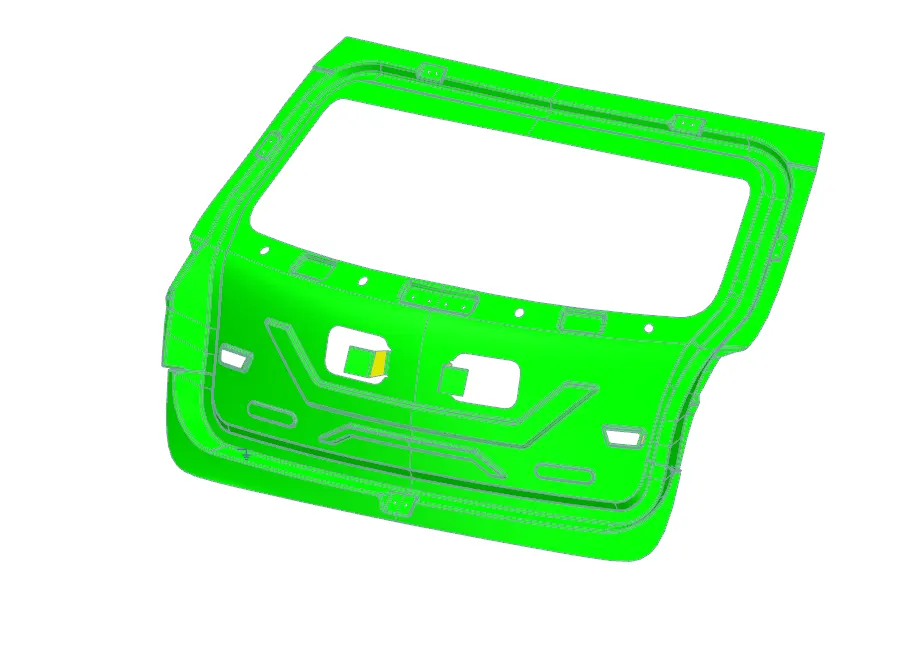
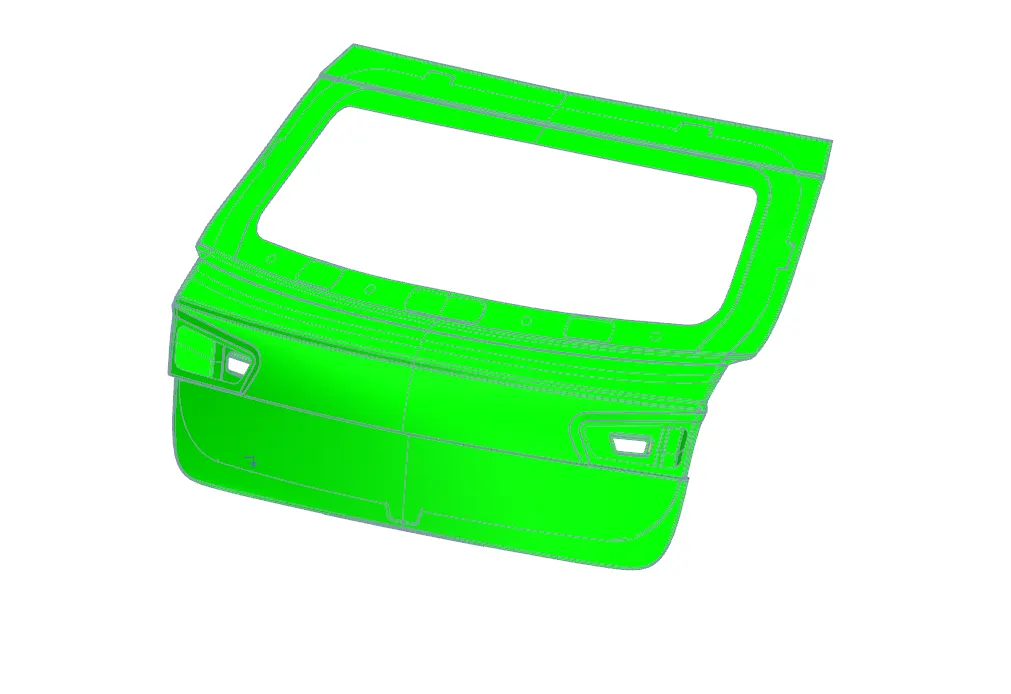
Inner Pannel Outer Panel
Views:
Front View:
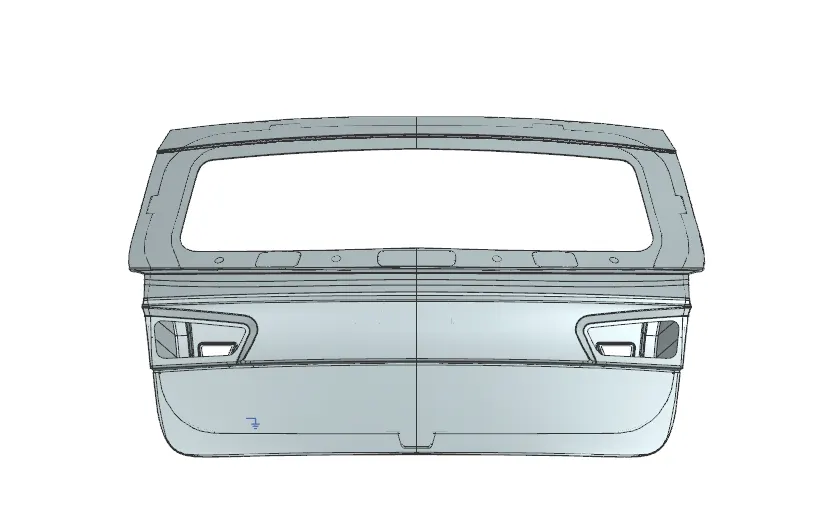
Top View:
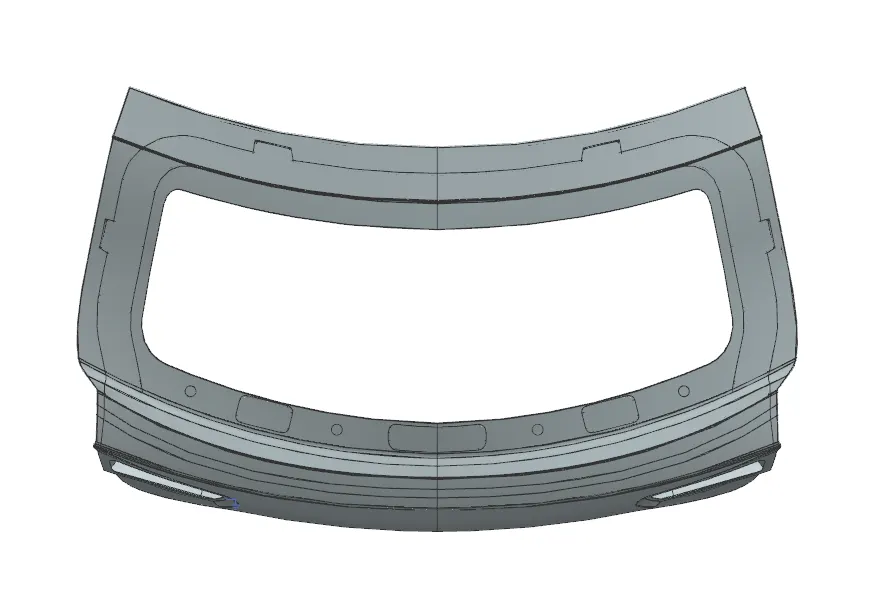
Side View:
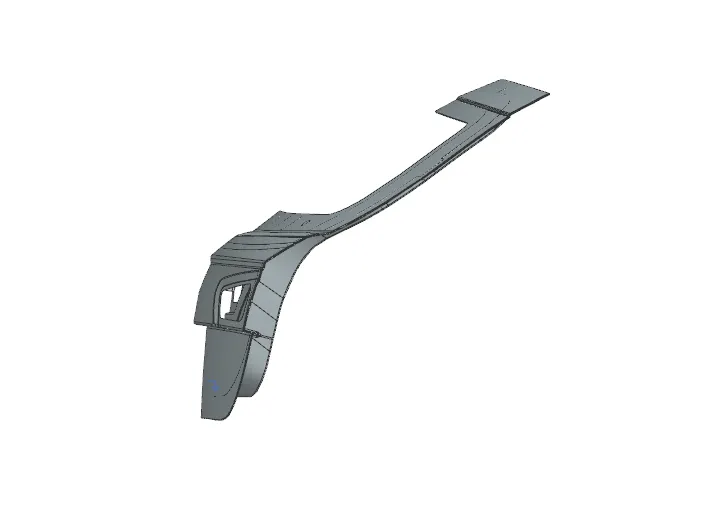
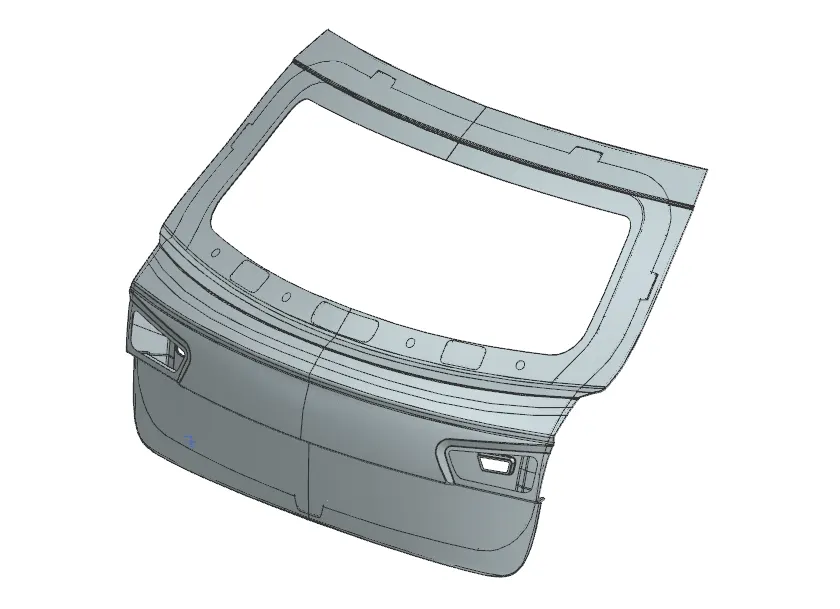
Isometric View:
Assembly Navigator:
Conclusion:
- The Back Door is designed from the styling surface with all the necessary reinforcements like Hinge,Gas Stay,Wiper Motor and Latchen Striker and the thickened part is also created.
- Inner Panel and Outer Pannel of back door is joined using the Hemming method.
- And the Draft Analysis of the part is also stuided.
I can't upload the zip file in the given box it shows only under 20MB file will be applicable so, my file is above 20MB.So I provided my Google Drive Link https://drive.google.com/file/d/1SdgS9LCjYXdJNJ1DNnmJwuuU6vNGCoKM/view?usp=sharing