Design of backdoor
Report :
NOTE:I HAVE a problem with the file SUBMISSION AS IT IS EXCEEDIDE 20 MB SO I ONLY ATTACHED THE 'STEP' FILE AND I HAVE GIVEN THE LINKS BELOW OF DRIVE OF THE PROJECT AND STEP FILES. THANK YOU
https://drive.google.com/file/d/15_QZWazh4ZzNbpIgBFZolNPkVU60iX12/view?usp=sharing
STEP file:
https://drive.google.com/file/d/1sgheB6Jt0dUGcgk9y_FkMTy-obVhn-1e/view?usp=sharing
Design of backdoor
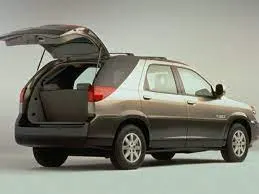
Car backdoor:
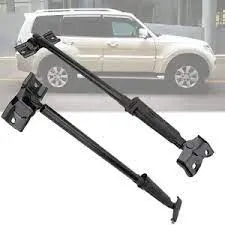
The back door of a car is also known as the trunk, boot, or tailgate. It's located next to the passenger seat and provides access to the luggage compartmentA gas spring, also known as a gas strut, is a rod that supports horizontally hinged doors, hatches, lids, and covers. They can support in a variety of ways, including lifting, positioning, and lowering.
A gas spring, also known as a gas strut, is a rod that supports horizontally hinged doors, hatches, lids, and covers. They can support in a variety of ways, including lifting, positioning, and lowering.
Gas springs use compressed gas contained within an enclosed cylinder, unlike a typical mechanical spring that relies on elastic deformation. The main components of a gas spring are a cylinder, a piston rod with piston head, a seal, and a guide. The cylinder is filled with compressed nitrogen gas, which applies equal pressure on both sides of the piston.
As the mechanical springs are stretched or compressed, the internal pressure from the gas increases or decreases respectively due to the movement of the metal rod.
Gas pressure internal to the strut provides a push or pull force depending on configuration. It also contains a damping circuit typically to control the speed of motion through one or both directions of travel.
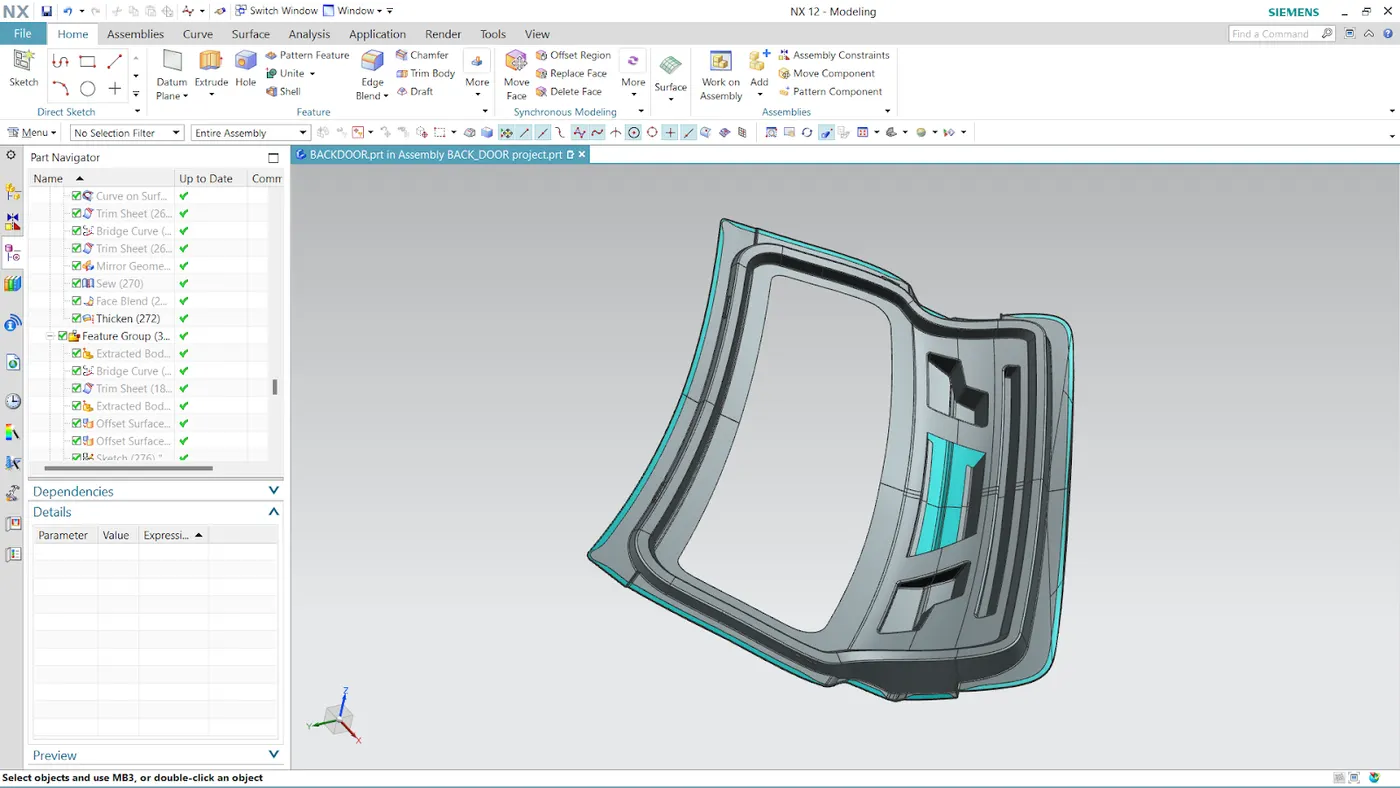
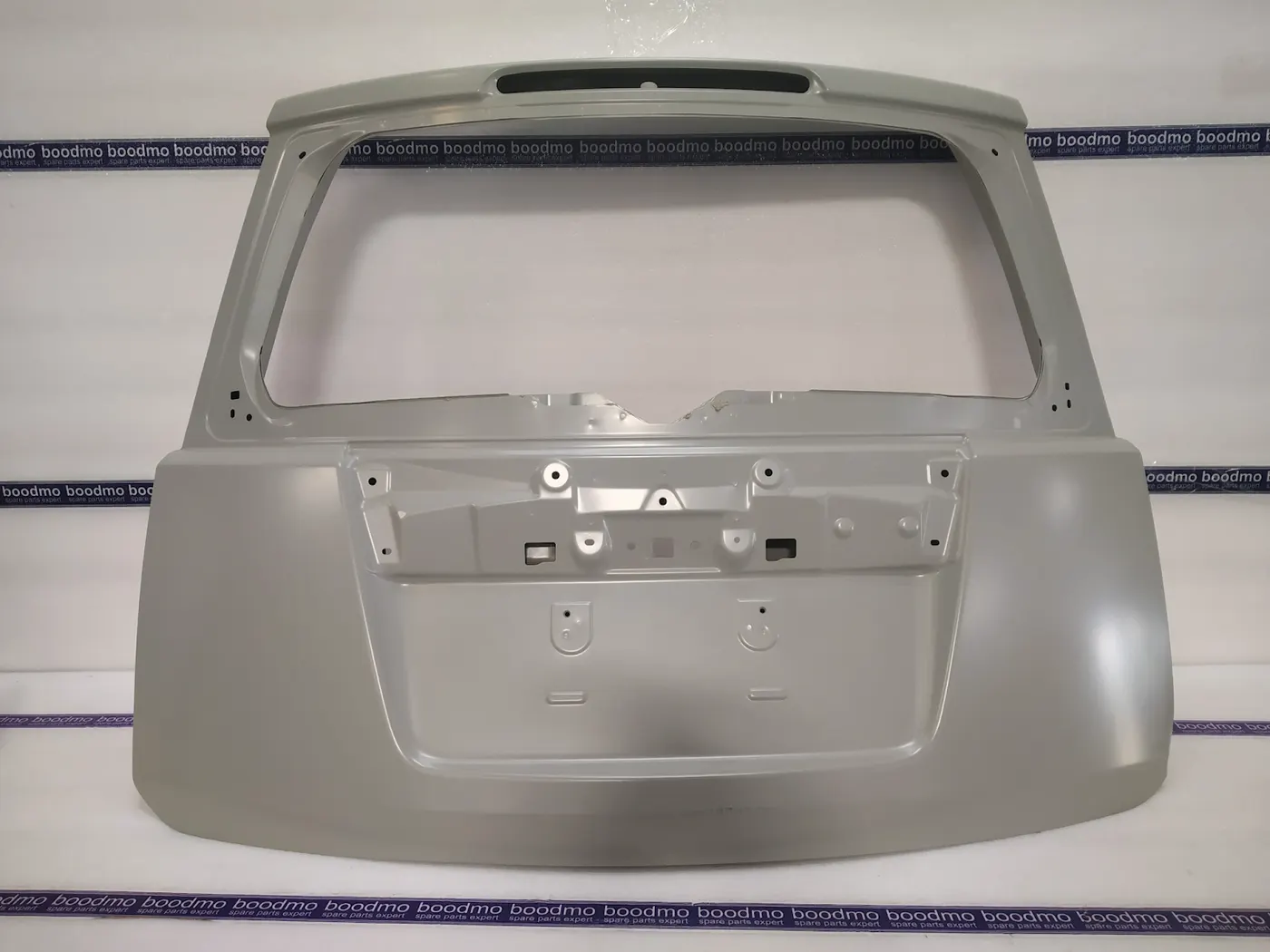 CLASS C of backdoor(inside of the backdoor)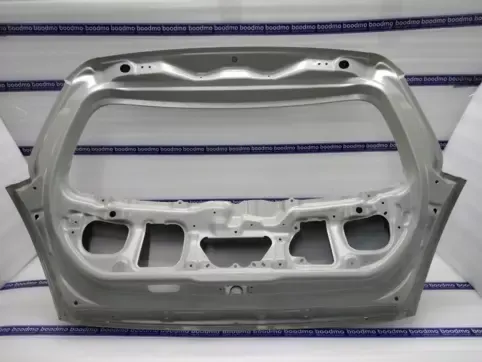
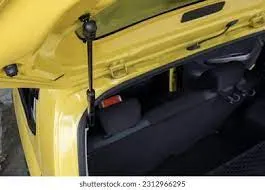
Gas spring, also known as a gas strut
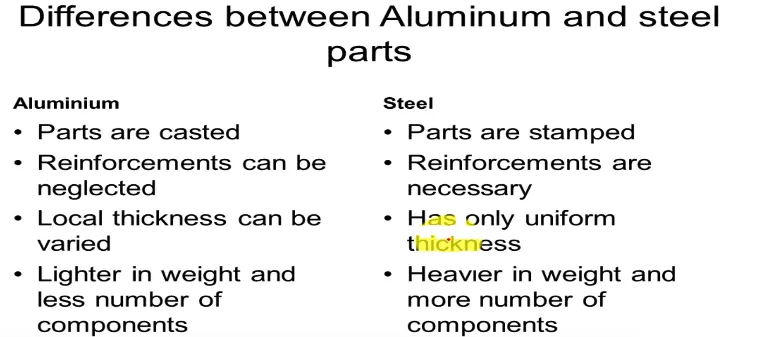
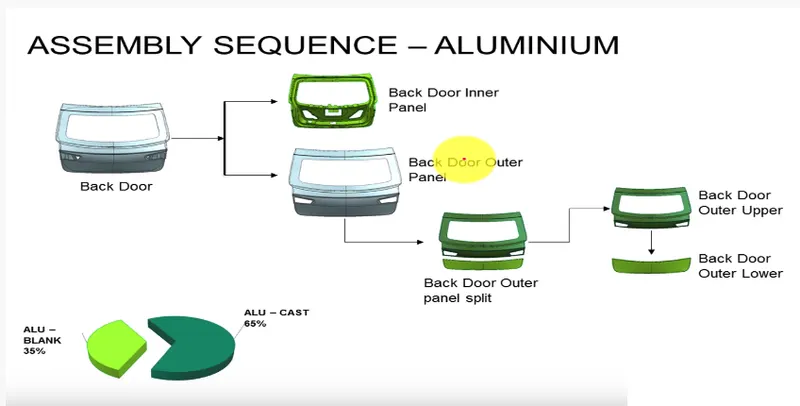
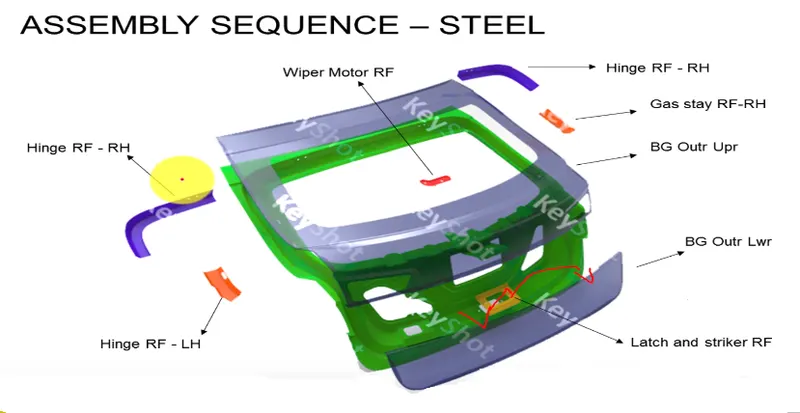 ANALYSIS OF THE EMBOSS
Different types of Sheetmetal operations are done in the Back Door
Metal Forming Processes:
Introduction:
Metal forming processes play a crucial role in the manufacturing of various products such as cups, cans, and intricate designs on sheet materials. Among these processes are deep drawing, embossing, hemming, blanking, and punching, each serving a distinct purpose in shaping metal sheets.
Deep Drawing:
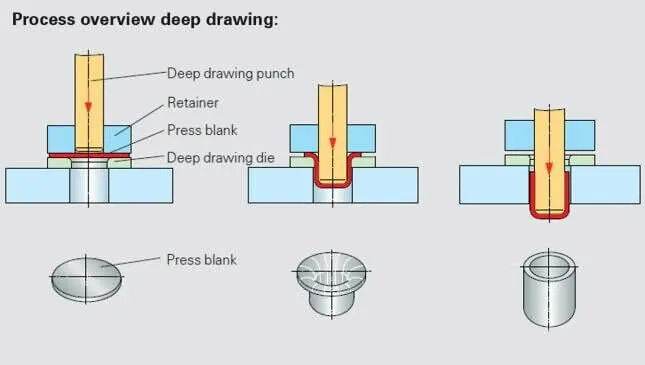
Deep drawing is a highly effective method used in the production of cups, cans, and similar products. It involves two main stages:
a. First-stage Drawing: The initial flat metal sheet is placed on a die and comes into contact with a punch. As the punch moves downward, the outer rim of the blank undergoes pure radial drawing between the die and the metal. This results in the metal bending and sliding over the die, creating the desired shape.
b. Redrawing: The components produced in the first stage undergo a second drawing process to achieve further depth and form a cup shape. This second stage is referred to as redrawing.
-
Embossing:
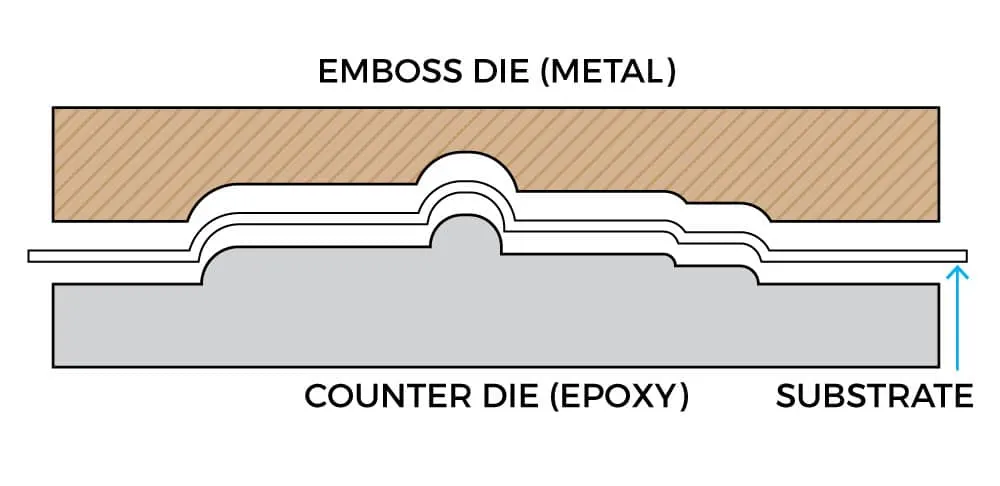
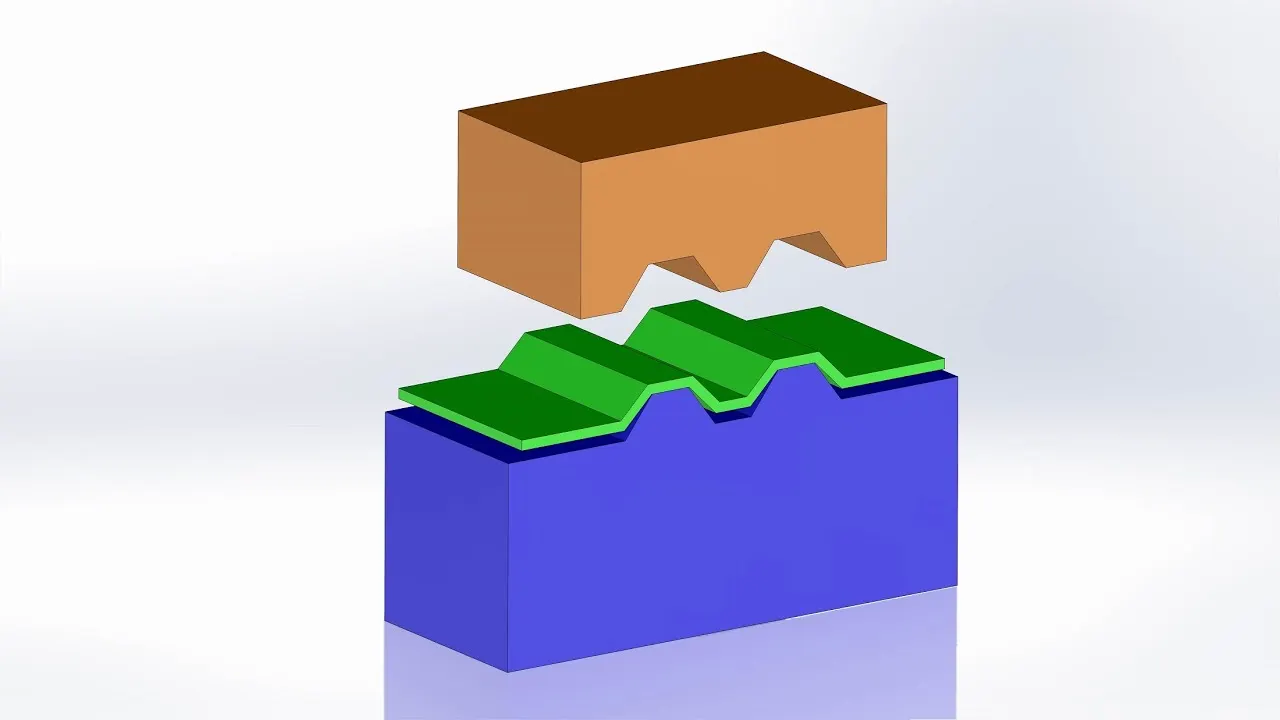
Embossing is a metal forming process that produces raised or sunken designs on sheet materials. This is achieved using matched male and female roller dies. The metal sheet is drawn through these dies, creating a pattern without changing the thickness of the metal. Commonly used materials for embossing include aluminum alloys, steel alloys, zinc, copper, galvanized steel, brass, and cold-rolled steel.
Hemming:
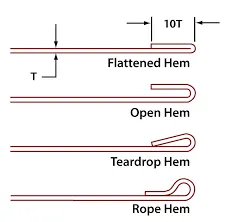
Hemming is a forming operation where sheet edges are folded over another part to achieve a secure fit. This operation is employed in assembly processes, especially after deep drawing, trimming, and flanging operations. Various types of hemming operations include:
a. Conventional Die Hemming: Folding the flange over the entire length using a hemming tool.
b. Roll Hemming: Guiding a hemming roller with an industrial robot to form the flange.
c. Open Hem: Featuring a full round shape and a return flange, with a bend angle of 180 degrees.
d. Tear Drop Hem: A hem with a bend angle greater than 180 degrees.
e. Closed Hem: Hems without any inside radius, not recommended for painted or stainless steel/aluminum materials.
There are various types of hemming operations:
-
Conventional die hemming: In conventional die hemming, the flange is folded over the entire length with a hemming tool.
Roll hemming: In roll hemming, the hemming roller is guided by an industrial robot to form the flange.

Open Hem: A Hem has a full round feature and a return flange. In open hem bend angle is equal to 180 degrees.
Tear drop Hem: In tear drop hem the bend angle is greater than 180 degrees.
Closed Hem: Hems without any inside radius are called as closed hem. Closed hems are not recommended if the hem geometry is to be painted or if the material used is SST or Aluminium.
Blanking:
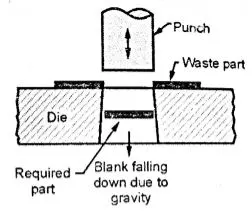
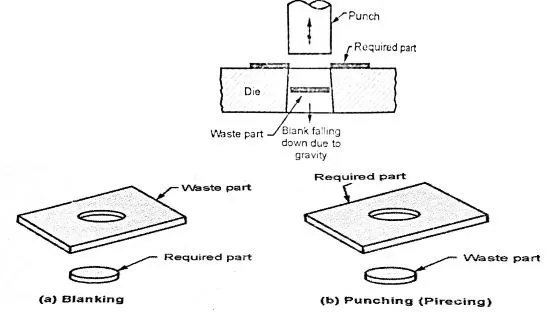
Blanking is a cutting operation where a flat metal sheet is cut, and the punched-out piece is referred to as a blank. The blank is the desired product, and the remaining metal is considered waste.Punching:
Similar to blanking, punching is a cutting operation, but in this case, the hole is the desired product, and the material removed from the hole is considered waste.
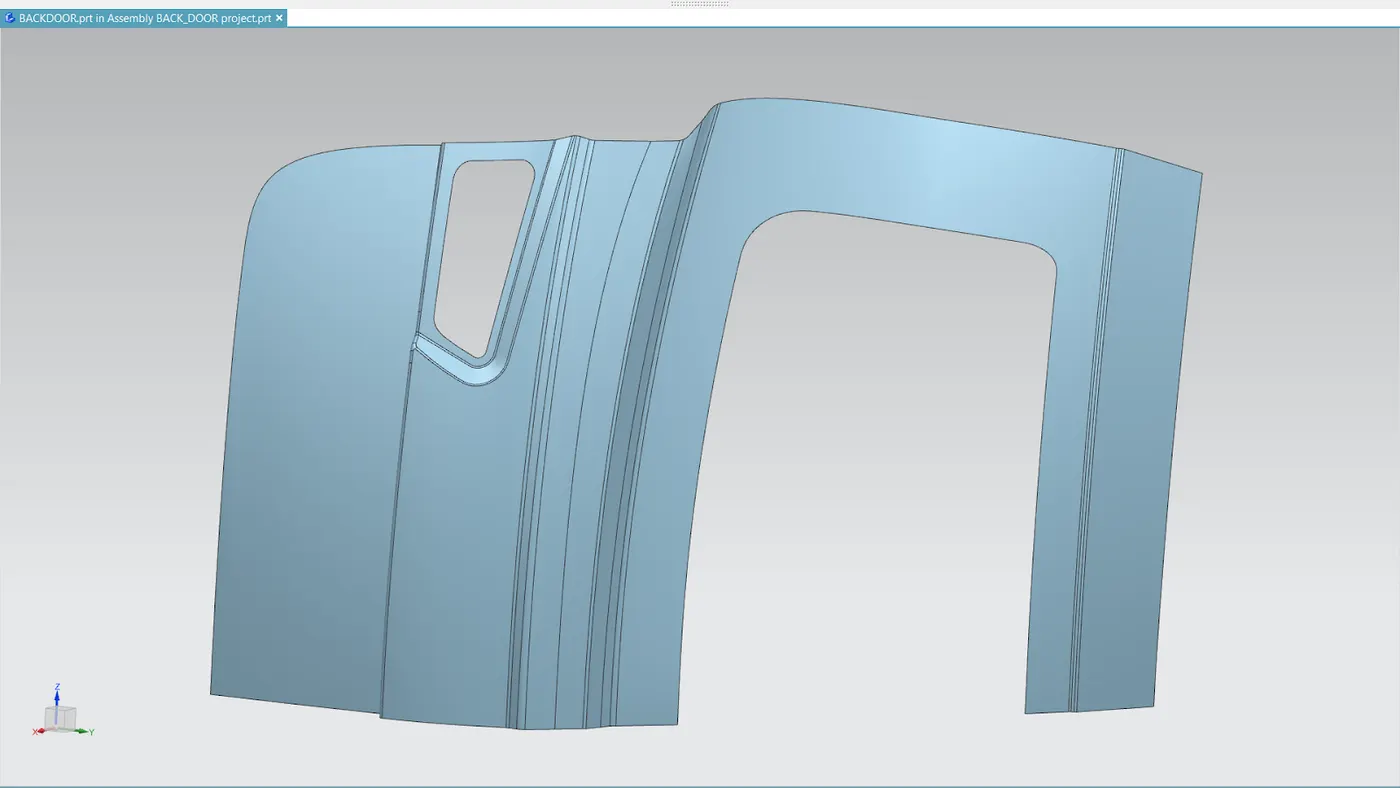
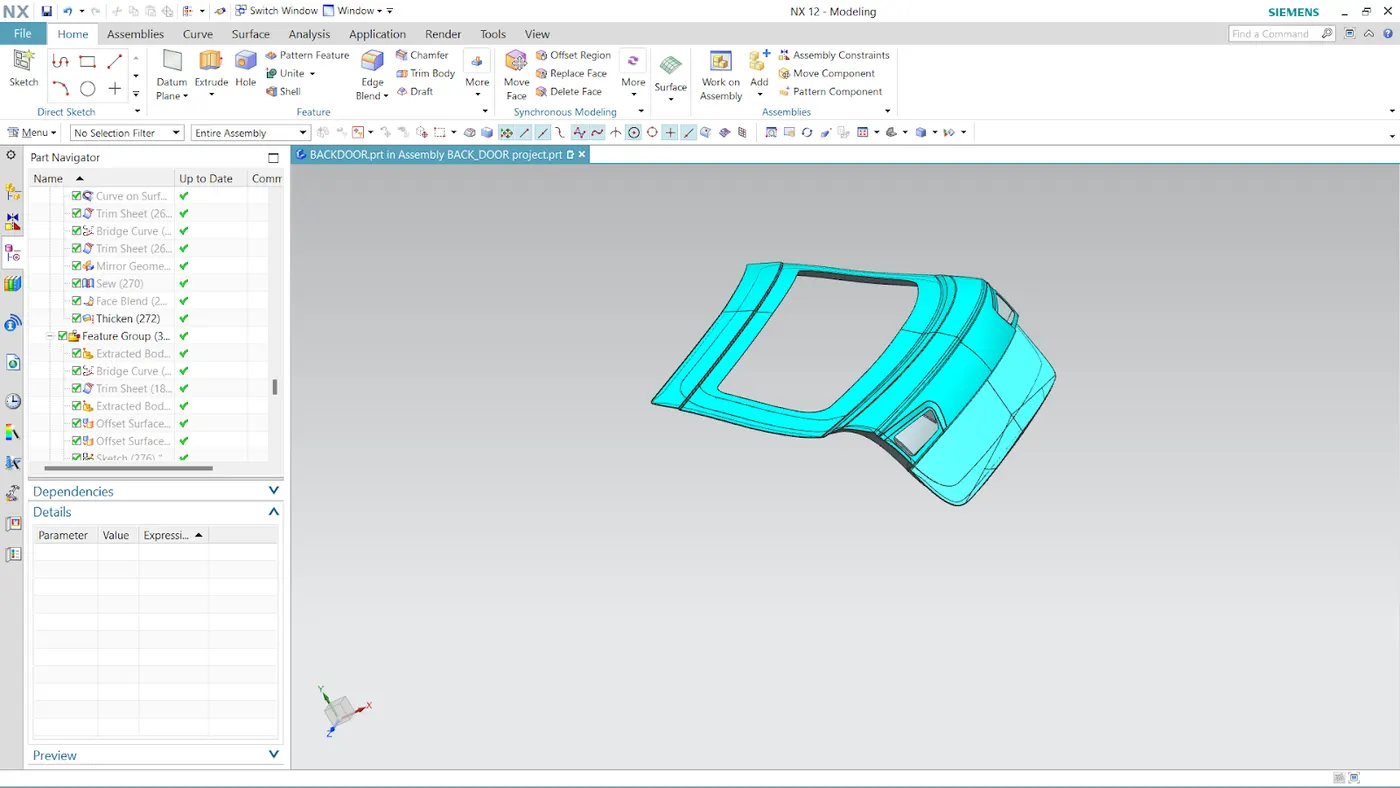
Given class A
 SEATING FLANGE
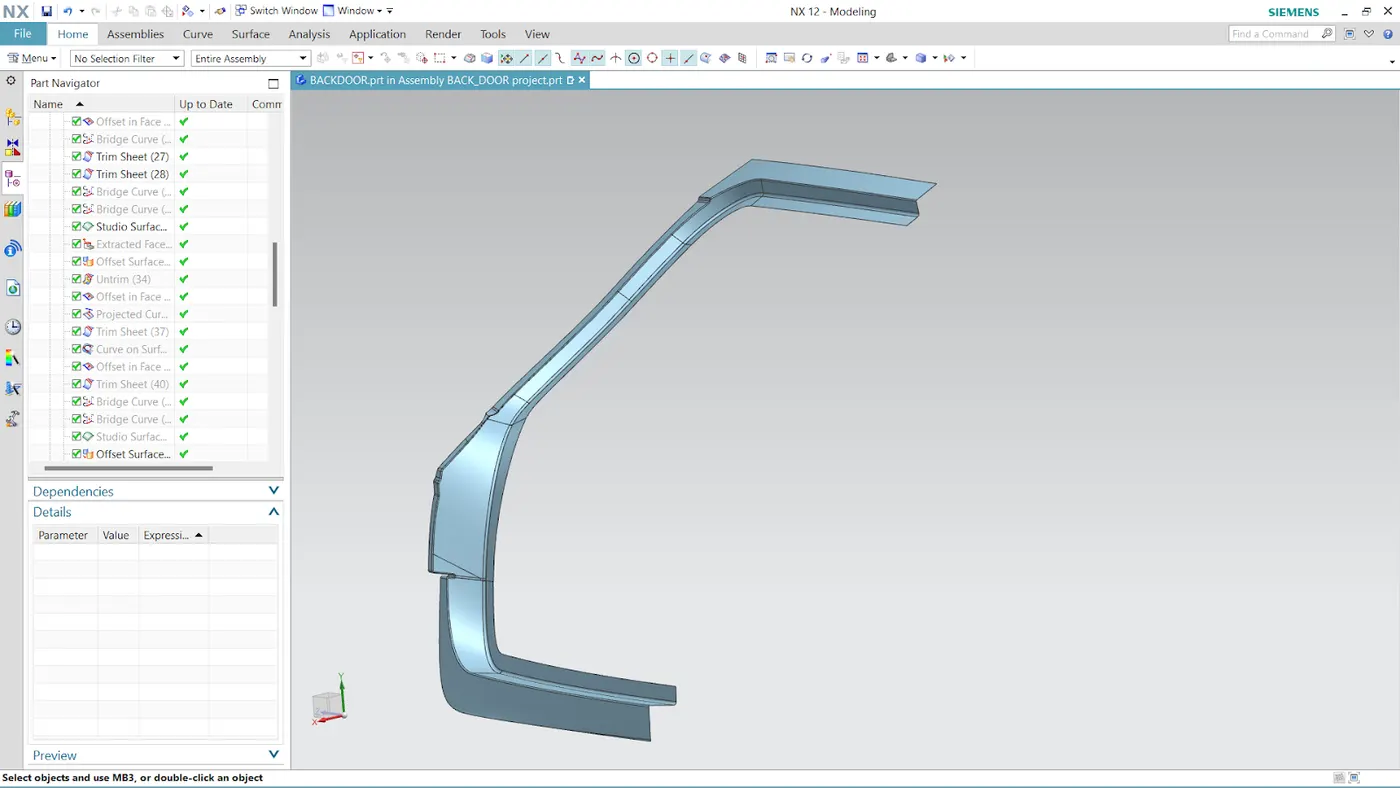 BACK SIDE SURFACE CREATION
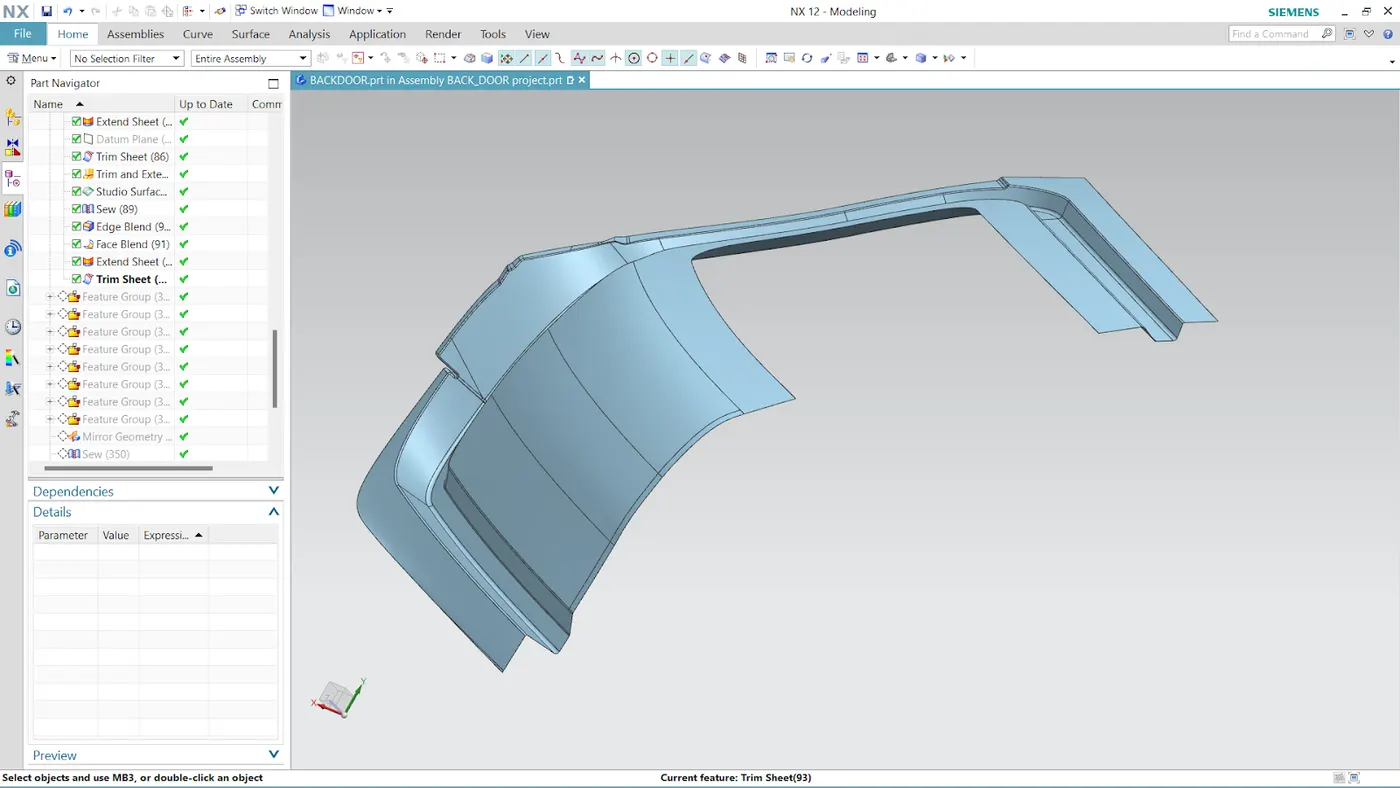
EMBOSS CREATION FOR STRENGTH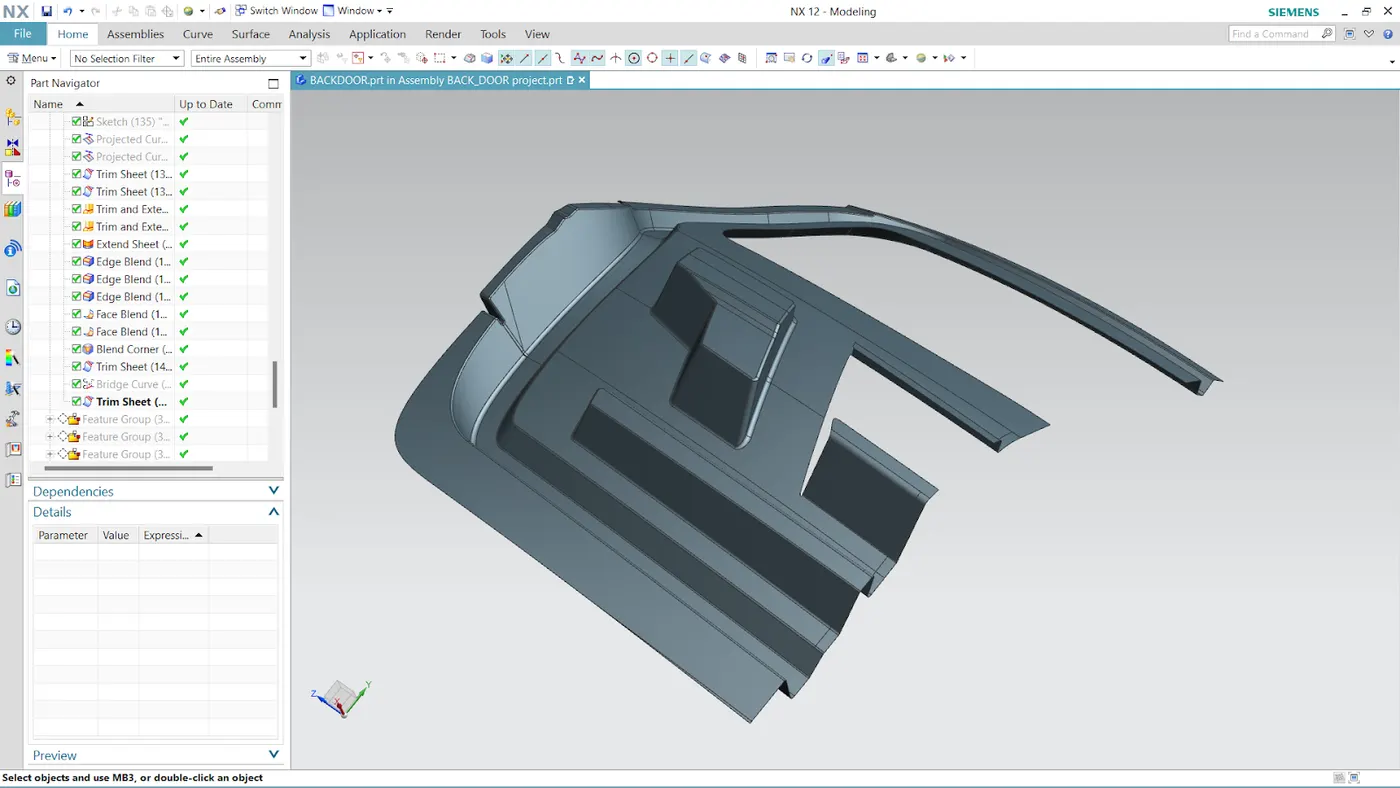 EMBOSS CREATION AT THE HINGE
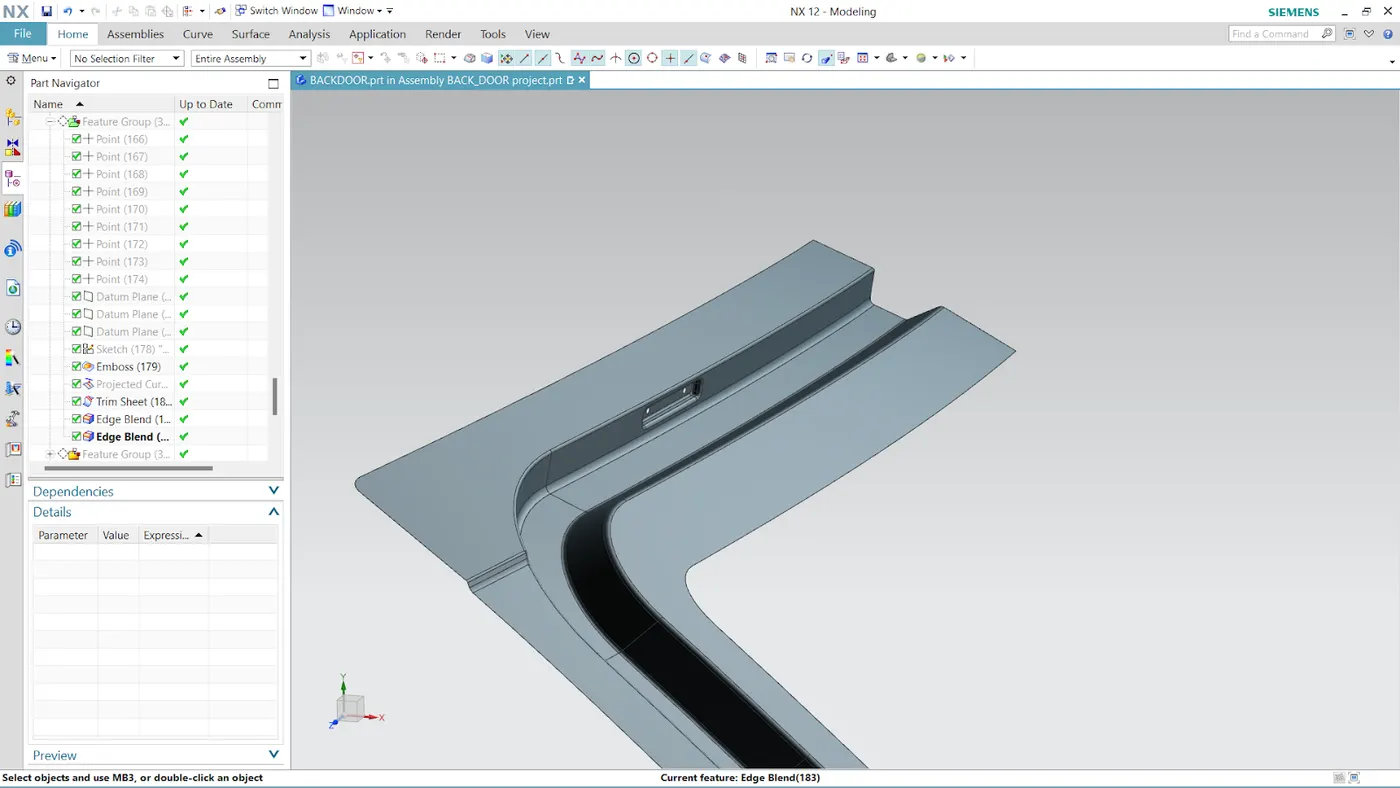 EMBOSS FOR GAS SPRING
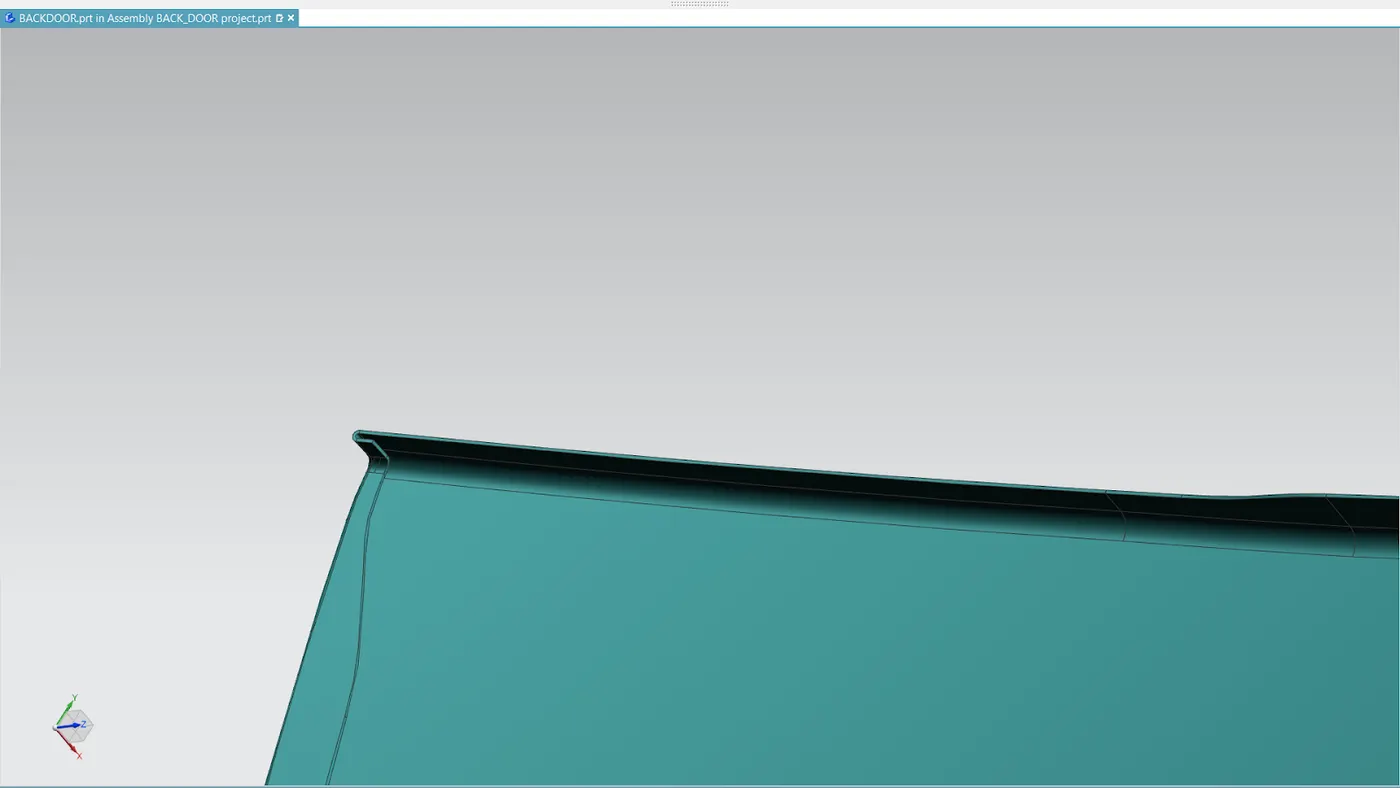
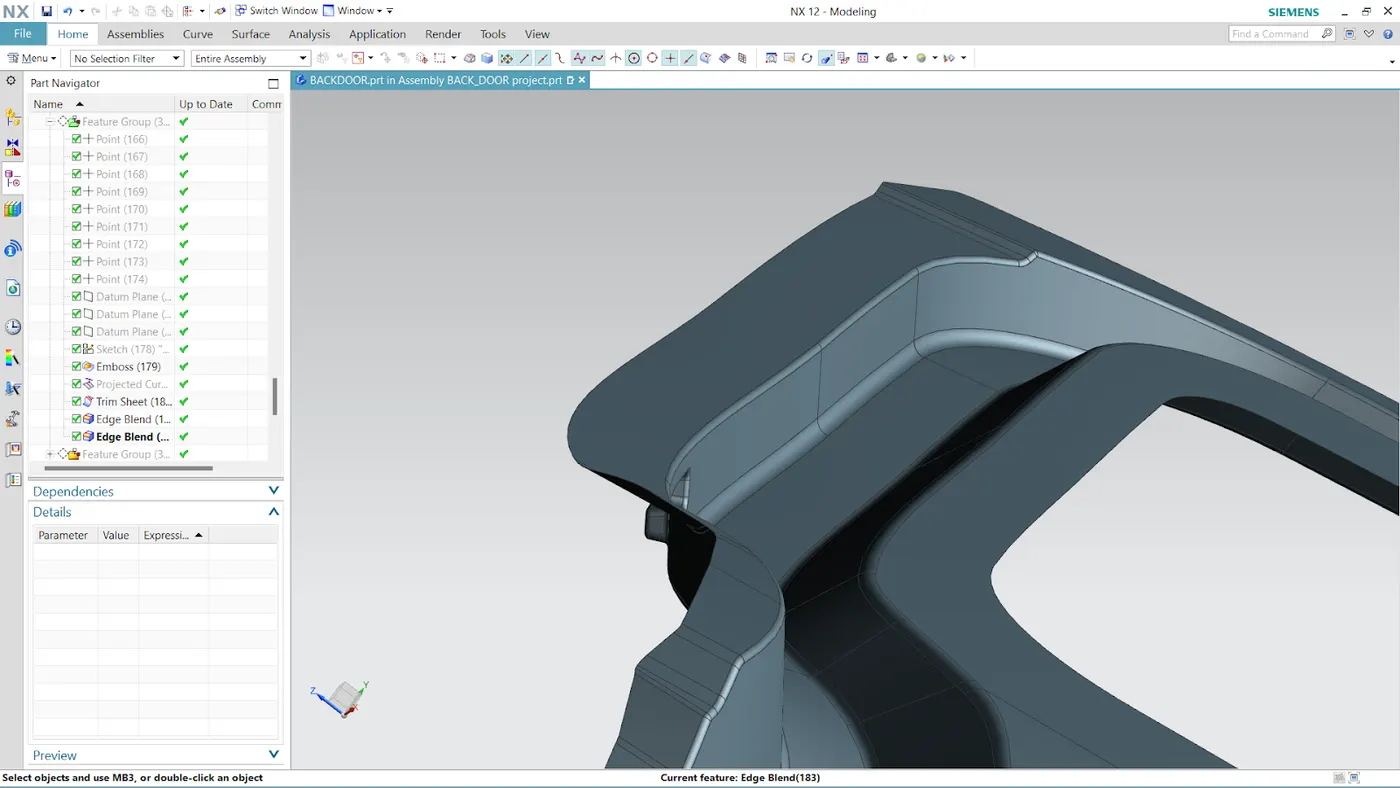 HEMMING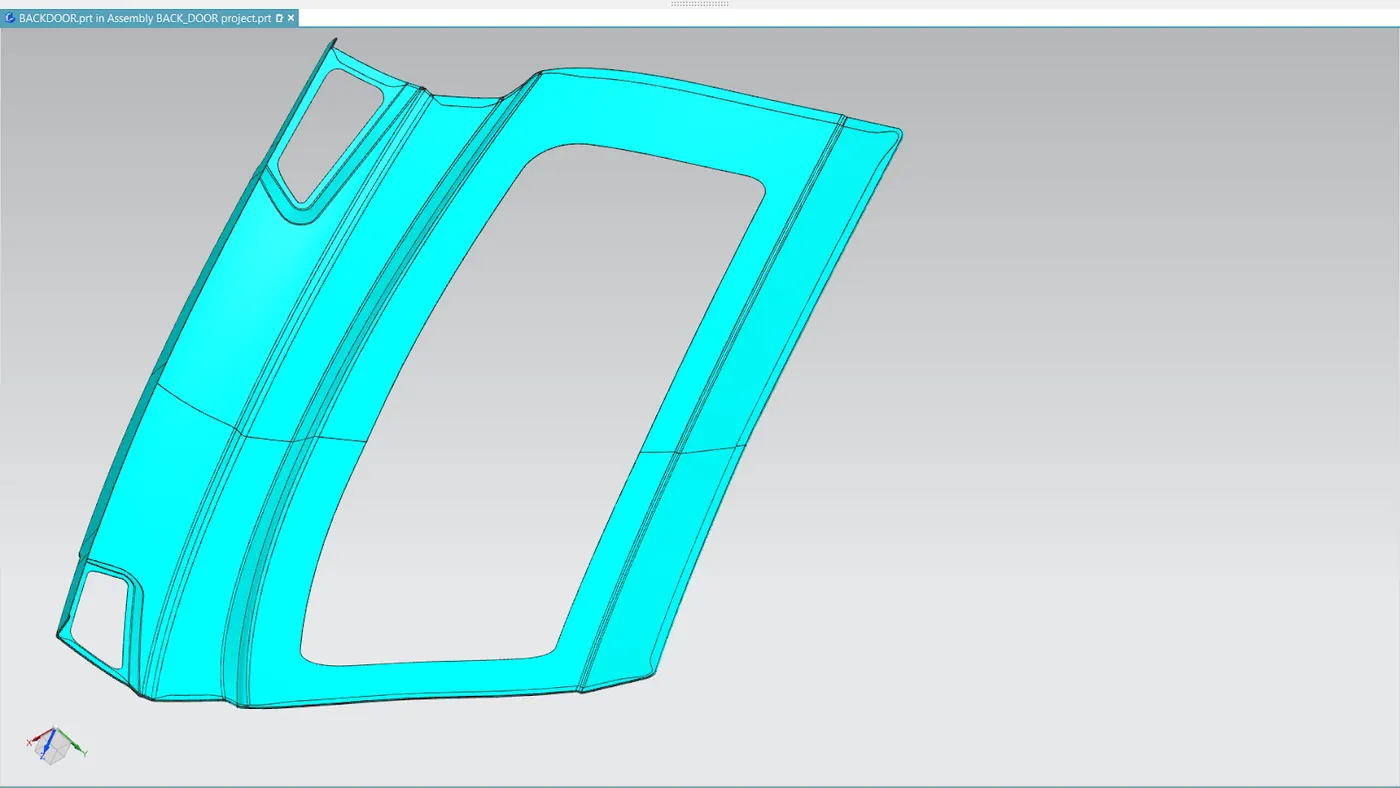
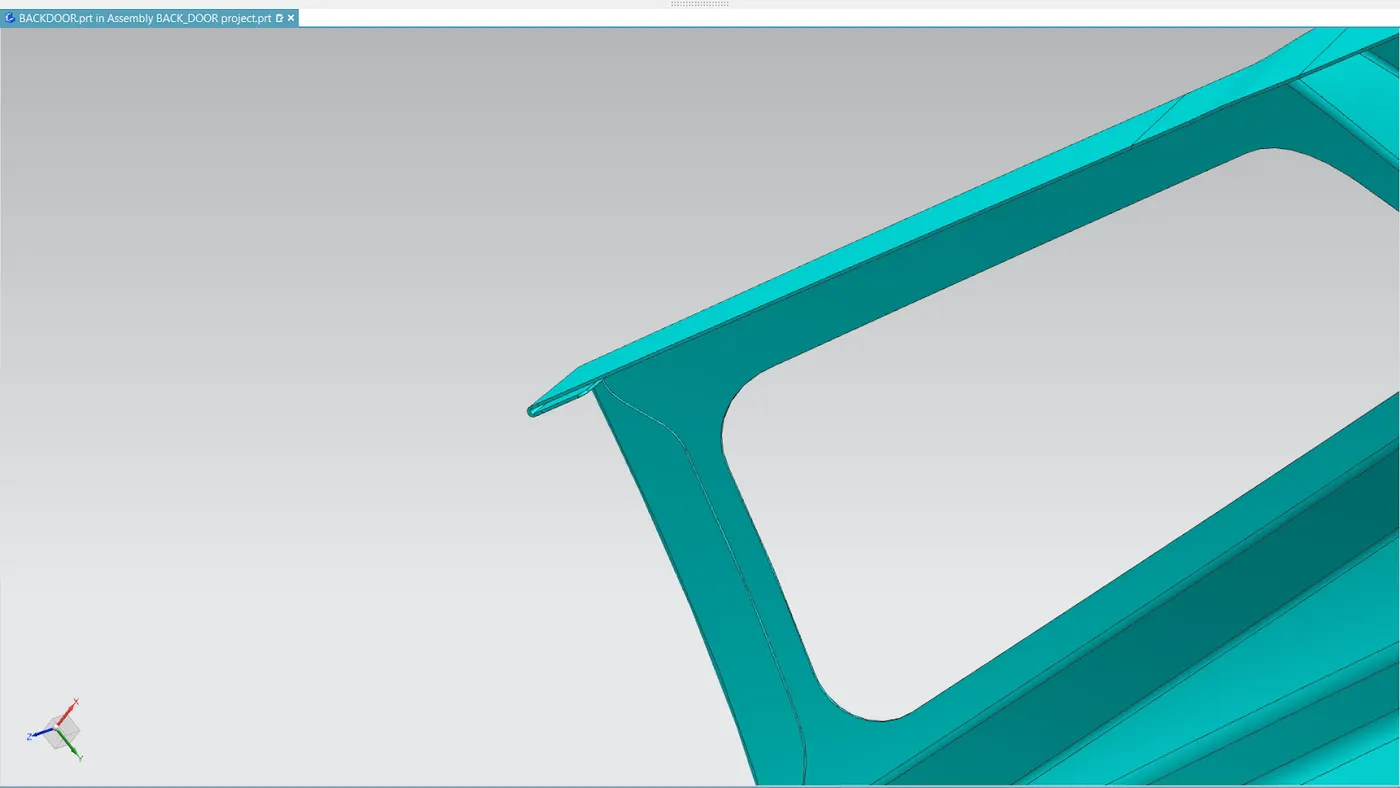
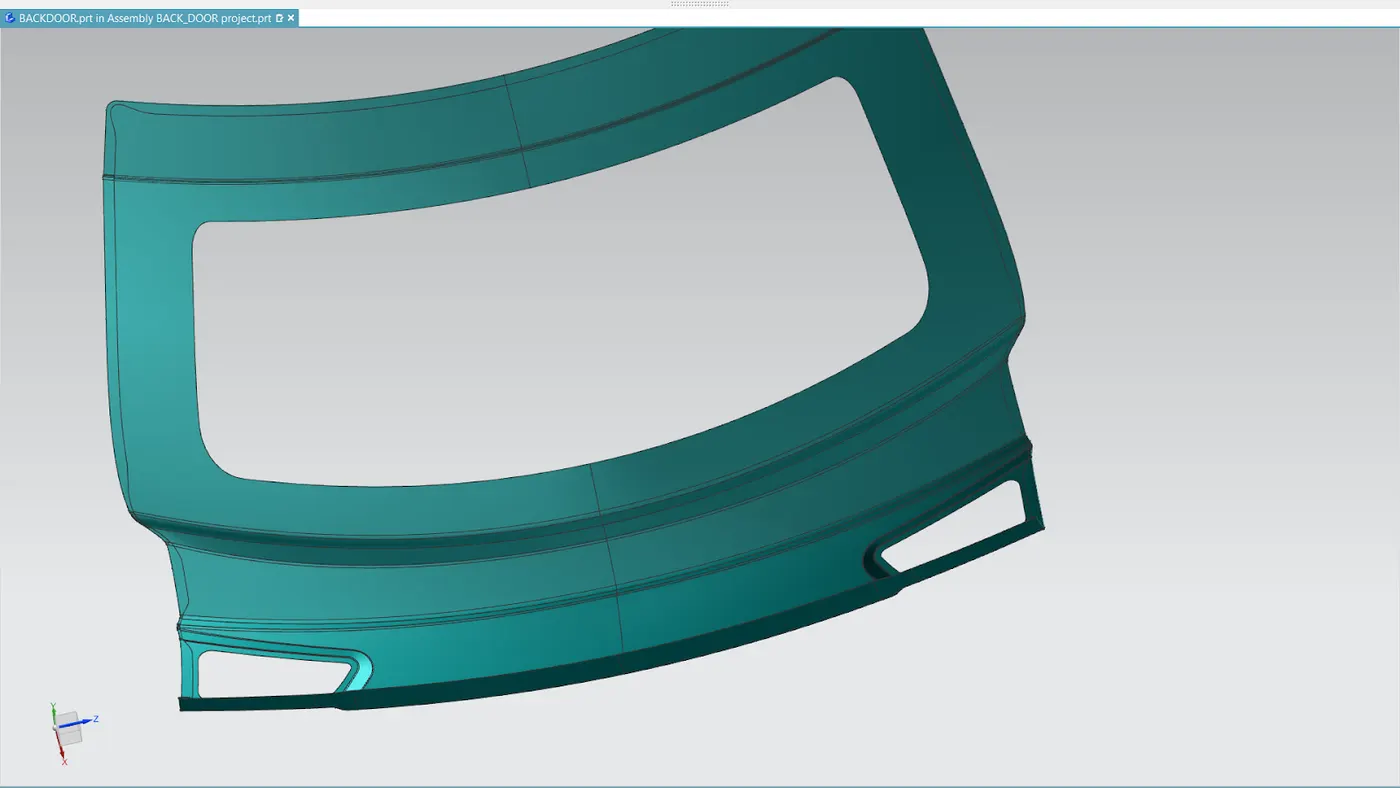 HEMMING FOR LOWER HALF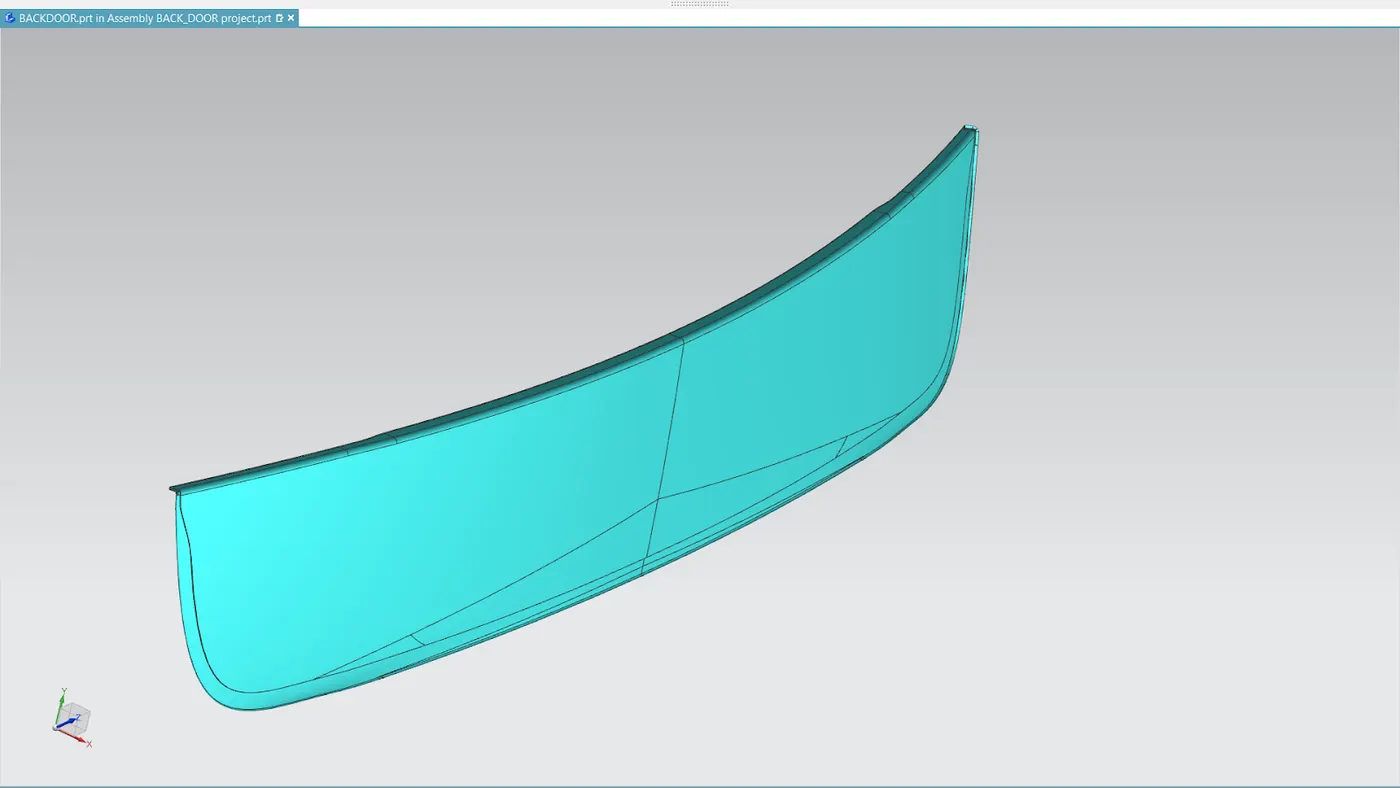
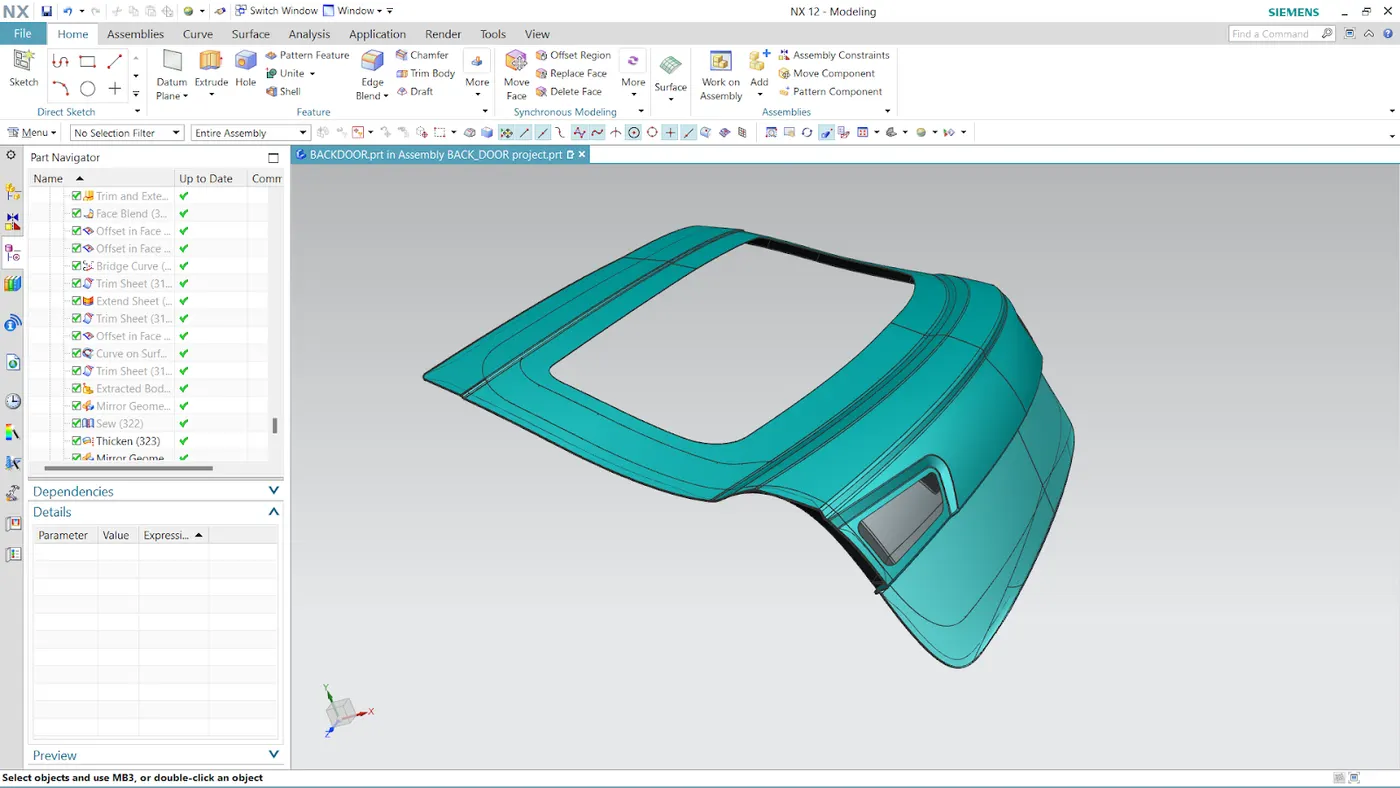 TOOLING AXIS CREATION,TOTAL THERE ARE 6 TOOLING AXIS FOR SIX FEATURES,AS CLEARLY ILLUSTRATED IN THE IMAGE
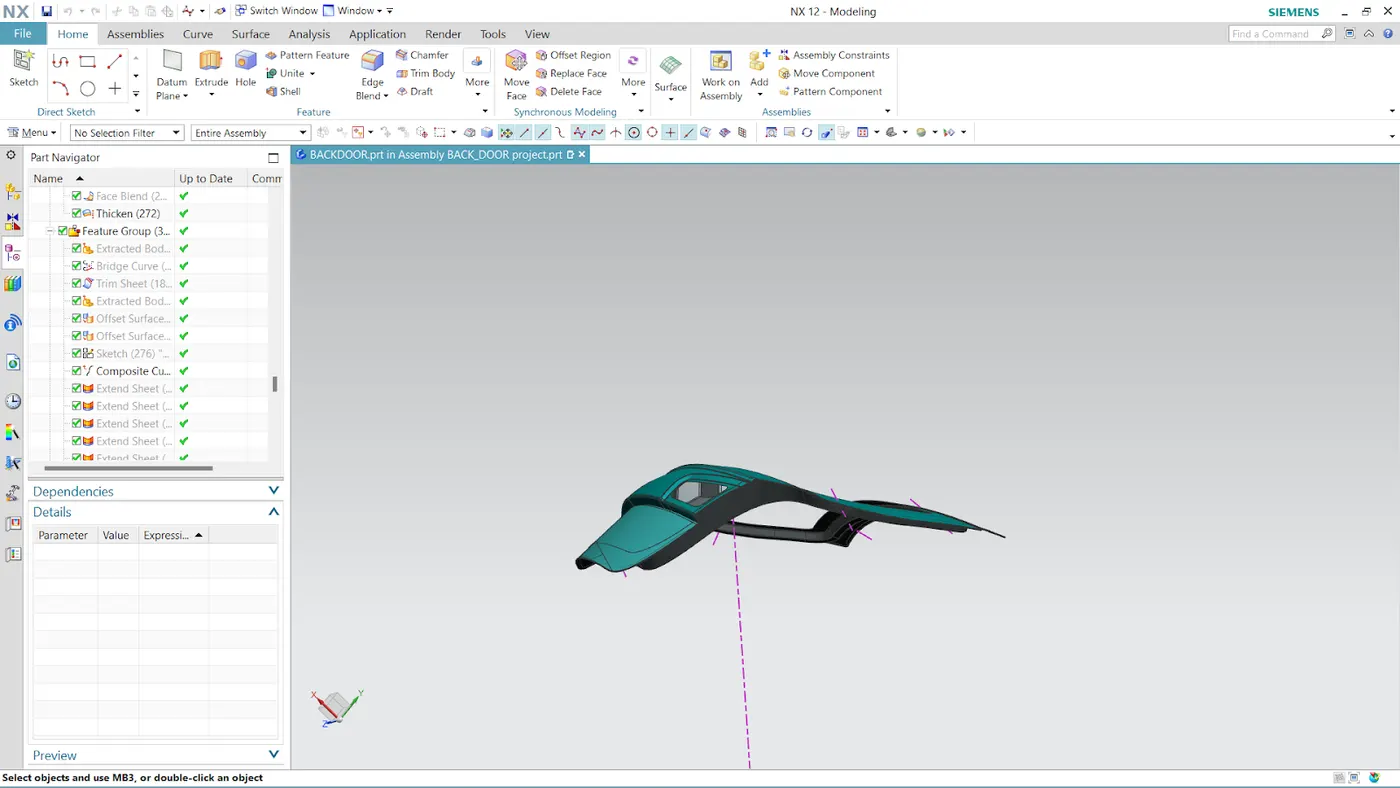
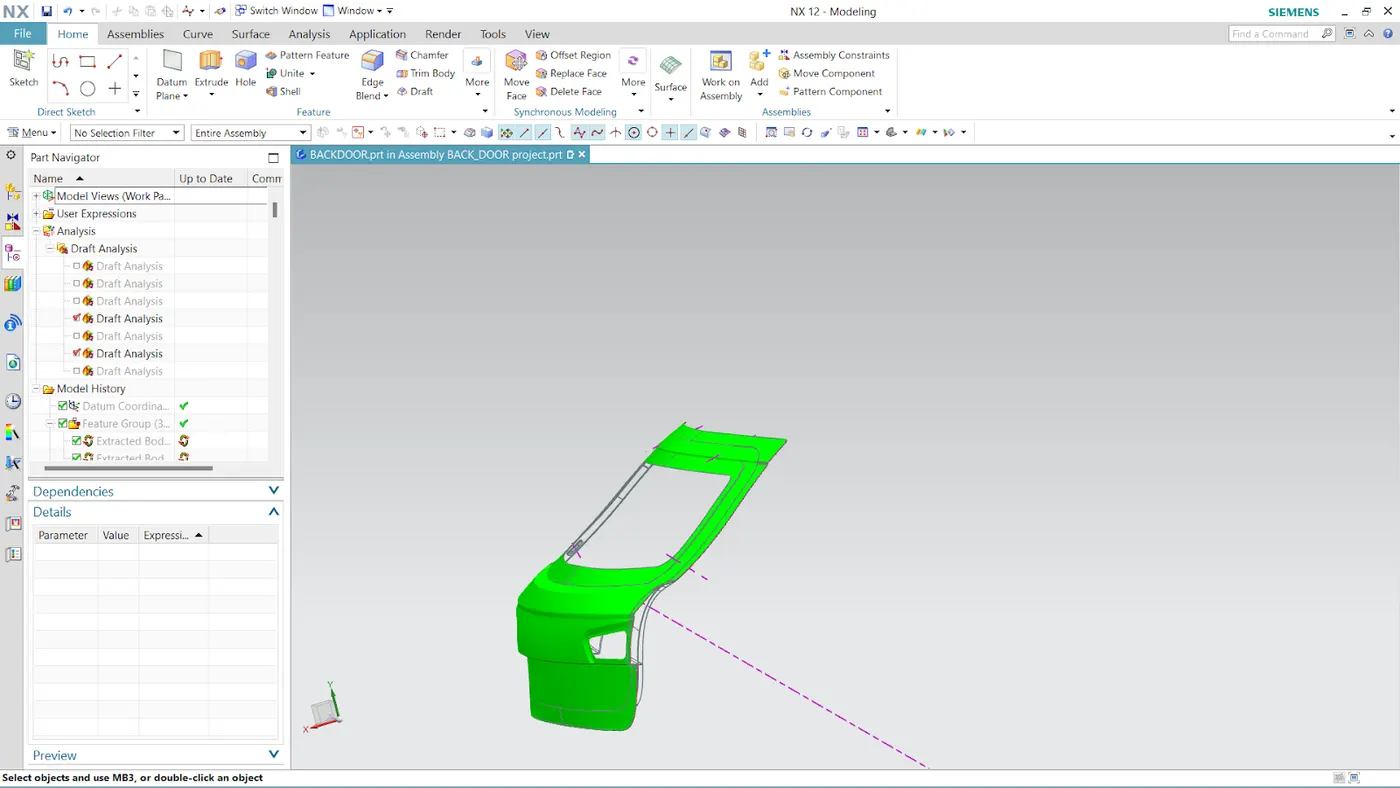
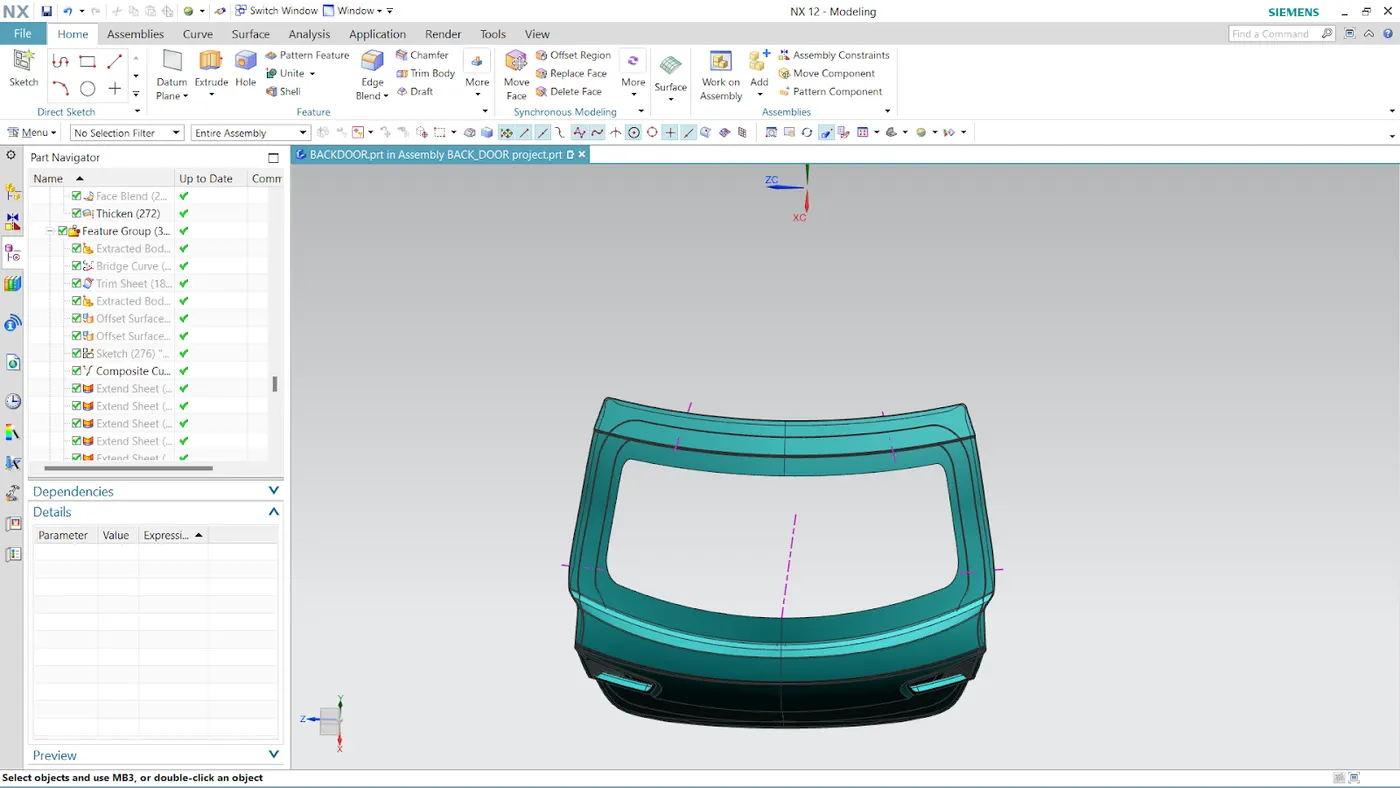 SIX TOOLING AXIS CLEARING THE DRAFT OF 6 DEGREES
 DRAFT ANALYSIS: ALL CLEARED WITH DRAFT OF SIX DEGREES
DRAFT ANALYSIS OF THE INNER PANNEL OR CLASS 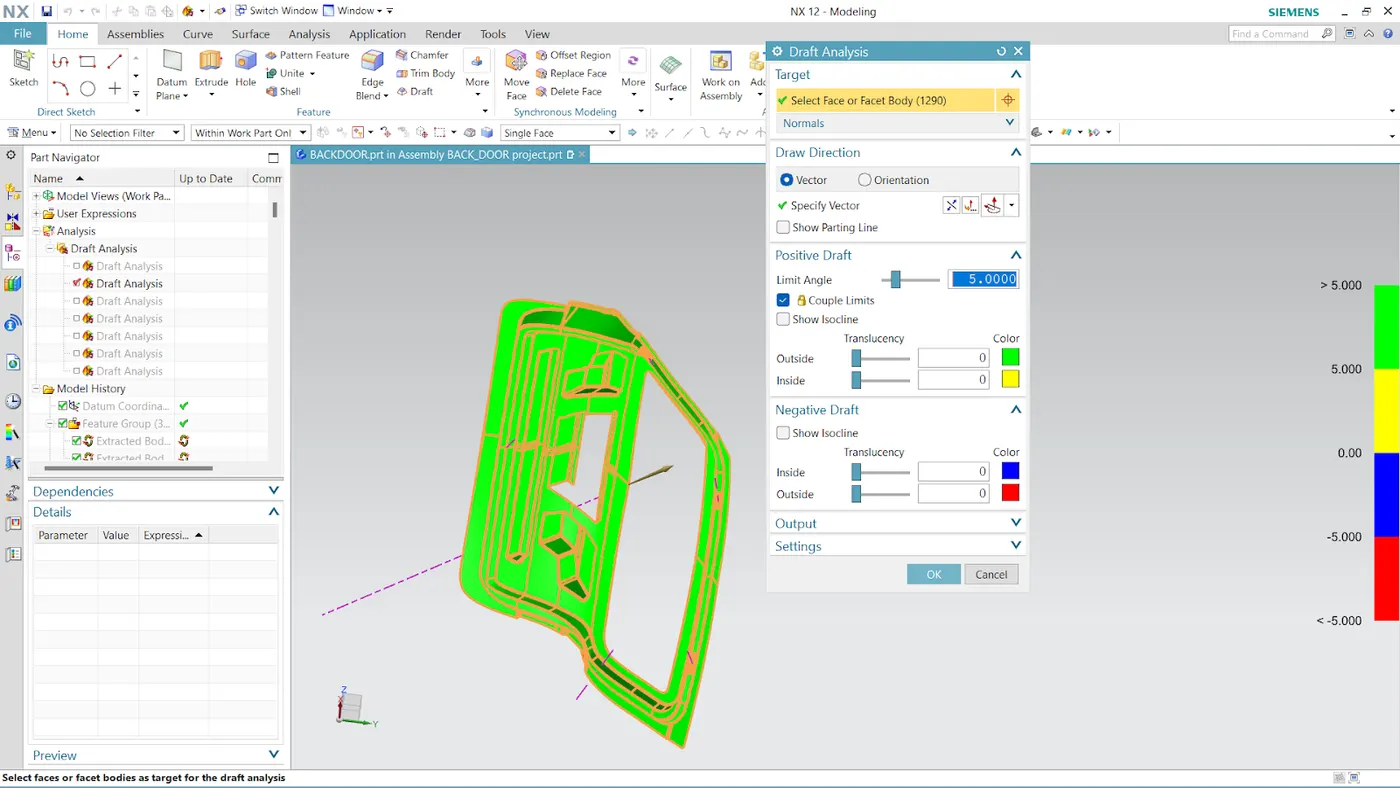
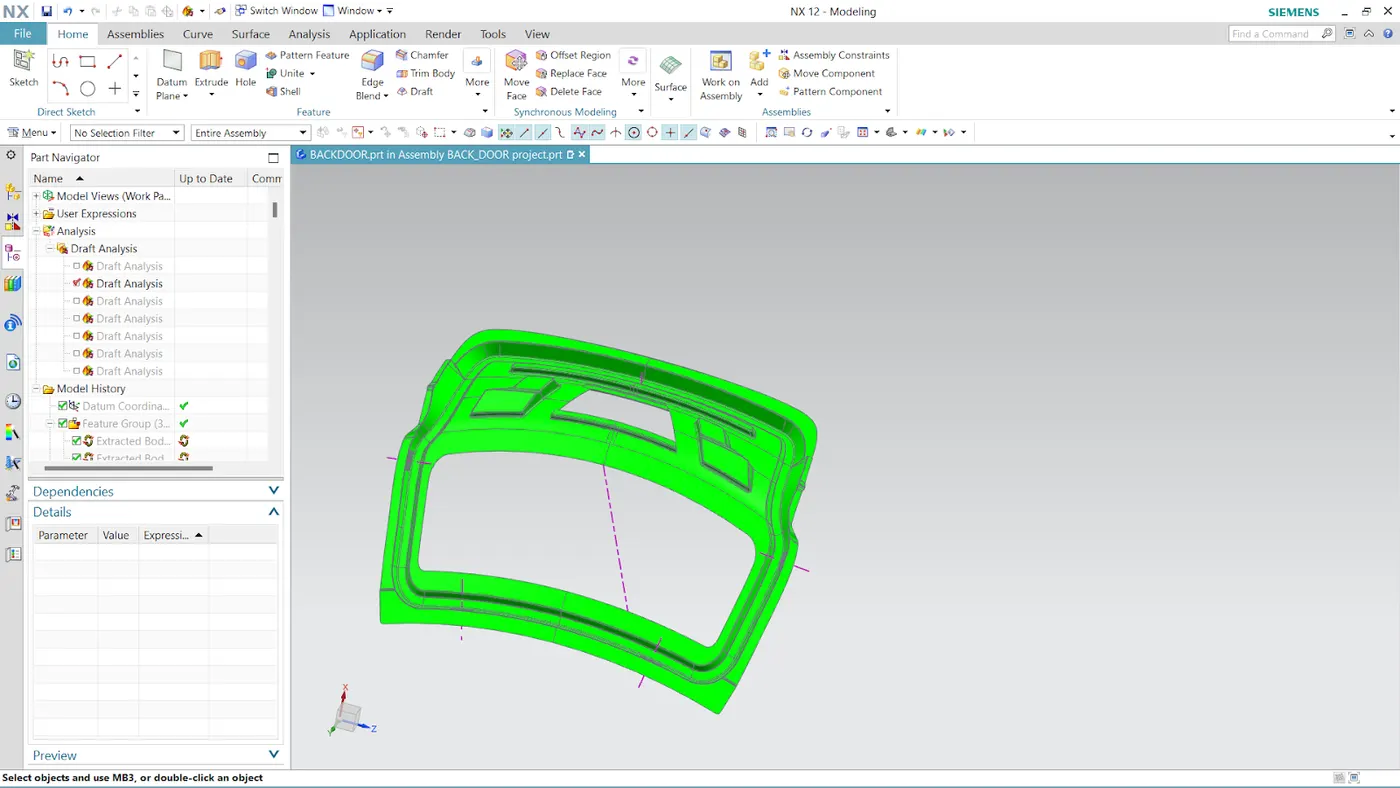 RIGHT SIDE GAS SPRING EMBOSS:
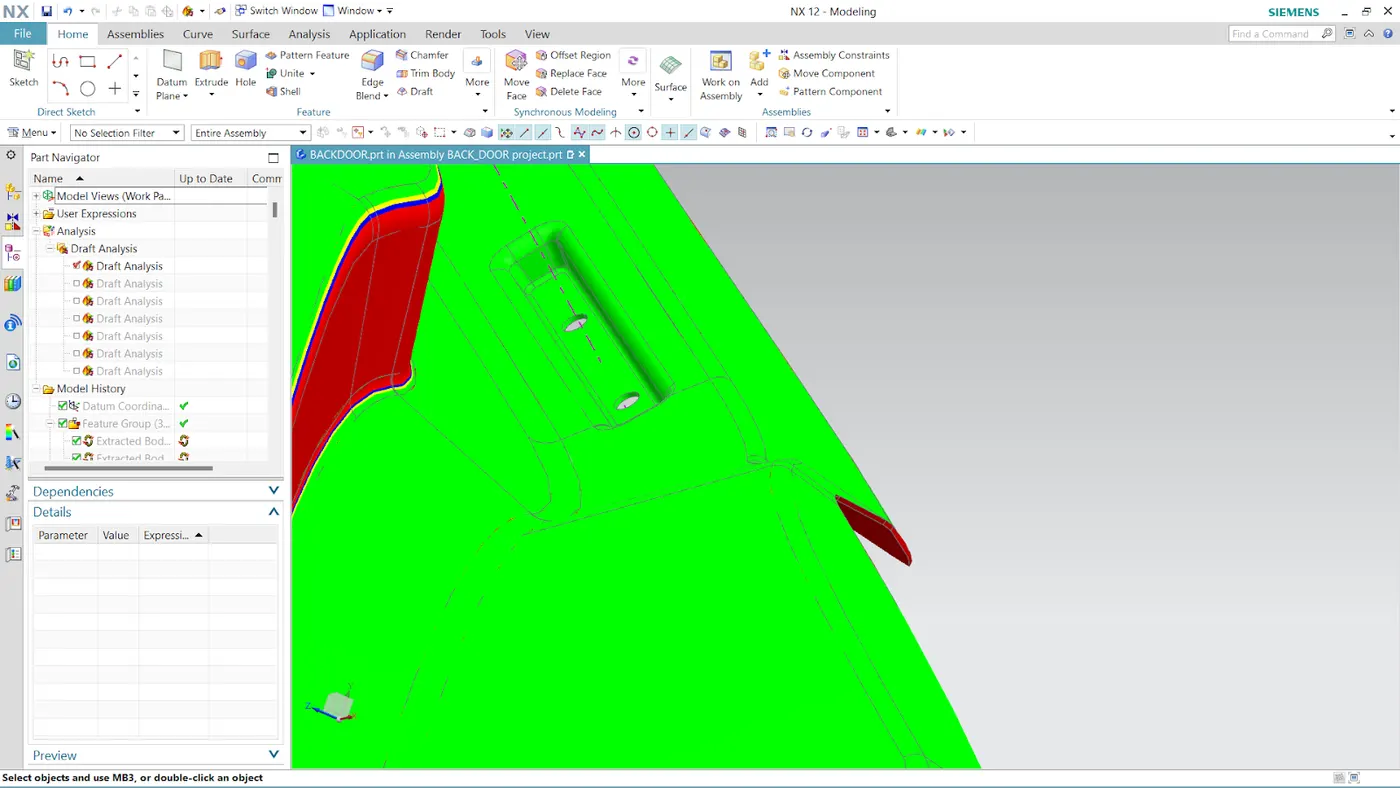 LEFT SIDE GAS SPRING EMBOSS:
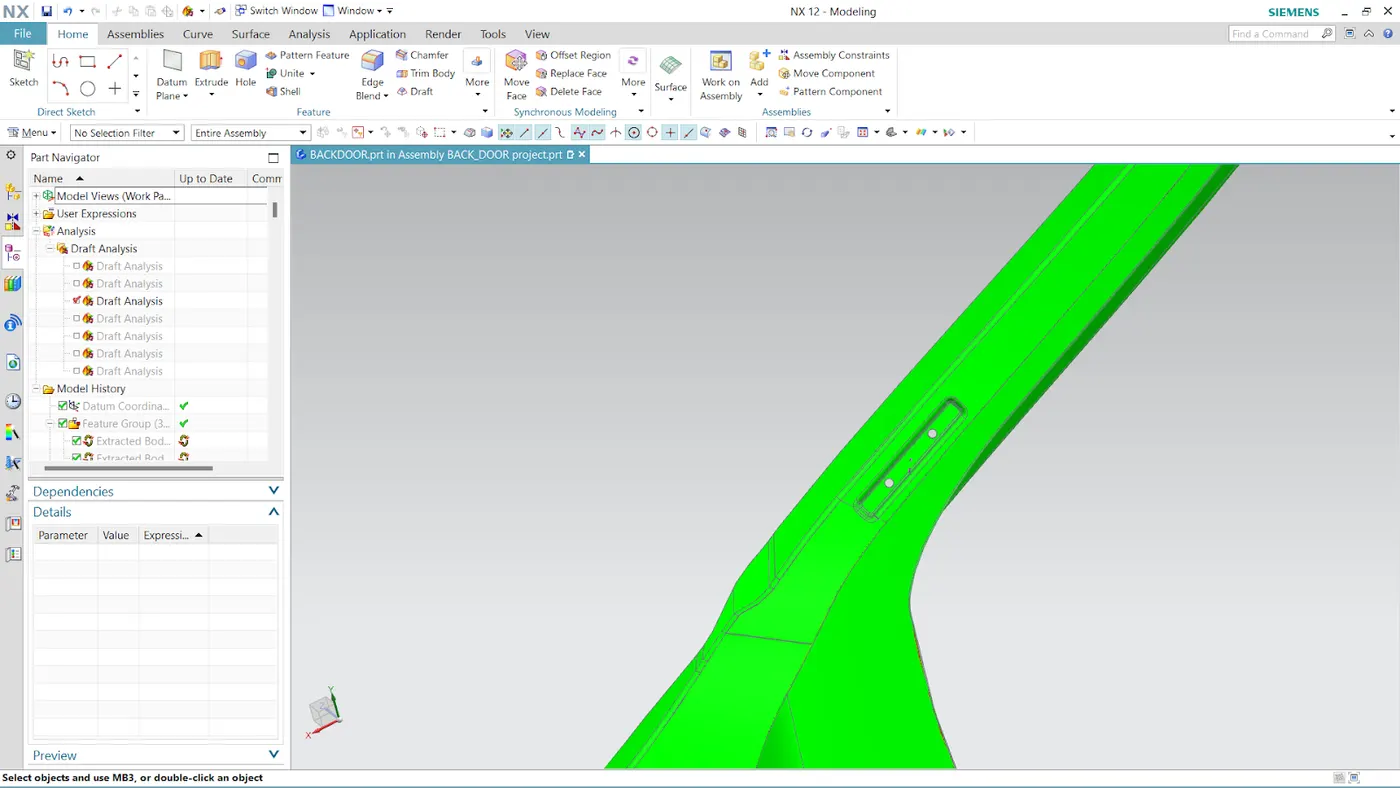 EMBOSS FOR HINGE LEFT SIDE:
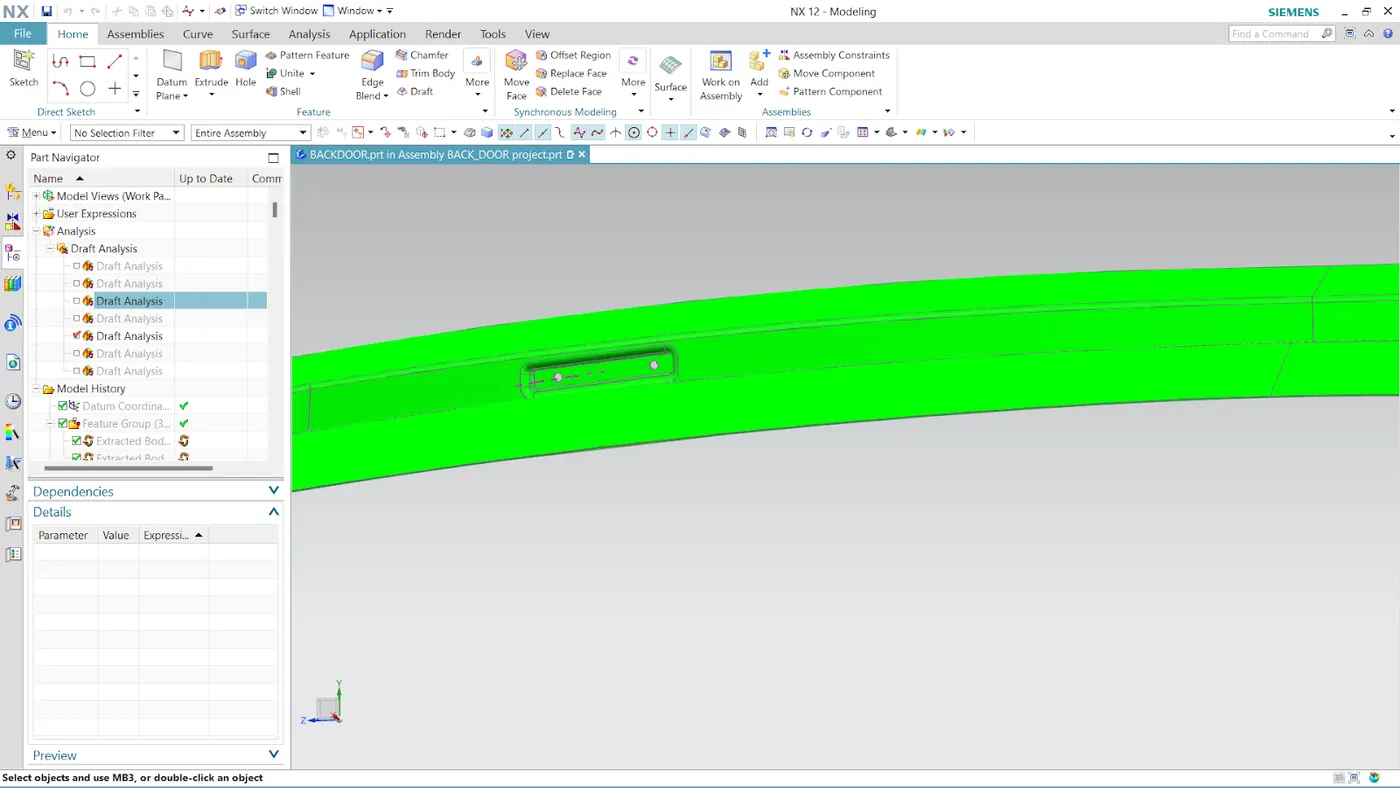 EMBOSS FOR HINGE RIGHT SIDE:
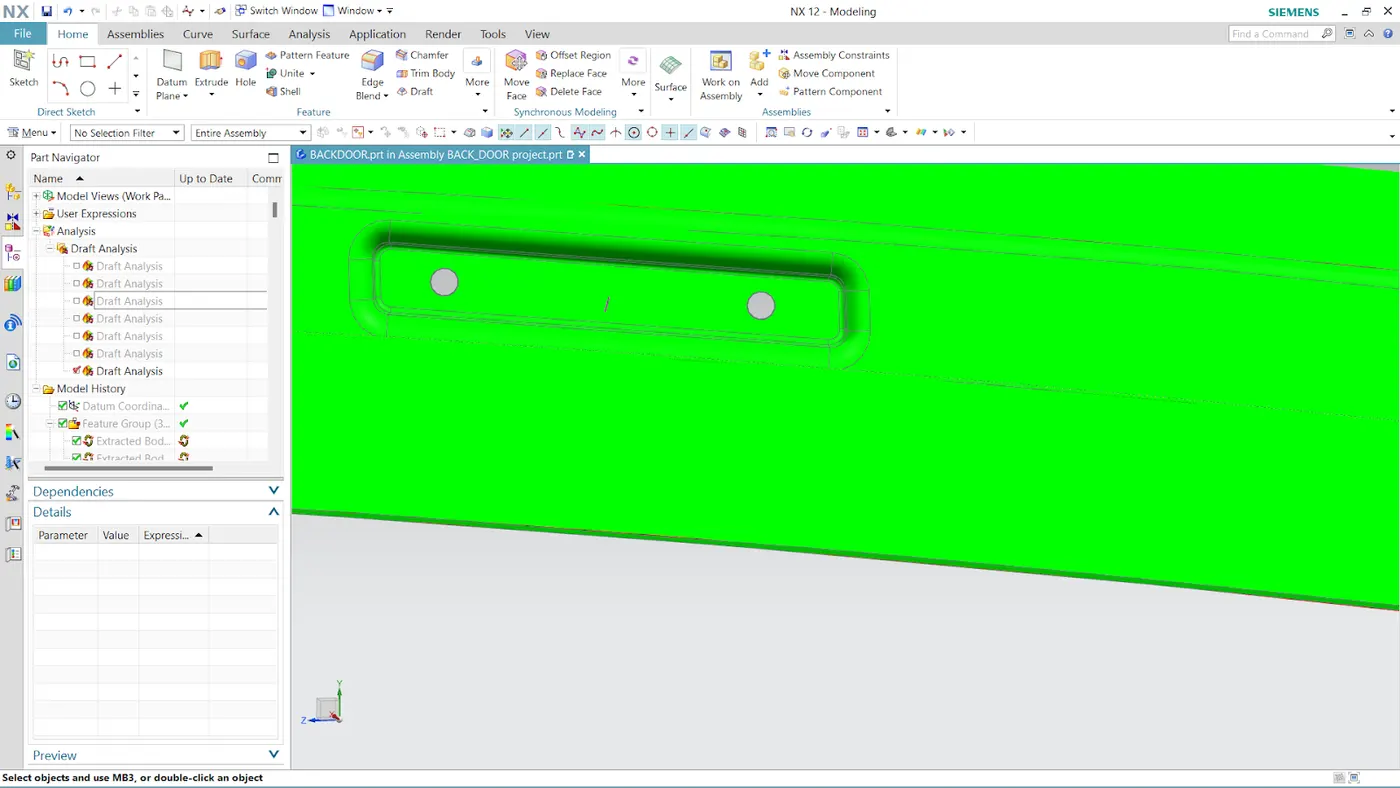 CLASS-A CLEARING THE DRAFT
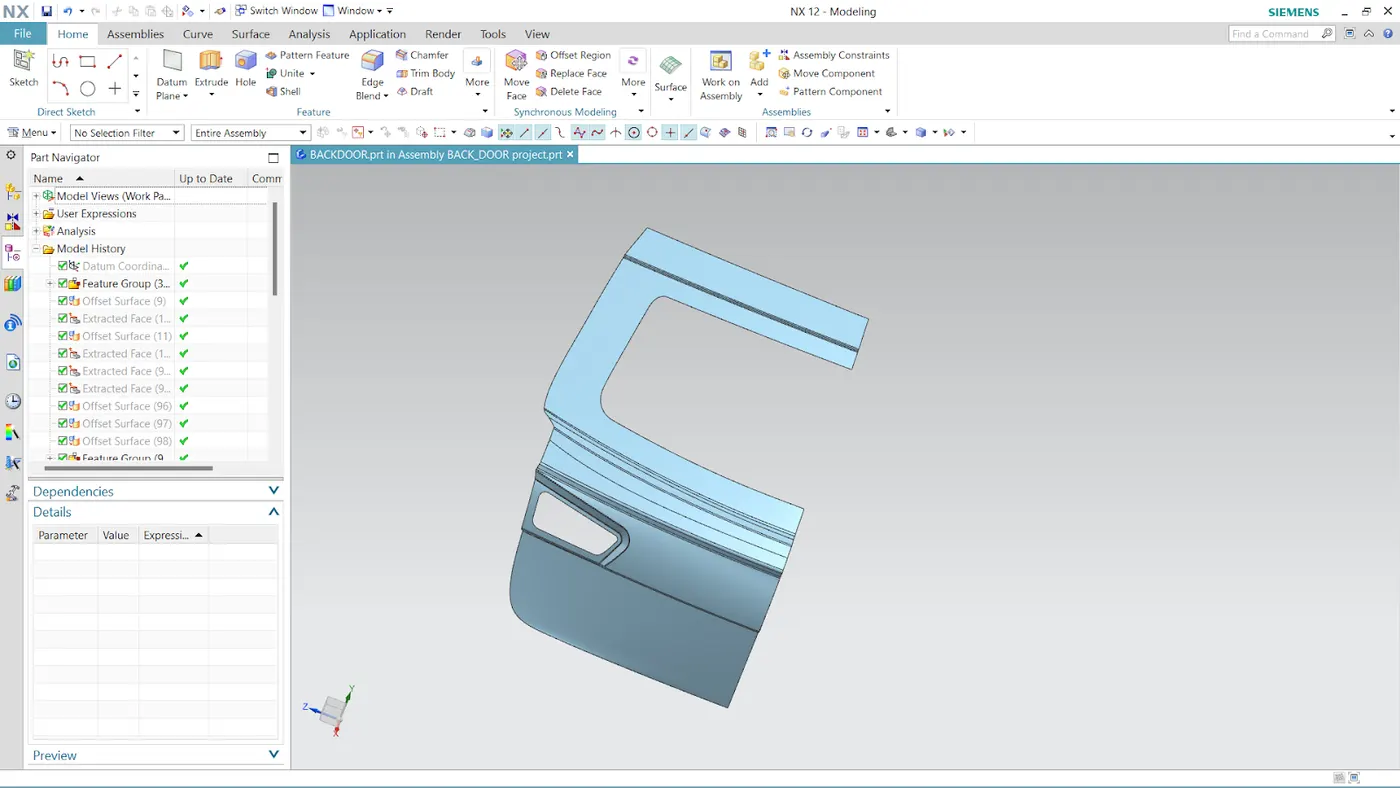
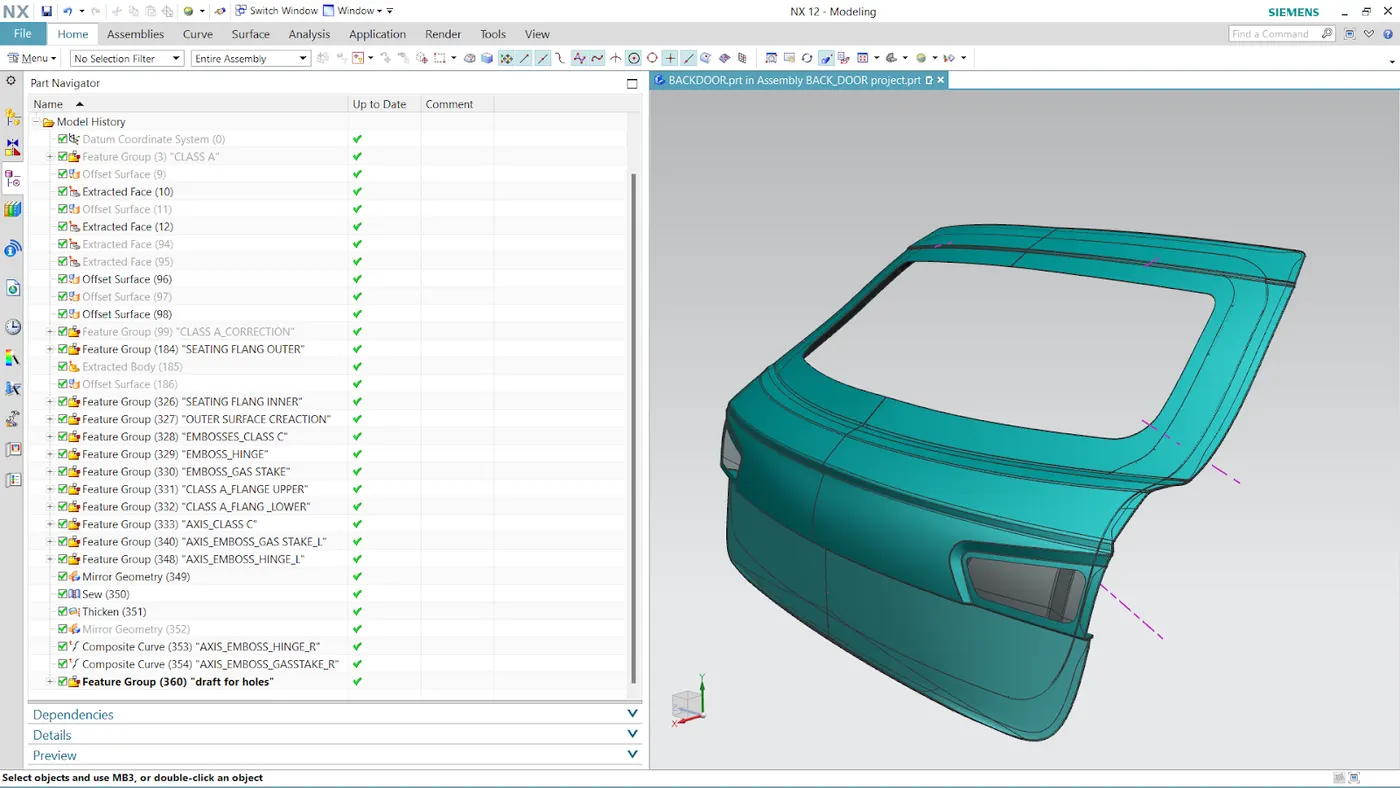
  MODEL HISTORY of ‘back door’
 images of Assembly tree structure AND Reinforcements ,THICKNESS 0.75 at four locations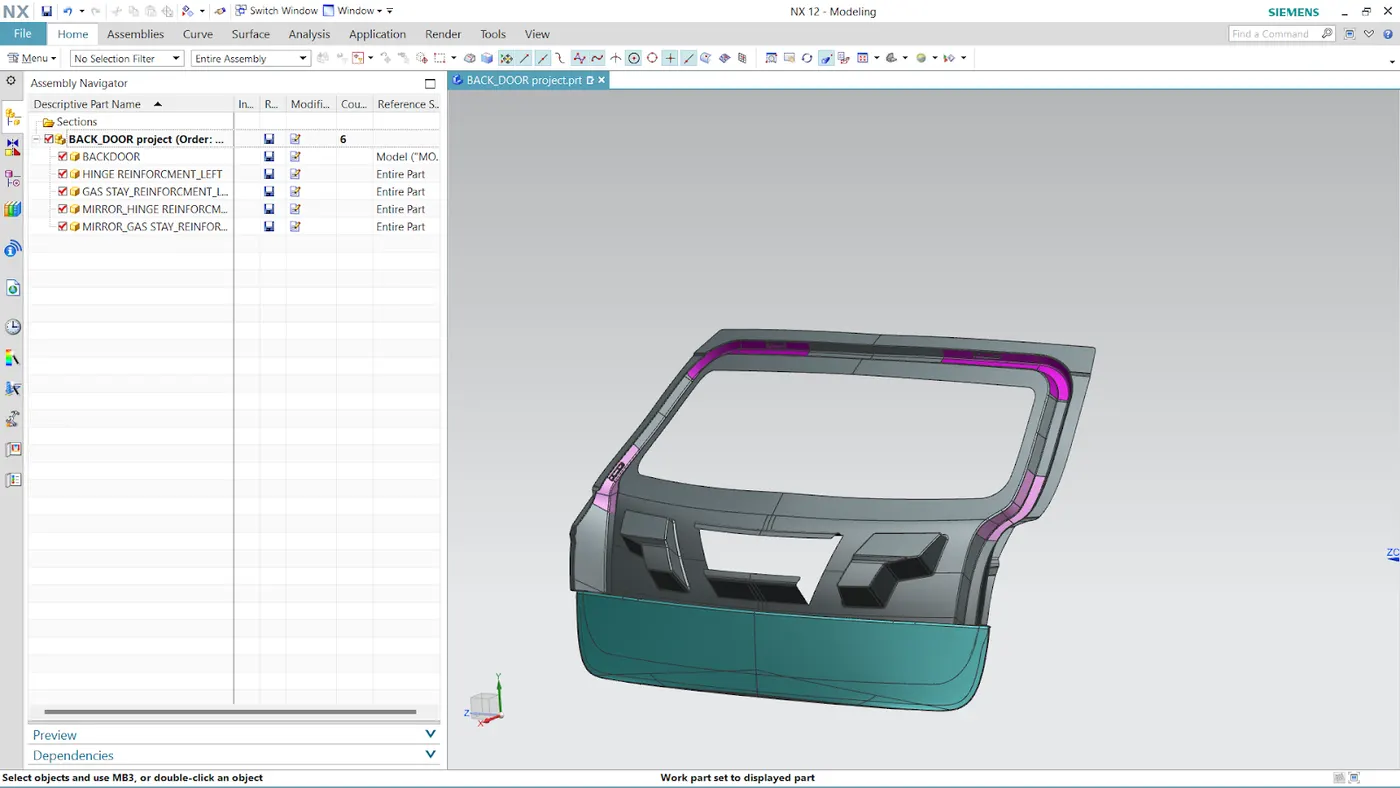
CONCLUSION: The design of the back door is done according to the given criteria successfully.
NOTE:I HAVE a problem with the file SUBMISSION AS IT IS EXCEEDIDE 20 MB.
SO I HAVE GIVEN THE LINKS BELOW OF DRIVE OF THE PROJECT FILE AND STEP FILES.
THANK YOU
https://drive.google.com/file/d/15_QZWazh4ZzNbpIgBFZolNPkVU60iX12/view?usp=sharing
STEP file:
https://drive.google.com/file/d/1sgheB6Jt0dUGcgk9y_FkMTy-obVhn-1e/view?usp=sharing