Design of backdoor
DESIGN OF A BACKDOOR
NOTE: - ***Since, the file to be submitted has exceeded the 20MB limit, i have uploaded it in the Google Drive and the link is shared below after consulting with the support team.***
The file link is attatched below before the conclusion part.
AIM = Use the provided styling surface to come up with a back door design, use appropriate design methodologies, and provide the necessary reinforcements and embosses.
SOFTWARE USED = NX Student Version
BACK DOOR DESIGN CRITERIA: -
- Visibility
- Force Dissipation
- Latch and Striker Positions
- Hinge Position
- Gas Stay Position
- Hemming and Relief Areas
PARTS OF A BACKDOOR: -
- Outer Panel (Upper and Lower)
- Inner Panel
- Hinge Reinforcements
- Gas Stay mechanism
- Latch and Striker
- Wiper motor mechanism
THICKNESS FOR PARTS:-
- Outer Panel = 0.75mm
- Inner Panel = 0.75mm
- Reinforcements = 0.75mm
DEFINITIONS
- BACK DOOR = A part seen in 4 wheeler vechicles for better cargo carriage, space aligning, good model finish and act as safety module also. It is also called a tailgate.These doors can be operated through manual or electric powered. It involves a very major role during rear crash cases of ensuring pedestrian safety. The Institute of Highway Saftey analyse the different accidents and they set a test to rate our car. so these rating depends uopn the design of the trunk and material used, flanges, embosses, type of joining of inner panel and outer panel etc. Thus our design must obey crash requirements.
- Stamping processes is used to manufacture a panel depend on its design. However, normally the processes used extensively are blanking, drawing, piercing, forming, notching, trimming,hemming, etc
-
HEMMING = It is a forming operation in which the edges of the sheet are folded or folded over another part in order to achieve a tight fit. Normally hemming operations are used to connect parts together, to improve the appearance of a part and to reinforce part edges.
- DEEP DRAWING = A form of metal forming, where rigid tools such as punch, die and blank holder is used. The blank is placed between the die and the holder and then deformed by the punch pushing the sheet into the die and the blank finally assumes the shape of the die.
-
BLANKING = A cutting operation of a flat metal sheet and the article punched out is known as blank. Blank is the required product of the operation and the metal left behind is considered as a waste.
-
PIERCING = If a part requires slots, holes, or other cutouts, piercing can be employed. Piercing, which can be performed simultaneously with blanking, punches the requisite shapes out of the metal sheet.
-
BENDING = Bending is a fairly self-explanatory process. The part-in-progress is placed on a specially designed die and a ram pushes against the metal, providing the required bend. Bending is performed after drawing, as attempting to punch an already bent piece of metal causes the entire part to deform.
REPORT
- A sample frame of the outer panel has given and was instructed to design a Back Door Inner Panel with respect to sufficient requirements.
- The given Class A surface has certain error and complexities, its been modified according to workability by replacing the surfaces.
- The modified surface had also been attatched with the assembly file submitted below.
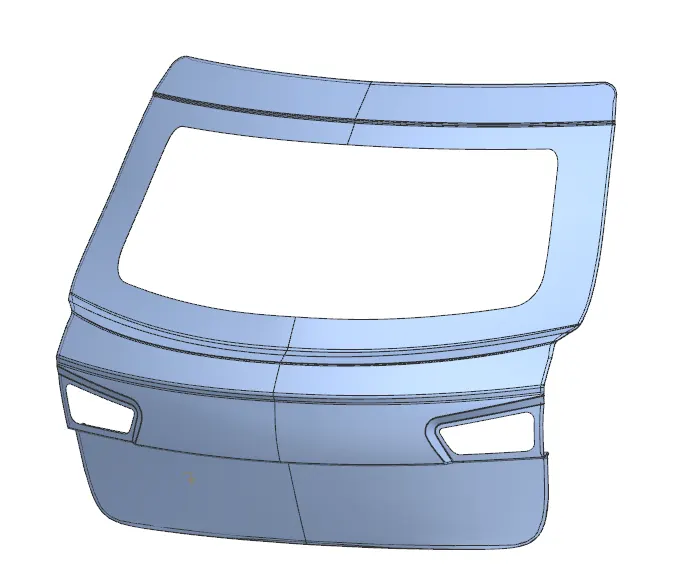
- Splits the Outer panel as Upper frame of outer panel and Lower frame of Outer panel for proper functionability.
- Wave Geometry Linker is used to extract the surface for development of Inner Panel, reinforcements and all.
- Wave Geometry Linker, Extract Body, extract face, Trim sheet, Offset Surface, Offset curve in Face, Trim and Extend, Extend Sheet, Through Curve Mesh, Studio Surface, Sketch, Datum Plane, Studion Spline, Project Curve, Emboss, Face and Edge blend, Sew, Blend Corner, Brdge Curve, Mirror Geometry, Thicken etc are the main commands repeatedly used in all the parts.
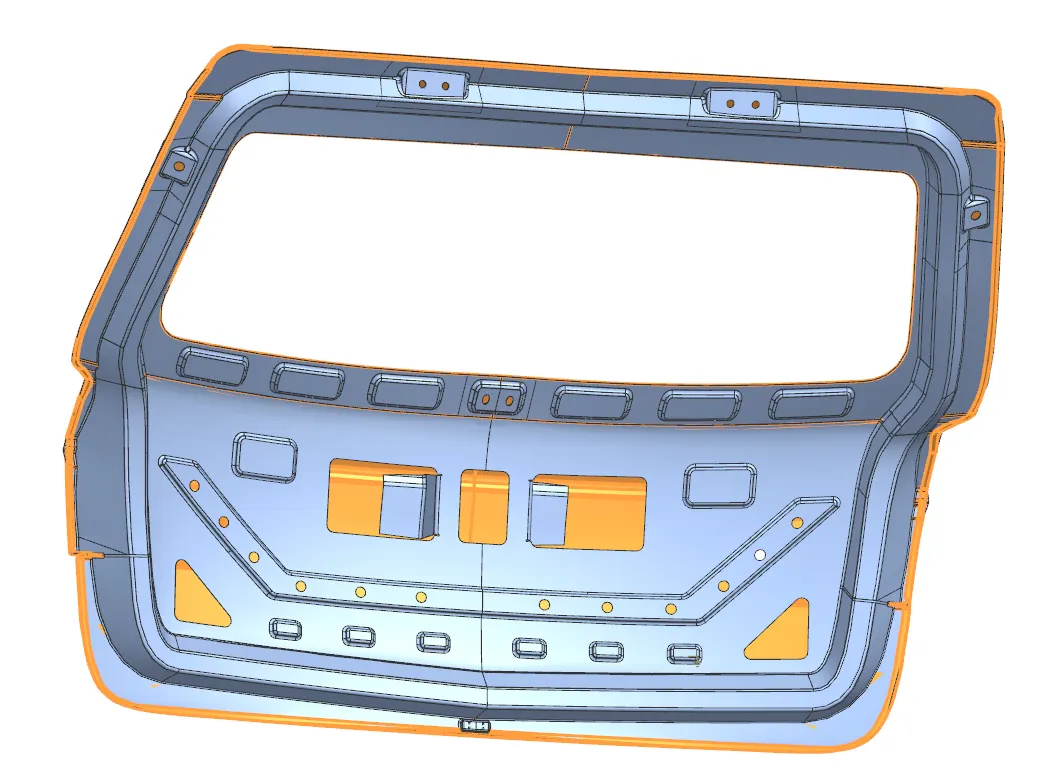
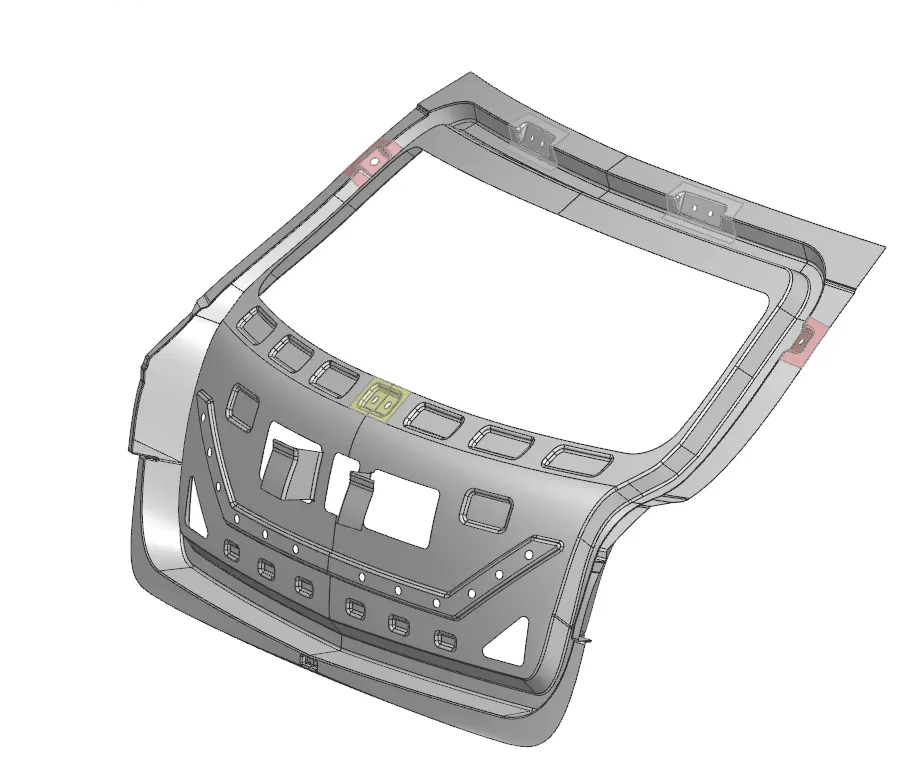
- Started the creation of Inner panel using these commands and done it with proper surface finish followed of Embosses, Cutouts, Sealant joining with outer panel, Hinge Mounting, Gas Stay mounting, Latch/Striker mounting on Inner panel.
- Reinforcements for the mounting are also designed and aligned with assemby itself.
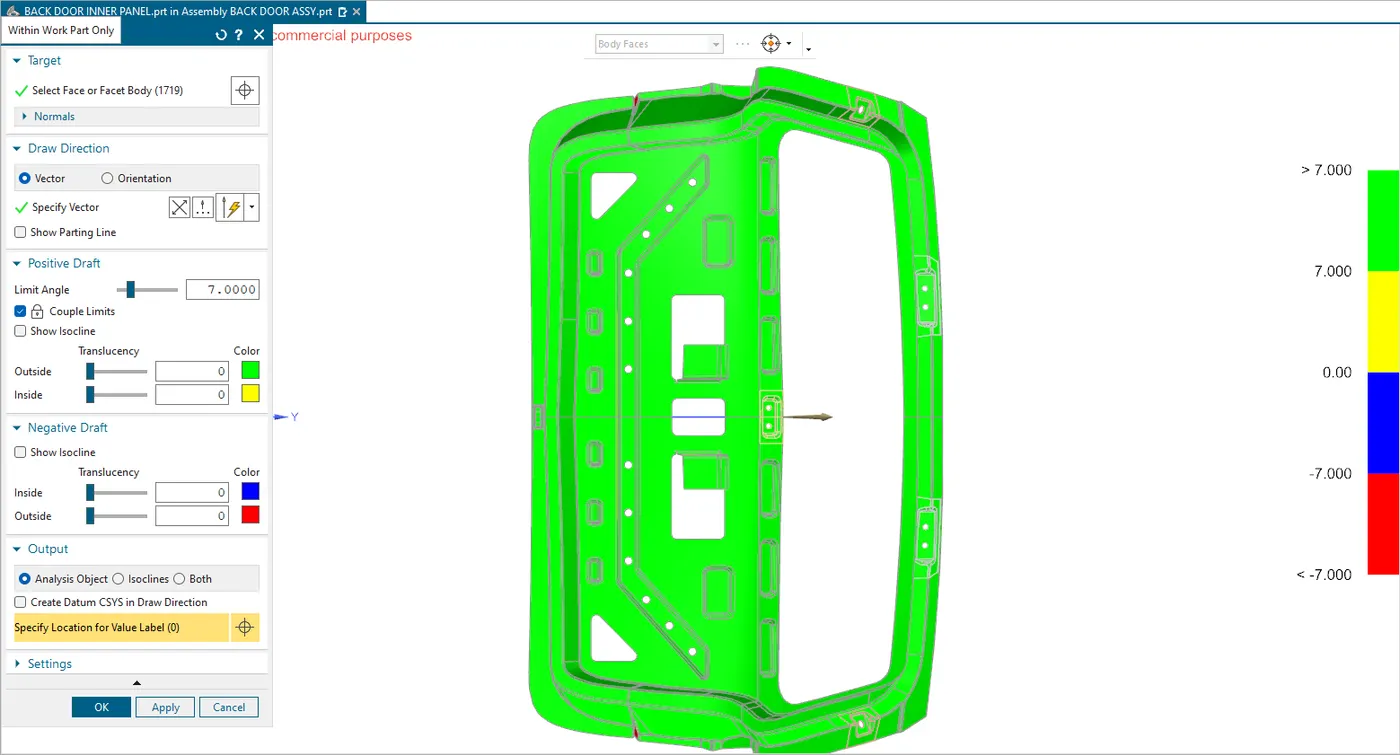
- Finishing off with designing, draft anaysis for inner panel is conducted with a clearance angle of 7degrees and all the steps including the mountings had got well cleared with it.
- The inner and outer panel panel are joined through spot welding on edges with reinforcements and mastics on other regions of body.
IMAGES
- OUTER PANEL WITH HEMM
- INNER PANEL
- ISOMETRIC VIEW
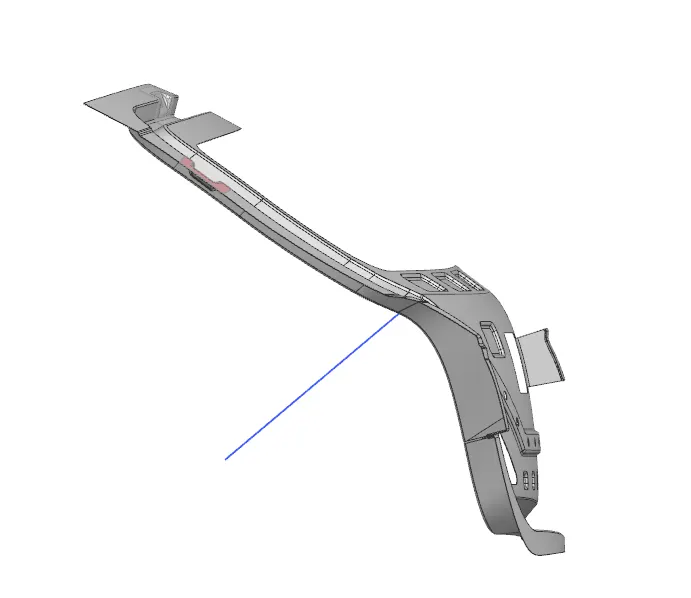
- SIDE VIEW
- INNER PANEL WITH REINFORCEMENTS
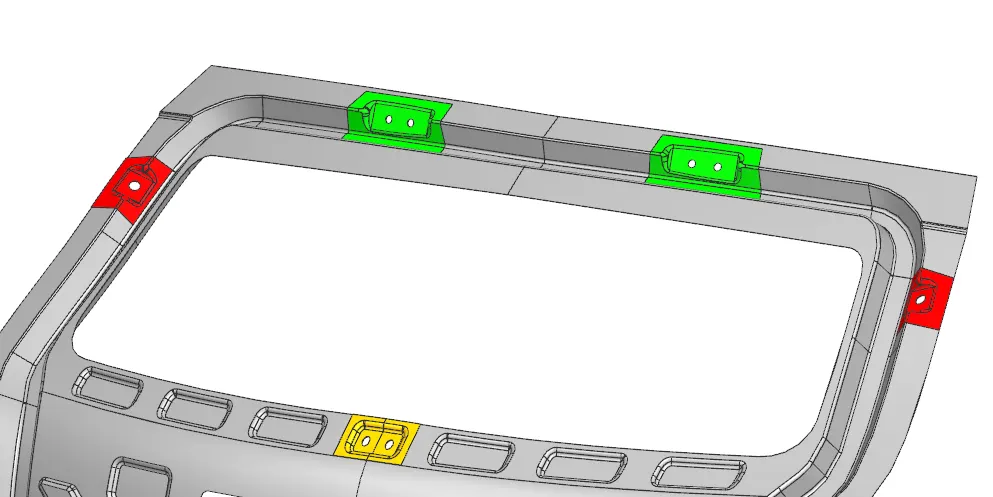
- MERGER OF INNER PANEL WITH OUTER PANEL LOWER AND UPPER FRAME
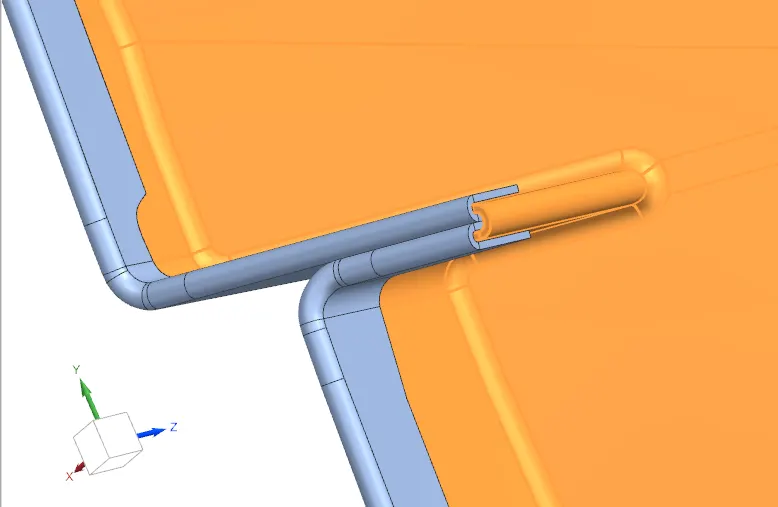
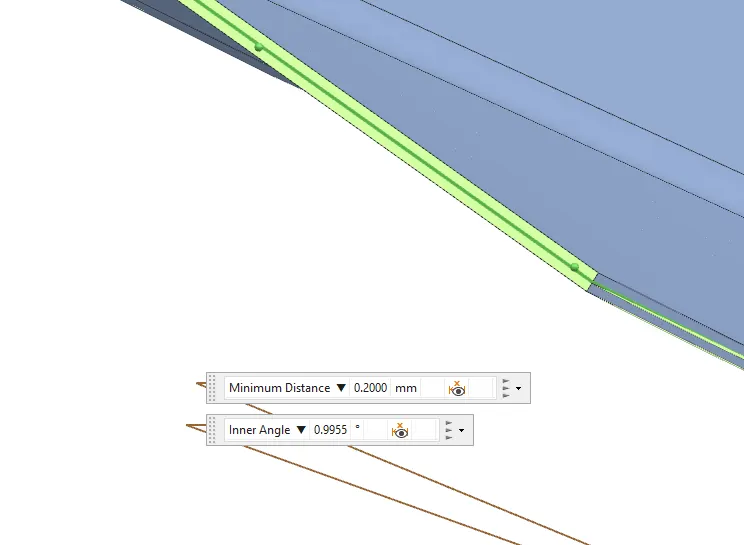
- CLEARANCES GIVEN IN OUTER PANEL HEMMED REGION
- 1/3
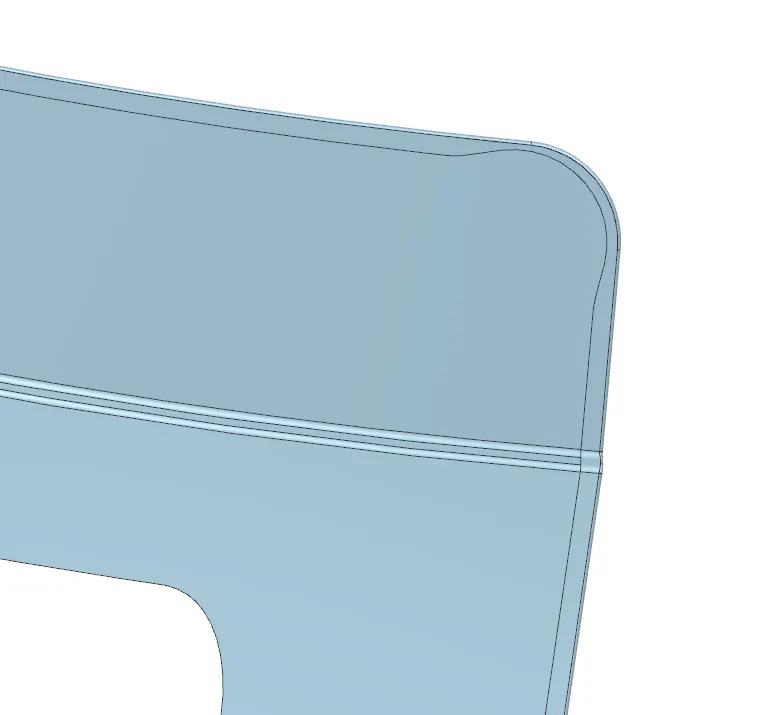
- 2/3
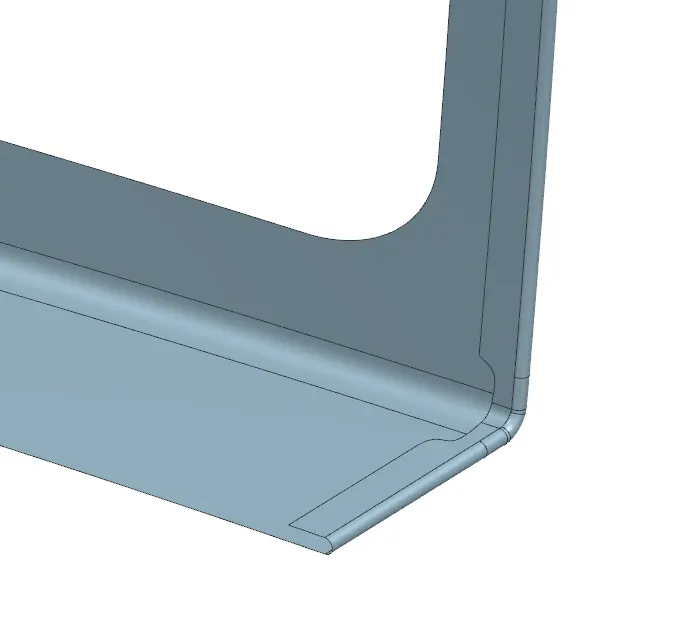
- 3/3
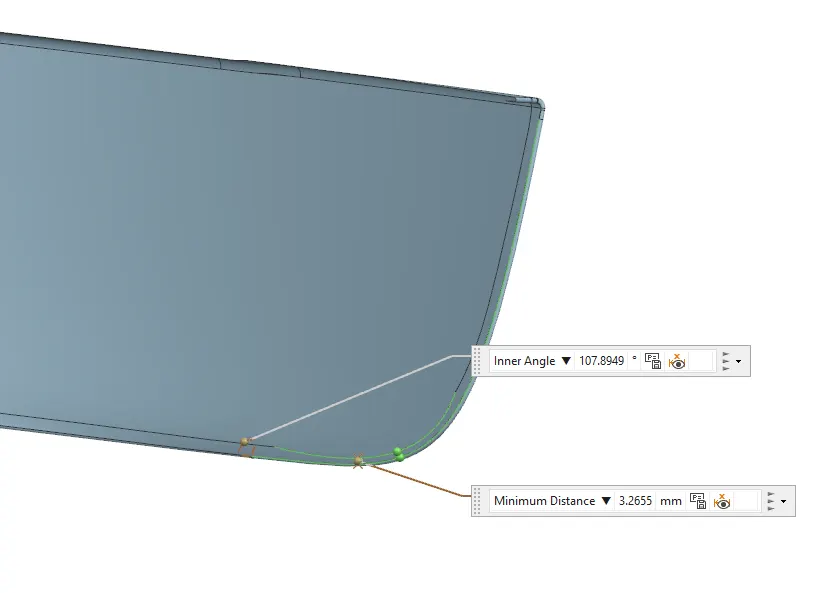
- CLEARANCE FOR HEMM GLUE
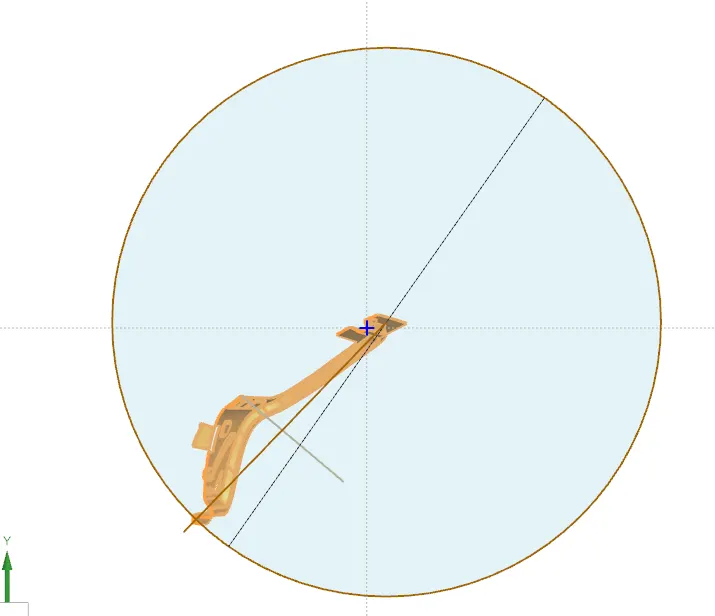
- TRAJECTORY FOR LATCH / STRIKER TO MOUNT
- DRAFT ANALYSIS OF INNER PANEL
NOTE: -
- All the parts are properly designed, followed design considerations and master sections.
- Assembly has created with essential flanges and reinforcements.
- 0.75mm thickness is given to the parts mentioned along with edge fillets above 3mm + thickness of the component.
- All the sufficient images are provided along with the report, if any issue arises, i had attatched a file along with the assembly file in zip file the below uploading area.
- Proper tree structure is maintained.
FILE: - https://drive.google.com/drive/folders/1jdv-LHCn_32sNW1J_PC1QEW8AxMEvnyo?usp=sharing
CONCLUSION
With reference to to given surface i had designed the Back Door with respect to design requirements by providing sufficient reinforcements, embosses, and curvatures which is primarily good for manufacturing as it clears draft analysis.