Design of backdoor
Title
CAR BACKDOORVDESIGN USING NX CAD
Objective
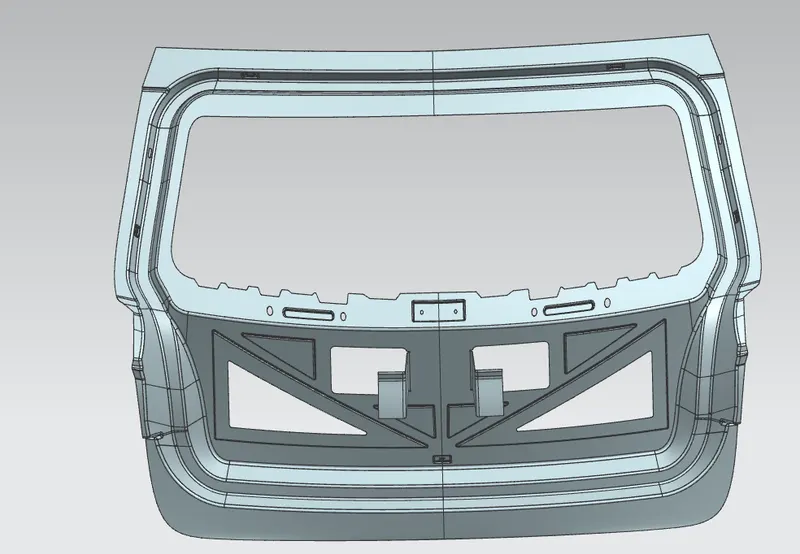
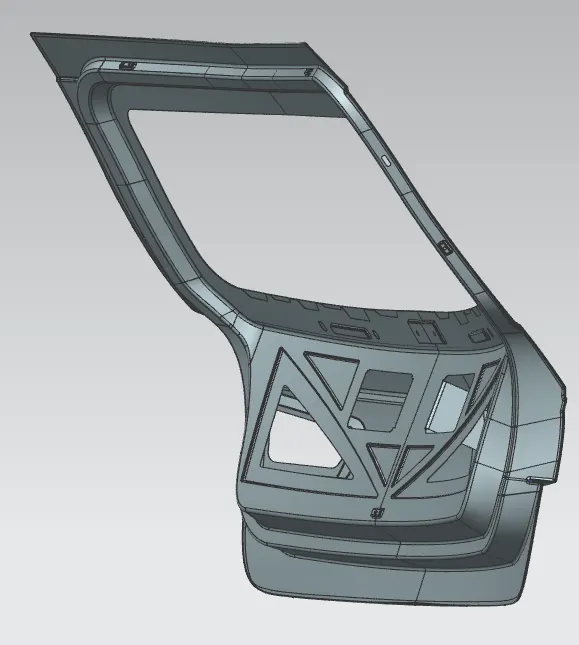
- From the given styling surface , develop back door inner panel and hemm with outer panel using appropriate design methodologies.
- Provide necessary reinforcements and emboss definitions.
Software used- nx cad
NX, formerly known as "unigraphics", is an advanced high-end CAD/CAM/CAE, which has been owned since 2007 by Siemens PLM Software. In 2000, Unigraphics purchased SDRC I-DEAS and began an effort to integrate aspects of both software packages into a single product which became Unigraphics NX or NX.
Brief Introduction
- In this project I have deigned car backdoor given from the styling surface by using appropriate methodologies.
- Upper end of backdoor is hinged with the roof rear rail and similar to hood , backdoor is also a swinging commodity in a car .
- Backdoor consists of outer panel upper portion, outer panel lower portion , inner panel, hinge reinforcement, gas stay reinforcement , wiper motor reinforcement, latch and striker reinforcement.
- Backdoor has to be designed by keeping in mind the space for luggage compartment as well as all the necessary reinforcement without comprising the strength of component.
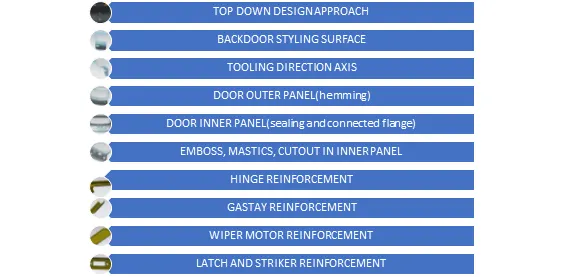
Design methodology
Material preference
- Inner panel is made out of steel which is manufactured through deep drawn process but here reinforcement are essential to compensate the strength.
- Aluminium panel now days are used in most of the company for casting outer panel due to less weight and same strength that was in steel.
- Although with added advantage of aluminium , steel drawn parts are used which is much cheaper than aluminium.
- Deep drawing is a sheet metal forming process in which a sheet metal blank is radially drawn into a forming die by the mechanical action of a punch. ... The process is considered "deep" drawing when the depth of the drawn part exceeds its diameter.
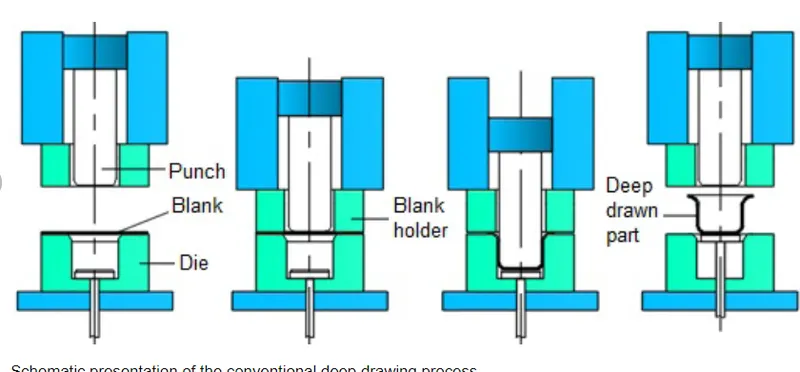
Major parts of backdoor
we will see in brief abou every part i designed in a backdoor
Outer panel
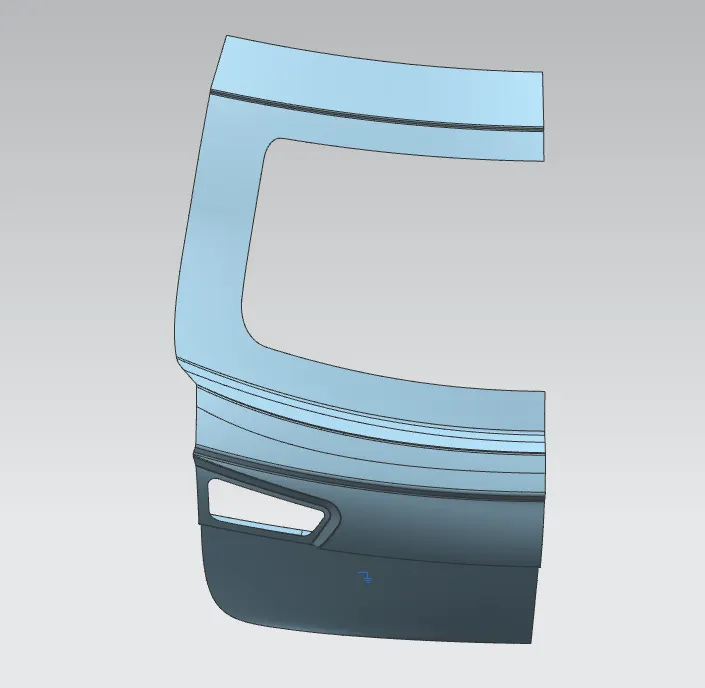
- The outer panel is given from the styling surface for designing other parts of back door.
- It is source to design other parts of backdoor basically the inner panel.
- Outer panel is a cover of a backdoor and due to the outermost part it deals with the aesthetics of car.
- The thickness I have taken while thickening the outer panel is 0.75 mm in downward direction.
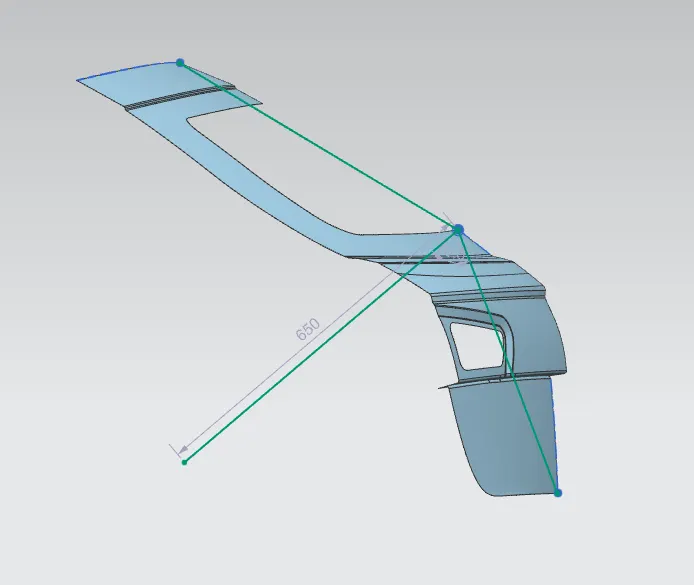
Tooling direction
- Based on style surface the foremost step is definition of tooling direction for deep drawn steel processes and all downstream metal operations are based on tooling axis.
- We will select the tooling axis as a vector in further designing.
Inner panel
- Inner panel function is to provide strengthen to backdoor.
- I have given 0.75 mm thickness in upward direction to inner panel.
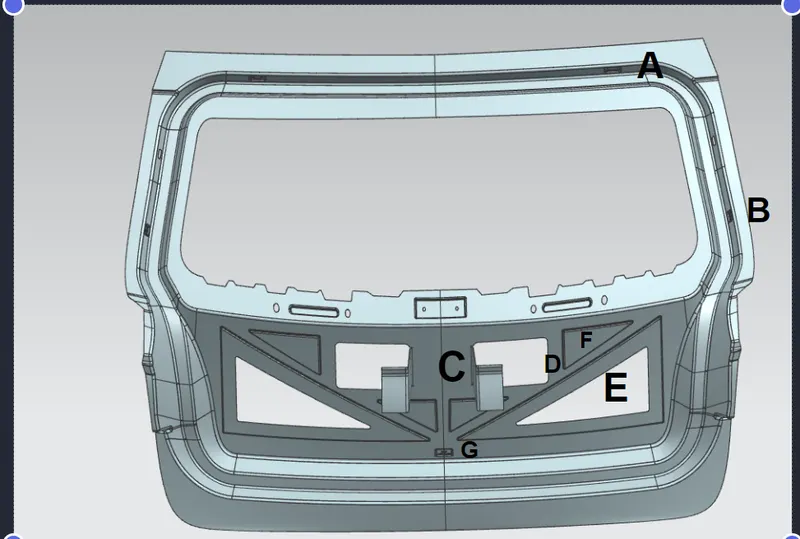
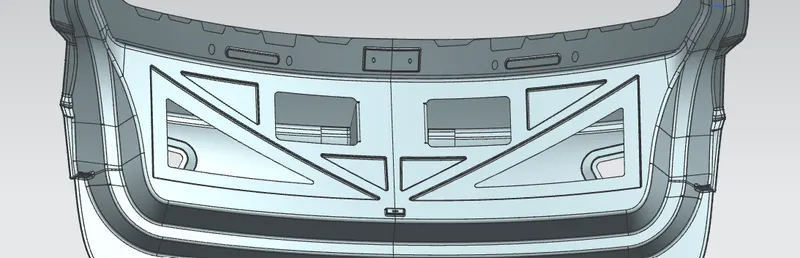
- A-hinge emboss
- B-gas stay emboss
- C-flange connecting the outer and inner pannel
- D-acess hole for wiper motor
- E- acess hole for lamp and hole for compensate COG
- F-emboss
- G-latch mounting hole
- In inner panel all the reinforcement and embosses are provided to justify the function.
- Embosses are done to provide strength to the inner panel against stress due to frequent opening and slamming and also the force acts in perpendicular to the panel so the embosses should be at upward direction of inner panel facing towards the outer panel so that any deformation or stress first occurs on the embosses and the stress should pass out from a given direction easily.
- The inner panel accommodates the embosses , latch and necessary cut outs.
Hemming
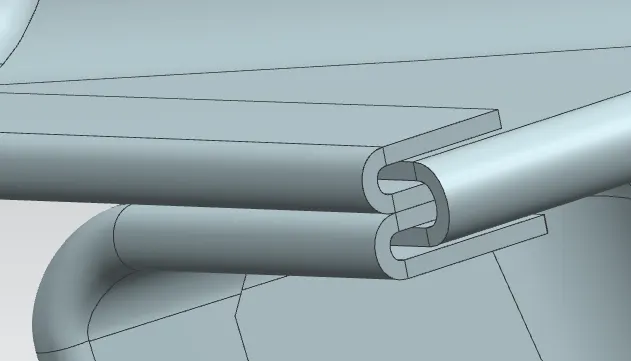
- Hemming is a process in which a sheet metal edge is rolled over onto itself.
- It actually is a joining process in which outer and inner panel are joined together using hemming operation .
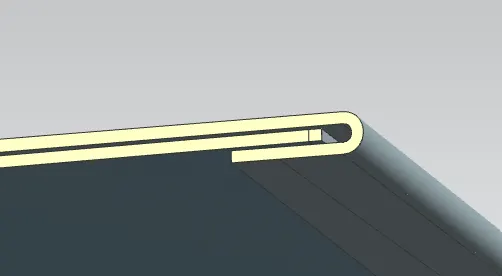
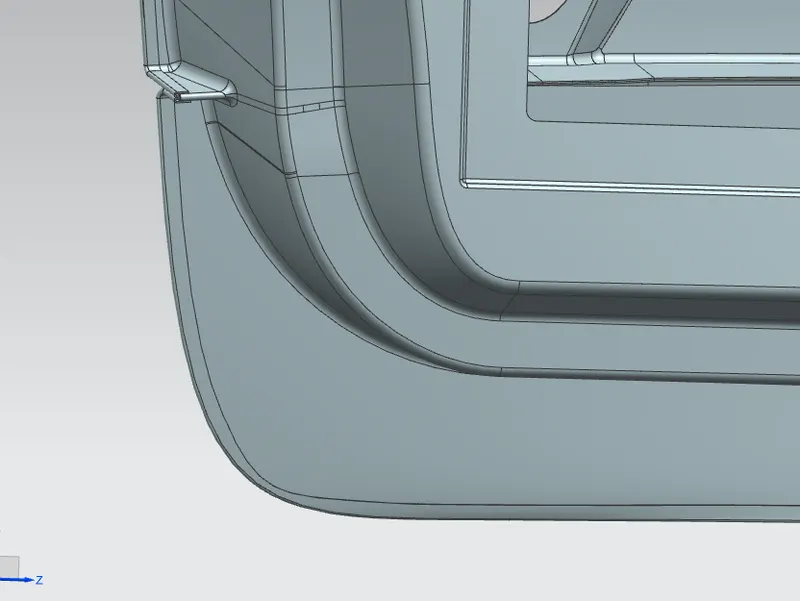
- There is actual no gap between panel but 1.5-2 mm clearance at the edge of inner panel.
- Hemming is more preferred on a outer surface which are easily viewed by anyone which provide an aesthetic finishing so hemming is more preferred than spot welding on visible surface.
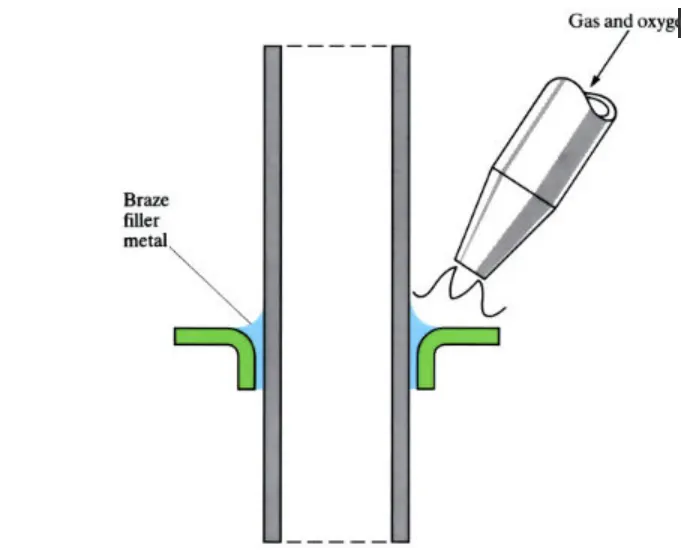
- The portion of inner panel and outer panel along the wind shield gas is joined using brazing.
- Brazing is a joining process traditionally applied to metals (but also to ceramics) in which molten filler metal (the braze alloy) flows into the joint.
Mastic sealant
- Mastics sealant are hard rubber material used to improve the strength .
- They act as paste for joining inner and outer panel with a thickness of 5 mm.
- Like hemming mastics are also preferred over spot welding just for car aesthetics , especially on the outer most surface .
REINFORCEMENT
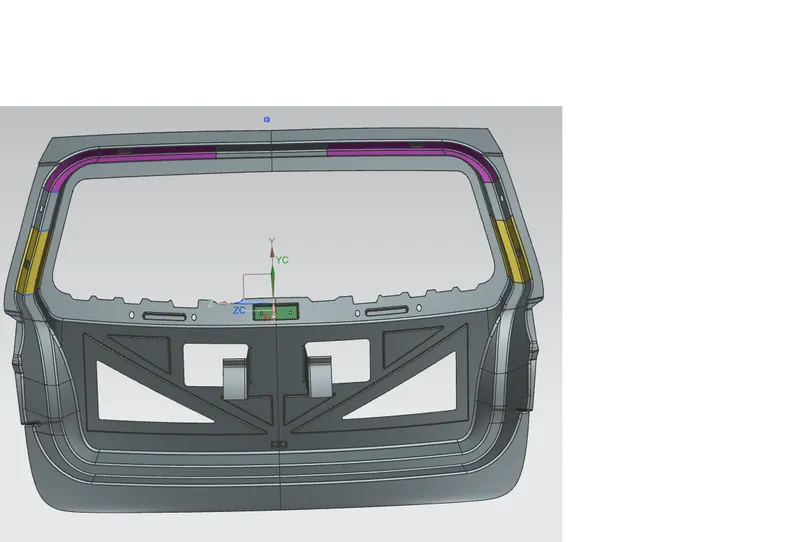
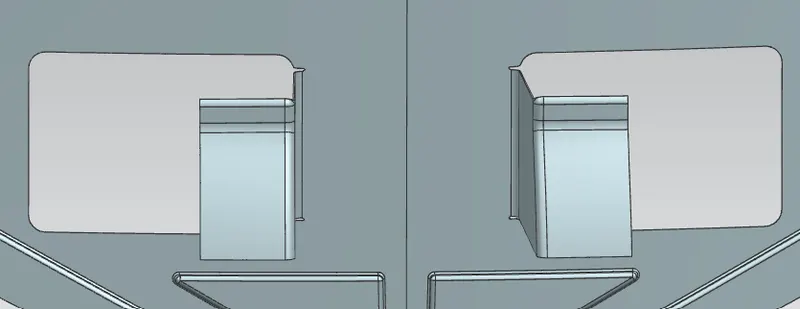
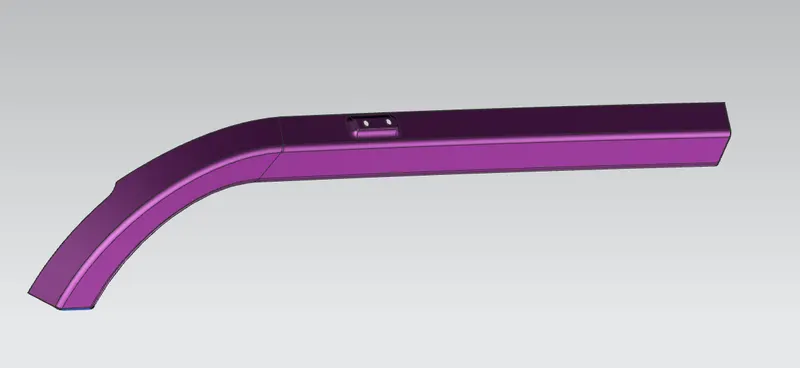
- HINGE REINFORCEMENT(purple colour)
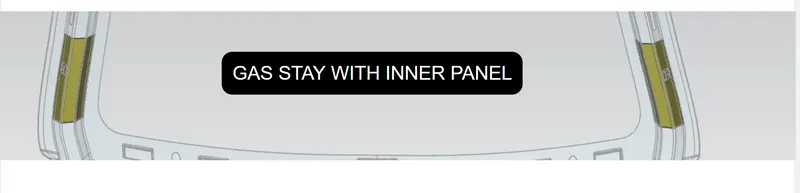
- GAS STAY REINFORCEMENT(yellow colour)
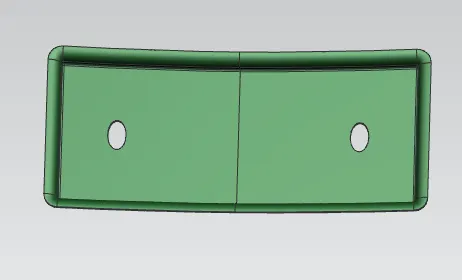
- WIPER MOTOR REINFORCEMENT(green colour)
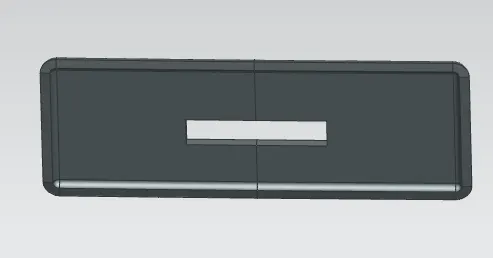
- LATCH AND STRIKER REINFORCEMENT
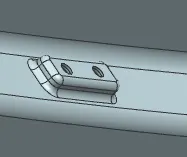
Hinge reinforcement
- This is done on inner panel of backdoor .
- Hinge are generally done for opening and closing of backdoor.
- Hinge reinforcement are done to add strength in the region were load act while opening and closing of backdoor.
- The positions of the hinges are determined by the mid point of axis of the hinge called hinge axis point, which should be aligned with the latch and striker through the trajectory of the backdoor opening and closing. If the striker is exactly perpendicular to the trajectory , then hinges can be fixed accordingly on the inner panel.
- Embossing Is done at the hinge placements to compensate for the functional holes punched.
Gas stay reinforcement
- It is used for supporting the backdoor in its open position.
- No manual power is required its an automatic process.
- It is a gas filled cylinders with sliding shaft which are fixed at both the ends of hood inner panel and engine chassis with stud balls.
- To open backdoor only initial force needs to be applied after specified angle. It actuate to push the hood to its maximum open angle and stay upwright.
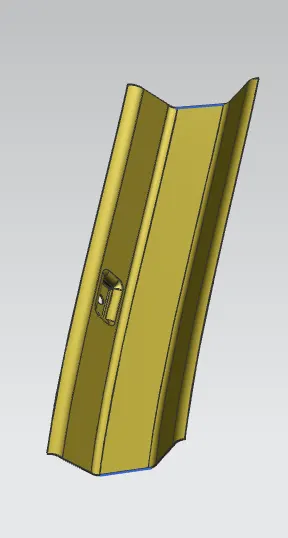
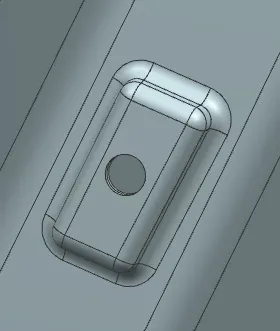
- In the gas stay have designed I have provided embosses on the mounting area to compensate for the functional holes punched as shown in fig below.
Wiper motor reinforcement
- It is created to mount the wiper motor assembly at inner panel for backdoor.
Latch and striker reinforcement
- The latch and striker forms the locking mechanism of the backdoor with the car.
- Due to regular opening and closing of backdoor there is stress developed on the latch and striker area so to compensate reinforcement are added in area.
LOAD CASE ANALYSIS
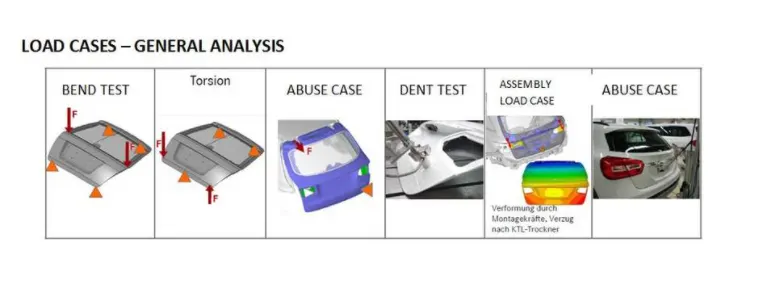
The following test are done the positioning of various reinforcement is calculated.
- Bend test
- Torsion test
- Abuse test
- Dent test assembly load cases
- Endurance test
screenshot of model and draft analysis
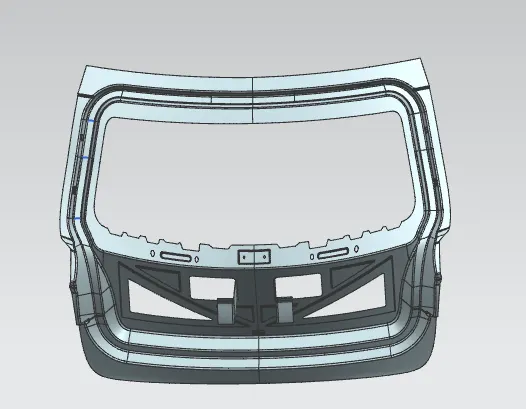
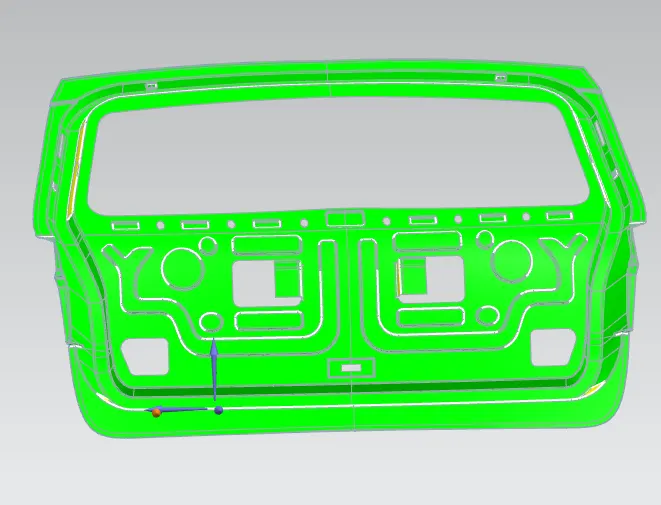
- draft angle allows to detect whether the parts which are designed can be easily removed or not . for that positive draft angle if there is any region other thn green then those region should be manufactured separately.
CONCLUSION
Backdoor was designed and developed from the given styling surface with necessary reinforcement, emboss, cut out and hemming.