Design of backdoor
BACK DOOR ASSEMBLY (by: Pramod Mamillapalli)
Purpose:
In this project we are going to design the car back door assembly including inner panel, outer lower panel, outer upper panel, reinforcements. Also we are going to do draft anlysis for that whether it is going to satisfy the tooling or not so lets get started.
Introduction:
The "back door" is not a common term used in the automotive industry. However, based on the context you provided, it seems that you are referring to the trunk door of a car.
The trunk door, also known as the trunk lid or boot lid (in some regions), is the rear door of a car that provides access to the trunk or cargo area. It is typically hinged at the top or bottom and can be opened and closed to store and retrieve items from the trunk.
The trunk door plays an important role in the functionality and design of a car. It allows for convenient loading and unloading of luggage, groceries, or other belongings. It also helps secure the items stored in the trunk, providing protection and privacy.
In many cars, the trunk door can be opened using a key, a remote key fob, or an interior button. Some modern vehicles even have hands-free or automatic trunk opening features, where you can activate the trunk door by waving your foot under the rear bumper or using a sensor.
Overall, the trunk door is an essential component of a car, providing storage space and accessibility for transporting various items.
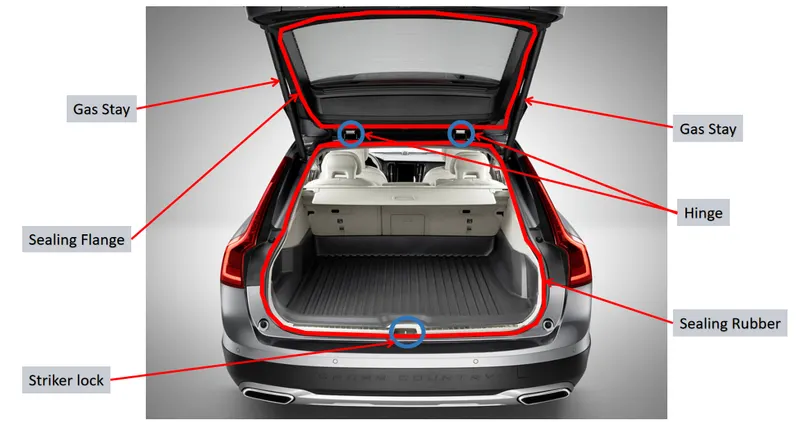
Types of Trunks:
There are several types of trunk doors or rear openings that can be found in different types of vehicles. Here are some common types:
-
Conventional Trunk: This is the most common type of trunk door, hinged at the top and opening upward. It provides full access to the trunk area.
-
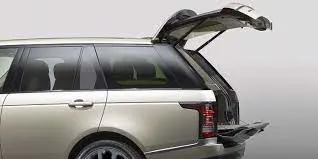
Liftgate: A liftgate is a one-piece door that extends from the roofline to the rear bumper. It can be opened by lifting it upward, similar to a conventional trunk. Liftgates are commonly found in SUVs, crossovers, and hatchbacks.
-
Hatchback: In hatchback vehicles, the rear opening includes both the rear window and the trunk lid. The trunk area is combined with the passenger compartment, allowing for versatile storage options. The hatchback door typically opens upward, providing easy access to the cargo area.
-
Tailgate: A tailgate is a rear opening found in pickup trucks and some SUVs. It is hinged at the bottom and opens downward, providing access to the cargo bed or storage area at the rear of the vehicle.
-
Split Trunk: Some larger luxury sedans or station wagons may feature a split trunk door, where the trunk lid is divided into two sections. Each section can be opened independently, allowing for easier access to specific areas of the trunk.
-
Power or Automatic Trunk: Many modern vehicles offer power-operated or automatic trunk doors. These can be opened and closed with the push of a button, using a key fob, or through a hands-free sensor or foot-activated mechanism.
These are just a few examples of the different types of trunk doors found in various vehicles. The design and functionality of the trunk door depend on the specific car model and manufacturer, and they are often tailored to meet the needs of different vehicle types and market segments.



Advantages:
Trunk doors in cars offer several advantages that enhance convenience, functionality, and safety. Here are some key advantages of having a trunk door:
-
Storage Space: Trunk doors provide a designated storage area separate from the passenger compartment. This allows you to safely and securely transport luggage, groceries, equipment, and other items without cluttering the interior of the car. It helps keep the passenger area organized and maximizes available space for occupants.
-
Privacy and Security: A trunk door provides a secure enclosure for items stored in the trunk. It helps prevent theft or unauthorized access, as the trunk can be locked separately from the passenger doors. This is particularly useful when parking in public areas or leaving the vehicle unattended.
-
Versatility: Trunk doors offer versatility in terms of loading and unloading cargo. Depending on the type of trunk door (conventional trunk, liftgate, hatchback, etc.), you can easily accommodate items of various sizes and shapes. Some trunk doors also have adjustable or removable shelves or compartments, allowing for flexible storage configurations.
-
Easy Access: Trunk doors provide convenient access to the trunk or cargo area. You can quickly load or unload items without the need to enter the vehicle or disturb passengers. This is especially useful when carrying heavy or bulky items.
-
Aesthetic Appeal: Trunk doors contribute to the overall design and aesthetics of a car. They are often integrated into the vehicle's styling, adding to its visual appeal. Car manufacturers pay attention to the design of trunk doors to ensure they blend seamlessly with the rest of the vehicle's exterior.
-
Safety Features: Trunk doors are equipped with safety features to protect users. These may include automatic locking mechanisms, remote trunk release, interior trunk release handles (to open from inside in case of an emergency), and sensors that prevent the trunk from closing if an obstruction is detected.
These advantages make trunk doors an essential component of cars, providing practicality, security, and convenience for both everyday use and travel.
Disadvantages:
While trunk doors offer numerous advantages, there are also a few potential disadvantages associated with them. Here are some disadvantages of trunk doors in cars:
-
Limited Accessibility: In vehicles with a trunk door, accessing items stored in the trunk may require opening and closing the trunk door. This can be inconvenient in situations where quick access to the trunk is needed, such as when retrieving items on the go or in tight parking spaces.
-
Space Constraints: The design of the trunk door and the trunk compartment itself can impose space constraints. Trunk doors typically have a fixed opening size, which may limit the size and shape of items that can be loaded into the trunk. Bulky or oversized items may not fit easily, requiring alternative transportation methods or compromising passenger comfort.
-
Limited Cargo Capacity: Compared to other cargo-carrying options like pickup trucks or larger SUVs, trunk doors in cars generally have a more limited cargo capacity. While they are sufficient for everyday storage needs, they may not be suitable for transporting large or numerous items.
-
Inflexibility for Passenger Accommodation: The presence of a trunk door can limit the flexibility for passenger accommodation. In vehicles with a fixed trunk compartment, it may not be possible to expand the passenger space by folding down rear seats or reconfiguring the interior layout to accommodate larger or longer items.
-
Reduced Rear Visibility: Depending on the design of the car and the size of the trunk door, it can partially obstruct the rearward visibility for the driver. This can make parking and maneuvering more challenging, necessitating the use of rearview cameras or sensors to compensate for the limited visibility.
-
Added Weight and Complexity: Trunk doors, especially power-operated ones, add weight and complexity to the vehicle. This can impact fuel efficiency and may require additional maintenance or repair costs over time.
It's important to note that the specific disadvantages can vary depending on the type of trunk door and the vehicle in question. Manufacturers strive to mitigate these drawbacks by designing trunk doors that balance functionality, convenience, and safety.
Tool used to design back door:
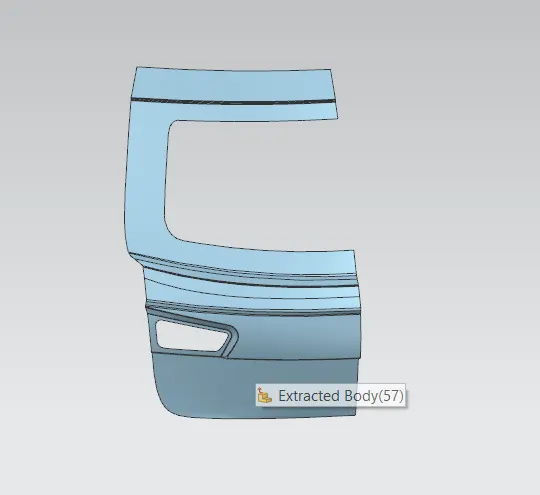
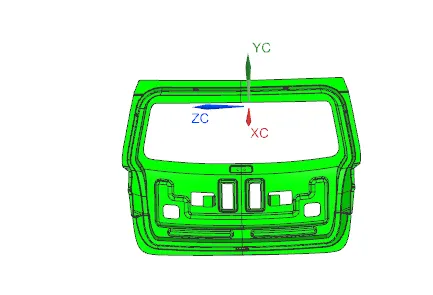
We use NX-CAD to design the back door with the help of given reference of outer most panelsas shown below.
Introduction to NX-CAD:

NX CAD, commonly referred to as Siemens NX or simply NX, is a powerful computer-aided design (CAD) software developed by Siemens Digital Industries Software. It is widely used in various industries, including automotive, aerospace, machinery, and consumer products, for product design, engineering, and manufacturing.
NX CAD offers a comprehensive set of tools and functionalities for creating, editing, and analyzing 3D models. It enables engineers and designers to digitally create and simulate complex parts, assemblies, and systems before physical prototypes are built. Some key features and capabilities of NX CAD include:
-
Parametric Modeling: NX CAD supports parametric modeling, allowing users to create and modify 3D models by defining and controlling parameters such as dimensions, constraints, and relationships. This helps maintain design intent and facilitates design changes and iterations.
-
Assembly Design: The software provides tools for assembling components and creating complex assemblies. Users can define assembly relationships, check for interferences, and simulate the motion and behavior of assemblies.
-
Surfacing and Freeform Design: NX CAD includes robust surfacing capabilities for creating smooth, organic shapes and complex geometry. It allows designers to create aesthetic surfaces and freeform shapes required in industries like automotive and industrial design.
-
Drafting and Documentation: NX CAD offers tools for generating detailed engineering drawings and documentation from 3D models. Users can create dimensioned views, annotations, and other documentation required for manufacturing and communication purposes.
-
Simulation and Analysis: The software integrates simulation and analysis capabilities, allowing users to perform structural, thermal, and flow analysis on their designs. This helps identify potential issues, optimize designs, and ensure product performance and reliability.
-
Integration with Manufacturing Processes: NX CAD supports integration with computer-aided manufacturing (CAM) software, enabling seamless transfer of design data for downstream processes such as toolpath generation and CNC machining.
-
Collaboration and Data Management: NX CAD provides collaboration tools and data management capabilities to facilitate teamwork, version control, and secure data sharing among design teams and stakeholders.
NX CAD is known for its advanced capabilities, scalability, and industry-specific solutions. It is used by large corporations as well as small and medium-sized enterprises for designing and developing complex products across a wide range of industries.
Why NX-CAD:
NX CAD is a powerful software tool that offers numerous advantages for designing in various industries, including automotive design. Here are some key reasons why NX CAD is beneficial for designing:
-
Comprehensive Toolset: NX CAD provides a comprehensive set of tools and features that cover all aspects of the design process. From sketching and 3D modeling to simulation and analysis, NX CAD offers a wide range of capabilities that enable designers to create complex and detailed designs efficiently.
-
Parametric Modeling: NX CAD supports parametric modeling, which allows designers to establish relationships between different design elements. This parametric approach enables easy modification and updates to the design, ensuring design intent is maintained throughout the process. It enhances design flexibility and facilitates design iterations.
-
Integration with Other Systems: NX CAD integrates seamlessly with other software systems, such as computer-aided manufacturing (CAM) and product lifecycle management (PLM) tools. This integration streamlines data exchange, enhances collaboration, and enables a smooth transition from design to manufacturing and beyond.
-
Advanced Simulation Capabilities: NX CAD incorporates powerful simulation and analysis tools. Designers can perform structural, thermal, and fluid flow analyses to validate and optimize their designs. This enables the identification of potential issues and the optimization of designs for performance, reliability, and safety.
-
Collaboration and Communication: NX CAD facilitates effective collaboration among team members. It provides tools for sharing designs, collaborating on projects, and incorporating feedback from stakeholders. This improves communication, accelerates decision-making, and ensures that all parties are aligned on the design objectives.
-
Manufacturing Considerations: NX CAD includes specific features and tools that consider manufacturing processes, such as sheet metal design and mold design. This helps designers create designs that are optimized for manufacturing, reducing rework, improving efficiency, and ensuring that the designs can be translated into physical products accurately.
-
Time and Cost Savings: By leveraging the capabilities of NX CAD, designers can streamline the design process, reduce errors, and optimize designs. This ultimately leads to time and cost savings by minimizing rework, improving product quality, and shortening the overall design cycle.
In conclusion, NX CAD is a comprehensive and powerful design tool that offers advanced features, integration capabilities, and simulation tools. It enables efficient and optimized design processes, facilitates collaboration, and helps designers create high-quality designs that meet industry standards and manufacturing requirements.
Different parts in back door:
The back door, or trunk door, of a car typically consists of various parts that contribute to its functionality, safety, and aesthetics. Here are some common parts found in the back door of a car:
-
Outer Panel: The outer panel is the visible exterior surface of the trunk door. It is usually made of sheet metal or composite materials and provides the shape and structure of the door.
-
Inner Panel: The inner panel is the inner surface of the trunk door, opposite the outer panel. It helps provide rigidity and support to the door structure. The inner panel may have reinforcement ribs, mounting points, or access holes for components.
-
Hinges: Hinges are the mechanisms that allow the trunk door to pivot and open or close. They are typically attached to the body of the car and the trunk door itself, enabling smooth movement and providing stability when the door is open.
-
Latch and Lock Mechanism: The latch and lock mechanism secures the trunk door in the closed position and prevents it from opening unintentionally. It consists of a latch mechanism that engages with a striker plate on the car body and a lock mechanism that can be operated with a key or a remote fob.
-
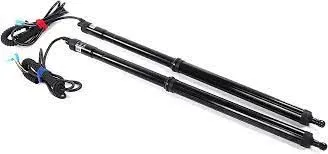
Gas Struts or Lift Supports: Gas struts, also known as lift supports, assist in opening and holding the trunk door in the open position. They are typically mounted between the trunk door and the car body and use compressed gas to provide the necessary lifting force.
-
Interior Trim: The interior trim of the trunk door includes various components such as panels, carpeting, or fabric coverings that enhance the aesthetics and provide a finished appearance to the inside of the door.
-
Wiring and Electrical Components: Depending on the vehicle's features, the trunk door may contain wiring harnesses, connectors, and electrical components. These components may be related to lighting, such as trunk lights or license plate lights, or features like power-operated trunk opening mechanisms or rearview cameras.
-
Accessories: Various accessories can be found in the trunk door, such as rear windshield wipers, spoilers, emblems, badges, or rear defoggers. These components add functionality or enhance the appearance of the vehicle.
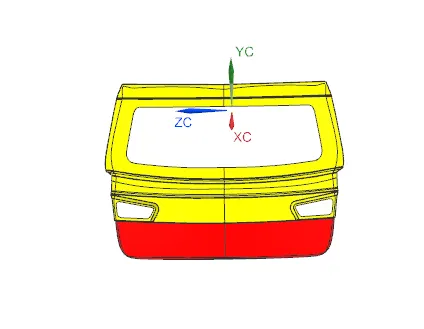
These are some of the common parts typically found in the back door or trunk door of a car. The specific components and design can vary depending on the car model, manufacturer, and additional features. Refer below images.

Design procedure:
Designing a trunk door for a car from scratch in NX CAD involves several steps. Here's a general outline of the process:
-
Define Design Requirements: Start by understanding the specific requirements for the trunk door. Consider factors such as size, shape, desired functionality, weight, and aesthetics. Determine any regulatory or safety requirements that need to be considered during the design process.
-
Create a New Part File: Open a new part file in NX CAD to begin the design. Set the appropriate units and coordinate system based on your preferences and design standards.
-
Sketch the Profile: Use the sketching tools in NX CAD to create a 2D profile of the trunk door. This profile will define the outer shape of the door when viewed from above or in cross-section. Ensure that the sketch aligns with the design requirements and dimensions.
-
Extrude the Profile: Extrude the 2D sketch to create a 3D solid representing the initial shape of the trunk door. Specify the desired thickness and any necessary draft angles or other geometric features. This extrusion will form the basic structure of the trunk door.
-
Add Features: Use the available tools in NX CAD to add features to the trunk door design. This may include creating flanges, ribs, cutouts, and curves to meet the functional and aesthetic requirements. Consider factors such as reinforcement, mounting points, and integration with other vehicle components.
-
Validate Design: Perform analysis and simulations, such as finite element analysis (FEA), to validate the structural integrity and performance of the trunk door design. Ensure that it can withstand the expected loads and environmental conditions.
-
Refine and Iterate: Review the design, gather feedback, and make any necessary refinements or iterations. This may involve adjusting dimensions, modifying features, or addressing any issues identified during the validation process.
-
Add Additional Details: Include any additional details required for the trunk door design, such as handles, hinges, latches, seals, or trim elements. Pay attention to functionality, ergonomics, and aesthetics while incorporating these features.
-
Document and Drafting: Generate detailed engineering drawings and documentation for the trunk door design. Include dimensions, annotations, tolerances, and any other necessary information to communicate the design intent accurately.
-
Review and Finalize: Conduct a thorough review of the trunk door design, ensuring that it meets all the design requirements, standards, and regulations. Make any final adjustments or modifications based on the feedback received.
Remember that designing a trunk door involves a combination of creativity, engineering principles, and considerations for manufacturing and assembly processes. It's essential to consult with experts in the field and follow relevant industry standards and best practices throughout the design process.
Uses of reinforcements:
Reinforcements play a crucial role in ensuring the structural integrity, safety, and performance of a car's rear door. Here are some common uses of reinforcements in car rear doors:
-
Crash Protection: Rear doors are subject to various impacts and collisions, such as in rear-end collisions. Reinforcements are strategically placed within the rear door to absorb and distribute impact forces, reducing the risk of intrusion into the passenger compartment and providing protection to the occupants.
-
Rigidity and Stiffness: Reinforcements are used to enhance the rigidity and stiffness of the rear door. This helps maintain the overall structural integrity of the vehicle and improves resistance to torsion, bending, and vibrations.
-
Side Impact Protection: In the event of a side impact, reinforcements in the rear door help protect occupants by absorbing and dissipating the energy from the impact. They can also help prevent intrusion from the striking vehicle, reducing the risk of injury to occupants.
-
Mounting Points: Reinforcements are often incorporated into the rear door to provide secure mounting points for various components. This includes hinges, latches, handles, and other hardware that facilitate the proper operation and functionality of the door.
-
Noise and Vibration Damping: Reinforcements can contribute to reducing noise and vibrations transmitted into the passenger compartment. They help dampen vibrations and provide a more comfortable and quieter driving experience.
-
Structural Integration: Rear doors need to be seamlessly integrated into the overall structure of the vehicle to ensure optimal performance and safety. Reinforcements help connect the rear door to the vehicle's body structure, enhancing the overall structural integrity and providing support to adjacent components.
-
Weight Optimization: While reinforcements add weight to the rear door, they are designed to provide the necessary strength and protection while minimizing excessive weight gain. Modern engineering techniques and materials are used to balance strength and weight considerations, ensuring the rear door remains lightweight yet robust.
These uses of reinforcements highlight their importance in maintaining the safety, durability, and performance of car rear doors. They contribute to the overall structural design and impact resistance of the vehicle, prioritizing occupant safety in various scenarios.
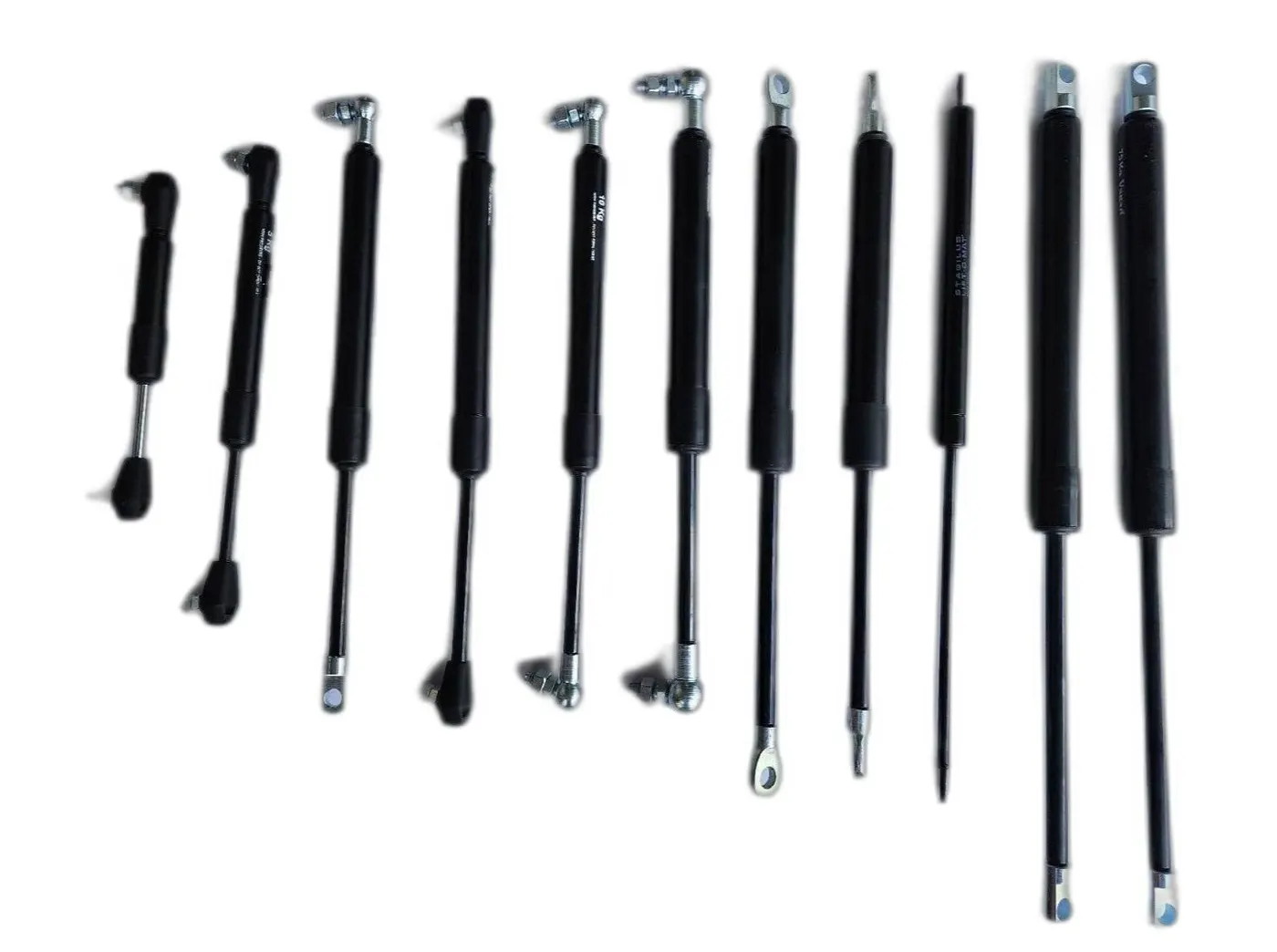
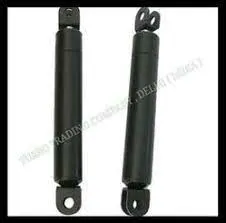
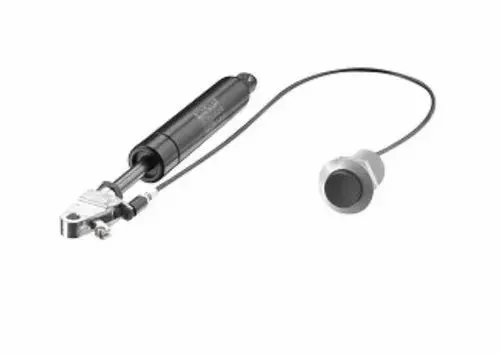
Types of Gas stays:
Gas stays, also known as gas springs or gas struts, are used in trunk doors of cars to assist in their opening and to hold them in the open position. While there are variations in design and specifications among different manufacturers, the following are common types of gas stays used in car trunk doors:
-
Compression Gas Stays: Compression gas stays are the most common type of gas stays used in trunk doors. They consist of a pressurized cylinder with a piston rod. When the trunk door is opened, the gas stay extends, providing support and keeping the door open. When closing the trunk, the gas stay compresses, helping to lower the door smoothly.
-
Tension Gas Stays: Tension gas stays operate in the opposite manner of compression gas stays. They are designed to pull or tension the trunk door when it is opened. Tension gas stays are less commonly used in trunk doors, but they can provide unique advantages in specific applications.
-
Lockable Gas Stays: Lockable gas stays have a locking mechanism that allows the trunk door to be held securely in different positions. When the desired position is reached, the gas stay can be engaged to fix the length and provide stability at that specific angle. Lockable gas stays are beneficial when the trunk door needs to be partially open or held at a specific angle for easier loading or unloading.
-
Adjustable Gas Stays: Adjustable gas stays provide flexibility in terms of their length and force. They typically have a threaded body that allows for easy adjustment to alter the extended or compressed length of the gas stay. This adjustability is useful in accommodating variations in trunk door weight or achieving the desired operating characteristics.
-
Soft-Close Gas Stays: Soft-close gas stays, also known as dampened gas stays, offer a controlled and slow closing motion for the trunk door. They contain internal valves that regulate the flow of gas, gradually reducing the speed of the closing action and preventing the door from slamming shut. Soft-close gas stays provide a smooth and gentle closing experience.
These are the common types of gas stays used in car trunk doors. The specific type used may vary depending on the vehicle model, manufacturer preferences, and desired functionality for the trunk door.

-
Sketching Tools: NX CAD provides comprehensive sketching tools that allow users to create 2D profiles of the back door. These tools include lines, arcs, circles, splines, and more. Sketches serve as the basis for creating the 3D geometry of the door.
-
Feature-Based Modeling: Feature-based modeling tools in NX CAD enable the creation of complex 3D geometry by combining and manipulating basic geometric features. These features include extrusions, revolves, sweeps, fillets, chamfers, and holes. They allow for the precise definition of the back door's shape, size, and specific design elements.
-
Parametric Modeling: NX CAD supports parametric modeling, allowing users to define relationships between different features and dimensions. By associating parameters and constraints, users can easily modify the design and maintain design intent. Parametric modeling facilitates design iterations and updates throughout the design process.
-
Assembly Design: NX CAD provides tools for assembling components and creating complex assemblies. Users can import and position various parts of the back door, define assembly relationships (such as hinges and latches), and simulate the motion and behavior of the door within the overall vehicle assembly.
-
Surface Modeling: Surface modeling tools in NX CAD enable the creation of smooth and complex surfaces that define the outer shape of the back door. These tools allow for the creation of aesthetic curves, fillets, and blends. Surface modeling is crucial for achieving the desired design and aerodynamic properties of the door.
-
Sheet Metal Design: For car doors that are constructed using sheet metal, NX CAD offers specialized tools for sheet metal design. Users can create and unfold sheet metal parts, define bend allowances, add flanges and stiffeners, and generate flat patterns for manufacturing.
-
Visualization and Rendering: NX CAD provides visualization and rendering capabilities to create realistic and high-quality renderings of the back door design. Users can apply materials, textures, and lighting effects to visualize the door's appearance and assess its aesthetics.
-
Simulation and Analysis: NX CAD integrates simulation and analysis capabilities that help evaluate the structural integrity and performance of the back door design. Users can perform finite element analysis (FEA) to assess factors such as structural strength, stiffness, and durability.
These tools and features in NX CAD empower designers to create detailed and optimized back door designs for cars. They support the entire design process, from initial sketches to the final evaluation and visualization, enabling the development of high-quality and functional back doors.
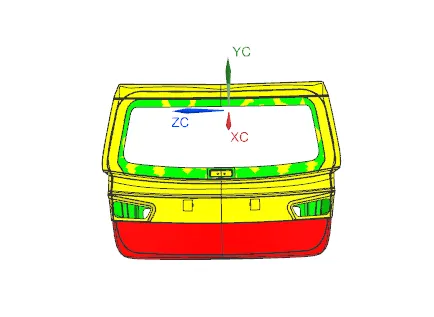
Draft Analysis:

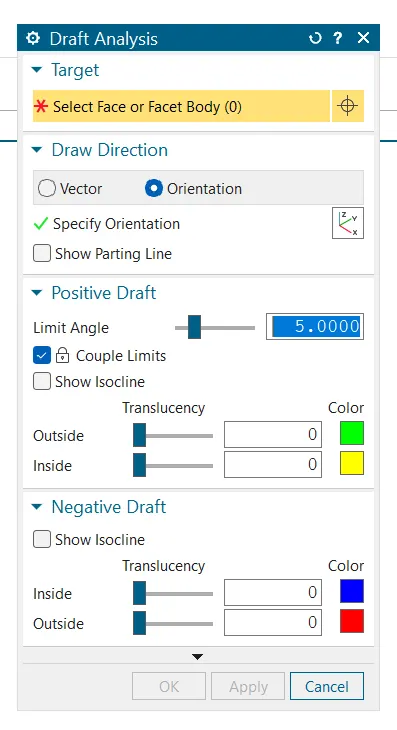
Draft analysis, also known as draft angle analysis, is a feature in NX CAD that allows users to evaluate and analyze the draft angles present in a 3D model. Draft angles refer to the taper or slope of a surface relative to the parting direction or mold opening direction.
In manufacturing processes such as injection molding or casting, draft angles are crucial for facilitating the ejection or removal of a part from a mold. Insufficient draft angles can result in difficulties in mold release or cause damage to the part or mold.
The draft analysis feature in NX CAD helps designers and engineers identify areas in the model where draft angles may be insufficient or excessive. By visualizing the draft angles, it allows them to make informed decisions and modifications to ensure proper manufacturability and functionality of the part.
To perform a draft analysis in NX CAD, you typically follow these steps:
-
Open the 3D model in NX CAD.
-
Navigate to the "Analysis" or "Evaluate" menu.
-
Select the "Draft Analysis" tool or command.
-
Define the parting direction or the direction in which the mold will be opened.
-
Specify the minimum and maximum acceptable draft angles based on the manufacturing requirements.
-
Run the draft analysis tool, and NX CAD will analyze the model and generate a visual representation of the draft angles.
-
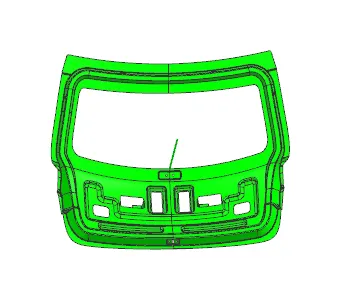
Review the draft analysis results, which may include color-coded indications to highlight areas where draft angles fall within or outside the acceptable range.
-
Based on the analysis, make necessary modifications to the model, such as adjusting surface angles, adding draft features, or reorienting surfaces to ensure proper draft angles.
Draft analysis in NX CAD provides valuable insights into the manufacturability of a design and helps optimize the part for successful molding or casting processes. It enables designers to detect and address draft-related issues early in the design phase, saving time, costs, and potential manufacturing challenges downstream.
Advantages of draft analysis:
Draft analysis in NX CAD offers several advantages that enhance the design process and manufacturability of parts. Here are some key advantages of using draft analysis in NX CAD:
-
Early Detection of Draft Issues: Draft analysis allows designers to identify draft-related issues early in the design process. By analyzing the draft angles of a 3D model, potential problems, such as insufficient or excessive draft angles, can be detected before the manufacturing stage. This helps avoid costly and time-consuming modifications or rework later in the process.
-
Optimal Moldability: Draft angles are crucial for successful molding processes, particularly in injection molding. By analyzing draft angles, designers can ensure that the part can be easily ejected from the mold without sticking or damaging the part or the mold. Draft analysis helps optimize the draft angles to achieve optimal moldability, reducing the risk of manufacturing issues.
-
Improved Design for Manufacturability: Draft analysis tools in NX CAD help designers ensure that their designs are manufacturable and compatible with mold or casting processes. By identifying areas with improper draft angles, designers can modify the design to meet the manufacturing requirements, leading to smoother production and reduced manufacturing costs.
-
Time and Cost Savings: Early detection and resolution of draft-related issues through draft analysis can result in significant time and cost savings. By addressing draft issues during the design phase, designers can eliminate or minimize the need for rework, mold modifications, or tooling adjustments, which can be expensive and time-consuming.
-
Design Optimization: Draft analysis provides designers with visual feedback on the draft angles, indicating areas that require modification or adjustment. This information allows designers to optimize the design for both manufacturability and functionality, ensuring that the final part meets the desired specifications and quality standards.
-
Enhanced Collaboration: Draft analysis in NX CAD facilitates effective collaboration between designers and manufacturing teams. By providing clear visual representations of draft angles and potential issues, designers can easily communicate design intent and requirements to manufacturing experts, fostering better understanding and collaboration.
Overall, draft analysis in NX CAD offers significant advantages in terms of manufacturability, design optimization, cost savings, and collaboration. By leveraging this tool, designers can improve the quality and efficiency of the design process, resulting in better-performing parts and smoother manufacturing processes.
Disadvantages of Draft analysis:
While draft analysis in NX CAD offers numerous benefits, there are also a few potential disadvantages to consider. Here are some disadvantages of draft analysis:
-
Limited to Molded or Cast Parts: Draft analysis is primarily applicable to parts that are manufactured through molding or casting processes. If you are designing parts that do not involve these manufacturing methods, such as machined parts or additive manufacturing, draft analysis may not provide relevant insights or may not be necessary.
-
Complex Geometries: Draft analysis tools may have limitations when dealing with highly complex or organic geometries. In some cases, it may be challenging to accurately analyze and evaluate draft angles for intricate designs or surfaces with irregular shapes. The software may struggle to provide reliable feedback or may require additional manual assessment.
-
Reliance on User Input: Draft analysis tools rely on accurate input of the parting direction and acceptable draft angle ranges. If incorrect or inconsistent input is provided, it can lead to misleading results and potential design errors. Proper training and understanding of the software and draft analysis principles are essential to maximize its benefits.
-
Subjectivity in Acceptable Draft Angles: Defining acceptable draft angle ranges can be subjective and dependent on various factors such as the specific manufacturing process, material properties, and part geometry. Determining the appropriate draft angles may require collaboration between designers and manufacturing experts to align on acceptable ranges and industry standards.
-
Simulation Accuracy: Draft analysis tools in NX CAD utilize simulation algorithms to assess draft angles. While these algorithms are generally reliable, they may not account for all factors and complexities present in the real-world manufacturing process. The results should be interpreted as a guideline and verified through physical prototypes or consultation with manufacturing specialists.
-
Potential Design Limitations: Strict adherence to draft angles in certain areas of the design may introduce design limitations or constraints. Designers may need to make compromises or trade-offs between achieving optimal draft angles and meeting specific functional or aesthetic requirements. Balancing these factors is important to ensure overall design success.
It's important to recognize these potential disadvantages and use draft analysis as one tool among many in the design process. Combining it with other design considerations, engineering expertise, and real-world testing can help mitigate any limitations and ensure a well-rounded and effective design outcome.
Conclusion:
Designing a car trunk door in NX CAD offers numerous advantages and capabilities that enhance the design process and ensure a successful outcome. By utilizing the powerful tools and features available in NX CAD, designers can create functional, aesthetically pleasing, and manufacturable trunk door designs. Here are some key points to conclude:
-
Comprehensive Design Capabilities: NX CAD provides a wide range of tools and features, including sketching, parametric modeling, surface modeling, and assembly design, enabling designers to create detailed and optimized trunk door designs.
-
Simulation and Analysis: With integrated simulation and analysis capabilities, designers can evaluate the structural integrity, performance, and manufacturability of the trunk door design. This helps identify potential issues early in the design process, saving time and costs.
-
Collaboration and Communication: NX CAD facilitates effective collaboration between designers, engineers, and manufacturing teams. The software allows for easy sharing of design files, documentation, and visualizations, enabling seamless communication and reducing errors.
-
Design Optimization: By leveraging the capabilities of NX CAD, designers can optimize the trunk door design for functionality, manufacturability, and aesthetics. They can iterate on the design, making modifications and adjustments based on simulation results, feedback, and design intent.
-
Consideration of Manufacturing Processes: NX CAD provides tools specifically tailored for sheet metal design and considerations for molding or casting processes. This ensures that the trunk door design is manufacturable, meets industry standards, and can be efficiently produced.
-
Time and Cost Savings: Utilizing NX CAD for trunk door design helps streamline the design process, reduce errors, and optimize manufacturing. This ultimately leads to time and cost savings by minimizing rework, ensuring proper fit and functionality, and improving overall efficiency.
Overall, NX CAD empowers designers to create high-quality, functional, and visually appealing trunk door designs for cars. By leveraging its tools and capabilities, designers can overcome challenges, optimize designs, and create trunk doors that meet the specific requirements of the automotive industry.