Design of backdoor
DESIGN OF BACK DOOR
Aim: To design car back door from given styling surface data under given design rules and regulations.
Introduction:
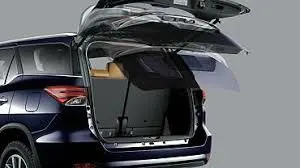
Back door or tail gate simply refers to the back of the car that can open and close.A door which is located at the rear side of a car which gives access for the boot space to store luggage, spare wheel etc .The door or opening of a cargo area may be hinged at the top, side, or bottom .These doors can be operated manually or electric powered. In most of the luxury cars door is electrically operated.The back door comprises of certain components which form the back door assembly together.
Functions of the Backdoor:
- It protects the occupants and luggage from getting damaged.
- It houses assembly of tail lamps, wiper motor and other components.
- It serves as entry and exit point for luggage/passengers.
- It houses windshield glass which helps in rear visibility.
- Parking sensors, rear view camera are mounted on it.
Types of Back door
Based on Mounting
- Top mounted
- Side mounted
- Bottom mounted
Top Mounted
Pick up trucks, station wagon and sports utility vehicles use this type of back door. These are both gas stay supported and motor powered. Advantage of this type of back door is it provides greater rear visibility compared to others.
Side mounted
Side mounted doors are mounted on the side of the car. Vans, SUVs, MPVs, Trucks use this type of back door. Accidental head impacts can be avoided with this type. It is easier to load and unload items using this door.
Bottom Mounted
Bottom mount doors are used in estate type cars, pickup trucks and some luxury SUVs. This is the most comfortable type of back door, it can be also used as supporting table or holding long items.
Based on Working mechanism
- Gas stay type
- Powered lift type
Gas stay type
Gas stay type is the most common type used in cars for operating the back door. Components of back door are gas stay, hinge, wiper mechanism, rear light and rubber beadings for sealing of door.
Powered lift type
Powered lift type is also known as electric motor actuated type. It is mostly used in luxury cars. As it is the sophisticated type of operating the back door. A switch is pressed to open or close the door. This consists of power latch, anti pinch switch, PTF assembly.
Manufacturing Process
Tail gate undergoes numerous manufacturing process, like bending, stamping, punching, deep drawing, hemming, embossing, spot welding and even more. But the main moto is to reduce the lead time, cost and increase the productivity.
Bending
In bending the sheet metal is bent to a defined curvature. Here simple curve surfaces are produced and this becomes the base surface of the component. A Die and Press arrangement applies pressure on the sheet metal which changes the curvature of the blank permanently. And applying of pressure must be careful that the metal should not spring back to its original shape.
Deep Drawing
Next after the bending process drawing operation is done here Complex curvature can be produced. the die and the mould create the desired shape which we predefined for the blank the pressure is applied hydraulically or mechanically that forces the punch to the die and forms the shape in the sheet metal. Negative draft angle is avoided because it cannot be manufactured.
One of the drawing process is Deep drawing deep drawing is a forming operation the is a combination of tensile and compression.
Stamping
Stamping is done with the help of Stamping press machines share a series of dies or a single die with various cuts or formed on the metal
Embossing:
Embossing is a metal forming process for producing raised designs in sheet materials with the help of dies, theoretically with no change in metal thickness or by-passing sheet or a strip of metal between rolls of the desired pattern. Metal sheet is drawn through the male and female dies producing a pattern or design on the metal sheet. Depending on the dies used, different patterns can be produced on the metal sheet.
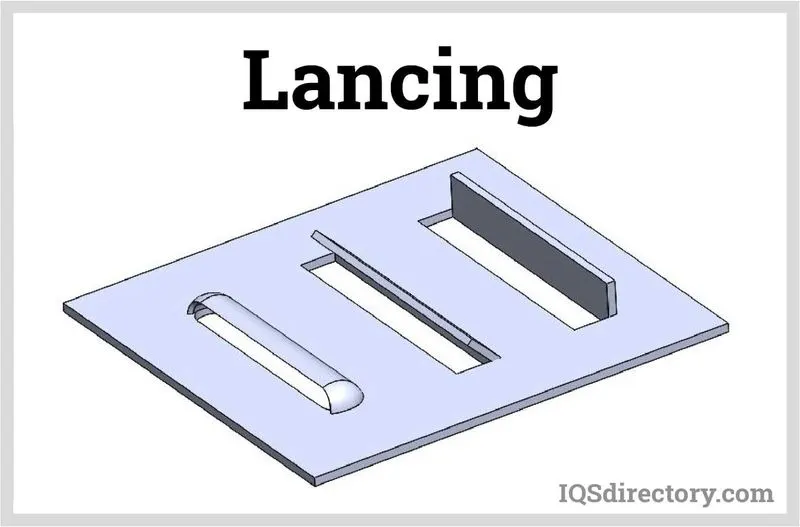
Lancing:
Lancing is a process in the sheet metal where the metal is cut to a sheet of metal through part of its length and then bending the cut portion. No material is removed in the lancing process. It is used to make tabs, vants, louvers in sheet metal workpiece. Here in back door inner panel we use this operation
Reducing weight of the car is more important as it is a major red flag in cost and performance. So there will be a search for material lighter than steel. But most at times it will be costlier and can be used only in the luxury section of cars. Most automobiles use steel as it is not costlier. ULSAB - Ultra light steel auto body is used to reduce the steel weight, tailor welded blank and hydro-forming techniques are used in ULSAB.
Tailor Welded blank:
Two separate pieces of sheet metal can be welded together with tailor welded blank operation. It allows to join sheet metals at different grades, thickness and corrosive coating for giving specified properties in different areas. They also allow a high degree of flexibility in designing parts and large blanks can be formed from much smaller sheets. Weight can be decreased by using this method.
Hemming:
Hemming is a type of forming operation in manufacturing components. Here the edges of the sheetmetal are folded on the other part achieving tight fit. This joins the both parts without affecting the appearance and hence it is used in hood, doors, fenders, tailgates etc,. In tailgate it is used to join the inner and Outer panel of the tail gate.
There are various types of heming operations
- Conventional Dai Hemming
- Roll Hemming
Conventional Dai Hemming:
This is used for mass productions. Here a hemming tool is used to fold the entire length of the sheet metal. Depending on the opening angle that will be several steps of the Hemming process. But this is an expensive process and it is restricted to flat and complicated profiles cannot be made in hemming.
Roll hemming:
The name says rollers are used in the hamming process and industrial robots are used to get the rollers over the part to fold over the other part and hemming is done. Comparing to the conventional die hemming the tool cost are significantly low the old hemming but the cycle time is higher the roll hemming
Spot Weld:
Spot welding is a type of electric resistance welding. It is also known as resistance spot welding. The process of spot welding is sheet metals are made into contact with each other and pressure is applied on specified points. So heat is generated from the resistance and weld is formed
Back Door Assembly Components:
- Inner Panel
- Outer Panel
- Hinge Reinforcement.
- Gas Stay Reinforcement.
- Wiper Motor Reinforcement
- Striker Reinforcement.
Inner panel:
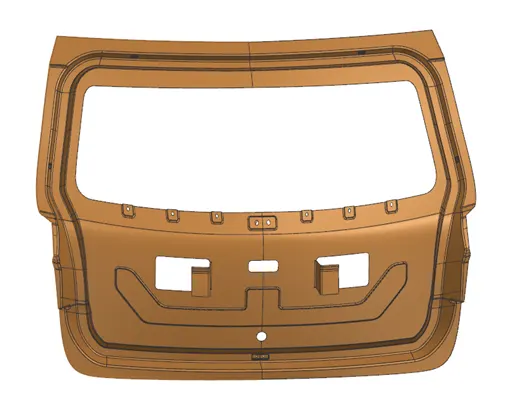
Back door inner panel has the mountings for hinges, gas stay, wiper motor, mastic area, striker and so on. The block is stamped as single part. This reduces the cost and number of tools needed to manufacture. This is the strengthening element of the back door. Inner panel is hemmed with outerpanel finally. Aluminium or steel will be used for manufacturing the tail gate inner panel. reinforcements are added whereever needed. Thickness is given 0.75mm in the above model towrards the outer panel. Flages like Connecting flange, sealing flange and inner panel flange will be present in the the inner panel.
Outer panel:
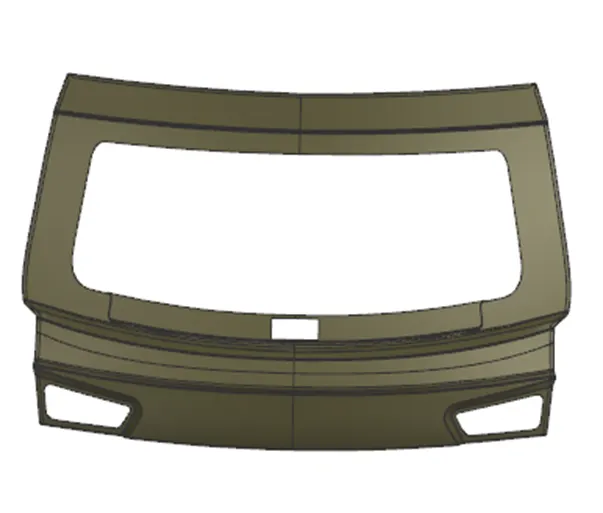
Outer panel is the asthetic part of the tail gate. It will be attractive in look. coatings are given to keep it scratch and rust resistant. The outer panel also has the provisions for the tail lamp, rear fog lamp and also has the provision for licence plate mountings. Most of the hatchback cars have the provision for wiper motor. Thickness is given 0.75mm in the above model towrards the inner panel. Hemming is done to join the inner and outer panel.
Hinge Reinforcement:
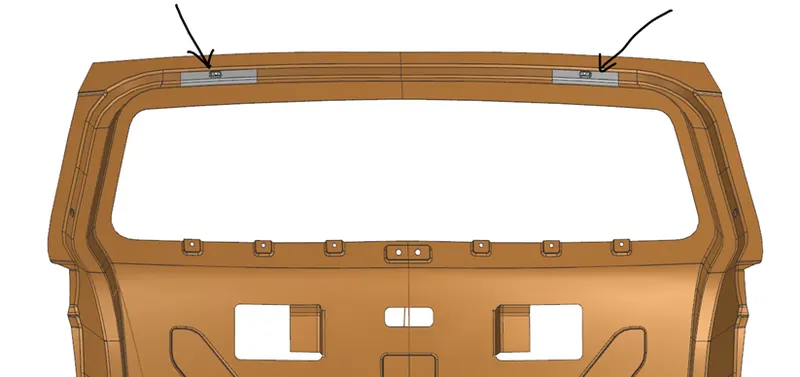
Hinges are used to opening and clsoing of the back door. Both halves of hinge on back door and roof combines to operate the door. Reinforcement is given to compensate the load acting on the region. Thickness is given 1.5mm in the above model towrards the outer panel.
Gas Stay Reinforcement:
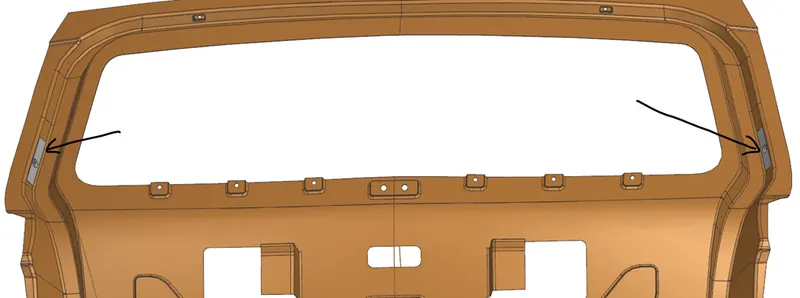
Gas stay in a tail gate is used hold open and close the tail gate. It eliminates man power by holding the back door open in position. one end of the gas stay is fixed on the door and other on the body side.
Latch andStriker Reinforcement:
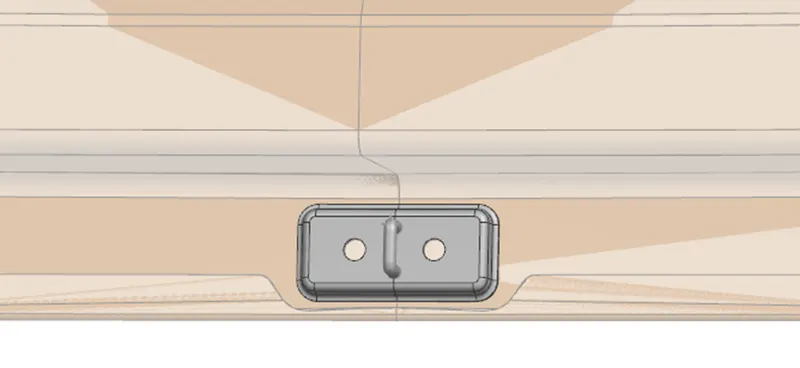
Latch and striker is responsible for locking of the back door. Stress will be developed as we frequently open and close the door so adding a reinforcement will make it stronger.
Conclusion:
Thus,we have designed the back door by the provided styling surface of a back door design, I have used appropriate design methodologies and provided the necessary reinforcements and embosses for the BackDoor design.