Design of backdoor
AUTOMOTIVE DESIGN OF TAILGATE FOR HATCHBACK TYPE
INTRODUCTION
The objective of the project is to design a backdoor of a car with its constituent elements involved. This backdoor is for hatchback type cars. Backdoor influences the boot space, crush load from rear side, trim parts, plastic parts, etc. The hinge axis trajectory is justified by positioning the striker at an appropriate place. The required hinge areas for back door and gas stay mounting areas were determined. By knowing the required boot space and rear visibility criteria the sealing flange is designed. The required embosses for force distribution were given. The wiper motor area, latch and striker motor mounting area and fixture positioning hole are given at desired places. Thus the BIW part and class A surface is created and then hemmed together.
SOFTWRAE USED
Siemens NX12
FUNCTIONAL REQUIREMENTS OF BACKDOOR
The backdoor has many accessories like lighting, wiper motor, latch and striker motor, handle mounting, gas stay or power lifter, hinge mountings etc. These parts has to be placed in the backdoor for their functions. These parts can’t be seen from either the outside or from cabin inside. So by understanding functional requirements of back door the required amenities and its positioning details were incorporated while designing the backdoor. The actuating motors are responsible for the function of power lifter, latch and striker, wiper, etc.
DESIGN REQUIREMENTS
1. The design requirements includes the boot space, rear visibility criteria, force distribution embosses, reinforcements, sealing flange, etc.
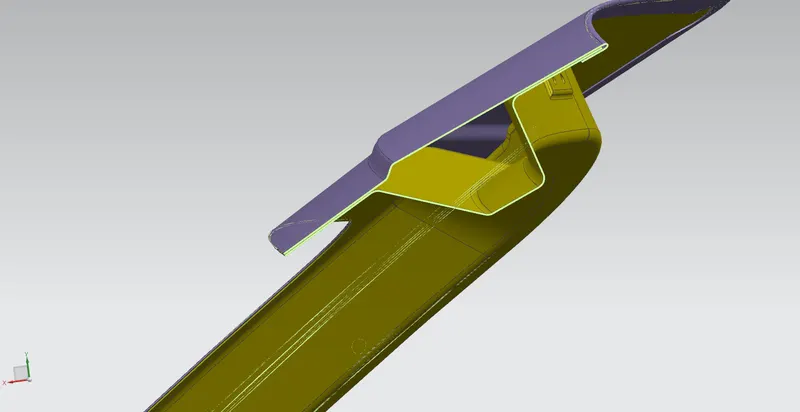
2. The boot space can be varied by changing the sealing flange distance from the outer panel. The weather strip or the rubber is used between the rear roof rail and the sealing flange. The rubber is compressed when the door is closed. This sealing flange seats in the body and in the rear roof rail.
3. The force distribution embosses were necessary to be included to handle the forces introduced while rear crash. These embosses disperse the force to the weakest portion of the backdoor.
4. The rear visibility criteria can be adjusted by changing the deep drawing angle, bend reliefs, etc.
5. Reinforcement were added to the weak areas like hinge and gas stay mounting areas to improve the strength locally.
MATERIAL COMPARISON
The two important material always under debate were aluminum and steel.
ALUMINIUM - It can be efficiently manufactured by casting process. Aluminium has good castability. Since the process involves casting, required reinforcements can be given in the casting stage itself by variying the mould design thickness. Therefore no seperate reinforcements needed. Using aluminium ultimately reduces the final mass of part produced compared to steel, but the price and the manufacting cost is higher.
Density(AL) = 2710 kg/cubic meter
STEEL - Parts are stamped. Reinforcements has to be given to increase strength locally. Uniform thickness can be maintained all over the part. compared to the aluminium the weight of steel is higher.
Density(steel) = 7900 kg/cubic meter
ALUMINIUM vs STEEL IN STAMPING
Steel is majory used in sheetmetal operations than aluminium. The reason behind this is stiffness. Stiffness plays an important role in NVH charecteristics considerations. Stiffness of a component is a function of both material and geometry. On the material side, stiffness depends on the modulus of elasticity, also known as Young’s Modulus. Young’s Modulus for steel (29 million PSI) is three times that of aluminum (10 million PSI). This means that for a fixed geometry, a part made out of steel will be three times as stiff as if it were made out of aluminum. In other words, an aluminum part under load will deflect three times as much as a similarly loaded steel part. This kind of deflection is stricly not a desirable quality in automobiles.The thickness and shape of the formed part also contributes to its stiffness. Stiffness is proportional to the cube of the thickness. To neutralize aluminum being one-third the stiffness of steel, an aluminum part must be made 44 percent thicker than the steel part. So while incraesing the thickness upto 50 percent the sheetmetal operations become questionale. Hence aluminium are casted while steel were stamped. Therefore this gives a nice conclusion that aluminium reduces part weight but it is not effectively manufactured through stamping.
LOAD CASES OF BACKDOOR
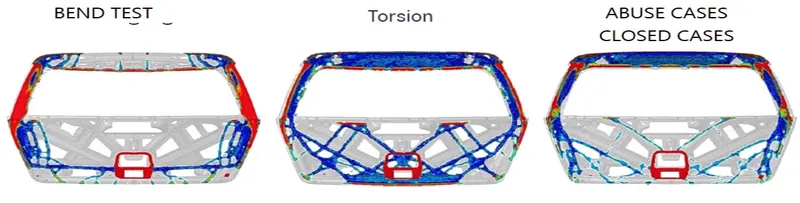
The backdoor manufactured is taken under different load conditions to know its withstanding ability.
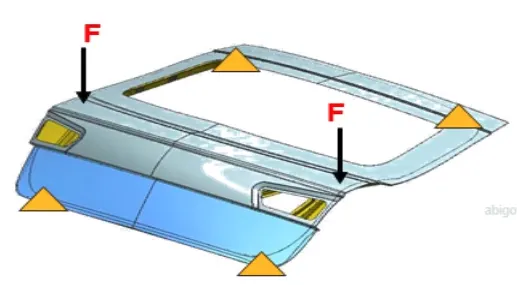
1. BENDING LOAD
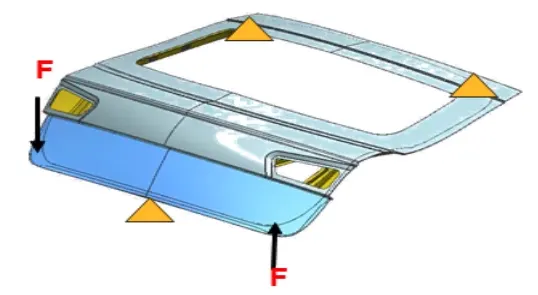
2. TORSION LOAD
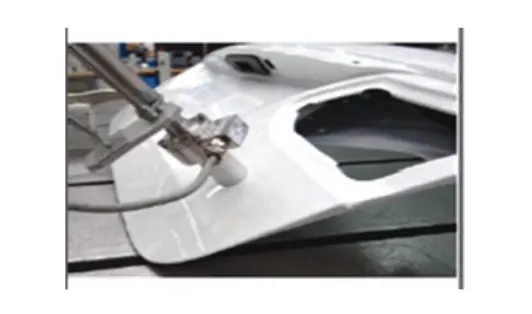
3. DENT TEST
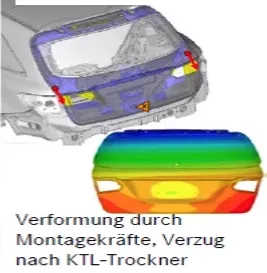
4. ASSEMBLY LOAD CASE
ASSEMBLY SEQUENCE
1. ALUMINIUM
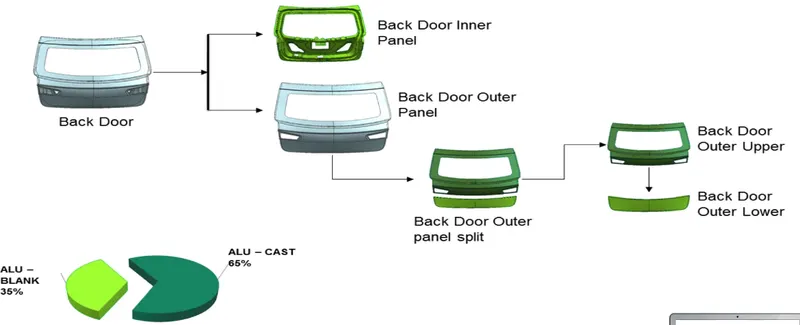
It is seen from the sequence that most of components were casted. Which makes the assembly easier in case of aluminium. This also reduces the total cycle time in each workstation. Drastic weight reduction can be seen.
2.STEEL
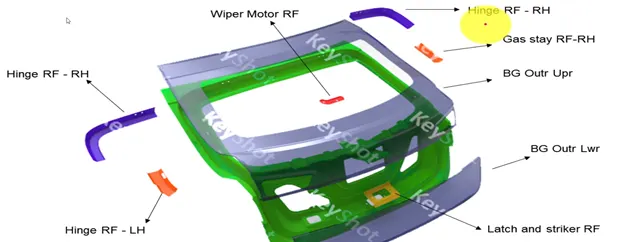
In steel the number of components involved increases, but this is cost effective and also ease of manufacturing. Almost all the parts were manufactured by sheet metal operations.
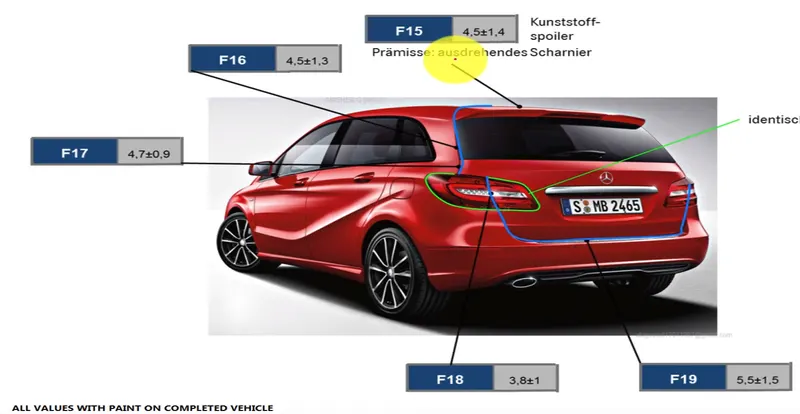
GAP and FLUSH REQUIREMENTS
DESIGN COMMODITIES
- Backdoor outer panel – class A surface(upper and bottom)
- Backdoor inner panel
- Hinge mounting areas for backdoor
- Hinge mounting areas for gas stay
- Mounting regions for wiper motor and striker emboss
- Force dispersion emboss
- Fixture holes
- Mastic sealant flange
- Sealing flange
1. OUTER PANEL
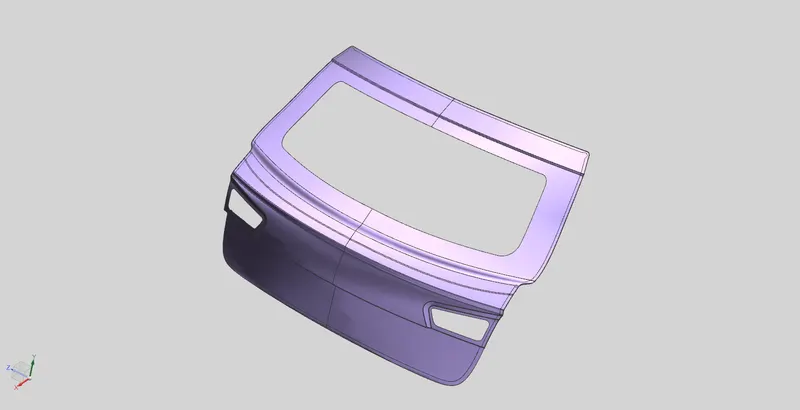
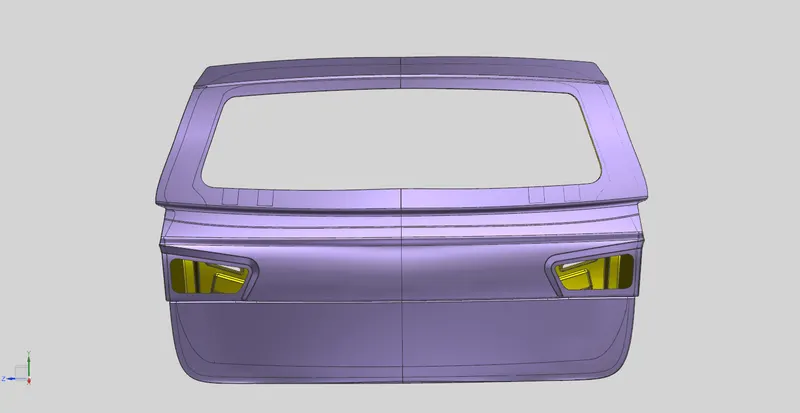
The outer panel is a set of upper and lower panel. These panels are spot welded at the intermediate flange. If the aluminium materail is used this can be produced as a single part by casting them. The outer panel given by the styling team have some surface irregularities at the blended faces of surfaces. This can be solved by replacing that particular surface by another smooth surface. After doing this surface cleanup the surface looks good and smooth. The lower panel hold the license plate and lightings.
2. INNER PANEL
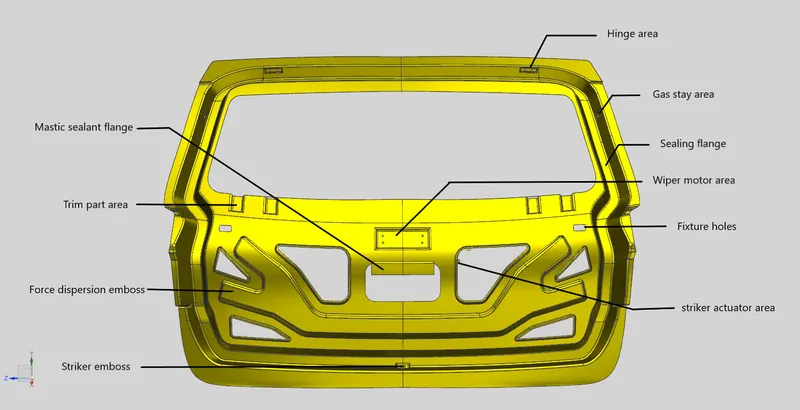
The inner panel is produced by knowing the required boot space, rear visibility criteria, rear roof rail position, etc. The sealing flange is the first feature to be considerd while designing the inner panel. This sealing flange disance is the deciding factor of boot space. The backdoor rests on the rear roof rail, body and sill of the automotive. A weather strip or rubber is placed between the inner panel and the sealing flange in body. This rubber is defromed when backdoor is opened and gets restrained when closed.
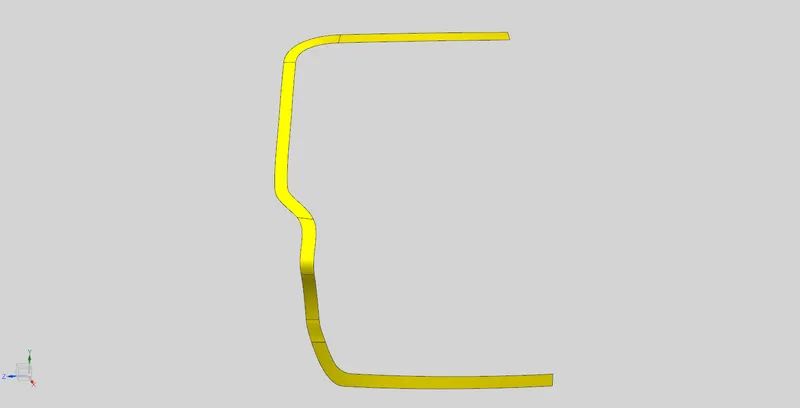
Sealing flange
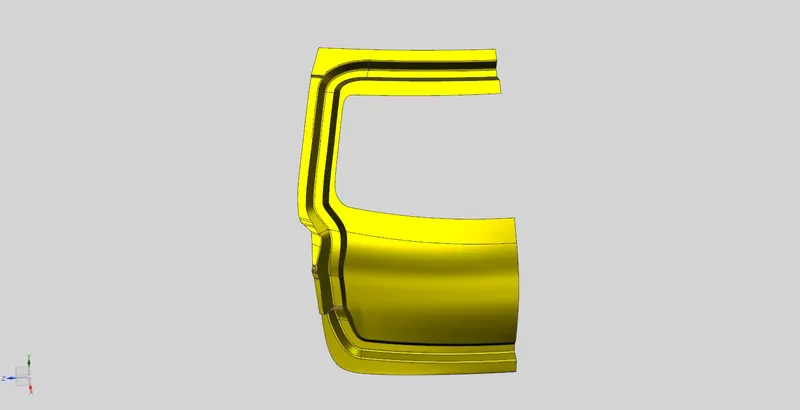
3. HINGE AREAS FOR BACKDOOR
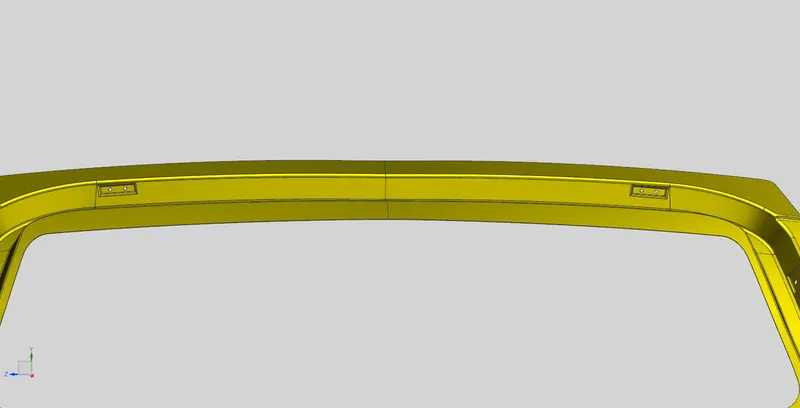
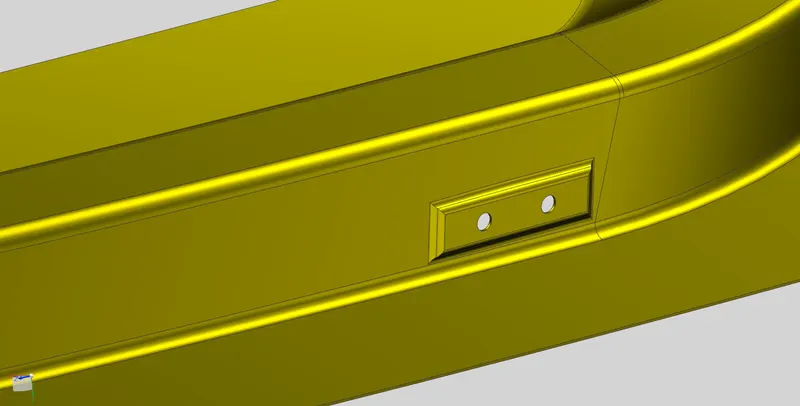
The hinges were mounted on the areas. There are two categories of it. one is placed inside the backdoor where the other is placed outside the backdoor. These hinge areas has to be flat without any curvature. In the analysis stage there will be loss of strength locally. To compensate this reinforcement has to be given. Generally reinforcements were about 0.75 to 1.5mm. This depends upon the loss during analysis.
4.GAS STAY MOUNTING AREAS
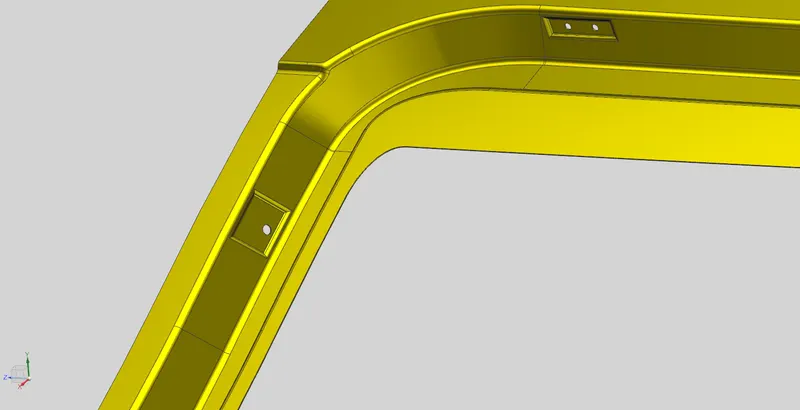
There are totally 8 variants available by placing gas stay at different positions.
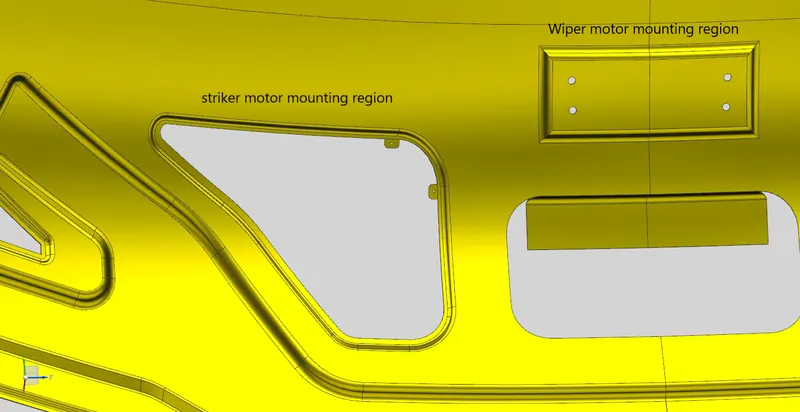
5. WIPER MOTOR REGION AND STRIKER EMBOSS
6.FORCE DISPERSION EMBOSS
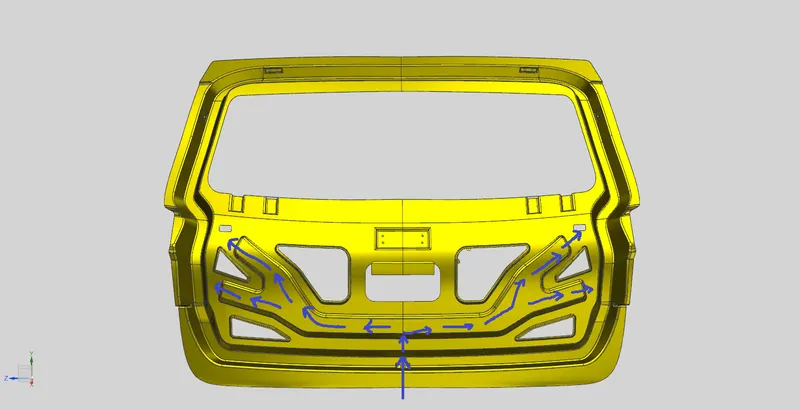
7. MASTIC SEALANT FLANGE
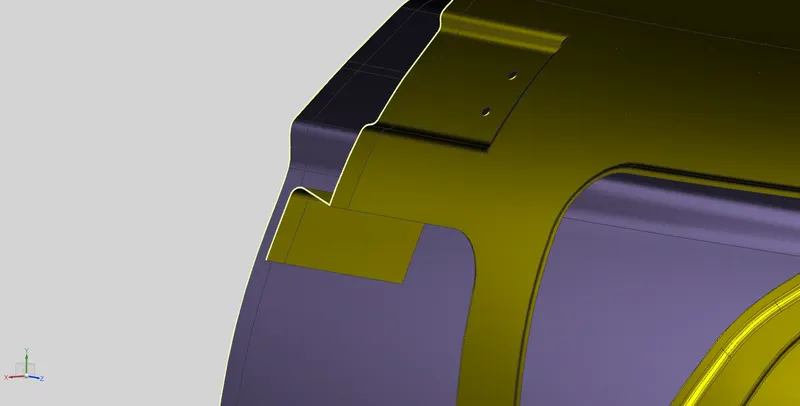
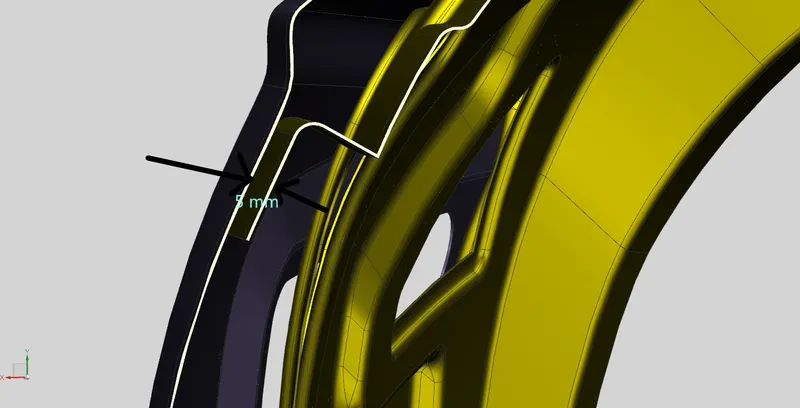
To reduce the rattling noise created between outer and inner panels sealants were used. A minimum gap of 5mm given for sealants.
HEMMING AND CORNER RELIEF
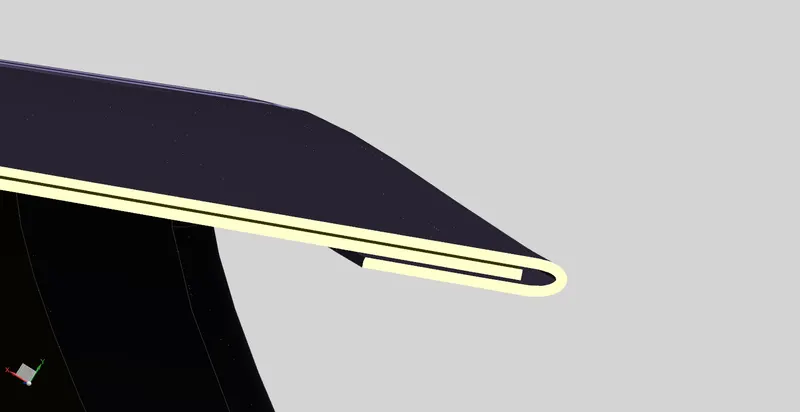
Hem distance = 0.75+0.2+0.75+0.2+0.75 = 2.65mm
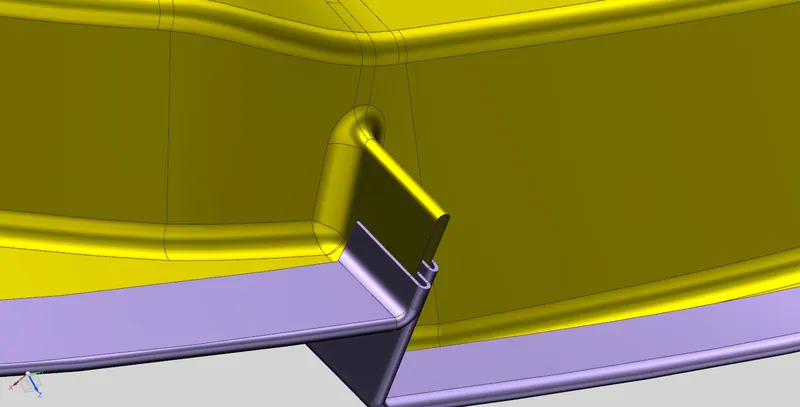
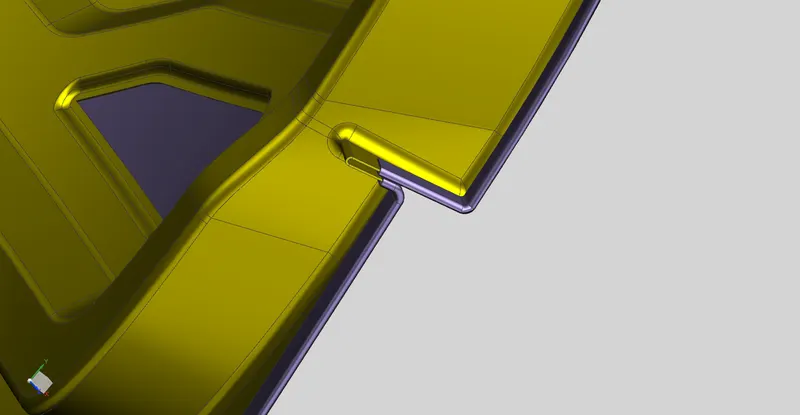
The upper panel and lower panel were hemmed individually with the inner panel.
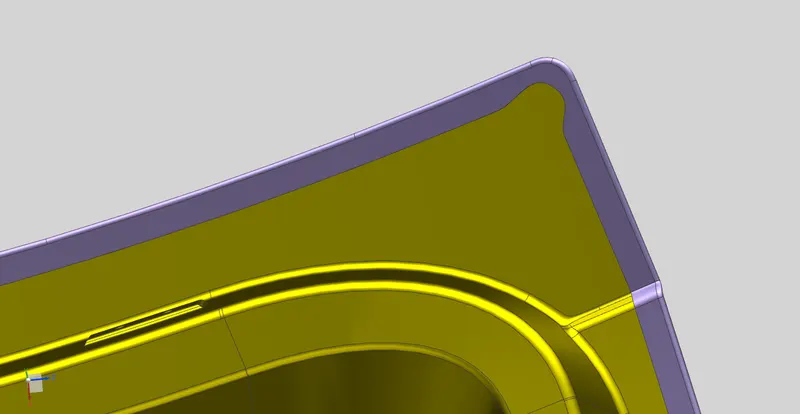
Corner reliefs were give to deviate the stress concentration sharp areas.
REINFORCEMENTS
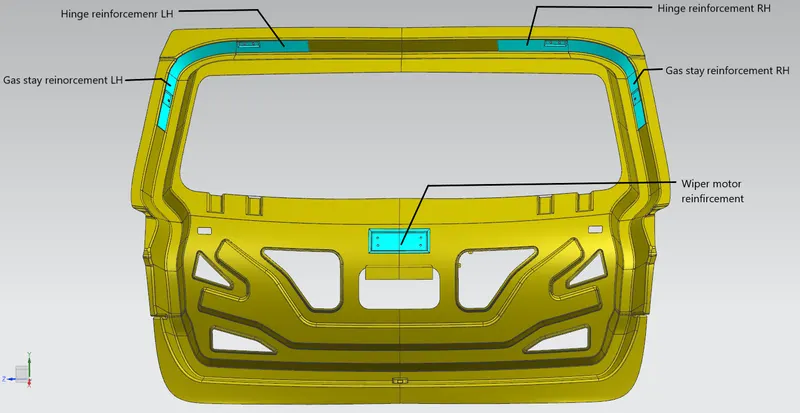
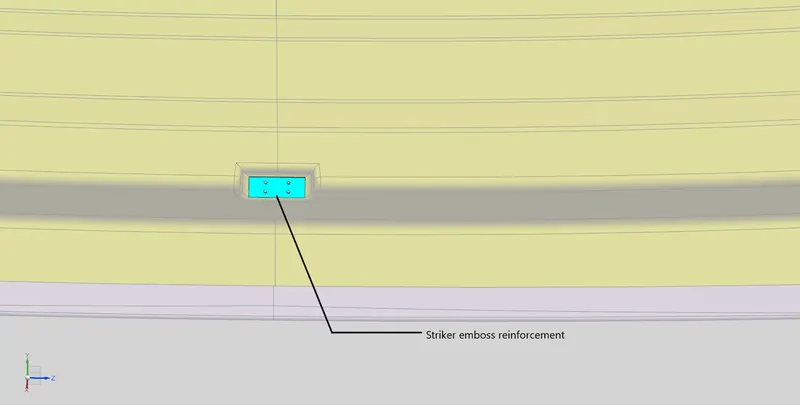
The given reinforcement thickness were 0.75mm.
TRAJECTORY OF BACKDOOR
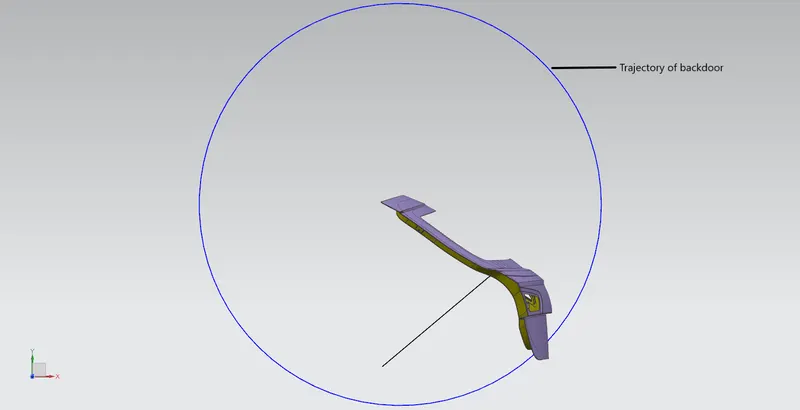
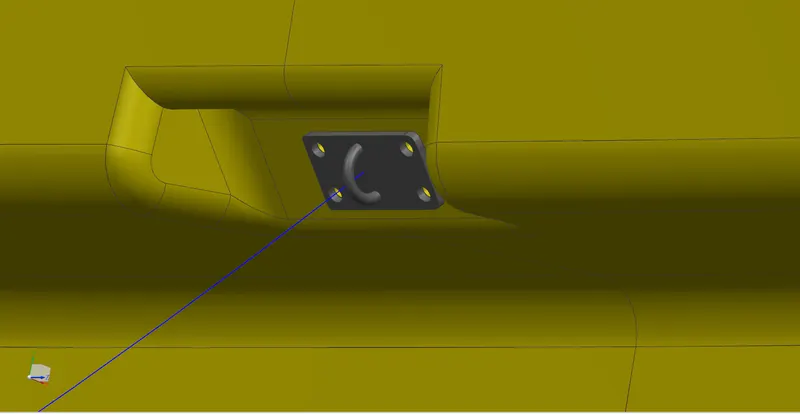
The striker is positioned normal to the curve of trajectory.
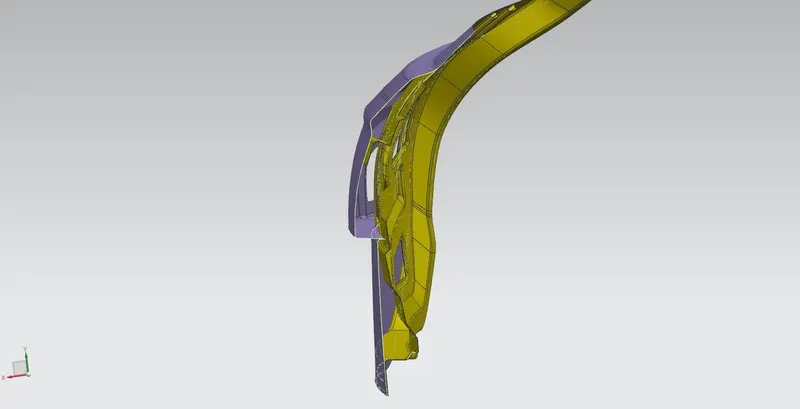
SECTIONAL VIEWS OF BACKDOOR
DRAFT ANALYSIS
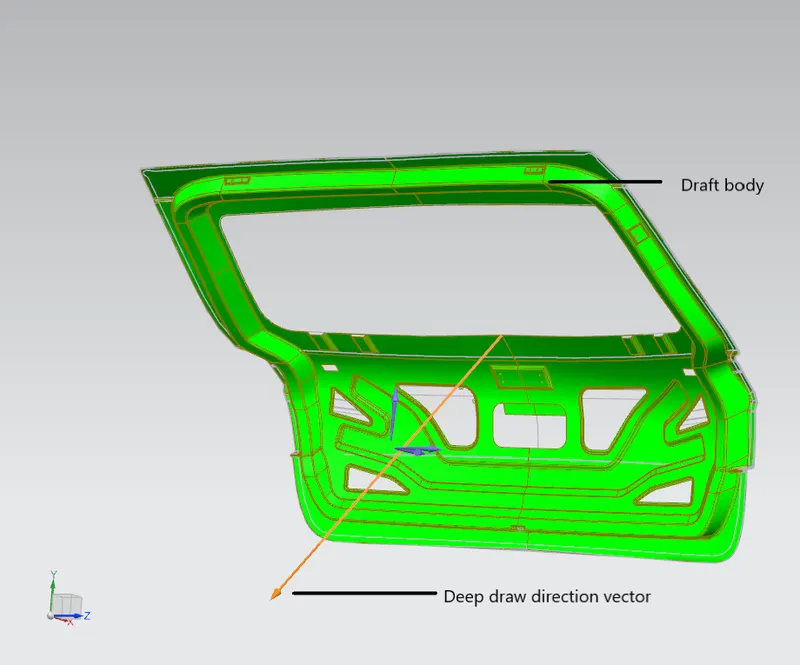
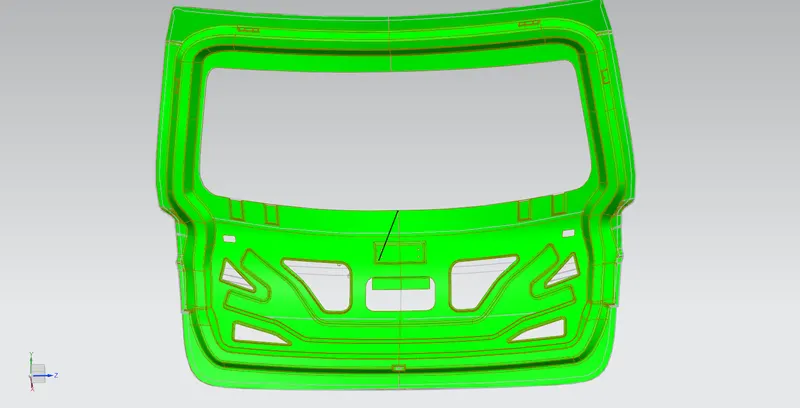
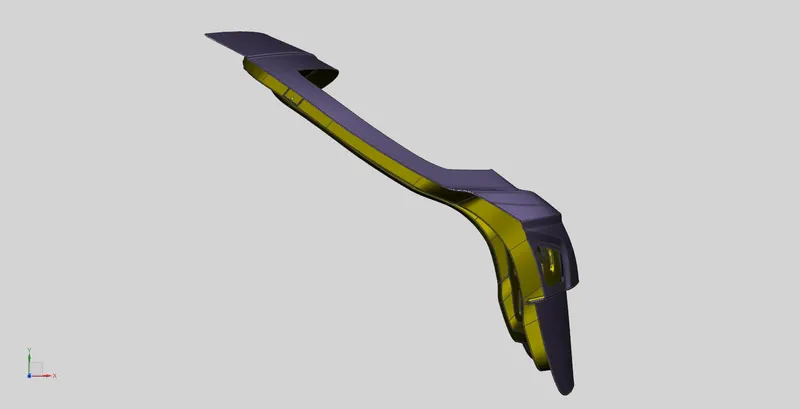
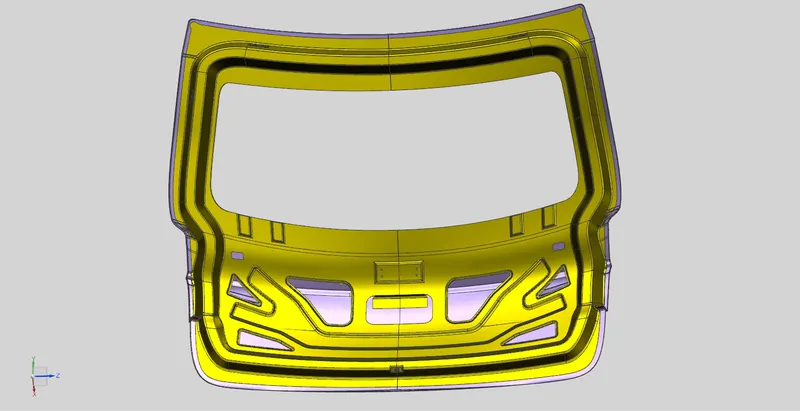
The body is checked for its draw angle. There is not any negative drafts. Therefore the part is manufacturable. All the draw angle given are greater than 7 degrees.
CONCLUSION
The backdoor is designed with the manufacturing feasibility.