Design of backdoor
AIM :
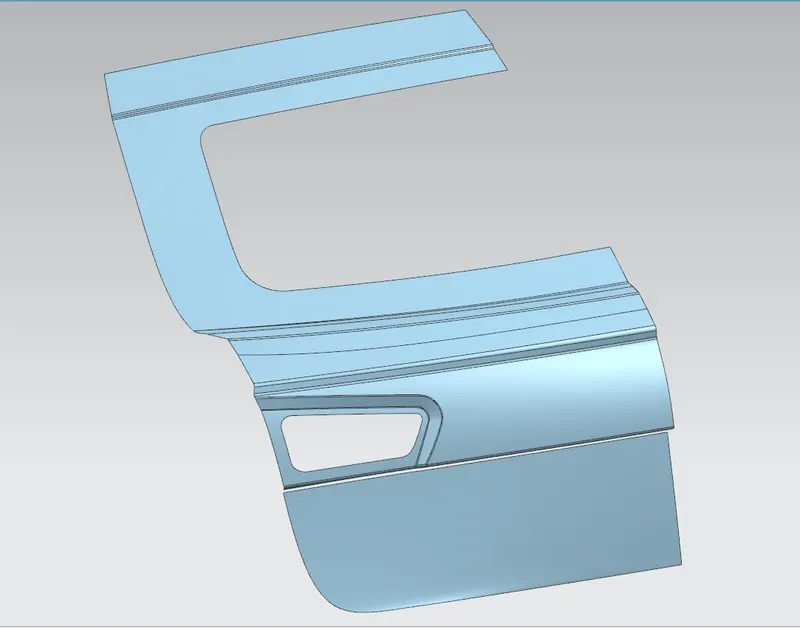
To design a car tailgate , its reinforcements and embosses from the given styling surface using appropriate design methodologies.
Given styling surface :
About a vehicle tailgate :
The car tailgate is a specific type of rear door commonly found in SUVs, trucks, and some station wagons. It is the door or panel that covers the rear cargo area of the vehicle.

The tailgate is hinged at the bottom and typically opens upward, allowing for easier loading and unloading of items into the cargo area. It can be locked and unlocked using the vehicle's key or a button inside the car. Some tailgates also feature a separate rear window that can be opened independently to access the cargo area without fully opening the tailgate.
In pickup trucks, the tailgate serves as both the rear closure for the cargo bed and a platform for loading and unloading. It can often be folded down completely to extend the cargo bed or used as a support for carrying longer items.
The design and operation of a car's tailgate can vary depending on the make and model of the vehicle, but its primary function is to provide access to the rear cargo area while securely enclosing it when closed.
Components of a tailgate :
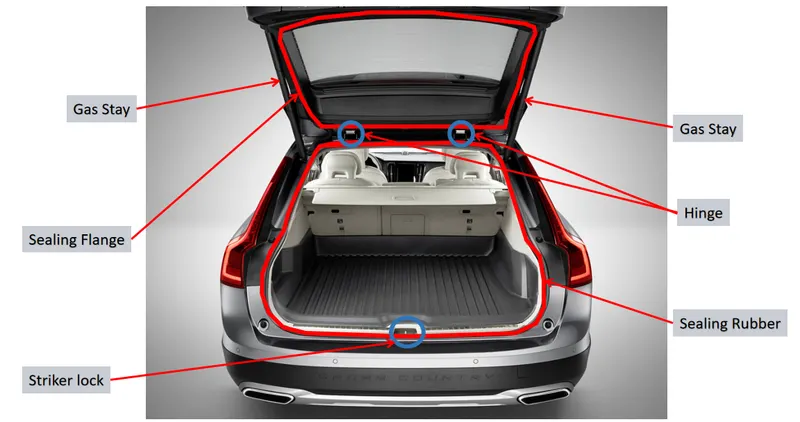
The design of a car's tailgate can vary depending on the specific vehicle model and manufacturer. However, here are some common components you may find in a typical car tailgate:
- Outer Panel: The outer panel is the visible exterior surface of the tailgate. It is usually made of steel, aluminum, or composite materials and is designed to match the overall aesthetics of the vehicle.
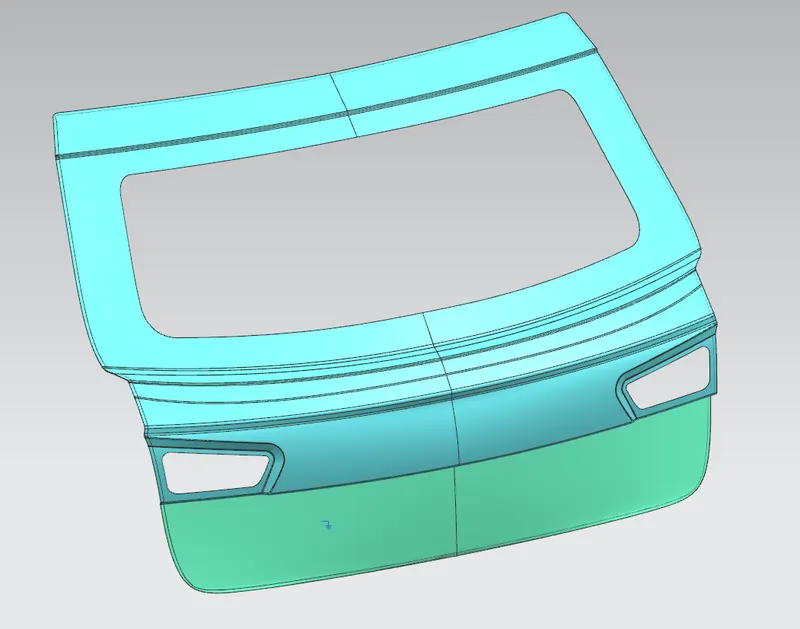
- Inner Panel: The inner panel is the interior surface of the tailgate, located on the opposite side of the outer panel. It provides structural support and can be made of similar materials as the outer panel.
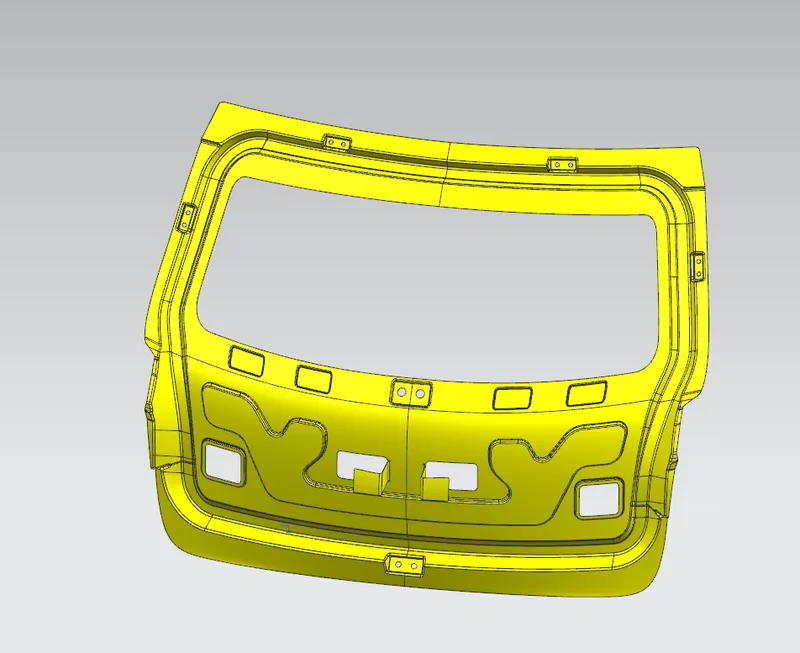
- Latch Mechanism: The latch mechanism is responsible for securely closing and locking the tailgate. It typically includes a handle or release lever on the exterior that allows the tailgate to be opened, as well as a locking mechanism to keep it closed.
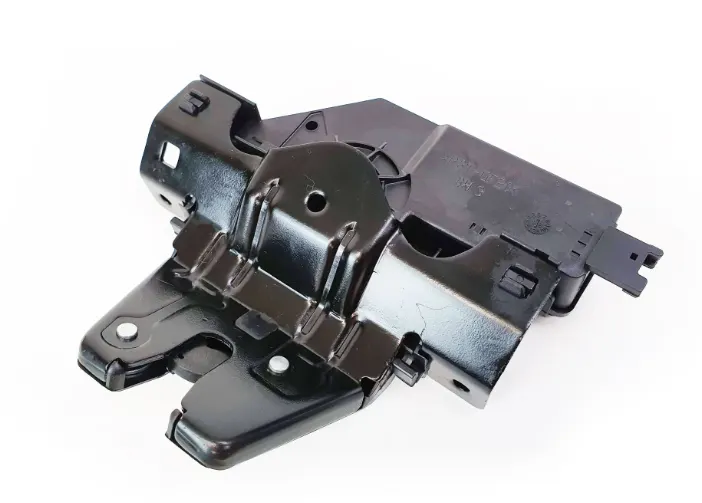
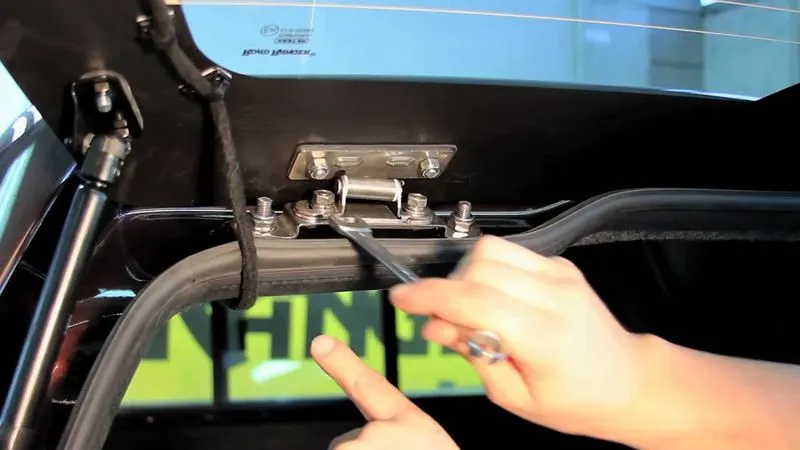
- Hinges: The hinges are the components that allow the tailgate to swing open and closed. They are usually positioned on the sides or bottom of the tailgate and are designed to support the weight of the tailgate while allowing it to pivot smoothly.
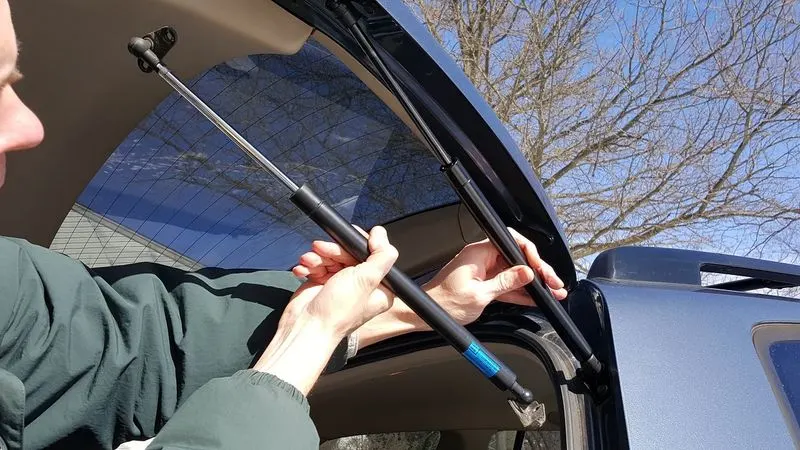
- Struts or Lift Supports: In larger vehicles or tailgates equipped with a rear window, gas struts or lift supports are often employed. These assist in the controlled opening and closing of the tailgate and help to counterbalance its weight.
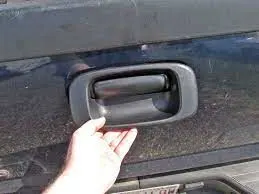
- Tailgate Handle: The tailgate handle is located on the exterior of the tailgate and is used to grip and pull the tailgate open. It can be integrated into the latch mechanism or exist as a separate component.
- Rear Window (if applicable): Some tailgates feature a separate rear window that can be opened independently. The rear window may have its own latch or hinge mechanism and can provide access to the cargo area without fully opening the tailgate.

These are some of the key components commonly found in a car's tailgate design. However, it's important to note that specific vehicle models may have additional features or variations in their tailgate designs.
Original Equipment Manufacturers (OEMs) follow specific manufacturing processes to produce car tailgates. While the exact methods can vary between manufacturers, this is a general outline of how car tailgates are typically manufactured in OEMs:
- Design and Engineering: The tailgate design is created by the OEM's engineering team, taking into account the vehicle's specifications, design requirements, and safety standards. CAD software is used to create a detailed 3D model of the tailgate design.
- Material Selection: The OEM selects the appropriate materials for the tailgate based on factors such as strength requirements, weight considerations, and cost. Common materials include steel, aluminum, or composite materials.
- Tooling and Die Manufacturing: Tooling and dies are created to shape the raw materials into the desired form. These specialized tools and molds are custom-made for each tailgate design. Tooling and die manufacturing can involve computer-controlled machines, such as CNC (Computer Numerical Control) machines, to ensure precision and accuracy.
- Metal Forming: The selected raw material, such as metal sheets, is processed through metal forming techniques. This can include processes like sheet metal stamping or hydroforming, where the metal is shaped into the desired tailgate form using the previously manufactured tooling and dies.
- Assembly and Joining: The various components of the tailgate, such as the outer and inner panels, are assembled and joined together. This can involve techniques like welding, adhesive bonding, or a combination of both, depending on the materials and design specifications.
- Surface Treatment and Finishing: The tailgate undergoes surface treatment processes to enhance its appearance, protect against corrosion, and improve durability. This can include cleaning, sanding, priming, painting, and applying other protective coatings. Additional finishing processes like polishing or buffing may also be employed to achieve the desired finish.
- Installation of Hardware: The necessary hardware components, such as hinges, latches, handles, and lift supports, are installed onto the tailgate. These components are typically integrated into the assembly process using specialized machinery and tools.
- Quality Control and Testing: Throughout the manufacturing process, rigorous quality control measures are implemented to ensure that the tailgate meets the required specifications and safety standards. Inspections, measurements, and functional tests are conducted to verify the integrity, fit, and finish of the tailgate.
- Integration into Vehicle Assembly: Once the tailgate has passed quality control checks, it is integrated into the OEM's vehicle assembly line. The tailgate is aligned and mounted onto the vehicle, with electrical connections made if necessary for features like rear window defoggers, cameras, or power opening mechanisms.
- Final Testing and Inspection: The fully assembled vehicle, including the tailgate, undergoes final testing and inspection to ensure proper functionality, alignment, and overall quality. Adjustments and corrections are made if necessary.
- Sheet Metal Stamping: Sheet metal stamping is a widely used technique for creating car tailgates made of metal, such as steel or aluminum. Large presses equipped with specialized dies and tooling are used to cut and shape flat metal sheets into the desired form of the tailgate. This process involves applying high pressure to deform the metal and achieve the desired shape.
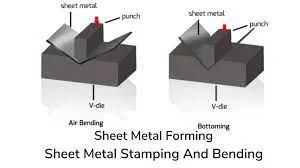
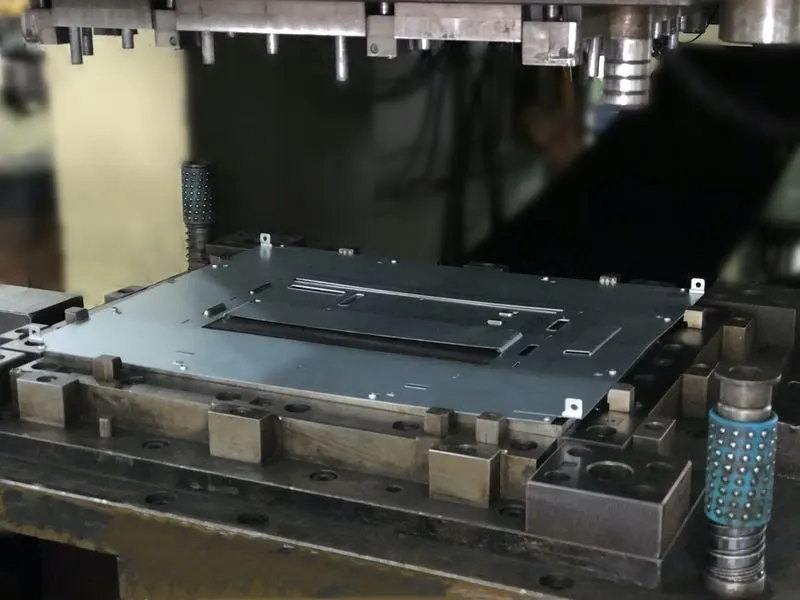
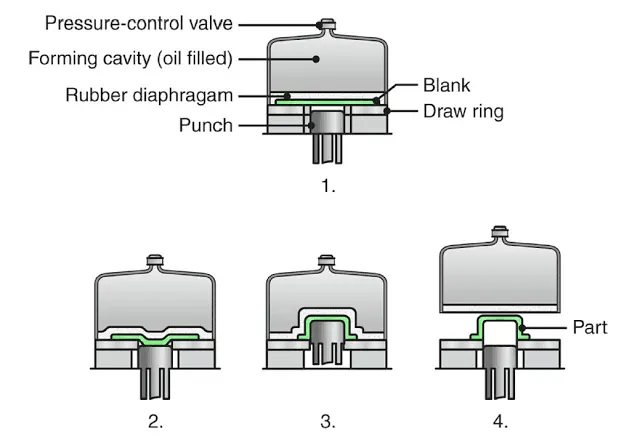
- Hydroforming: Hydroforming is a manufacturing technique that utilizes fluid pressure to shape metal sheets into complex and intricate forms. It involves placing the metal sheet over a mold and applying high-pressure fluid to force the sheet against the mold's contours. Hydroforming can be particularly useful for creating tailgates with intricate curves and unique designs.
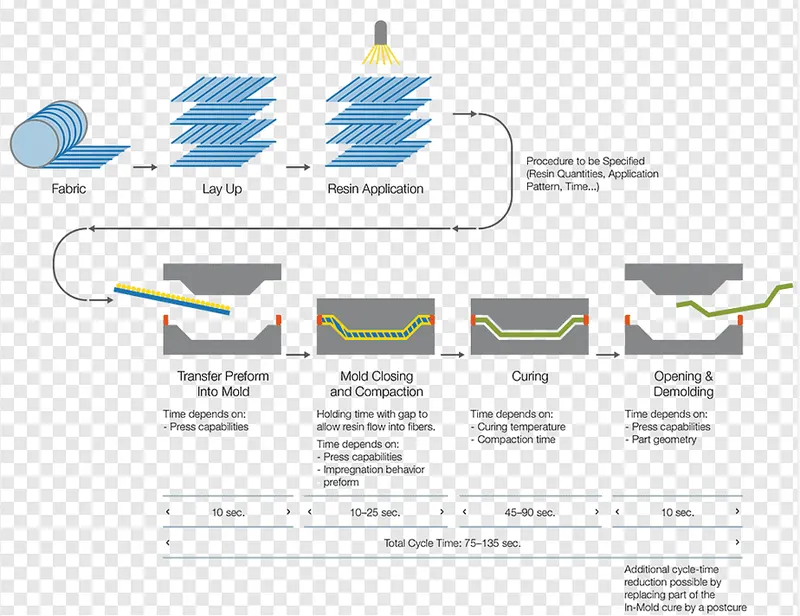
- Composite Material Molding: Car tailgates can also be manufactured using composite materials, such as carbon fiber or fiberglass. Composite material molding techniques, including processes like resin transfer molding (RTM) or vacuum infusion, are used to lay up layers of composite materials onto molds. The materials are then cured under heat and pressure to form the final tailgate shape.
- welding and joining : Various welding techniques are employed to join the different components of the tailgate together. Techniques such as spot welding, MIG (Metal Inert Gas) welding, or laser welding may be used to securely join metal components. For tailgates made of composite materials, adhesive bonding or resin-based bonding methods may be employed.

- Surface Treatment and Finishing: After the initial formation of the tailgate structure, surface treatment processes are employed to enhance appearance, improve durability, and provide protection against corrosion. This can involve processes like cleaning, sanding, priming, painting, powder coating, or applying other protective coatings. Surface treatments are often followed by finishing processes such as polishing or buffing to achieve the desired surface finish.
- Integration of Hardware: During the manufacturing process, the necessary hardware components for the tailgate, including hinges, latches, handles, and lift supports, are integrated into the structure. This can involve precision assembly techniques, such as robotic assembly or automated fastening systems, to ensure accurate and reliable installation.
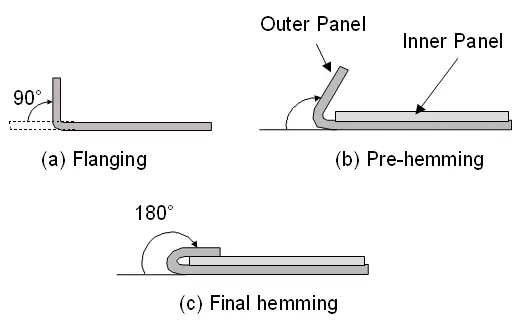
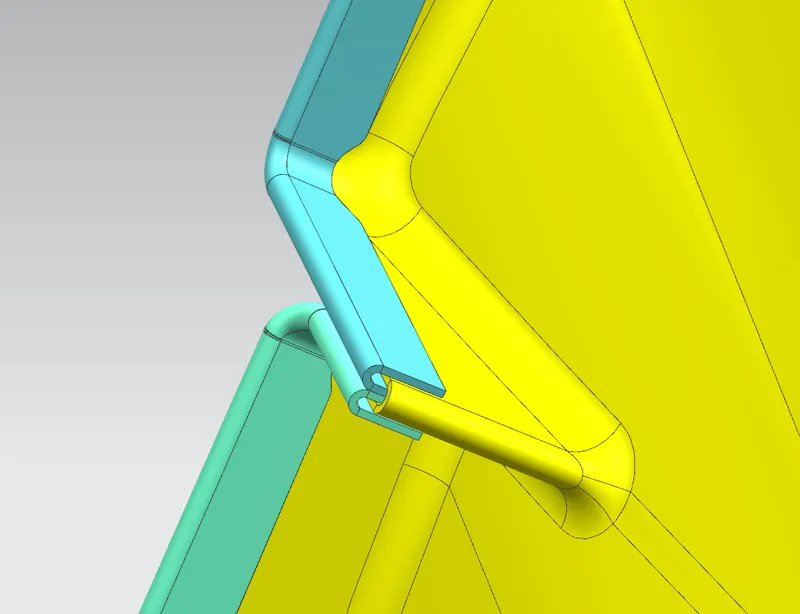
Hemming involves folding or bending the edge of a sheet metal component over itself to create a double layer or "hem." This folded edge provides increased strength, improves stiffness, and creates a smooth and protected edge.
The hemming process typically involves the following steps:
Preparation: The sheet metal component is prepared by cutting and forming it into the desired shape. The edges that will be hemmed are typically left with a slight gap or overhang to allow for the folding process.
Clamping: The sheet metal component is held in place using specialized clamps or fixtures that ensure precise positioning and alignment.
Hemming Tooling: Hemming tooling, which can vary depending on the specific application, is used to fold the edge of the sheet metal. The tooling may consist of hemming dies, punches, or rollers designed to press or roll the edge inward.
Hemming Process: The hemming tooling is applied to the edge of the sheet metal component, creating a fold or bend. The fold is typically formed by bending the outer layer of the sheet metal over the inner layer, creating a secure overlap.
Hem Sealing or Joining: In some cases, an additional sealing or joining process may be employed to further secure the hemmed edge. This can involve techniques like adhesive bonding or spot welding to ensure the folded edge remains in place and provides structural integrity.
Hemming provides several advantages in automotive manufacturing:
-
Increased strength and stiffness: The folded edge created by hemming enhances the overall strength and stiffness of the sheet metal component, improving its resistance to deformation and enhancing the structural integrity of the car body.
-
Improved appearance: Hemming creates a smooth and visually appealing edge, eliminating sharp edges or exposed raw edges. This enhances the overall aesthetic quality of the car body.
-
Enhanced corrosion resistance: By folding the edge of the sheet metal, hemming provides additional protection against corrosion by creating a sealed edge that helps prevent moisture penetration.
Hemming is a versatile process used in various automotive applications, including tailgates, doors, hoods, and fenders. Its use in tailgate manufacturing helps create a robust, visually pleasing, and durable edge that contributes to the overall quality of the car.
Construction of the tailgate :
inner panel :
1) given styling surface was not proper , so first i rectified the edges in the styling surface .
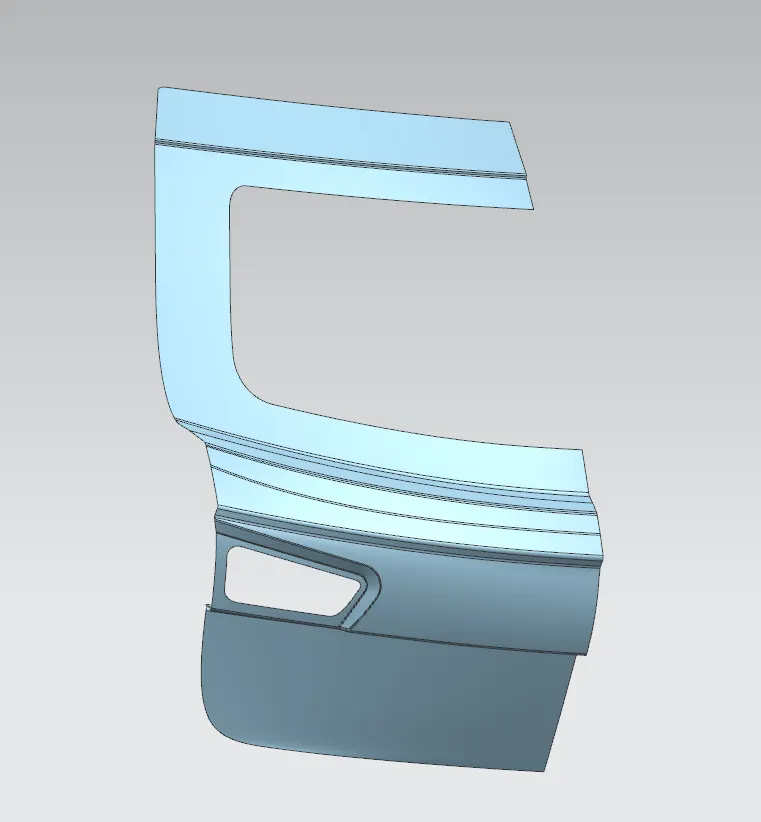
2) then created a tooling axis for the component .
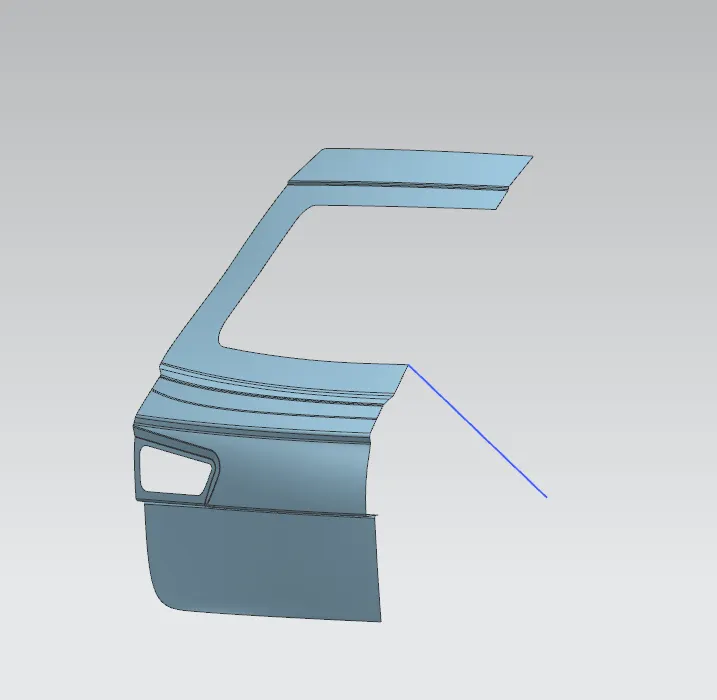
3) then created an assembly and inside of the assembly added all the necessary parts for the tail gate .
4) using wave geometry linker command , extracted the parent surface for the creation of inner panel .
5) created the inner panel which has all the necessary embosses , lances and holes considering the appropriate design methodologies.
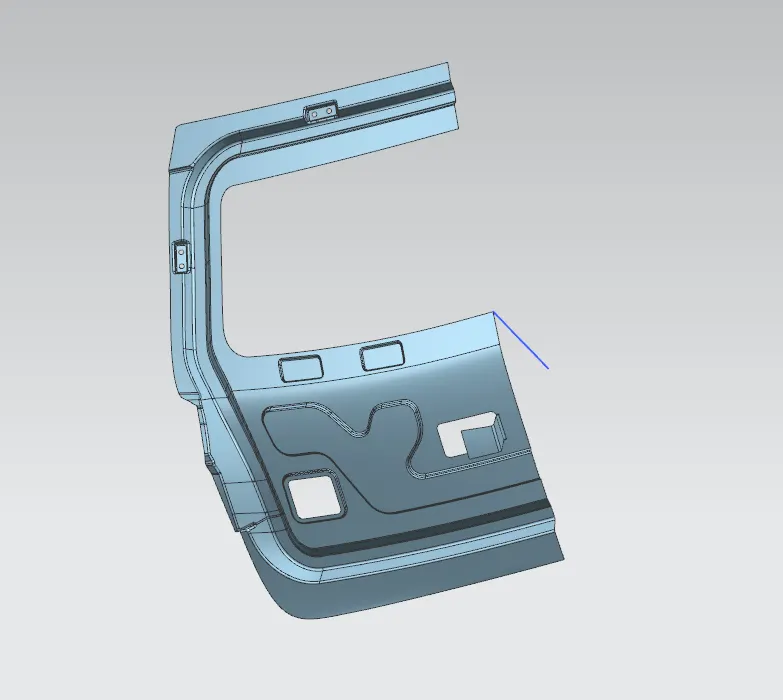
6) using the mirror and sew command , created the whole inner panel.
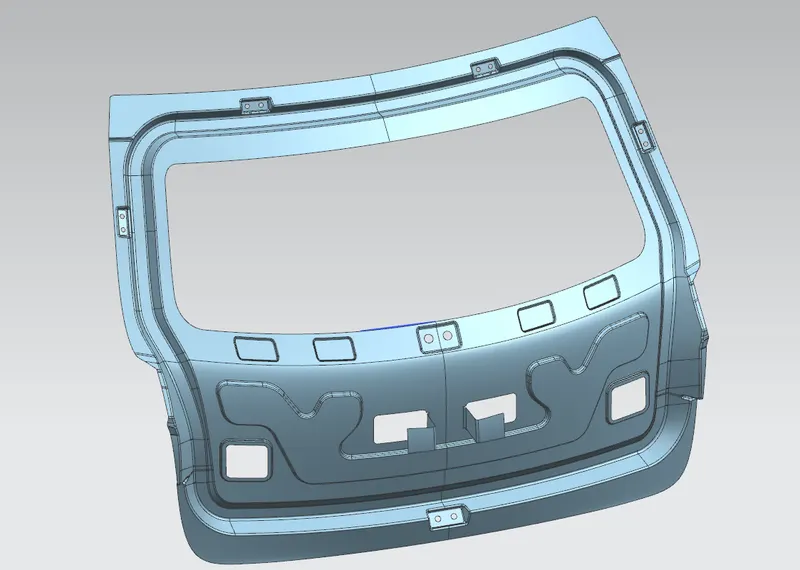
7) finally thickened the surface for 0.75mm.
Reinforcements :
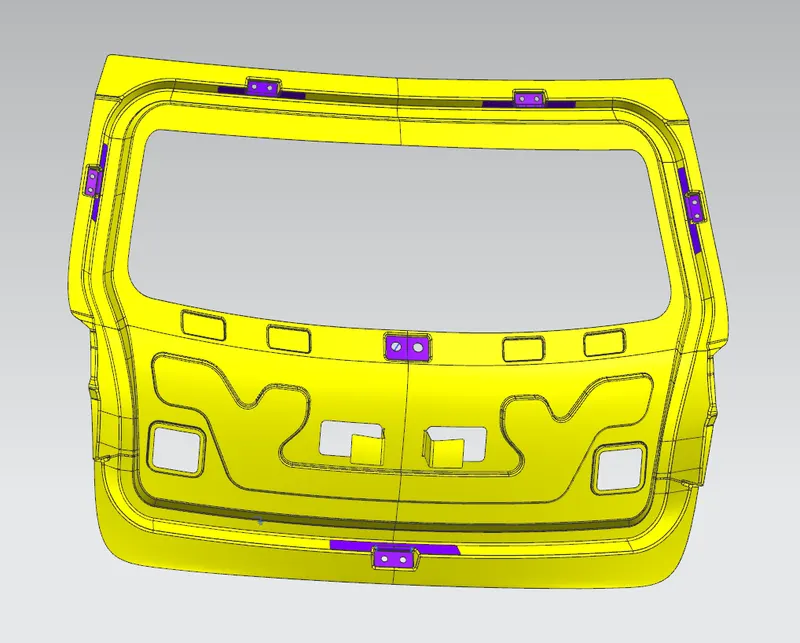
In the context of automotive manufacturing, BIW stands for Body-in-White, which refers to the stage of production where the car's body structure is assembled but is not yet painted or fully trimmed. Reinforcement in BIW components involves incorporating additional structural elements or features into the body structure to enhance its strength, stiffness, and safety performance. These reinforcements are strategically placed to improve the overall integrity and durability of the vehicle.
Here are some common types of reinforcements used in BIW components:
- Crossmembers: Crossmembers are structural elements that connect the longitudinal members of the BIW, such as the front and rear subframes or chassis rails. They provide additional support and rigidity to the body structure, helping to distribute forces and enhance overall vehicle stability.
- Side Impact Beams: Side impact beams are usually incorporated into the doors or rocker panels of the vehicle's body structure. They are designed to absorb and redirect energy during a side collision, protecting the occupants by reinforcing the side structure and minimizing intrusion into the passenger compartment.
- Reinforced Pillars and Roof Rails: The pillars and roof rails of a vehicle play a crucial role in maintaining the structural integrity during various loading conditions, such as in rollover or impact events. Reinforcements like high-strength steel inserts, bracing, or additional layers of material are often used to strengthen these areas.
- Bulkheads and B-Pillar Reinforcements: Bulkheads and B-pillar reinforcements are structural elements that enhance the stiffness and crashworthiness of the BIW. They are positioned in areas where the roof, floor, and sidewalls meet, providing increased rigidity and resistance to deformation during accidents.
- Strut Towers and Suspension Mount Reinforcements: Strut towers and suspension mount reinforcements are added in the BIW to improve the strength and rigidity of the mounting points for the suspension components. These reinforcements help to minimize flexing or deformation of the body structure, contributing to better handling and stability.
- Floor Pan Reinforcements: Reinforcements are often incorporated into the floor pan of the BIW to improve torsional rigidity and overall structural strength. These reinforcements can include added bracing, stamped ribs, or structural adhesive applications.
The specific types and locations of reinforcements in a BIW can vary depending on the vehicle's design, intended performance, and safety requirements. Automotive manufacturers employ various engineering techniques, such as computer simulations and physical testing, to determine the optimal placement and design of reinforcements to meet regulatory standards and internal performance targets.
Overall, reinforcements in BIW components play a vital role in enhancing the structural integrity, safety, and overall performance of the vehicle by providing additional strength and stiffness where needed.
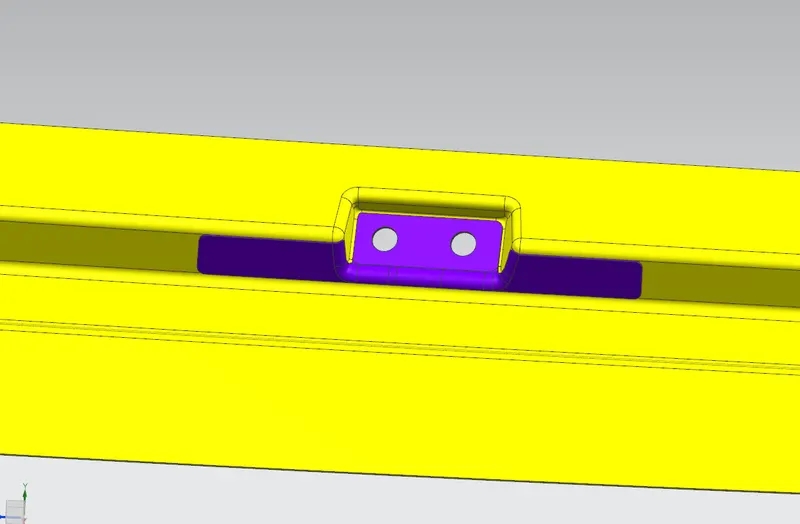
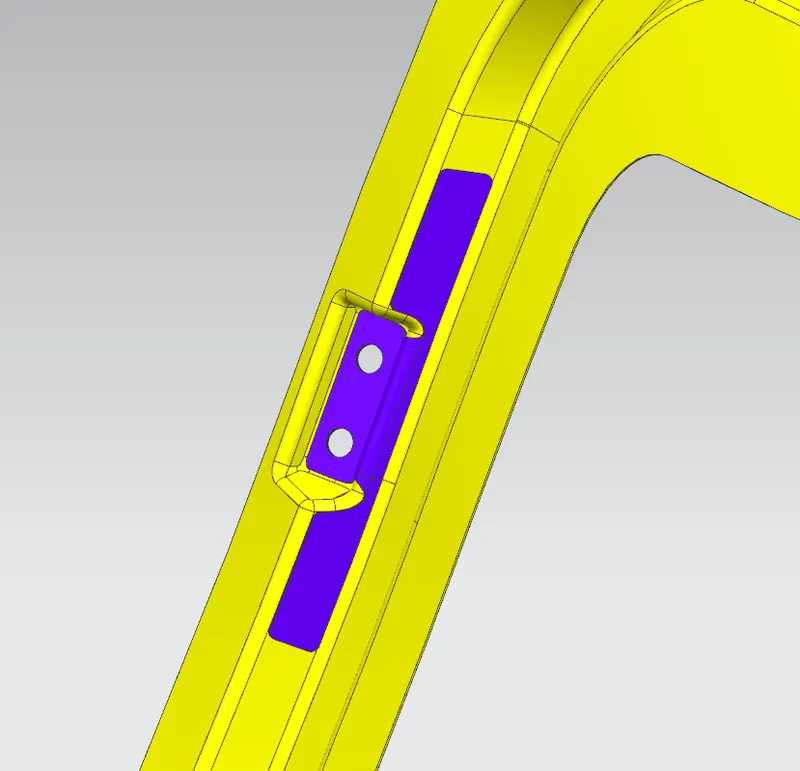
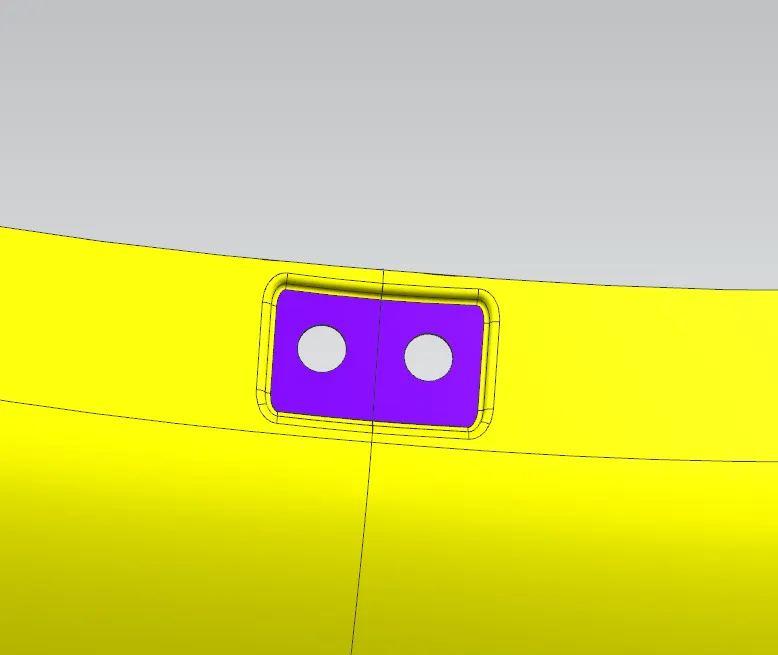
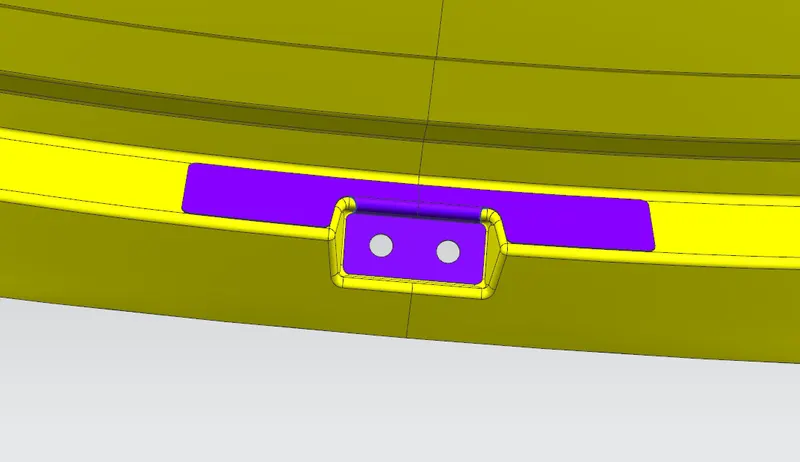
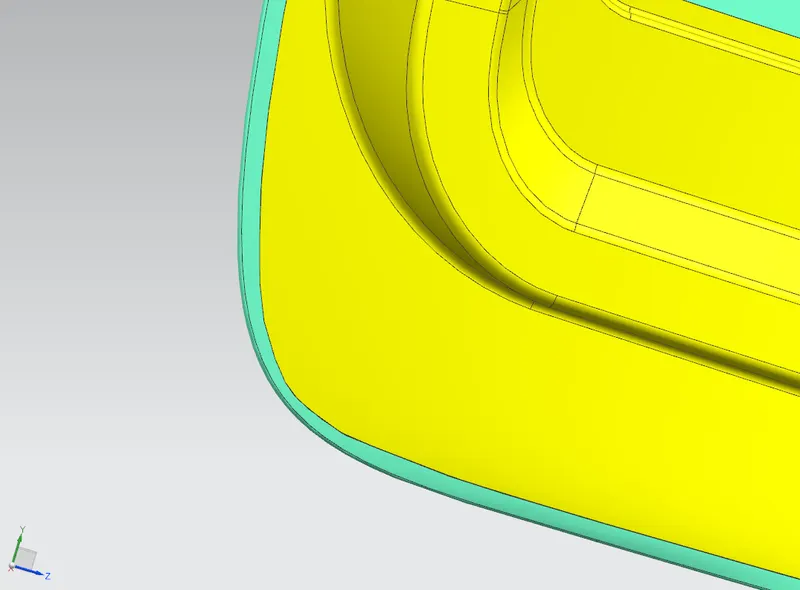
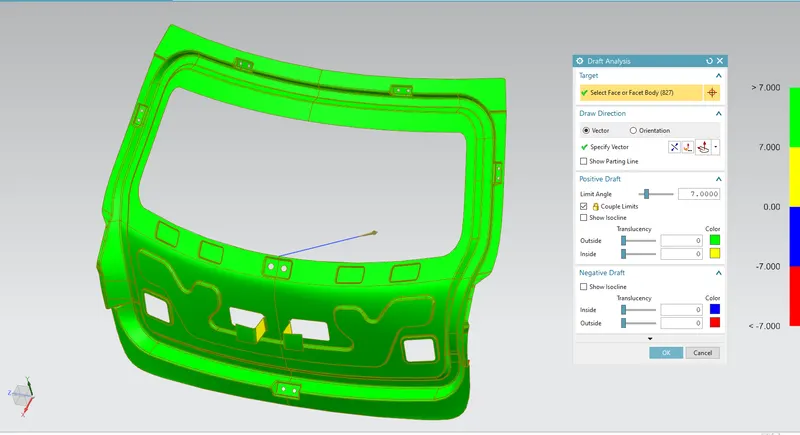
Purpose: The primary purpose of draft analysis is to determine the feasibility and practicality of manufacturing or molding a given object. It helps identify potential issues and areas of concern that may arise during the production process.
Draft Angles: Draft angles are intentional angles or tapers added to the vertical surfaces of a three-dimensional object. These angles facilitate the easy removal of the object from a mold or the smooth separation of mating components during assembly. Draft angles allow for proper ejection of the part from a mold without causing damage or deformation.
Undercuts: Undercuts are features or design elements that prevent the easy removal of an object from a mold or interfere with the assembly of components. Draft analysis helps identify any undercuts present in the design, allowing for necessary adjustments or modifications to be made to ensure manufacturability.
Moldability and Tooling Considerations: Draft analysis also takes into account the requirements and limitations of the manufacturing process, such as injection molding or die casting. It helps determine the minimum draft angles needed for successful molding, the optimal parting line location, and the proper design of tooling for manufacturing.
Software Tools: Draft analysis is often performed using specialized software tools that can analyze and evaluate the draft angles and undercuts in a 3D model. These tools can simulate the molding process, assess draft angles visually, and provide feedback on potential manufacturing issues.
Iterative Design Process: Draft analysis is typically an iterative process that involves making design adjustments based on the analysis results. Designers and engineers review the analysis feedback, make necessary modifications to the model, and iterate until an optimal design is achieved that meets both functional requirements and manufacturing considerations.