Design of backdoor
AIM
To develop the car Backdoor Design (Tail gate) with the reference of given skin data as per engineering standard.
BACK DOOR
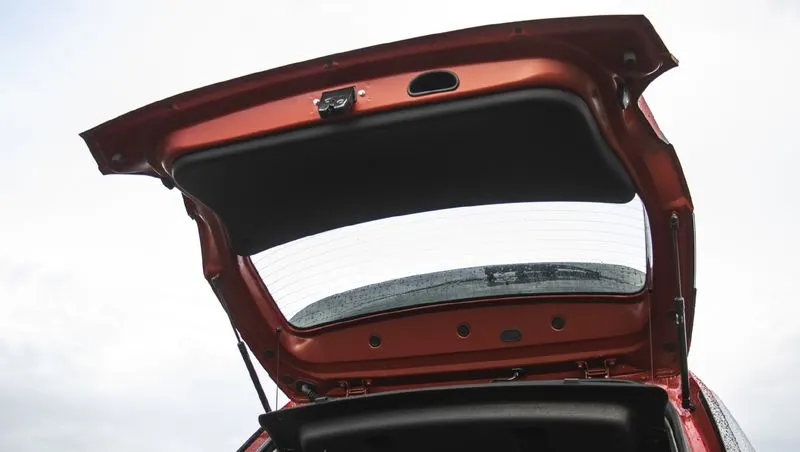
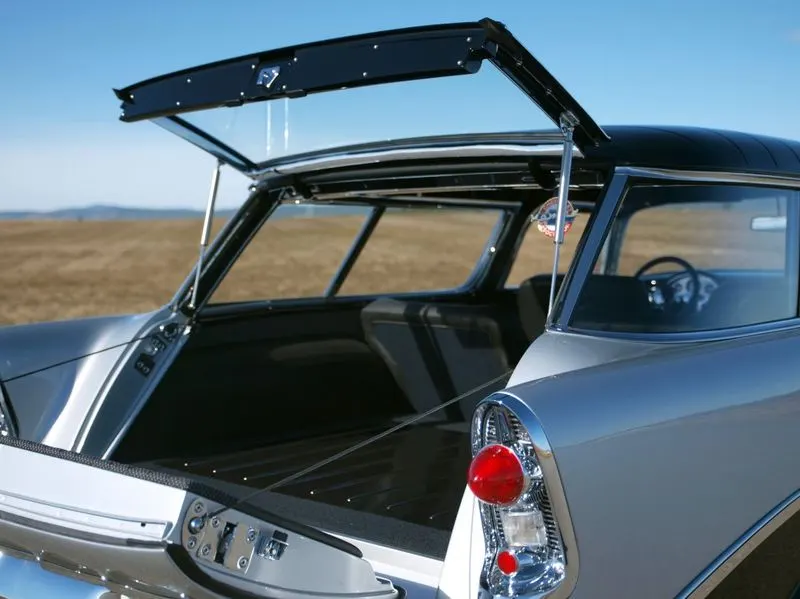
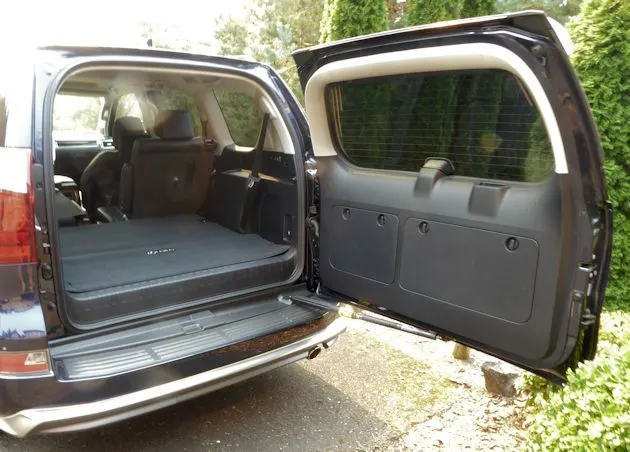
The Backdoor/Tailgate is the panel that covers the boot or trunk of an automobile. It enables access to the main luggage compartment. A hinge allows the boot lid to be raised, while devices such as springs or gas cylinders hold it up in the open position. In principle, tailgates have to fulfill similar requirements and are subject to the same design guidelines as bonnets. However, aluminium sheets are used much less for Tailgate than for bonnets. Backdoor are hinged at the top and open upwards, tailgates are lateral opening doors which are hinged at the left or right side. They greatly benefit from a reduced weight due to easier handling. In addition, a reduced weight can translate into significantly lower rear axle loads as these panels overhang the rear axle and hence additional seating capacity.
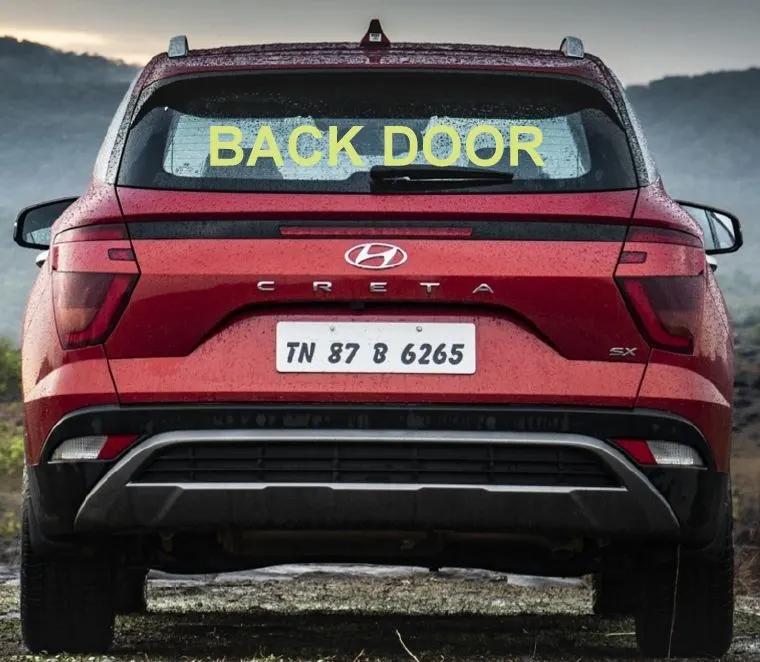
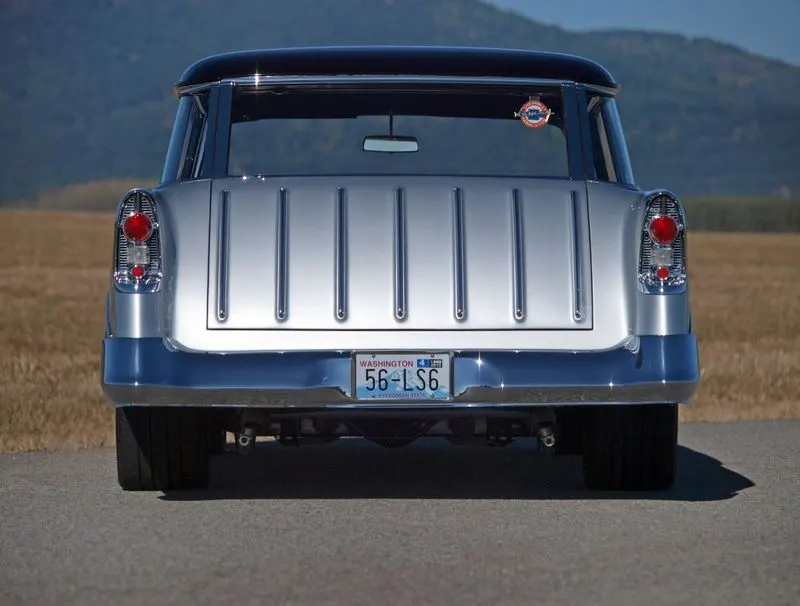
TYPES OF BACK DOOR MOUNTED DESIGN
- Top Mounted
- Bottom Mounted
- Side Mounted
TOP MOUNTED
BOTTOM MOUNTED
SIDE MOUNTED
DESIGN CONSIDERATION
- Visibility Criteria
- Latch and Striker Position
- Hinge Position
- Gas Stay Position
- Space Availability
- Drain Holes
- Hemming and Relief areas
BACK DOOR DESIGN THICKNESS FOLLOWING
- Outer Panel - 0.75 mm
- Inner Panel - 0.75 mm
- Reinforcements - 0.75 mm
BACK DOOR ASSEMBLY COMPONENTS
- Inner panel
- Outer panel
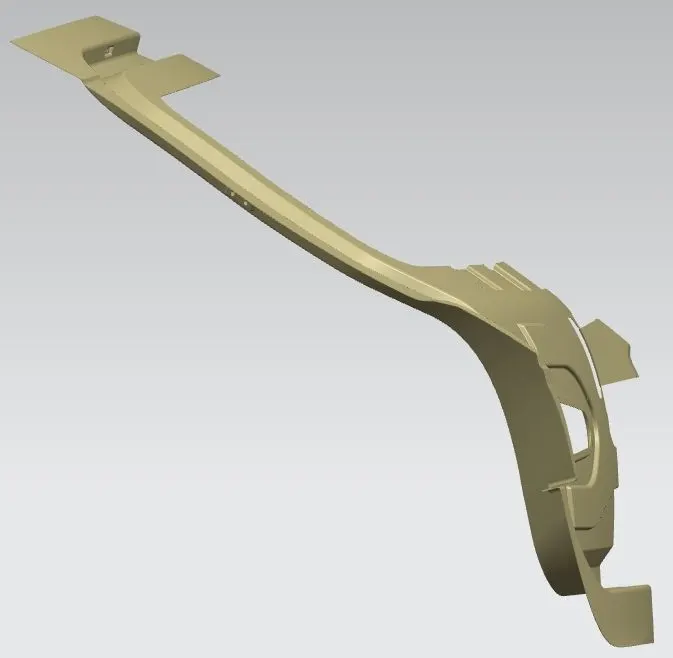
- Hinge reinforcement
- Gas stay reinforcement
- Wiper motor reinforcement
- Latch & striker reinforcement
INNER PANEL DESIGN
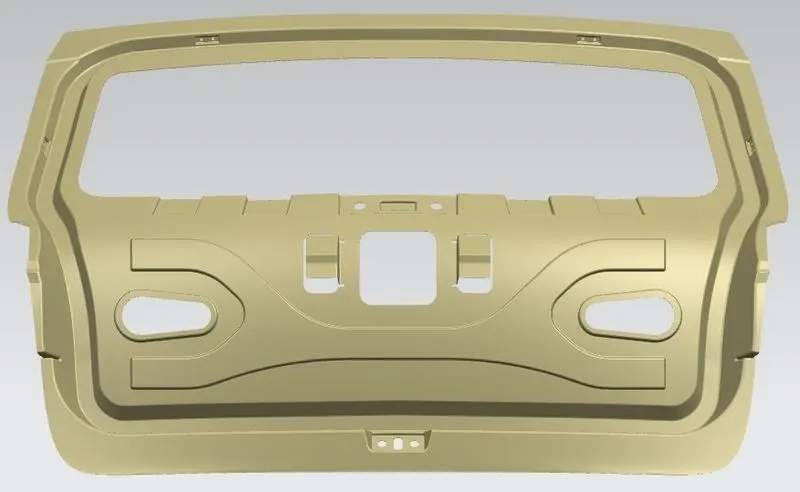
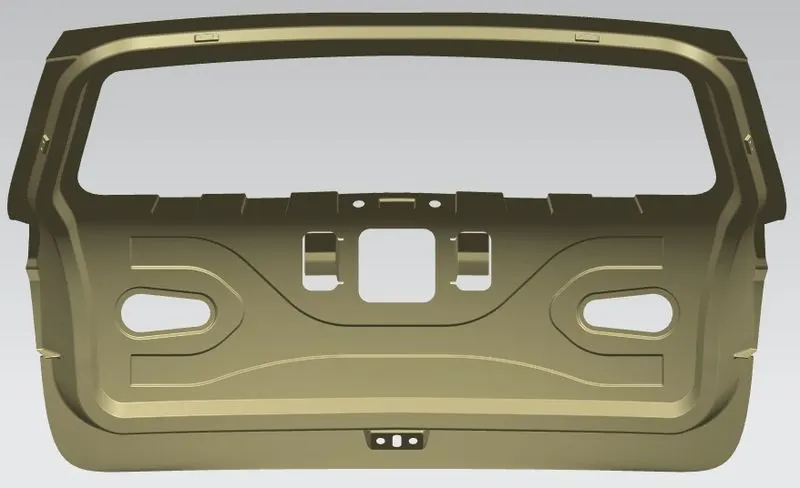
Inner panel is a component which is used for strengthening the door and it is one of the most important components are Hinge mounting, Wiper mounting, Latch & striker mounting, gas stay mounting. Most of the materials are using for inner panels like steel, aluminium, for giving more strength to the inner panels by adding extra reinforcements to strengthen the parts.
OUTER PANEL
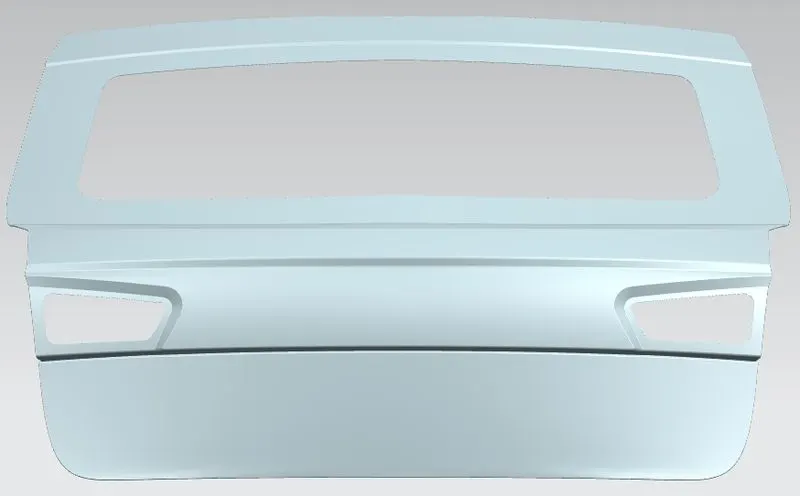
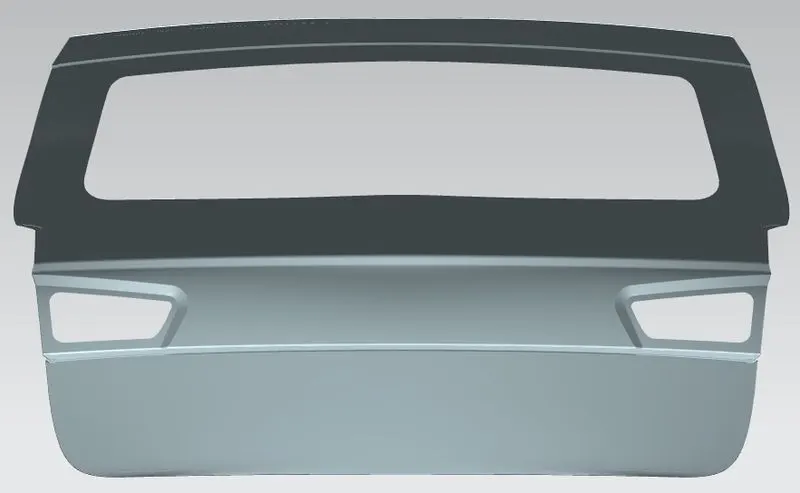
The Outer panel of the back door is similar to other BIW components where it is the aesthetic part of a vehicle. The coating provided is of multi stage which has the property of scratch resistance, rust prevention and smooth and attractive finishes. The Outer panel also has the provisions for the tail lamp, rear fog lamp and also has the provision for number plate mountings. Most of the hatch back cars have the provision for wiper motor.
HINGE REINFORCEMENT
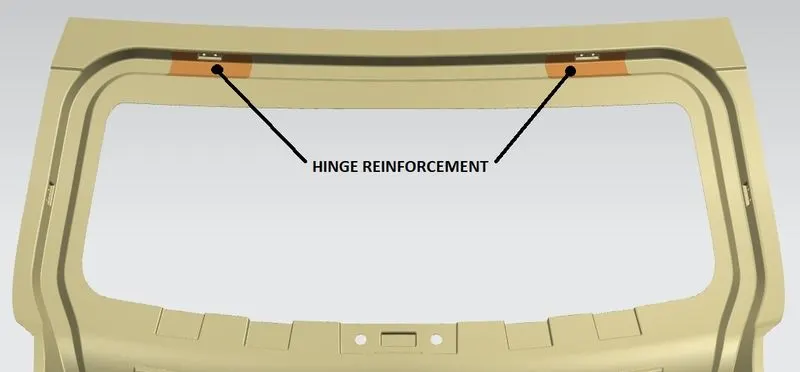
Hinges are the essential that allows doors to pivot on one edge as they open and close. They are found on virtually all doors. It is a mechanical bearing that connects two solid objects, typically allowing only a limited angle of rotation between them.
Hinge reinforcement support the weight of the whole backdoor. Hence reinforcement is provided here too. Emboss is designed such that the hinges should operate freely. The electrical wiring looms are through the holes along the periphery to keep them hidden.
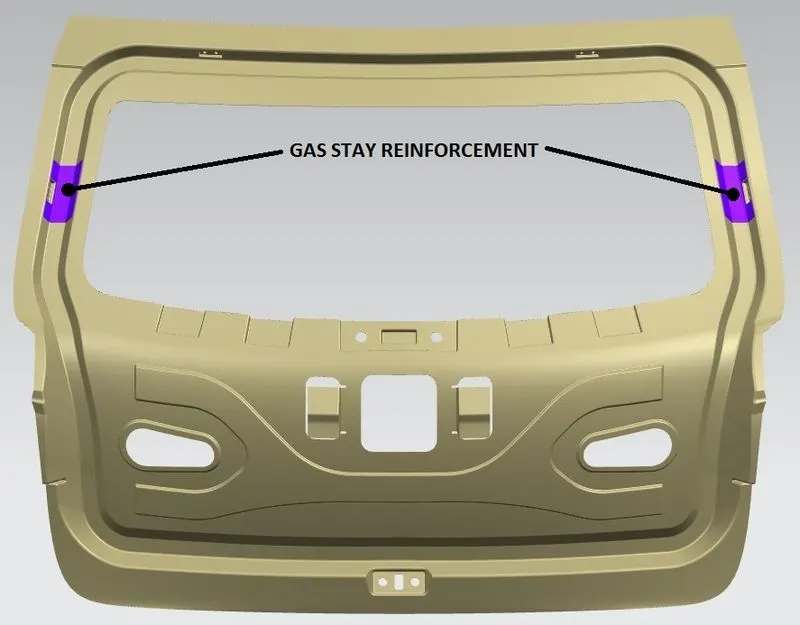
GAS STAY REINFORCEMENT
While opening and closing the backdoor gas stay plays a major role here, We using gas stay for backdoors is for smooth opening and closing.
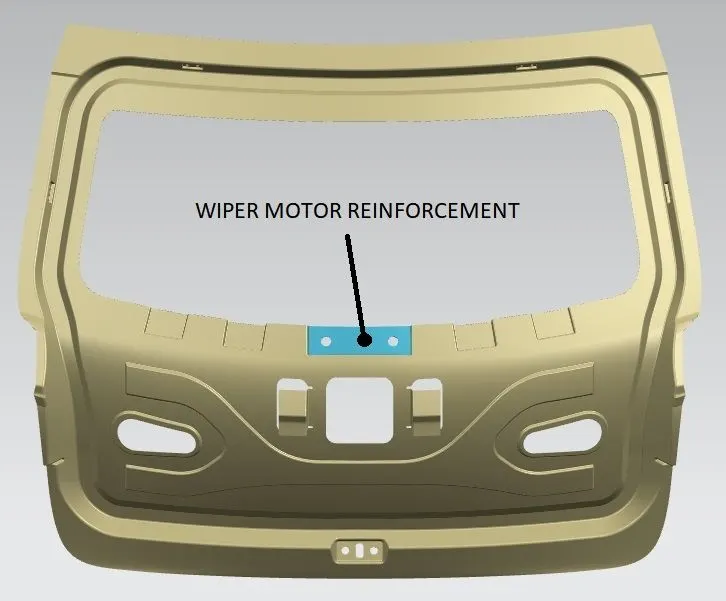
WIPER MOTOR REINFORCEMENT
It is small electric motor which is mounted in the rear tail gate. It used to clean the rear windshield for clear visibility.
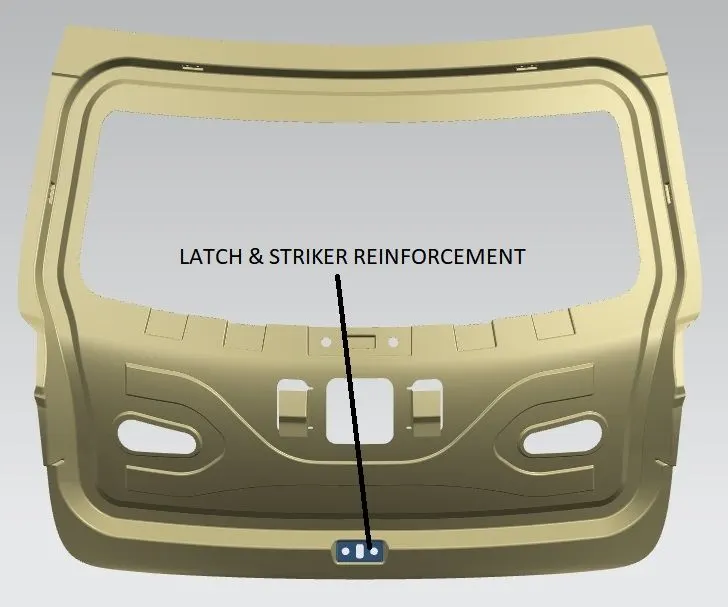
LATCH & STRIKER REINFORCEMENT
At the bottom of the latch and striker assembly Generally a key operated or automatic remotely controllable locking mechanism is used to keep the door close and open.
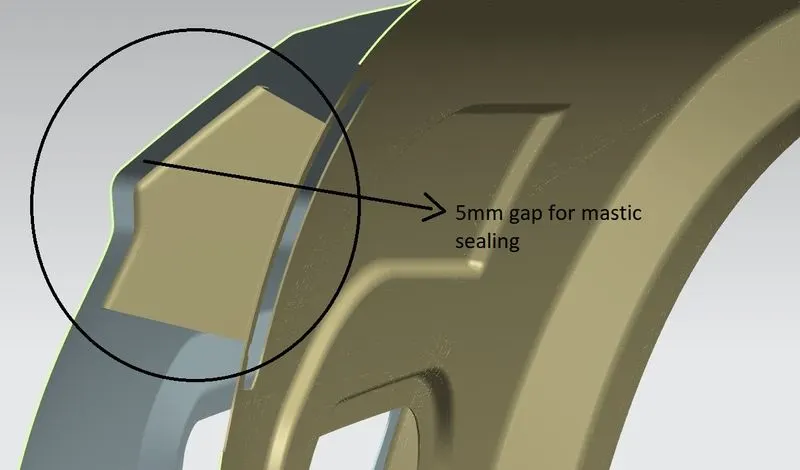
MASTIC SEALING
As we know that the main purpose of the outer panel is for the aesthetic looks. Thus we cannot use bolts or welding. This has to be done with the help of the hemming and mastic sealants. Mastic sealants are elastic compound that behaves like the rubber. It is placed between the outer and inner panel. Initially is it in paste form, but after the hot furnace bath it gets hardened thus joining the outer and inner panel. Mastic sealant has the tendency to increase the strength of the panel and has influence of 80mm diameter.
FORCE DISTRIBUTION
When the car hit at rear end, the force which acted should be react outside. The Y/V emboss which is helps to move the force to the outer end.
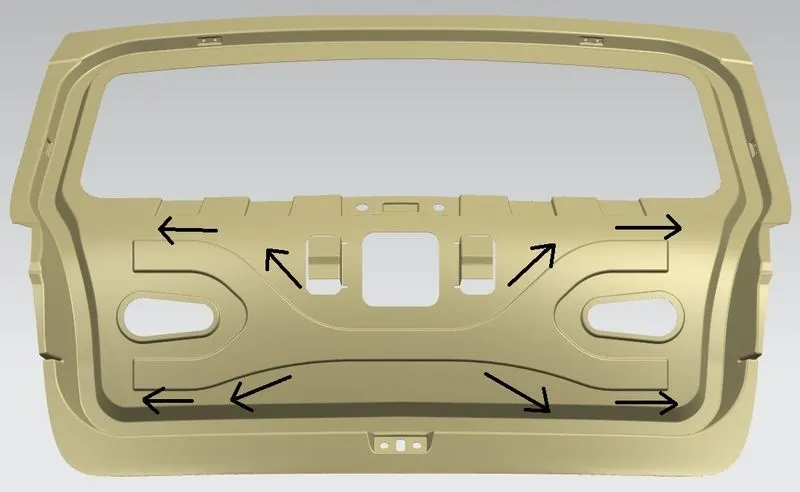
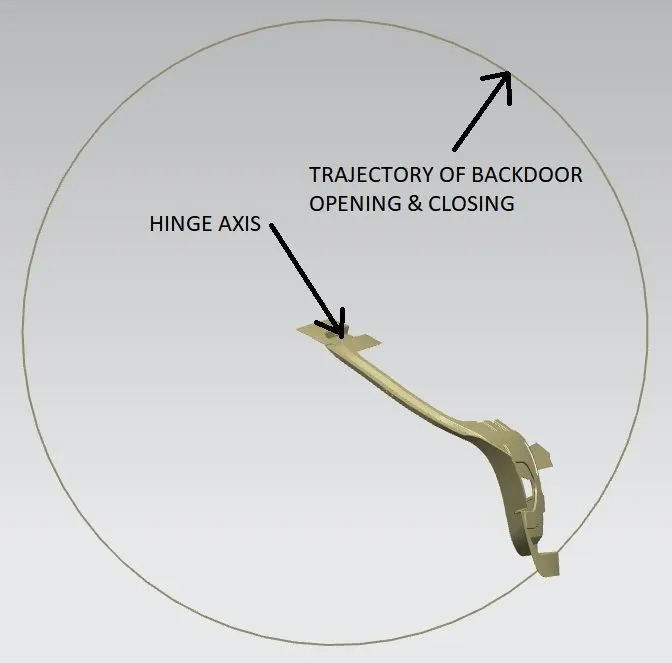
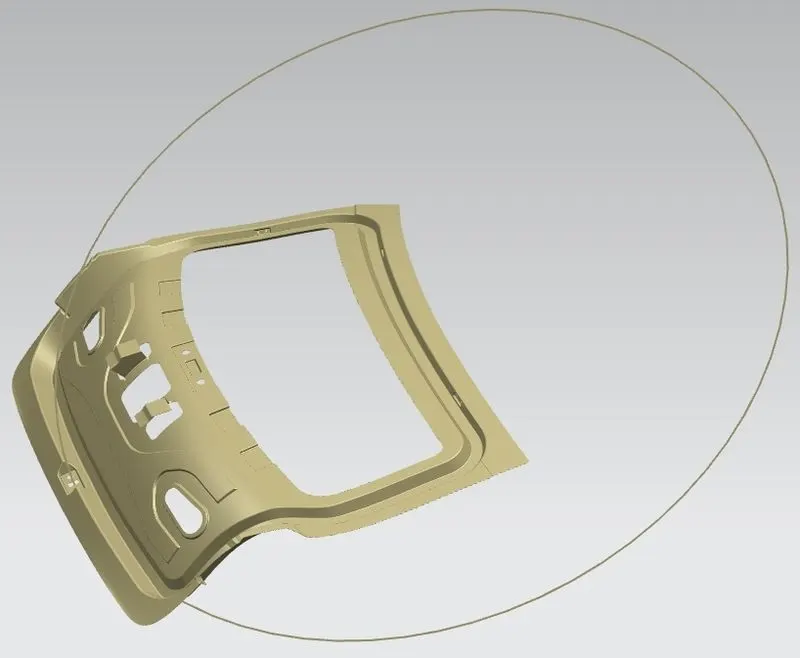
LATCH AND STRIKER POSITIONING WITH RESPECT TO HINGE AXIS
CORNER RELIEF
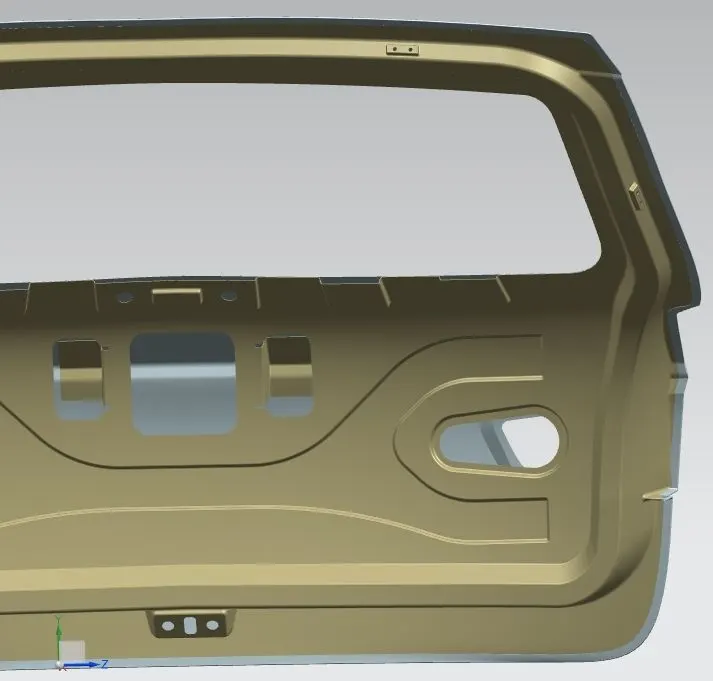
Relief helps to control sheet metal material behavior and to prevent unwanted deformation during unbend operations.
HEMMING
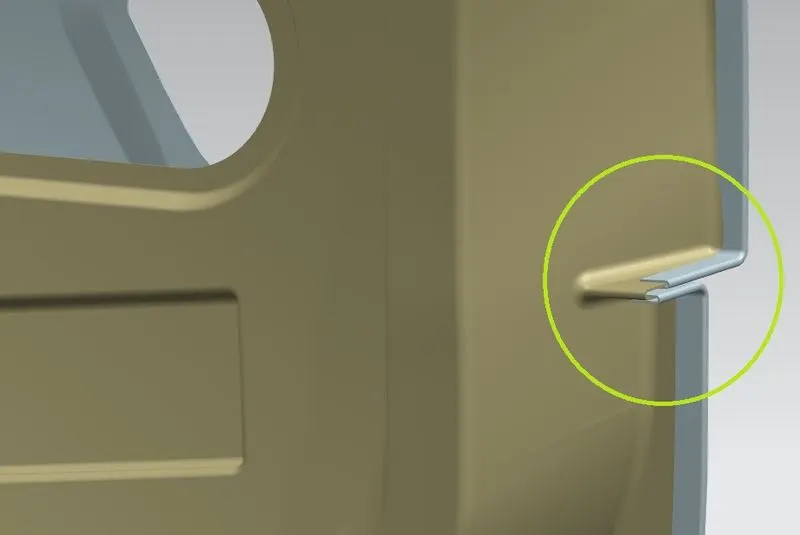
Hemming is the process in which the edge is rolled flush to itself, while a seam joins the edges of two materials. Normally hemming operations are used to connect parts together, to improve the appearance of a part and to reinforce part edges. Relief is provided onto the part or component in order to remove any stresses developed in a particular area, sharp corners that takes place during the hemming process is carried out. Thus corners are rounded or chamfered.
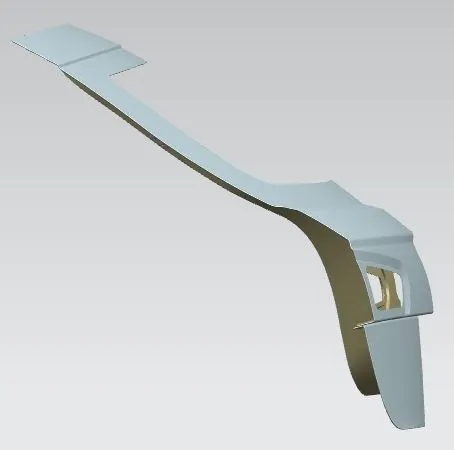
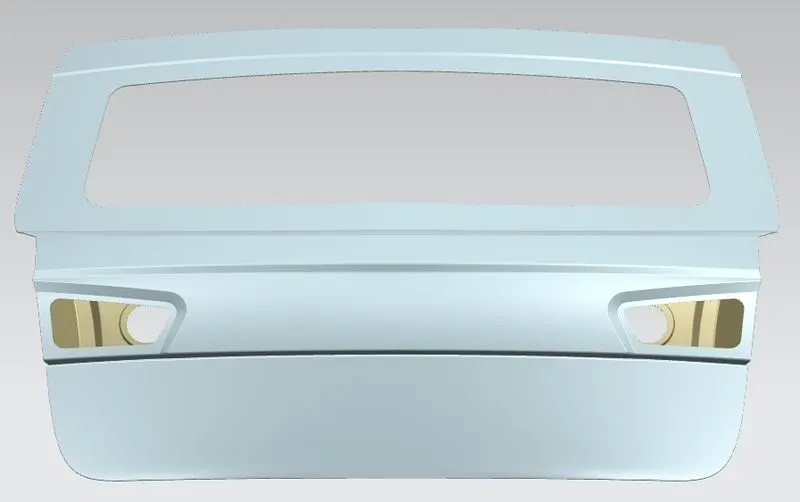
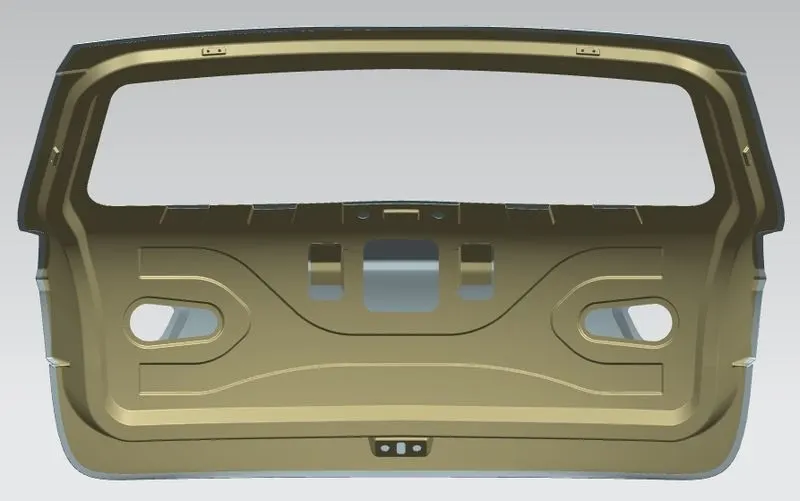
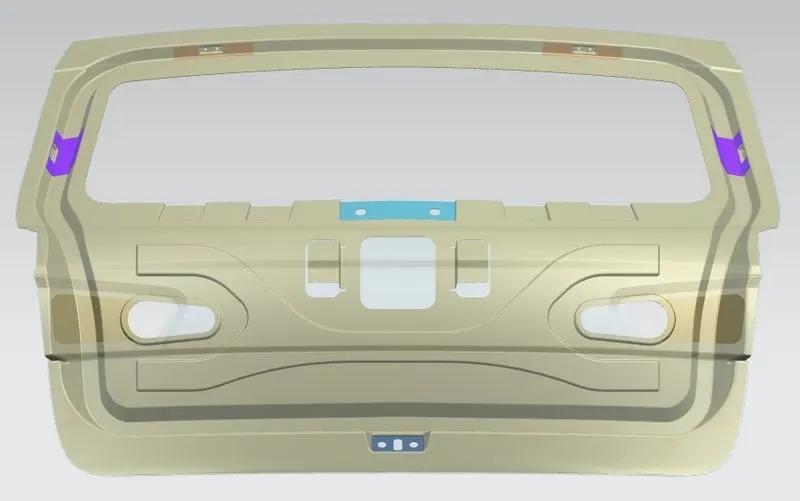
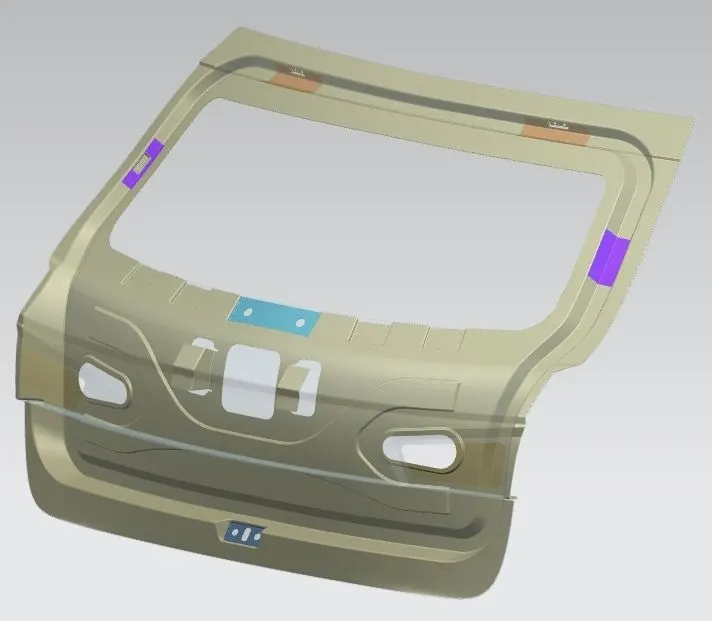
BACK DOOR DESIGN ASSEMBLY OUTPUT IMAGES
CONCLUSION
Design of the Back door BIW was completed with the engineering standard and all the reinforcement.