Design of backdoor
BACK DOOR :
The back door of the car protects the rear portion of the car as well as covers the boot space, and it also said to be " tail gate ". In the back door there will be the glass window for rear vision, and also tail lamp, indicator light, stop light will be located in the back door of a car. The tail lamp will be either fully fitted in the back door or split tail lamps are also there partialy one of will be on the back door and other will be in the rear portion of the body side part.The back door aslo contains the wiper assembly.
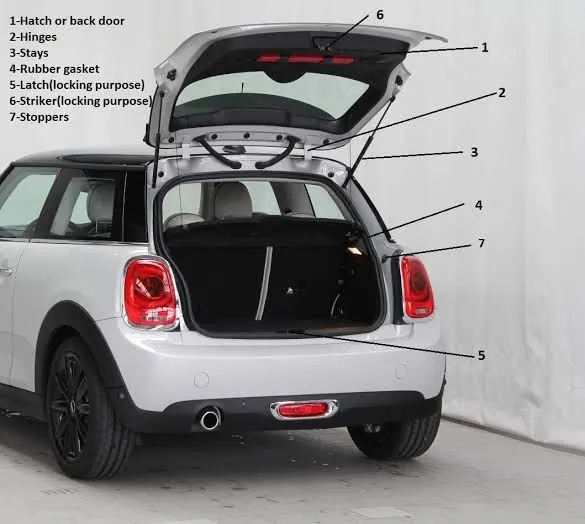
The major considerations on designing the back door are as follows;
- Opening Angle of the back door
- Hinge and Striker Trajectory
- Gas Stay position
- Rear vision
- Rear crash force acting regions
- Boot luggage Space
- Weight of the back door
The opening angle of the car back door is majorily depend upon the location of the gas stay mount, while it is of minimum distance from the upper end then the opening angle will be maximum, opening angle will be totally depend upon the people height on different regions. Either we can use gas stay or power lifter for lifting the back door,we get the gas stay mount area from the body side designing team.
The hinge mount will either inside back door or outside the back door, we get the hinge mount area from the roof assembly design team.
Most of the premium car manufacturers use aluminium parts in back door rather than steel. Comparetively Al weighs less than steel and costs more than steel. Al parts can only casted while steel parts are only produced stamping process so it follows uniform thickness. In case we using Al metal for back door then reinforcements may be neglected.
Components designed in the Back Door Assembly :
- Outer panel Upper and Lower
- Inner panel
- Hinge Reinforcements LH and RH
- Gas stay Reinforcements LH and RH
- Wiper Motor Reinforcements
- Striker Reinforcements
Back Door Outer Panel:
In Designing the outer panel Upper and Lower as separate components and later it will be joined by spot welding process. The surface should be smooth as class A .
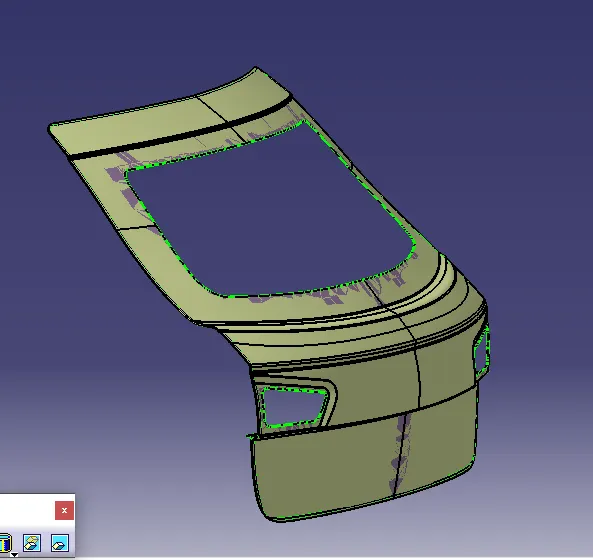
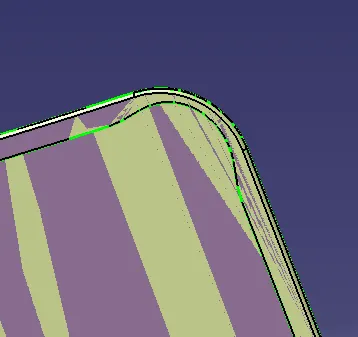
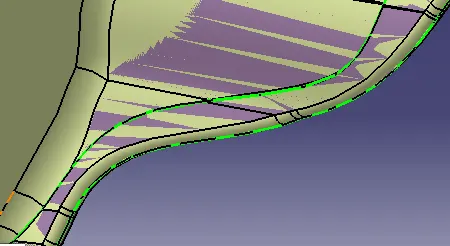
Corner reliefs to be given to the hemming.
Back Door Inner Panel:
The inner panel of the back door has the sealing flange , where the rubber sealant fitted in the body of the car comes into contact with the sealing flange in the back door, it is to prevent the entry of water and foreign particles into the boot space while back door is in closed ,it seals the minute gap .
The wiper motor also assembled in the back door inner panel. and flat embosses are created for the mounting of Hinge ,Gas stay and Striker components. And aslo provide holes for fasteners.
Inner panel and Outer panel are joined by hemming process.We a sheet from outer panel over the inner panel with hem glue. Corner reliefs are provided to the hemming sheet to avoid breakage and scrap management. In addition to the hemming process we create a cutout in the middle of the inner pannel lower side with that cutout, we extract a mastic emboss and join the inner and outer pannel with mastic glue.
For the assembly of tail lamps and indicator lights we provide a cutout and aslo for the actuators , we need to maintain uniform cutouts to maintain weight balancing.
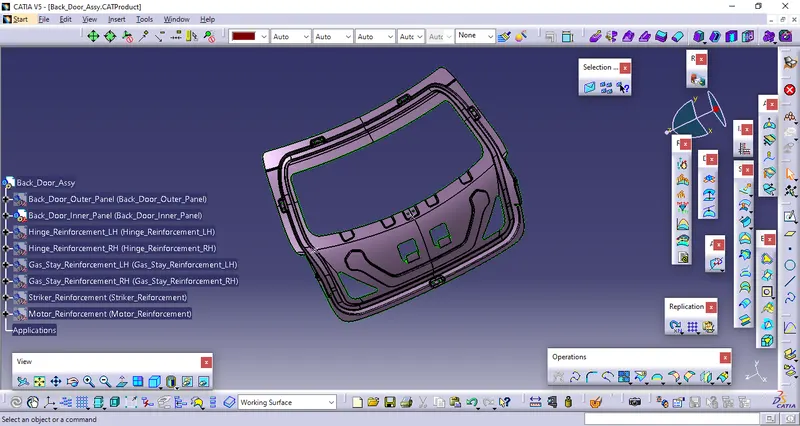
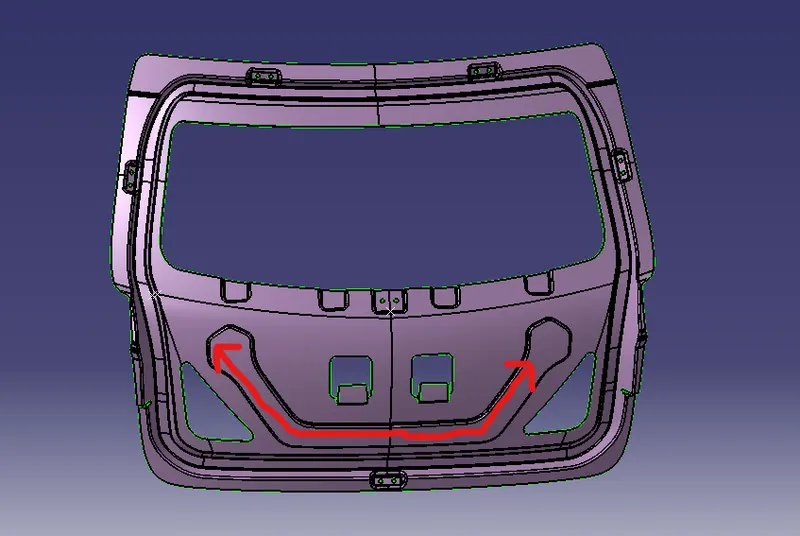
Force Acting Areas :
With an sudden impact or rear crash the force majorily act in Y or V direction , so to deviate the forces through the inner panel we provide emboss in Y or V shapes.
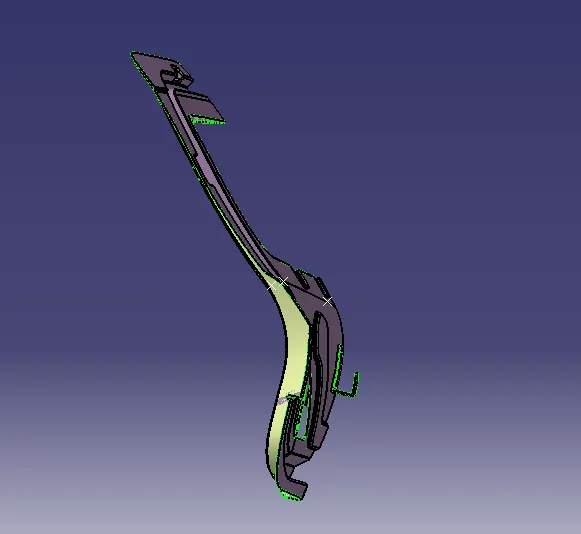
The outer and inner panel are given thickness of 0.75mm inwards and outwards respectively.
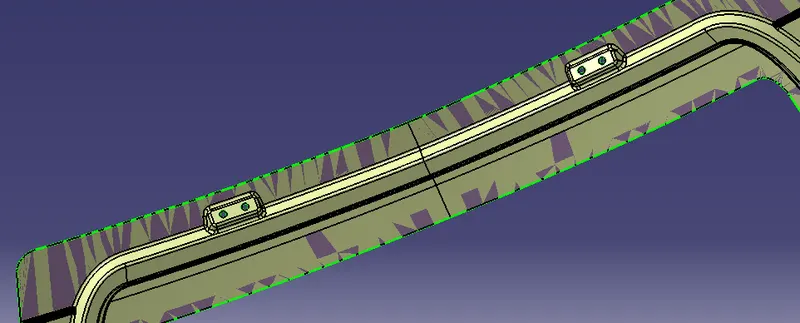
Reinforcements:
While manufacturing the back door with steel we need to provide reinforcements such as hinge,gas stay, wiper motor and striker.
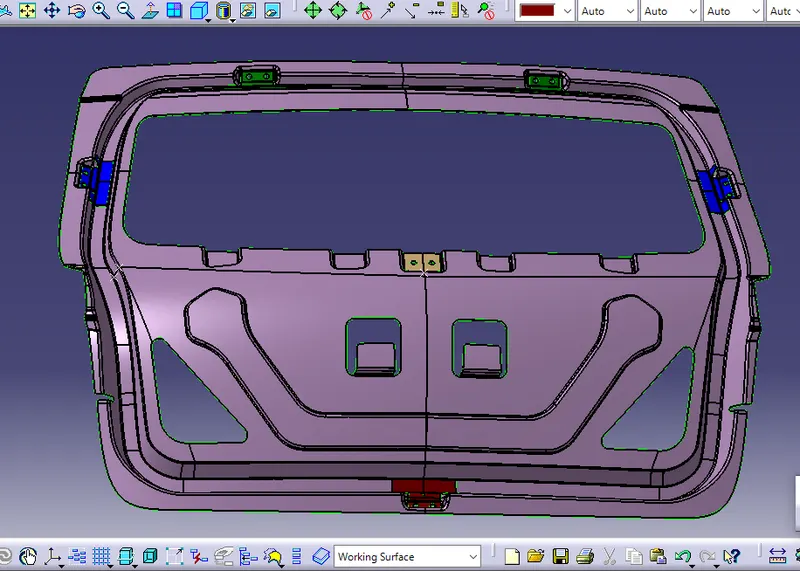
These reinforcements are made out of scrap materials. it can joined with the inner panel by spot welding process. A thickness of 1mm is given to all the reinforcements.
DRAFT ANALYSIS:
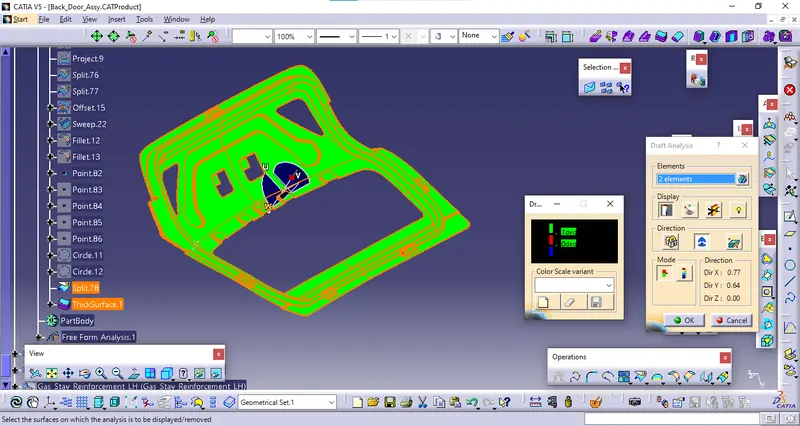
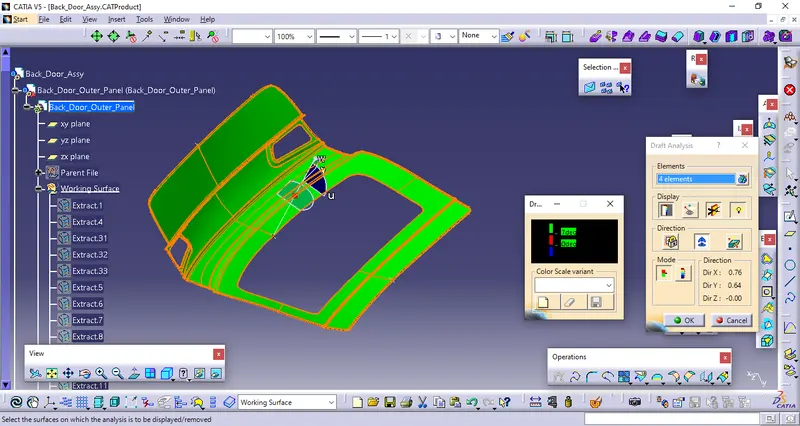
The draft analysis is mainly done to check whether the designed product is desirable to produce. So it needs to pass the draft analysis.