Design of backdoor
Aim:-
To design the back door of the car using the given styling surface.
Back Door:-
It is a hinged door at the rear of the vehicle that can be opened or closed as per requirements. It is also called 'Hatch' or 'Tailgate' or 'Trunk-lid' or 'Boot-door'. It’s the rearmost part of the vehicle which gives access to the trunk or luggage compartment of the car and has mounts for tail lamps, hinges, wiper motor, gas stay, parking sensors, rearview camera, etc.
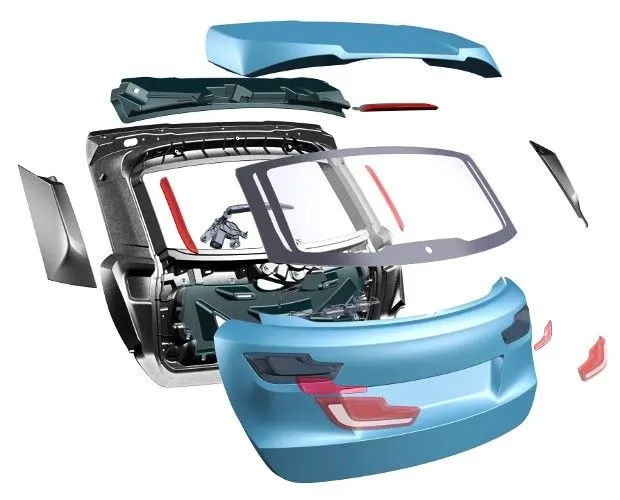
Fig.1: Back door exploded view
Following are the types of back doors based on the mounting positions:
- Top-Mounted Back Door:
The back door is hinged with the top part i.e., the roof of the car. These types of back doors are used in station wagons, pickup trucks, and some other small cars. Today’s modern cars use top-mounted doors as they provide greater rear visibility compared to other types.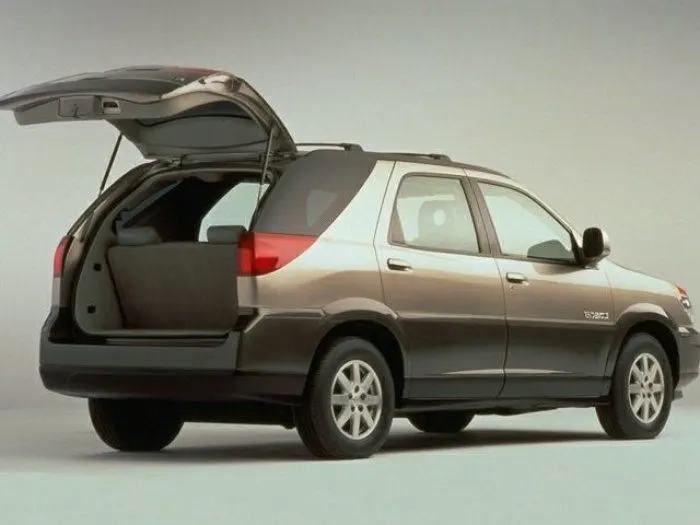
Fig.2: Top-mounted back door - Side-Mounted Back Door:
As the name says the side-mounted back doors are hinged with the side body of the car. It is generally used in vans, MPVs, SUVs, and pickup truck vehicles. These side-mounted doors are a lot easier compared to top-mounted ones for loading/unloading luggage/goods in vehicles. These doors are more convenient for the goods handlers carrying lengthy objects.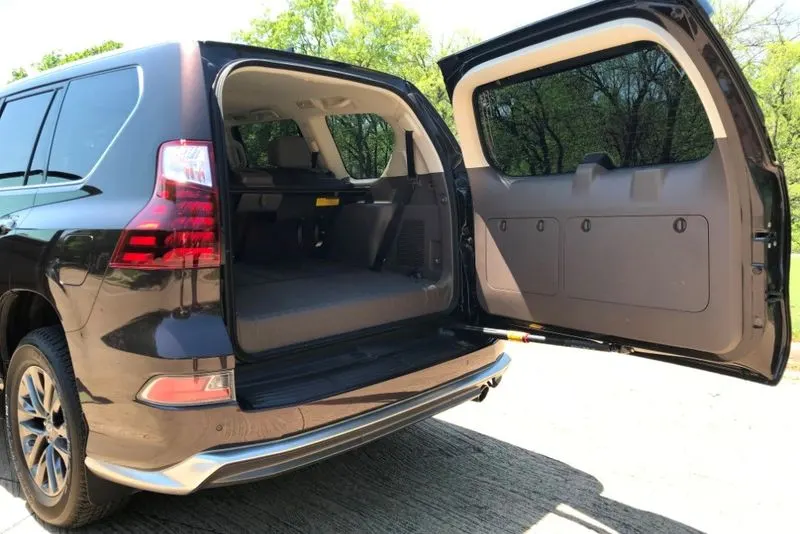
Fig.3: Side-mounted back door - Bottom-Mounted Back Door:
Bottom-mounted or split-type back door system is used in estate-type cars, pickup trucks, and some luxury SUVs. These are the most convenient type of back doors in which the bottom split is used as a support or even as a table for touring people.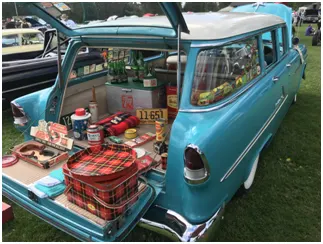
Fig.4: Bottom-mounted back door
Selection of Material and Manufacturing Process:-
The selection of material plays a major role in determining the overall weight of the back door. The common materials used are Steel & Aluminum. The density of Steel is higher than Aluminum thus adding more weight to the door. The material used in the manufacturing of the backdoor depends upon the budget of the car, most low-cost vehicles use steel as it is cheaper compared to Aluminium. Another aspect is to be noted that if casted Aluminum parts are used instead of deep-drawn steel parts there is no need for reinforcements and the overall weight of the car is reduced by approximately 5-10kg thus increasing the performance of the vehicle. Also, the draft angle for casted parts is around 3 degrees while for deep drawn parts is around 7-10 degrees which helps in increasing the luggage/cabin space.
Components of Back Door:-
Following are the components of the back door which are designed:
- Outer Panel:
The outer panel of the back door is the aesthetic part of a vehicle. The outer panel is provided with a coating multi-stage which has the property of scratch resistance, rust prevention, and smooth and attractive finishes. The outer panel also has provisions for the wiper motor, tail lamp, rear fog lamp, parking sensors, rearview camera, and license plate mountings.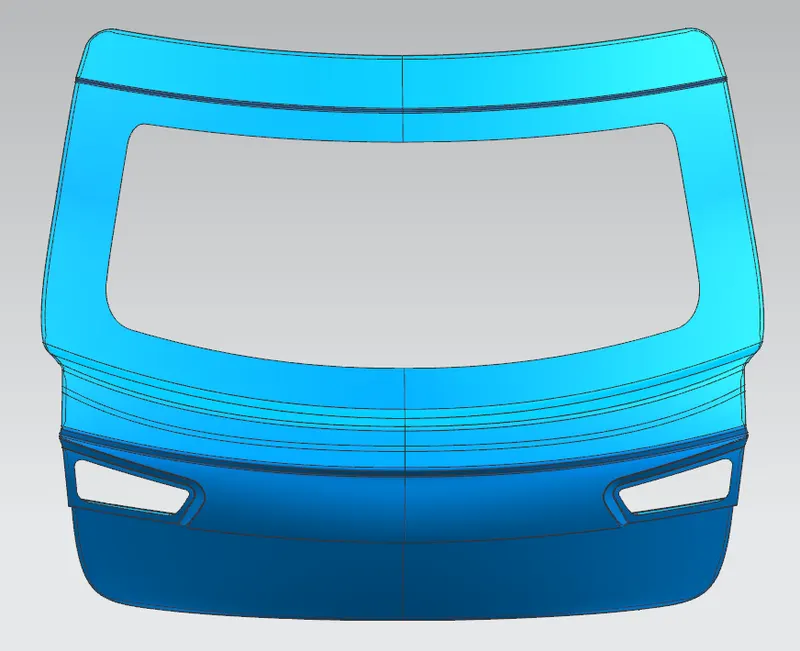
Fig.5: Outer panel of the back door - Inner Panel:
The inner panel is a component that is used for strengthening the door assembly and it is one of the most important components on which all accessories are mounted like hinges, glass guide channel, latch, etc. The possible method is the integration method. In the integration method, the part is stamped out of a single blank. This reduces the number of tools needed, assembly cost, and eliminates any fit ability problem.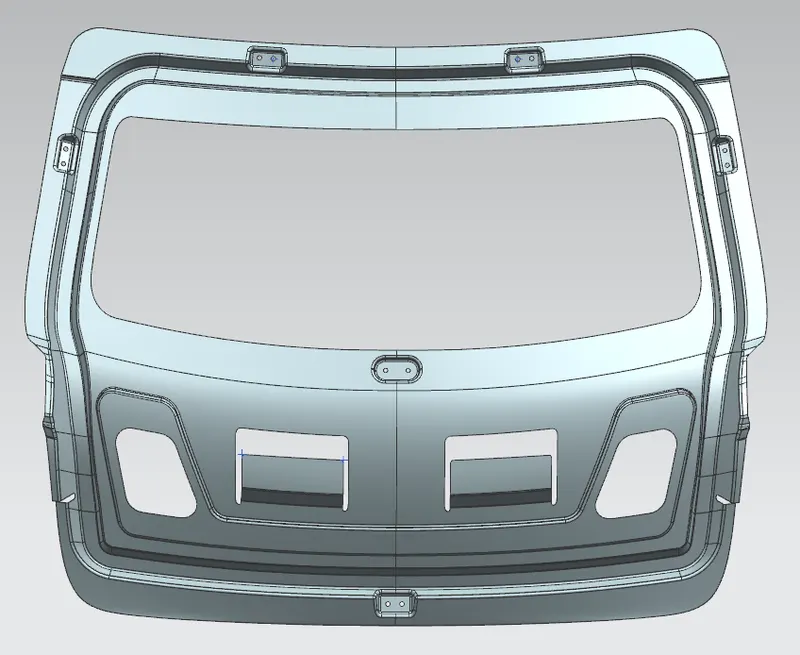
Fig.6: Inner panel of the back door - Reinforcements:
The reinforcements are the extra material addition of greater thickness to the region to increase the strength of that region locally.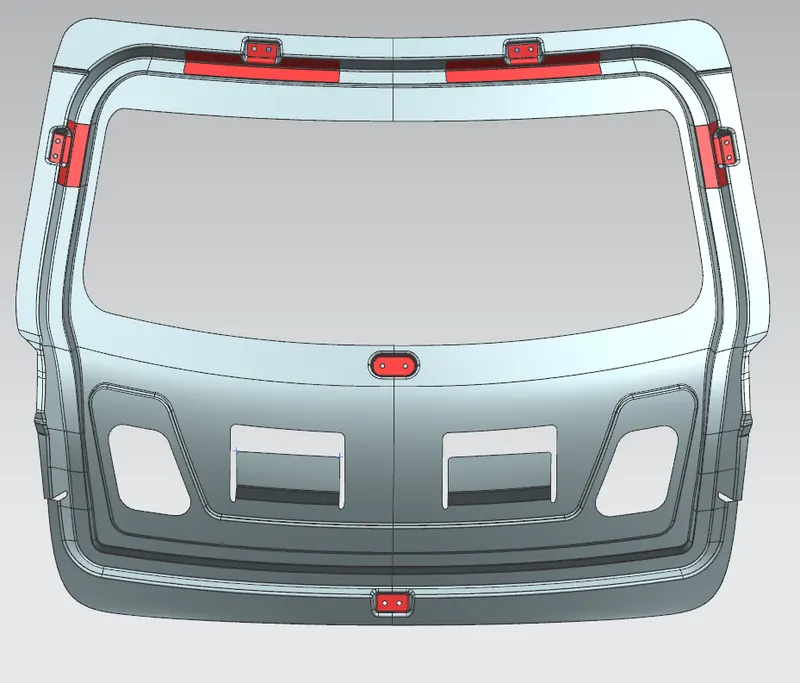
Fig.7: Reinforcements for the back door
The following are the reinforcements designed:
- Hinge Reinforcement:
Hinges enable the opening and closing of the back door about an axis. The hinge reinforcements are added to compensate for the weak region where hinges are mounted due to the acting load over it.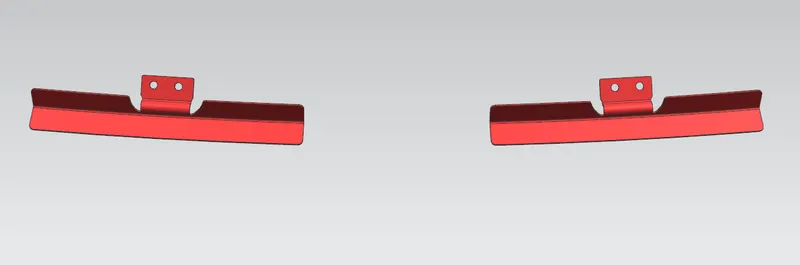
Fig.8: Hinge reinforcements - Gas Stay Reinforcement:
Gas Stay is a device used for supporting the back door in its open position. The gas stay reinforcement is provided at the gas stay mounting area to compensate for weakness and improve strength.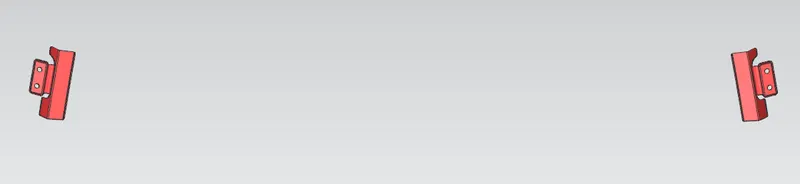
Fig.9: Gas stay reinforcements - Wiper Motor Reinforcement:
Wiper motor reinforcement is created to mount the wiper motor assembly as well as to increase the strength there.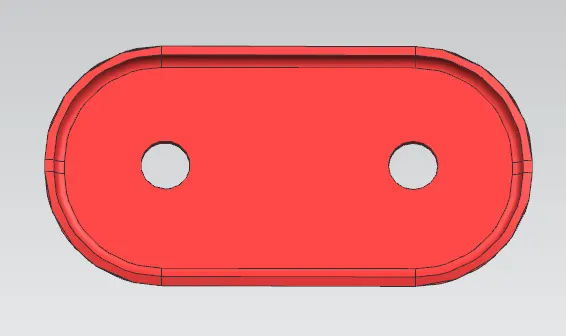
Fig.10: Wiper motor reinforcements - Striker Reinforcement:
The Latch & Striker forms the locking mechanism of the back door with the car. Due to regular opening, closing, and over-slamming of the back door, there is stress developed in the Striker area. To compensate for the same, reinforcements are added in this area.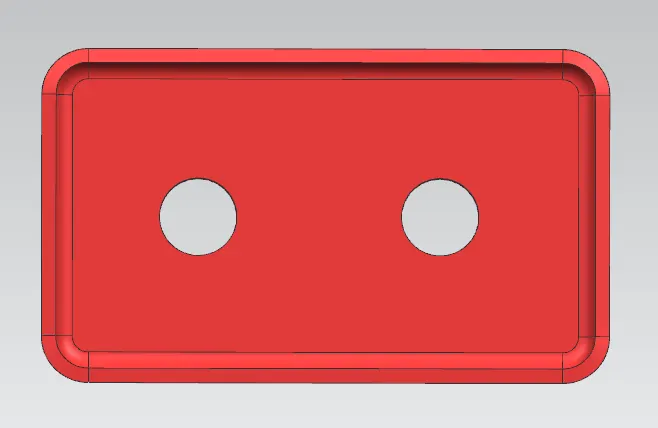
Fig.11: Striker reinforcements
- Hinge Reinforcement:
Joining Process:-
The outer upper panel and the outer lower panel are joined using spot welding, the inner panel and the outer panel are joined using hemming operation, also mastic sealants are provided between the inner panel and the outer panel in some areas to improve the strength of the back door assembly.
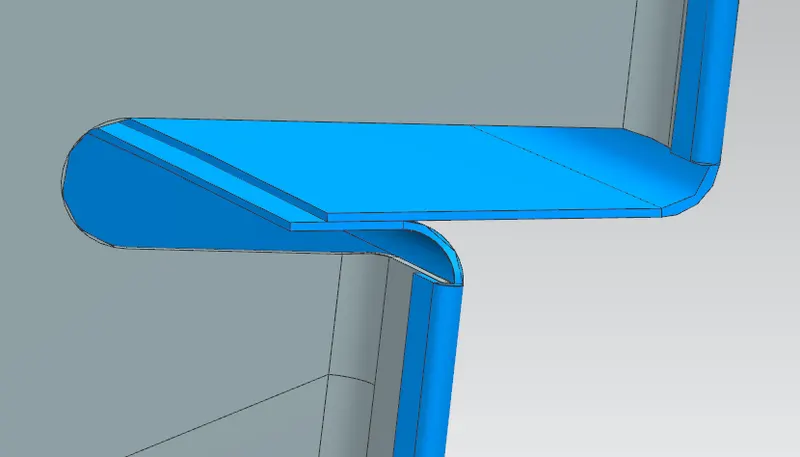
Fig.12: Region for spot welding
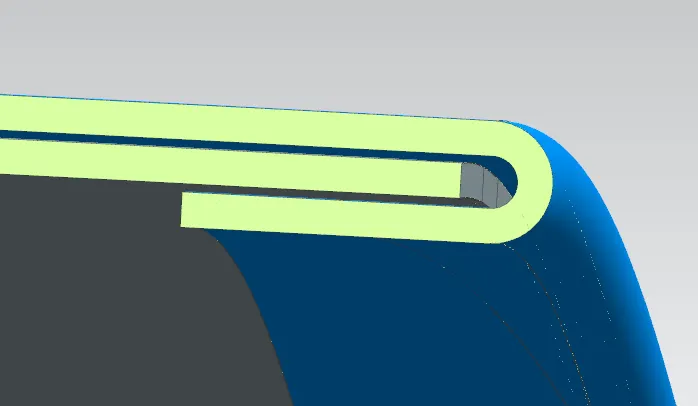
Fig.13: Hemming region
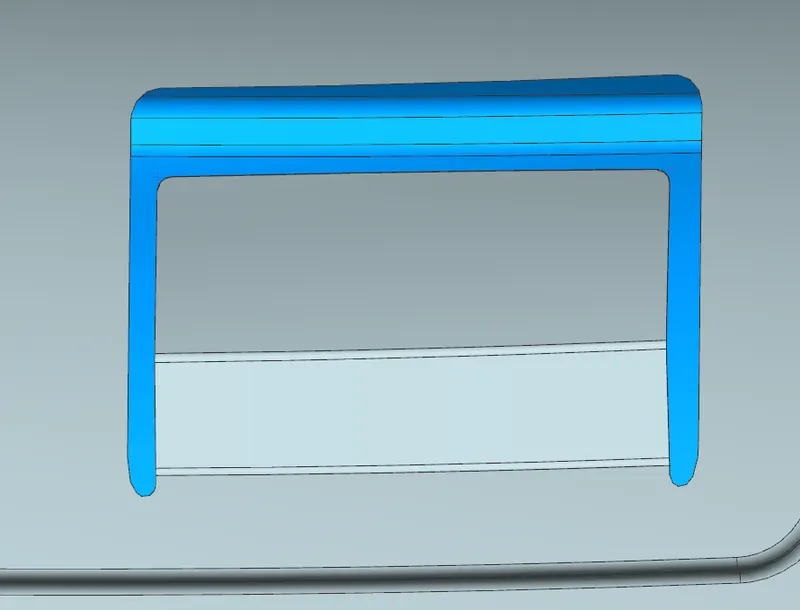
Fig.14: Region for mastics
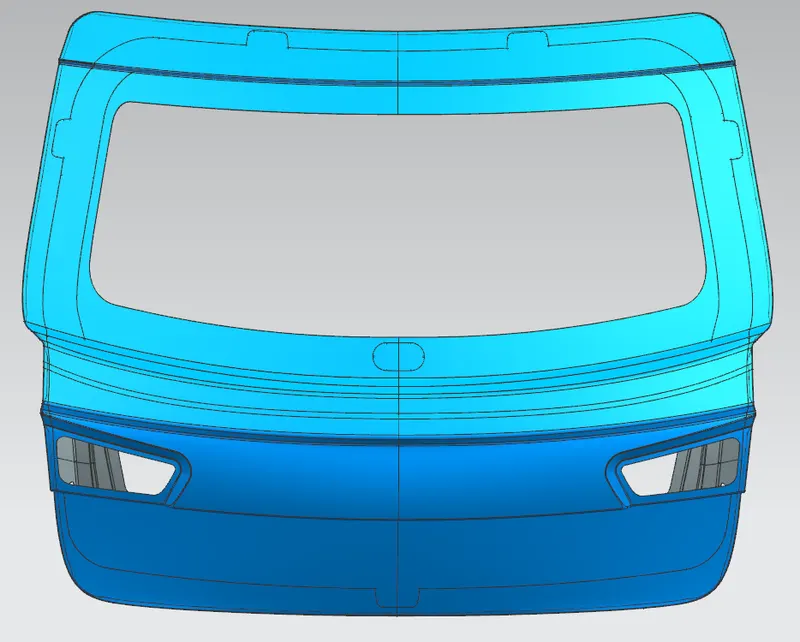
Fig.15: Back door assembly front view
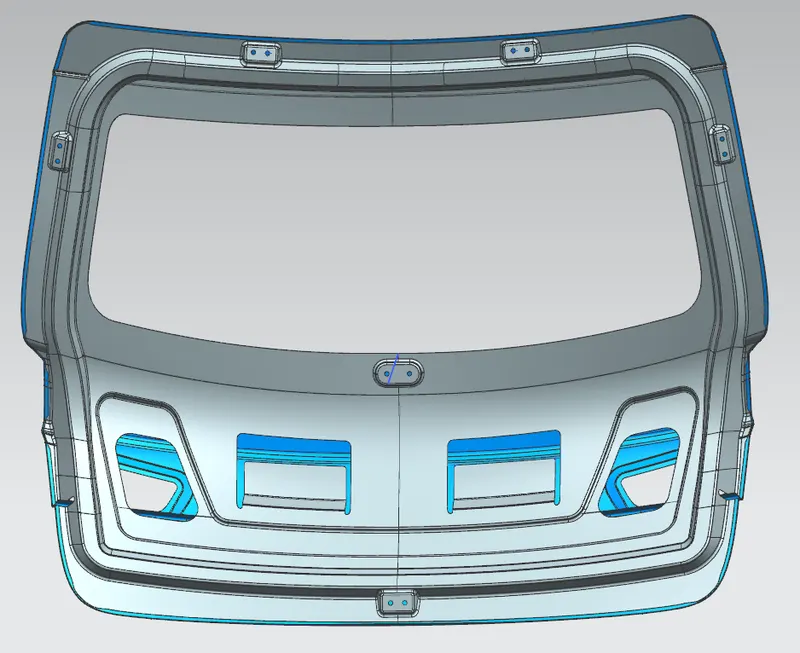
Fig.16: Back door assembly back view
Latch and Striker Trajectory:-
The latch and striker trajectory line shows the line of action of the back door when hinged to the body of the car.
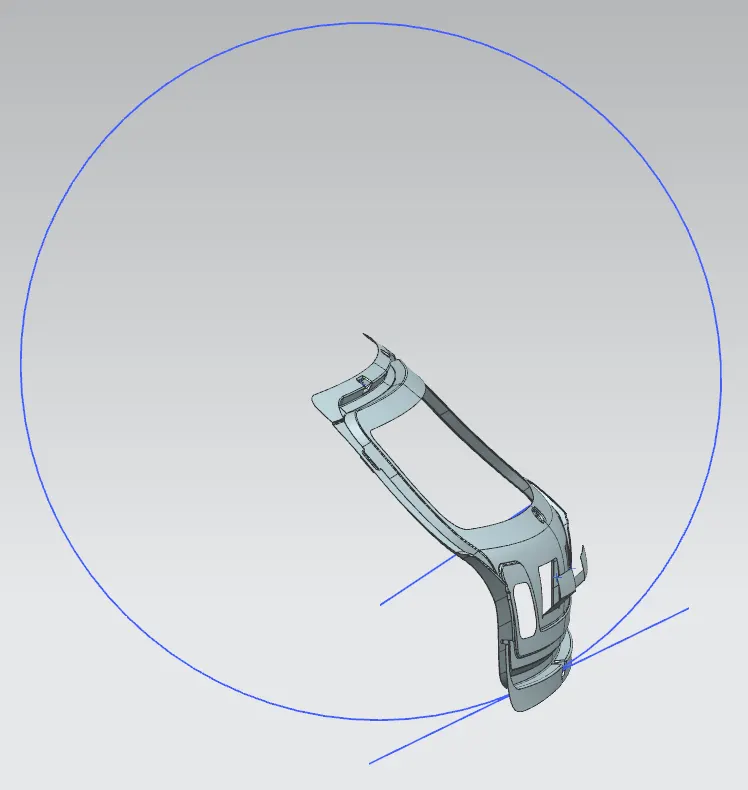
Fig.17: Latch and striker trajectory
Draft Analysis:-
Draft Analysis is carried out to check the manufacturing feasibility along the tooling direction. The inner panel is designed by considering at least the minimum draft angle value of 7 Deg.
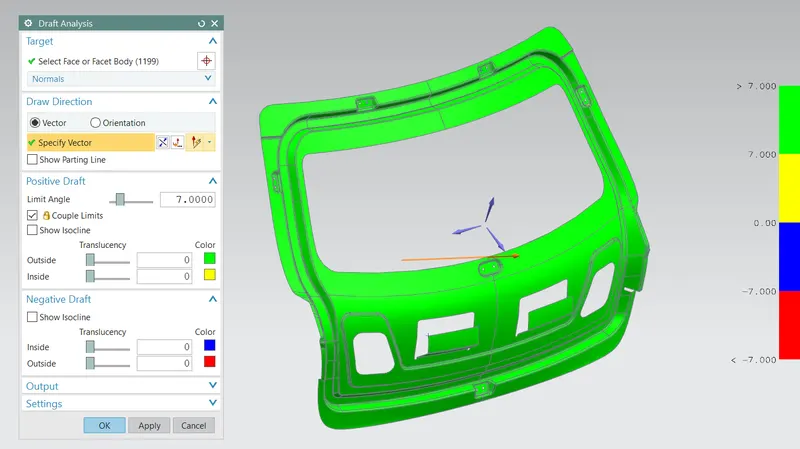
Fig.18: Draft Analysis
Conclusion:-
Thus the back door of the car was designed using the given styling surface along with all the necessary embosses and reinforcements.