Design of backdoor
AIM:To design the Backdoor following the Engineering conditions with given Class A Surface
INTRODUCTION:BACKDOOR
Backdoor is the part of the vehicle which is located at rear side of the car which gives the access for luggage compartment.
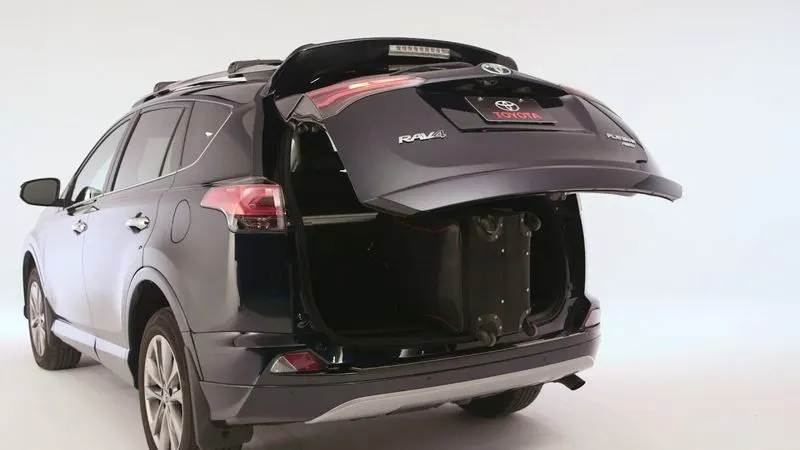
Back Door Assembly:
- Inner panel
- outer panel
- hinge and its reinforcement
- wiper motor reinforcement
- latch & stricker and its reinforcement
MANUFACTURING TECHNIQUE
The different sheetmetal process used in manufacturing backdoor are:
- Deep drawing
- Embossing
- Hemming
- Punching
Deep drawing
Deep drawing is a sheet metal forming process in which a sheet metal blank is radially drawn into a forming die by the mechanical action of a punch.It is thus a shape transformation process with material retention. The process is considered "deep" drawing when the depth of the drawn part exceeds its diameter. This is achieved by redrawing the part through a series of dies.
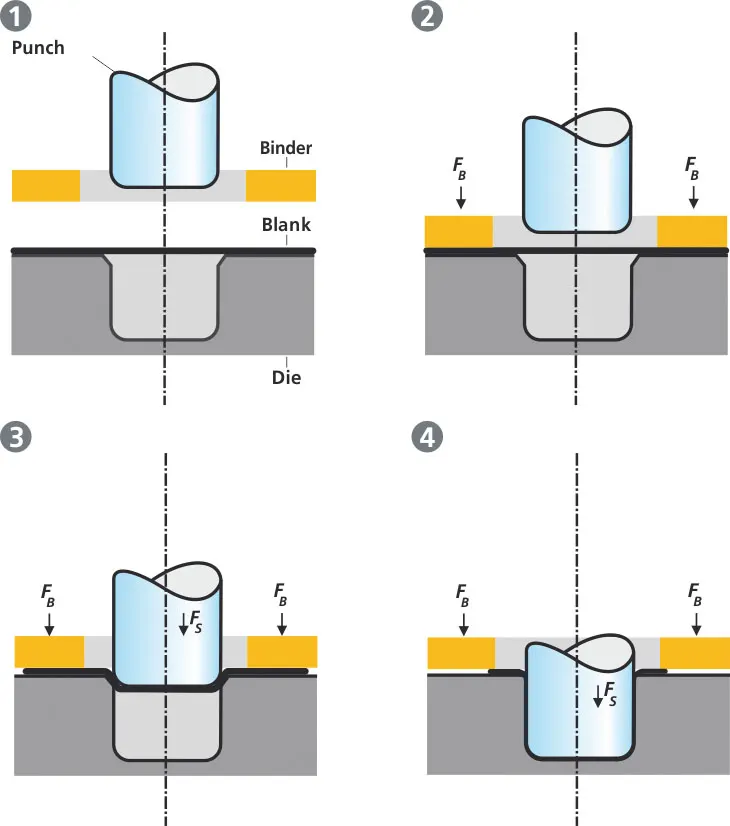
Deep drawing is a form of metal forming, where rigid tools such as punch,die and blank holderis used. The blank is placed between the die and the holder and then deformed by the punch pushing the sheet into the die and the blank finally assumes the shape of the die. The metal plate is fixed between the die and the holder before processing begins, this prevents the formation of undesired deformations such as wrinkles.
Embossing
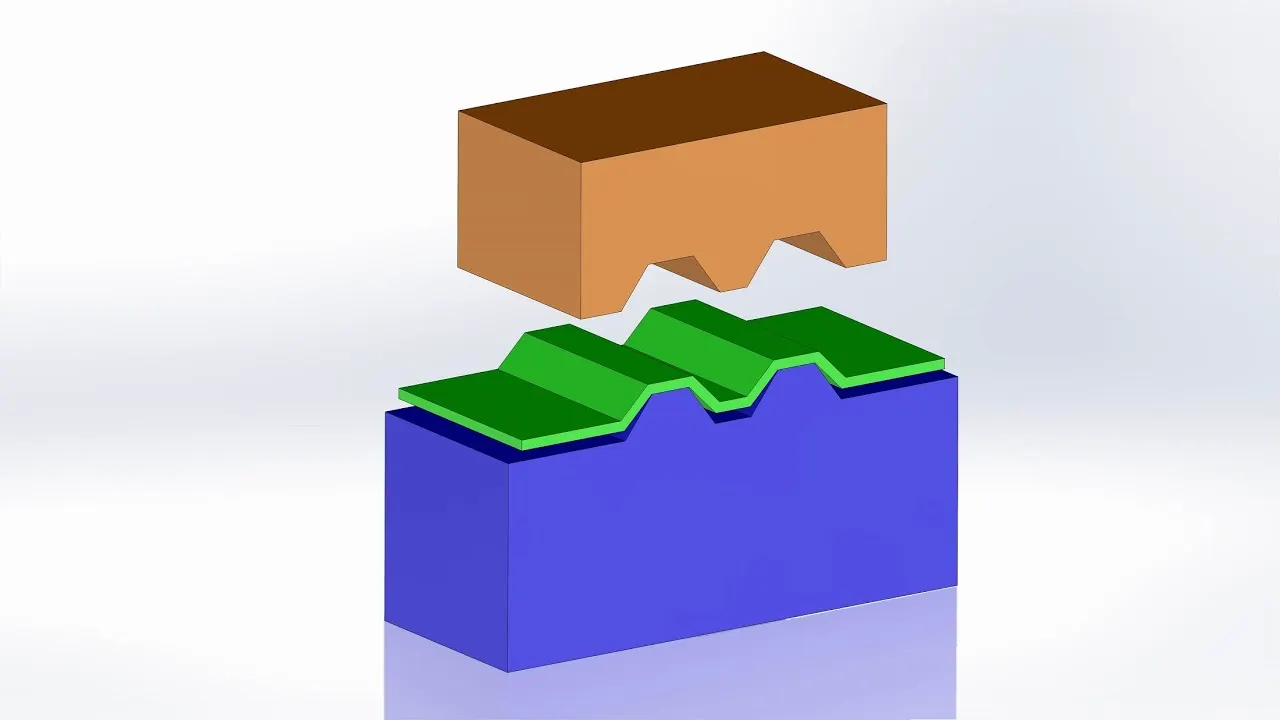
Embossing is a metal forming process for producing raised or sunken designs or relief in sheet materials by means of matched male and female roller dies, theoretically with no change in metal thickness or by-passing sheet or a strip of metal between rolls of the desired pattern. Metal sheet is drawn through the male and female roller dies producing a pattern or design on the metal sheet. Depending on the roller dies used, different patterns can be produced on the metal sheet
Hemming
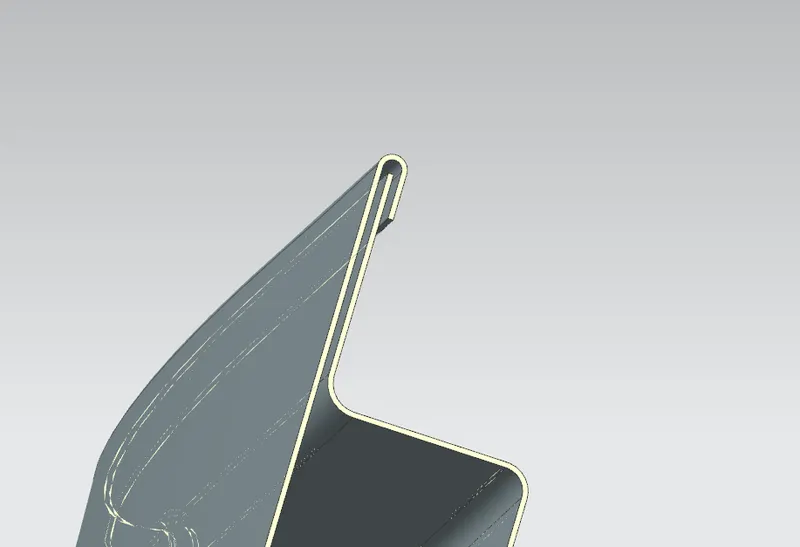
Hemming is a forming operation in which the edges of the sheet are folded or folded over another part in order to achieve a tight fit. Normally hemming operations are used to connect parts together, to improve the appearance of a part and to reinforce part edges.
In car part production, hemming is used in assembly as a secondary operation after deep drawing, trimming and flanging operations to join two sheet metal parts (outer and inner) together. Typical parts for this type of assembly are hoods, doors, trunk lids and fenders.
The accuracy of the hemming operation is very important since it affects the appearance of the surface and surface quality. Material deformations, which occur during the hemming process, can lead to dimensional variations and other defects in parts. Typical hemming defects are splits or wrinkles in the flange, material overlaps in the corner areas or material roll-in. This is why it is important to use simulation tools in order to, on the one hand, better understand the hemming process and, on the other hand, significantly reduce the number of “trial and error” loops during tryout und production.
There are various types of hemming operations:
- Conventional die hemming
- Roll hemming
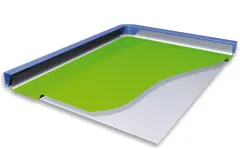
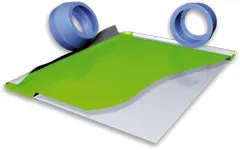
Conventional die hemming
Conventional die hemming is suitable for mass production. In die hemming, the flange is folded over the entire length with a hemming tool. Normally the actual hemming is a result of a forming operation in which the flange is formed with a hemming tool after the drawing and trimming operations have been completed. The formed flange is then hemmed in several process steps. These steps include, for example, the pre-hemming and final hemming depending on the respective opening angle of the flange. Production plants for conventional die hemming are very expensive, but the cycle times are very low.
Roll hemming
Roll hemming is carried out incrementally with a hemming roller. An industrial robot guides the hemming roller and forms the flange. Roll hemming operation can also be divided into several pre-hemming and final hemming process steps. Roll hemming is very flexible to use and tool costs are significantly lower as compared to those of conventional die hemming. However, the cycle times are much higher since the hemming is realized using a hemming roller which follows a defined path.
Punching
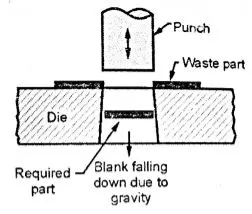
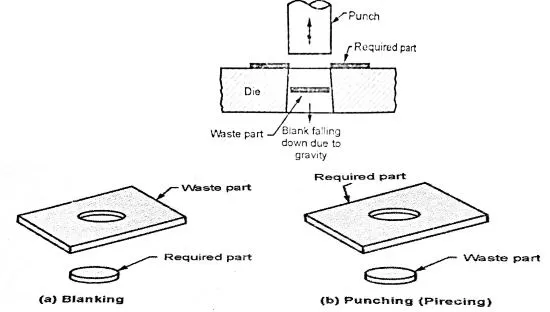
It is similar to blanking only the main difference is that, the hole is the required product and the material punched out from the hole is considered as a waste
The major Design considerations for backdoor are:
- Luggage space
- Rear visibilty criteria of driver
- Safety from Crash
- Latch/Striker rotational angle
The main Design rules for the backdoor are :
- Outer and Inner panel thickness:0.75mm
- Reinforcement thickness:1.5mm
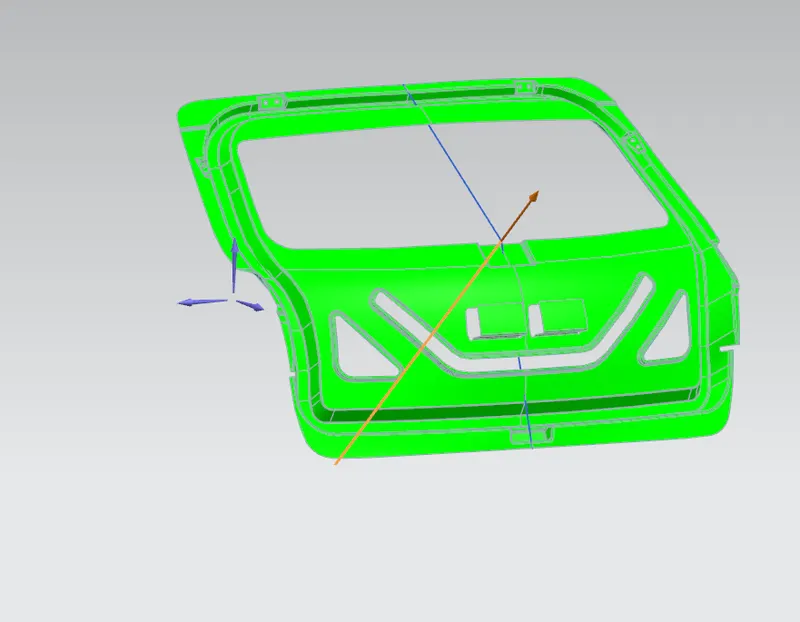
- Draft angle:7 degree higher
The main parts of Backdoor are:
- Inner Panel
- Hinge Mounting Bracket ( LH & RH )
- Gas Stay Bracket ( LH & RH )
- Wiper Motor Support Bracket
- Latch
- Latch Reinforcement
- Hinge reinforcement ( LH & RH )
- Gas Stay Reinforcement ( LH & RH )
DRAWING
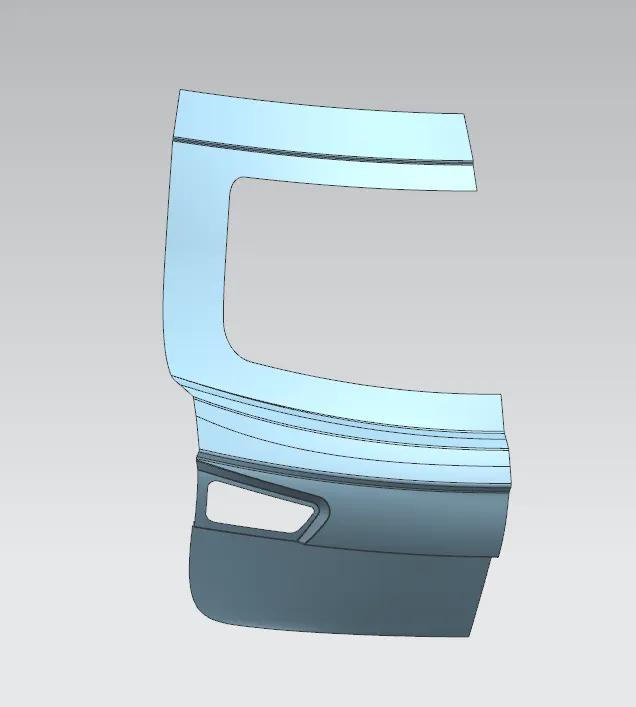
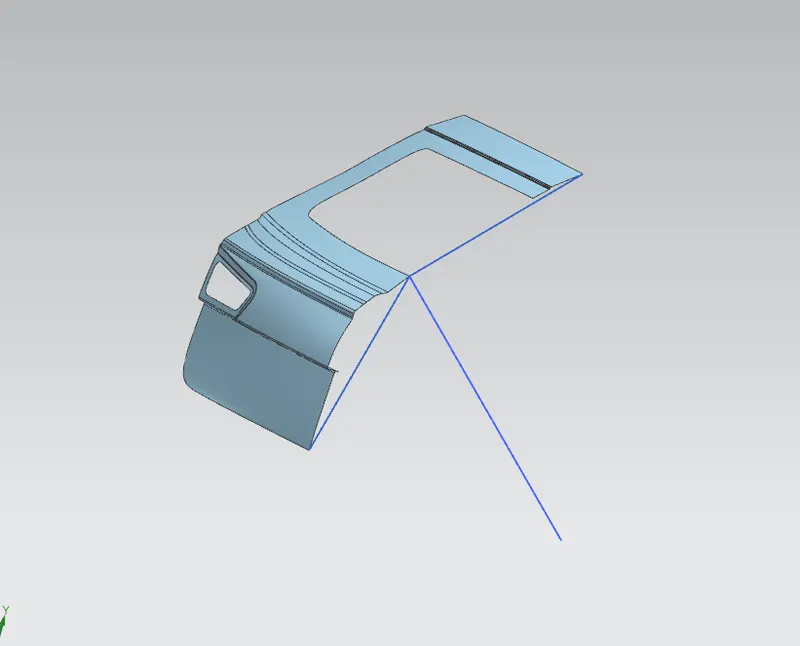
Tooling axis
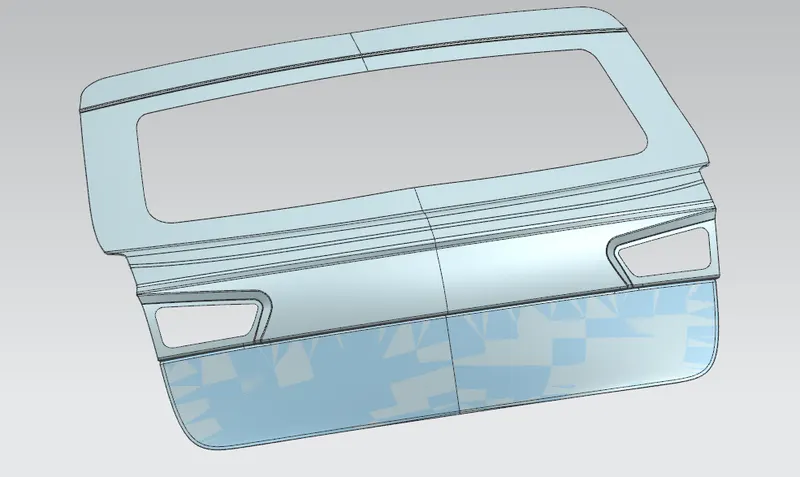
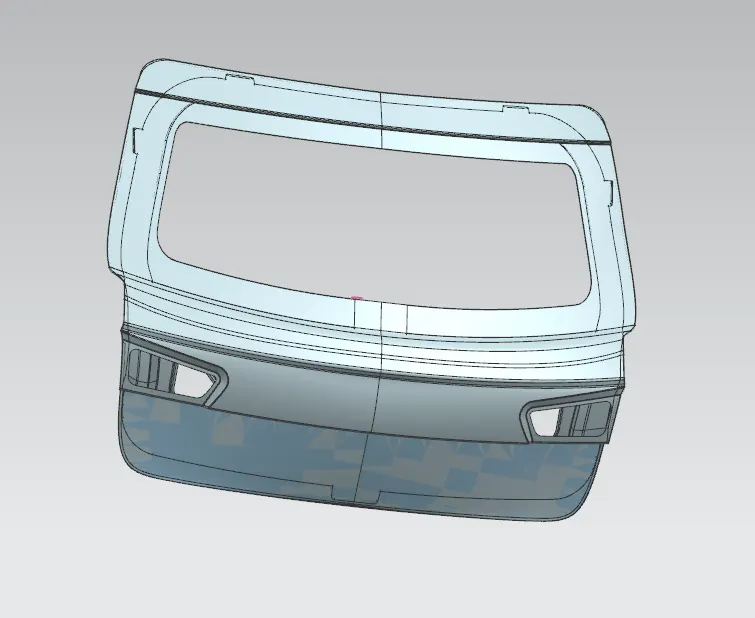
Outer panel
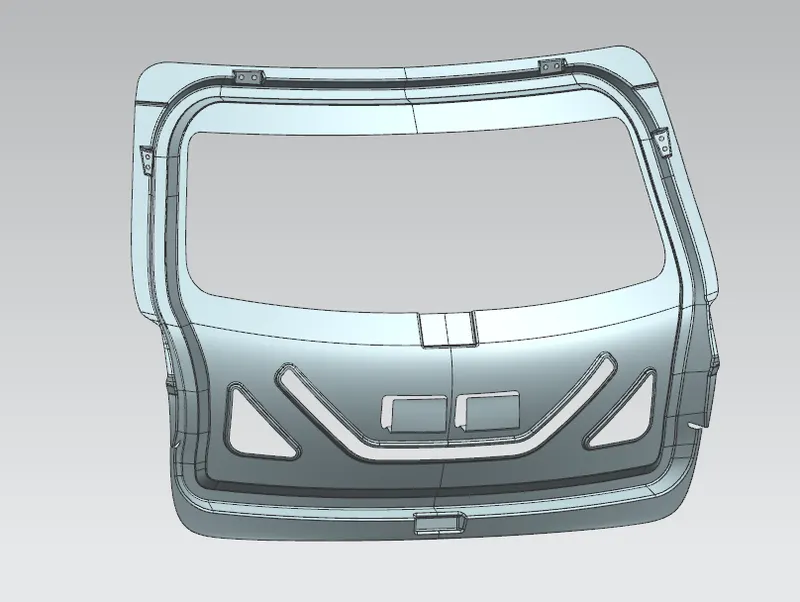
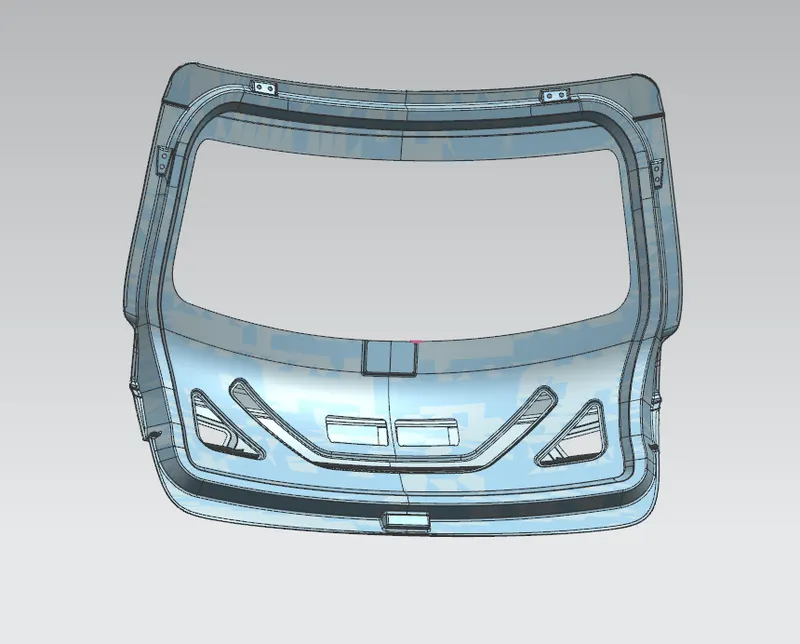
Inner panel
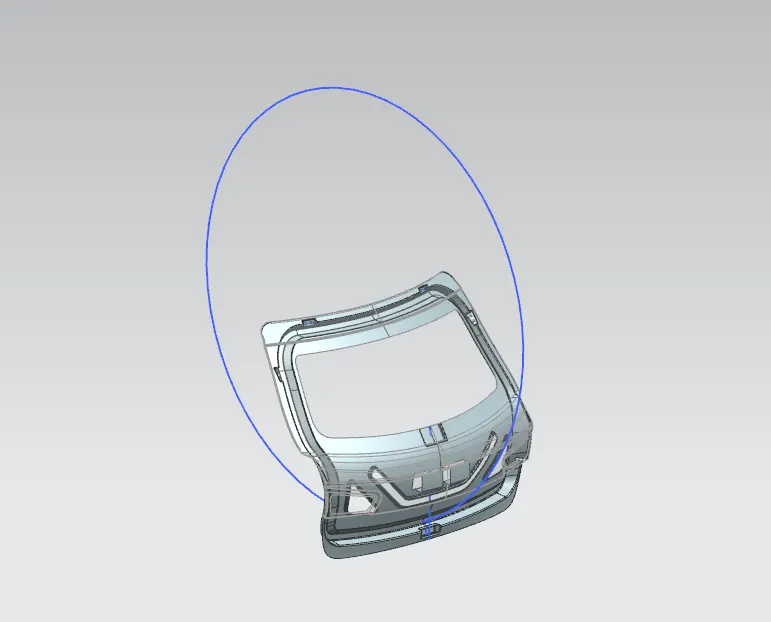
Latch Trajectory
Final Assembly
Draft Analysis
CONCLUSION
The backdoor of a car is created using NX-Cad