Design of backdoor
Back door design
Aim:
1. given from the styleing surface design The Back door as per the design regualtions.
2.Where ever Load& more strength need area to provide Embosses &Reinforcement.
Tools:
CATIA v5
Introduction:
In this project I have are designed a back door for a hatchback where it is hinged at roof level (as opposed to the boot/trunk lid of a sedan, which is hinged below the rear window). Similar to the hood and side doors, back door is a swinging/closure commodity in a car. It consists of an outer and inner panel. It is a very critical component because of the passenger safety requirements.
Backdoor has to be designed by keeping in mind the space required for the luggage compartment as well as to accommodate the Latch and Striker motor and Wiper motor without compromising the strength of the component.
Usually Aluminium or Steel is used to manufacture the backdoor. While Aluminium backdoor is lighter in weight and has lesser number of components (since the part is “cast”, it has varying thickness and therefore doesn’t require reinforcements), Steel backdoor is “deep drawn” with uniform thickness, added reinforcements and therefore is heavier. But the production cost of the latter is lesser and therefore a Steel backdoor is priced lower.
Majer parts & Design Regulations:
Outer panel:
Given the styleing surface check any uneven surface and open gap for quality check purpose if any open gap and un even surface identified That area will corrected for Good quality Back door outer panel.primarily the Inner Panel. It acts as the outer cover and deals with the aesthetics of the car. It's thickness is in the range of 0.65-0.75 millimetres
Inner panel:
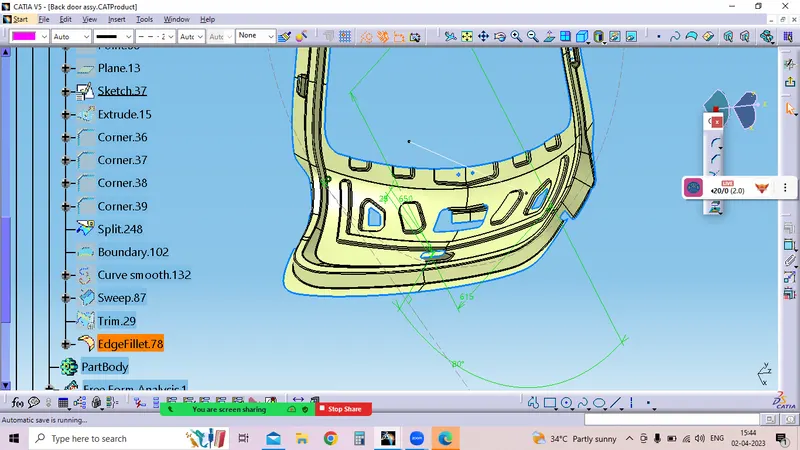
Inner panel provides strength of Back door It's thickness is in the range of 0.65-0.75 millimetres inner panels have embosses and cutouts & Reinforcements for where ever strength will need area it's will provide.
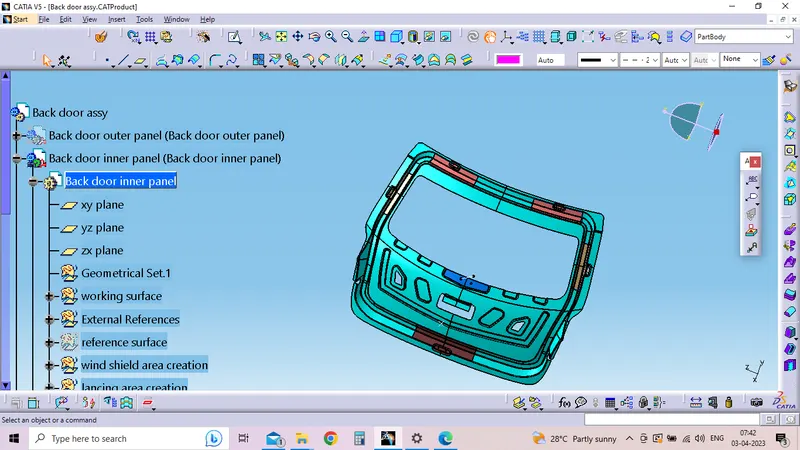
Inner panel have sub elements:
1 . Sheeling Flange.
2 . Connecting flange.
3 . Wind shield area.
Sheeling Flange :
sheeling flange created for Back door will cover with Biw Assembly with out any air gap &water leak &any other outer sorounding noise will not enter into the car.
Connecting Flange:
connecting flange will created for Inner panel connected with Sheeling flange correct degeree of angle with respect to the Tooling direction.
Wind shield Area:
Wind shield area will created for one of majer design Considerations REAR visibility Purpose.
The inner panel accommodates the Latch and Striker actuator, Wiper motor actuator, Trims mounting, Hinge and Gas Stay embosses, V-Emboss, Latch, etc and therefore the necessary cut outs are provided. Various reinforcements are also spot welded to the inner panel.
Hemming:
Hemming process is two Metal joining wiihout welded. Hemming given asthetic finishing, This process will follow other clousre area and swining Area. There is a 0.2 mm gap between the two panels and 1-2 mm clearance at the edge of the inner panel. This space is provided for the sealant to ooze out and spread properly between the panels after the Hemming process in order to achieve water tightness.
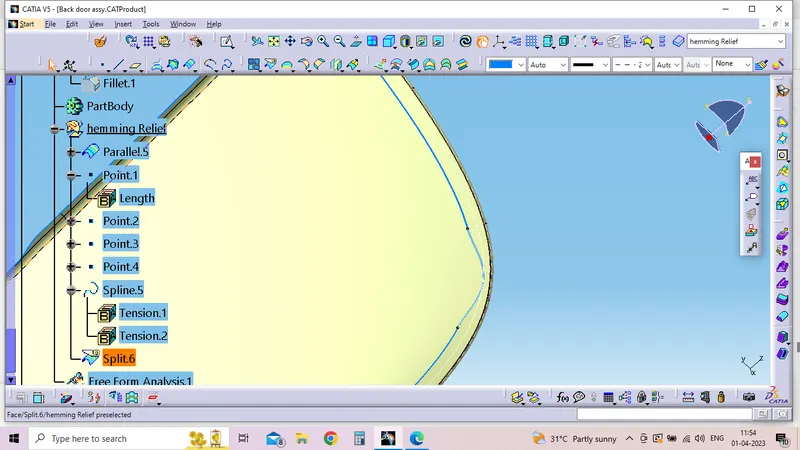
Hemming relief:
Hemming relief will provide closures corners for avoid tollerence issue.
Mastic sealents:
Mastic sealents used for to improve NVH (Noise,Vibration,Hardness) reduce the levels.Mastic sealents is preferred over spot welding for to join the inner and outer panel due to the fact that the latter reduces the aesthetics of the car, especially on the outer panel which is the styling surface.
mastic sealents They are made of hard Rubber and are introduced as a paste thereby joining the inner and outer panel with a thickness of 5mm.
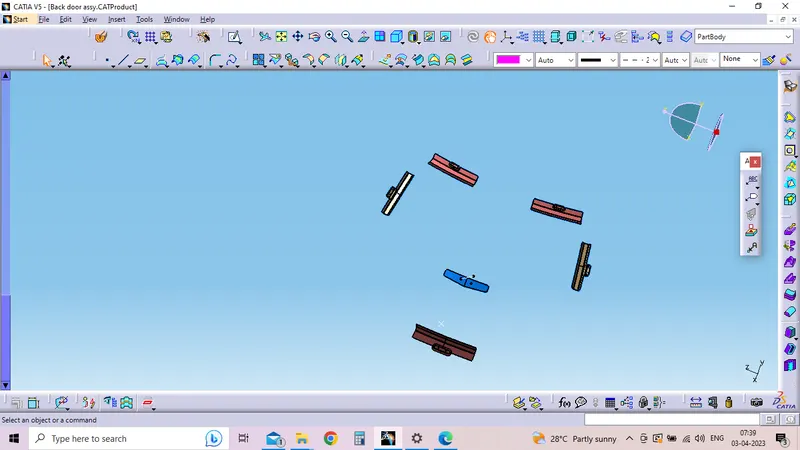
Reinforcements:
Hinge reinforcement:
Hinges with enabled with back door for opening ang Clossing purpose , Hinges oneend connectd with back door otherend connected with roofs on bothsides. Hinge reinforcements are added in this region to compensate for the weak zone developed due to the load acting while opening and closing the backdoor.
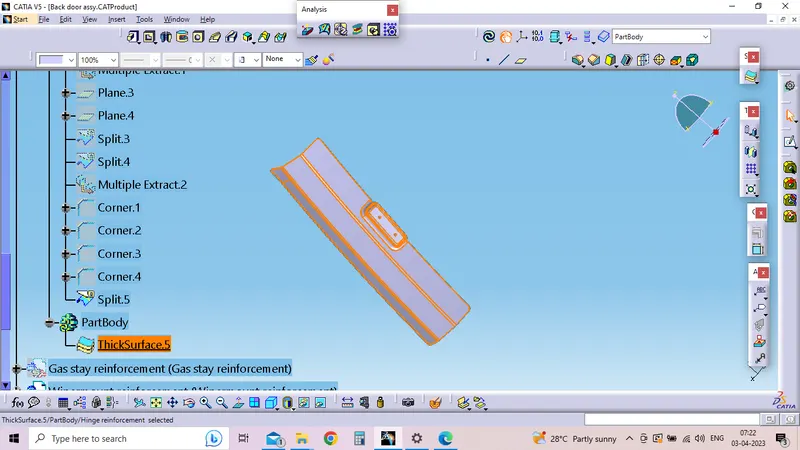
Gas stay reinforcements:
Gas stay is a devise it's supporting to the back door for opening condition. Gas stay requires no man power and is engaged into support position automatically as the back door opens. One end of the Gas Stay is fixed on the backdoor and the other end on the Body Side or on the Back door stationary area. Embossing is provided at the Gas Stay mounting area to compensate for the functional holes punched.
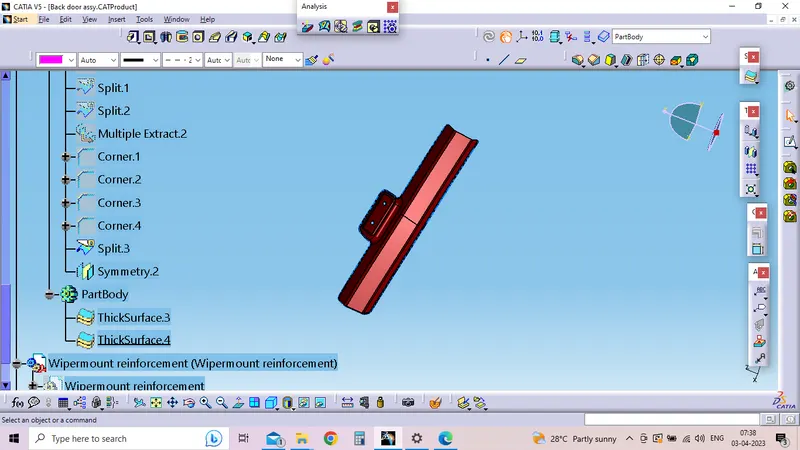
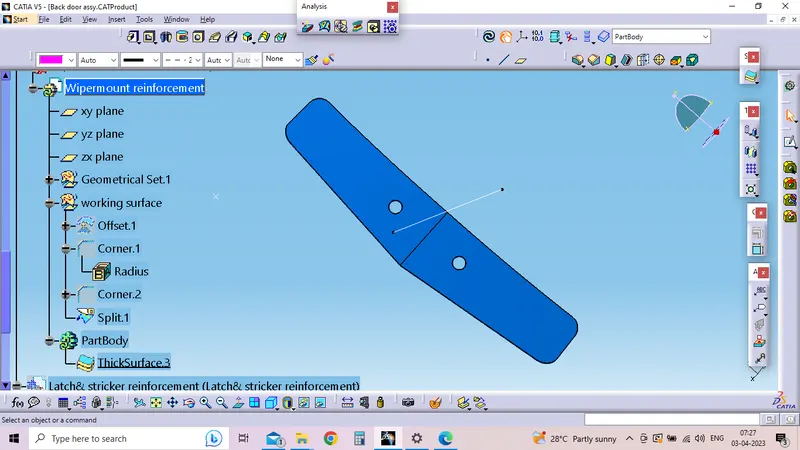
Wiper mount Reinfocements:
Wiper mount reinforcements its provided for to fix the wiper motor assembly.
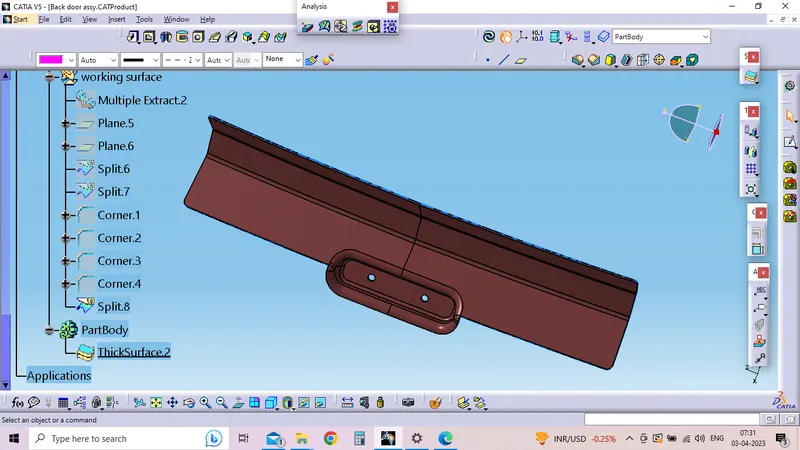
Latch& Stricker reinforcements:
Latch &srticker first point of the contect with car . some of strength will add in particulur area so Latch and stricker reinforcements will added here. The Latch & Striker forms the locking mechanism of the backdoor with the car. Due to regular opening, closing and over slamming of the backdoor, there is stress developed in the Latch and Striker area.
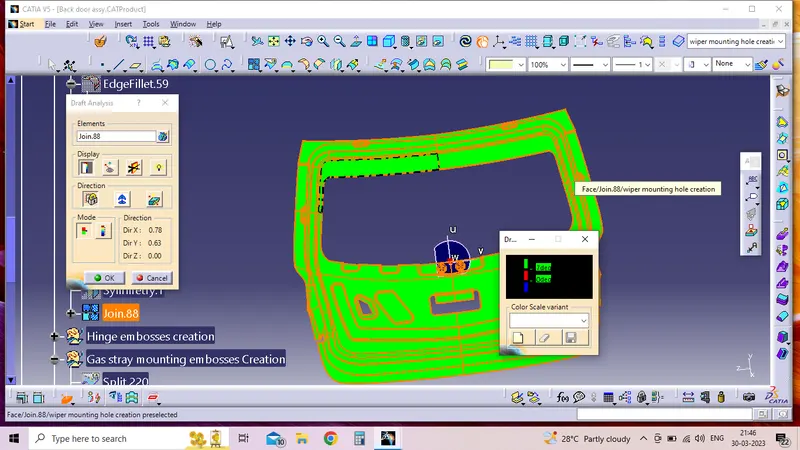
Draft analayis:
Draft analayis is done with draft angle with respect to the tooling direction. When designing a product they need to be angled slightly so that the tool can be pulled away from the object easily, without deformation or damage. This slight angle is called draft.
Conculation:
The back door was designed and developed form the given surface with essentional Reinforcements and embosses.