Design of backdoor
BACK DOOR DESIGN
Aim: Use the provided styling surface to come up with a back door design, use appropriate design methodologies, and provide the necessary reinforcements and embosses
Back door of a car:
A back door of a car is a door located at the rear of the car that provides access to the interior of the vehicle from the back. Most cars have two back doors, one on either side of the vehicle, although some smaller cars may have only one. The back doors typically open outwards and can be locked and unlocked using a key or a remote control. The back doors may also have child locks to prevent them from being opened from the inside, which is a safety feature designed to prevent young children from accidentally opening the doors while the car is in motion.
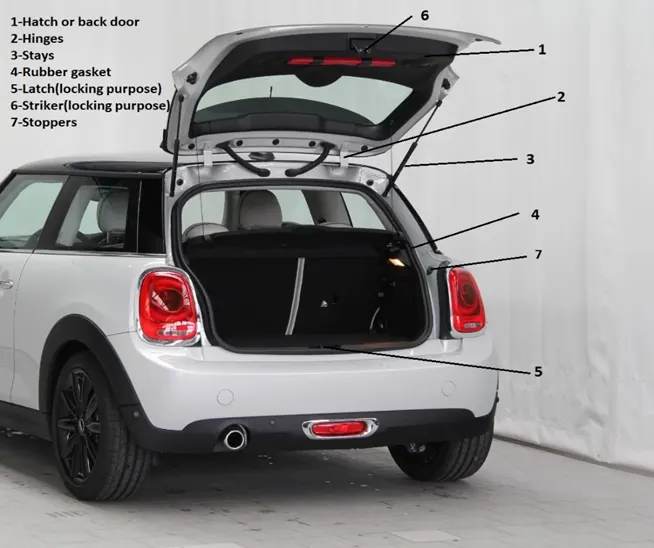
Types of cars back doors:
There are several types of back doors for cars, including:
Conventional hinged doors: This is the most common type of back door, where the door is attached to the car with hinges and opens outward.
Sliding doors: Some cars, particularly minivans and some SUVs, have sliding doors that slide back and forth to provide access to the back seat.
Liftgate: This type of back door is hinged at the top and swings upward to provide access to the cargo area of the car. It's commonly found on SUVs, hatchbacks, and some larger sedans.
Tailgate: Similar to a liftgate, a tailgate is hinged at the bottom and swings downward to provide access to the cargo area. It's commonly found on pickup trucks and some SUVs.
Split doors: Some SUVs and larger vehicles have back doors that split in the middle and open outward, providing access to the cargo area from either side.
PARTS OF BACK DOOR ASSEMBLY & OTHER PARAMETERS:
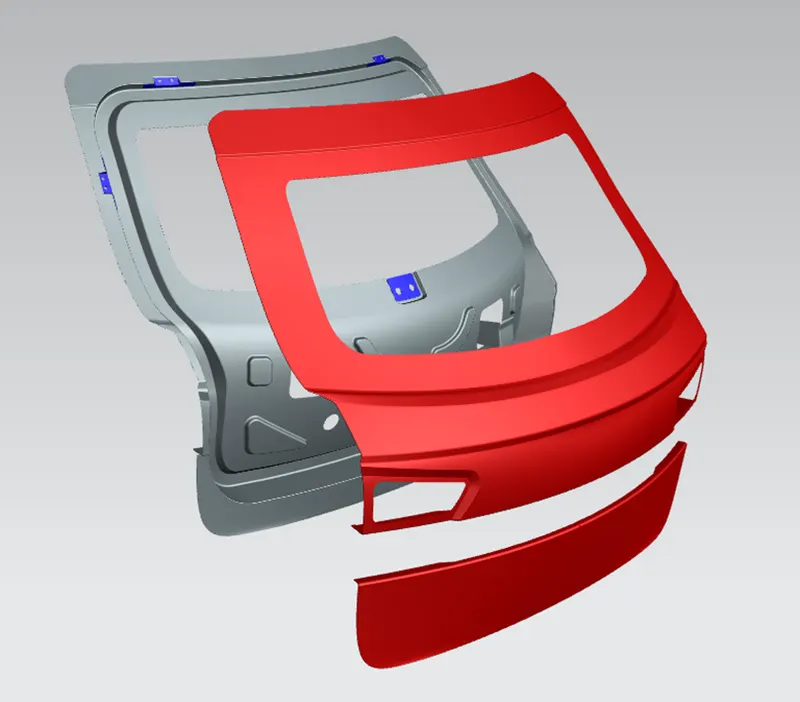
Backdoor outer panel
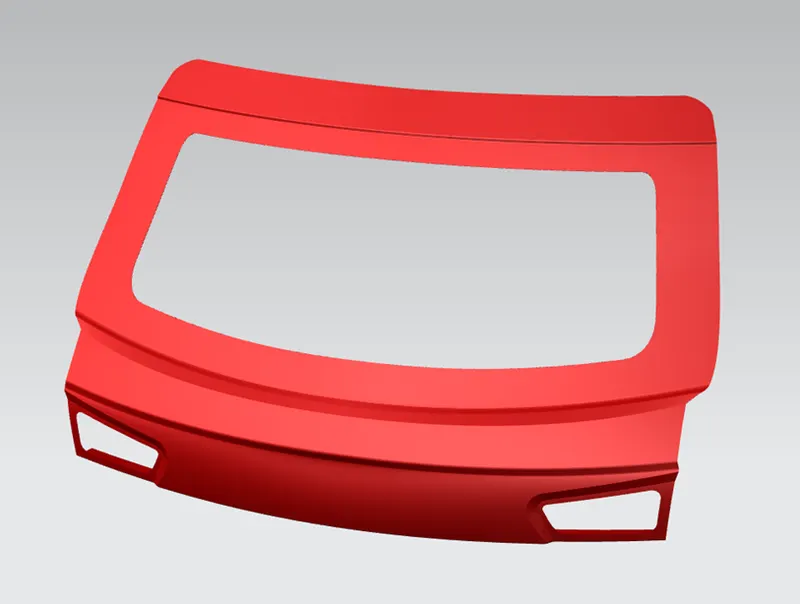
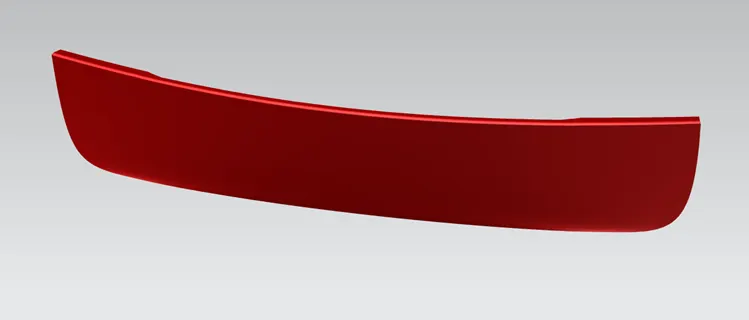
Back door outer panel lower
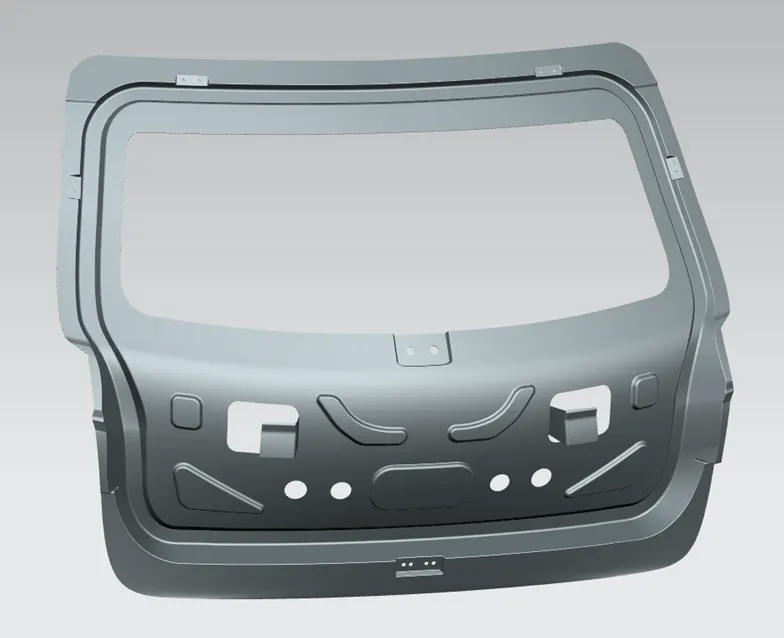
Backdoor inner panel
Hinge reinforcement
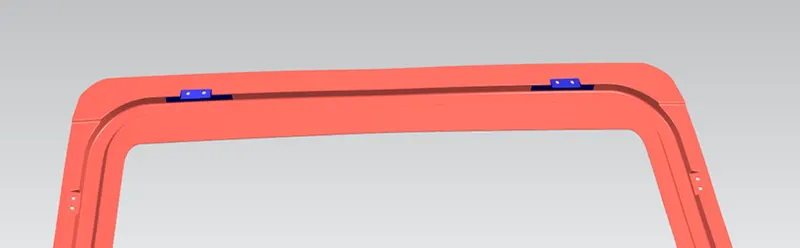
Gas stay reinforcement

Wiper motor reinforcement
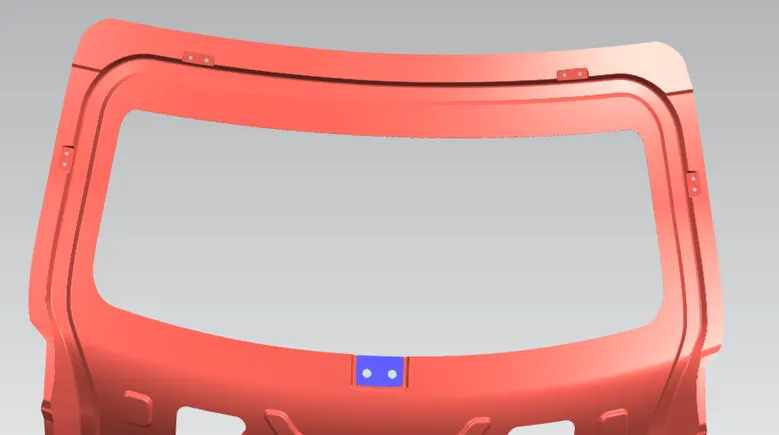
Latch and striker reinforcement
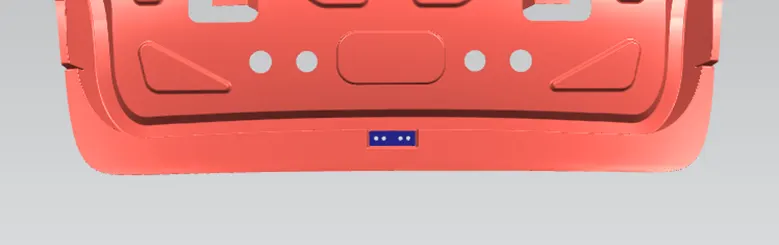
Tooling direction
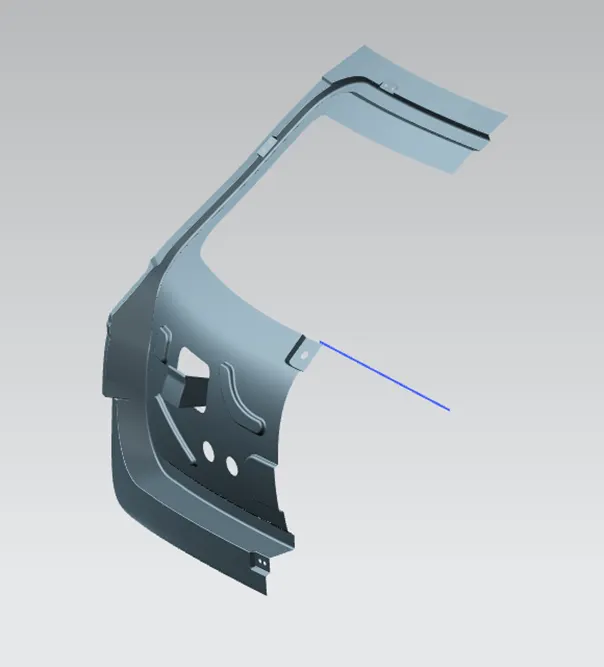
Side relief
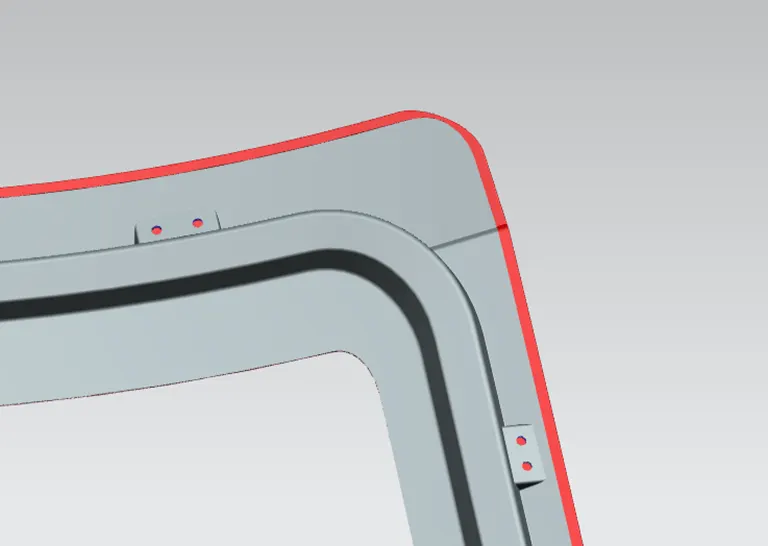
Full assembly
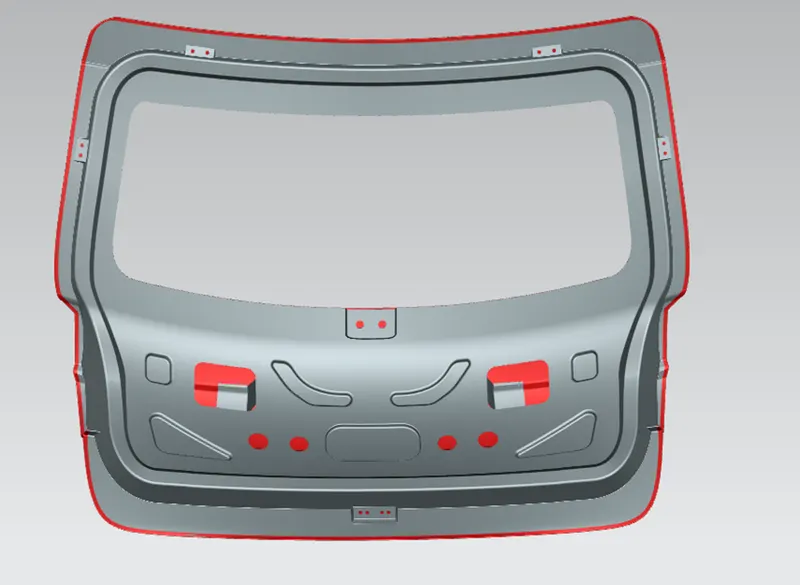
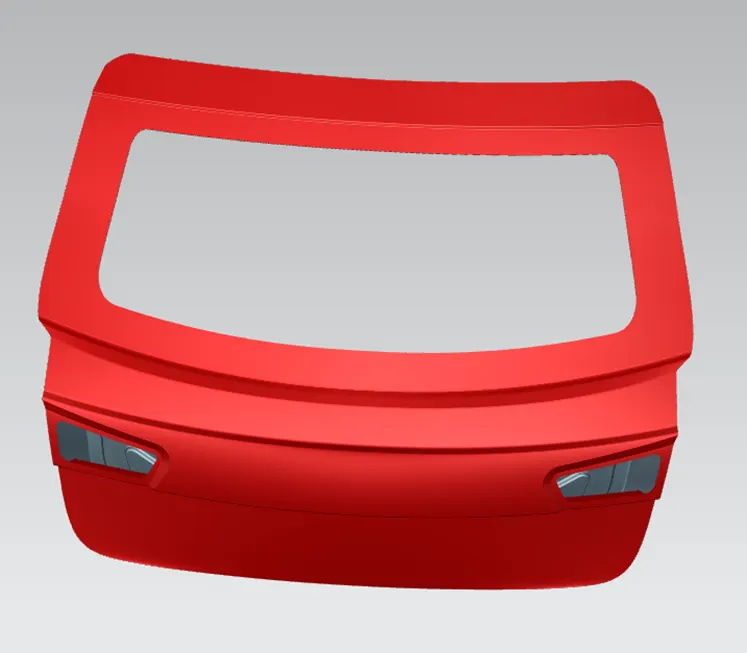
Draft analysis:
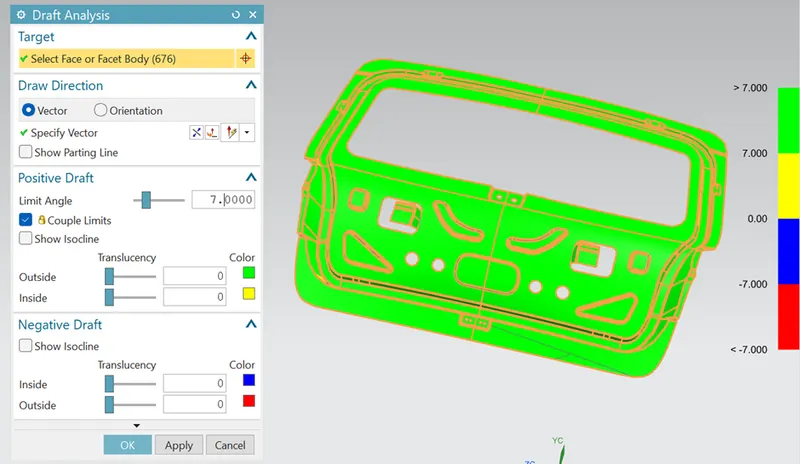
Different Sheetmetal processes used for manufacturing the Back Door:
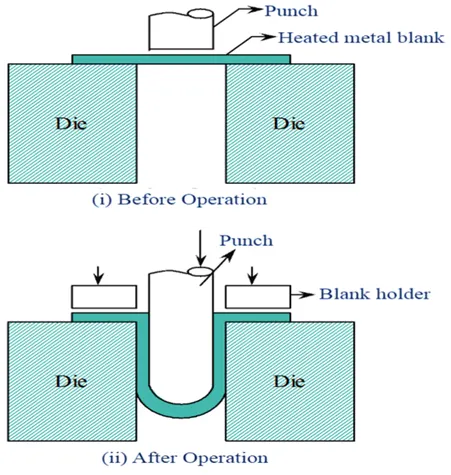
Deep drawing: It is a process of forming a sheet metal into a hollow shape by applying force to the sheet metal with a punch, which draws it into a die. The process is called deep drawing because the depth of the part is greater than its diameter. Deep drawing is commonly used to produce cups, cans, and other hollow metal components.
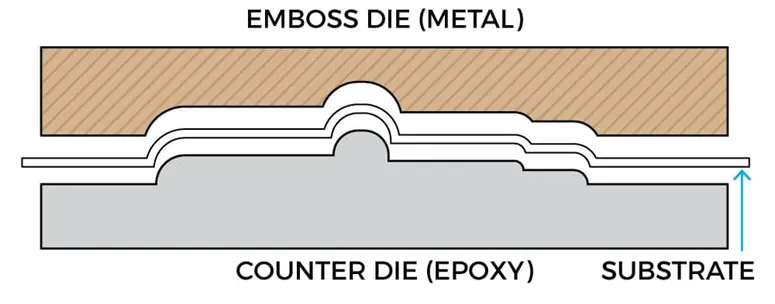
Embossing: It is a process of creating a raised design or pattern on a sheet metal surface. This is done by applying force to the back of the metal sheet with a punch or a die, which creates the desired pattern on the front of the sheet. Embossing is commonly used in the production of decorative metal products like gift boxes, metal signage, and packaging materials.
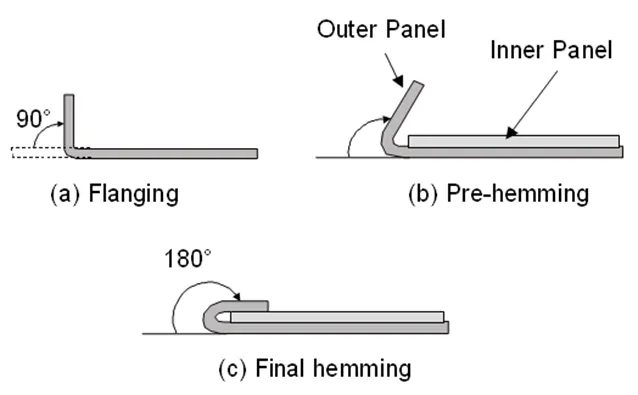
Hemming: It is a process of bending the edge of a sheet metal to form a hem, which is used to provide a clean, finished edge or to join two pieces of metal together. The hem is created by folding the metal over itself and then clamping it together with a die. Hemming is commonly used in the production of automotive panels, aircraft panels, and other metal components.
Blanking: It is a process of cutting out a flat shape from a sheet metal. The process is done by applying force to the sheet metal with a punch, which cuts out the desired shape from the sheet. Blanking is commonly used in the production of metal stampings, such as washers, gaskets, and shims.
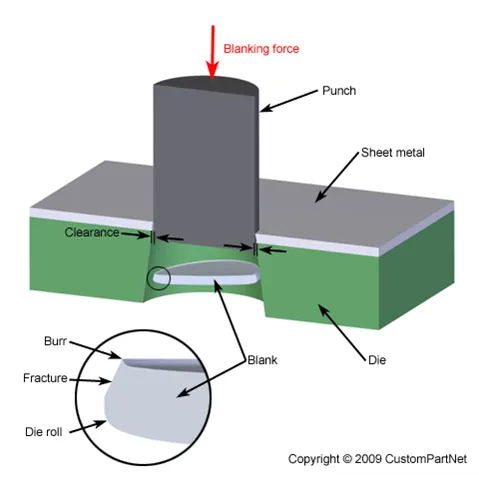
Punching: It is a process of creating a hole or opening in a sheet metal by applying force with a punch. The process is done by pressing the punch through the metal sheet, which creates a hole of the desired shape and size. Punching is commonly used in the production of metal stampings, such as brackets, hinges, and clips.
CONCLUSION:
For the provided styling surface of a back door design, I used appropriate design methodologies and provided the necessary reinforcements and embosses for the BackDoor design.