Design of backdoor
AIM:
To design a backdoor ok the car by using sheet metal with the considering design parameters and
R&D method.
OBJECTIVE:
- To design a back door of a car with an inner panel, outer panel and reinforcement for hinges, gas stay, Wiper motor and latch.
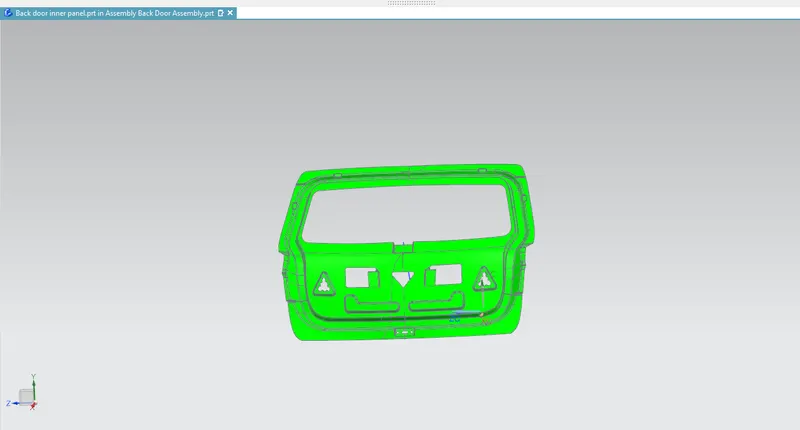
- The inner panel is subjected to the draft analysis to ensure whether it is satisfying the deep drawing requirements for the tooling direction that is created in the design.
BACK DOOR:
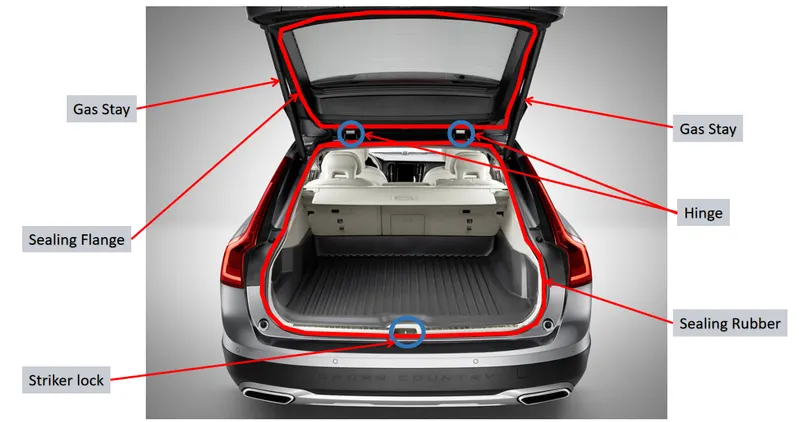
Backdoor are one of the type of door of the vehicle which are located next to the passanger seat which provides access to the luggage compartment.
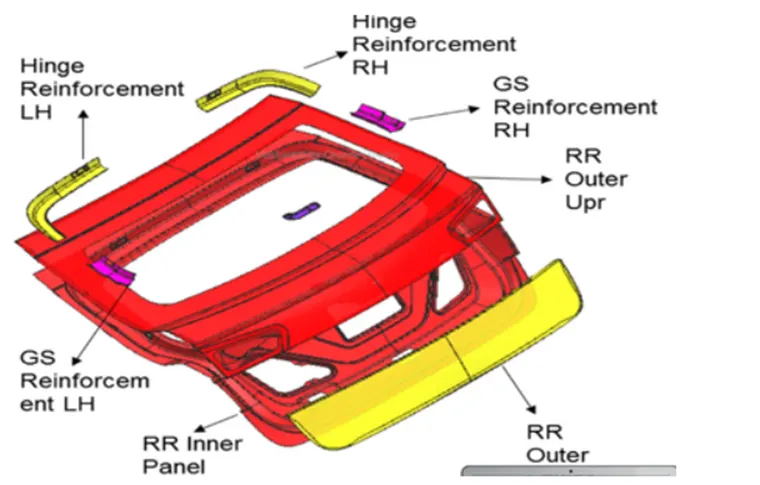
COMPONENTS OF BACK DOOR
- Inner Panel
- Outer Panel Upper
- Lower outer panel
- Hinge Reinforcement LH / RH
- Gas Stay Reinforcement LH / RH
- Wiper motor reinforcement
- Latch Reinforcement
DEEP DRAWING
The deep drawing process is a forming process which occurs under a combination of tensile and compressive conditions. A flat sheet metal blank is formed into a hollow body open on one side or a hollow body is formed into a hollow body with a smaller cross-section
DESIGN CONSIDERATION
- Rear visibilities for safety and functionality
- Support like hinges and Gas stay
- Rear crash regulations
- Boot space
- Mounts for wiper motor and lights
- Strength criteria
- Draft analysis
MASTIC REGION
- The mastic points are defined on the back door inner panel where the back door can easily deform.
- They help the backdoor outer panel to come back to its original shape after it gets deformed.
- Mastic sealants are elastic compound that believe like the rubber.
- The gap between the inner panel and the outer panel over the embosses is filled with mastic sealants at curtained specified places, this helps to reducing vibrations and overall NVH (Noise, Vibrations and Harness)
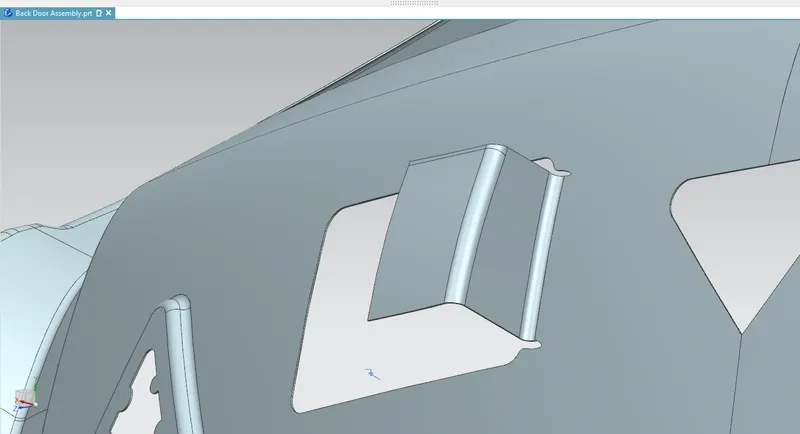
INNER PANEL
- The inner panel is a component which is used for strengthen the door assembly and it is one of the most important components on which all accessories are mounted like hinges, glass guide channel, molded trim, latch etc.
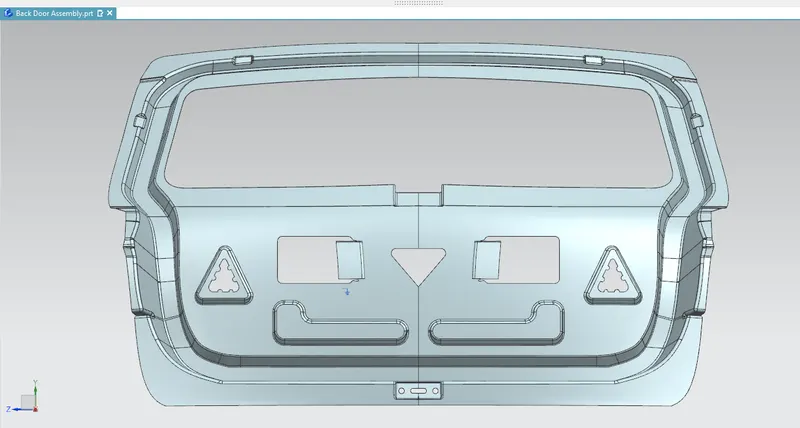
OUTER PANEL
- The coating provided is of multi stage which has the property of scratch resistance, rust prevention and smooth and attractive finishes.
- The outer panel also has the provisions for the tail. Lamp, rear fog lamp and also has the provision for license plate mountings.
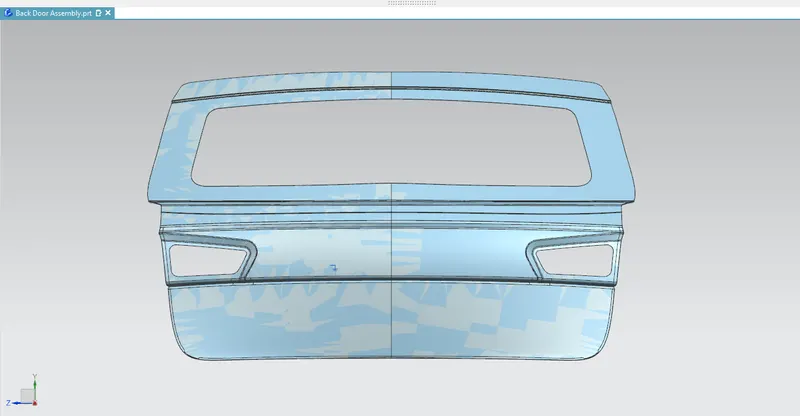
EMBOSSES
- The embossed are used to increase the strength of the backdoor.
- These embosses are used to despite the forces sideways.
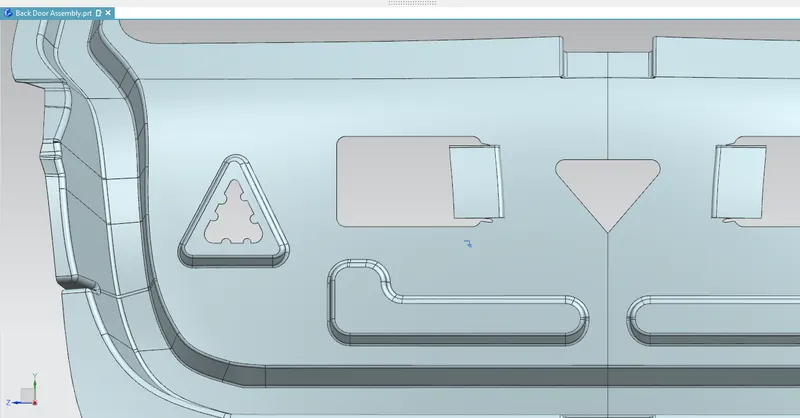
HINGE AND GAS STAY REINFORCEMENT
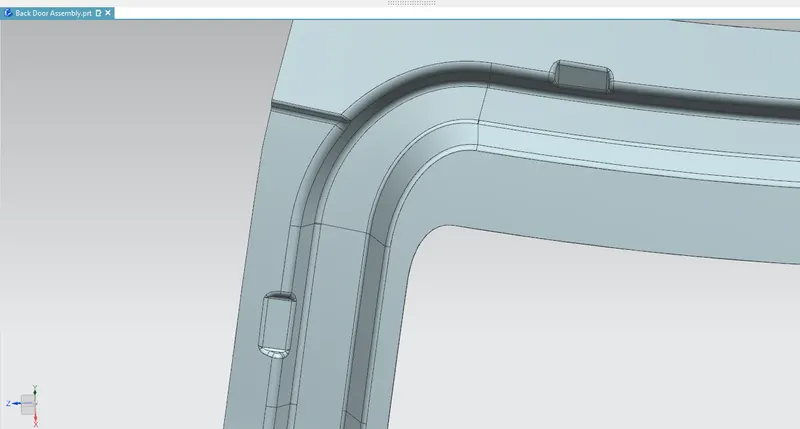
LATCH AND STRIKER
- The opening and closing trajectory, the hinge and latch are positioned based on the hinge axis and trajectory.
- The circle drawn should be perpendicular to the latch striker to satisfy the condition.
- Based on the rotation trajectory the hinge axis, latch striker and predefined Gas stay are correlated for smooth kinematics of the door opening and closing.
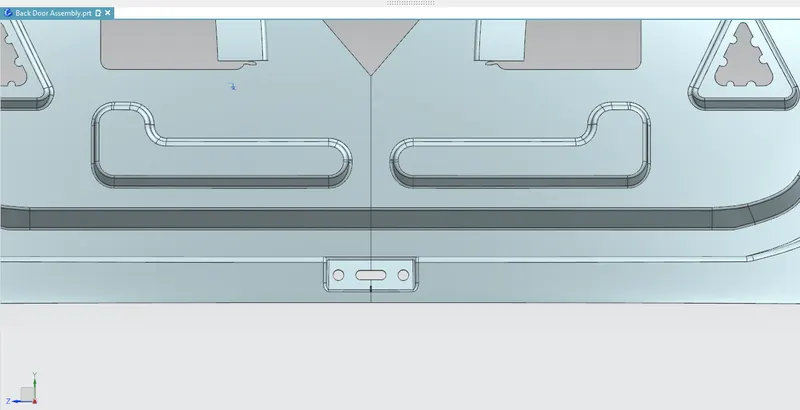
HEMMING
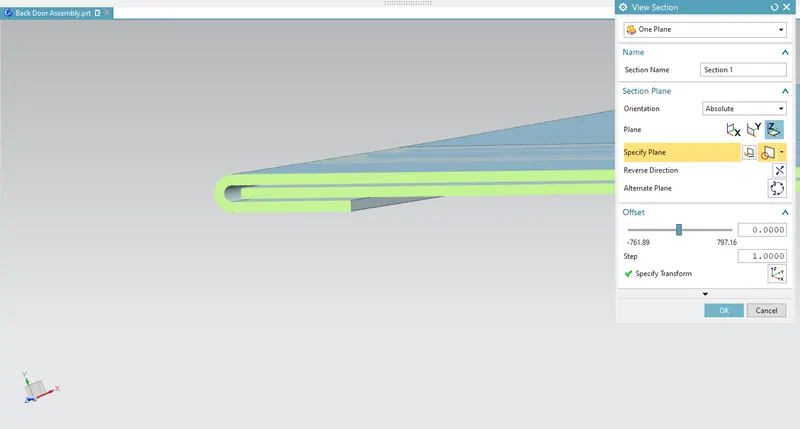
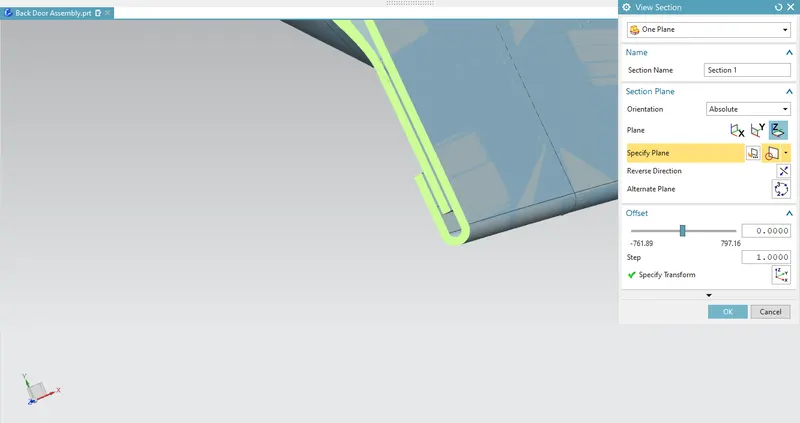
Hemming is a mechanical joints design which is used for joining inner and outer closure panels as found indoors, hoods, bonnets and lift gates. To increase crash resistance the gap between the hemmed panels is filled with a high strength adhesive which also prevents from corrosion.
HEMMING CORNER RELIEF
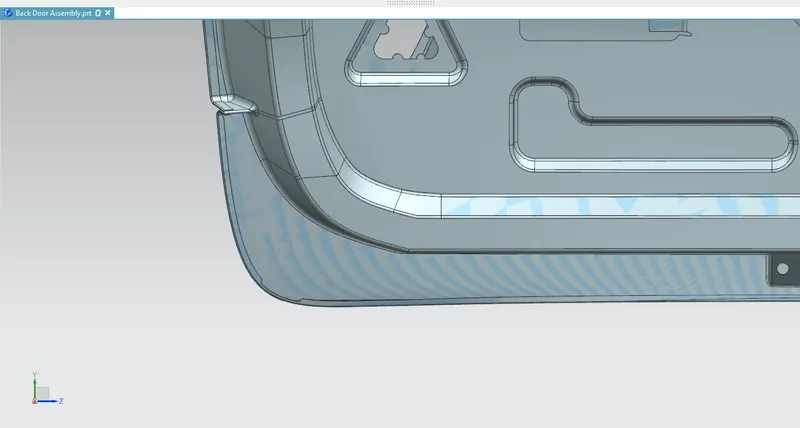
- Hemming relief is given to the corner of the back door to reduce the stress of the object.
DRAFT ANALYSIS
BACK DOOR IMAGES
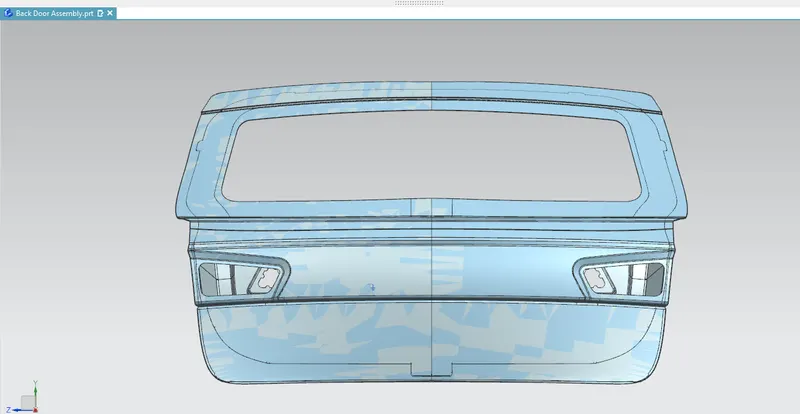
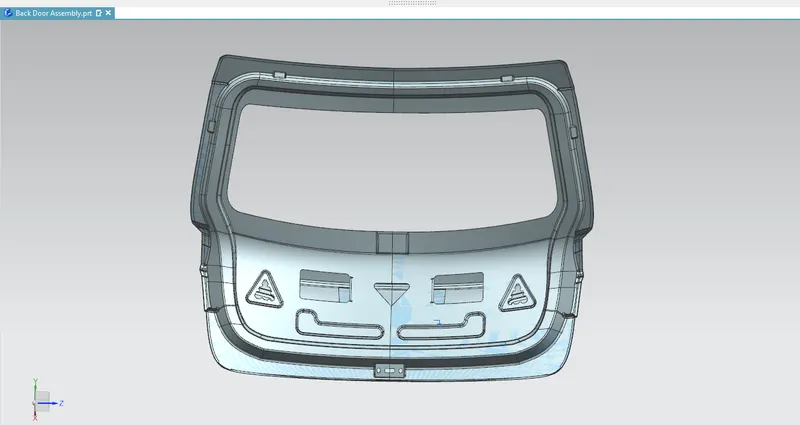
CONCLUSION
Thus the back door is designed and developed from the given surface
To satisfy the manufacturing requirements draft analysis was also done on the inner panel.