Hood design-Week 2
DESIGN AND MODELLING OF HOOD USING SIEMENS NX-CAD
INTRODUCTION
- Hood is a component of BIW.
- The main function of hood is to allow access of engine compartment and other sub systems to occupant for regular services like maintenance.
- Also it absorbs most of the force of frontal impact and transfer to body pillars for provide safety to driver of the vehicle.
IMPORTANT THINGS TO BE DONE IN HOOD
- It should provide safety to the driver.
- It reduces the noise of engine.
- We should provide the euro NCAP standards.
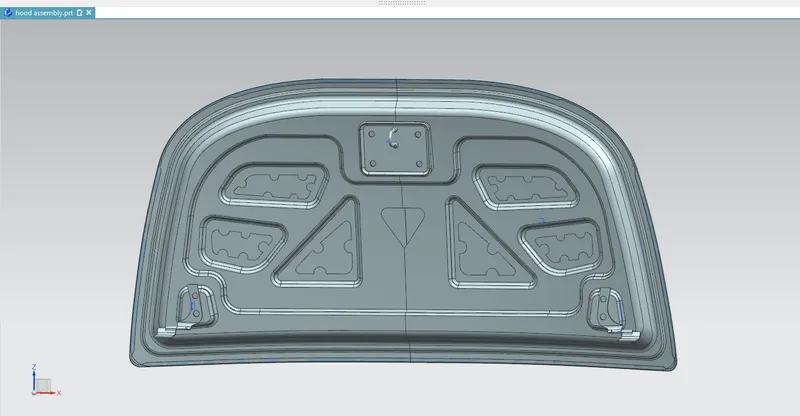
COMPONENTS OF HOOD
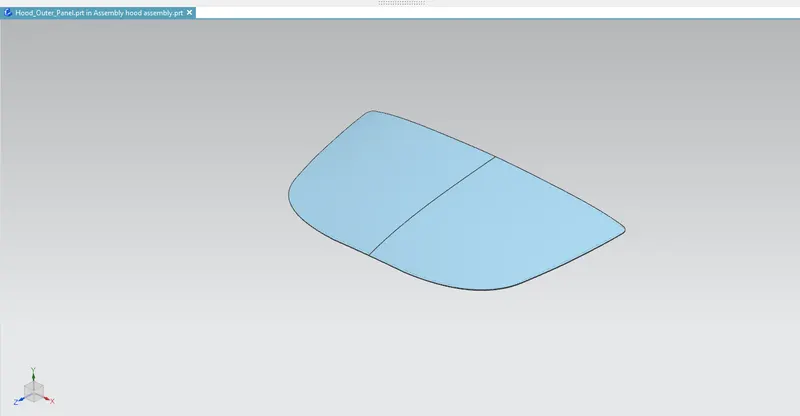
HOOD OUTER PANEL
- The outer panel is used to cover the inner panel and the engine.
- This part is intact with inner panel so to have a perfect combination its edges are wrap around inner panel this type of wrap called hemming.
- It is very important to have good strength and ability to absorb impact.
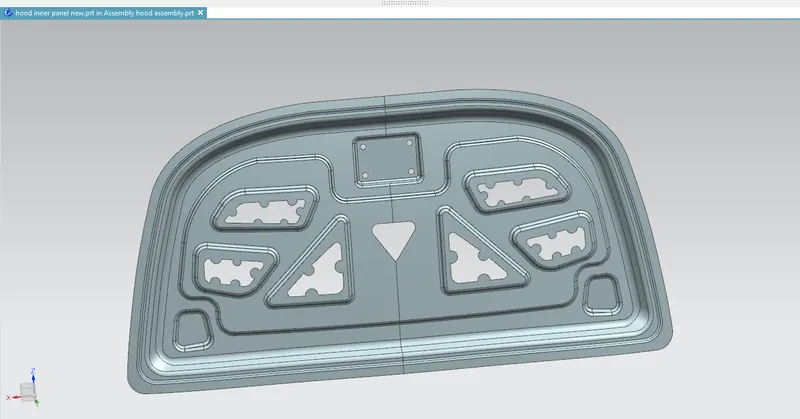
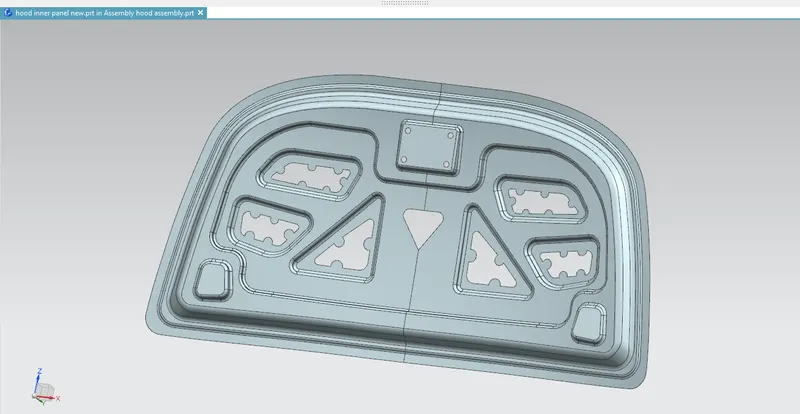
HOOD INNER PANEL
- The design of this part has more engineering specification as impact force distribution design.
- Components attached to this panel are striker and hinges.
- This part is internal to outer panel and designed to support it, hence the design of inner panel prepared from outer panel skin data which is received from styling team.
- This has embosses which are formed through forming process to provide stiffness and avoid localisation of forces.
- It’s design is intended to distribute force of impact to body pillars.
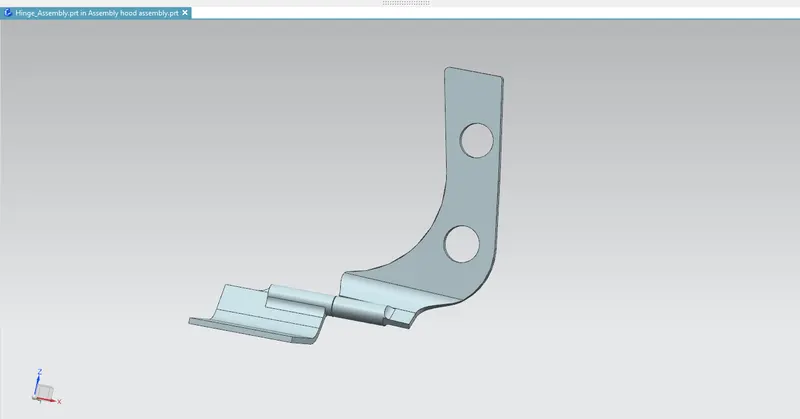
HINGE
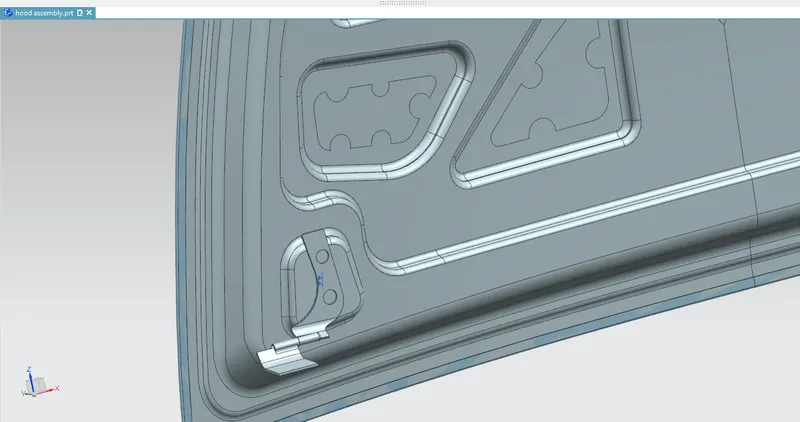
- Hinges are used to connect hood to car and permit a movement of hood to open and close frequently.
- Technically they are provided to allow rotational movement of part about an axis.
- Emboss are used to provide the mount hinge for the opening and closing of the hood.
LATCH AND STRIKER
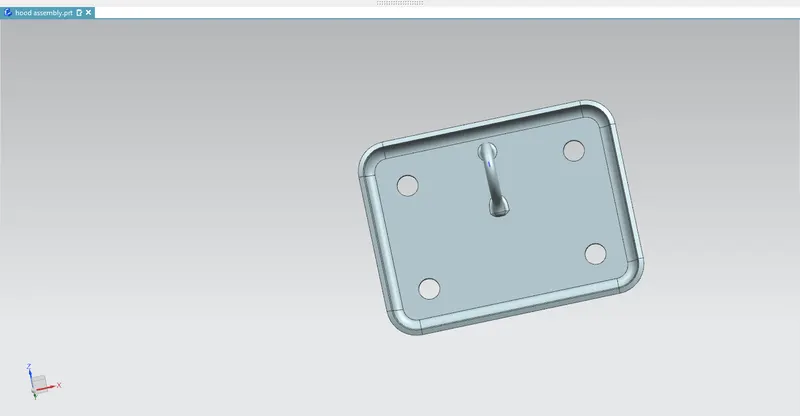
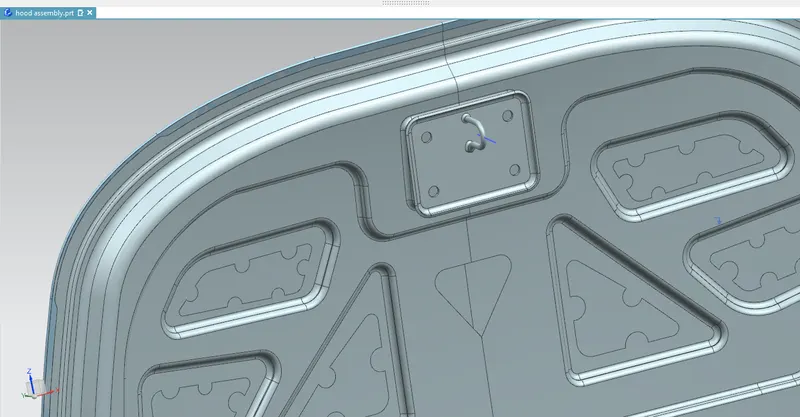
- Latch and striker is used to lock the hood with engine compartment.
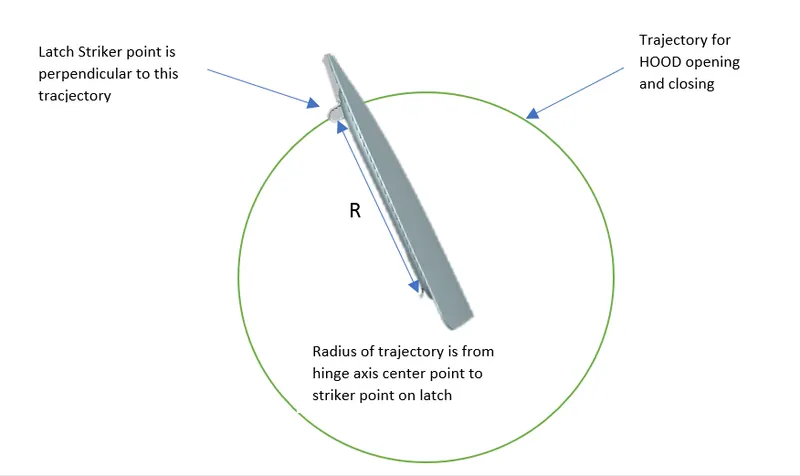
TRAJECTORY OF HOOD
- It is refers to path that hood follows while opening and closing.
- For proper opening and closing of hood it is required to positioned striker, the striker should be perpendicular to the trajectory of hood.
- Hinges are positioned to respective places and a circle is drawn from centre of hinge axis perpendicular to it up to striker position.
MASTIC DATA
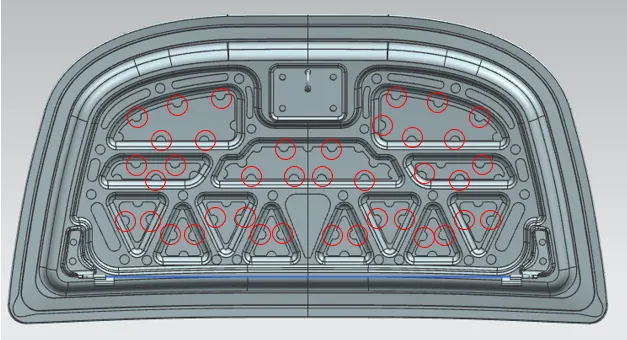
- The hood inner panel and outer panel are joined using the mastic sealant instead of welding or other joining methods because the outer panel is a cosmetic part and it needs to have a smooth and attractive surface finish.
- The mastic sealant also further improves the flexural rigidity of the entire assembly.
- The mastic points where the mastic sealant is placed were strategically chosen because the mastic sealant is generally known to have approximately 80mm.
HEMMING
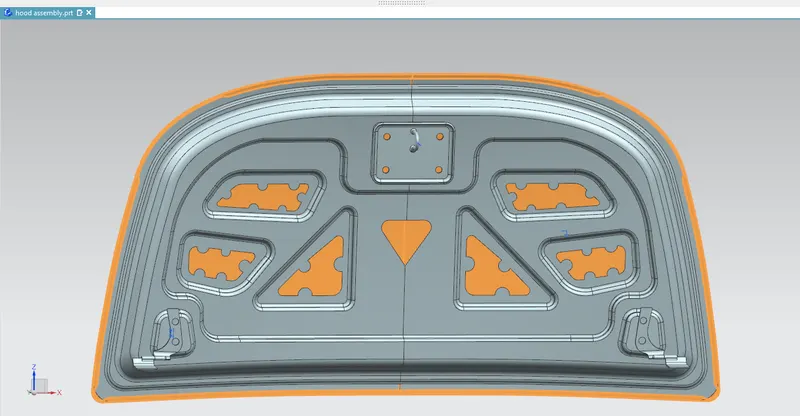
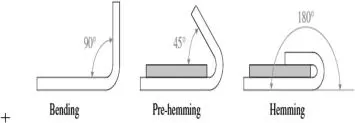
- Hemming is the process of making outer panel to cover the inner panel.
- while manufacturing the hemming is done using rooling method.
- To avoid the welding we use the hemming process.
SAFETY PARAMETER
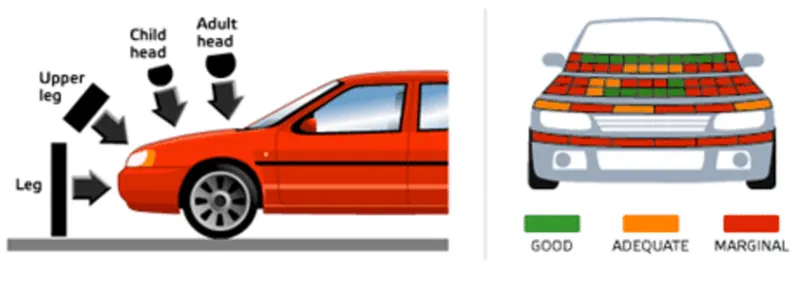
- Euro NCAP is a division working with safety aspect tests of cars in form of pedestrian protection since about 14 Lack pedestrians per year are killed by traffic accident in the world as per WHO report.
- Most accidents occur within city areas where the speeds are moderate.
- In these tests, the potential risk at injuries to pedestrian head, pelvis, upper and lower leg are assessed.
- To estimate the potential risk of head injury when a vehicle striking an adult or a child, a series of impact tests is carried out at 40 km/h using an appropriate head-shaped impact mass.
FINAL OUTPUT OF HOOD
CONCLUSION
Hood is very important to a car and hood model has to follow the safety rules and
their master diagram for better in the ratings etc.