Design of backdoor
DESIGN OF CAR Back DOORS
AIM:
To Design the back door of an automobile using the exterior class "A" surface provided. And the designed zipped file attached below.
OBJECTIVE:
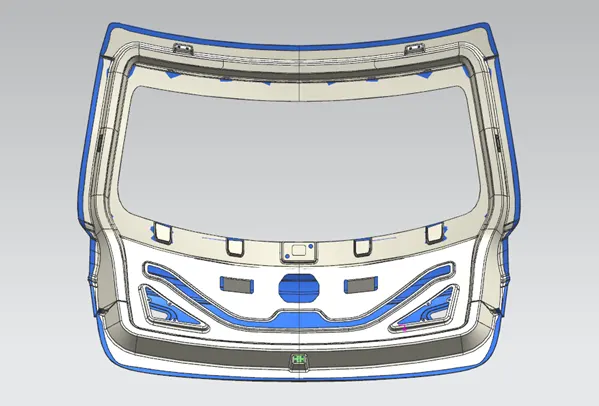
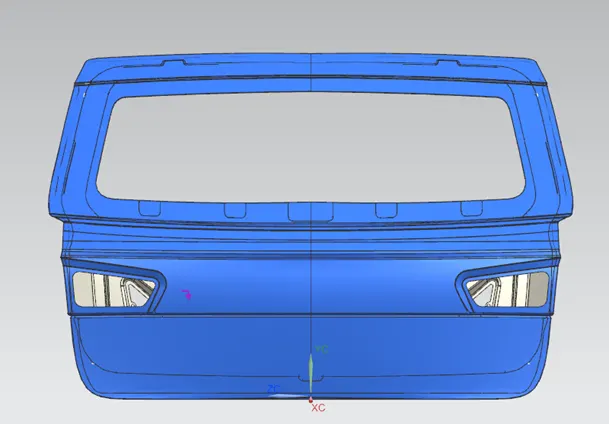
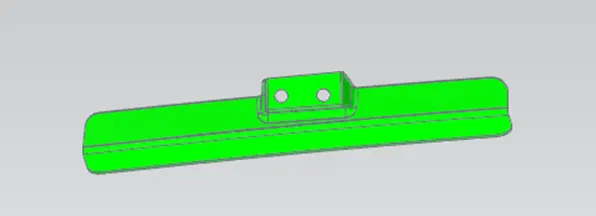
- Creating a car back door with an inner panel, an outside panel, and reinforcement for the latch, wipers motor, gas stay, and hinges.
- The inner panel is put through a draught examination to see if it complies with the deep drawing specifications for the tooling direction that the design creates.
INRODUCTION TO BACK DOOR:
- The back door of a car typically refers to the door at the rear of the vehicle that allows passengers or cargo to enter and exit the car. In most cars, there are two back doors, one on either side of the car.
- The back doors of a car can vary in design depending on the make and model of the vehicle. Some cars have back doors that swing open, while others have doors that slide open. Some cars also have back doors that open automatically with the push of a button or the wave of a foot.
- It is important to ensure that the back doors of a car are properly closed and locked while driving to ensure the safety of all passengers in the vehicle. Additionally, it is important to regularly maintain the back doors, including checking the hinges and locks, to ensure they function properly and securely.
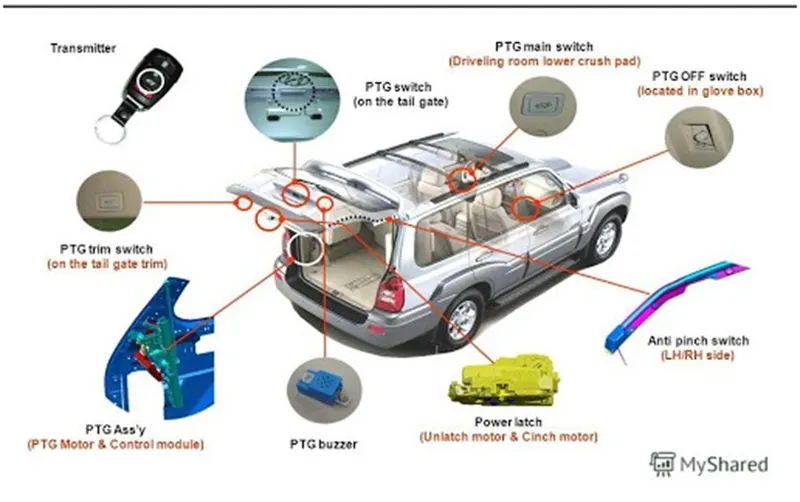
Types of backdoors according to positions:
A cargo area door or entrance may have hinges on the top, side, and bottom. A tailgate is a door that hinges from the bottom.
- Top-mounted
- Doors with side rail
- Bottom type
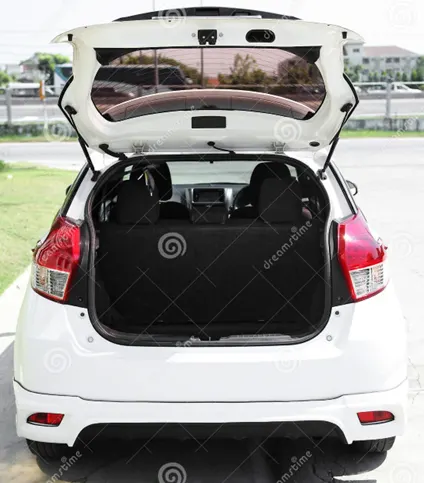
- Top-mounted
This style of back doors is common in several sport utility vehicles, pickup trucks, and station waggons. Modern automobiles include top-mounted tailgating systems that are motorised and gas-powered. Compared to side mounted or backdoors with central pillars, these top mounted tailgates offer better rear visibility.
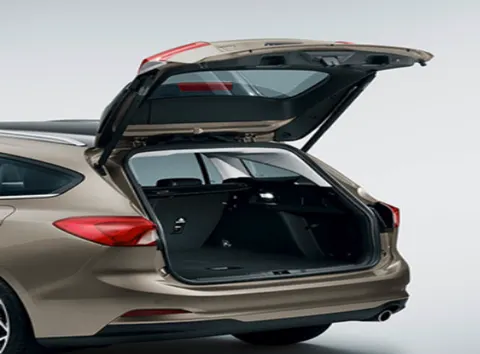
- A side-mounted door
The side mounted doors are utilised in van-type MPVs, SUVs, and pickup truck vehicles, as the name implies. Compared to top mounted doors, these side mounted or barn doors are much simpler. These doors can be opened simply and are often smaller in size. For long pipes and other lengthy components, where one door is maintained open, these doors are more practical for the people who handle the goods. Accidental head strikes are also avoided by these doors. The side mounted doors make loading and unloading objects much simpler.
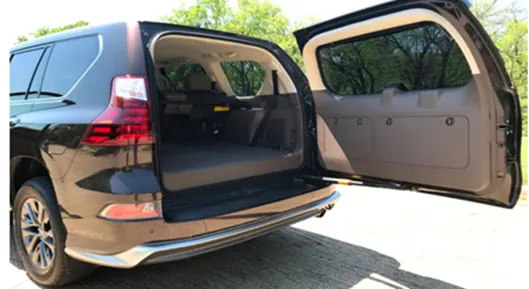
- Bottom type
This bottom-type backdoor system is utilised in various car types, including sedans, pickup trucks, and some opulent SUVs. They are the most practical back doors since the bottom split can be utilised to support or even serve as a table for tourists.
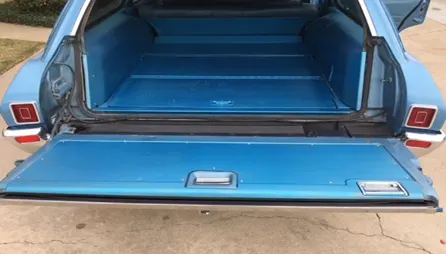
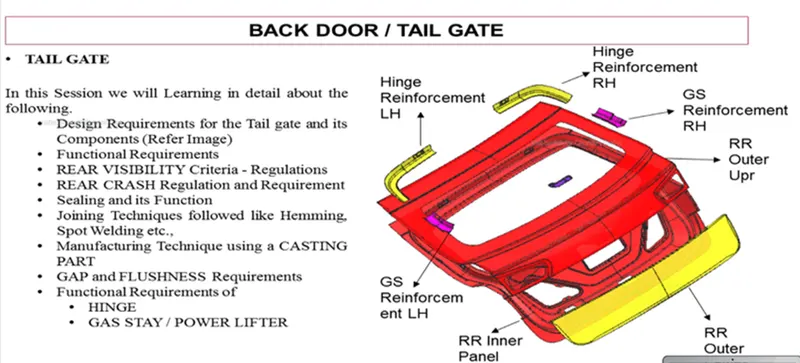
Back Door Assembly:
- Inner panel
- outer panel
- hinge and its reinforcement
- wiper motor reinforcement
- latch & Stricker and its reinforcement
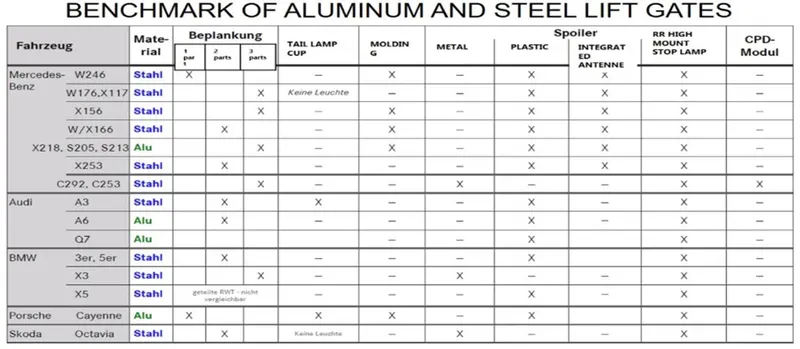
The Back Door is made using a variety of Sheetmetal fabrication technique; they are
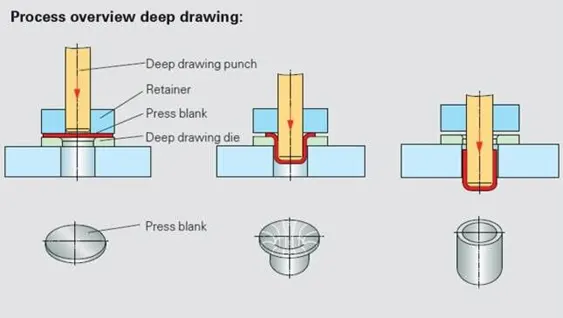
Deep Drawing:
Cups, cans, and other deep drawn goods can be produced with success using the metal deep drawing process.
Deep drawings can be divided into two basic types.
- First stage: (Drawing)
The metal blank is placed on the die and made contact with the punch during the first stage of drawing. When the metal specimen is a flat piece of sheet metal, it is employed in the product's shaping and finishing. The punch starts out by moving downward. Pure radial drawing (drawing towards vertical axes) between the die and the blank metal is applied to the outside rim of the blank. The metal bent, slipped over the die, and was stretched between the die and the punch. The metal near the punch head and in touch with it bend, slide, and extend over the head of the punch.
- Redrawing: To create a cup shape in the die and punch, the components formed in the initial stage are redrew and given more depth. Redrawing is the name for the second phase of drawing.
Embossing:
In theory, there is no change in metal thickness or bypassing of sheet or a strip of metal between rolls of the desired pattern when using matched male and female roller dies to create raised or sunken designs or relief in sheet materials. Metal sheet is produced with a pattern or design by drawing it through the male and female roller dies. Several designs can be created on the metal sheet depending on the roller dies used.
The following materials are frequently used in the metal embossing process:
- Alloys of aluminium
- alloys of steel
- Zinc, copper, and galvanised steel
- Brass
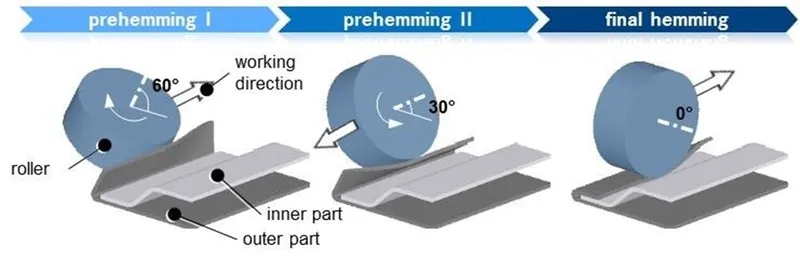
Hemming:
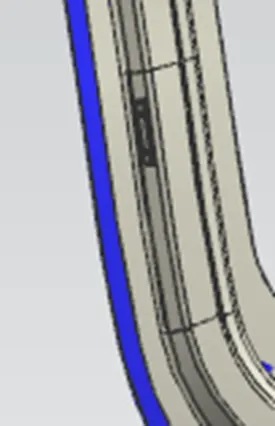
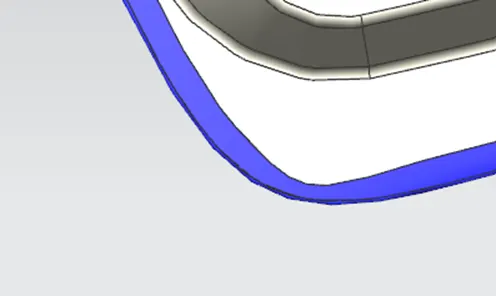
- Hemming in car backdoors refers to the process of finishing the edge of the metal sheet that forms the back door of a car. Hemming is often used in car body manufacturing to create a smooth and seamless finish on the edges of the metal panels.
- In the case of car backdoors, hemming is important because it helps to create a strong and durable seal between the back door and the rest of the car body. This seal helps to prevent moisture, air, and noise from entering the car cabin from the outside.
- Hemming in car backdoors is typically done using specialized machines that are designed to fold the metal sheet over itself and create a tight seal. The hemmed edge is then usually welded or bonded to the rest of the car body to create a strong and secure connection.
- Proper hemming of car backdoors is important not only for the aesthetic value of the car but also for the safety and functionality of the vehicle. A poorly hemmed backdoor can lead to leaks, rattling, and even compromise the structural integrity of the car, potentially leading to safety issues.
Design of Back door in NX CAD:
Door parts thickness is given below,
- Outer Panel - 0.75 mm
- Inner Panel - 0.75 mm
- Reinforcements - 1.5 mm
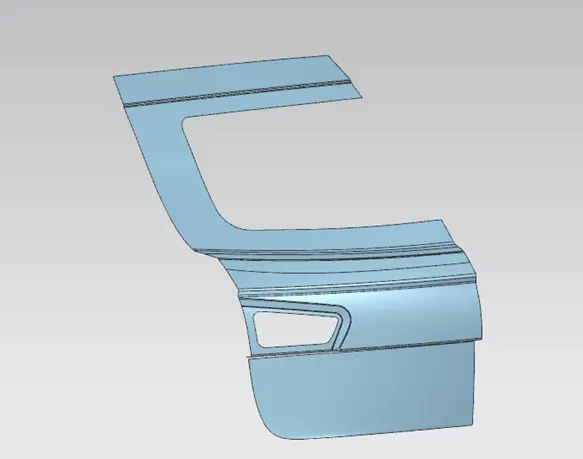
Design approach:
First, we must determine whether the skin data contains any surface imperfections; if so, these irregularities must be repaired using a bridge curve, curve nesh, and sewing.
Next, a sealing flange is made. Typically, we will design the panel with the proper dimensions using the original sketch. But we designed this without a master sketch because of assumption
Direction for Tooling Development:
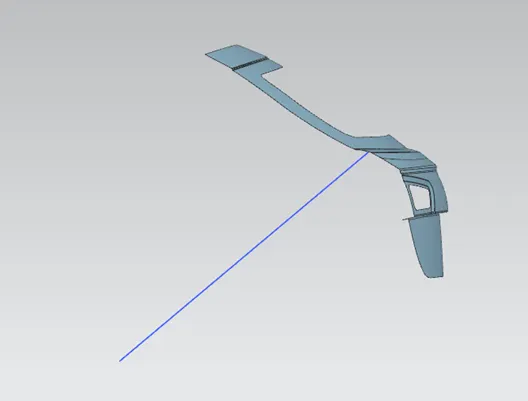
Deep sketching will be used to create the back door. One instrument used in the deep drawing process is the core and die. The inclination angle of the core, which follows a single straight path, is referred to as the tooling direction.
The tooling direction or axis is designed so that the manufacturing team can use it as a reference and construct the part as necessary. It was created utilising a top-down design strategy.
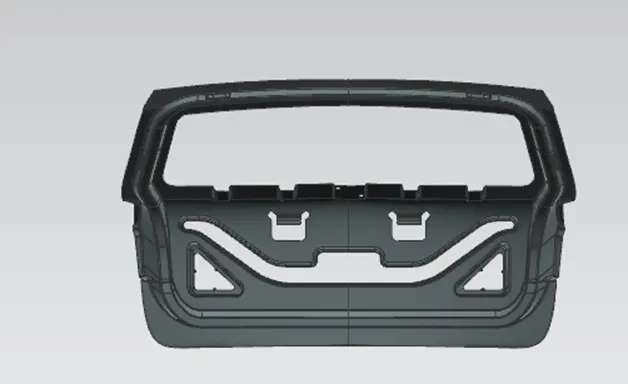
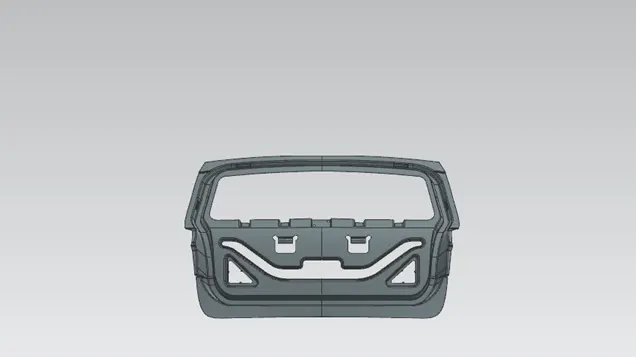
Inner Panel:
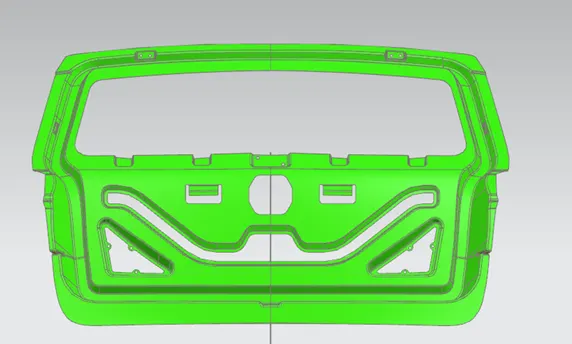
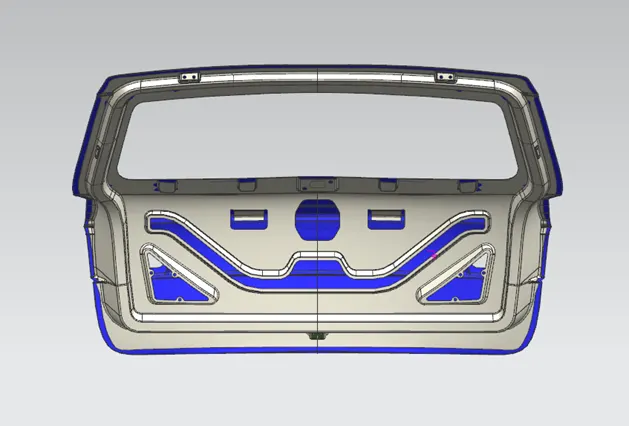
One of the most crucial parts of the door assembly, the inner panel is utilised to stiffen the door assembly and is where all of the accessories, including the latch, glass guide channel, moulded trim, and hinges, are installed. The integration method is a potential approach. The part is formed using the integration method from a single blank. This lessens the number of tools required, lowers the cost of assembly, and solves any fit ability issues.
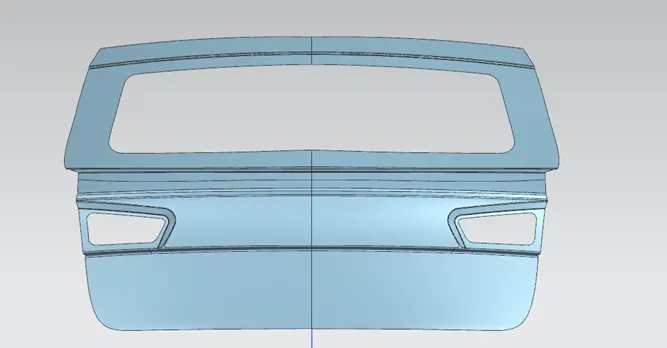
Outer Panel:
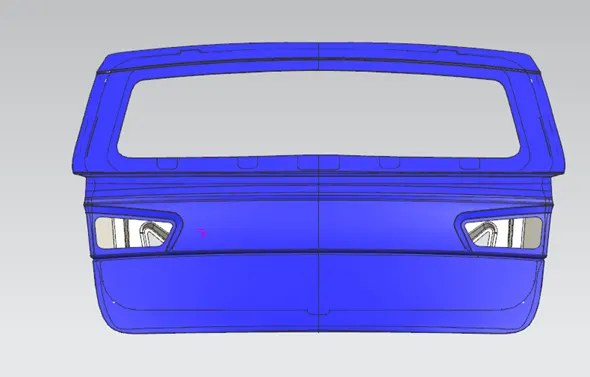
Similar to other BIW components, the back doors outside panel serves as the vehicle's decorative element. The offered coating is a multi-stage coating with the qualities of scratch resistance, rust avoidance, and slick and appealing finishes. Moreover, the outer panel includes mounting holes for the tail lamp, rear fog lamp, and licence plate. The majority of hatchback automobiles are equipped with wiper motors.
Embosses & Reinforcement:
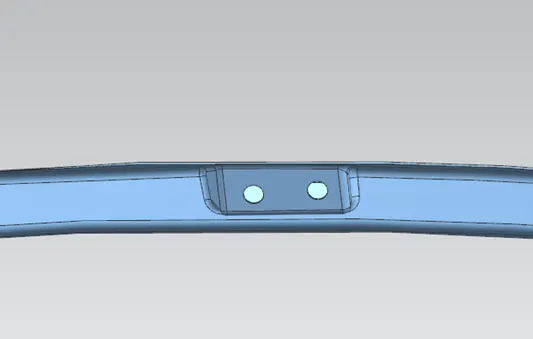
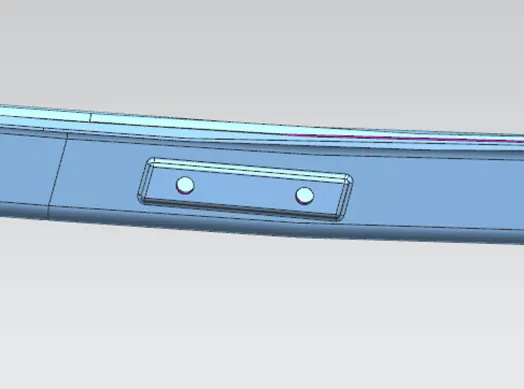
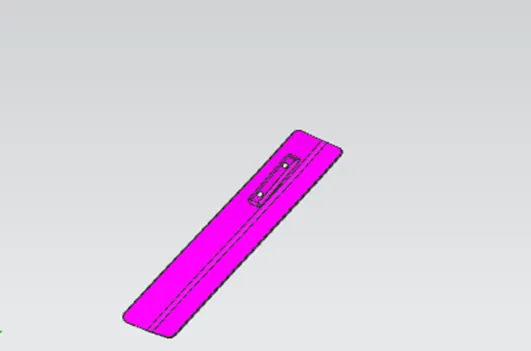
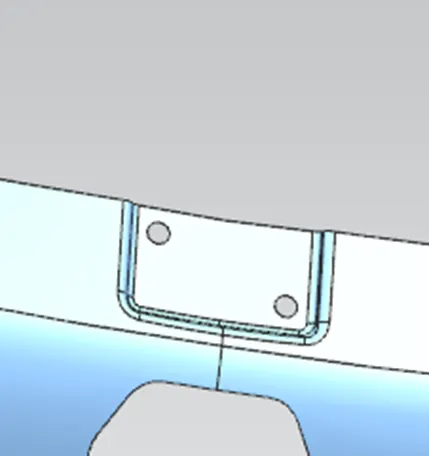
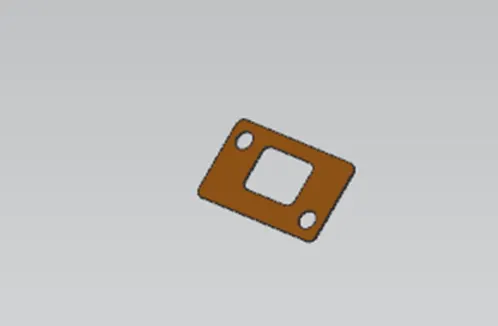
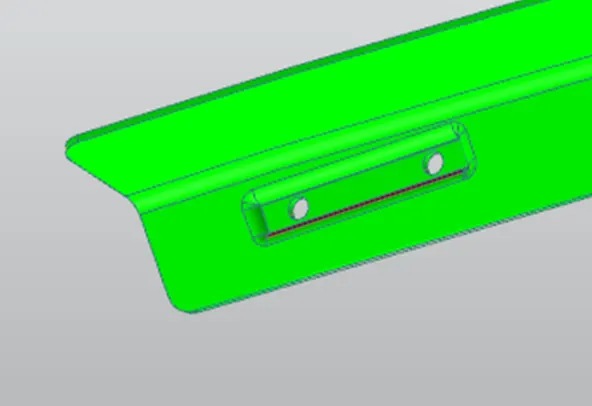
The unusual cross section allows for the creation of embosses. The embossing is utilised to make the backdoor stronger. We should keep in mind that it shouldn't be overly strong when designing. So, we favour designing large embosses rather than small ones. These embosses are employed to counteract lateral stresses.
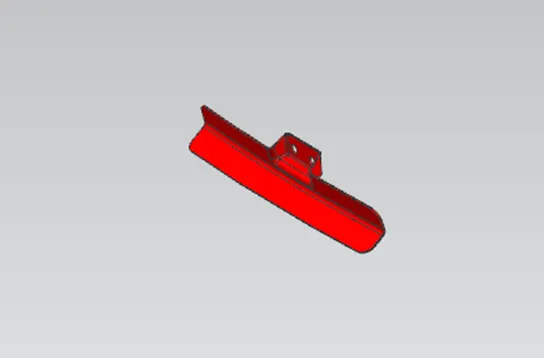
- HINGE EMBOSS & REINFORCEMENT:
- GAS STAY EMBOSS & REINFORCEMNT:
- WIPER MOTOR EMBOSS & REINFORCEMENT
Hemming and Hem Relief:
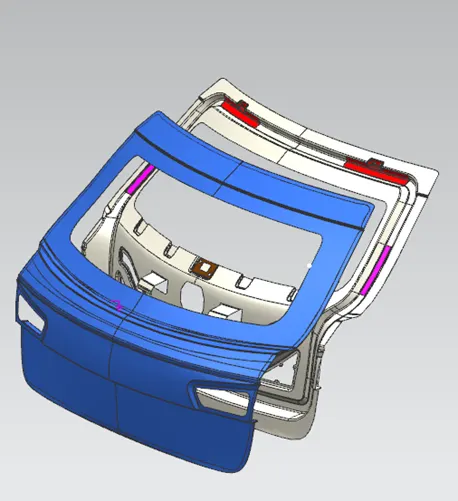
ASSEMBLY OF BACK DOOR
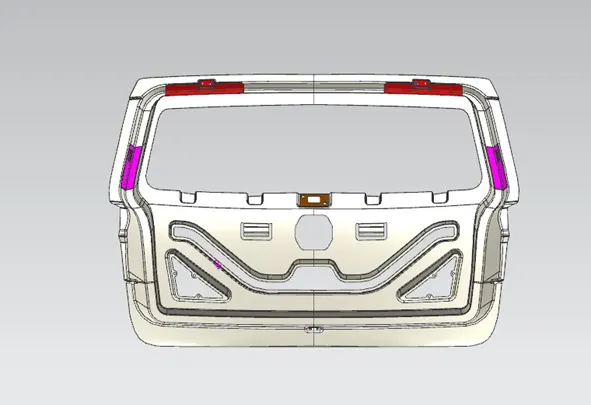
DRAFT ANALYSIS:
FINAL ASSEMBLY:
PART AND ASSEMBLY ZIPPED FILES:
CONCLUSION:
As a result, the back door was created from the style surfaces that were already present, adding the necessary reinforcements and emboss. For the inner panel, a draught analysis was also performed to meet the production requirements.