Design of backdoor
BACKDOOR
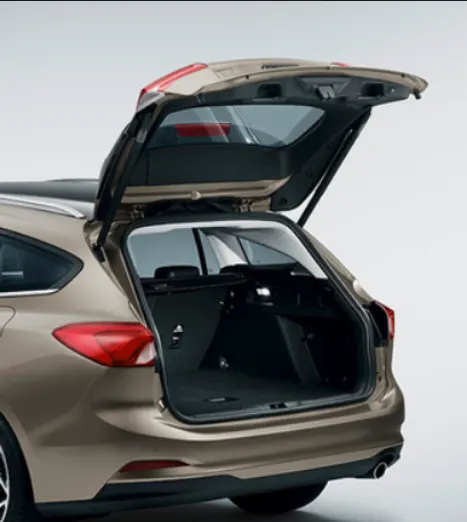
The term "back door" or "tailgate" simply refers to the opening and closing of the back of the vehicle. It encircles the back of the car. It gives access to a boot or trunk that contains freight. Hatchbacks, estates/station wagons, and liftbacks are characterized primarily by a tailgate that hinges at the roof. A cargo area door or entrance may hinge from the top, side, or bottom.
This technique is typically carried out manually in the majority of autos. To open and close the tailgate using the automobile key, one must exit the vehicle. These days, automakers offer cutting-edge technology like an automated tailgate. The electronic closing and opening of the tailgate are handled by an automatic tailgate in a vehicle.
MANUFACTURING PROCESS
Traditional tailgate assemblies are created by joining stamped metal panels to create a tailgate. To activate a striker on the pickup sides, latches are fitted on either side of the tailgate. The tailgate assembly's latches are operated by a handle. The pickup bed's steel tailgate assembly offer a reliable and sturdy closure.
The expense of the tooling and equipment needed to stamp metal tailgate components is another drawback of steel tailgate assembly. Usually, a big stamping press is used to make metal tailgate parts. Tools consisting of hardened steel that have been highly machined are typically needed for stamping presses. A metal tailgate requires significantly more expensive tooling.
STAMPING PROCESS
The stamping techniques to be applied to a panel are determined by its design. But, the procedures that are typically employed frequently include blanking, drawing, piercing, shaping, notching, trimming, and hemming. The initial rough shape of the part is prepared on a flat sheet by blanking. The first operation to achieve depth-related form is typically drawing. Operations connected to product design include piercing, notching, and hemming. Trimming often involves removing superfluous material from the panel's periphery that was intended to hold blanks during draw operations. The choice of the trim line is crucial and ultimately determines whether or not one will get a nice draw.
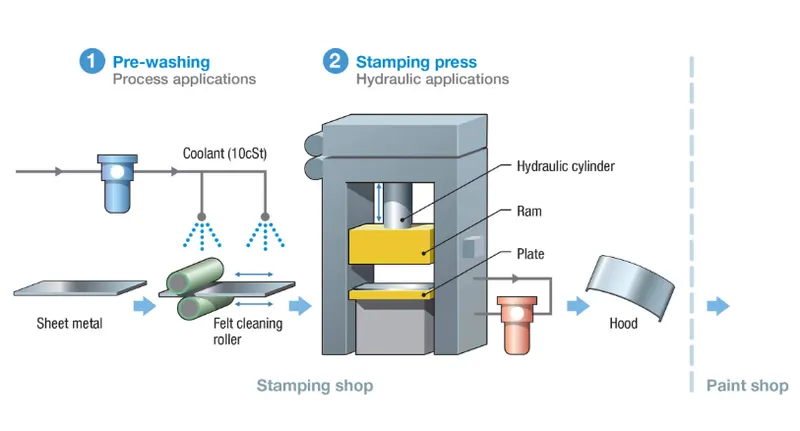
- BLANKING: When necessary, blanking comes first in the stamping procedure. Cutting big metal sheets or coils into more manageable, smaller pieces is a process known as blanking. When a stamped metal component will be drawn or produced, blanking is typically done.
- PIERCING: If a part requires slots, holes, or other cutouts, piercing can be employed. Piercing, which can be performed simultaneously with blanking, punches the requisite shapes out of the metal sheet.
- DRAWING: In the process of stamping metal, drawing is what is actually stamped. A punch pushes a piece of metal through a die, giving the part its main shape. Deep drawing refers to portions with a depth larger than the principal opening; shallow drawing refers to parts with a depth less than the opening.
- BENDING: The action of bending is very self-explanatory. The part-in-progress is set up on a unique die, and the metal is bent as needed by a ram pushing against it. As trying to punch a piece of metal that has already been bent causes the entire portion to deform, bending is done after drawing.
DESIGN OF BACKDOOR
The design consideration of the back door are:
- Visibility Criteria
- Force Dissipation
- Latch and Stricker Positions
- Hinge Position
- Gas Stay Position
- Hemming and Relief Areas
PARTS OF BACKDOOR
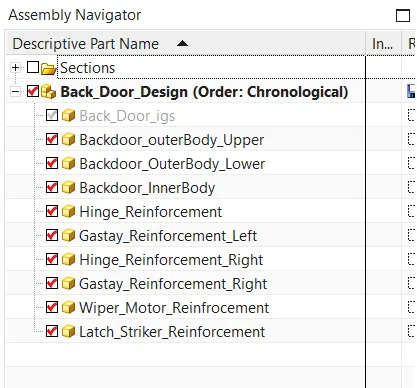
- Back door outer panel (upper and lower)
- Back door inner panel
- Hinge reinforcements
- Gas stays reinforcements
- Latch and striker reinforcements
- Wiper motor reinforcements
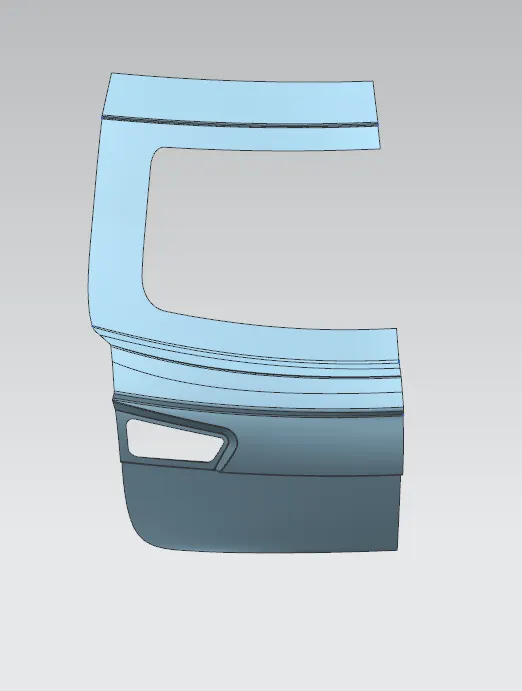
Step 1: Download the Class A surface
Step 2: Improved Class A surface
- By Sew command we check which surface is creating the issue.
- Then Remove the surface which causes the issue.
- Using bridge curve, through curve mesh, face blend, and offset curve surface command we improve our Class A surface.
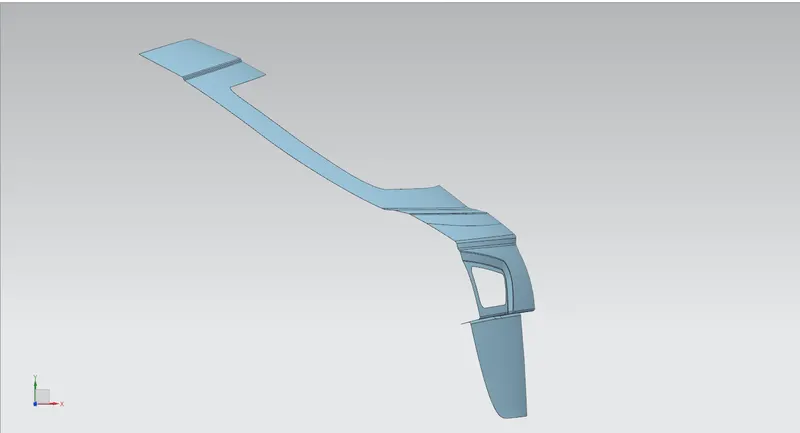
Step 3: Create separate two new assembly components for Backdoor Outer Panel
This design divides the back door's outer panel into an upper and lower portion. This outer panel was created with adequate reliefs at the corners for hemming operations and visibility standards. The outside panel is 0.75 mm thick.
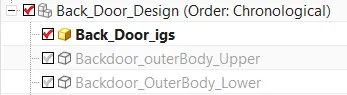
- Using the wave geometry linker command we make to separate link on the backdoor outer panel.
BACKDOOR OUTER PANEL UPPER:
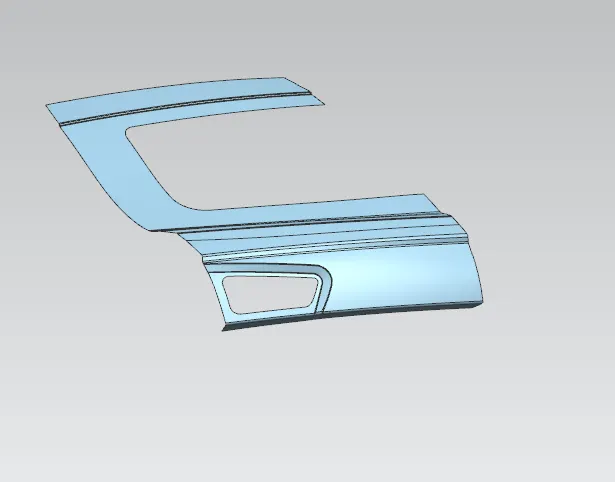
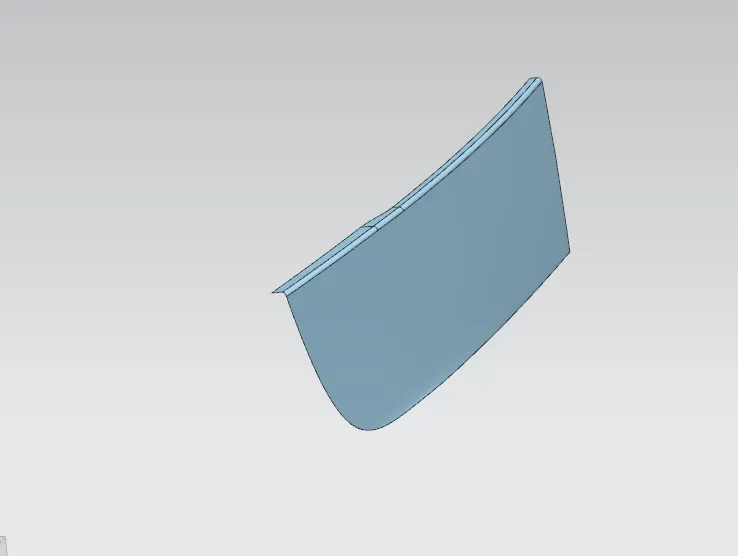
BACKDOOR OUTER PANEL LOWER:
Step 4: Creation of BACKDOOR INNER PANEL
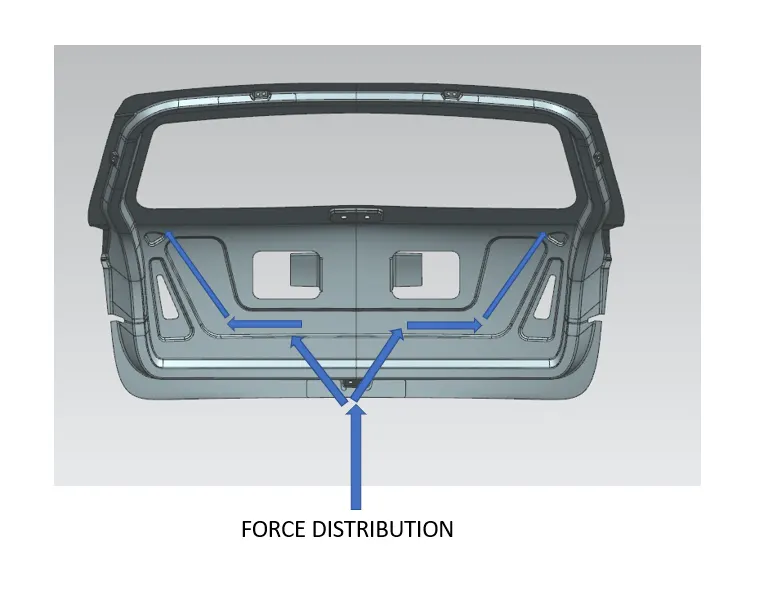
The inner panel of the back door was developed using the visibility requirements, the position of the wiper motor, the gas stay, and the hinge. The creation of an appropriate tooling direction results in a trouble-free production procedure. This tooling direction was used to construct the stamping operations in this design. This design has been embossed for distributing force. In this design, the mastic areas have the proper clearance. The inner panel is 0.75 mm thick.
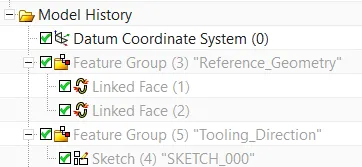
1. First we create a reference geometry using the wave geometry linker command of the Backdoor Outer panel both upper and lower. Then using that we create the tooling direction and based on this tooling direction we choose our vector direction.
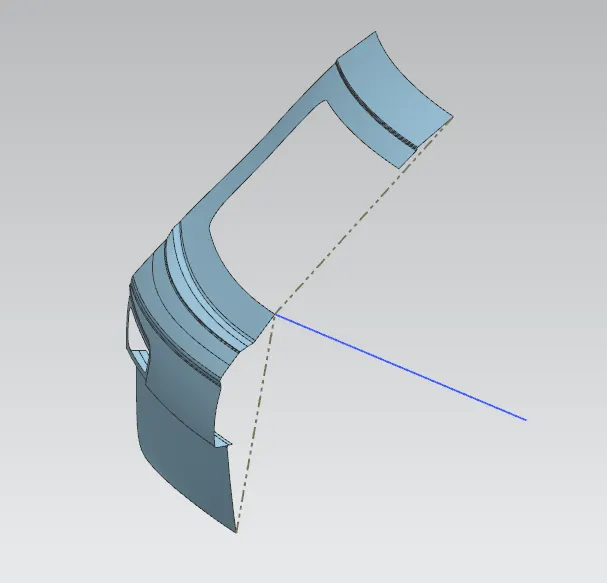
2. Creation of a sealing flange and then a connecting flange
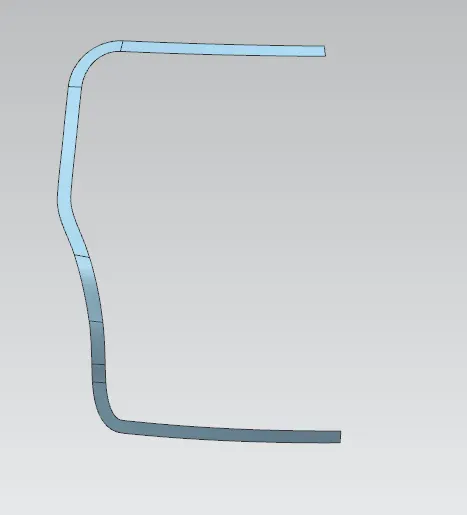
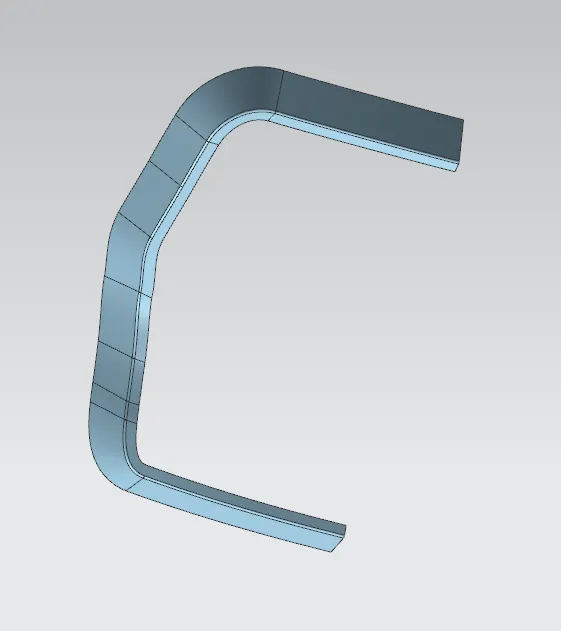
3. Final Flange
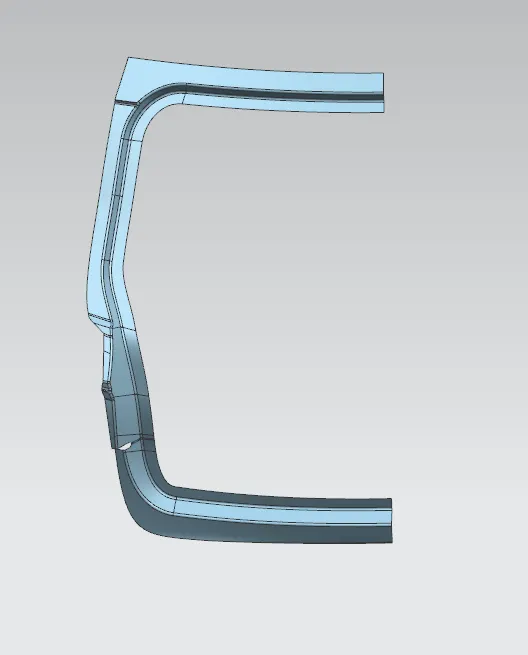
4. Creation of windshield area, emboss, Mountings, and the mastic area
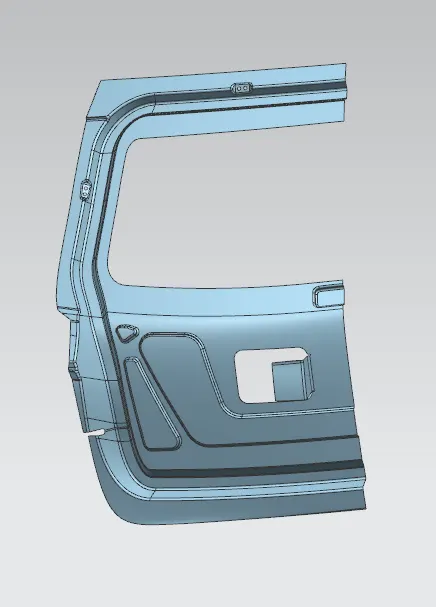
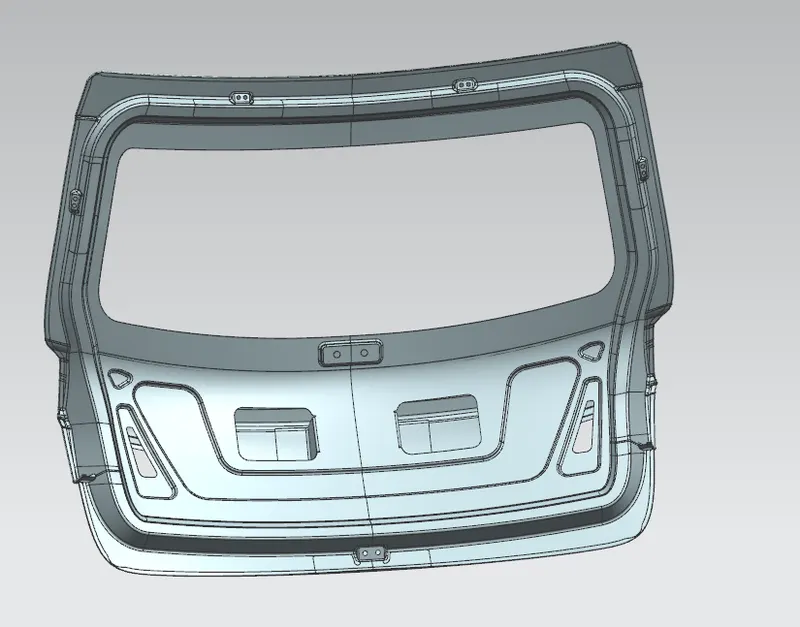
5. Final backdoor inner panel after thickening with 0.75mm
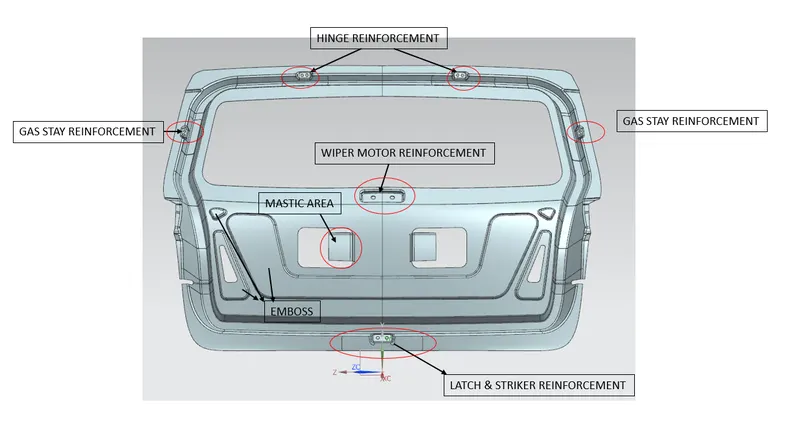
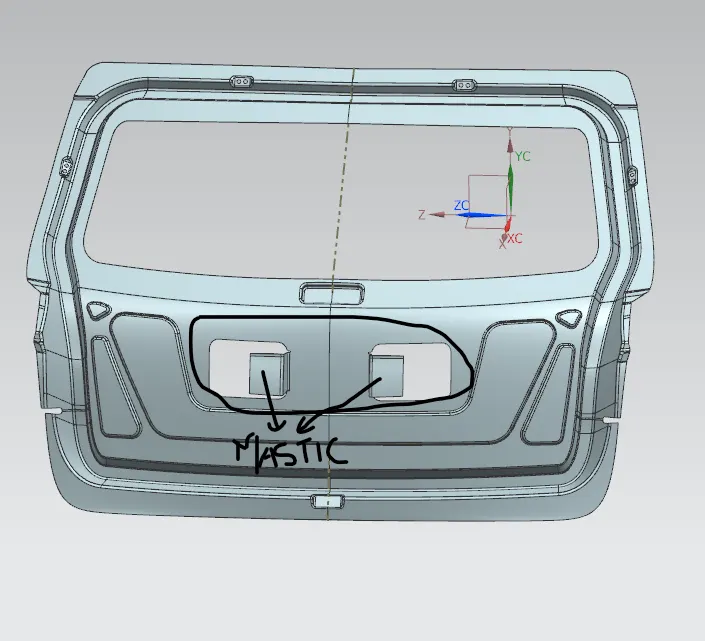
*Mastic Area
Mastics sealants are used for the joining of the outer panel and inner panel. It increases the strength of the back door and good NVH. So accurate clearance was given for mastic sealant.
DESIGNING THE REINFORCEMENTS:
There are four types of reinforcement we use that are:
- HINGE REINFORCEMENT
- GAS STAY REINFORCEMENT
- WIPER MOTOR REINFORCEMENT
- LATCH REINFORCEMENT
PROCEDURE TO CREATE REINFORCEMENT:
The same process was used to generate each reinforcement; first, the linked bodies were created independently by the command wave geometry linker, and then the necessary area was cut out and thickened.
Hinge reinforcement:
The back door's opening and shutting are made possible by hinges. On both sides, the hinge is secured with one end on the backdoor and the other on the roof. Both the outside and inside of the backdoor might have hinges.
To make up for the weak area caused by the acting load over it, hinge reinforcements are installed.
Gas Stay Reinforcement:
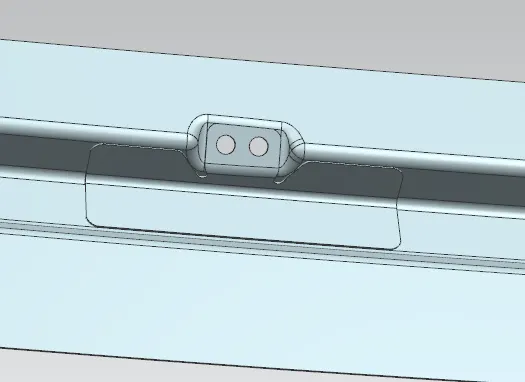
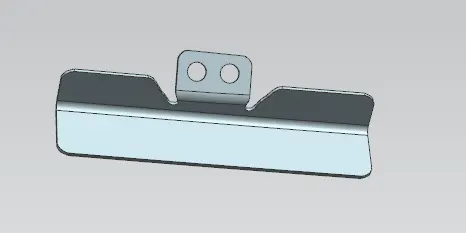
A mechanism called a "Gas Stay" is employed to hold the back door open. The gas stays automatically engages into the support position as the back door opens and doesn't require any manual effort. The Gas Stay is fixed with one end on the backdoor and the other on the body side or the immobile back door location.
In the location where the Gas Stay is mounted, embossing is offered to make up for any weaknesses and increase strength.
Wiper Motor Reinforcement:
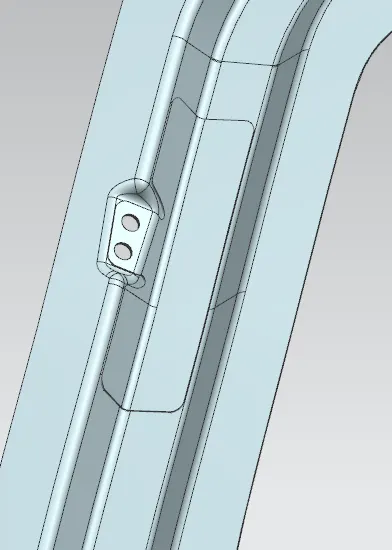
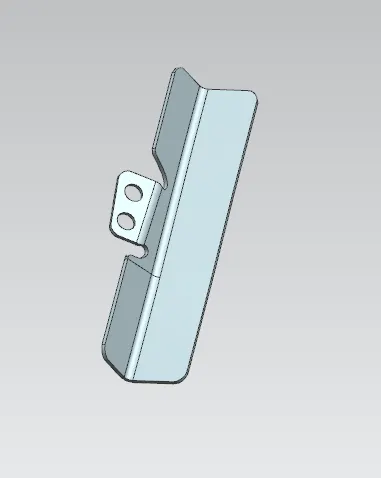
Wiper motor reinforcement is created to mount the wiper motor assembly.
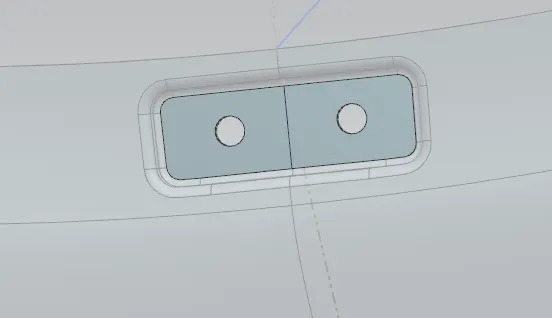
Latch and Striker Reinforcement:
The backdoor's locking mechanism is formed by the Latch & Striker and the vehicle. Stress has built up in the Latch and Striker region as a result of the backdoor being opened and closed frequently as well as excessively slammed. In this area, reinforcements are added to make up for the same.
TRAJECTORY:
The trajectory is created to position the latch and striker. The latch system must be able to catch the striker of the door while closing. Circle is drawn from the hinge axis. The striker follows this path.
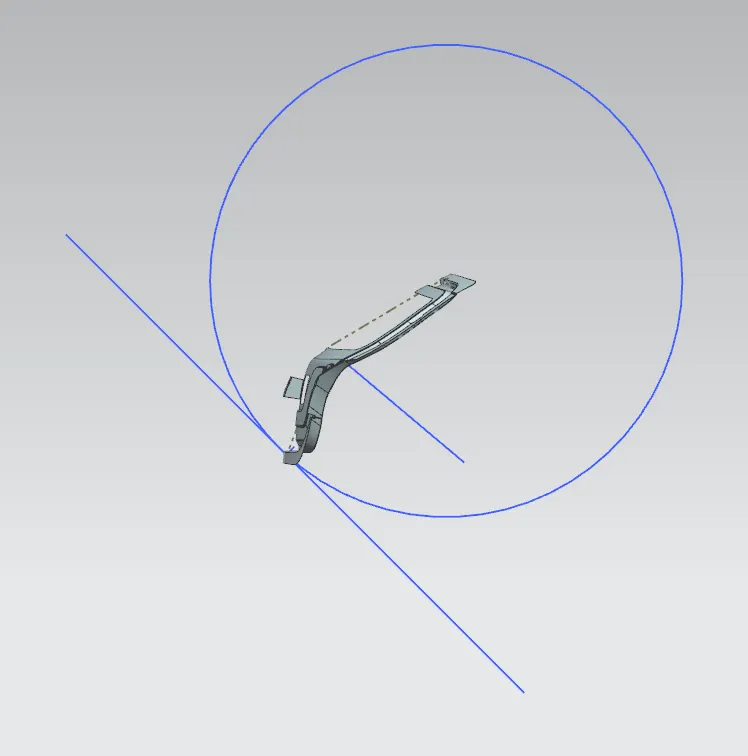
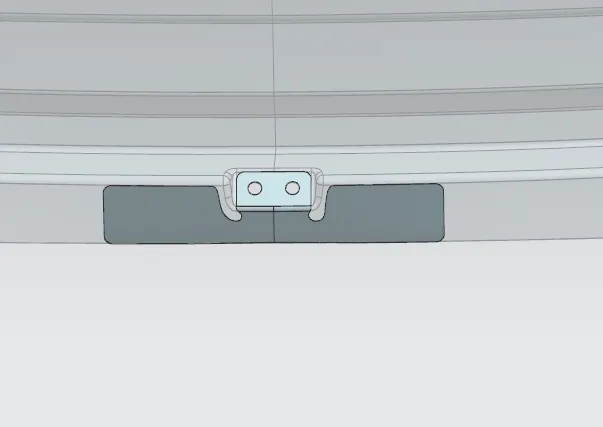
NOTE: 1mm Thickness is provided for all the reinforcement. All reinforcement parts are spot welded on the inner panel for better strength in that area.
CREATION OF HEMMING
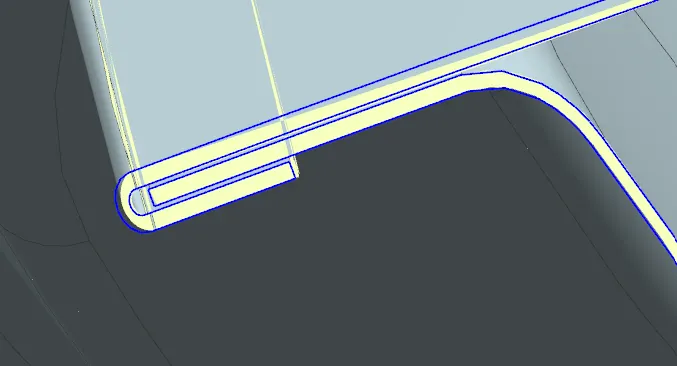
The car industry uses hemming to connect the inner and outer closure panels together (hoods, doors, tailgates, etc.). It involves folding or bending the outer panel's flange over the inner panel. The accuracy of the process has a considerable impact on how the exterior of the automobile looks, making it a crucial component of the finished vehicle's quality.
Roller hemming :- The robotized hemming systems provide an extremely flexible solution by combining a typical industrial robot with a roller hemming head. This roller hemming head is made up of a body, a few guides, and several rolls that are created specifically for each individual part's geometry.
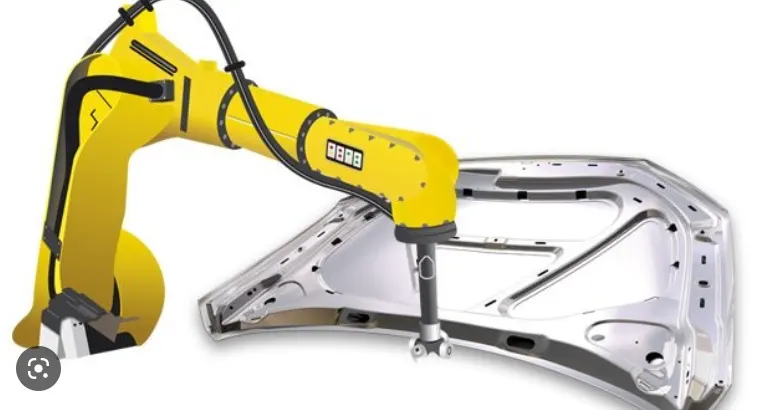
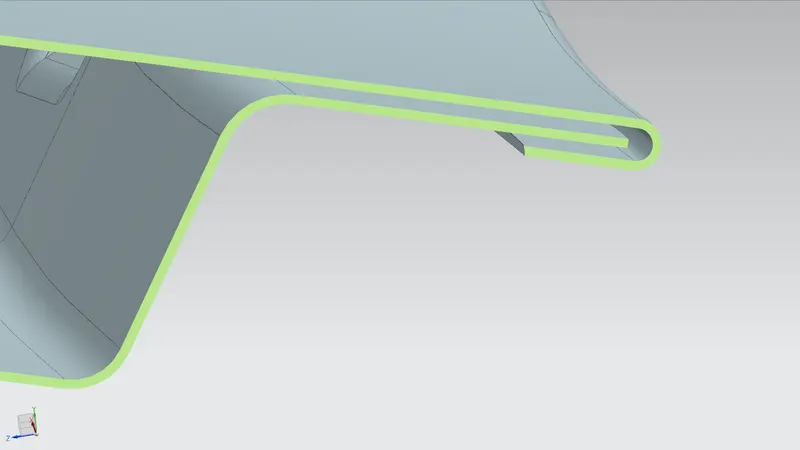
Proper corner relief is provided for trouble-free hemming operation
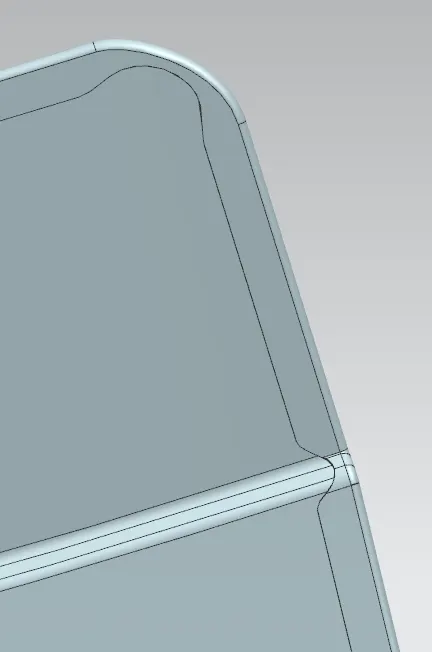
*HEMMING IN BACKDOOR OUTER PANEL UPPER
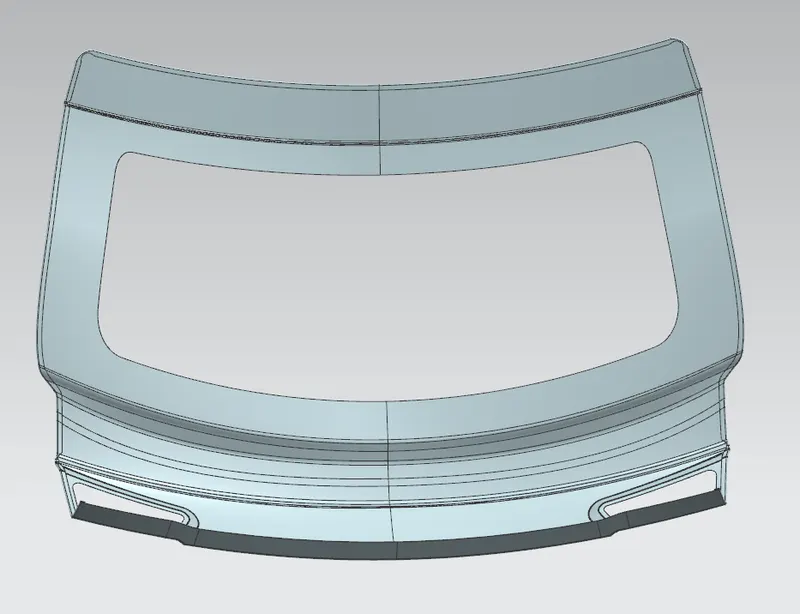
*HEMMING IN BACKDOOR OUTER PANEL LOWER
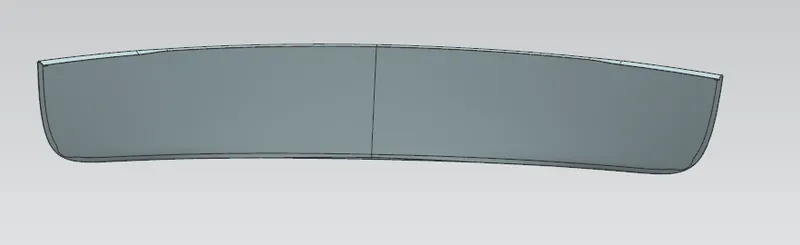
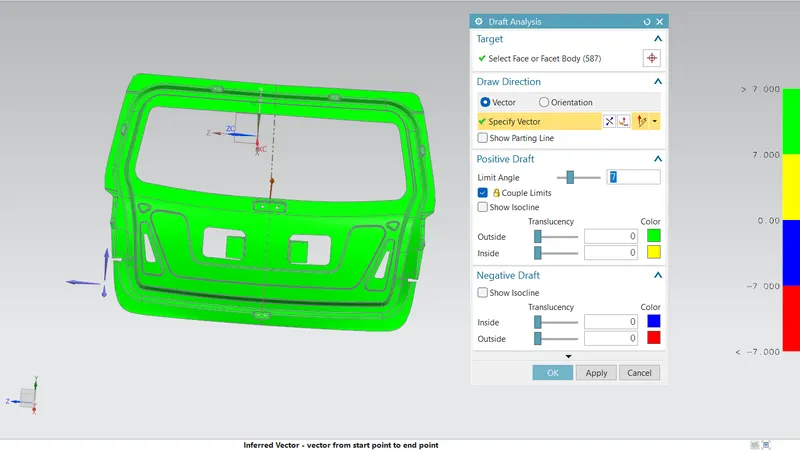
DRAFT ANALYSIS
To make sure the planned part is appropriate for stamping operations with respect to tooling direction, a draft analysis was undertaken. With this capability, we can identify mistakes. The draft angle requirement is 7. We can quickly identify the sections that are inappropriate because the bad draft is shown in a different color.
ASSEMBLY TREE STRUCTURE
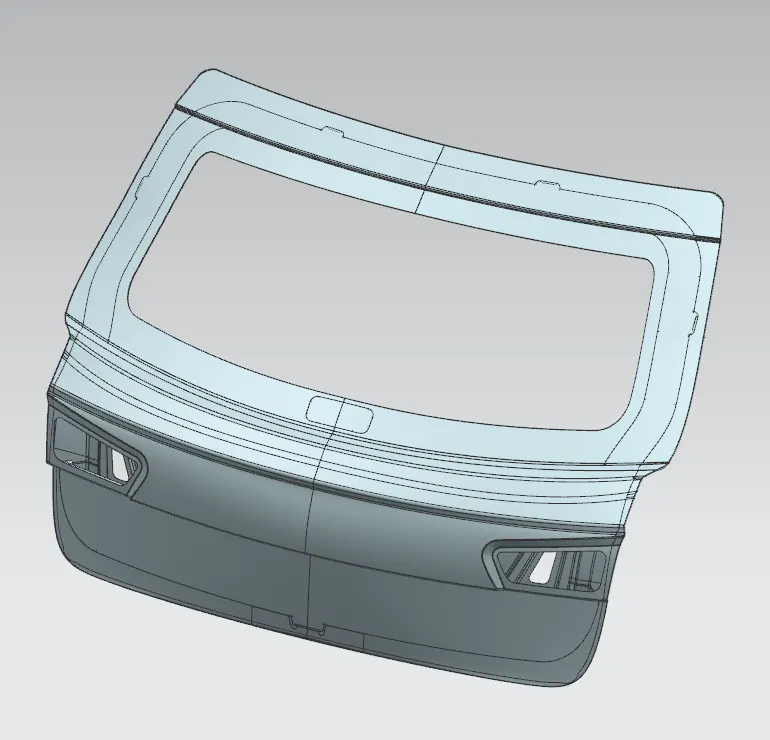
FINAL BACKDOOR IMAGES
CONCLUSION
Based on design factors, the backdoor was created. Inner panel reinforcing where necessary is present. With the help of the draught analysis feature, the design is examined.