Design of backdoor
A Backdoor is a hinged part which is mounted on the rear side of a vehicle. The Backdoor is used for access to the luggage compartment, boot space, Stephanie storage, etc. Backdoors are usually operated by gas stays which ease the opening and closing movement of the backdoor. Some of the car’s backdoors are also operated by an electric motor.
Types of Backdoors based on the opening
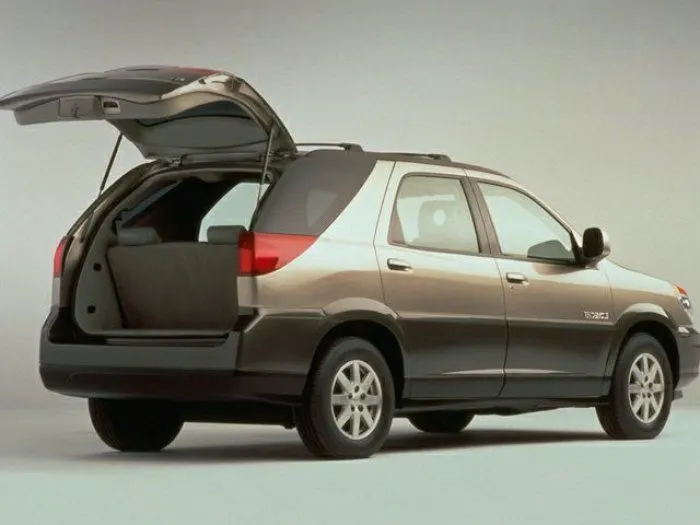
Top Mounted – These types of mounting are used in hatchbacks, wagons, sedans, SUVs, MUVs etc.
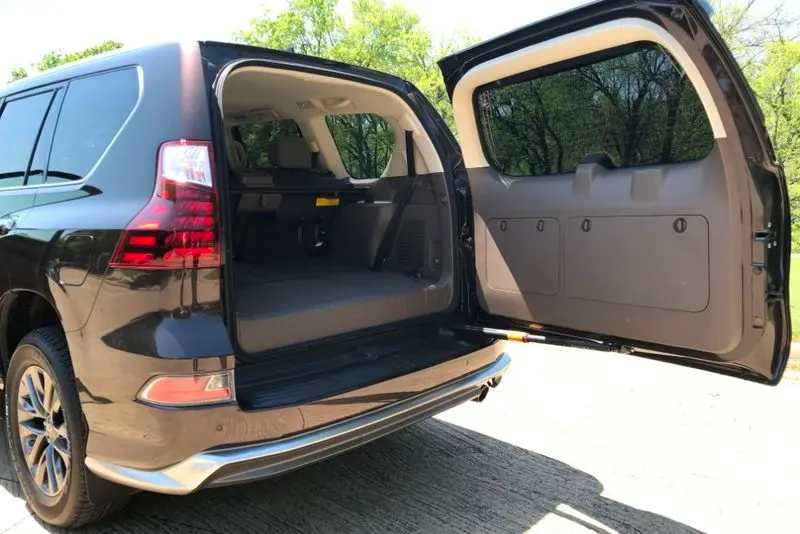
Side Mounted- These mounting types are used in jeeps, vans, pickups, etc.
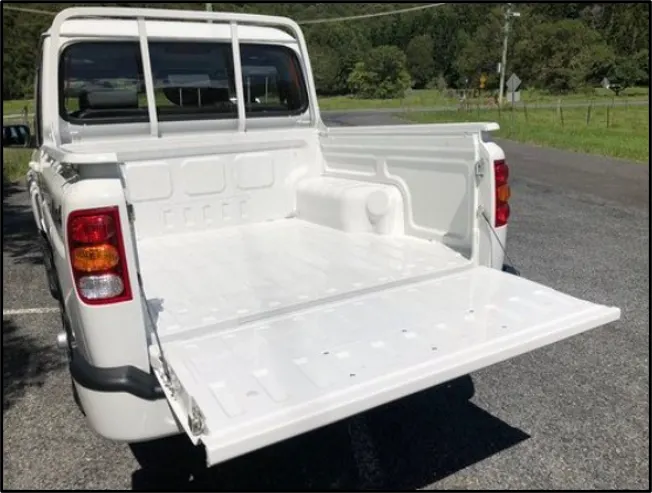
Bottom Mounted- These types of mounting are used in goods-loading vehicles.
Types of Backdoors based on the working mechanism
Gas Stay type- These types are majorly used, from lower to luxury car segment prefers this type due to ease of operation.
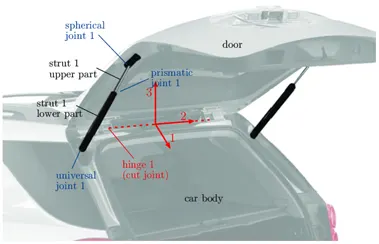
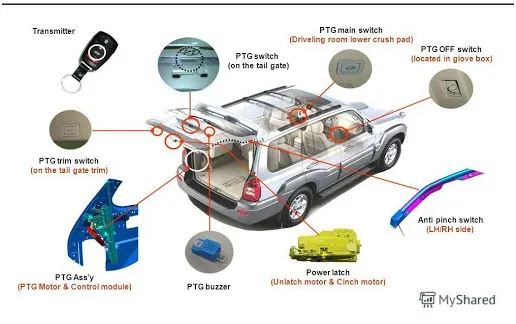
Power lift type- this is another type of mechanism used for opening and closing of backdoor, this type is a bit sophisticated it operates with the touch of buttons.
Manufacturing Method
Nowadays different approaches are there to increase the performance of the car, reducing the weight is most suitable, which is achieved by using lightweight material or using steel but by using different manufacturing techniques and providing various embosses. Using different materials increases the cost of vehicles as different manufacturing approaches need to implement.
Tailor welded blank
Tailor welded blank is a blank which consists of different sheet metal which is welded before the further manufacturing process. It allows the welding of different types of sheet metal grades, and different thicknesses as per properties required in the different regions without increasing the number of tools and manufacturing process. Large type of sheets is produced by using small sheets and welding them together thus reducing the manufacturing process, waste metals can be used resulting in cost reduction.
Components of Backdoor
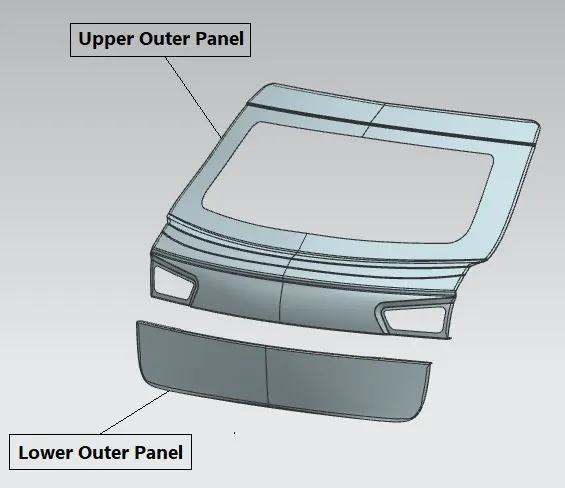
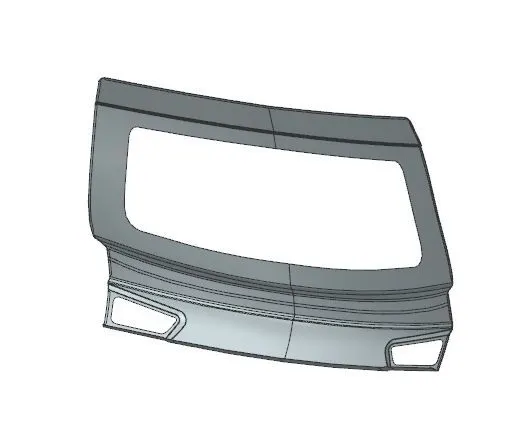
Backdoor Upper Outer Panel- It is the upper part of the backdoor, it is a sheet metal part which is usually visible to us when we see a backdoor its thickness lies between 0.65 to 0.75mm.
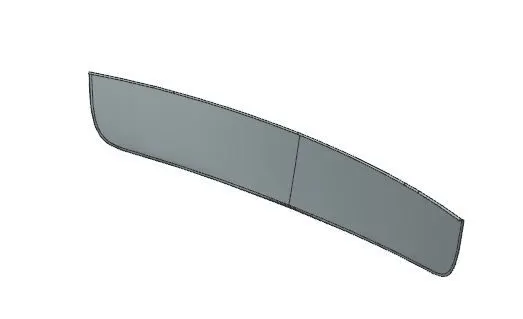
Backdoor Lower Outer Panel- It is a lower part of the backdoor, it is a sheet metal part which is usually visible to us when we see a backdoor its thickness lies between 0.65 to 0.75mm.
Backdoor Inner Panel- It is mounted inside the backdoor where various part of the backdoor is mounted. The backdoor inner panel is manufactured by using various manufacturing processes like embossing, deep drawing, blanking, hemming, etc. It is also used to provide strength to the outer panel.
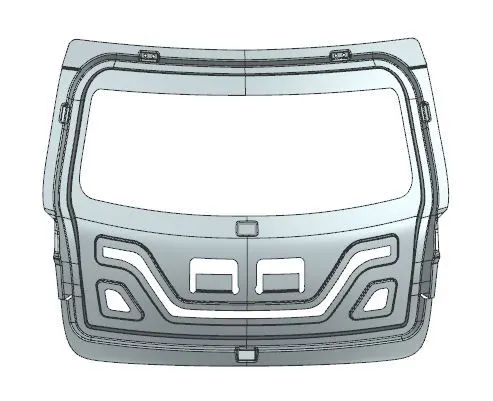
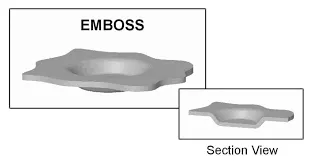
Emboss- Sheet metal embossing is a stamping process for producing raised or sunken designs or reliefs in sheet metal. This process can be made by means of matched male and female roller dies, or by passing a sheet or a strip of metal between rolls of the desired pattern.
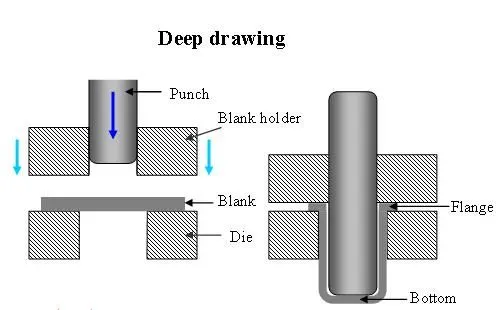
Deep Drawing- The deep drawing process is a forming process which occurs under a combination of tensile and compressive conditions. A flat sheet metal blank is formed into a hollow body open on one side or a hollow body is formed into a hollow body with a smaller cross-section.
Deep Drawing is carried out by using rigid tools in the automotive industry.
The image shows the process of deep drawing
It consists of Punch, blank holder, Die and blank.
The Blank holder holds the blank and punches and then punches the blank in the vertically downward direction by using a punching press after which the blank and punch go inside the die to form the desired shape.
Blanking -It is a type of cutting process in which a desired part of flat sheet metal is punched out of the full sheet, the part which is punched out of the sheet is used and the remaining sheet is called waste.
Punching- It is a type of cutting process in which a desired part of flat sheet metal is punched out of the full sheet, the part which is punched out of the sheet is called waste and the remaining part of the sheet is used for further process.
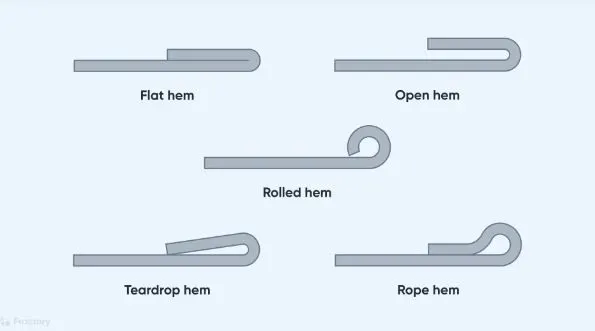
Hemming- It is a manufacturing process of bending the sheet from the corners into itself. The hemming process is used to provide stiffness, hide sharp edges and connect two parts together. It is carried out in two stages; the first stage creates acute bends (V bends) using V tooling and dies and in the second stage flattening of the bent flange is carried out by using flattening tooling and dies. In hood assembly, an open hemming process is used to join the inner panel and the outer panel.
Hemming Types
- Flat or Closed Hem
- Open Hem
- Teardrop Hem
- Rope Hem
- Rolled Hem
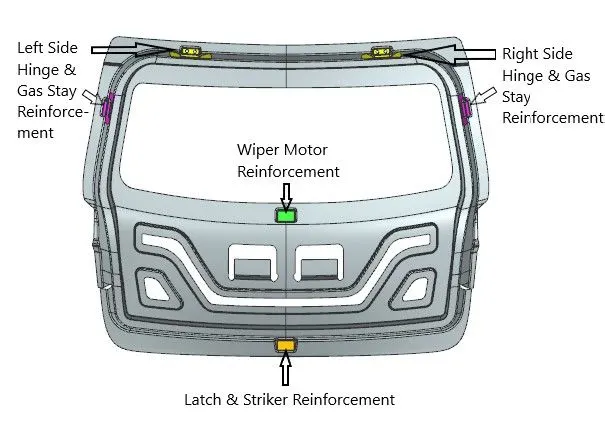
Reinforcements- It is generally a piece of the sheet which is placed under gas stay, hinge assembly, latch & striker and wiper motor embosses to provide stiffness or rigidity. It also increases the life of the backdoor.
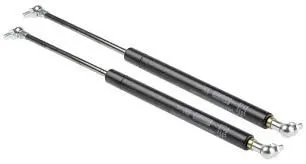
Gas stays- It is used to open and close the backdoor without more effort, as the weight of the backdoor is more we cannot open and close it manually, gas stay helps this operation. Generally, two gas stays are placed in the backdoor at both ends of the backdoor.
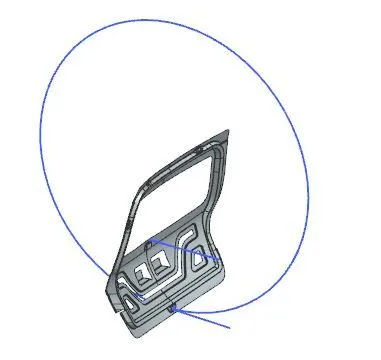
Latch Trajectory
It is the path at which the backdoor opens and closes, it is generally used to view the placement of the latch and striker assembly. A circle is drawn from the centre of the hinge axis which must be perpendicular to the striker this will help to ease engagement and disengagement of the backdoor.
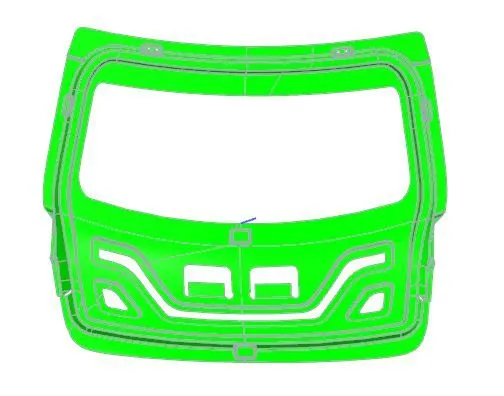
Draft Analysis
Draft analysis has been performed on the designed inner panel and the result of the same can be seen below
Conclusion
Hence from the given class A surface different components of back doors have been designed by using standard design methodologies. and draft analysis is also carried out to predict manufacturing possibilities. Draft analysis is meeting the requirements.