Design of backdoor
AIM: To design a back door with the help of the given styling surface using appropriate design methodologies, and providing the necessary reinforcements and embosses
- What is a Backdoor?
The back door is a rear-hinged panel of the vehicle which provides access to the boot space or rear-mounted seats so that luggage and passengers can be occupied. It is also referred to as Tailgate, trunk lid, or Boot door. It serves as the housing for tail lamps, wiper motor, and other rear-mounted vehicle components.
- Types.
There are three types of backdoors depending on the mounting location.
1. Top-mounted backdoors.
This type of backdoor is the most preferred one among all when it comes to specific applications. In top mounted backdoor with the help of stay rods, access to the boot space can be achieved easily. It is mostly used in cars for luggage space access.
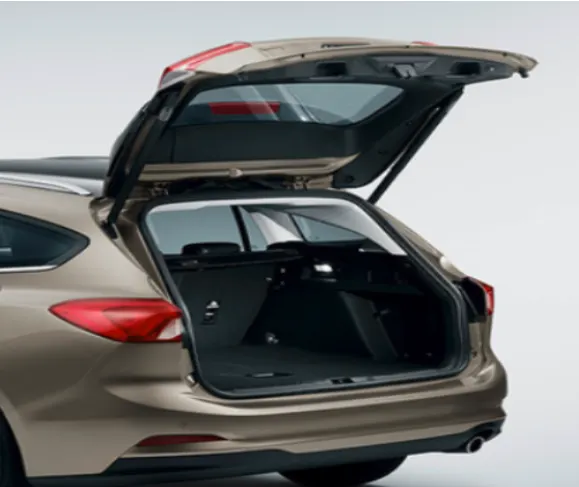
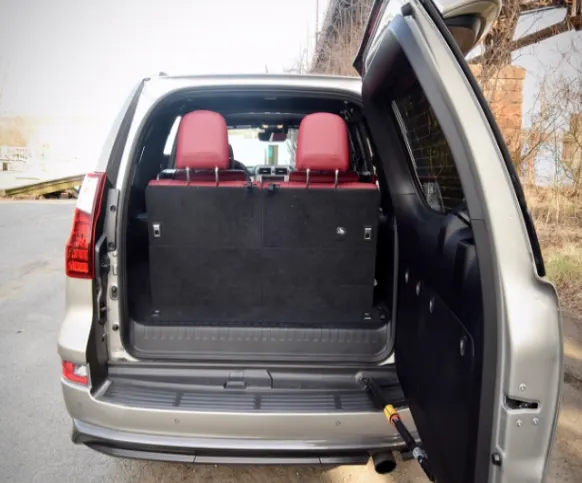
2. Side-mounted backdoors.
Side-mounting backdoors are mostly used for rear passenger seating facility-provided vehicles/more storage space-oriented vehicles providing more room for entry and exit of passengers/loading and unloading of goods easily. Stay rods are not used instead stoppers are provided to limit the opening range of the door. It also saves accidental head impacts.
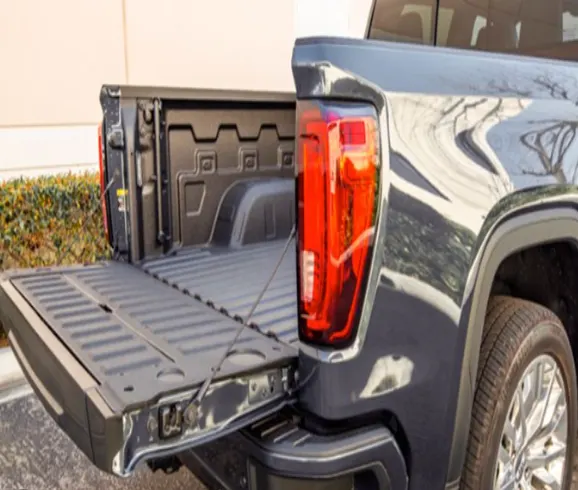
3. Bottom-mounted backdoors.
Bottom-mounted ones are used in pickups, and trucks so that full access to the rear can be achieved for the sole purpose of loading and unloading of goods. Cable stay and chain stay are us to support the bottom-mounted backdoor.
- Back Door opening Assistance Mechanism.
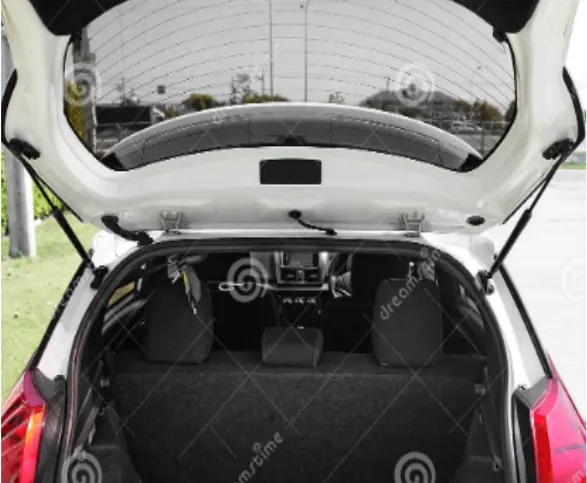
1. Gas stays.
It is used to keep the backdoor in the open position during loading /unloading or when the back door is to be kept open. In gas stays the pneumatic compression and expansion of the piston exert force and take the load thus less manual force is required to open the door.
2. Power Lift
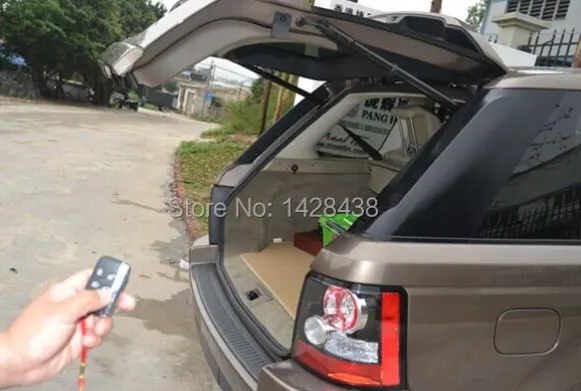
It is used for the automation of the back door opening where a motor is attached to the door pneumatic/hydraulic cylinder which is electrically operated to open or close the door .this type of mechanism is seen in top-end models of the vehicle /top brand vehicles. they also come in remote and gesture-driven feature
- Back Door material selection and Manufacturing process.
The back door is mostly prepared by casting using Aluminium or by sheet metal stamping of steel. Depending on the cost factor and other points to be taken into consideration preference of material is been decided. Aluminum is lighter in weight and no bending radius or factors is needed while manufacturing whereas in sheet metal all those factors are to be taken into consideration. Reinforcements are also needed in sheet metal for improving its strength thus the number of components increases. but in the end, the cost is to be taken into consideration for the larger market side. Aluminium is expensive and can be used for only high-end vehicles so steel is preferred mostly.
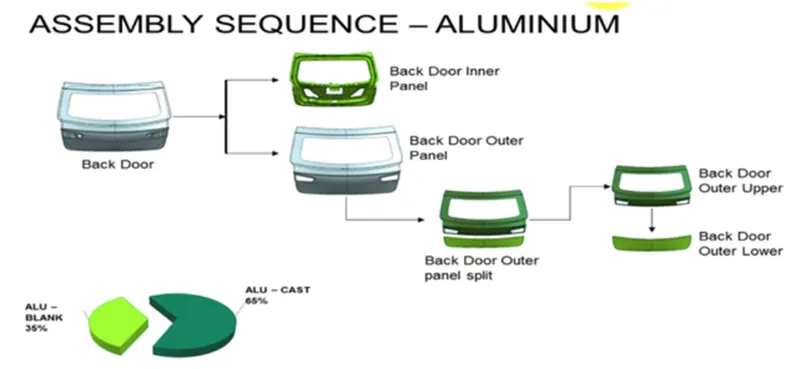
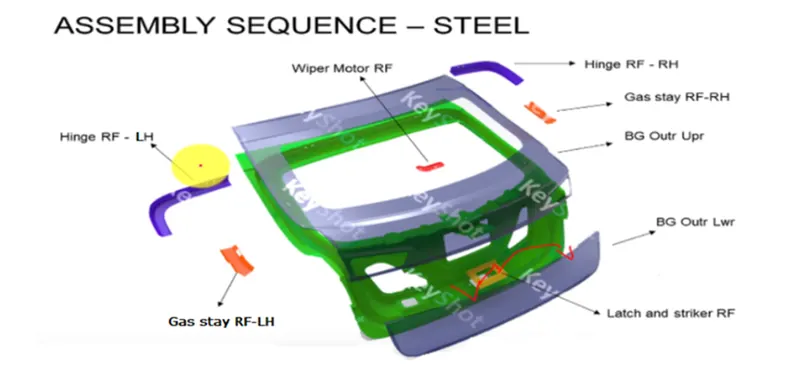
Comparison:

Processes:
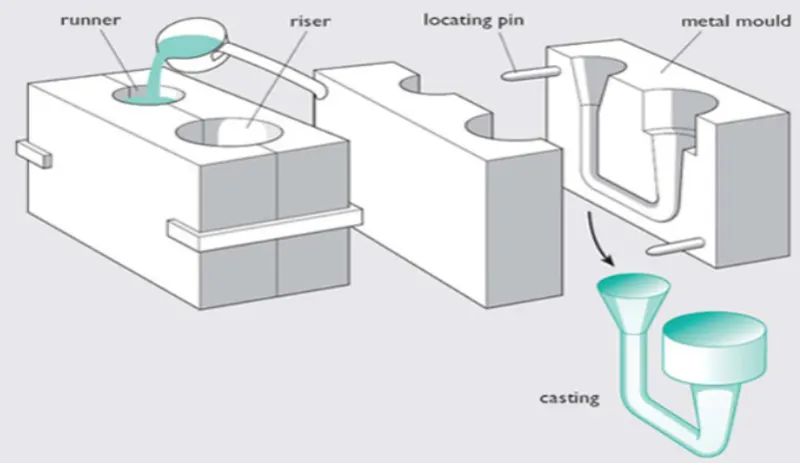
Casting: It is the manufacturing process in which liquid metal is poured into the mold and left to cool and the metal solidifies and takes the shape of the mold.
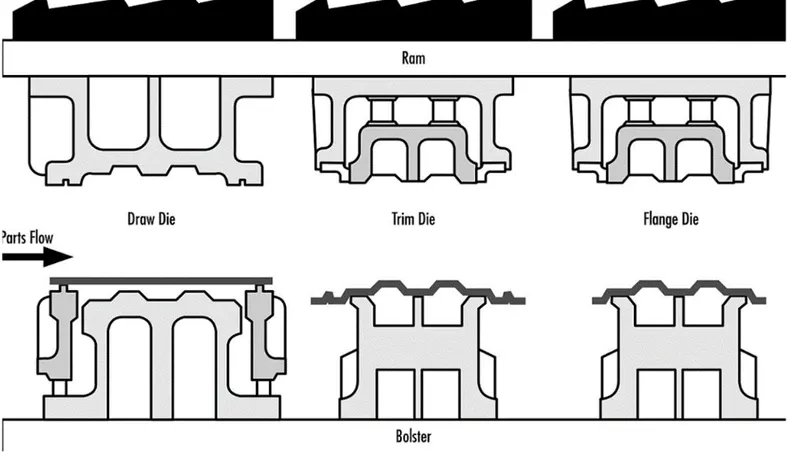
Stamping: In this process, the die is designed with positive and negative peaks and valleys which is to be achieved on the sheet metal. the angel is always kept in a positive draft so that there will be no problem after the punching operation is carried out and the deformed sheet can be easily removed from the die. So basically the sheet is punched into the die and the sheet gains the impressions of the die.
- Design considerations of Back door.
- Rear visibility
- Boot space
- Rear crash regulations
- Gap and flush requirements
- Rear component mounting provisions
- Reinforcements
- panel joining considerations(spot weld,hemming)
Components of Back door.
- Outer Panel
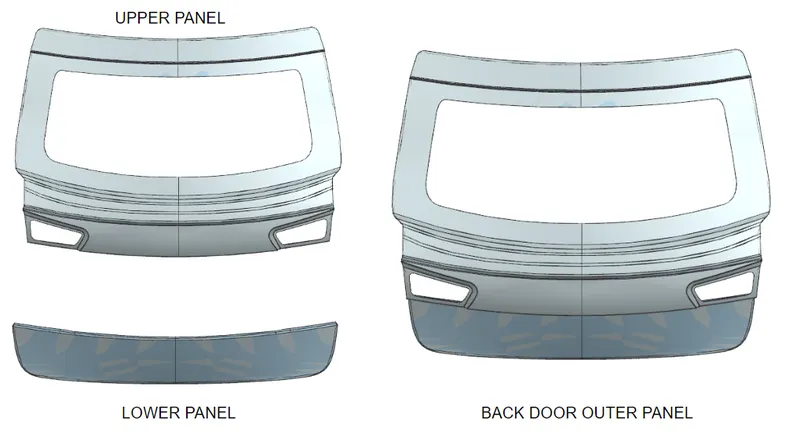
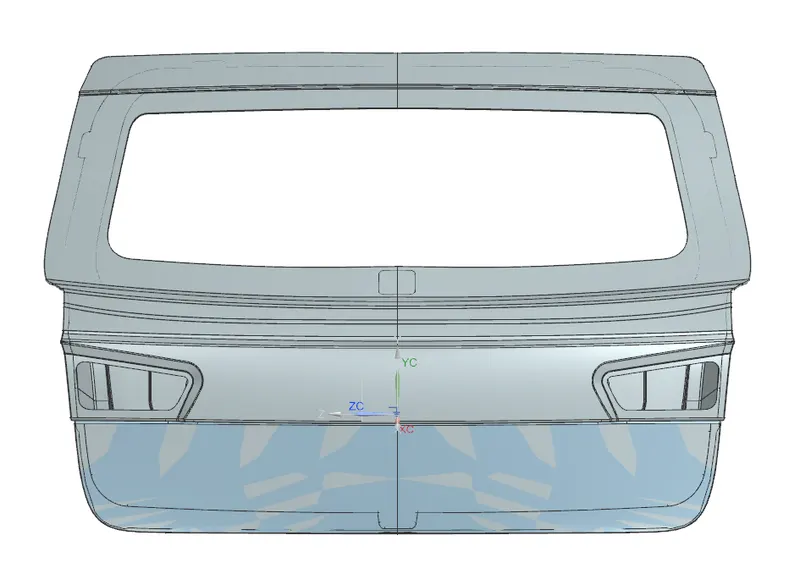
It comprises the upper and lower panel, it is the outer aesthetic panel of the backdoor which was made by repairing the styling provided. By repairing we are referring to the irregular surface and edge blends which will cause difficulties in manufacturing and thickening the panel in CAD.
- Inner Panel
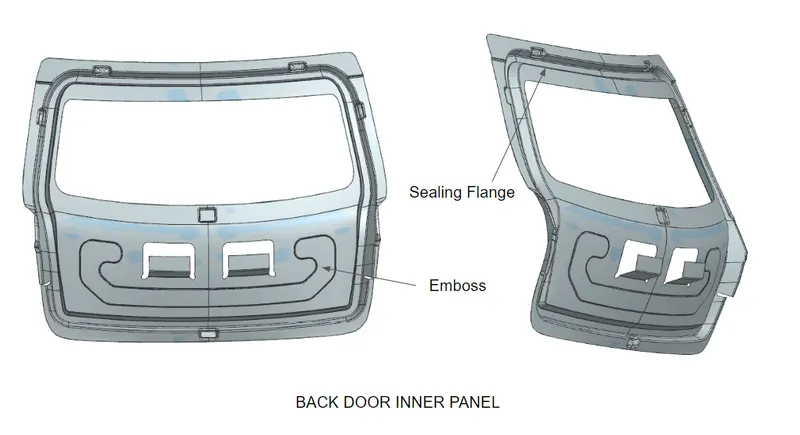
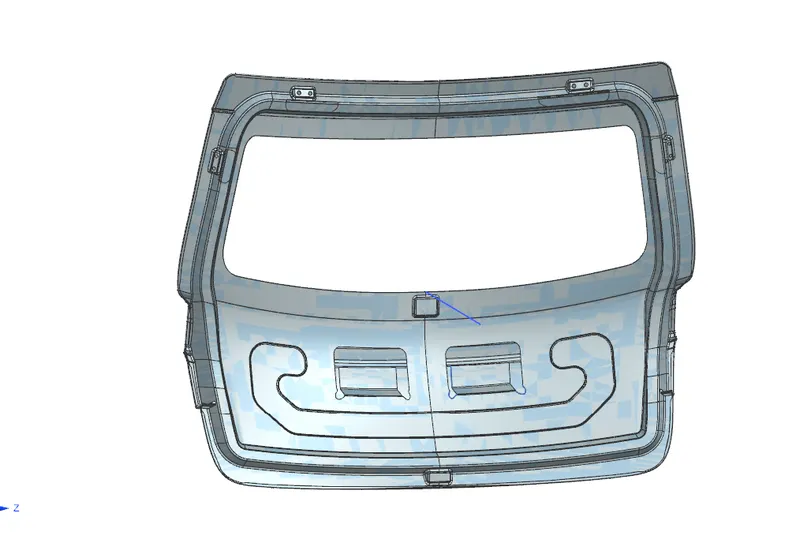
It is the panel that supports and provides strength to the outer panel. it holds the housing for all the internal fitments such as gas rods, hinges, wiper motor, and latch and Striker. It was designed taking the outer panel offset and with the help of law extension command sealing flange was designed, the windshield panel was then extracted and combined with the sealing flange with the help of trim and extend command. Embossing was also done to strengthen the inner panel.
- Reference Factors.
1. Tooling Direction.
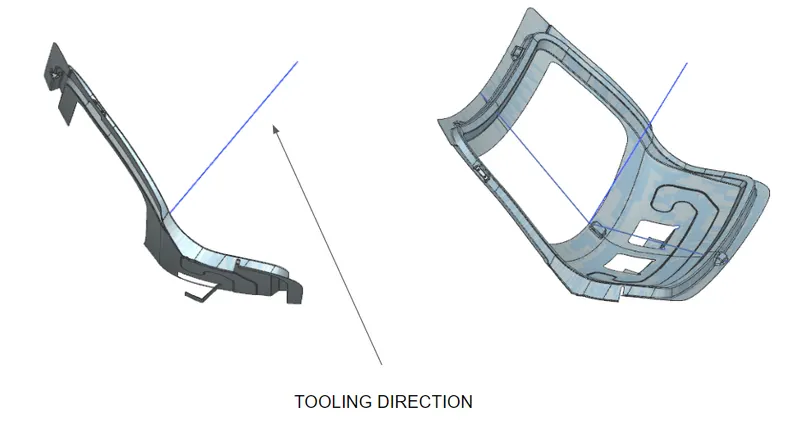
It is the direction in which the punch will move into the die. It is used as a reference so that the design which we are working on can be checked for manufacturability. It is made with the help of a derived line by taking the top and bottom point center intersection
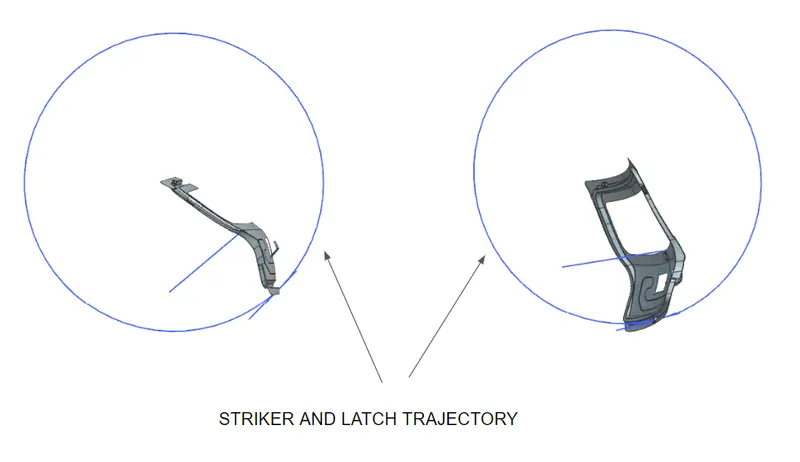
2. Latch and striker trajectory.
By taking the hinge axis and coinciding the circular path the tangent on the circular path is the trajectory that is the perpendicular one. Thus the striker is placed perpendicular to the circular path for proper opening and closing of the backdoor.
- Reinforcements
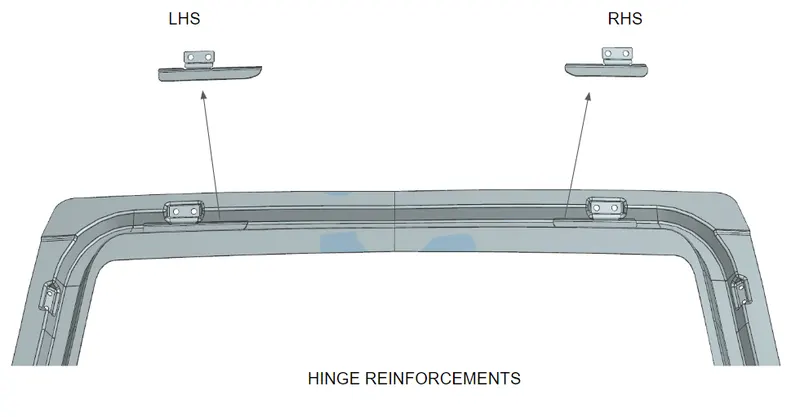
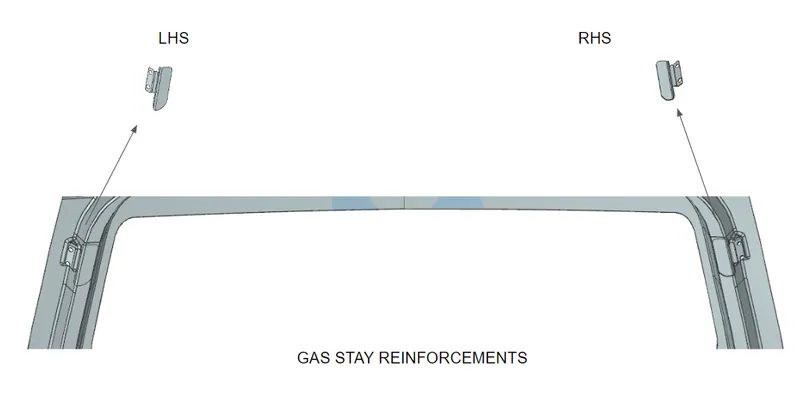
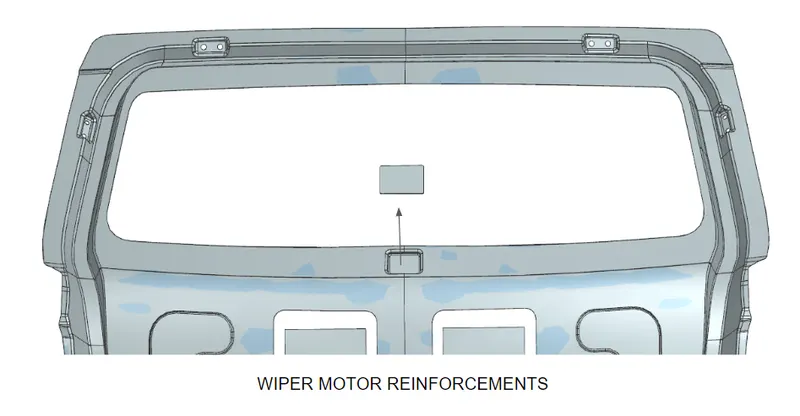
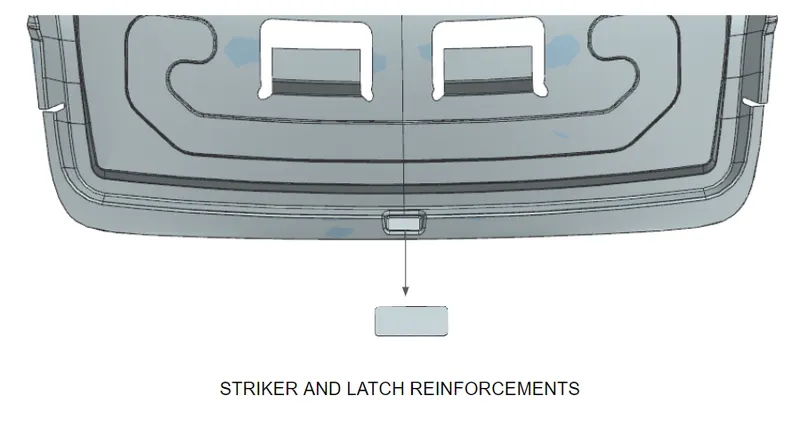
Reinforcements are the additional panels welded or attached to the weaker sections of the panel so that they can be strengthened. The housing/ mounting location provided is weaker in comparison to other regions of the panel due to the removal of the material for the hole and point of stress and force application, these areas are provided with reinforcements. the thickness of these is 1.5 in the designed backdoor
1. Hinge Reinforcement
2. Gas Stay Reinforcement
3. Wiper motor
4. Striker and Latch Reinforcement
- Panel Joining Process.
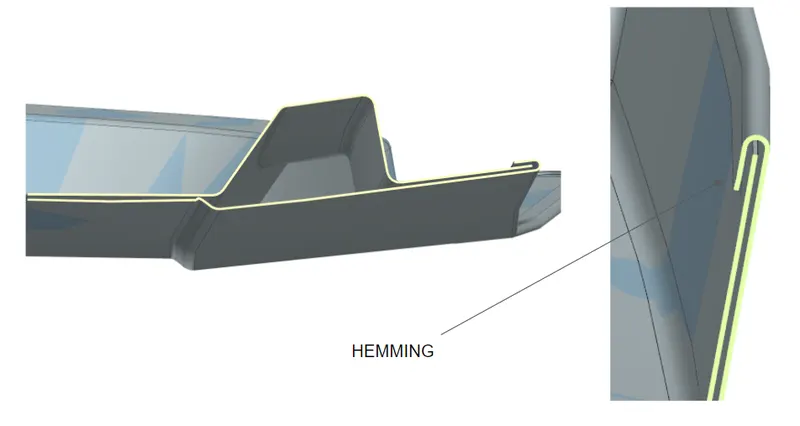
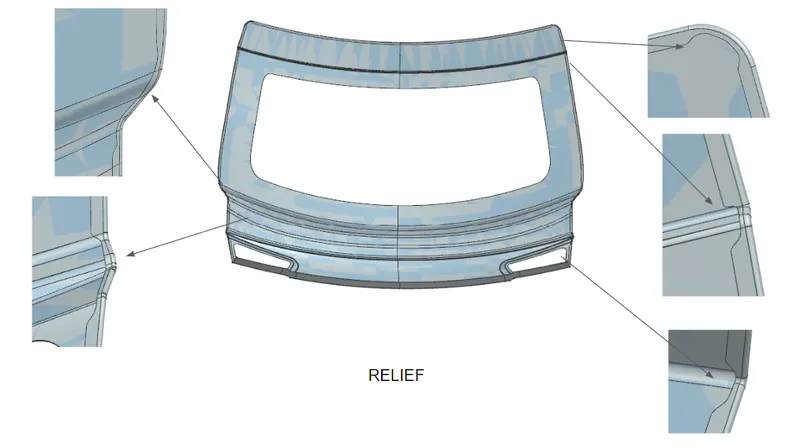
Hemming process: Hemming is a forming operation in which the edges of the sheet are folded or folded over another part in order to achieve a tight fit. Normally hemming operations are used to connect parts together, to improve the appearance of a part, and reinforce part edges. At the sharp corners relief is provided so that there is no shrinkage or warpage of the sheet during hemming.
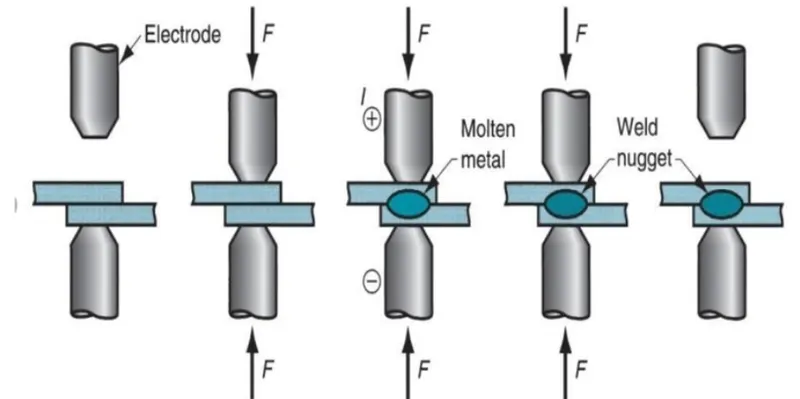
Spot welding process: This process uses heat produced by resistance to an electrical current to join materials together., the panel is welded to each other and the minimum length for the process is 10mm. The lower and the upper panel is spot welded in the back door.
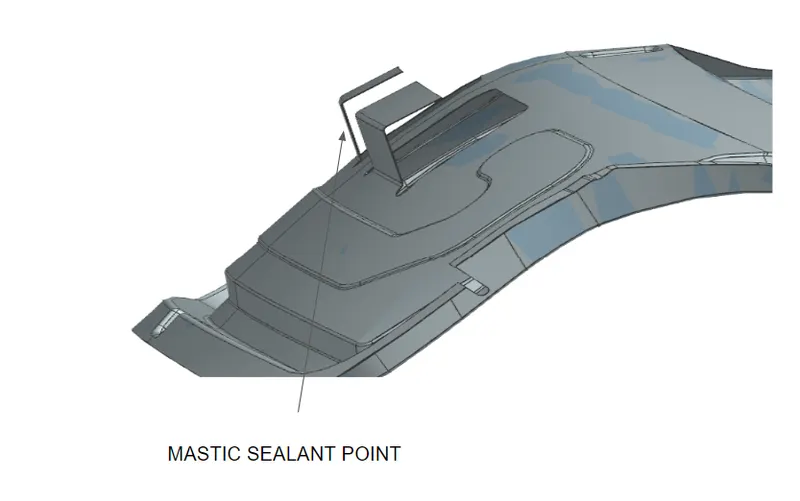
Mastic sealants: A mastic sealant is a type of liquid sealant that cures in an elastic state, thus making it flexible while holding the bond of the surfaces that have attached together. It adheres to just about any material making an all-purpose type of sealant. The main purpose of using this is to preserve the aesthetic look of the outer panel as other processes leave marks on the surface.
- Draft Analysis.
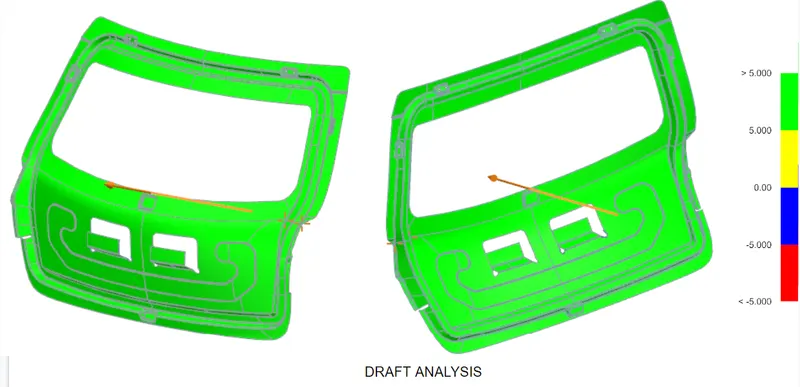
Draft analysis of the inner panel was carried out through the tooling direction. The green areas are acceptable and in the worst cases yellow regions are accepted but the blue and red regions are never accepted. The draft angle considered in the design was 7 degrees which is the minimum draft angle of sheet metal (steel).
From the analysis, it is clear that the design is manufacturable as all the portion is green in color.
ASSEMBLY:
- Conclusion.
Successfully designed the backdoor from the A styling provided considering all the design considerations and performed the draft analysis on it . The design is manufacturable and is upto the standards.