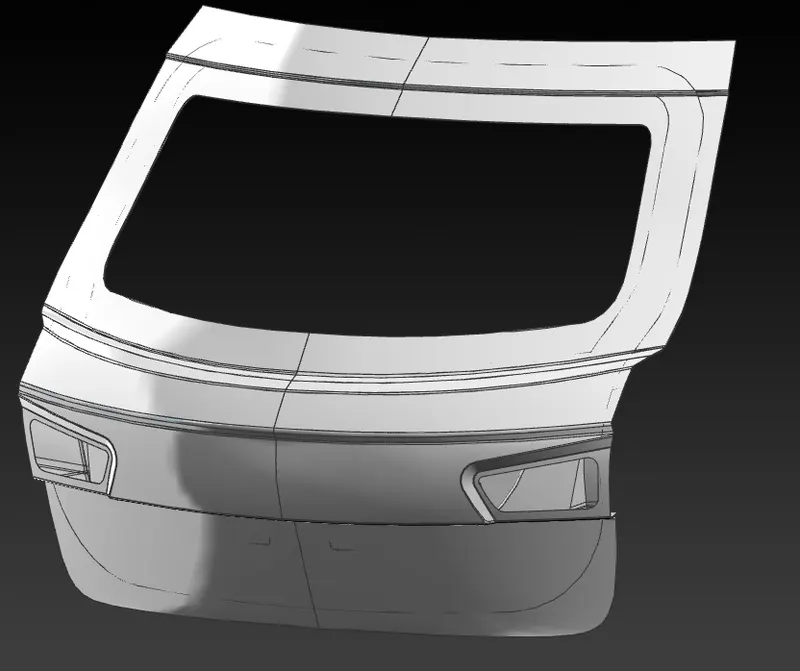
Design of backdoor
AIM:
To design the outer upper and lower panel, inner panel with the necessary reinforcements by following the Master section with the design parameter for the given class A surface.
INTRODUCTION:
A door is a hinged part which is used for entry and exit of the vehicles. Back doors are one of the type doors of the vehicle which are located next to the passenger seat which provides access to the luggage compartment. In most of the cars, these back doors are operated with the help of gas stay which in turn reduces the effort required to lift open the door. Some luxury cars have powered backdoor which in turn is driven by an electric motor. This kind of system is also called a powered trunk lid system. Hatchback or station wagons are sold as 3 door or 5 door models. In this case, the rear hatch is classified as door this is because it enters the passenger compartment. The naming is mainly used in Europe countries. In case of safety, the back door designed should meet the safety requirement for the rear collision.
Types of the back door
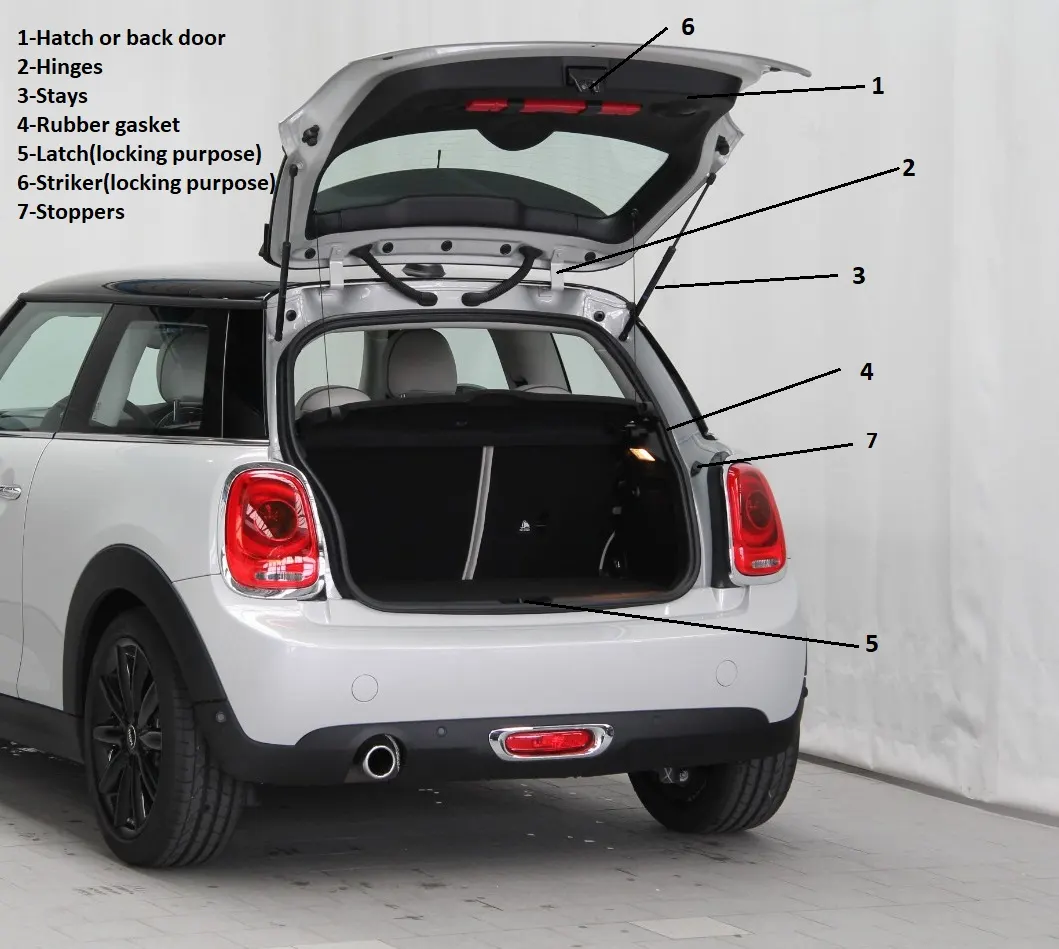
Top-Mounted :
- This type of back doors is used in a station wagon, pickup truck and some of the sport utility vehicles.
- Today’s modern cars use top-mounted tailgating systems which are both powered and also gas stay supported.
- These top mounted tailgates provide greater rear visibility compared to side-mounted or bar doors which have canter pillars in it.
Side Mounted Doors :
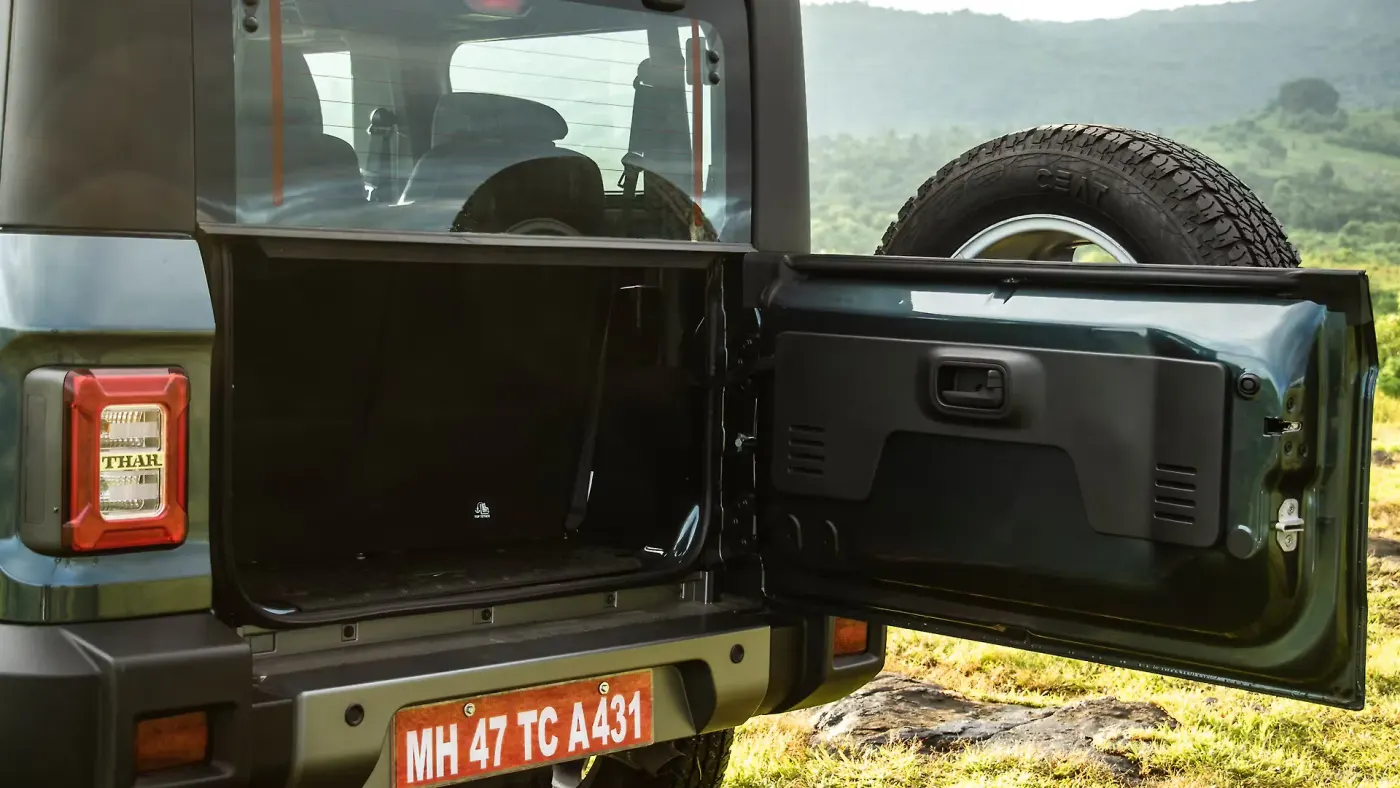
- As the name signifies side-mounted doors are the one which is used in the van type MPVs, SUVs, pickup truck vehicles.
- These side-mounted doors or barn doors are a lot easier compared to top-mounted doors.
- These doors are generally smaller in size and can be easily accessed.
Types of mechanisms for Rear Door:
Gas stays:
- Gas stay types backdoor/liftgate/tailgate is an ideal and most commonly used tailgate mechanism from lower segment car to luxury car segment.
- The ideal components of tailgate consist of a hinge, door, gas stay and some rubber beadings for sealing of door.
Powered lift system:
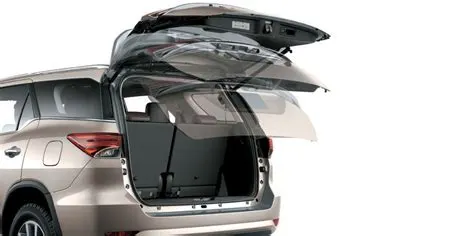
Power trunk lid system is another sophisticated way of trunk/liftgate opening mechanism which is to automatically open and close of the trunk/liftgate and release of the latch by the touch of a button.
Components to create:
- Outer Upper Panel.
- Outer Lower Panel.
- Inner Panel.
- Hinge Reinforcement LH and RH.
PROCEDURE:
1. Checking the Geometry:
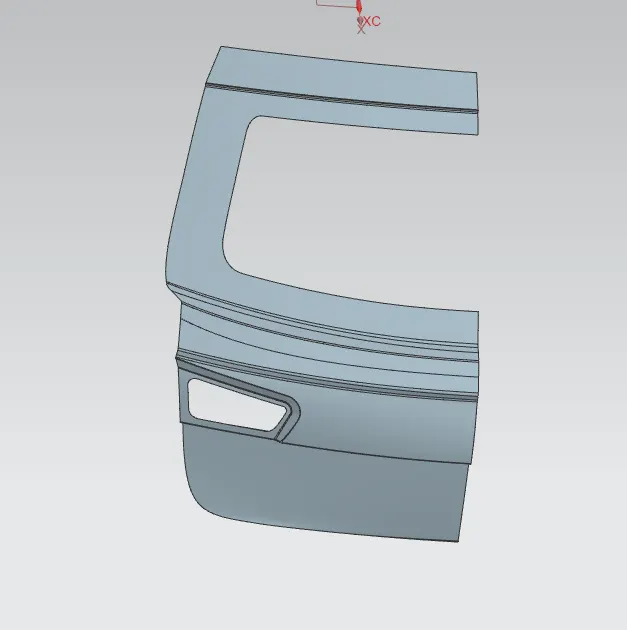
Once the model is opened, we get a Class A Surface of the back door, Try joining the Upper surface of the car, if the surface sews together, we get the outer surface and if the surface didn’t join then we need to create the surface by using studio surface tool.
Create the fillet areas, Tail Lamp areas as those areas will be vulnerable and are unable to join together.
2. Tooling axis creation:
Draw a line from left and right extremities almost parallel to the path of the surface along the unsymmetrical axis.
Using the Derived lines tool, create a bisecting line as shown below:
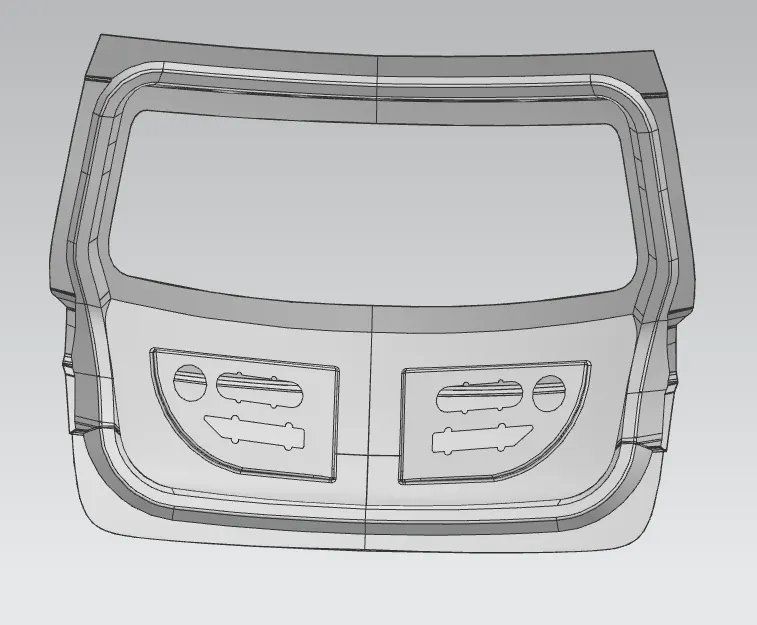
3. Creating Inner panel
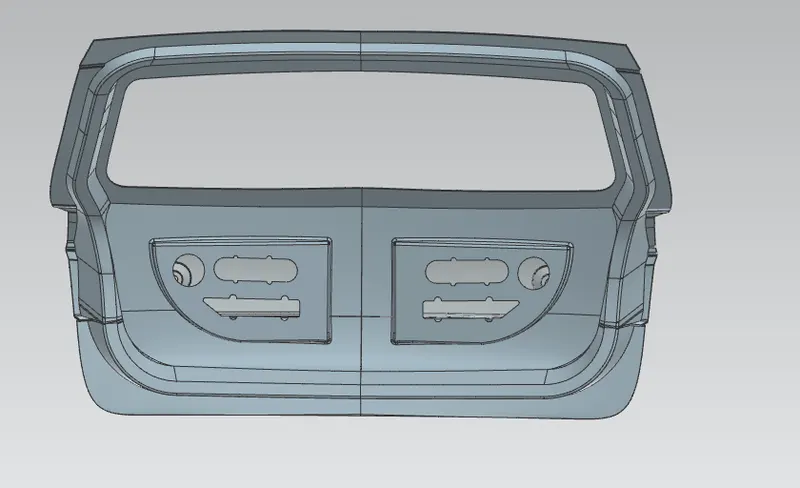
- First offset the surface to a distance of 1.7mm, which will give the innerpanel surface position.
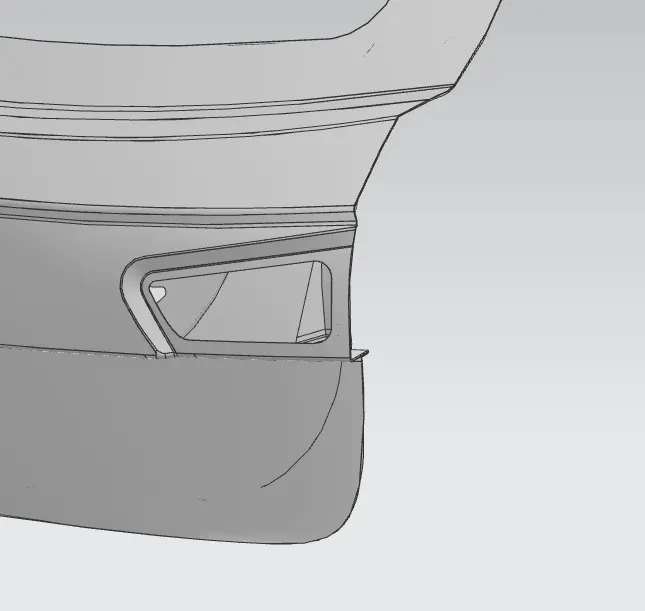
- Now the sealing flange for the inner panel has to be created.
- The seaing flange created by cuttng from the surface is shown below.
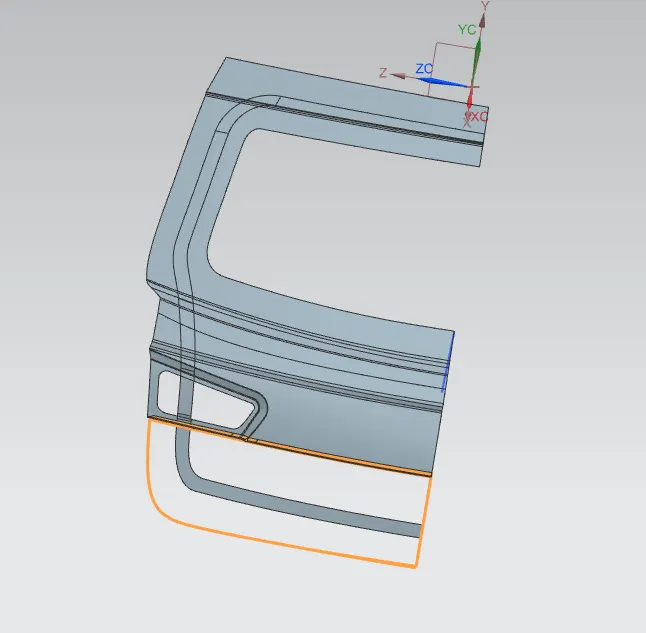
- In between, the tangent tensioning (Shape control) can be adjusted by modifying the surface using the Bridge curve tool.
- This flange has to be in a depth of 30 mm from the surface
- Now connect the flange with the surface using law extension with respect to the tooling axis and proper draft given.
- Fillets has to be applied at each steps and check whether the surface is getting thickened or not.
- The next step is to create the other side which has to be connected with the sealing flange.
- Similarly connect the lower side of the surface by creating a surface and sew it all together.
- A mastic sealent is used on the surface to connect the inner and outer panel with a gap of 5mm.
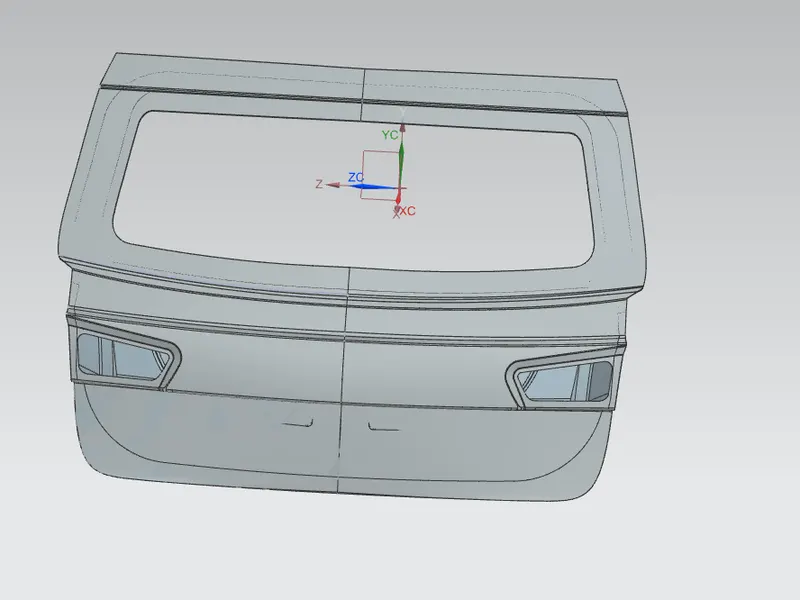
4. Creating hinge reenforcement in LH and RH:
- Hinges support the weight of the whole backdoor.
- Hence, the reinforcements must be provided there too.
- The emboss is designed in such a way that the hinges should operate freely.
- The hinge is connected to the rear roof of the car.
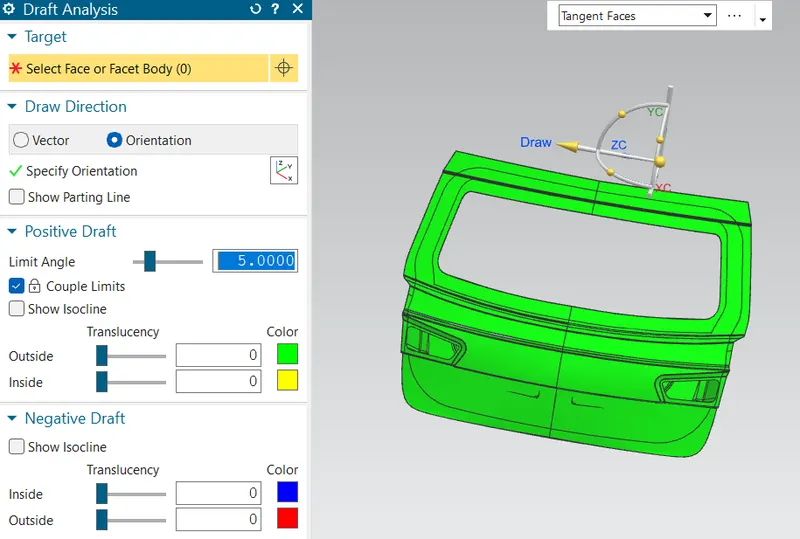
DRAFT ANALYSIS:
- Draft analysis of inner panel is carried out through the tooling direction only.
- Only the green areas are acceptable and i worst cases yellow regions are accepted but the blue and red regions are never accepted.
- The draft angle for aluminium casted panel is 2 to 3 degrees is enough but if it is steel then the angle is more than 7 degrees.
- In this project i considered it as steel and used 7 degrees as draft angle and direction is choosen as tooling direction which is the deep drawn direction.