Design of backdoor
BACK DOOR DESIGN
OBJECTIVE
- To create the back door inner pannel and outer pannel with all the important emboss, fixation strategy, gastey reinforcement, hinge reinforcements, latch and striker and wiper motor emboss with the help of given A surface
INTRDUCTION
A passenger car has many opening and closing objects like hood, passengers doors, tail gate. In this exercise we have learnt about the design of tail gate with OEM standards With consideration of rear visibilty criteria, Latch and stricker placement, wiper motor reinforcement, gastey reinforcement, etc. Tailgate is the rear most part of the vehicle which closes to keep the luggage compartment. It also protects from the rear end collision, provides the aesthetic appearance to the vehicle and reduces the wind noise. The Tail gate is splited into 2 pannels one is inner pannel and other is outer pannel. Inner pannel provides strength to the gate and outter pannel provides aesthetic appeal to the vehicle. Joining of inner panel and outer panel is done by mastics and hemming to ensure the proper fixation of both panels together.

MAJOR PARTS OF TAIL GATE
- Outer Upper Pannel
- Outer Lower Pannel
- Inner Pannel
- Gastey Reinforcement Left and Right
- Hinge Reinforcement LH and RH
- Striker Reinforcement
- Wiper Reinforcement
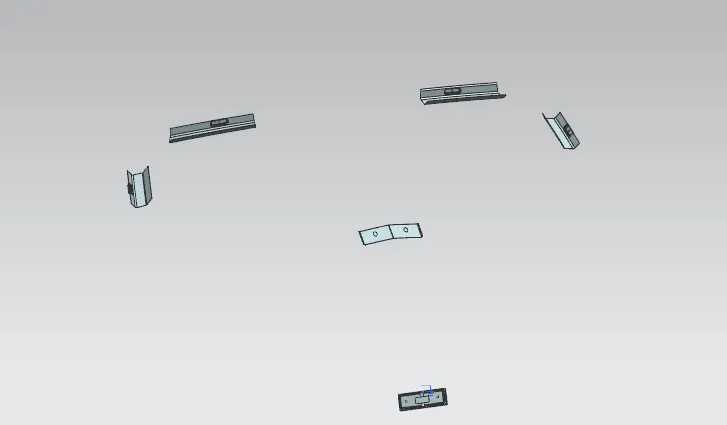
Design Consideration for Back Door:
Hinge and gastey are the functional requirements.
STRIKER POSITION:- The position of hinge should be perpendicular to the latch and striker meets for that a circle is drawn from the center of the hinge axis to find path of striker and position perpendicular to the path.
Rear Visibilty criteria:-Federal motor vehicle safety standards, NO. 111, Rear Visibility currently requires that vehicle be equipped with rearview mirror to provide drivers with a view of objects that are behind them.
Joining techniques :- To join inner and outer pannel the hemming process is used and to join outer upper and lower laser brazing welding is used.
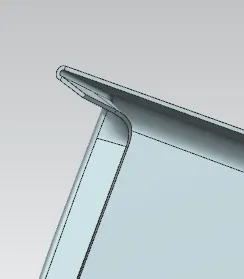
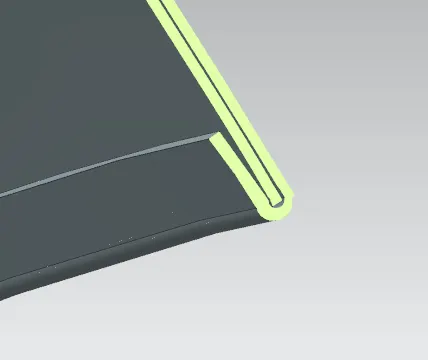
Hemming:-It is the process in which the outer and inner pannel is joinned together after the hemming flange is created the roller balls are rotated over it to make is perfectly fix.
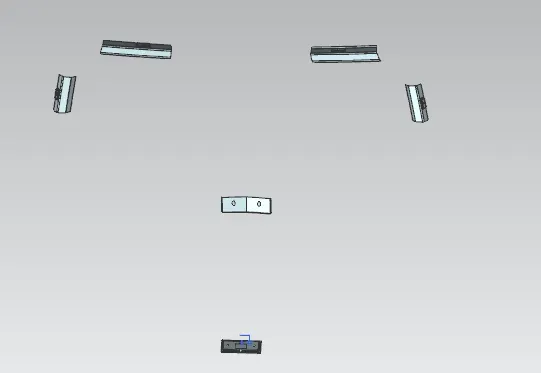
Adding reinforcement and stiffener pad:-Reinforcements are added to improve the strenght to the object locally and provide the fastening to the gastey and wiper motor.
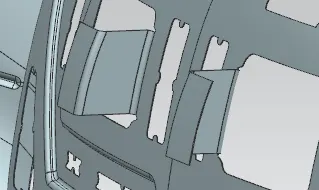
EMBOSS DEFINATION:-Emboss are provided in the inner pannel of the body to divert the force during collision it also helps in reducing the weight of the back door.
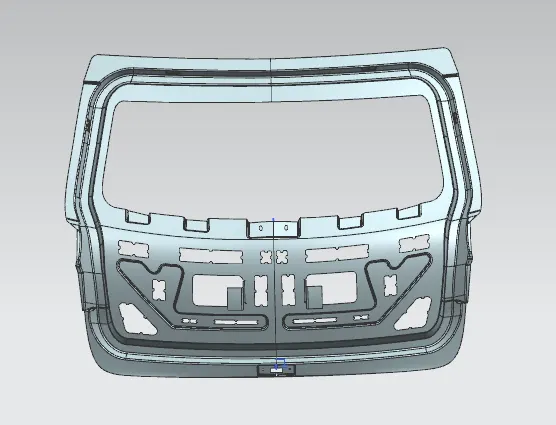
CLASS A SURFACE
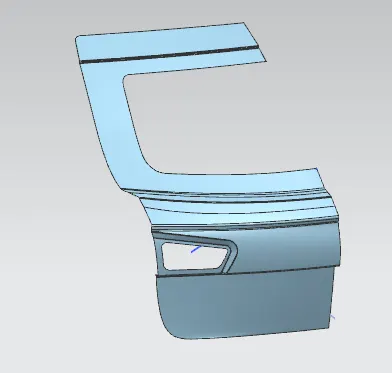
INNER PANEL DESIGN
In the inner pannel thickness is considered as 0.75mm outwards and the gap between them is 0.2mm.
Emboss are also places in the inner pannel it self
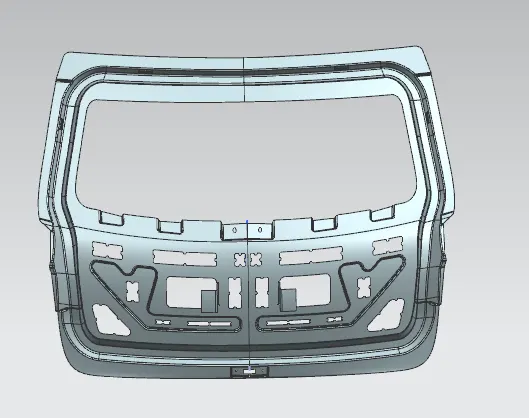
Emboss
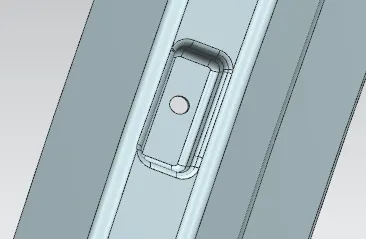
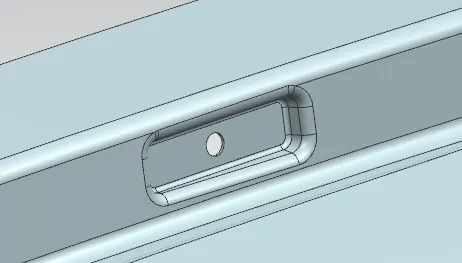
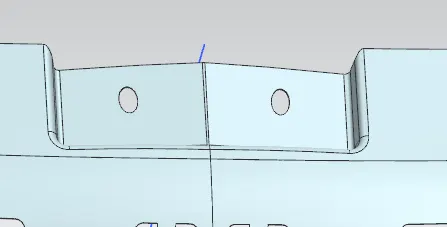
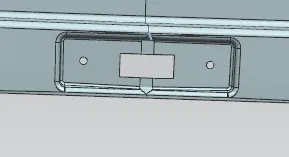
TOOLING DIRECTION
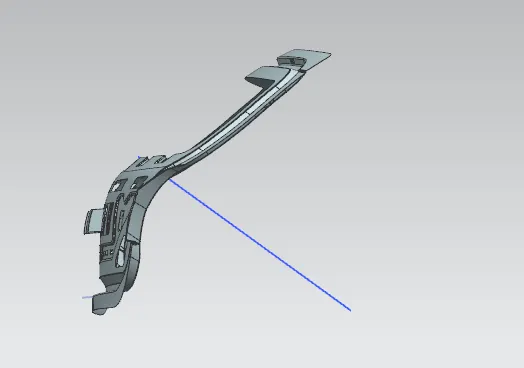
It is tool tool punching direction.It is created by using bisecting method
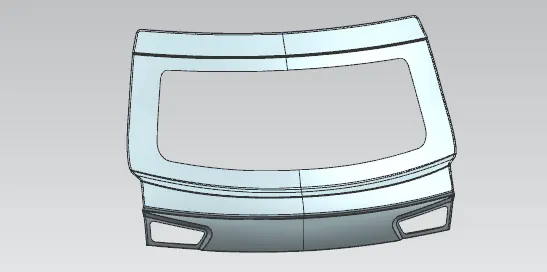
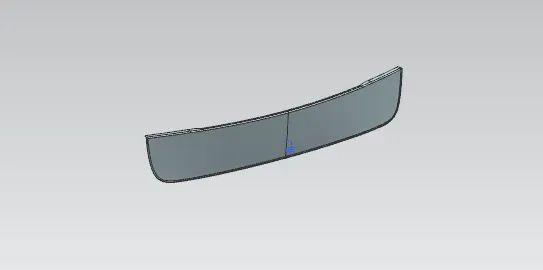
OUTER PANNEL(UPPER)
Outer pannel is created by the styling team as class A surface
Thickness of outer pannel is 0.75mm downwards
Hemming is given in the outer pannel
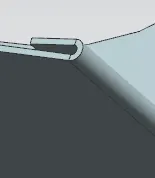
OUTER PANNEL(LOWER)
Outer pannel is created by the styling team as class A surface
Thickness of outer pannel is 0.75mm downwards
Hemming is given in the outer pannel
REINFORCEMENT
The thickness of reinforcement is 1.2mm
DRAFT ANALYSIS
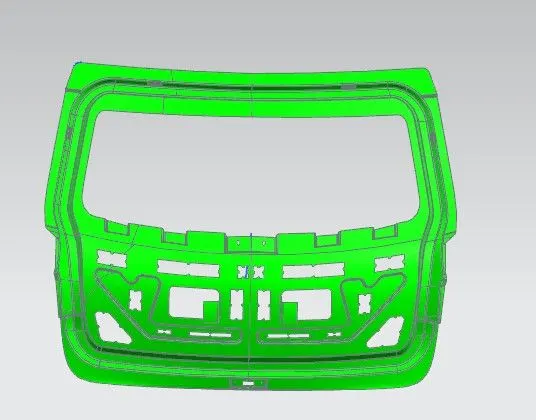
Draft analysis is the method to check the clearance of the part in single tooling direction with the minimum draft angle of 10 degrees
Draft analysis of inner pannel is shown above
OUTPUT
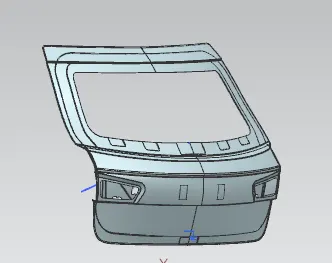
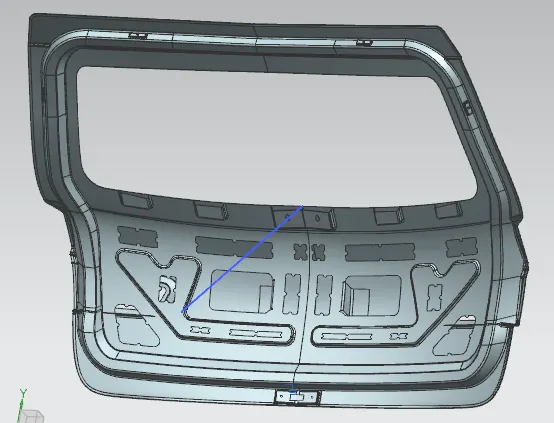
CONCLUSION
Fron this project we have learnt to develop the inner pannel, reinforcements and embosses of the back door with OEM standards