Design of a 3D Printing Filament Extruder using Recycled Plastics
INTRODUCTION:
This is a project on a 3D Printing filament extruder machine that uses recycled plastic as raw material. It is done with a team of two members for the design contest AAKRUTI 2020 hosted by SOLIDWORKS India.
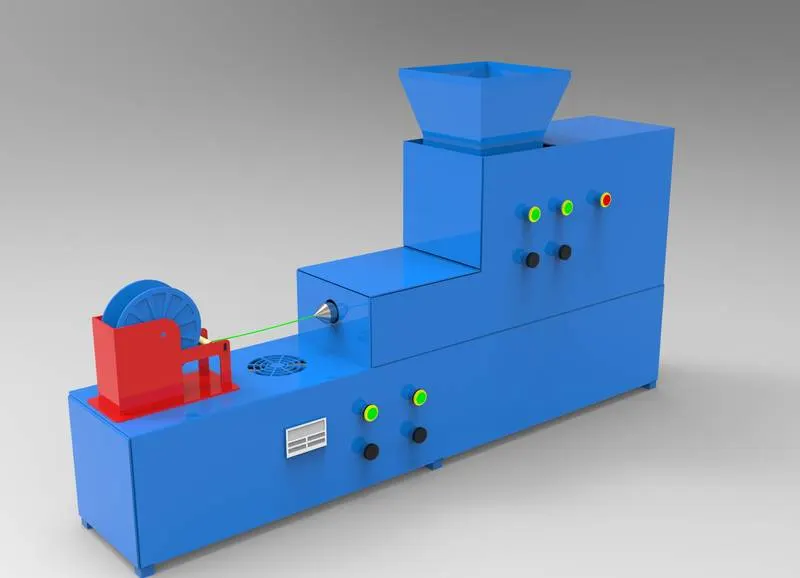
A Project REPORT on MEGA EXTRUDER
Problem Statement:
Our home planet is dying of non-biodegradable waste. Each year 300 million tonnes of plastic waste gets produced, 50 % of which are for single-use purposes. It gets used for a few moments but it damages our earth for at least several hundred years.
Global plastic waste management is a huge problem. A variety of plastic wastes ends up in the landfill and ocean which is non-biodegradable. This is causing eradication of soil fertility, destruction of thousands of aquatic as well as terrestrial habitats, food poisoning, and so on. Plastic wastes from the automotive, electronics industries hardly get recycled and reused which is creating a lot of plastic waste right from the scrap. The disposal of plastic products at the end of life mostly goes to the garbage and only a fraction of it gets recycled.
The research done by ‘Our World in Data’ suggests 270 million tonnes of plastic is produced and 275 million tonnes of plastic is converted into waste every year. This shows that plastic waste is being generated more than fresh plastic is being produced. This also shows the global need for plastic.
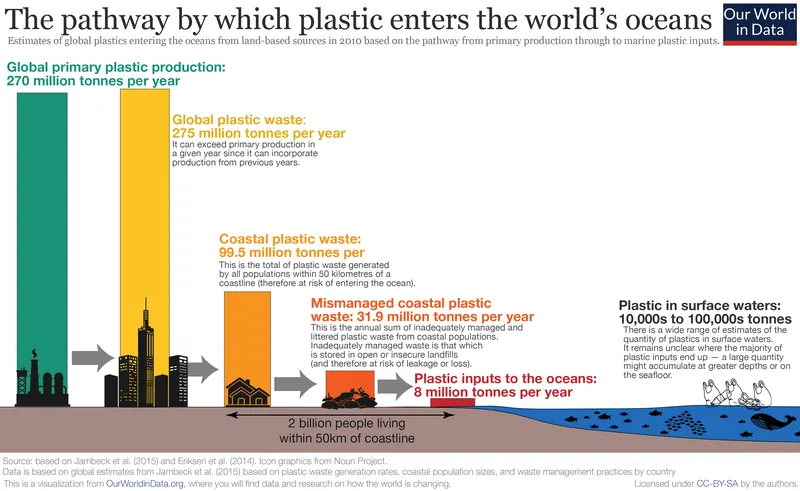
(Source: OurWorldinData.org)
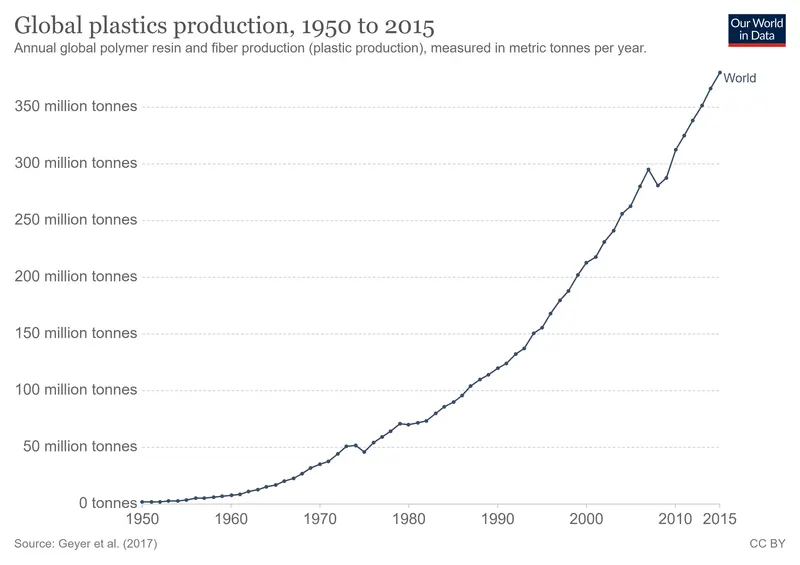
The following chart shows that global plastics production is growing exponentially. In 2015, 381 million tonnes of plastics were produced.
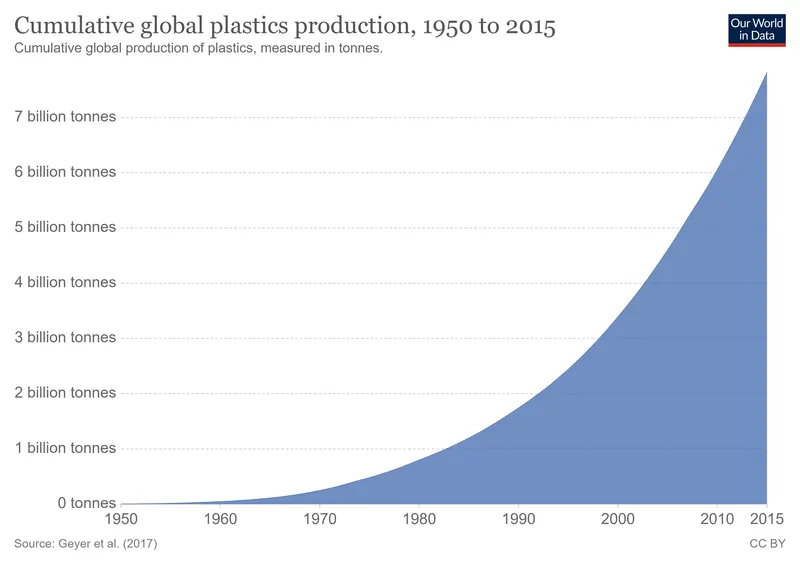
(Source: OurWorldinData.org)
The cumulative plastic produced till 2015 is 7.82 billion tonnes. That means more than one tonne of plastic for every human being on the earth. This is totally unnecessary and avoidable. At this rate, the amount of plastic production has really climbed up and up till this date.
But how are those plastics getting disposed of? The end use of plastic and its end of life disposal really matters on how it affects the global plastic waste problem. The following chart suggests that 55% of the plastic is being discarded, 25% is being incarnated and only 19.5% of it is being recycled by the end of 2015.
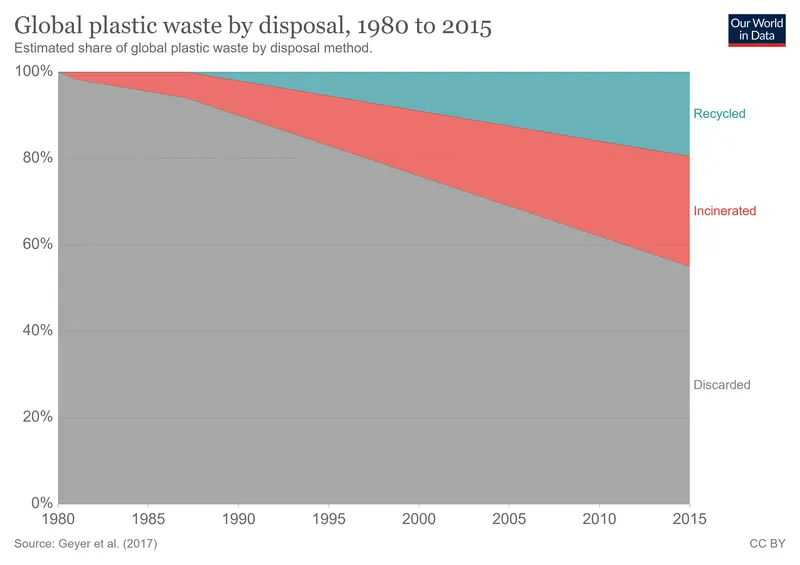
(Source: OurWorldinData.org)
According to the ocean cleanup company, over 1000 rivers are accountable for 80% of the global emissions (plastic waste in the ocean) which ranges from 0.8-2.7 million of tonnes. Over 30,000 other rivers are responsible for the remaining 20% of the plastic.
The following world meter and the chart shows the hot spots for the rivers among the 1000 and 30,000 different river categories. The meter shows the entry of 3,762 Kg of plastic into the ocean within 5 minutes.
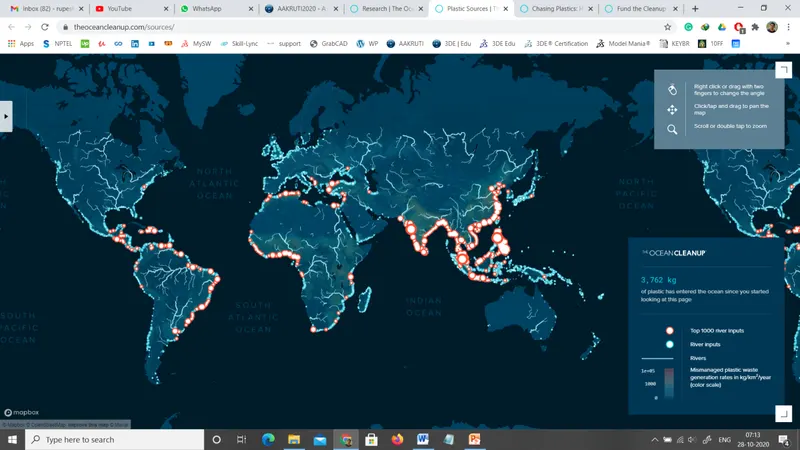
(Source: thecoeancleanup.org)
The statistics given below shows the generation of plastic waste in millions of tonnes per year from 2001 to 2041.
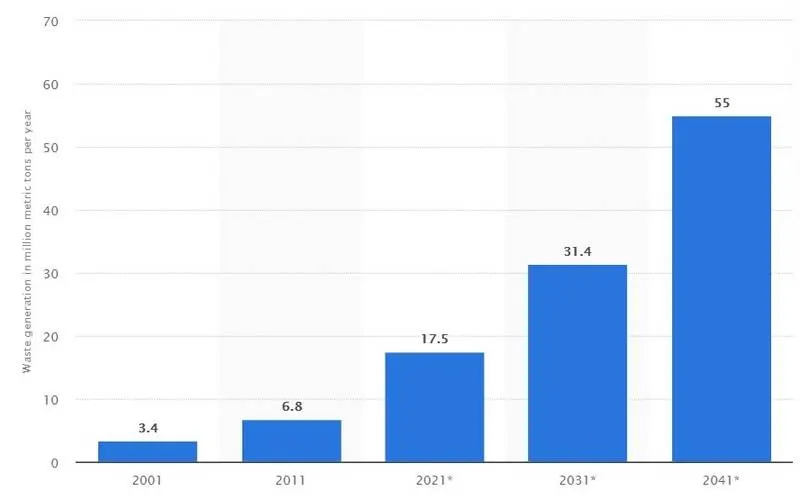
(Source: statista)
Addressing the Problem:
To address this global plastic waste problem, we are focusing on:
- Global trend
- Industrial need
- Future Potential
We are aiming to address a fraction of this global problem which can really solve the stated problem for long run. We have chosen additive manufacturing industry for this.
Additive manufacturing is often called as rapid prototyping and also 3D Printing. There are over 16 different technologies for 3D Printing. FDM, SLA, SLS, DLP, LOM etc are some of its major types. But the 3D Printing technologies which employs plastic as raw materials are limited. The following four methods are the primary 3D Printing technologhes using plastics:
- FDM (Fused Deposition Modeling)/FFF (Fused Filament Fabrication)
- SLA (Stereolithography)
- SLS (Selective Laser Sintering)/MJF (Multi Jet Fusion)
- Polyjet
Among the above mentioned methods, most of them uses plastitc resins as raw mateirals for the 3D Printing process. We are addressing the problem with respect to the FDM because of the various reasons like:
- It is the most popular 3D Printing technology
- It has the most basic operation
- It requires basic plastic requirements as raw materials
- Its simplicity has made it upto the desktop level
In order to know the raw materials amount and its sources, the stastistics given by the ‘Our World in Data’ shows the following.
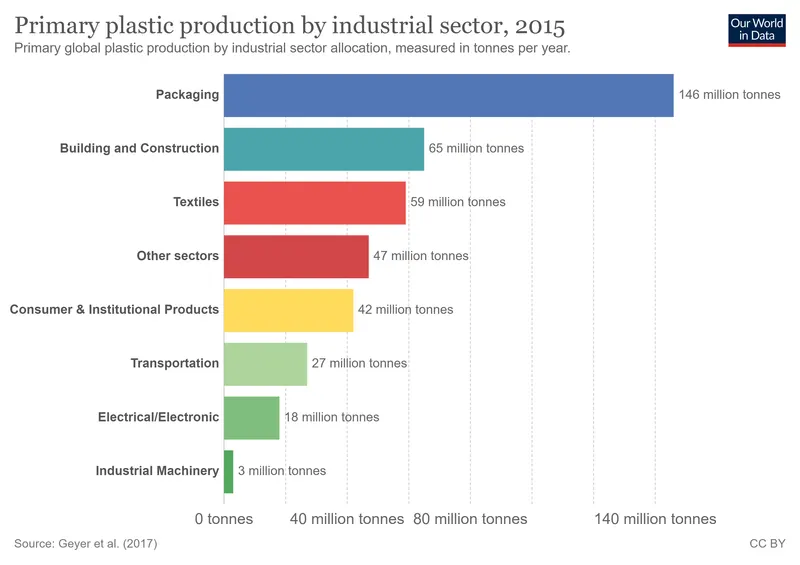
(Source: OurWorldinData.org)
The table shown below gives the different sectors and the forms where the majority of the plastics are going as waste.
|
Additives |
17.00 million tonnes |
|
All industrial sectors |
302.00 million tonnes |
|
Building and Construction |
13.00 million tonnes |
|
Consumer & Institutional Products |
37.00 million tonnes |
|
Electrical/Electronic |
13.00 million tonnes |
|
HDPE |
40.00 million tonnes |
|
Industrial Machinery |
1.00 million tonnes |
|
LD, LDPE |
57.00 million tonnes |
|
Other polymer type |
11.00 million tonnes |
|
Other sectors |
38.00 million tonnes |
|
PET |
32.00 million tonnes |
|
PP |
55.00 million tonnes |
|
PP&A fibers |
42.00 million tonnes |
|
PS |
17.00 million tonnes |
|
PUT |
16.00 million tonnes |
|
PVC |
15.00 million tonnes |
|
Packaging |
141.00 million tonnes |
|
Textiles |
42.00 million tonnes |
|
Transportation |
17.00 million tonnes |
(Source: OurWorldinData.org)
There’s a huge necessity of plastic in additive manufacturing industry. Fused Deposition Modeling requires thermoplastic which is already in the garbage but production of new plastics is increasing the plastic pollution. Few of the 3D Printable plastics are PLA, ABS, Nylon, HIPS, etc. These plastics are only a fraction of the global plastic waste but it addresses many sectors such as electronics, automotive, telecommunication, toys, etc. Normally household materials are made from PP (Polypropylene) or nylon which is usually injection molded rather than 3D Printed due to its temperature setting problems. We can employ any of PLA, ABS, Nylon, HIPS, TPU etc for our machine.
Existing Solutions:
To solve the problems of plastic waste, there are different methods and techniques practiced for years. The 3R method; reuse, reduce and recycle is the most accepted and most popular method for the plastic waste management.
Specific to the additive manufacturing industry, there have been only few steps towards the use of recycled plastic in 3D Printing. Most of them only use virgin plastics for the extrusion of filament. Some 3D Printing machines such produced by Pursa, Ultimaker etc are the example of desktop level 3D Printer companies while companies like Stratasys, Bigrep makes 3D Printers for industrial purposes. The filaments used by all these 3D Printers are produced separately by filament extrusion machine. Filabot, Notzek are some of the examples of existing 3D Printing filament extruder manufacturers. They know the market and they know the potential of it so they have very high price range seeing no other dominations in such industry. In context of India, it can be an opportunity with a future potential.
The existing solution has following disadvantages:
- There is no such extruder dedicated to use recycled plastics as raw materials.
- The price range of the Filabot Extruder machines lies between $300-10,000 which is extremely high.
- Extruder exists on many sizes and forms but they all extrude the industry prepared plastic pellets.
- Extruder like ‘Noztek Pro’ exists which is dedicated to extrude filament from the fresh plastic pellets and they are expensive too.
- Few extruders like ‘ProtoCycler’ and ‘Filabot’ extruders are also intended to extrude filament from the plastic pellets and failed prints.
MARKET SURVERY
The global 3D printing market size is estimated to be USD 9.9 billion in 2018 and is expected to reach USD 34.8 billion by 2024. The market for 3D printing materials is growing rapidly and the pandemic this year has resulted in huge growth of the use of Additive Manufacturing for prototyping. Companies are adopting AM and the demand is increasing. In 2019, the AM materials market is valued at $1.5 billion. It is expected to grow into a whopping $4.5 billion opportunity in the next five years.
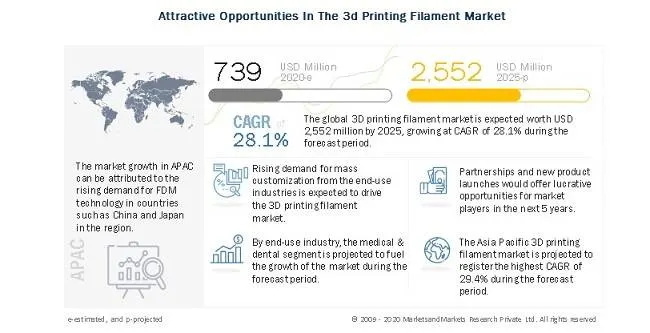
The 3D Printing filament market is growing rapidly at CAGR of 28.1% is estimated to be $739 million and is expected to reach $2,552 million by 2025 (Markets and Markets, 2020).
In context of India, the 3D Printing market is increasing at the rate of 20% CAGR. It has grown rapidly more during this pandemic of 2020. According to the survey of all3dp.com, 2019, the size of 3D Printing Industry is half a billion US Dollars. Automotive and electronics holds the highest share in Indian 3D printing market, while healthcare, aerospace and defence sectors are witnessing higher growth too.
Filament Market:
Filaments are sold in the market in the form of spool, normally in weights of 1 or 2 kg. Filament extruders which generally produces filament out of virgin plastics or fresh plastic pellets and following are the average market value of the several Filaments:
|
Type |
Price/kg (in INR) |
|
PLA |
1000 |
|
ABS |
1200 |
|
Nylon |
3000 |
|
TPU |
2200 |
|
HIPS |
2500 |
COSTING REPORT
If virgin plastic is used in the production of filaments, the price of filament per kg comes to about INR 1,500. A general thumb rule can be assumed to be the processing cost 30% lesser than the selling price of the plastic pellets as raw materials.
Taking 1kg of PLA filament production as an example;
Assuming that if the processing cost = Rs. 700
The selling price of the filament = Rs. 1000, considering 30% as the processing cost
Processing Cost Breakup:
In general, production of filament completely from the recycled plastic may result in low yield nature of the filament and also lesser quality of filament. Which is why, a proportion of virgin plastic is mixed along with the recycled and crushed plastic.
Out of Rs.700 of the processing cost, it can be distributed in different parts as below:
-Rs, 100 for fresh plastic pellets
-Rs. 100 for raw material (recycled plastic being higher in proportion)
-Rs. 100 for fillers, colours, crushing, cleaning etc.
-Rs. 100 for labour, manual intervention
-Rs. 100 for electricity charges
-Rs. 200 for study inventory for process to keep running. This inventory may involve different variables such as wastage of plastic in each processing steps, outcome diameter of the filaments according to the standard size.
Profit Cost Breakup:
The additional Rs.300 for 1 Kg of PLA filament can be broken down as follows:
-Rs. 200 for profit of the company
-Rs. 100 for the distribution management
Revenue generation of Filament:
The target market can be either desktop 3D Printers or industrial level 3D Printers. Taking desktop 3D Printers as an example in context of India, we can estimate the revenue that can be generated by our machine.
Assuming that a 3D Printer uses 2 spools of 1kg of filament every month, and taking 5 lakhs of desktop 3D Printers all over the India, that gives us 10 lakhs of kg of filament spool.
So, taking Rs. 1000 per kg of PLA, the total revenue = 1000*10,00,000 = Rs. 1,00,00,00,000 per year
Costing Report for the machine:
The cost report is generated based on the material, its weight calculated in SOLIDWORKS using the mass properties and the market value of the materials available on the internet. This report gives the rough estimation of the product. Most of the parts can be bought directly and some parts may require some machining or sizing which is incorporated in the same price.
|
Particulars |
Quantity |
Price in total(INR) |
|
Sheet Metal Plates |
6 |
13,200 |
|
AC Motor |
2 |
12,200 |
|
Frame |
- |
5,800 |
|
Shredder |
1 |
30,000 |
|
Bearings |
4 |
3,000 |
|
Extruder (Barrel & Screw) |
1 |
10,000 |
|
Clamp |
2 |
400 |
|
Heating Band |
3 |
600 |
|
Coupling |
1 |
200 |
|
Motors for spooler |
2 |
700 |
|
Spooler housing |
1 |
1000 |
|
Microcontrollers |
1 |
150 |
|
Wires |
- |
500 |
|
Switches |
- |
600 |
|
TOTAL |
- |
78,220 |
Production rate capability:
The production rate of machine per can be calculated taking the ratio of the revenue generated by the filament to the cost of a machine
i.e. per year
Return on Investment (ROI)
Now, taking 78,220 as a cost of machine production and adding 20% to it for selling, the selling price = Rs. 93,864
Taking 500 machines production per year for 5 lakhs 3D Printers which consumes the above-mentioned amount of filament, we can calculate the revenue generation by the machine.
Estimating the extruder can extrude 1.2 kg per hour and taking INR 1000 as average price of ABS & PLA plastic filaments and working 10 hrs. per day for 365 days excluding Sundays,
Yearly gains = 1.2*1000*10*317= INR 38,04,000 per machine
ROI =
DESIGN CALCULATIONS
The design calculations and specifications of the product are determined based on the dimensions of the product and the work load.
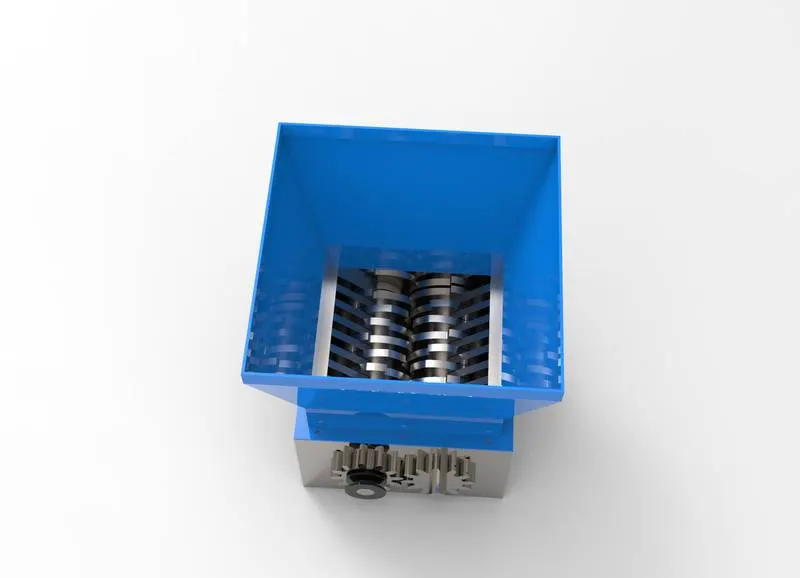
The shredder blades are designed to give an output of shredded plastics of about 5-6 mm in size.
The screw diameter is 50 mm and is 555 mm long. A small hopper/funnel through which the shredded plastics and a proportion of virgin plastics are charged has a diameter of 19 mm. This can easily allow the pellets as well as the shredded plastics through the funnel.
The size of the nozzle is designed to be the standard size of 2.85 mm.
Specifications:
Dimensions: 1710.95mm*3340mm*976mm
Diameter of nozzle: 2.85 mm
Temperature range: 1-400°C
Screw diameter: 50mm
Screw working length: 555mm
Working voltage: 220V
DESIGN and ASSEMBLY:
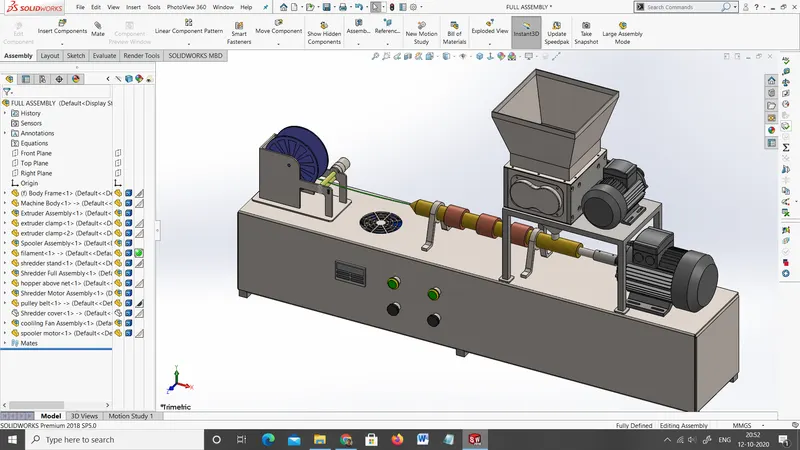
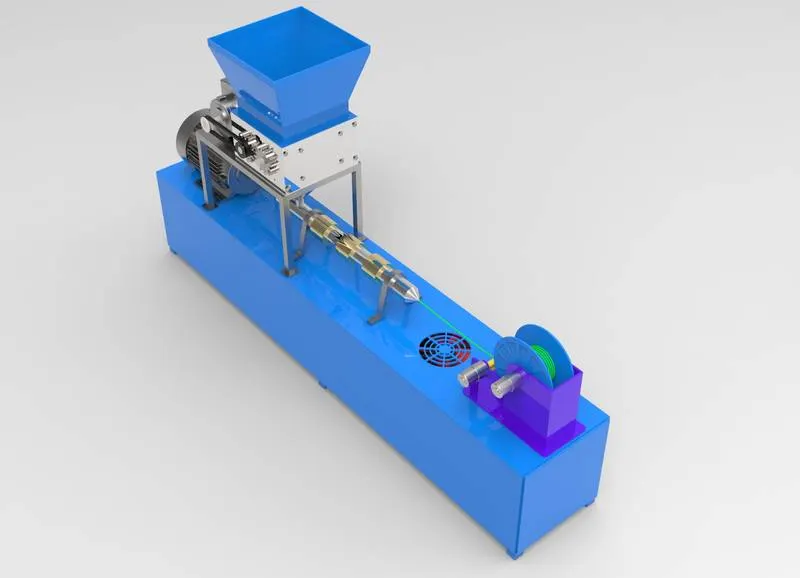
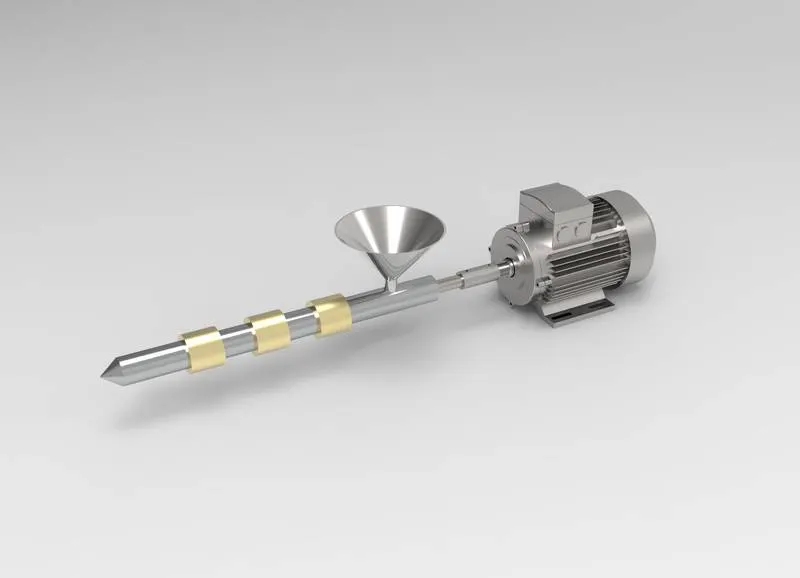
The design and assembly of each component are done in SolidWorks. The main components of the Design machine are:
1) Shredder
2) Motor
3) Heating Barrel
4) Screw
5) Hopper
6) Casing
7) Spooler
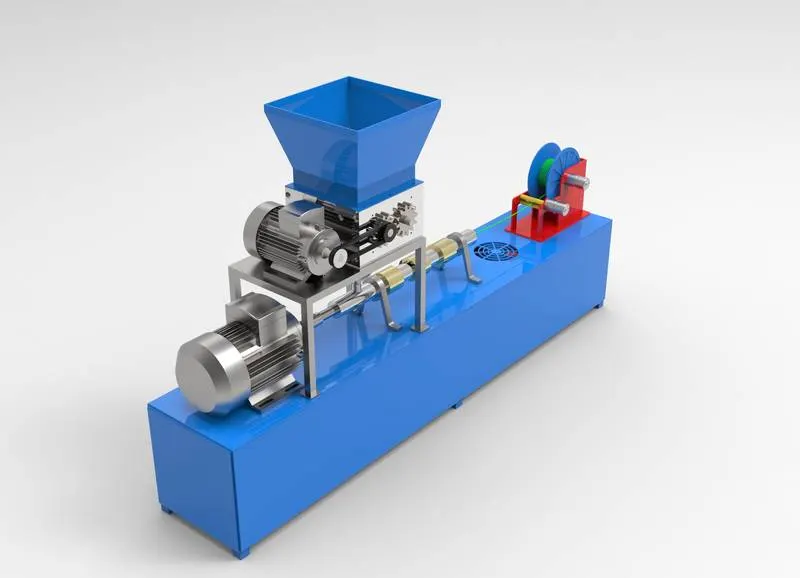
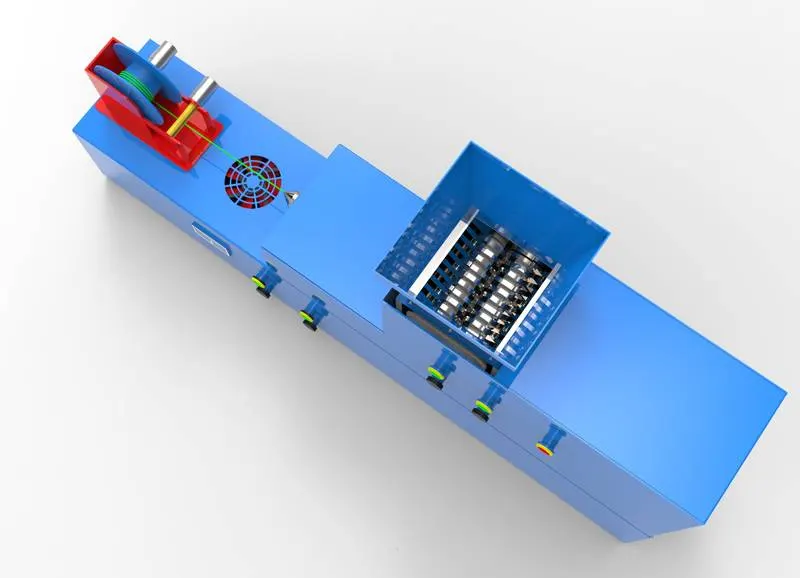
The rendered images of the final product are shown below:
MOTION ANALYSIS:
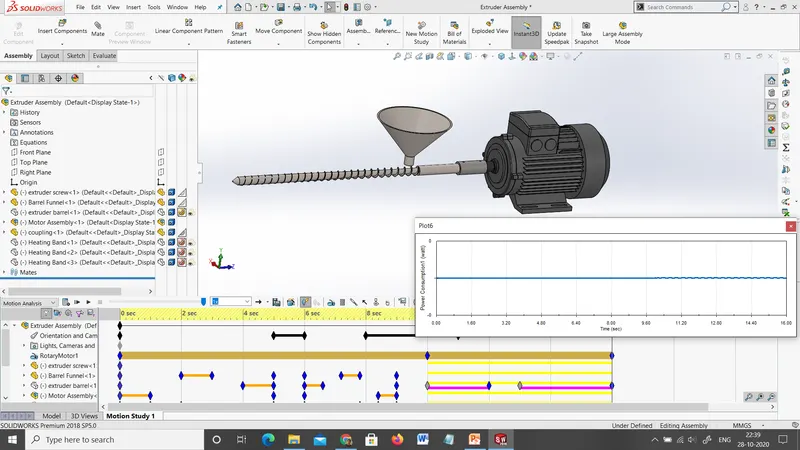
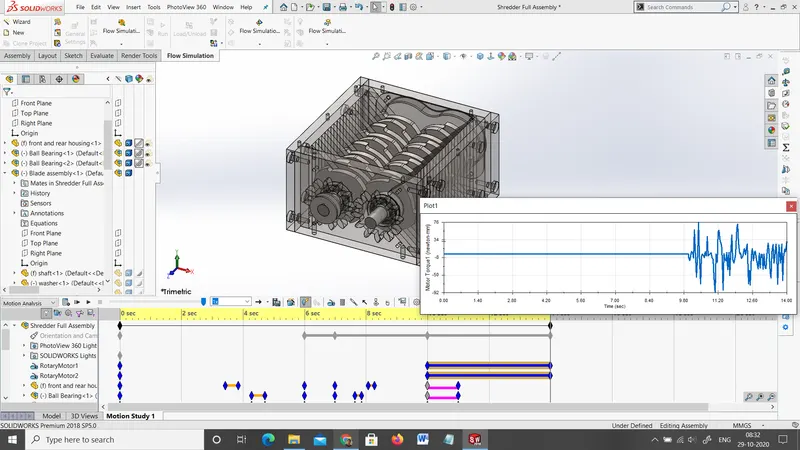
The motion analysis is done in the subassembly of the shredder and the extruder screw. It shows that the torque in the motors remains constant overtime which ensures the smooth operation of the machine.
Motion analysis of the screw subassembly
Motion analysis of the shredder subassembly
REFERENCES:
The Ocean Cleanup, live update (October 28, 2020) Retrieved on October 28, 2020 from https://theoceancleanup.com/research/
Our World in Data, Plastic Pollution (September 2018) Retrieved on October 20, 2020 from https://ourworldindata.org/plastic-pollution
Statista, Amount of plastic waste generated across India from 2001 to 2041 (October 16, 2020) Retrieced on October 28, 2020, from https://www.statista.com/statistics/1009095/india-plastic-waste-generation
Markets and Markets, 3D Printing Filament Market (October, 2020) Retrieved on October 28, 2020 form https://www.marketsandmarkets.com/Market-Reports/3d-printing-filament-market-267169690.html
All3DP, The future of 3D Printing: Beyond 2020 (Jan 4, 2020) Retrieved on October 28, 2020 from https://all3dp.com/2/future-of-3d-printing-a-glimpse-at-next-generation-making/
AMFG, The Evolution of 3D Printing Materials Market: Trends and Opportunities in 2019 (November 21, 2019) Retrieved on October 28 from https://amfg.ai/2019/11/21/the-evolution-of-3d-printing-materials-market-trends-and-opportunities-in-2019/