Conceptual design of a building with columns and shear walls
1.
Restrained of floor shrinkage:
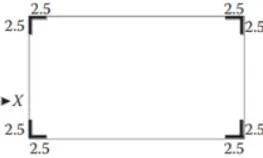
Observation:Fully restrained at all corners.
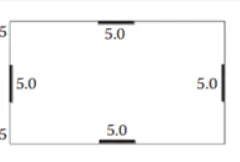
Observation:Corner are left freebut restrain along the edges.
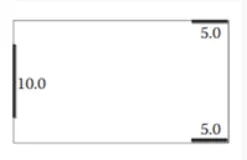
Observation:Non uniform restrains.
Conclusion:Option a will have higher shrinkage and thus leads to cracks.Option b is average.Option c will not effectively shrinkage so less crackage.
The lateral stiffness:
Observation:Lower lateral stiffness in both the direction.
Observation:Uniform and higher stiffness in both the direction.
Observation:Non uniform lateral stifness in both the direction.
Conclusion:Option b will provide higher stiffness.
Torsion with respect to vertival axis:
Observation:Corner wall will provide more resistance to twist.
Observation:Edge wall provide more resistance to twist.
Observation:Irregular wall provide very poor twist resistance.
Conclusion:Option a is good in torsion.
Static eccentricity:
Observation:Structuraly symmentric
Observation:Structurally symmentric
Observation:Un symmentric
Conclusion:Option c have static eccentricity
2.
Indirect lateral load transfer in X and Y direction:The beams are connected to another beam which are ineffective during lateral load transfer.In such case primary pear tend to shear failure.
Eccentricity:The longer the distance between center of mass and centre of stiffness the higher torsional moment of the building.As per the plan the build is tend to longer eccentricity.
Strong beam weak column possible:The size of column is same as 25x25,but all beam have deeper section.Inertia of beam is higher than column.If the column beam is adequate than the beam.
3.
Observation:
Floor plan:The floor plan of building is not either uniform or symmentric.So naturally any lateral load induced in the floor will not have influence in same direction.
Random internal column:Since the internal column are random,they are unable to teransfer lateral load.
Floor to floor variation of partition walls and beams:Partition wall provide important mass control in a building and beam play key role in shear transfer from floor to beam.