Bird Strike - Project - 2
BIRD STRIKE
Aim:
To perform bird strike test on the given engine model
Theory
Bird strike
A bird strike is strictly defined as a collision between a bird and an aircraft that is in flight or on a takeoff or landing roll. The term is often expanded to cover other wildlife strikes - with bats or ground animals.
Bird Strike is common and can be a significant threat to aircraft safety. For smaller aircraft, significant damage may be caused to the aircraft structure and all aircraft, especially jet-engine ones, are vulnerable to the loss of thrust which can follow the ingestion of birds into engine air intakes. This has resulted in some fatal accidents.
Bird strikes may occur during any phase of flight but are most likely during the take-off, initial climb, approach and landing phases due to the greater numbers of birds in flight at lower levels. Since most birds fly mainly during the day, most bird strikes occur in daylight hours as well.
The nature of aircraft damage from bird strikes, which is significant enough to create a high risk to continued safe flight, differs according to the size of the aircraft. Small, propeller-driven aircraft are most likely to experience the hazardous effects of strikes as structural damage, such as the penetration of flight deck windscreens or damage to control surfaces or the empennage. Larger jet-engine aircraft are most likely to experience the hazardous effects of strikes as the consequences of engine ingestion. Partial or complete loss of control may be the secondary result of either small aircraft structural impact or large aircraft jet engine ingestion. Loss of flight instrument function can be caused by impact effects on the Pitot Static System air intakes which can cause dependent instrument readings to become erroneous.
Complete Engine failure or serious power loss, even on only one engine, maybe critical during the take-off phase for aircraft which are not certificated to 'Performance A' standards. Bird ingestion into one or more engines is infrequent but may result from the penetration of a large flock of medium-sized birds or an encounter with a smaller number of very large ones. Engine failure (or having reduced thrust) usually results in an emergency return to land. Depending on the circumstance, this could be an overweight landing if the aircraft is not equipped with a fuel dumping system or it is considered unsafe to try to burn fuel.
In some cases, especially with smaller fixed-wing aircraft and helicopters, windscreen penetration may result in injury to pilots or other persons on board and has sometimes led to the loss of control and/or a forced landing. (See the images at the foot of this article.)
Wing root damage to single-engine light aircraft caused by a large bird (e.g., a vulture) during climb out may cause structural damage to such an extent that control is lost and terrain impact results.
Although relatively rare, a higher altitude bird strike to a pressurized aircraft can cause structural damage to the aircraft hull which, in turn, can lead to rapid depressurization. A more likely cause of the difficulty is impact damage to extended landing gear assemblies in flight, which can lead to sufficient malfunction of brakes or nose gear steering systems to cause directional control problems during a subsequent landing roll.
The rotorcraft must be designed to assure the capability of continued safe flight and landing (for Category A) or safe landing (for Category B) after impact with a 1 kg bird when the velocity of the rotorcraft (relative to the bird along the flight path of the rotorcraft) is equal to VNE or VH (whichever is the lesser) at altitudes up to 2438 m (8 000 ft). Compliance must be shown by tests, or by analysis based on tests carried out on sufficiently representative structures of similar design.
Procedure
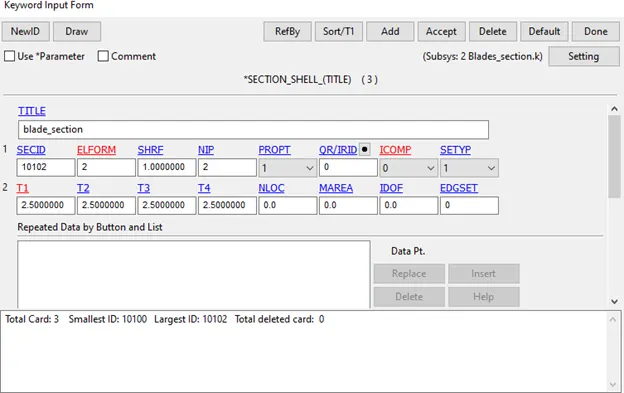
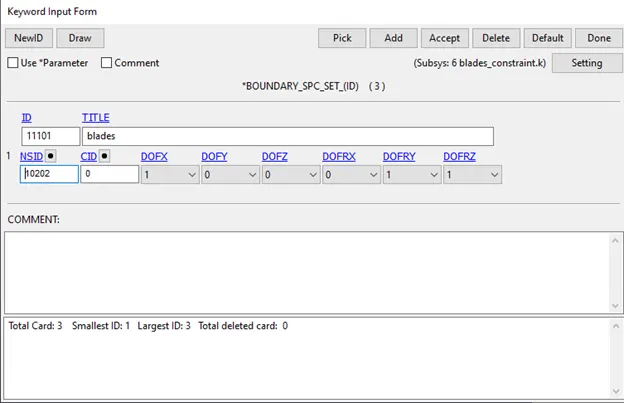
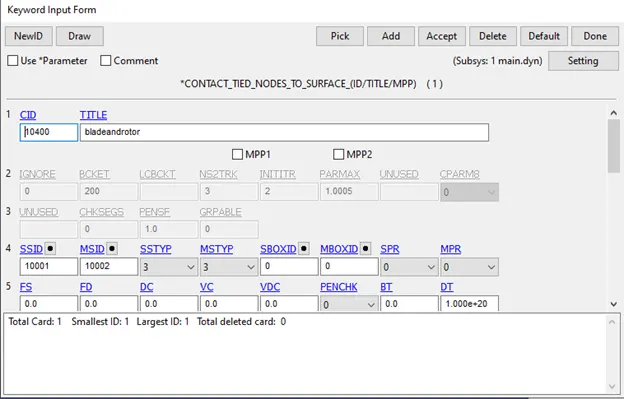
- After opening the bird strike file, save the parts as separate keywords.
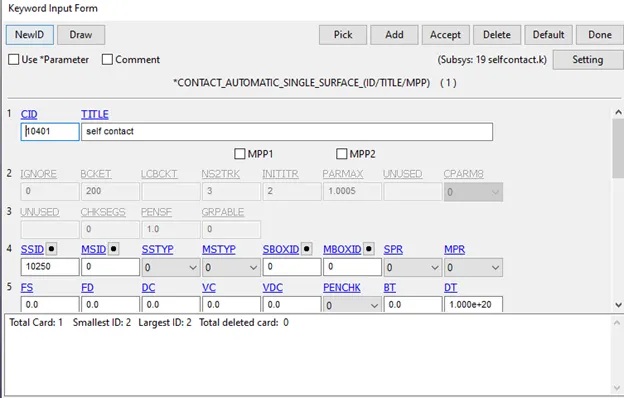
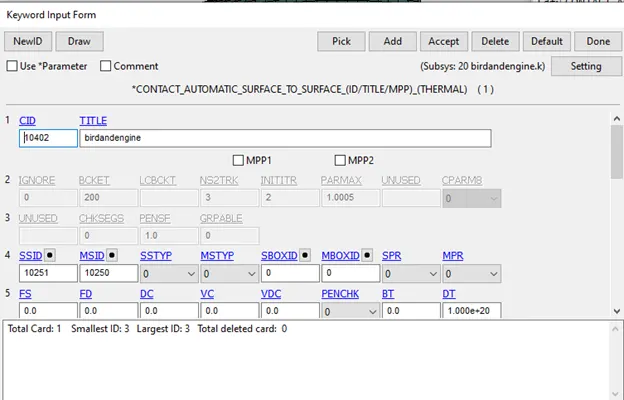
- To simplify this, we first set up each model separately before combining them in one main file.
Hub
Keywords
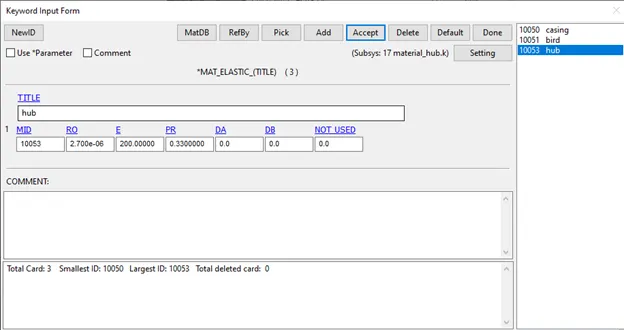
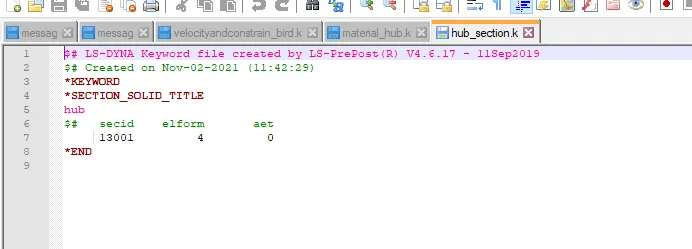
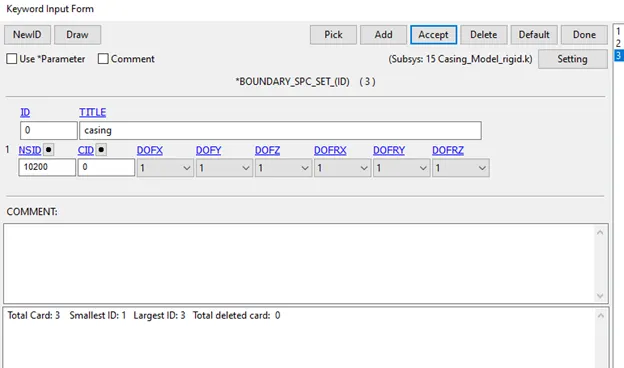
Casing
Keywords
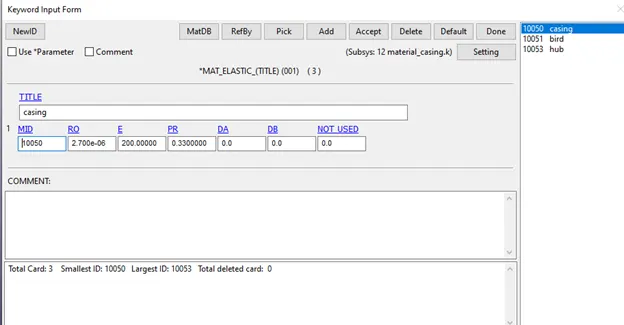
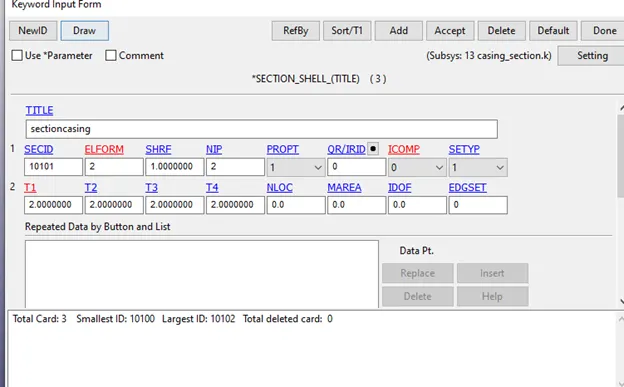
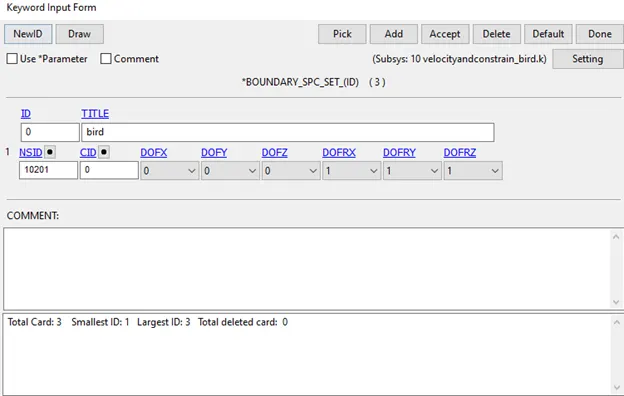
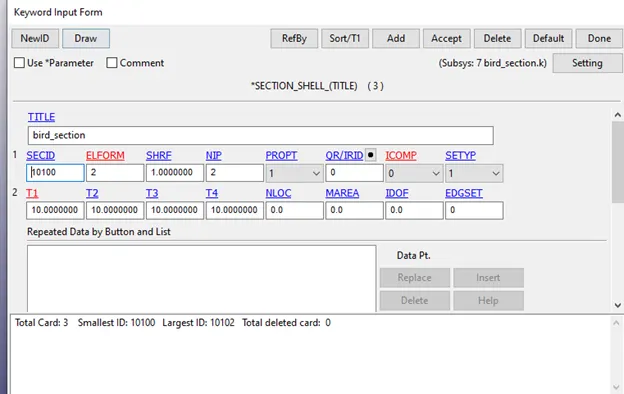
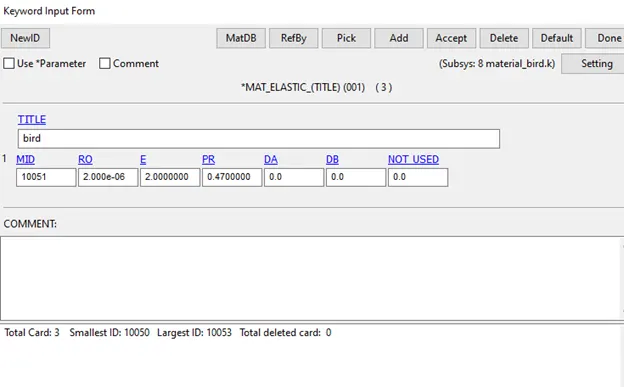
Bird
Keywords
Blades
Keywords
Control Cards
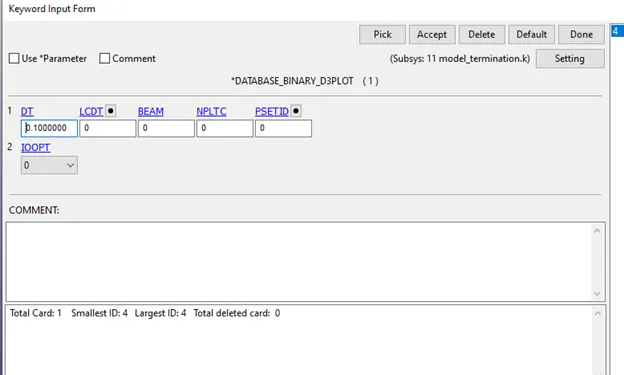
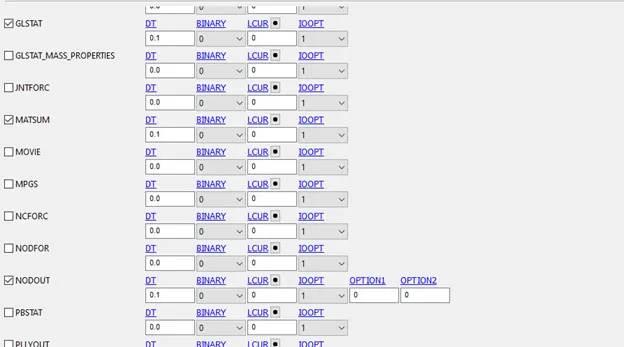
Database
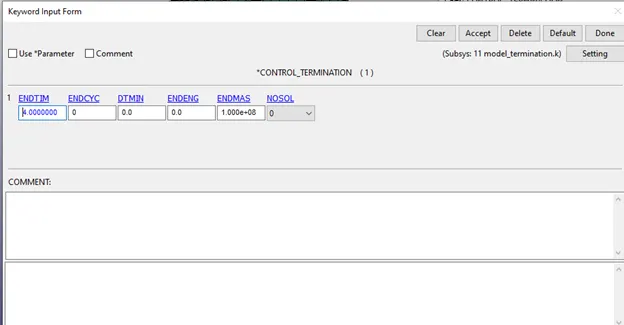
Termination
Mass scaling
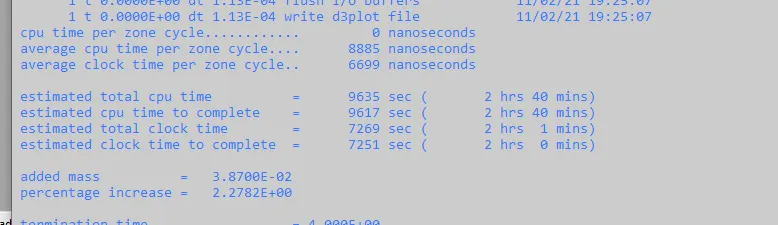
The lsdyna solver mentions that timestep should not go above 7.92e-05, so using that to set the TSSFAC and DT2MS values.

TSSFAC=0.9 DT2MS=-8.12e-05
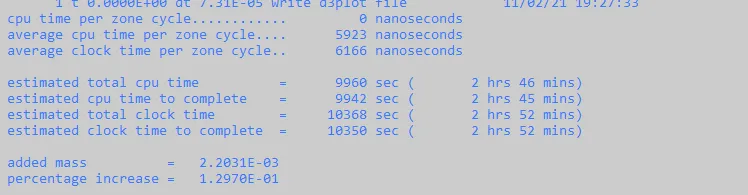
TSSFAC=0.8 DT2MSS=-9.12e-05
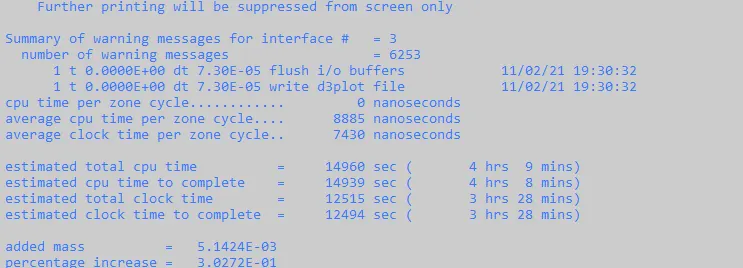
TSSFAC=0.57 DT2MS=-1.26e-04
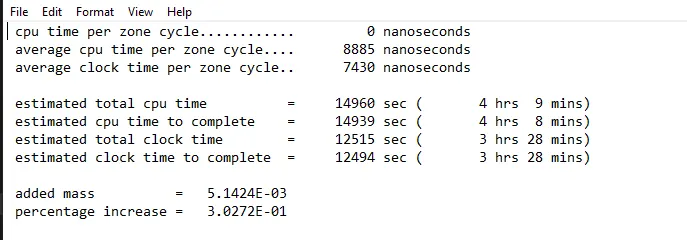
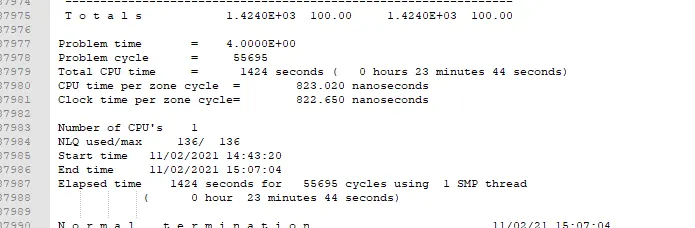
If it is considered acceptable, you can further increase the timestep to drastically reduce the time taken. But since the solver mentions to not exceed 7.92e-05 we limit ourselves to this.
TSSFAC=0.9 DT2MS=1.26e-04
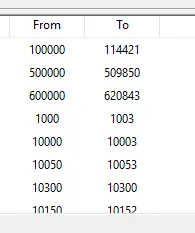
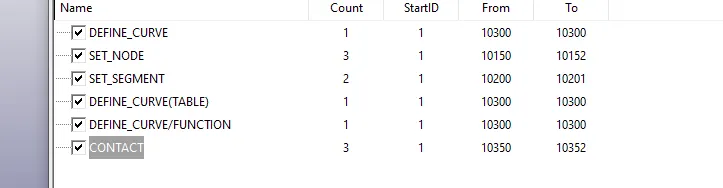
Renumbering
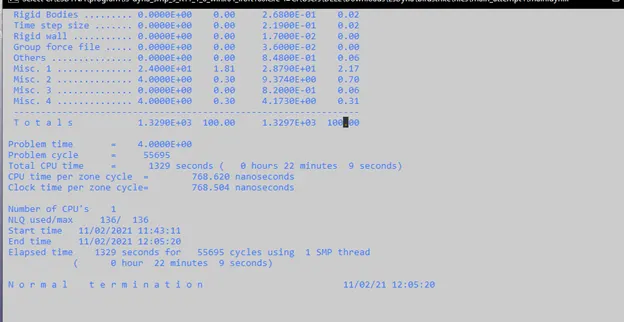
Run-on the ls Dyna solver, make sure it is normal termination
DEBUGGING
- Mat/section Id not being recognized
- Load the section/mat Ids before the part
- Blade not rotating properly
- Check if the constraints are proper
- Check if the connection to the blade and hub is proper
- No deformation/improper deformation
- Check constraints of blade and bird
- Check material properties
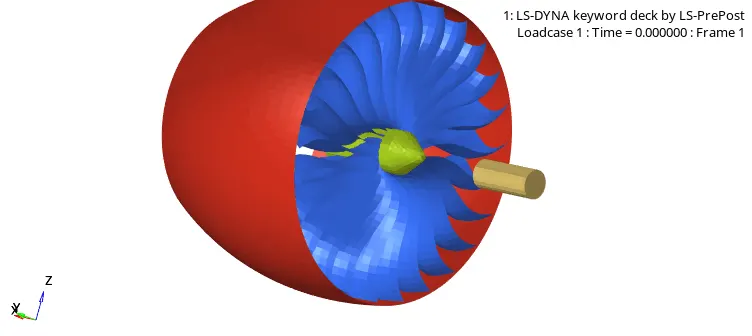
The above problem is due to the excessive constraints on the blades and bird. The lack of tied node contact between the hub and blades should be rectified as well.
Post Processing
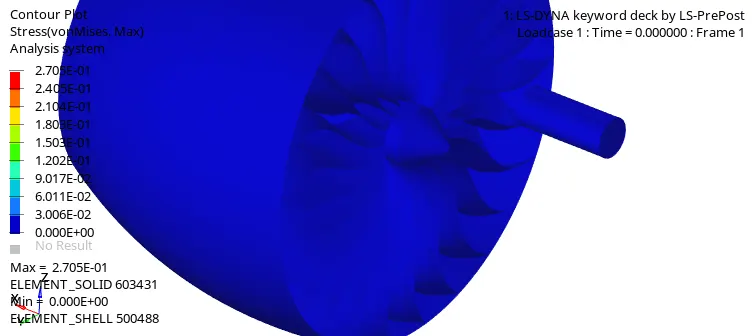
It can be observed that on impact there is no deformation of the blades but their speed gets reduced drastically before it stabilizes.
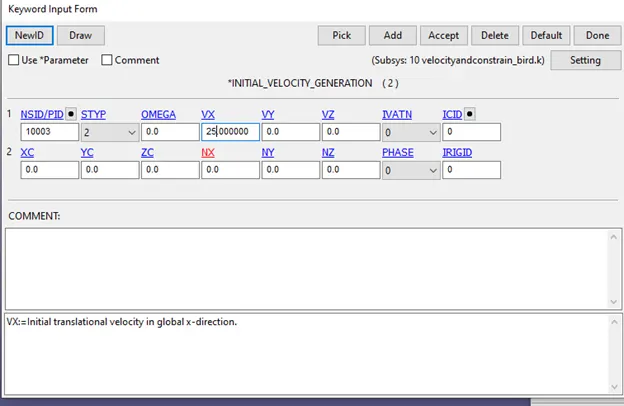
On increasing the bird velocity to 25mm/ms or 90Kmph
Highspeed
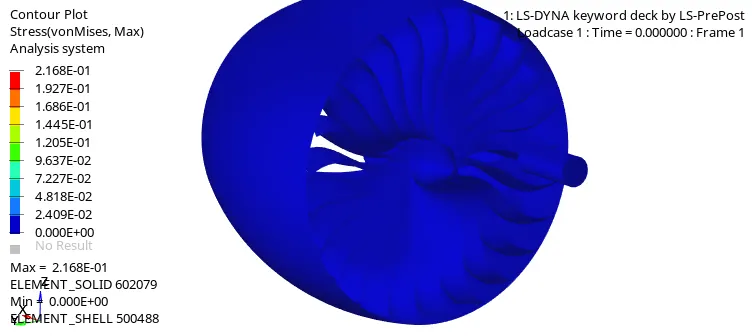
It can be seen that there is deformation of blades. This could imply danger as the blades might pierce the cabin and lead to loss of pressure inside the aeroplane. But in actual cases we will be using the SPH model for birds instead of simple elastic, this difference can drastically change the effects of the simulation and so it is recommended to go with the SPH model for bird during bird strike tests.
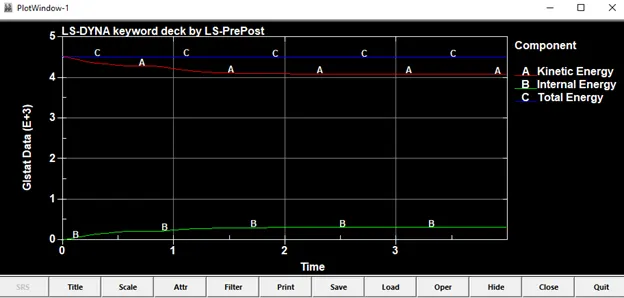
The kinetic energy is equal to total energy up to point of impact, after which there is some conversion to internal energy. The high kinetic energy suggests good stability as it implies that the velocity of the blade remains high enough for flight or landing.
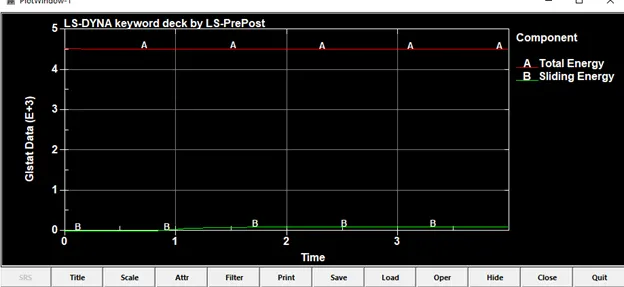
The sliding energy is very low compared to the total energy, signifying low penetration of elements.
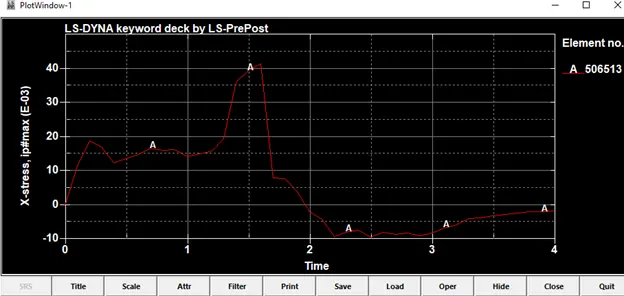
The stresses spike at the point of impact and stabilize afterwards.
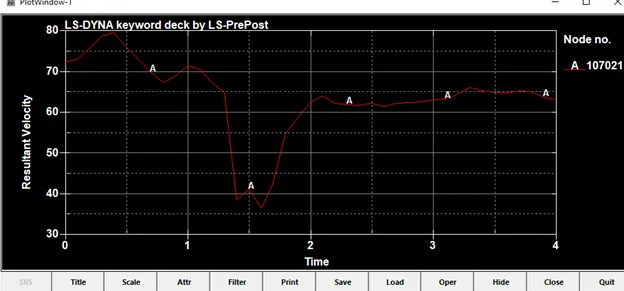
The velocity of the blades drops to critically low levels but stabilize to around 63mm/MS which is considered acceptable.
Passengers/pilots will feel turbulence for a small amount of time, less than 1ms, but it should almost immediately stabilize.
Learning Outcomes
- Setting up bird strike test using Ls’s Dyna with a modular system
- Debugging the simulation for errors
- Interpreting the results
Conclusion
Bird Strike is common and can be a significant threat to aircraft safety. For smaller aircraft, significant damage may be caused to the aircraft structure and all aircraft, especially jet-engine ones, are vulnerable to the loss of thrust which can follow the ingestion of birds into engine air intakes. This has resulted in some fatal accidents.
In this project, bird strike in an aero-engine is simulated to determine the stability of the engine in such situations. It could be seen that the energy graphs, stress graphs and velocity graphs indicate small instability for around 1ms during impact and stabilize afterwards.
Thus, it can be concluded that after impact the engine is stable enough for the pilot to land the aircraft safely.