Benchmarking
BENCH-MARKING
Bench-marking is the process of comparing organizational procedures and performance indicators with industry benchmarks and other businesses' methodologies. Quality, time, and cost are three factors that are frequently measured.
Utilizing a specific indicator (such as cost per unit of measure, productivity per unit of measure, cycle time of x per unit of measure, or defects per unit of measure), bench-marking is a method of measuring performance that produces a metric of performance that is then compared to others. In the bench-marking process, management chooses the best companies in their industry or in another industry where similar procedures are used, and compares its own processes and outcomes to those of the companies being examined (the "targets"). They gain an understanding of the targets' performance as well as, more crucially, the business operations that underpin these companies' profitability.
Bench-marking in Automotive Industry is usually termed as ‘technical bench-marking’ or ‘product bench-marking’, where it is crucial to employ the best technology currently on the market to build products that precisely fit user expectations while spending the least amount possible. Data is obtained by fully disassembling existing cars and their systems.
The 12 stage approach to bench-marking according to Robert Camp (who wrote one of the earliest books on bench-marking in 1989) is as follows:
- Select subject
- Define the process
- Identify potential partners
- Identify data sources
- Collect data and select all partners
- Determine the gap
- Establish process differences
- Target future performance
- Communicate
- Adjust goal
- Implement
- Review and re-calibrate
Types of Bench-marking
Bench-marking can be internal (comparing performance between different groups or teams within an organization) or external (comparing performance with companies in a specific industry or across industries).
Within these broad categories, following are important types of bench-marking:
Process Bench-marking: In order to discover and follow the best practices from one or more benchmark firms, the initiating firm concentrates its observation and analysis of business processes. Activity analysis will be necessary for comparing cost and efficiency, and it will be used more frequently for back-office tasks where
Performance Bench-marking:Permits the initiating organization to compare its goods and services to those of target companies in order to evaluate its competitive position.
Product Bench-marking: The process of creating new products or making improvements to existing ones. Reverse engineering, which involves disassembling competitor products to identify strengths and shortcomings, can occasionally be used in this procedure.
Generic Bench-marking: This macro-level bench-markingprocedure allows us to take into account different kinds of models. It conceptualizes a number of distinct models that are distinct from one another. This method provides us with more comprehensive knowledge of the data and products in the sector.
CASE STUDY
Problem Definition
Mr. D.S. Pughazhyendhii is a married man who lives in Bangalore which is a highly crowded city. His Family comprises five members including his wife, a five-year-old boy, his father, and his mother. He visits his native place Madurai which is 500kms away from Bangalore once a month. Also, he will be using his car to commute to his office. His budget falls between 8 to 10 lakhs on road. Please suggest to him options so that he will buy a good car for his family.
Note: Pughazhyendhii is fond of big cars
Based on the above information, following key points are important in selecting the best car for Pughazhyendhii as per his budget
- The car must be a 5-seater.
- It should be convenient in driving as per Bangalore traffic.
- It should be economical for daily use wrt to fuel as he has to commute to his office daily. He also has to look for safe and comfortable driving for his long drives.
- His budget falls under 8-10 lakhs
- And he is fond of big cars.
Following table compares four SUVs for Bangalore city on the basis of inputs mentioned above.
|
Parameters |
Renault Kiger (RXT AMT) |
Tata Punch (Accomplished AMT) |
Tata Nexon XE (Base Model) |
Nissan Magnite (Turbo CVT) |
|
City Mileage (kmpl) |
15.0 |
14.42 |
13.0 |
13.6 |
|
No of cylinders |
3 |
3 |
3 |
3 |
|
Max power(bhp@rpm) |
71.01@6250 |
84.48@6000 |
118.36@5500 |
71.02@6250 |
|
Torque(nm@rpm) |
96@3500 |
113@3300+/-100 |
170@1750-4000 |
96@3500 |
|
Boot Space(litres) |
405 |
366 |
350 |
336 |
|
ABS |
Yes |
Yes |
Yes |
Yes (No Break Assist) |
|
Gear Box |
5 speed |
5 speed |
6 speed |
5 speed |
|
GNCAP Rating |
4 |
5 |
5 |
4 |
|
Transmission |
Automatic |
Automatic |
Manual |
Manual |
|
Price (on road) in lakhs |
9.61 |
9.85 |
9.19 |
9.87 |
Conclusion:
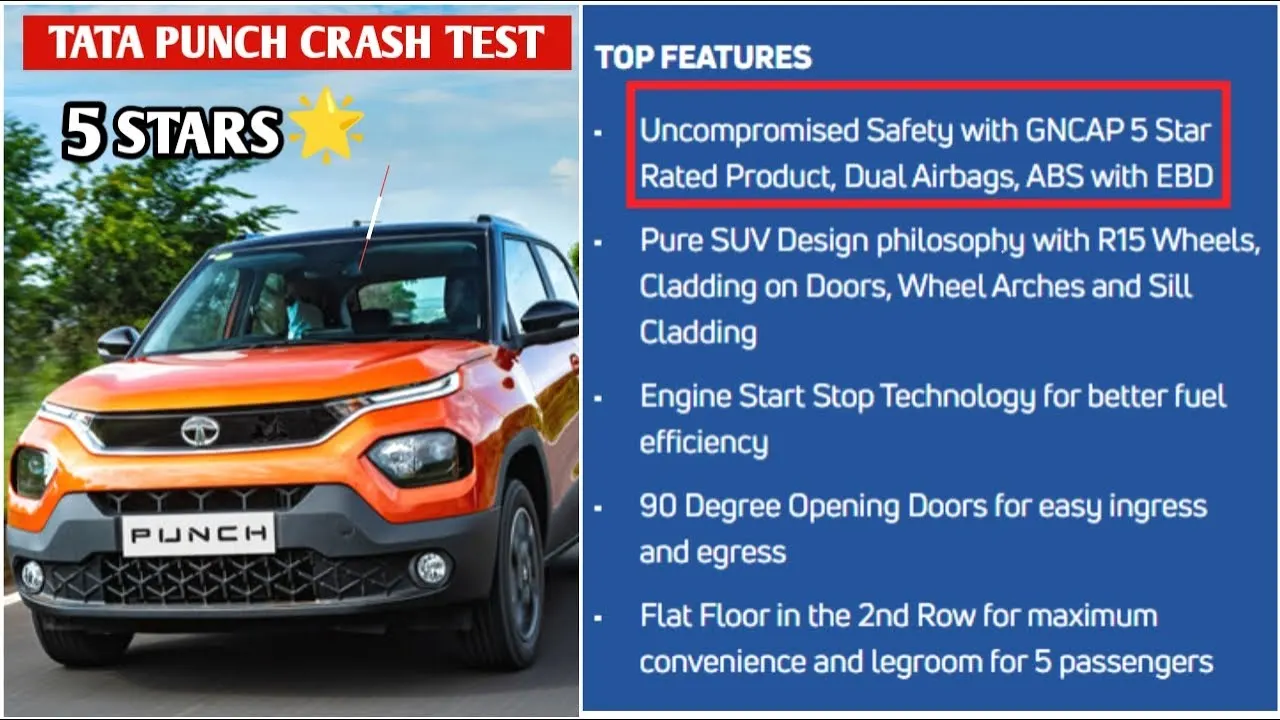
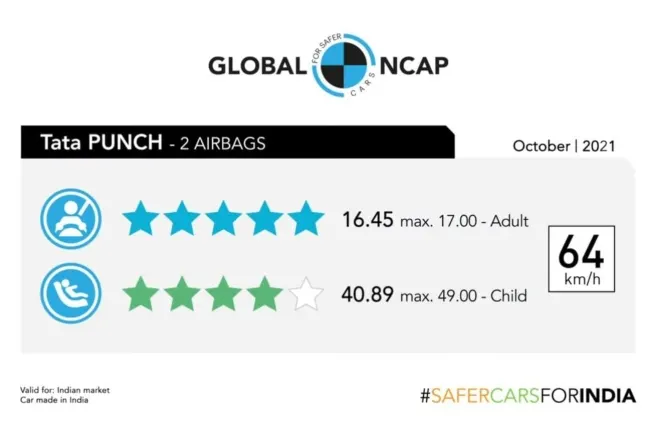
Mr. D.S. Pughazhyendhii should opt for Tata Punch as it has 5 star GNCAP rating suggesting saftey features are best in this SUV. The car also feautures with automatic transmission which is very helpful in heavy traffic of city Bangalore.
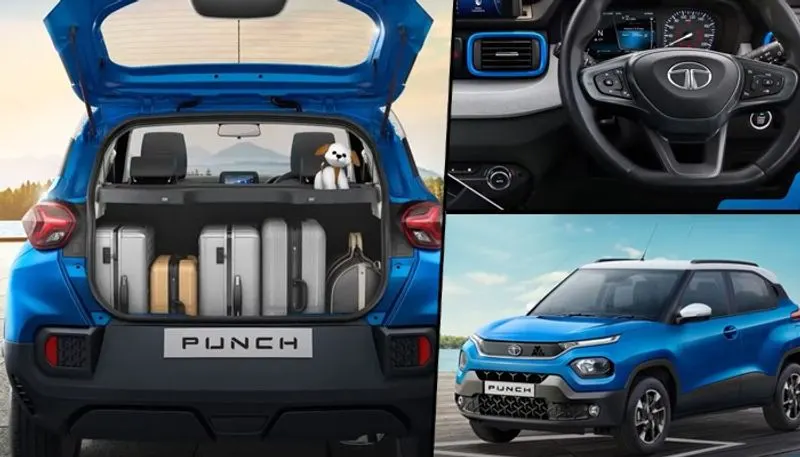
Tata Punch images