Benchmarking
What is Benchmarking?
Benchmarking is a process of measuring the performance of a company’s products, services, or processes against those of another business considered to be the best in the industry, aka “best in class.” The point of benchmarking is to identify internal opportunities for improvement. By studying companies with superior performance, breaking down what makes such superior performance possible, and then comparing those processes to how your business operates, you can implement changes that will yield significant improvements.
That might mean tweaking a product’s features to more closely match a competitor’s offering, or changing the scope of services you offer, or installing a new customer relationship management (CRM) system to enable more personalized communications with customers.
There are two basic kinds of improvement opportunities: continuous and dramatic. Continuous improvement is incremental, involving only small adjustments to reap sizeable advances. Dramatic improvement can only come about through reengineering the whole internal work process.
Step-by-Step Benchmarking
Benchmarking is a simple, but detailed, five-step process:
Choose a product, service, or internal department to benchmark
Determine which best-in-class companies you should benchmark against – which organizations you’ll compare your business to
Gather information on their internal performance, or metrics
Compare the data from both organizations to identify gaps in your company’s performance
Adopt the processes and policies in place within the best-in-class performers
Benchmarking will point out what changes will make the most difference, but it’s up to you to put them in place.
First Steps
To benchmark anything, you need to have quantitative data available to study. That means breaking down internal processes to calculate performance metrics. Quantify everything, because only quantifiable information can be accurately compared.
Key Benefits
In addition to helping companies become more efficient and profitable, benchmarking has other benefits, too, such as:
Improving employee understanding of cost structures and internal processes
Encouraging team-building and cooperation in the interests of becoming more competitive
Enhancing familiarity with key performance metrics and opportunities for improvement company-wide
In essence, benchmarking helps employees understand how one small piece of a company’s processes or products can be the key to major success, just as one employee’s contributions can lead to a big win.
Which car to buy under 10 lakhs(OTR) in India?
As we all know that cars come with different body types, i.e from big heavy MUVs and SUVs to small compact SUVs, Sedans, and hatchbacks, but for a person who is looking to buy a car under 10 lakhs, he doesn't need to bother looking cars of all body types. Buying a compact SUV or hatchback in this price range will be a safe option as these cars will provide a better price to performance ratio. As per the market trend in India, most selling cars are from these segment only because of their low price that too without comprising on the superior quality and space.
Below we have Benchmark with some presently available cars in the market whose price ranges within 8 to 10 lakhs on-road (Bangalore, India).
Let's have a look at some of the best compact SUVs in India:
1. Tata Nexon
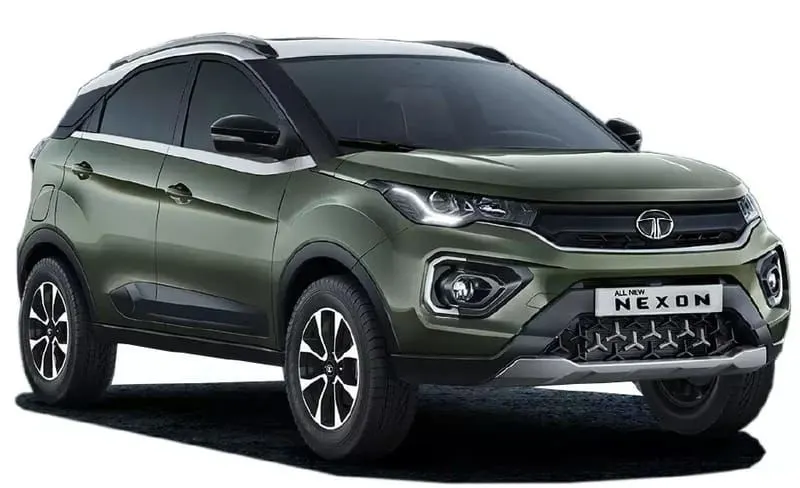
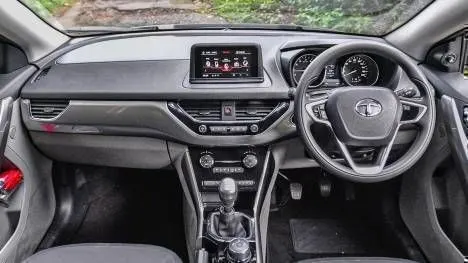
Price OTR Bangalore: Rs. 8.60 lakhs (Ver: XE, Petrol)
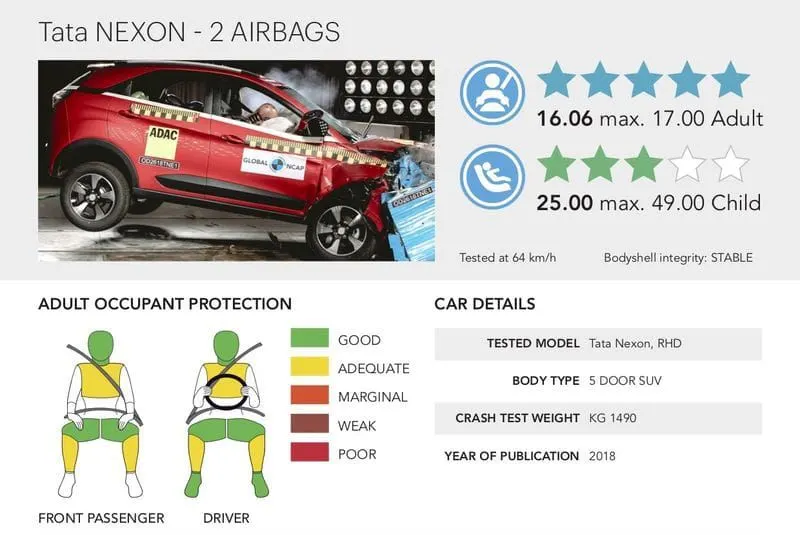
Tata’s sub-4m SUV is the only one in its segment to receive a 5-star rating in the Global NCAP crash tests. With the 2020 facelift, the Nexon has seen a host of upgrades over the previous model, not only visually but also in terms of features. These include safety equipment such as dual airbags, ABS with EBD, reverse parking sensors, and Electronic Stability Program (ESP) as standard. It also features projector headlights with LED DRLs, sunroof, 7-inch touchscreen with 8-speaker Harman audio unit, Apple CarPlay and Android Auto, digital instrument cluster and connected technology. The Nexon gets two engine options: a 1.2-litre turbo-petrol and a 1.5-litre diesel, both of which get an AMT option as well.
Specifications:
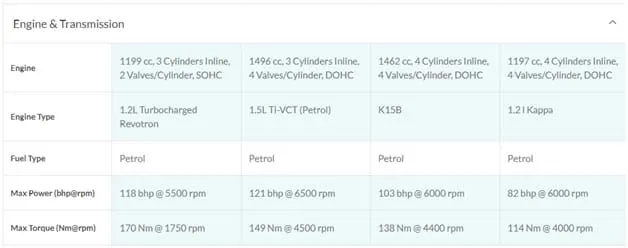
Engine: 1199cc, 3-Cyl, Petrol | 1497cc, 4-Cyl, Diesel
Power: 120 PS @ 5500 RPM | 110 PS @ 4000 RPM
Torque: 170 Nm @ 1750-4000 RPM | 260 Nm @ 1500-2750 RPM
Transmission: 6-Speed MT / AMT
Fuel Consumption: 10-11 km/l | 15-16 km/l
Fuel Type: Petrol | Diesel
Tyre Size: 215/60/16 (Front & Rear)
Suspension: McPherson Strut (Front), Twist Beam (Rear)
Brakes: Disc (Front), Drum (Rear)
Safety: 2 Airbags, ABS with EBD, ESP, Traction Control, TPMS, Brake Assist
Dimensions:
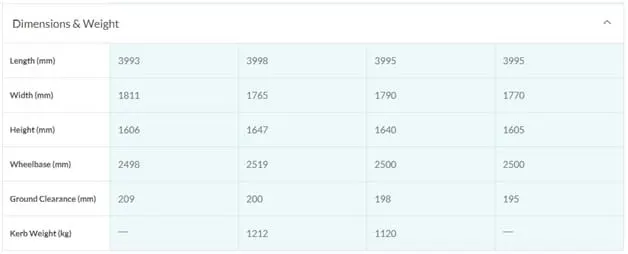
Overall length x width x height: 3993 mm X 1811 mm X 1606 mm
Wheelbase: 2498 mm
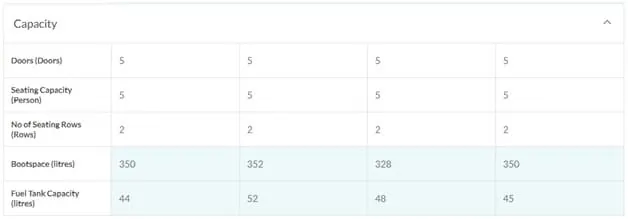
Boot Space: 350-litres
Turning Radius: 5.1-metres
Ground Clearance: 209 mm
Fuel Tank Capacity: 44-litres
2. Mahindra XUV300
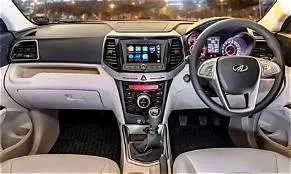
Price OTR Bangalore: Rs. 9.40 lakhs (Ver: WE, Petrol)
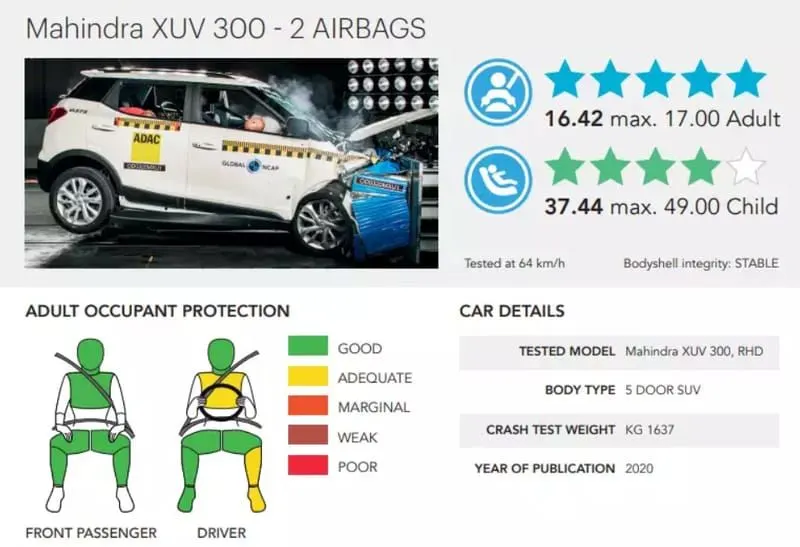
Mahindra has quite a few offerings in the sub-4m segment, but none as feature-loaded as the XUV300. It comes with several segment-first features like seven airbags, dual-zone climate control, and rear disc brakes. It also gets heated ORVMs, a 7-inch touchscreen with Apple CarPlay and Android Auto, leatherette upholstery, rear parking camera, ESP, and Hill Start Assist.
The engines on offer are a 1.2-litre turbo-petrol (110PS/200Nm) and a 1.5-litre diesel (117PS/300Nm). Only the diesel gets an AMT option.
Specifications:
Engine: 1.2-litre, 3-Cyl, Petrol | 1.5-litre, 4-Cyl, Diesel
Power: 110 BHP @ 5000 RPM | 115 BHP @ 3750 RPM
Torque: 200 Nm @ 2000-3500 RPM | 300 Nm @ 1500-2500 RPM
Transmission: 6-Speed MT
Fuel Consumption: 9-13 km/l (Petrol), 13-17 km/l (Diesel)
Fuel Type: Petrol | Diesel
Tyre Size: 215/55/17 (Front & Rear)
Suspension: McPherson Strut (Front), Twist Beam (Rear)
Brakes: Disc (Front), Disc (Rear)
Safety: 7 Airbags, ABS with EBD
Dimensions:
Overall length x width x height: 3995 mm X 1821 mm X 1627 mm
Wheelbase: 2600 mm
Turning Radius: 5.3-metres
Fuel Tank Capacity: 42-litres
3. Maruti Vitara Brezza
Price OTR Bangalore: Rs. 9.15 lakhs (Ver: LXI, Petrol)
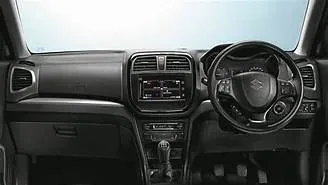
The Maruti Suzuki Vitara Brezza has ruled the charts and the hearts of Indian buyers for around 5 years now. It is in 2020 that the brand had said goodbye to the diesel variant and introduced this beloved compact SUV with a petrol engine. It misses out on a diesel engine, which is expected from a high rider, and instead makes do with 1.5-litre petrol with a mild-hybrid tech delivering 104PS/138Nm. In typical Maruti fashion, the claimed figures of this engine are the highest in its class but only when paired with a 4-speed automatic. The numbers stand at 17.03kmpl for the manual and 18.76kmpl for the automatic.
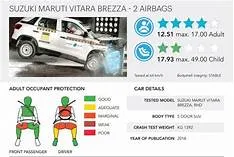
The Vitara Brezza is a popular pick owing to the peace-of-mind ownership experience that Maruti promises. It also has a decent feature list comprising LED headlamps with LED fog lamps, a 7-inch infotainment unit with Apple CarPlay and Android Auto, engine push start/stop, and auto climate control. For safety, there are dual airbags, ABS with EBD, reverse parking camera, Hill Hold Assist, and ISOFIX child restraint mounts.
Specifications:
Engine: 1462cc, 4-Cyl, Petrol
Power: 104.6 PS @ 6000 RPM
Torque: 138 Nm @ 4400 RPM
Transmission: 5-Speed MT | 4-Speed AT
Fuel Consumption: 13-14 km/l | 15-16 km/l
Fuel Type: Petrol
Tyre Size: 215/60/16 (Front & Rear)
Suspension: McPherson Strut (Front), Torsion Beam (Rear)
Brakes: Ventilated Disc (Front), Drum (Rear)
Safety: 2 Airbags, ABS with EBD, ESP
Dimensions:
Overall length x width x height: 3995 mm X 1790 mm X 1640 mm
Wheelbase: 2500 mm
Boot Space: 328-litres
Turning Radius: 5.2-metres
Fuel Tank Capacity: 48-litres
Kerb Weight: 1140 kgs
4. Hyundai Venue
Price OTR Bangalore: Rs. 8.50 lakhs (Ver: E, Petrol)
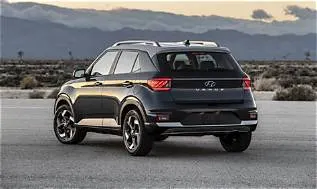
The Venue took the sub-4m-SUV segment by storm when it was launched last year. Its bold looks, wide variety of features and engine options made it an instant hit and one of the top 10 best-selling cars in India. The Venue’s long feature list includes automatic projector headlamps with cornering function, 16-inch diamond-cut alloy wheels, sunroof, and an 8-inch touchscreen with Apple CarPlay and Android Auto. For safety, it receives six airbags, ABS with EBD, rear parking camera with sensors, tyre pressure monitoring system, Electronic Stability Control (ESC), and Hill Assist Control.
Under the hood, you get the option of 1.2-litre petrol, 1.0-litre turbo petrol, and a 1.5-litre diesel engine. The two-pedal option is only available on the 1.0-litre turbo, which can be had with a 7-speed DCT as well.
Specifications:
Engine: 1197cc, 4-Cyl, Petrol | 998cc, 3-Cyl, Petrol | 1396cc, 4-Cyl, Diesel
Power: 82 BHP @ 6000 RPM | 118 BHP @ 6000 RPM | 89 HP @ 4000 RPM
Torque: 115 Nm @ 4000 RPM | 172 Nm @ 1500-4000 RPM | 220 Nm @ 1500-2750 RPM
Transmission: 5-Speed MT | 7-Speed DCT, 6-Speed MT | 6-Speed MT
Fuel Consumption: 10-13 km/l (P MT), 11-14 km/l (P AT), 14-17 km/l (D)
Fuel Type: Petrol | Diesel
Tyre Size: 195/65/15 (Front & Rear)
Suspension: McPherson Strut (Front), Torsion Beam (Rear)
Brakes: Disc (Front), Drum (Rear)
Safety: 6 Airbags, ABS with EBD, ESC, Hill Start Assist
Dimensions:
Overall length x width x height: 3995 mm X 1770 mm X 1605 mm
Wheelbase: 2500 mm
Ground Clearance: 190 mm
Fuel Tank Capacity: 45-litres
Alternate compact SUVs:
Renault Kiger
Nissan Magnite
Kia Sonet
Toyota Urban Cruiser
Ford EcoSport
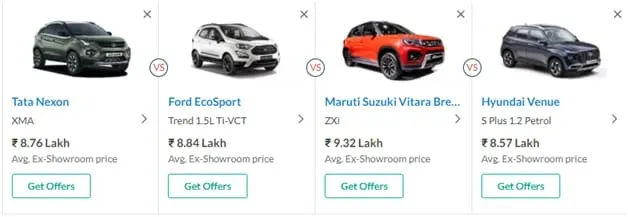
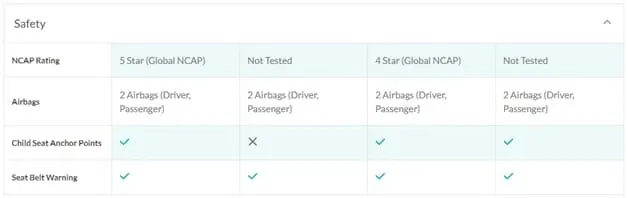
Comparision of some of the compact SUVs currently present in Indian market:
Dimensions:
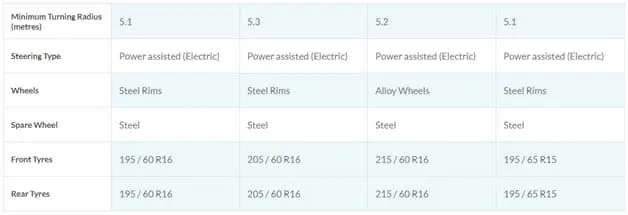
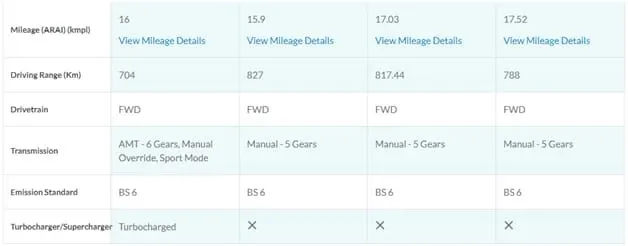
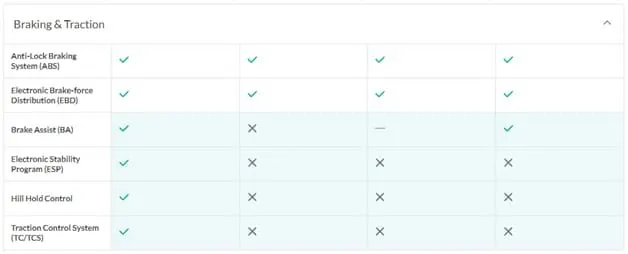
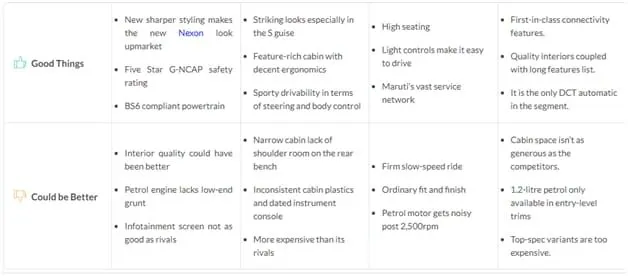
Conclusion:
After comparing all the compact SUVs above, it is safe to say that the Tata Nexon provides better value for money with best in class features among all other compact SUVs. It also includes 5-star rating in the Global NCAP crash tests which is only one in its segment. Some of the advantages which help Tata Nexon to stand amongst all other compact SUVs are
Only
Handsome design with great attention to detail
Feature-loaded interior with a decent amount of space
Powerful petrol and diesel engine options
Fantastic ride quality and a feedback-rich steering