Benchmarking
BENCHMARKING: -
Benchmarking: - Is the practice of comparing business processes and performance metrics. To industry bests and best practices. From other companies. Dimensions typically measured are quality time & cost.
Benchmarking is used to measure performance using a specific indicator (cost per unit of measure, productivity per unit of measure, cycle time of X per unit of measure or detects per unit of measure). Resulting in a metric of performance that is then compared to others.
That might mean tweaking a product feature to more closely match a competitor’s offering, or changing the scope of services you offer, or installing a new customer relationship management (CRM) system to enable more personalized communications with customers.
Step – by – Step Benchmarking: -
Choose a product, service, or internal department to benchmark.
Determine which best-in-class companies you should benchmark against – which organization you’ll be compare your business to.
Gather information on their internal performance, or metrics.
Compare the data from both organizations to identify gaps in your company’s performance.
Adopt the processes and policies in place within the beat-in-class performances.
Benchmarking will point out what changes will make the most difference, but it’s up to you to actually put them in place.
FIRST STEP: -
In order to benchmark anything, you need to have quantitative data available to study. That means breaking down internal processes to calculate performance metrics. Quantify everything, because only quantifiable information can be accurately compared.
KEY BENFITS: -
In addition to helping companies become more efficient and profitable, benchmarking has other benefits, too such as,
Improving employee understanding of cost structures and internal processes.
Encouraging team-building and cooperation in the interests of becoming more comprtitive.
Enhancing familiarity with key performance metrics and opportunities for improvement company-wide.
In essence benchmarking helps employees understand how one small piece of a company’s processes or products can be the key to major success, just as one employee’s contributions can lead to a big win.
CLIENT REQUIREMENTS: -
As per Mr. D.S.Pughazhendhii requirements, his needs were mentioned below clarity & suggesting him a best SUV segment car.
Family members: - 5(father, mother, wife and 5 years old son)
Native place: Madurai, 500km away from Bangalore.
Uses: - daily
Budget: - 8 to 10 lakhs on road.
Special preference: - pughazhendhii is found of big cars.
Monthly distanced travelled by pughazhendhii: 2500 km approximate.
From the requirements we clearly come to know that, he needs 5 seater car, which he can go for long drives as well as daily rides with good comfort and he needs SUV segments cars under 10 lakhs.
Considering his requirements, I have chosen 4 SUV segment cars in that I’m suggesting him a best car to meet his requirements. The four cars’ names and their features were listed below.
Tata Nexon 8.30 – 9.80 lakh.
Maruti Suzuki Vitara brezza 8.35 – 9.98 lakh.
Hyundai venue 8.10 – 9.94 lakh.
Renault duster 8.49 – 9.99 lakh.
1.TATA NEXON: -
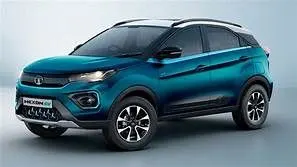
MODELS/SPECIFICATIONS TATA NEXON(AMT)
ARAI MILEAGE 21.5 kmpl
Engine Displacement(cc) 1497
Max Torque (mm @ rpm) 260Nm @ 1500-2750rpm
Transmission type Automatic
Fuel tank capacity 44lit
Max power (bhp @ rpm) 108.5 bhp @ 4000 rpm.
Seating capacity 5
Boot Space (liters) 350
Body type SUV
Safety 16.06/17.
Pros: -
Best in class safety package.
Best for long routes.
Ride and feels like a big vehicle.
Cons: -
Quality of plastics inside the cabin.
Electronics are not so good.
Slightly hard suspensions.
2.MARUTI SUZUKI VITARA BREZZA: -
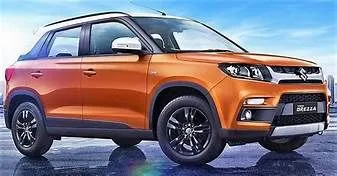
MODEL/
SPECIFICATIONS MARUTI SUZUKI VITARA BREZZA(VXI)
ARAI Mileage 17.03 kmpl
Engine Displacement (cc) 1462c c
Max Torque (nm @ rpm) 138Nm @ 4400rpm
Transmission Type Manual
Fuel tank capacity 48
Max power (bhp @ rpm) 103BHP @ 6000rpm
Seating capacity 5
Boot space (liters) 328
Body type SUV
Safety 12.5/17
Pros: -
Peppy @ efficient 1.5 petrol.
Good value for money.
Neutral ride, easy to drive.
Also very successful engine for CNG.
Cons: -
No more diesel option
Rivals offer more space
Same dashboard and cheap quality plastic.
3.HHYUNDAI VENUE: -
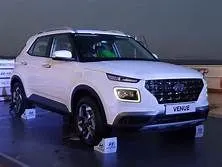
MODEL/
SPECIFICATIONS HYUNDAI VENUE (E) PETROL
ARAI mileage 17.52
Engine Displacement(cc) 1197
Max torque (nm @ rpm) 114 nm @ 4000 rpm
Transmission type petrol manual
Fuel tank capacity 45
Max power (bhp @ rpm) 82 bhp @ 6000 rpm
Seating capacity 5
Boot space (liters) 350
Body type SUV
Safety 4 stars NCAP rating
Pros: -
Looks attractive.
Three different engine options.
Feature loaded.
Cons: -
Isn’t as big as rivals.
No diesel automatic on offer.
1.2 petrol is weak on punch.
4.RENAULT DUSTER: -
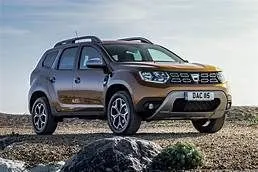
MODEL/
SPECIFICATIONS RENAULT DUSTER ( RXZ PETROL)
ARAI mileage 14.26kmpl
Engine Displacement(cc) 1498
Max torque (nm @ rpm) 142 nm @ 4000 rpm
Transmission type Manual
Fuel tank capacity 50lit
Max power (bhp @ rpm) 105 bhp @ 5600 rpm
Seating capacity 5
Boot space (liters) 475
Body type SUV
Safety 3star NCAP rating
Pros: -
Offers big space
Looks muscular and big
Offers turbo and automatic too
Cons: -
Looks outdated
No AWD or 4*4 on offer
Lack of features.
CONCLUSION: -
I would suggest tata nexon for Mr. D.S.Pughazhyendhii family, nexon is a excellent offering which is safest car in its segment. It is also value for money product with class leading features.