Benchmarking
Objective:
1. Benchmark with presently available cars in the market for the following case.
Mr. D.S. Pughazhyendhii is a married man who lives in Bangalore which is a highly crowded city. His Family comprises five members including his wife, five-year-old boy, his father, and his mother. He visits his native place Madurai which is 500kms away from Bangalore once in a month. Also, he will be using his car to commute to his office. His budget falls between 8 to 10 lakhs on road. Please suggest to him with options so that he will buy a good car for his family.
Note: Pughazhyendhii is fond of big cars
2. Prepare a report explaining what is benchmarking
3. compare at least 4 vehicles.
4. provide a proper conclusion for the report, suggesting a suitable vehicle among the comparison made.
Answer:
1. Benchmarking
Benchmarking in automotive industry involves a structured comparison between similar products , services or processes on some dimensions of performance. For example it can be used to compare the availability and delivery of features in a product and in this form often provides the basis of consumer tests and reviews. These look at products and services and provide recommendations based on which is best or some form of ranking amongst competitors. It is particularly useful when comparing not only performance but also practice – in other words what do the different organizations do to enable that performance to be delivered? And applied in this way it is a powerful tool in process innovations and studying how the ‘best’ achieve their performance can provide powerful clues for changing the way processes operate. Process benchmarking of this kind can operate at several levels:
• Between similar processes in the same factory or service branch
• Between different factories or service branches
• Between different competing organizations
• Between different sectors using the same process
A good example of this was the Automobile Industry Benchmarking Study at the heart of a long-running programme organized by MIT with other academic partners around the world called ‘The future of the automobile’. This programme was co-funded by most of the major auto industry players and explored a variety of aspects of the industry including product design and innovation, service delivery, retailing and supply chain management. Its results appeared in many books and articles and over a sustained period of time provided a powerful stimulus for change in the industry. The benchmarking study was the most influential, giving birth to the concept of ‘lean’ thinking which revolutionized first car making and then other manufacturing before.diffusing into services and the public sector. The original study was published in 1991 under the title’ The machine that changed the world’.1 The project involved a systematic benchmarking study of 68 car assembly plants around the world using a standard structured framework to ensure direct comparisons were made. Researchers from the various university teams looked in detail at all aspects of productivity and compared performance factors like labour hours to produce a car, number of defects per car, inventory levels per car, space utilization, etc. Their findings were significant and challenging for the industry.
Key findings of the study were as follows:
The Japanese plants require one-half the effort of the American luxury-car plants, half the effort of the best European plant, a quarter of the effort of the average European plant, and one-sixth the effort of the worst European luxury car producer. At the same time, the Japanese plant greatly exceeds the quality level of all plants except one in Europe - and this European plant required four times the effort of the Japanese plant to assemble a comparable product.
This massive difference in performance provided a powerful incentive for the lower-performing firms to explore how the best plants were able to deliver these different productivity levels. Various studies began to focus on trying to understand the process innovations involved and gradually it became clear that the differences were not down to levels of automation or other physical investments but rather in the underlying organization and management of production. The successful plants had an integrated philosophy backed up by an extensive toolkit of approaches which focused on eliminating or reducing waste in all areas and activities. They achieved this through a mixture of team working and employee involvement in innovation. This focus on waste and its reduction led the researchers to think of the successful systems as being ‘lean’ – rather like an athlete who carries not extra weight or fat and is therefore able to perform better. The term stuck and became a label for an approach which has had enormous impact on process innovation around the world.
2. Car comaprison
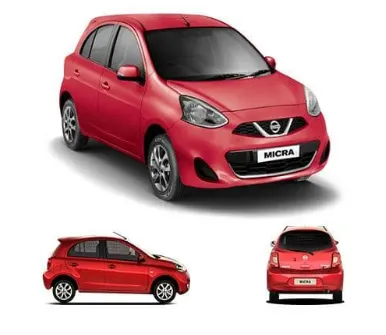
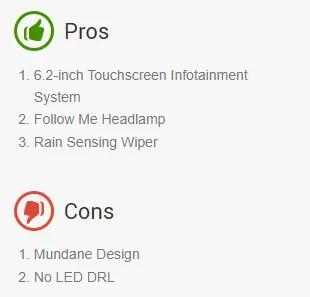
a)Nissan Micra XV CVT

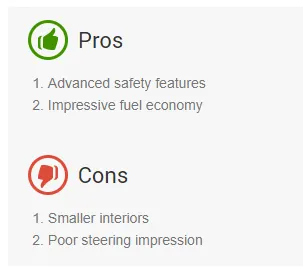
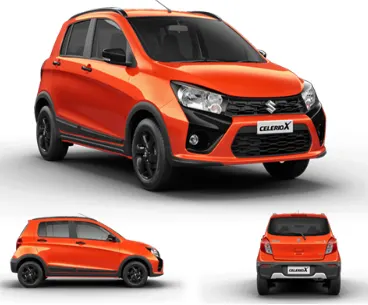
b) Maruti Suzuki Celerio X

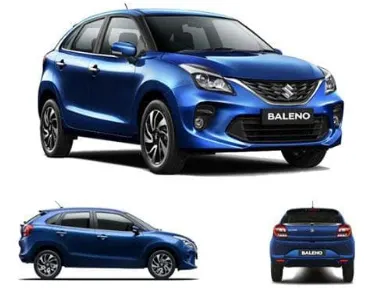
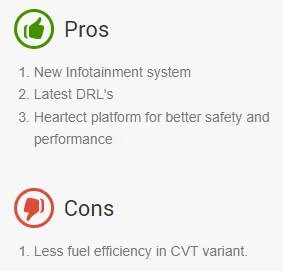
c)Maruti Suzuki Baleno

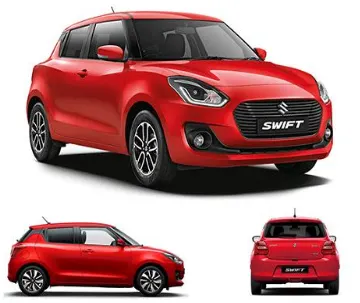
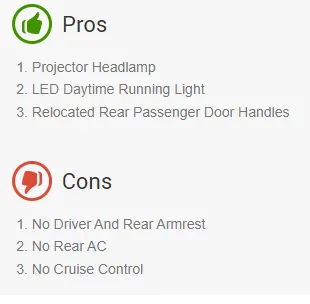
d)Maruti Suzuki Swift

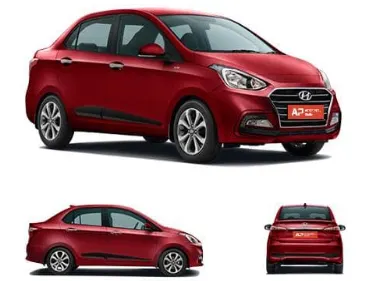
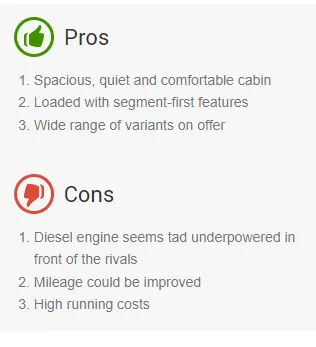
e) Hyundai Xcent

3) Conclusion
Hyndai Xcent seems to be a very ggod choice as it meets the requirement of daily travel as well as long distance travel . There is enough space and safety features for family use . Fair mileage and price comparitively .