Benchmarking
Concept Of BenchMaking In Body in White( BIW):
WHAT IS BENCHMARKING?
It is the process of the company business to analyse the processes and performance metrics from other companies and standards.
It can be operated in different factories and branches or same factory or branches or different competing organization.
Benchmarking 1 is used for comparing of the price features and segments, where as,
Benchmarking 2 is used for comparing the features of individual components.
Current methods of benchmarking BiW for Passenger cars for understanding its design philosophy, the load path, raw material usage, section details (Modulus, Thickness & Material Grade) & Manufacturing Cost incurs huge cost of activity and more time. Considering the reduction in launch to launch cycle time, the data required from benchmarking has to be in the right quantity and of right quality in the least possible time, else the cost invested in the benchmarking activity is futile.
Teardown Benchmarking + Body Engineering = Body In White Benchmarking With the expertise in teardown benchmarking and the experience in body engineering Advanced Structures’ supports OEMs’, Body In White teams in development, weight reduction, value engineering and more with our BIW benchmarking solution.
WHY DO WE BENCHMARKING IN BIW?
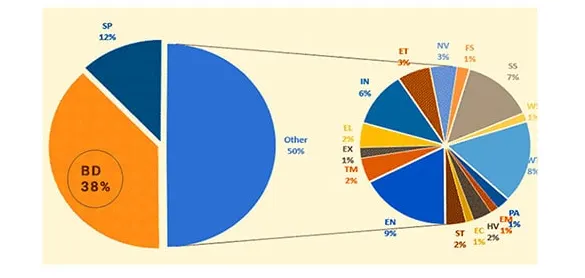
1. The BiW & 6 closures frame contributes for 30%-40% of the total vehicle, due to which the cost, complexity & weight impact is high on the vehicle. The above Figure shows the general distribution of sub-systems in a vehicle:
2. Technical understanding of BIW:
a. Weight contribution of key systems and identification of potential for weight savings.
b. Energy Management Strategy in the event of Offset & Lateral Crash Scenarios.
c. Vehicle Integration & packaging of components for simplified solutions.
d. Material usage strategy, Advanced HSS, HSS, Tailored WB, Forming Steel with yield strength ranging between 160-200-280-320-1200 MPa.
e. Construction, complexity, ease of assembly & no. of modules/zones.
f. Joineries (Spot Weld, Arc Weld, Sealants, Adhesive, Projection Welding, Hemming, Fusion Welding etc.)
g. Corrosion Resistance Treatments (coatings layers & thickness.)
3. Commercial Understanding:
a. Cost comparison & identifying delta.
b. Understanding zone/module wise cost distribution (Aesthetics/Strength/Mountings.)
c. Key cost driver identification.
QUESTION?
Mr. D.S. Pughazhyendhii is a married man who lives in Bangalore which is a highly crowded city. His Family comprises five members including his wife, five-year-old boy, his father, and his mother. He visits his native place Madurai which is 500kms away from Bangalore once in a month. Also, he will be using his car to commute to his office. His budget falls between 8 to 10 lakhs on road. Please suggest to him with options so that he will buy a good car for his family.
Note: Pughazhyendhii is fond of big cars.
BENCHMARKING PRICES AND SPECS:
Comparing the 4 Cars Based on the requirement of Mr. D.S. Pughazhyendhii by considering his budget and will provide a best suitable car for his daily activities and travelling to his native place.
1) MARUTI SUZUKI VITARA BREZZA:
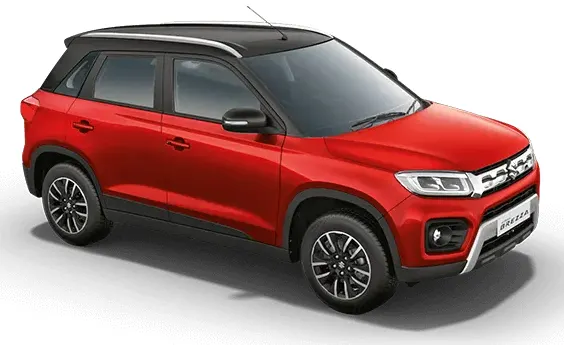
Milage of Maruti Suzuki Vitara Brezza: Price of this Car:
In City: 22Kmpl Rs.7.66 Lakh-10.3 Lakh.
In Highway: 24Kmpl
Pros:
All new Vitara Brezza comes and equipped with 2 Air Bags, ABS and EBD suzuki's Total Effective Control Technology( TECT) which provides the strenghtned to absorbing to assure a safety and secure and reliable drive.
Suzuki TECT( Total Effective Control Technology).
Anti Braking System( ABS).
Electronic Brakeforce Distribution (EBD).
Cons:
No petrol variant.
Summary:
Attractive and bold, the powerful all-new Vitara Brezza has an expression that’s indomitable. Enhanced by a pair of LED projector headlamps with integrated Dual function LED DRLs, it comes with a bold Front Grille that gives it a sportier, mightier and more dynamic stance.
It's over all length is about 3.9 Meter and its overall width is of 1.79 Meter and its over all Height is of 1.64 Meter.
It's wheel base is about 2.5 Meter and its Fuel Tank capacity of 48 Liter and its a 5 seater SUV and that is made available with a diesel Engine.
2) HONDA WR-V (Diesel Variant):
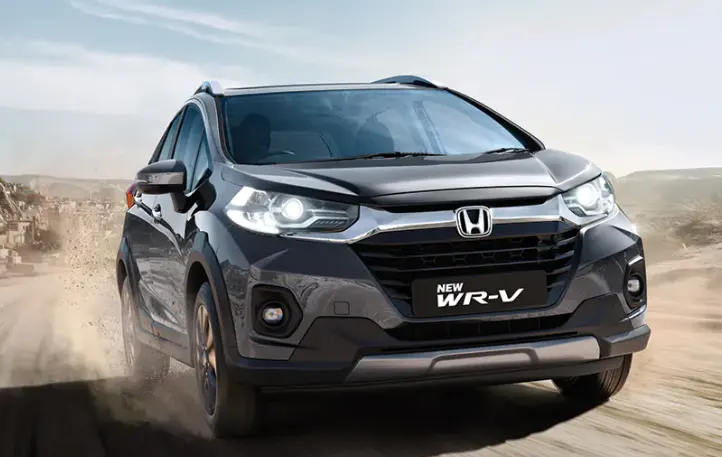
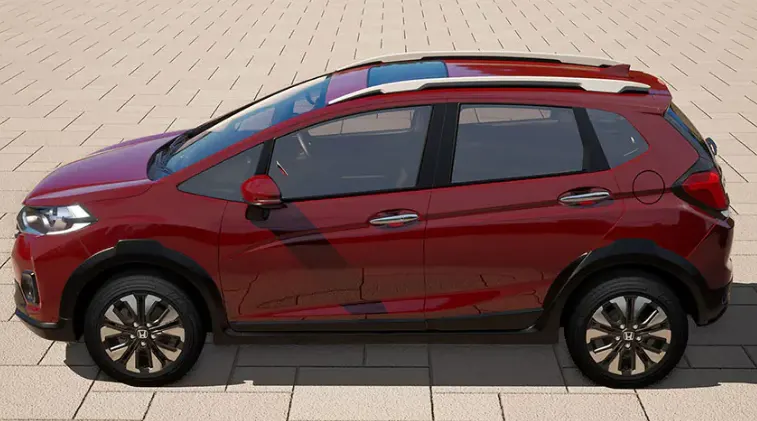
Milage of HONDA WR-V: Price of This Car:
In City: 24Kmpl. Rs. 8.76 Lakh- 11.79 Lakh.
In Highway: 26Kmpl.
Pros:
- High on cabin space and practicality; large 363 litres boot.
- Good visibility and ease of driving.
- Both petrol and diesel engines to choose from.
- Sunroof.
- Dual front air bags.
Cons:
- Misses out on an automatic option.
- The soft suspension is bothersome on windy sections of roads and speeds over 80kmph.
- Rear seats lack armrest, dedicated AC vent and USB port.
- No automic Transmission Variant.
Summary:
Wondering how the insides of the Honda WR-V look like? Get a tour of this car with the 360° degree view of the interior. Enjoy a lifelike view of the interior design of this car. Check out how the manufacturer has utilized the space and how spacious the legroom as well as the headroom are. Get a feel of the quality of the material used and see how the dashboard looks like. Check AC vents, infotainment system and other utility equipment on offer. See if the car offers steering-mounted controls. In a nutshell, this 360° degree interior view walks you through the inside of Honda WR-V. Click anywhere on the image and drag it to the left and right to rotate.
It's overall Engine Efficiency will be 1498CC.
It's a 5 seater capacity holder Car desiging over all it's dimensions.
It's Engine and Power Trasmission Emitting power Ranging from 1.2 litre for petrol(90 PS/110NM) and for Diesel is 1.5 litre(100PS/200NM).
Boot Space of this Honda WR-V is ranges are- 363.
3) TATA NEXON:
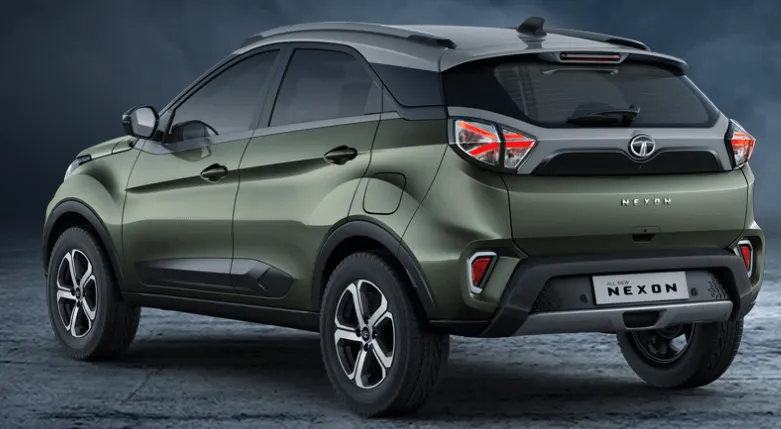
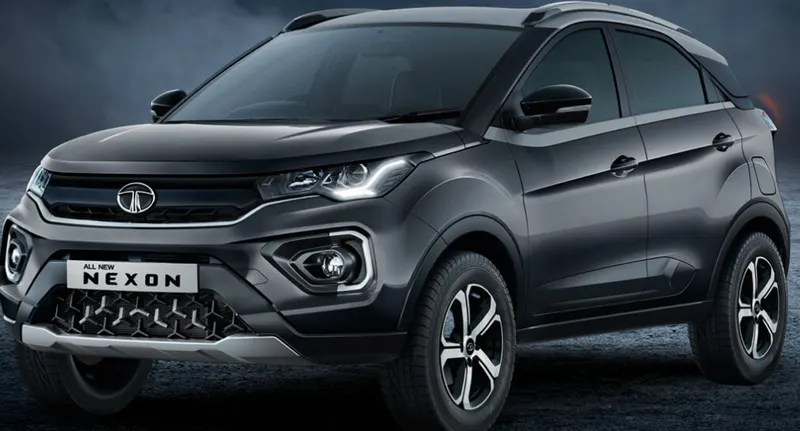
Milage of this Tata Nexon Car: Price of This Car:
In City: 20Kmpl. Rs. 7.28 Lakh- 13.23 Lakh.
On Highway: 22.4Kmpl.
Pros:
1) Handsome Looks.
This iteration of the Tata Nexon gets minor but impactful cosmetic changes as a part of the 2020 model year update. Similar to the electric version of the SUV that we'd seen earlier, this one also gets a revised hood for jacked up muscularity, a tweaked grille, sharper headlamps with tri-arrow pattern DRLs and a new lower grille as well.
A new alloy wheel pattern adds more character, while its revised LED tail lamps give it a distinct look at the back when compared to its older model. All of these aesthetic changes make it look even better and mature than the outgoing model.
2) Impressive Ride Quality:
The new-age TATA cars have set a high benchmark for good ride quality and the NEXON carries forward this popularity. The manufacturer has tuned its suspension to take on our unpredictable road conditions without any hassle. Passengers will be most comfortable as the Nexon absorbs all thunks and thuds from potholes and broken roads, while also being stable over undulations.
It rides quite high off the ground with a clearance of 209mm. This, paired with the 16-inch alloys and a wide and high profile give the Nexon a tall stance. Amongst all compact SUVs, it's got one of the best-in-segment ride qualities at both slow and high speeds.
3) Easy-to-drive with good handling:
The Nexon's steering now provides a better feel and feedback with improved handling as well. It weighs up adequately and feels precise with instant response to the turn-in provided. More importantly, it doesn't make you feel like you are driving a big SUV as minimal driver efforts are required. It's similar to what would be required to drive a hatchback. Furthermore, its compact footprint makes it easy to fit in traffic gaps and doesn't occupy too much space in your parking lot too.
4) Feature-packed:
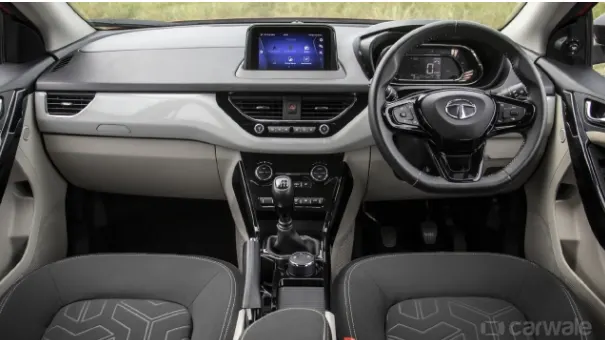
This top-spec XZ(O) variant is handsomely packed with many features. This 2020 Nexon continues with equipment like projector lamps, LED DRLs, LED tail lamps, engine push-start button, touchscreen infotainment system, automatic climate control, cruise control, etc. Remarkably, it now gets added features like a digital instrument cluster, TPMS and a much-in-demand sunroof.
What's more, the carmaker has come up with a new ‘Xpress Cool’ button owing to the hot and humid climatic conditions in India. This helps in cooling the cabin faster with max blower speed and by pulling the driver window down automatically. Needless to mention, the brand’s IRA tech is another USP given the need of connected technology by users.
5) Safety Car With Solid Build Quality:
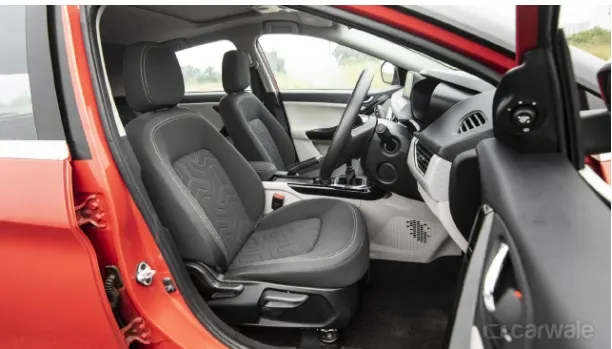
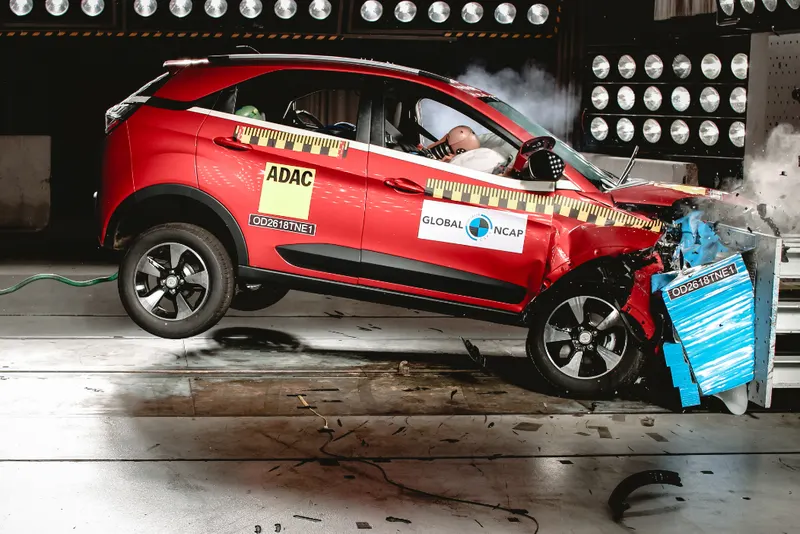
Also, it's not just for the tremendous road presence, but the Nexon has been appreciated for its tough construction as well. The quality of materials used do give it a built-to-last feel. Besides, its robust underpinnings have proved its solid build quality over time. Gladly, the new one also continues to boast of a five-star NCAP safety rating ensuring owners and prospective buyers of a very safe car.
This is backed up by a safety suite of dual-airbags, hill-hold assist, roll-over mitigation, ABS with EBD, traction control and more.
Cons:
1) Uninspiring bottom-end engine performance:
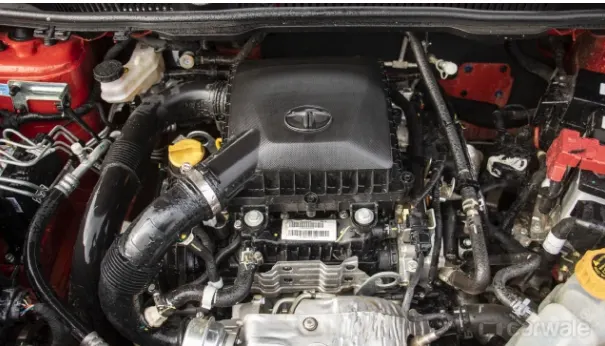
This up-rated turbocharged petrol motor is quite powerful than the one in the older model. However, the jump from 109bhp to 118bhp isn't quite evident from the word go. This mill does take a fair bit of time for the turbo to spool up and power is delivered quite linearly. It's only post 2,000rpm when the motor wakes up and helps the car make progress.As a result, there's no surging ahead even with more throttle inputs at low-range and it's only in the mid-range when you will be able to make use of the power. It might get unnerving for some drivers while overtaking or making a quick sprint.
2) Mediocre fuel Efficiency:
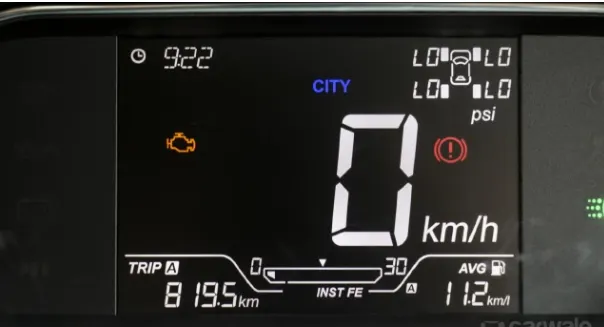
Due to the weak bottom-end engine performance and a kerb weight of 1,260kg, the Nexon ends up gulping down quite a lot of fuel. The constant gear shifts and mashing the throttle pedal quite often to make progress will have a downtrend in fuel efficiency.
This was quite apparent in our real-world fuel economy tests as well considering the SUV returned 13.26kmpl in the city-run and 14.45kmpl on the highway which isn't something remarkable. In fact, it might become a concern for owners expecting a good fuel efficiency from this vehicle.
Crash analysis of Nexon car:
Summary:
Tata Nexon is available in manual and automatic variants. It has a petrol - 1.2L Turbocharged Revotron engine and a diesel - 1.5L Turbocharged Revotorq engine. The petrol variant has an engine capacity of 1199cc, 3 cylinders while the diesel variant has an engine capacity of 1497cc, 4 cylinders. The key specification of Tata Nexon includes multi-drive modes - Eco, City, and Sport.
Tata Nexon specifications include dimensions - length of 3993 mm, the width of 1811 mm, the height of 1606 mm, boot space is 350 l, and ground clearance is 209 mm.
The seating capacity of Nexon is 5 and with a fuel capacity of 44 l. Check out the other technical specifications of Tata Nexon including suspension, transmission, brakes, and other specs. Also, explore Tata Nexon Features to know about safety, design, interior, exterior, and more.
4) MAHINDRA TUV 300:
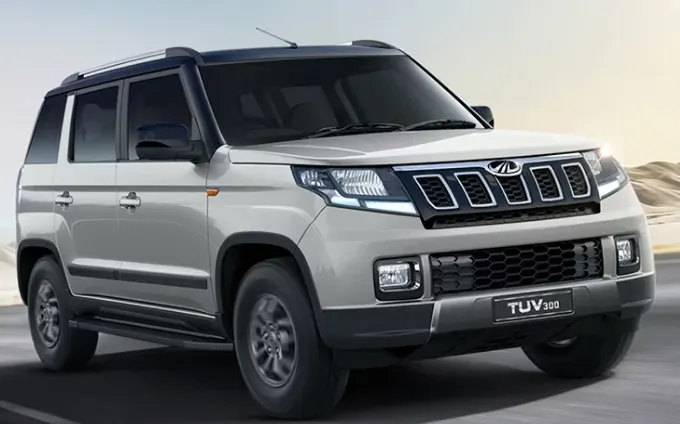
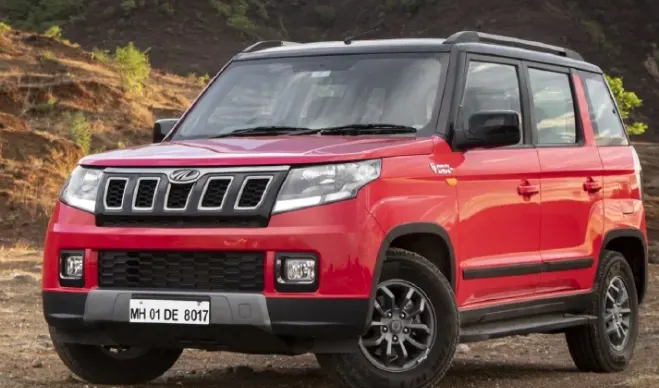
Milage of Mahindra TUV 300 is: Price of Mahindra TUV 300:
In city: 16kmpl. Rs-8.59 Lakh- 10.61 Lakh.
On Highway: 18Kmpl.
Pros of Mahindra TUV 300:
1) Interior Space:
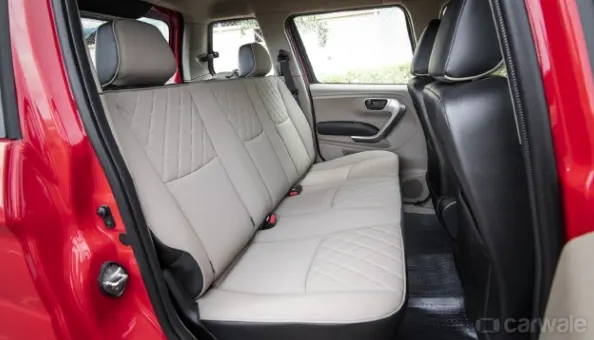
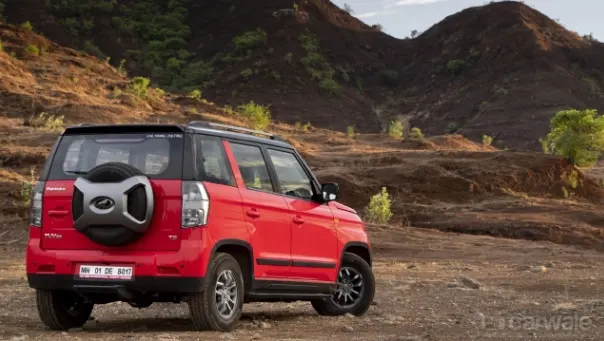
The TUV is one of the few sub-four metre SUVs that can actually seat three abreast at the back without the occupants having to smell each other’s armpits! Even at the front, there’s so much space between the driver and the co-driver that we’d recommend the TUV if you fight with your spouse often. And of course, there’s enough and more headroom in here to stretch even!
The boot too is decently sized. Now, the side opening door isn’t the most practical, and neither is the high loading lip height. But, get past the two, and you can stuff a lot of luggage in there.
2) Cabin Comfort:
The TUV doesn’t move around on the go too much either. Show it broken roads, bumpy roads, or no roads at all, and it would rarely send a rude shock down any of its occupants’ spine. If ever. It does jiggle a bit over bad roads, like most ladder frame SUVs do, but one can easily live with it.
You also get a touchscreen multimedia system. There’s height adjust for the driver. The outside rear view mirrors are electrically powered. And there’s a whole array of cup and bottle holders, and stowage options as well.
3) All Round Visibility:
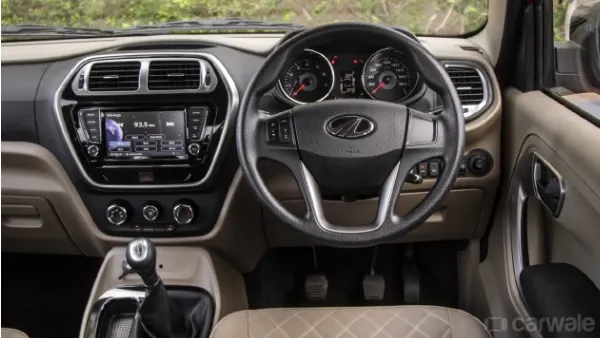
The TUV has great visibility. The large glass area helps. But, it also has a relatively thin A-pillar. Plus with the high seating, the short dashboard, and the squarish but well defined edges, it is very easy to place the TUV in traffic making it quite easy to drive even in chock-o-block traffic.
You also get these huge rear view mirrors, and now there’s a reversing camera to compensate for the high rear windshield and the tail gate mounted spare.
4) Diesel Powertrain:
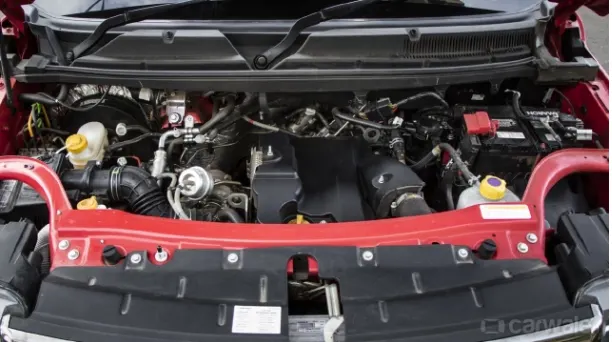
One of the biggest highlights for me when it comes to the TUV300, is its engine. It is different from the one that powers the XUV300. This one is a 1.5litre diesel as well. But, it has three cylinders instead of four. And it makes 100bhp. But more importantly, it produces 240Nm of peak torque from 1600rpm. But it doesn’t seem to have any turbolag! We are in first gear, nowhere near the throttle. And the TUV just picks up its weight and begins motoring effortlessly.
But here’s the beauty of it. We are under 1000rpm, but the moment I get on the throttle, the TUV takes off like it heard a gun go off! This torque and this pull at lower rpm makes the TUV300 a very likeable SUV, be it in the city or on a dirt trail.
Cons for Mahindra TUV 300:
1) Driving Dynamics:
The TUV is a body-on-ladder SUV. So, it’s tall and it’s heavy compared to other sub-four meter SUVs. And it has a slow steering rack. Not surprising then, around a twisty road, it rolls, and its handling isn’t exactly point and shoot precise. It has to be nursed into a corner while it settles under its weight.
But for all its lack of handling prowess, it does have the ability to smother everything on the road. We won’t call the ride pliant, but it does beat the road into submission.
2) Last Row Seating:
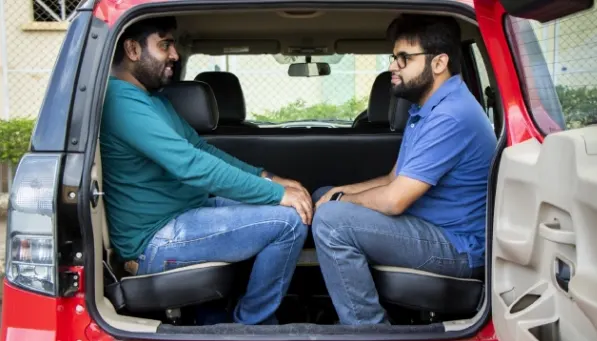
Difficult to get into. No thigh support to speak of. And if you bring in another adult into the scene, well things get uncomfortably close. But most of all, there are no seat belts. So for means and purposes, at least for us, the TUV is only a five-seater.
Specifications of Mahindra TUV 3OO:
Length: 3995mm.
Width: 1835mm.
Height: 1817mm.
Fuel Tank Capacity: 60 litre.
Engine Capacity: 1493cc.
Fuel Type: Diesel.
Seating Capacity: 7 Seater arrangment.
Automotive Brake power system.
Dual air bag including driver and front passenger with high precission occupancy.
Boot Space: 384 Litres.
Number of Cylinders: 3
Torque speed: 240Nm@ 1600-2800 RPM.
Transmission System: 84PS@ 3750 RPM.
Summary:
The design of this Mahindra TUV is relatbly quite good about it's new features and fuel Effieciency of this TUV is good in design. The Overall performance of this TUV is highly appreciable.
The seating arrangement in mahindra TUV is made with 7 member seating and the window specification models are relatively quite good in design with wind can be easily passes through those windows.
The milage of this Mahindra TUV is very less compared to the other vehicles like TATA NEXON, HONDA WR-V AND MARUTI SUZUKI VITARA BREZZA and many more.
CONCLUSION:
Finally I have done a comparision of my selected 4 cars specification based on the requirment for Mr.D.S. Pughazhyendhii and his budget for his range. Finally I came across by understanding the specification of each and every car which gives a proper milage and high safe and secure lifestyle. None of the above cars can be 100% perfect in designing aspirants and there will be some issues disadavantages in the manufacturing process of each and every selected cars.
But by this study ill ensure he should By HONDA WR-V (Diesel Variant) which is compartevely good in design and its milage is also good on highway as well as in city i.e. 24kmpl- 26kmpl.
The Price of this HONDA WR-V is relatevely good and it's under his range of budgets so that it can be affordable and safe and secure for the traveeling purpose as well as his official usage purpose. And every year these engineers are going to change there performance of engine as well as its design specifications to satistfy the customer requirments.