Benchmarking
Benchmarking
In the automotive industry, benchmarking refers to the process of comparing and evaluating a company's products, processes, or performance against those of its competitors or industry leaders. It involves measuring key metrics, studying best practices, and identifying areas for improvement in order to enhance a company's competitiveness and drive innovation.
There are different types of benchmarking used in the automotive industry:
- Product benchmarking: This focuses on comparing the features, specifications, performance, and quality of a company's products with those of its competitors. It helps identify areas where a company's products excel or fall short, enabling them to make necessary improvements.
- Process benchmarking: This involves evaluating the manufacturing processes and techniques employed by industry leaders or competitors. By studying and comparing processes such as assembly, materials handling, quality control, and supply chain management, automotive companies can identify opportunities for optimization, cost reduction, and increased efficiency.
- Performance benchmarking: This type of benchmarking involves measuring and comparing key performance indicators (KPIs) such as production output, cycle time, defect rates, warranty claims, and customer satisfaction. By comparing their performance against industry benchmarks, companies can set performance goals and develop strategies to improve their competitiveness.
- Strategic benchmarking: This focuses on understanding the overall business strategies, market positioning, and innovation practices of successful automotive companies. It involves studying their product development approaches, marketing strategies, organizational structure, and competitive advantages to gain insights and ideas for improving business performance.
Advantages of Benchmarking in the Automotive Industry:
- Performance Improvement
- Competitive Advantage
- Customer Satisfaction
- Innovation and Adaptation
- Cost Reduction
Disadvantages of Benchmarking in the Automotive Industry:
- Limited Scope
- Lack of Contextual Relevance
- Incomplete Transferability
- Overreliance on Competitors
- Data Accuracy and Validity
Here are some of the important segments in a car that are commonly benchmarked in the automotive industry:
Performance: This segment focuses on benchmarking aspects such as acceleration, top speed, handling, and braking performance to assess the overall driving experience.
Fuel Efficiency: Benchmarking fuel efficiency metrics, such as miles per gallon (MPG) or kilometers per liter (KPL), helps evaluate a vehicle's energy efficiency and compare it to competitors.
Safety Features: Benchmarking safety features and technologies, such as crash test ratings, active safety systems (e.g., autonomous emergency braking, lane-keeping assist), and passive safety measures (e.g., airbags, structural integrity), ensures compliance with industry standards and identifies areas for improvement.
Interior Comfort and Ergonomics: This segment involves benchmarking the design, materials, seating comfort, cabin space, and user-friendly interfaces of a vehicle's interior to optimize comfort and convenience for occupants.
Infotainment and Connectivity: Benchmarking infotainment systems, user interfaces, connectivity options (e.g., Bluetooth, Wi-Fi), and integration of smartphone functionalities allows manufacturers to stay competitive in terms of technology and user experience.
Quality and Reliability: Benchmarking quality metrics, such as initial defects per unit (DPU) and long-term reliability, helps identify potential areas for improvement in manufacturing processes, component selection, and overall product reliability.
Exterior Design: Benchmarking the exterior design elements, aesthetics, aerodynamics, and visual appeal of a vehicle against competitors helps in creating distinctive and attractive designs.
Cost and Value: This segment involves benchmarking the cost of production, pricing strategies, and value proposition relative to competing vehicles in the market.
Manufacturing Processes: Benchmarking manufacturing processes, automation levels, efficiency, and cycle times helps identify opportunities for streamlining production and reducing costs.
Environmental Impact: Benchmarking environmental factors, such as carbon emissions, recyclability, and use of sustainable materials, supports the development of eco-friendly vehicles and aligning with global environmental regulations.
Maruti Suzuki Dzire
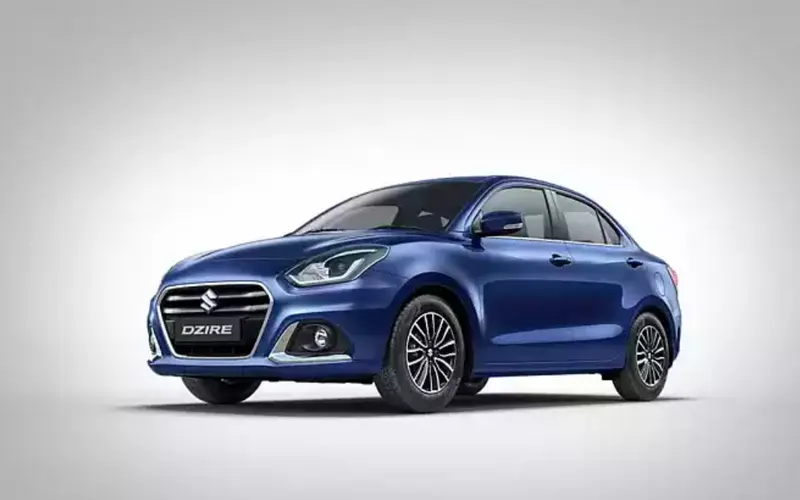
Maruti Suzuki Dzire Key Specifications
The Maruti Suzuki Dzire is priced between ₹6.52 - 9.39 Lakh. It is available in petrol and CNG fuel variants. The car has a seating capacity of 5 people and offers both manual and automatic (AMT) transmission options. It has a fuel tank capacity of 37 liters and provides a mileage of 23-25 km/l, making it an economical choice for fuel efficiency-conscious buyers.
- Offers good power and torque figures
- Decent boot space of 378 litres
- Moderate ground clearance of 163 mm
- Smaller size compared to other options
Honda Amaze:
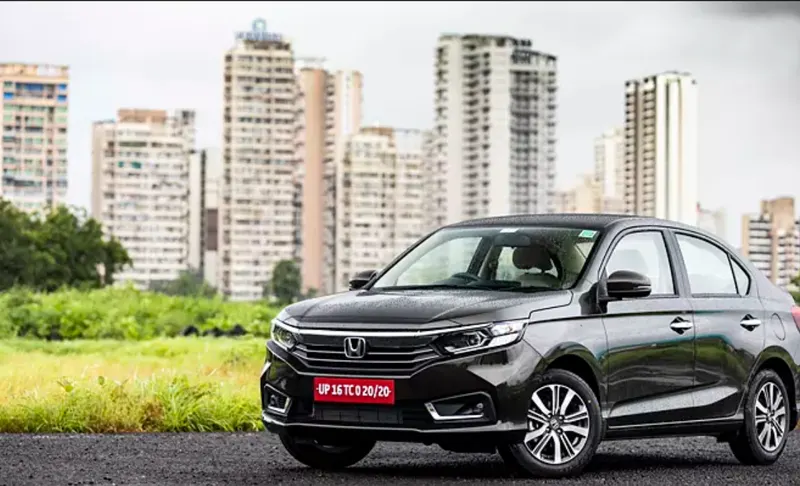
The Honda Amaze is a popular compact sedan offered by Honda. The price of the Honda Amaze ranges from ₹7.07 lakh to ₹9.68 lakh. Please note that car prices may vary depending on the specific variant, location, and any additional features or accessories.
The Honda Amaze is available with a petrol engine. It does not offer a diesel engine option. The mileage of the Honda Amaze petrol model ranges from 18.3 km/l to 18.6 km/l, which may vary slightly depending on driving conditions.
The Honda Amaze has a seating capacity of 5 people, making it suitable for small families or groups. It is available in both manual and automatic (CVT) transmission options, providing flexibility to the buyers.
- Good power and torque figures
- Spacious boot space of 420 litres
- Safety rating of 4 stars (Global NCAP)
Tata Tigor:
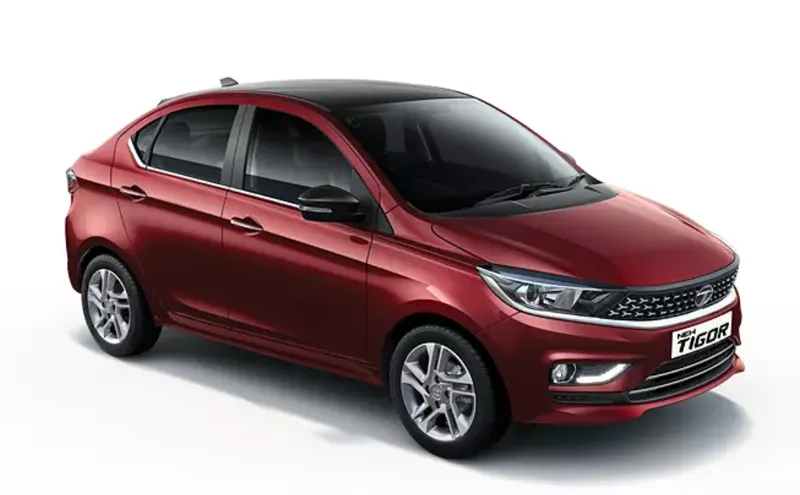
The Tata Tigor is priced between ₹6.30 - 8.90 Lakh. It is available in both petrol and CNG fuel variants. The car offers a mileage range of 19.2 - 26.4 km/l, making it a fuel-efficient choice. It has a seating capacity of 5 people and provides options for both manual and automatic (AMT) transmissions. The Tigor comes with a fuel tank capacity of 35 liters in the petrol variant and a larger 60-liter tank in the CNG variant. With its competitive pricing, fuel options, and decent mileage figures, the Tata Tigor offers a combination of affordability and efficiency in the compact sedan segment.
- Moderate power and torque figures
- Comparable boot space of 419 litres
- Decent ground clearance of 170 mm
- Safety rating of 4 stars (Global NCAP)
Hyundai Aura:
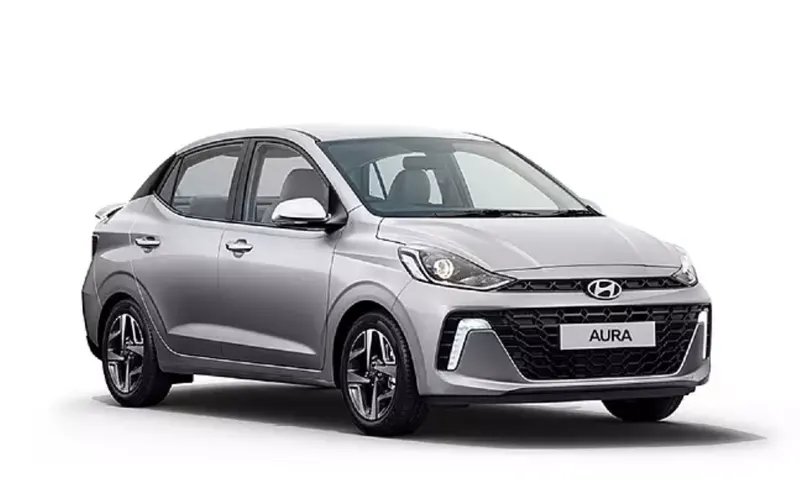
The Hyundai Aura is priced between ₹6.33 - 8.90 Lakh. It is available in petrol and CNG fuel variants. The car has a seating capacity of 5 people and offers both manual and automatic (AMT) transmission options. The petrol variant has a fuel tank capacity of 37 liters, while the CNG variant has a larger 65-liter fuel tank. The Aura provides a mileage of 17.5 - 23 km/l, depending on the engine and transmission chosen. With its competitive pricing, fuel options, and decent mileage figures, the Hyundai Aura is a suitable choice for those seeking a compact sedan.
- Slightly lower power and torque compared to other options
- Good boot space of 402 litres
- Compact size with slightly narrower width
|
Maruti Suzuki Dzire |
Hyundai Aura |
Honda Amaze |
Tata Tigor |
|
|
Fuel Type |
Petrol |
Petrol |
Petrol |
Petrol |
|
Engine Size |
1197 cc |
1197 cc |
1199 cc |
1199 cc |
|
Transmission |
Manual |
Manual |
Manual |
Manual |
|
Power |
89 bhp @ 6000 rpm |
82 bhp @ 6000 rpm |
89 bhp @ 6000 rpm |
84 bhp @ 6000 rpm |
|
Torque |
113 Nm @ 4400 rpm |
114 Nm @ 4000 rpm |
110 Nm @ 4800 rpm |
113 Nm @ 3300 rpm |
|
Safety Rating |
2 Star (Global NCAP) |
2 Star (Global NCAP) |
4 Star (Global NCAP) |
4 Star (Global NCAP) |
|
Boot Space |
378 litres |
402 litres |
420 litres |
419 litres |
|
Ground Clearance |
163 mm |
- |
- |
170 mm |
|
Size |
3995 mm L X 1735 mm W X 1515 mm H |
3995 mm L X 1680 mm W X 1520 mm H |
3995 mm L X 1695 mm W X 1498 mm H |
3993 mm L X 1677 mm W X 1532 mm H |
Considering these factors, the Honda Amaze offers a combination of safety, a well-proportioned size, and decent mileage