Benchmarking
AIM:- Perform benchmarking to recommend Mr D.S. Pughazhyendhii a single suitable car for his Family.
REQUIREMENT
Mr D.S. Pughazhyendhii is a married man who lives in Bangalore which is a highly crowded city. His Family comprises five members including his wife, a five-year-old boy, his father, and his mother. He visits his native place Madurai which is 500 km away from Bangalore once a month. Also, he will be using his car to commute to his office. His budget falls between 8 to 10 lakhs on the road. Please suggest to him options so that he will buy a good car for his family.
Note: Pughazhyendhii is fond of big cars
WHAT IS BENCHMARKING?
Benchmarking is comparing the performance of a firm's products, services, or procedures to those of another company regarded as the best in the industry, or "best in class." Benchmarking is used to find internal possibilities for improvement. You may adopt changes that will generate substantial benefits by analysing firms with outstanding performance, breaking down what makes such superior performance feasible, and then comparing those procedures to how your business runs.
This might include modifying a product's features to more closely match a competitor's offering, altering the scope of services you provide, or implementing a new customer relationship management (CRM) system to enable more personalised contacts with clients.
There are two types of improvement opportunities: continuous and dramatic. Continuous improvement is gradual, requiring just little tweaks to yield significant gains. Only by reengineering the whole internal work process can dramatic improvements be realised.
BENCHMARKING STEP-BY-STEP
Benchmarking is a five-step technique that is basic but detailed:
- To benchmark, select a product, service, or internal department.
- Determine the best-in-class corporations to benchmark against and which organisations to compare your company to.
- Collect data about their internal performance, or metrics.
- Compare the data from both organisations to find performance gaps in your firm.
- Adopt the methods and practices used by best-in-class performers.
Benchmarking will show you which improvements will make the biggest difference, but it is up to you to implement them.
You must have quantifiable data to analyse to benchmark anything. This entails dissecting internal processes to compute performance measurements. Only quantitative information can be accurately compared, therefore quantifying everything.
BENCHMARKING BENEFITS
Benchmarking provides several advantages in addition to assisting businesses in being more efficient and lucrative.
- By identifying areas in your business where you want to improve and evaluating your current performance against rivals, your company may seek to increase its execution tenfold. Using benchmarking in this manner has enabled organisations to acquire strategic advantages over competitors while also increasing industry averages.
- Enhancing employee comprehension of cost structures and internal procedures
- In order to become more competitive, encourage teamwork and collaboration.
- Increasing knowledge with key performance measures and opportunities for improvement across the organisation.
Benchmarking, in essence, teaches employees how one tiny element of a company's procedures or goods may be the key to great success, just as one employee's efforts can contribute to a big win.
SUGGESTED CARS
- FORD ECO SPORT
- TATA NEXON
- MAHINDRA XUV 300
- HYUNDAI VENUE
MODELS AND SPECIFICATIONS
1. FORD ECO SPORT
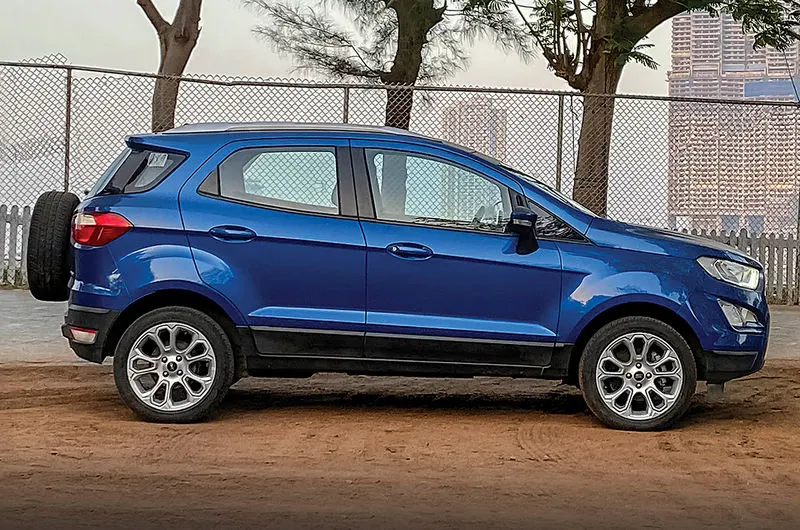
The Ford Ecosport is regarded as one of the best sub-4m small SUVs currently on the market in India. The vehicle has strong and polished engines, as well as an aggressive and attractive design language. If you're in the market for a new small SUV, you might be thinking if the Ecosport is the best of the bunch.
|
MODELS / SPECIFICATIONS |
FORD ECO SPORT |
|
ARAI Mileage |
21.7kmpl |
|
Engine Displacement (cc) |
1498 |
|
Max Torque (nm@rpm) |
215Nm@1750-2500rpm |
|
Transmission Type |
Manual |
|
Fuel Tank Capacity |
52 |
|
Max Power (bhp@rpm) |
98.63bhp@3750rpm |
|
Seating Capacity |
5 |
|
Boot Space (Litres) |
352 |
|
Body Type |
SUV |
|
Safety |
4 stars NCAP rating |
|
Price |
₹ 7.91 Lakh to ₹ 11.70 Lakh |
|
Pros |
|
|
Cons |
|
2. TATA NEXON
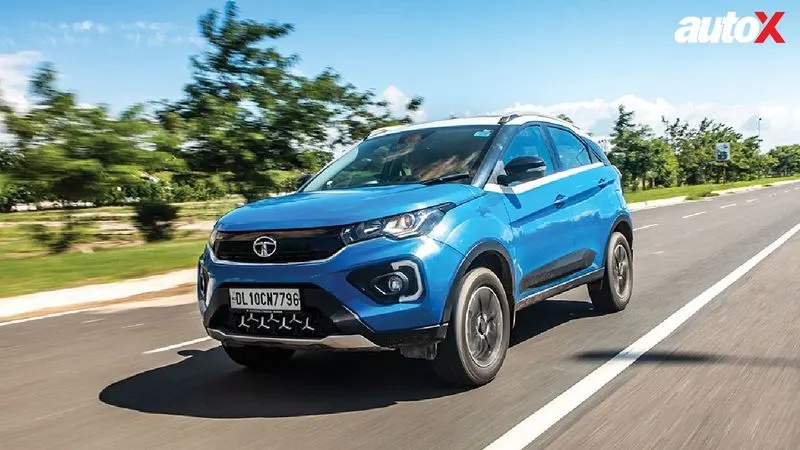
During an unlucky collision, Nexon's high-strength steel construction absorbs impact energy and protects the passenger. A boundary-pushing SUV design that blends the utility of an SUV with the flair of a sports coupe. The Nexon has vented Leatherette seats in the front to keep you comfy no matter what the weather is like outside.
|
MODELS / SPECIFICATIONS |
TATA NEXON |
|
ARAI Mileage |
21.5 kmpl |
|
Engine Displacement (cc) |
1497 |
|
Max Torque (nm@rpm) |
260Nm@1500-2750rpm |
|
Transmission Type |
Automatic |
|
Fuel Tank Capacity |
44 |
|
Max Power (bhp@rpm) |
108.5bhp@4000rpm |
|
Seating Capacity |
5 |
|
Boot Space (Litres) |
350 |
|
Body Type |
SUV |
|
Safety |
16.06/17 |
|
Price |
₹ 7.80 Lakh to ₹ 14.30 Lakh |
|
Pros |
|
|
Cons |
|
3. MAHINDRA XUV 300
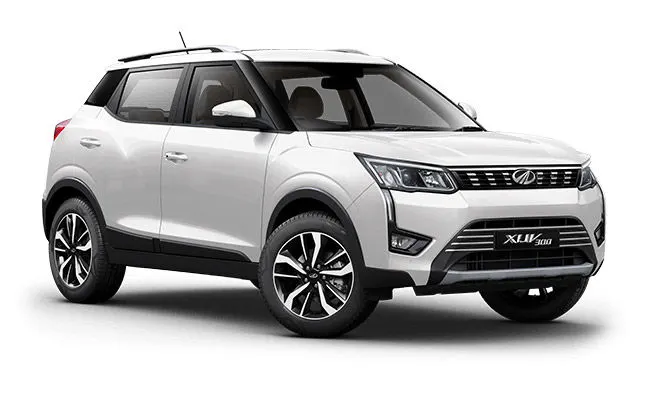
The Mahindra XUV 300 comes with one diesel engine and one petrol engine. The diesel engine has 1497 cc. It comes with both manual and automatic gearbox options. The XUV300 has a mileage range of 16.5 to 20.1 kmpl depending on the version and fuel type. The XUV300 is a five-seater four-cylinder vehicle with a length of 3995mm, a width of 1821mm, and a wheelbase of 2600mm.
|
MODELS / SPECIFICATIONS |
MAHINDRA XUV 300 |
|
ARAI Mileage |
20.0 kmpl |
|
Engine Displacement (cc) |
1497 |
|
Max Torque (nm@rpm) |
300Nm@1500-2500rpm |
|
Transmission Type |
Automatic |
|
Fuel Tank Capacity |
42 |
|
Max Power (bhp@rpm) |
115.05bhp@3750rpm |
|
Seating Capacity |
5 |
|
Boot Space (Litres) |
257 |
|
Body Type |
SUV |
|
Safety |
16.42/17.00 |
|
Price |
₹ 8.41 Lakh to ₹ 14.60 Lakh |
|
Pros |
|
|
Cons |
|
4. HYUNDAI VENUE
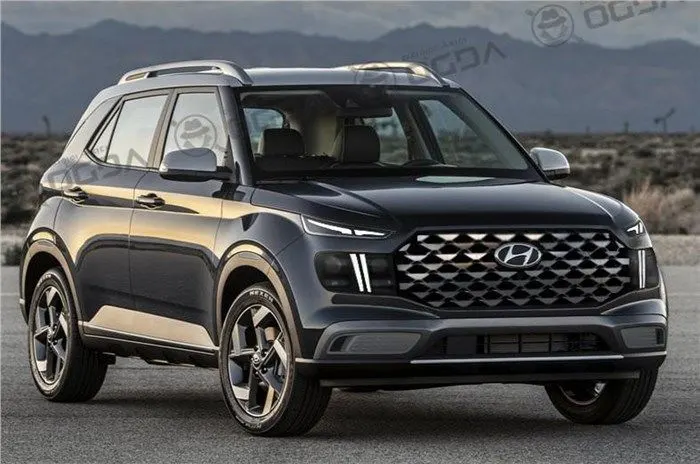
The Venue fits within the sub-4-metre SUV category in the Indian market, benefiting from tax breaks for vehicles lower than 4 metres. The Hyundai Venue received a Top Safety Pick Key award from the IIHS, while the NHTSA rated it four out of five stars for safety, with one point subtracted for rollover and front risk ratings of four stars.
|
MODELS / SPECIFICATIONS |
HYUNDAI VENUE |
|
ARAI Mileage |
18.14kmpl |
|
Engine Displacement (cc) |
998 |
|
Max Torque (nm@rpm) |
171.6Nm@1500-4000rpm |
|
Transmission Type |
Automatic |
|
Fuel Tank Capacity |
45 |
|
Max Power (bhp@rpm) |
118.35bhp@6000rpm |
|
Seating Capacity |
5 |
|
Boot Space (Litres) |
350 |
|
Body Type |
SUV |
|
Safety |
4 stars NCAP rating |
|
Price |
₹ 7.72 Lakh to ₹ 13.18 Lakh |
|
Pros |
|
|
Cons |
|
COMPARISON
|
MODELS / SPECIFICATIONS |
FORD ECO SPORT |
TATA NEXON |
MAHINDRA XUV 300 |
HYUNDAI VENUE |
|
ARAI Mileage |
21.7 kmpl | 21.5 kmpl | 20.0 kmpl | 18.14 kmpl |
|
Engine Displacement (cc) |
1498 | 1497 | 1497 | 998 |
|
Max Torque (nm@rpm) |
215Nm@1750-2500rpm |
300Nm@1500-2500rpm |
300Nm@1500-2500rpm | 171.6Nm@1500-4000rpm |
|
Transmission Type |
Manual | Automatic | Automatic | Automatic |
|
Fuel Tank Capacity |
52 | 44 | 42 | 45 |
|
Max Power (bhp@rpm) |
108.5bhp@4000rpm | 108.5bhp@4000rpm | 115.05bhp@3750rpm | 118.35bhp@6000rpm |
|
Seating Capacity |
5 | 5 | 5 | 5 |
|
Boot Space (Litres) |
355 | 350 | 257 | 350 |
|
Body Type |
SUV | SUV | SUV | SUV |
|
Safety |
4 stars NCAP rating | 16.06/17.00 | 16.42/17.00 | 4 stars NCAP rating |
CONCLUSION
Mr D.S. Pughazhyendhii's family should choose the Tata Nexon, which is an amazing product and the safest automobile in its class. It is also a good value product with class-leading features.