Benchmarking
Benchmarking
Benchmarking in the automobile industry Benchmarking involves a structured comparison between similar products, services or processes on some dimensions of performance. For example it can be used to compare the availability and delivery of features in a product and in this form often provides the basis of consumer tests and reviews. These look at products and services and provide recommendations based on which is best or some form of ranking amongst competitors. It is particularly useful when comparing not only performance but also practice – in other words what do the different organizations do to enable that performance to be delivered? And applied in this way it is a powerful tool in process innovation sin e studying how the ‘best’ achieve their performance can provide powerful clues for changing the way processes operate. Process benchmarking of this kind can operate at several levels:
• Between similar processes in the same factory or service branch
• Between different factories or service branches
• Between different competing organizations
• Between different sectors using the same process
Whilst if offers a significant learning opportunity benchmarking between competing organizations is harder than the other three because competitors do not want to disclose their process information since it is a source of competitive advantage to tem. So benchmarking of this kind often involves a third party who can collect the data, make the comparison and provide feedback but all on a confidential basis.
The vehicle benchmarking considers 10 main attributes. The 10 main attribute are as follows:
- Performance
- Driveability
- Advanced Driver Assistance Systems (ADAS)
- Sound / NVH
- RDE: CO2 / Real life fuel consumption
- Pollutant emissions
- Friction
- Thermal, energy management
- Vehicle dynamics, handling
- Ride Comfort
Applications:
- Information about best of class behavior
- Development targets for new models
- Basis for model revisions
Full Vehicle Benchmarking
Problem Definition
To Compare the physical Vibration test results and arrive at a Finite Element Model which matches the Physical test results. Using this as reference, the customer wants to run reliable tests using the simulation technique. The main requirement is the achieve complete NVH analysis of the BIW along with the cross-members. This would include a variety of different steps such as 3D scanning, reverse engineering, vibration testing, CAE analysis, material testing, obtaining data regarding the mechanical properties of each part after material testing, and finally BOM has to be prepared.
Scope of work
The Scope of work that we had accepted includes
•Full Vehicle Teardown & Teardown documentation
•Stagewise 3D Scanning with necessary referencing for part level scanning & alignment.
•Creation of Level wise Bill of Materials to correlate sub assembly modeling & Assemblydocumentation, Material composition analysis & Grade identification, Suggestion of Alternatematerials, Correlation of Grade physical properties with actually measured properties on critical parts.
Tools Used for specific activities
The tools used during this process were :
1.COMET L3D blue light scanner : Scanning is the process of capturing a multiple number ofpoints from the surface of the part and forming point cloud data which later after processing is used asan STL file to do reverse engineering(CAD modeling).
2.Geomagic Design-X 3D software : This software is used for reverse engineering. With the help ofthis software a cad model is prepared from the STL file.
3.Solid Works : This software is used for assembly alignment.
4.Mechanical tools such as grinding machine, drilling machine, gas cutter, hammer, chisel, etc.
5.Vibration testing equipment kit.
6.Spectrometer : This machine is used for material testing(chemical composition).
7.Universal Testing Machine : This machine is used to obtain the value for tensile strength, yieldstrength, and elongation.
8.Total Materia : This tool is used to obtained the grade of the material according to their chemicalcomposition as well as the mechanical properties of the material.
CASE STUDY FOR BENCHMARKING TO BUY A PERFECT CAR FOR FAMILY
CASE
Mr. D.S. Pughazhyendhii is a married man who lives in Bangalore which is a highly crowded city. His Family comprises five members including his wife, five-year-old boy, his father, and his mother. He visits his native place Madurai which is 500kms away from Bangalore once in a month. Also, he will be using his car to commute to his office. His budget falls between 8 to 10 lakhs on road.
OBJECTIVE
Benchmarking the vehicles in markets according to cutomer's needs
Study
As per cutomer needs it would be best for him to go for compact SUV as it is a class of small sports utility vehicle bigger than the mini SUVs but smaller than mid sized SUVs.As compact SUV's are taller than the hatchbacks and the sedans, you sit at a higher height. This helps you get a better view of the road. This is advantageous especially in crowded areas, where negotiating through other road users gets a bit tricky. A height advantage lets you have a better view of your surroundings. So the compact SUV would be a better option for the cutomer as he has to use it for dauly commute in a crowded city Bangalore.users can further boost the luggage carrying capacity through flexible seating options that these vehicles provide.
BENCHMARKING OF VARIOUS COMPACT SUVs IN MARKET
- HYUNDAI VENUE
- MARUTI SUZUKI VITARA BREZZA
- KIA SONET
- TATA NEXON
1.Hyundai venue
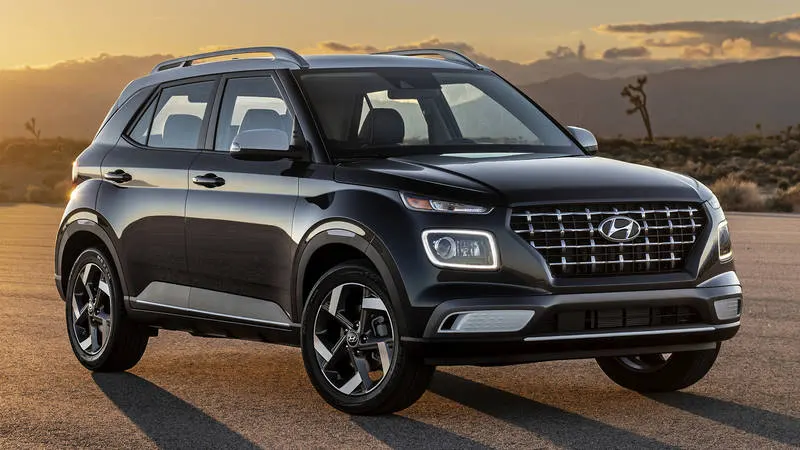
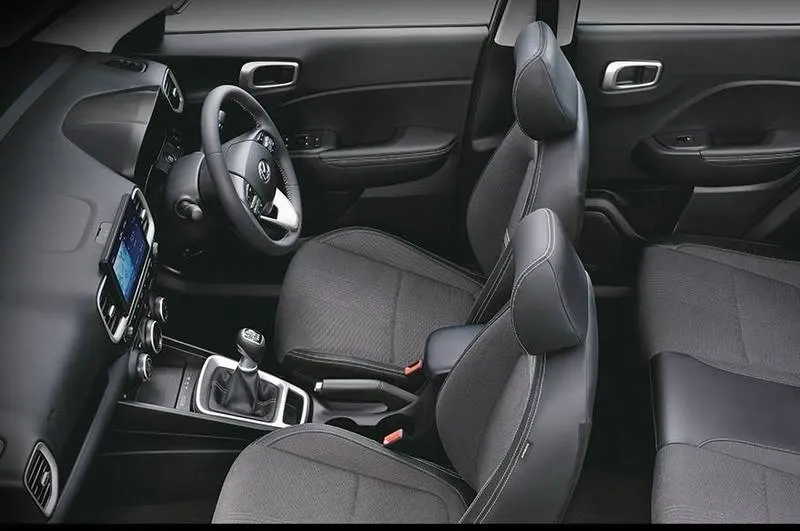
The Hyundai Venue is the latest entrant to the sub-4 metre compact-SUV. The Venue follows Hyundai`s latest design language, which includes the signature hexagonal grille up front. The Venue also features dual-headlamp clusters, with the sleek light strip on top for the turn indicators and the main headlamp cluster with the integrated LED DRLs at the bottom.Inside, the Hyundai Venue receives a blacked-out cabin. The dashboard does however feature silver accents surrounding the central console, the AC vents and also the steering wheel. These silver accents make the interiors of the Venue feel a bit more premium. The central console also houses the large eight-inch touchscreen infotainment HD display
The price of Hyundai Venue starts at Rs. 6.75 Lakh and goes upto Rs. 11.65 Lakh. Hyundai Venue is offered in 19 variants - the base model of Venue is E and the top variant Hyundai Venue SX Plus Sport DCT which comes at a price tag of Rs. 11.65 Lakh
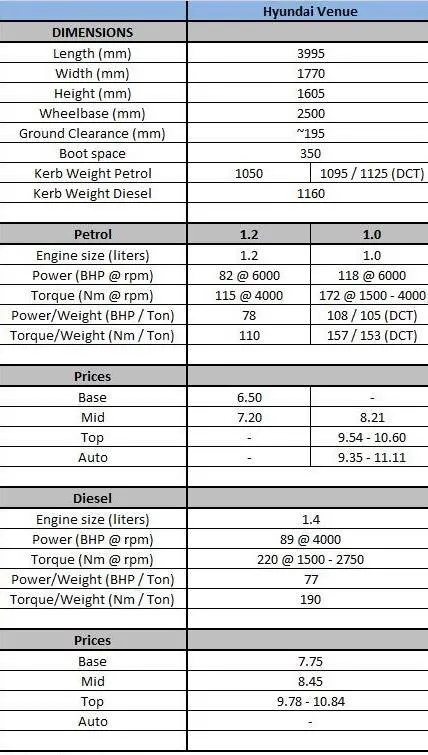
Pros
- First-in-class connectivity features.
- Quality interiors coupled with long features list.
- It is the only DCT automatic in the segment
CONS
- Cabin space isn’t as generous as the competitors.
- 1.2-litre petrol only available in entry-level trims
- Top-spec variants are too expensive
2.Maruti suzuki vitara brezza
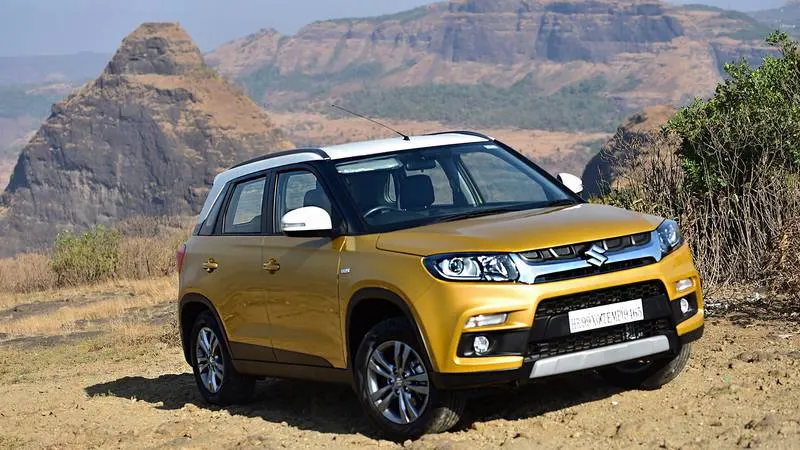
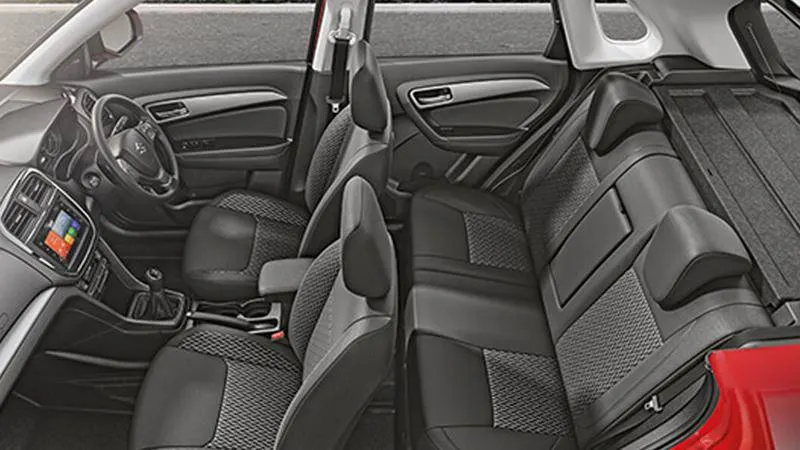
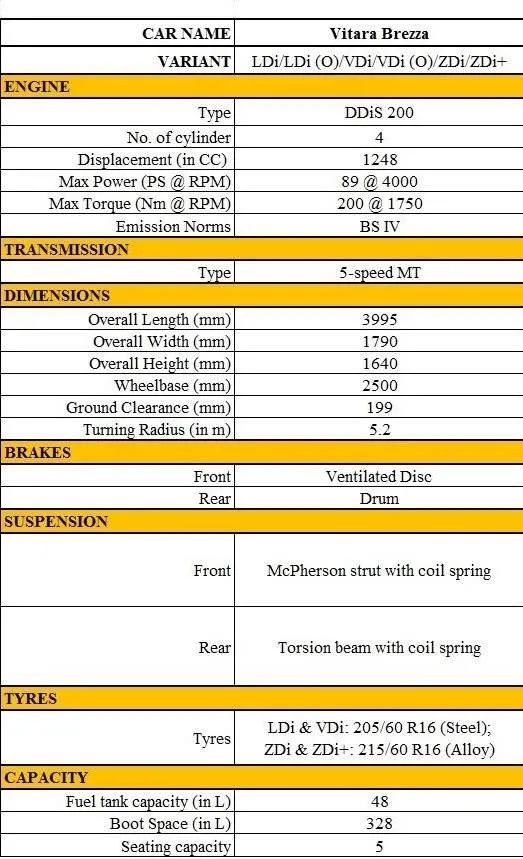
The compact SUV has been a hit from day one. 2020's facelift brings in mildly refreshed styling but marks a major change under the bonnet. The Brezza's 1.3-litre diesel engine has made way for a BS6-compliant 1.5-litre petrol unit. Now a petrol-only model, the Vitara Brezza is available with 5-speed manual and 4-speed torque converter auto transmission options. Curiously, Suzuki's efficiency-enhancing SHVS mild-hybrid tech is only part of the package on the automatic version of the Brezza. Commendably, the Vitara Brezza has been rated 4 stars by Global NCAP on adult occupant protection.
The price of Maruti Vitara Brezza starts at Rs. 7.39 Lakh and goes upto Rs. 11.40 Lakh. Maruti Vitara Brezza is offered in 9 variants - the base model of Vitara Brezza is LXI and the top variant Maruti Vitara Brezza ZXI Plus AT Dual Tone which comes at a price tag of Rs. 11.40 Lakh
Pros
- Smooth petrol engine is relaxing and fun!
- Comfortable ride quality. Tackles bumps, potholes much better.
- Spacious cabin for a family of five. Ample boot space too
Cons
- Old-school 4-speed automatic feels slow on inclines and highways.
- Missing features: sunroof, rear-AC vents, side and curtain airbags.
- No option of a diesel engine.
3.Kia sonet
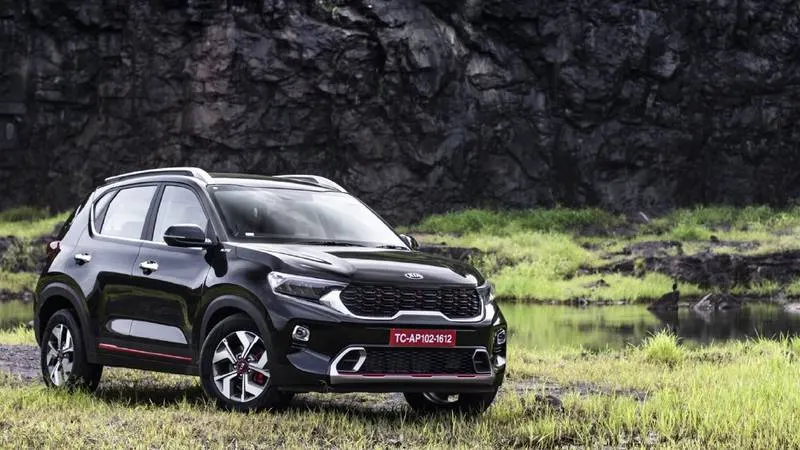
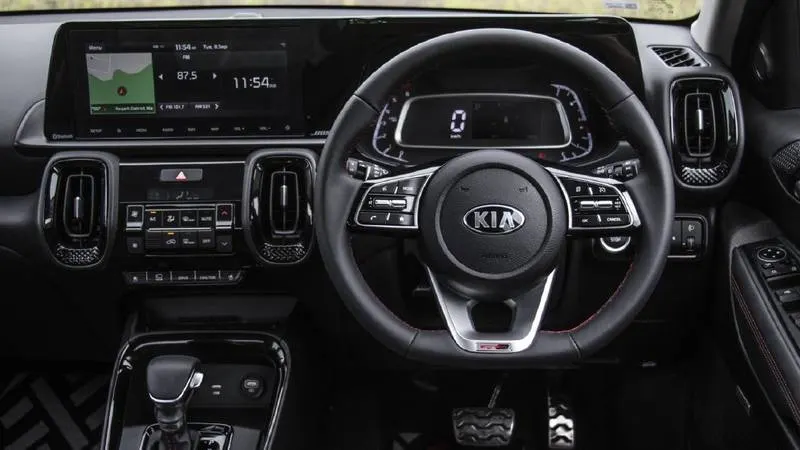
Kia has introduced its first sub-4m SUV in the country, dubbed as the Sonet. The Kia Sonet shares its underpinnings and its powertrains with its cousin, the Hyundai Venue. So much so, the Kia Sonet price actually puts it in the crosshairs of its cousin sibling.However, the two Korean firms have taken a very different approach with all of its siblings, and, as a result, the Kia Sonet has little in common with the Hyundai Venue. Here’s what makes it an interesting model in the sub-4m SUV space.
Kia Sonet price start at ₹ 6.71 Lakh and goes up to ₹ 11.99 Lakh. Check out the entire Kia Sonet variants on-road price in India. Get more info on Kia Sonet new models, videos, latest news, and the up-to-date Sonet four wheeler ex-showroom price
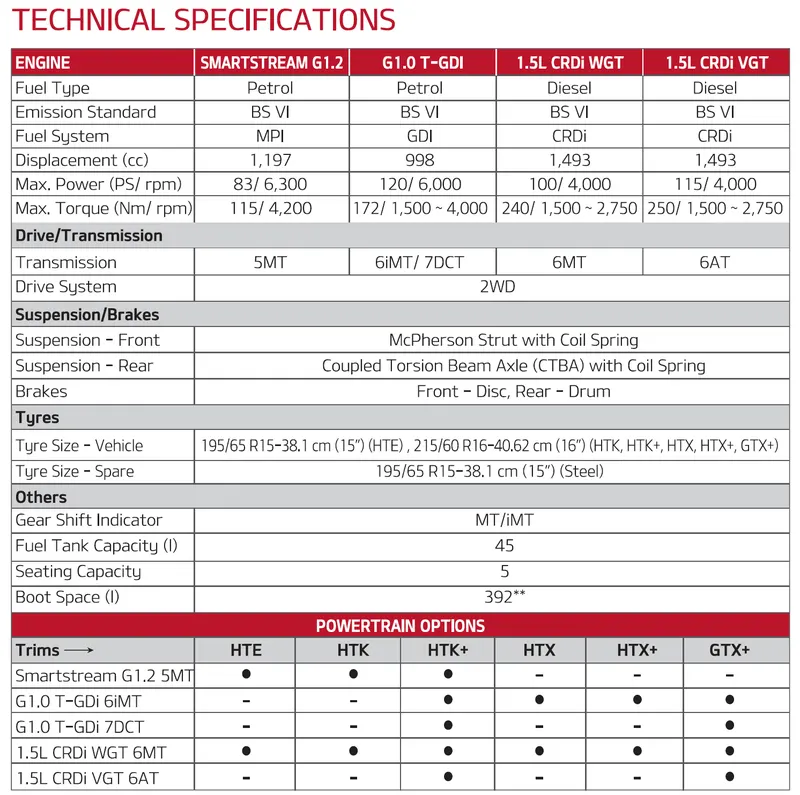
The Sonet comes powered with three engines. The entry-level variants are powered by a 1.2-litre four-cylinder petrol unit, which makes 82bhp and 115Nm of torque and comes mated to a sole 5-speed manual gearbox. The Sonet also gets the option of a turbo petrol engine, which is the same 1.0-litre T-GDI unit as in the Venue, good for 118bhp and 172Nm of torque. At the time of launch, this only comes mated to a 6-speed iMT gearbox and a 7-speed DCT.
The diesel power comes from a 1.5-litre four-cylinder engine, which makes 99bhp and 240Nm in combination to a 6-speed manual gearbox, while it produces 113bhp and 250Nm of torque when paired to a 6-speed torque converter unit
Pros
- Flamboyant styling
- Feature loaded cabin
- Loads of Powertrain options
Cons
- Slightly stiffer ride quality
- Second row seat isn’t spacious
- No diesel-iMT combination
4.Tata nexon
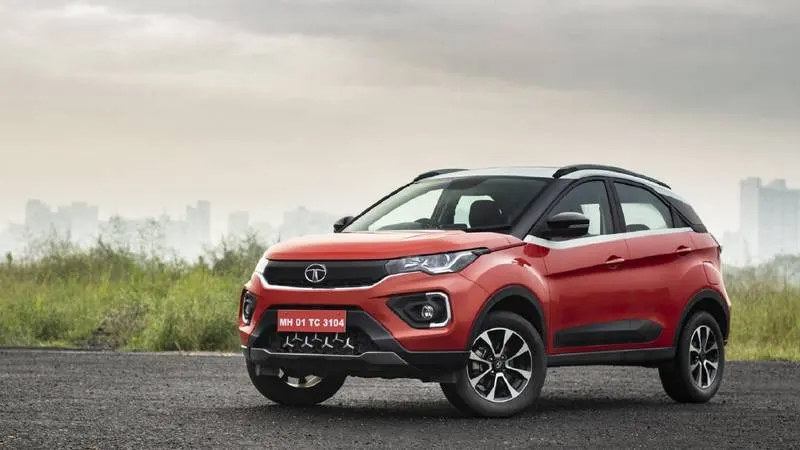
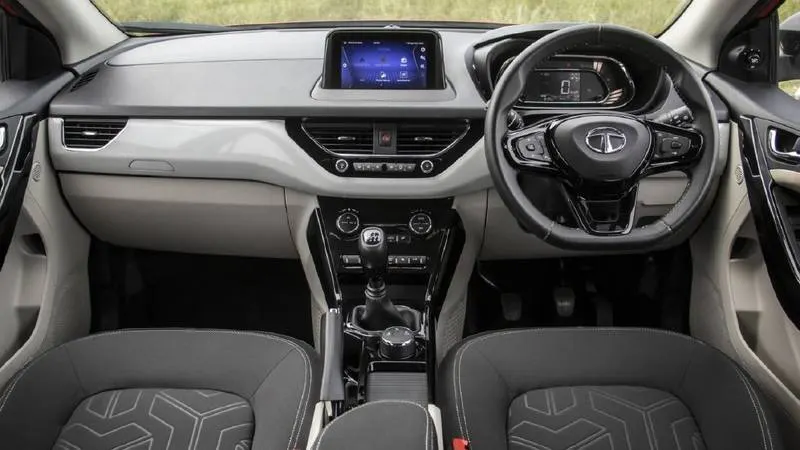
The attractive Tata Nexon is definitely the value for money proposition in this segment. And, the keen pricing and eye-catching styling are not the only things that make this Tata tempting. Its diesel engine is capable, there’s a good balance between ride and handling and the cabin space is surprisingly roomy. There’s also plenty of kit on offer. Fit and finish though largely good
The price of Tata Nexon starts at Rs. 6.99 Lakh and goes upto Rs. 12.70 Lakh. Tata Nexon is offered in 36 variants - the base model of Nexon is XE and the top variant Tata Nexon XZA Plus DT Roof (O) Diesel AMT which comes at a price tag of Rs. 12.70 Lakh
Pros
-
Has 5-star Safety rating from Global NCAP
-
Gets a spacious cabin with an optional sunroof
-
Gets both petrol and diesel engine option
Cons
-
Manual gearbox is a bit clunky and unrefined
-
Petrol engine has noticeable turbo lag in lower revs
-
Cabin plastic quality not that great
VERDICT
After comparisons of cars from various points of view I would recommend "TATA NEXON " for these reasons
- Very well-priced for what it offers. Undercuts all rivals.
- New sharper styling makes the new Nexon look upmarket.
- Well-sorted suspension definitely make this compact SUV very enticing.
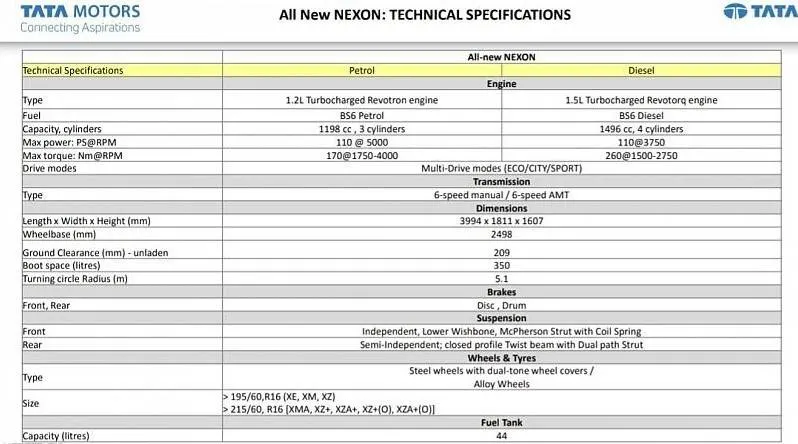
- Nice, spacious cabin with comfortable seats. You get a practical 350-liter boot too
- Five Star G-NCAP safety rating
- Balanced road manners for such a tall car. Fine EPS & 209 mm of ground clearance
I hope Mr. D.S. Pughazhyendhii will have a safe, happy rides and will enjoy the Nexon journey