Benchmarking
BENCHMARKING:
- Benchmarking is a process where you measure your company’s success against other similar companies to discover if there is a gap in performance that can be closed by improving your performance.
- Studying other companies can highlight what it takes to enhance your company’s efficiency and become a bigger player in your industry.
BENEFITES OF BENCHMARKING:
Combetitive Analysis
- By identifying areas you wish to improve on in your business and benchmarking your existing performance against competitors, your business can strive to enhance your execution tenfold.
- Using benchmarking this way has allowed businesses to gain strategic advantages over competitors and grow industry averages.
Monitor Performance
- Benchmarking involves looking at current trends in data and projecting future trends depending on what you aim to achieve. In order to know you have been successful, benchmarking needs to be a continuous process. Monitoring performance is an inherent characteristic of it.
Continuous Improvement
- As well as monitor performance, continuous improvement is an essential attribute of benchmarking. This is because the aim of benchmarking is to improve a certain element of a business.
- This improvement should not merely be something that improves once and is forgotten, but something that improves over time and is continuous.
Planning and Goal setting
- Once benchmarking has been carried out, goals and performance metrics are set in order to improve performance. These goals are new, more competitive targets for a company but they must be achievable.
- If goals are unrealistic to achieve teams become demotivated and goals are destined to remain unfulfilled.
BENCHMARKING PROCESS:
Planning
- The first stage of benchmarking is the most importent in the process Planning includes highlighting what you want to improve, who you will benchmark yourself against, and how you envisage success.
- Only once this step has been completed will you be able to move onto the next step as the results of planning will focus on the information you need to collect and what success will look like.
Collection of Information
- After planning, benchmarking is about collecting information on your processes and how competitors do them. If you are looking to improve your customer service satisfaction rating you should understand the processes involved in the department, how calls and communication are dealt with, and also how it differs from your competition.
- Maybe you can talk to someone in another call center, or call the center directly to gain first-hand knowledge of their processes. At this point, it is important to gather as much information as possible.
Analysis of Data
- Once you feel you have all the information you can gather, you can start to plot it and begin to understand the shortcomings you may have. It is important to remember at this point in the process that no business is perfect and you must have an open mind to be able to analyze information objectively.
- Once findings start to be uncovered you can draft a report and start discussing the next steps to achieve better performance in this area.
BENCHMARKING EXAMPLE:
Process Benchmarking:
- This type of benchmarking helps you to better understand how your processes compare to others in your industry. By looking at other companies in the industry you can improve your processes to make them more efficient and cost-effective.
Strategic Benchmarking:
- Strategic benchmarking, similar to process benchmarking, is all about improving parts of your company through looking at yours in the industry. Strategic benchmarking relates to strategy and how to create a strategy that will allow you to be more competitive in your area.
Performance Benchmarking:
- Performance benchmarking is the hardest process to improve as it involves learning about competitor performance metrics and procedure and also making changes to processes within your business on the lower levels.
- Introducing new processes is a challenging action in any business as it requires buy-in from many different levels in the company. Performance benchmarking can uncover findings that might not be possible to implement in the business without creating a long-term change plan.
- These can be also the most effective and successful changes for a company.
1.Renault Kiger RXZ
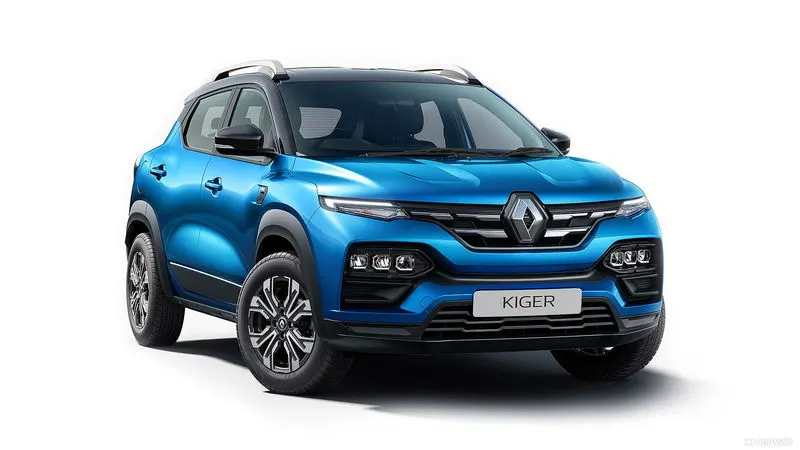
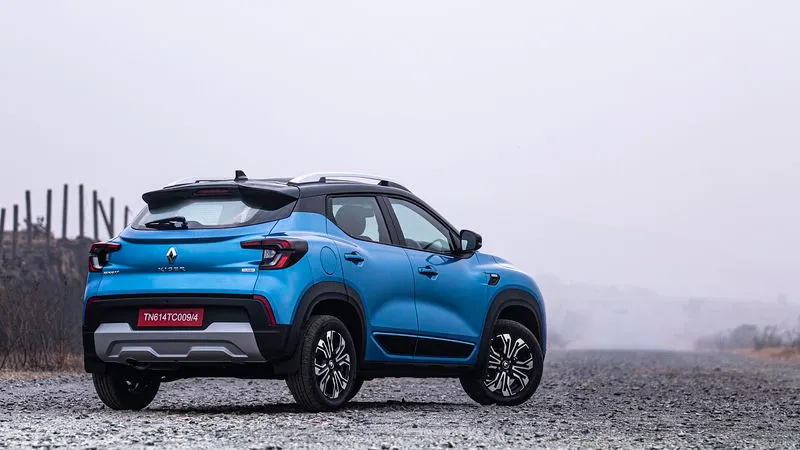
Renault Kiger RXZ Prices: The price of the Renault Kiger RXZ in New Delhi is Rs 8.39 Lakh (Ex-showroom).
Renault Kiger RXZ mileage : It returns a certified mileage of 19.17 kmpl.
Renault Kiger RXZ Colours: This variant is available in 9 colours: Moonlight Silver, ICE Cool White, Mahogany Brown, Caspian Blue, Caspian Blue With Mystery Black, Moonlight Silver With Mystery Black, Radiant Red With Mystery Black, Metal Mustard With Mystery Black Roof and Stealth Black.
Renault Kiger RXZ Engine and Transmission: It is powered by a 999 cc engine which is available with a Manual transmission. The 999 cc engine puts out 71.01bhp@6250rpm of power and 96Nm@3500rpm of torque.
Renault Kiger RXZ vs similarly priced variants of competitors: In this price range, you may also consider
Nissan Magnite XV Premium, which is priced at Rs.8.38 Lakh. Tata Punch Creative, which is priced at Rs.8.37 Lakh and Renault Triber RXZ Dual Tone, which is priced at Rs.7.99 Lakh.
Kiger RXZ Specs & Features: Renault Kiger RXZ is a 5 seater Petrol car. Kiger RXZ has Multi-function Steering Wheel,Power Adjustable Exterior Rear View Mirror,Touch Screen,Automatic Climate Control,Engine Start Stop Button,Anti Lock Braking System,Alloy Wheels,Power Windows Rear,Power Windows Front,Wheel Covers
| ARAI Mileage | 19.17 kmpl |
| City Mileage | 15.0 kmpl |
| Fuel Type | Petrol |
| Engine Displacement (cc) | 999 |
| No. of cylinder | 3 |
| Max Power (bhp@rpm) | 71.01bhp@6250rpm |
| Max Torque (nm@rpm) | 96Nm@3500rpm |
| Seating Capacity | 5 |
| TransmissionType | Manual |
| Boot Space (Litres) | 405 |
| Fuel Tank Capacity | 40.0 |
| Body Type | SUV |
| Ground Clearance Unladen | 205 |
2.TATA PUNCH
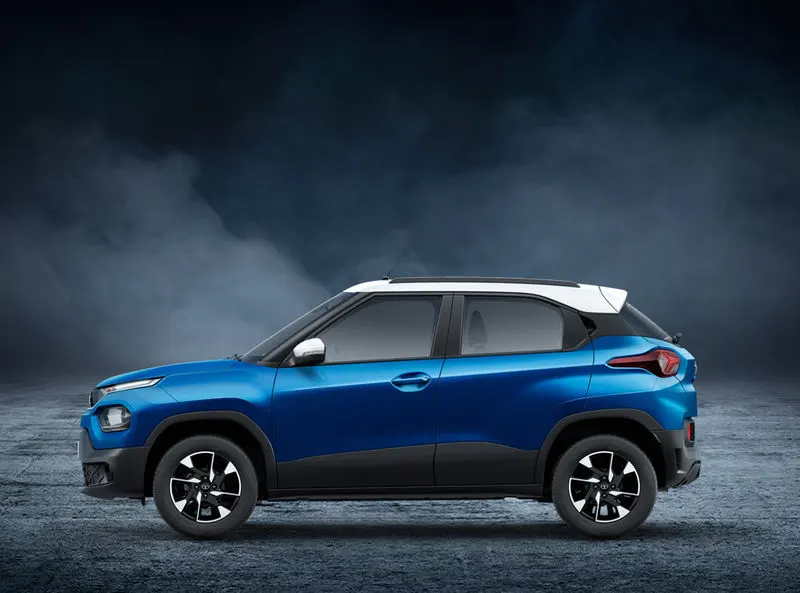
Price: The Tata Punch is priced between Rs 6 lakh and Rs 9.54 lakh (ex-showroom Delhi).
Variants: Tata Punch can be availed of in four trims: Pure, Adventure, Accomplished and Creative. The Kaziranga edition is available on the top-spec Creative trim and the new Camo edition can be had on the Adventure and Accomplished trims.
Seating Capacity: It’s a five-seater micro SUV.
Boot Space: It offers a boot space of 366 litres.
Engine and Transmission: The Punch uses a 1.2-litre petrol engine (making 86PS and 113Nm) paired with a five-speed manual and an optional five-speed AMT.
Ground Clearance: It has a ground clearance of 187mm.
Features: Features onboard the Punch includes a seven-inch touchscreen display, semi-digital instrument panel, auto air-conditioning, automatic headlights, connected car technology and cruise control.
Safety: The safety is ensured by dual front airbags, ABS with EBD, rear defoggers, rear parking sensors, a rear-view camera and ISOFIX anchors.
| ARAI Mileage | 18.82 kmpl |
| City Mileage | 14.42 kmpl |
| Fuel Type | Petrol |
| Engine Displacement (cc) | 1199 |
| No. of cylinder | 3 |
| Max Power (bhp@rpm) | 84.48bhp@6000rpm |
| Max Torque (nm@rpm) | 113Nm@3300+/-100rpm |
| Seating Capacity | 5 |
| TransmissionType | Automatic |
| Boot Space (Litres) | 366 |
| Fuel Tank Capacity | 37.0 |
| Body Type | SUV |
3. HYUNDAI I 20
Price: Hyundai’s premium hatchback’s cost starts from Rs 7.07 lakh and goes till Rs 11.62 lakh (ex-showroom).
Variants: It can be had in four trims: Magna, Sportz, Asta and Asta (O).
Engine and Transmission: The Hyundai i20 is available with three engine options: a 1.2-litre naturally aspirated engine (producing 83PS and 114Nm) paired with a five-speed manual or a CVT, a 1-litre turbo-petrol unit (120PS and 172Nm) paired with a six-speed iMT (clutchless manual) or a seven-speed DCT, and a 1.5-litre diesel unit (100PS and 240Nm), that is only available with the six speed manual transmission.
Features: A 10.25-inch touchscreen infotainment system with Apple CarPlay and Android Auto, an air purifier, connected car tech, auto LED headlights and a sunroof are among the features of Hyundai's premium hatchback.
Safety: On the safety front, it offers up to six airbags, rear parking sensors, a reverse camera and electronic stability control (ESC).
| ARAI Mileage | 20.28 kmpl |
| City Mileage | 12.6 kmpl |
| Fuel Type | Petrol |
| Engine Displacement (cc) | 998 |
| No. of cylinder | 3 |
| Max Power (bhp@rpm) | 118.36bhp@6000rpm |
| Max Torque (nm@rpm) | 171.62nm@1500-4000rpm |
| Seating Capacity | 5 |
| TransmissionType | Automatic |
| Boot Space (Litres) | 311 |
| Fuel Tank Capacity | 37.0 |
| Body Type | Hatchback |
| Service Cost (Avg. of 5 years) | Rs.2,882 |
MARUTI BALENO
Price: Maruti retails its premium hatchback between Rs 6.49 lakh and Rs 9.71 lakh (ex-showroom pan-India).
Variants: Maruti offers the Baleno in four trims: Sigma, Delta, Zeta and Alpha.
Boot Space: The premium hatchback has a boot space of 318 litres in petrol variants, which is reduced to 55 litres due to a CNG tank in CNG variants.
Engine and Transmission: The Baleno is powered by a 1.2-litre Dual Jet petrol engine (making 90PS and 113Nm) which comes paired with a five-speed manual or an optional five-speed AMT.
In the CNG variants, the same engine produces a reduced output of 77.49PS and 98.5Nm and only comes mated with a five-speed manual gearbox. The engine also receives idle-start/stop technology, which replaces the previously available mild-hybrid technology.
Here are the claimed fuel efficiency figures:
- 1.2-litre MT: 22.35kmpl
- 1.2-litre AMT: 22.94kmpl
- 1.2-litre MT CNG: 30.61km/kg
Features: Its list of amenities includes a nine-inch touchscreen infotainment system with Apple CarPlay and Android Auto, an Arkamys sound system, a reversing camera, a heads-up display, a 360-degree camera and cruise control. Further, it gets auto AC, push-button start/stop and keyless entry.
Safety: Up to six airbags, ABS with EBD, electronic stability program (ESP), hill-hold assist, ISOFIX anchorages, rear parking sensors and a rear-view camera are part of the safety equipment.
| ARAI Mileage | 22.94 kmpl |
| City Mileage | 19.0 kmpl |
| Fuel Type | Petrol |
| Engine Displacement (cc) | 1197 |
| No. of cylinder | 4 |
| Max Power (bhp@rpm) | 88.50bhp@6000rpm |
| Max Torque (nm@rpm) | 113Nm@4400rpm |
| Seating Capacity | 5 |
| TransmissionType | Automatic |
| Boot Space (Litres) | 318 |
| Fuel Tank Capacity | 37.0 |
| Body Type | Hatchback |
CONCLUSION
- The Tata Punch is absolutely top-notch when it comes to safety standards. This is also justified by the Global NCAP results. The Tata Punch has achieved a 5-star safety rating for adult occupant protection and a 4-star safety rating for child occupant protection in Global NCAP's latest crash tests.
- So I recomended TATA PUNCH for Pughazhyendhii.