Benchmarking
Aim: To expain about Benchmarking and finding a good car for Mr.D.S.Pughazhyendhii by comparing the cars.
Benchmarking :-
Benchmarking is a process of measuring the performance of a company’s products, services, or processes against those of another business
considered to be the best in the industry, “best in class.” The point of benchmarking is to identify internal opportunities for improvement. By
studying companies with superior performance, breaking down what makes such superior performance possible, and then comparing those
processes to how your business operates, you can implement changes that will yield significant improvements.
That might mean tweaking a product’s features to more closely match a competitor’s offering, or changing the scope of services you offer, or
installing a new customer relationship management (CRM) system to enable more personalized communications with customers.
There are two basic kinds of improvement opportunities: continuous and dramatic. Continuous improvement is incremental, involving only
small adjustments to reap sizeable advances. Dramatic improvement can only come about through reengineering the whole internal work
process.
Process benchmarking of this kind can operate at several levels:
- Between similar processes in the same factory or service branch
- Between different factories or service branches
- Between different competing organizations
- Between different sectors using the same process
Step-by-Step Benchmarking :
Benchmarking is a simple, but detailed, five-step process:
- Choose a product, service, or internal department to benchmark.
- Determine which best-in-class companies you should benchmark against, which organizations you’ll compare your business to.
- Gather information on their internal performance, or metrics.
- Compare the data from both organizations to identify gaps in your company’s performance.
- Adopt the processes and policies in place within the best-in-class performers.
Benchmarking will point out what changes will make the most difference, but it’s up to you to actually put them in place.
In order to benchmark anything, you need to have quantitative data available to study. That means breaking down internal processes to
calculate performance metrics. Quantify everything, because only quantifiable information can be accurately compared.
Benifits:
In addition to helping companies become more efficient and profitable, benchmarking has other benefits, too, such as:
- Improving employee understanding of cost structures and internal processes
- Encouraging team-building and cooperation in the interests of becoming more competitive
- Enhancing familiarity with key performance metrics and opportunities for improvement company-wide
In essence, benchmarking helps employees understand how one small piece of a company’s processes or products can be the key to major
success, just as one employee’s contributions can lead to a big win.
Requirement:
Benchmark with presently available cars in the market for the following case.
The vehicle benchmarking program considers 10 main attributes scoring up to 815 single criteria. The 10 main attributes are as follows:
- Performance
- Driveability
- Advanced Driver Assistance Systems (ADAS)
- Sound / NVH
- RDE: CO2 / Real life fuel consumption
- Pollutant emissions
- Friction
- Thermal, energy management
- Vehicle dynamics, handling
- Ride Comfort
Suitable cars :
- TATA NEXON
- HYUNDAI VENUE
- MARUTI SUZUKI VITARA BREZZA
- FORD ECO SPORT
|
Mahindra XUV 300 |
Basic characteristics of cars:
- Good seating arrangement.
- Safety.
- BS6 Engine used.
- Good Mileage.
- Good Interiors.
- Lightweight Car body.
- Specifications of cars
TATA NEXON
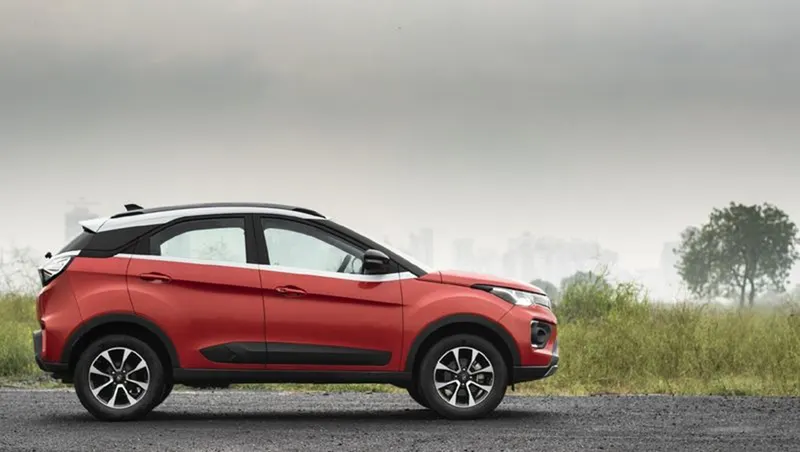
Pros:
- Best in class safety package
- Powerful engines (petrol & diesel)
- Ride and feels like a big vehicle
Cons:
- Quality of plastic inside the cabin
- Sluggish infotainment
- Slightly hard ride
|
MODELS / SPECIFICATIONS |
TATA NEXON |
|
ARAI Mileage |
21.5 kmpl |
|
Engine Displacement (cc) |
1497 |
|
Max Torque (nm@rpm) |
260Nm@1500-2750rpm |
|
Transmission Type |
Automatic |
|
Fuel Tank Capacity |
44 |
|
Max Power (bhp@rpm) |
108.5bhp@4000rpm |
|
Seating Capacity |
5 |
|
Boot Space (Litres) |
350 |
|
Body Type |
SUV |
|
Safety |
16.06/17 |
HYUNDAI VENUE
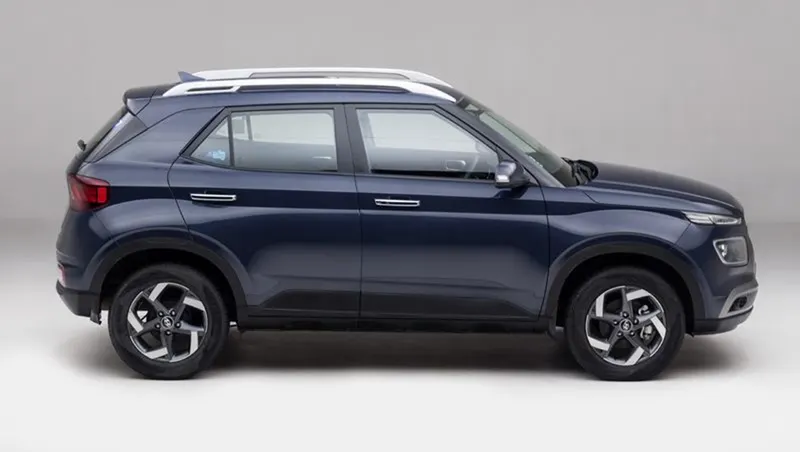
Pros:
- Ease of driving on offer
- Three different engine options
- Feature loaded
Cons:
- Isn't as big as rivals
- No diesel automatic on offer
- 1.2 petrol is weak on punch
|
MODELS / SPECIFICATIONS |
HYUNDAI VENUE |
|
ARAI Mileage |
18.14kmpl |
|
Engine Displacement (cc) |
998 |
|
Max Torque (nm@rpm) |
171.6Nm@1500-4000rpm |
|
Transmission Type |
Automatic |
|
Fuel Tank Capacity |
45 |
|
Max Power (bhp@rpm) |
118.35bhp@6000rpm |
|
Seating Capacity |
5 |
|
Boot Space (Litres) |
350 |
|
Body Type |
SUV |
|
Safety |
4 stars NCAP rating |
MARUTI SUZUKI VITARA BREZZA
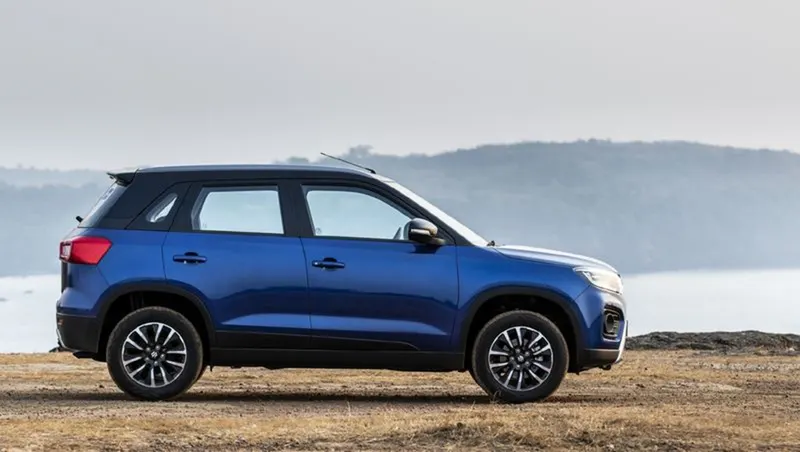
Pros:
- Peppy & efficient 1.5 petrol
- Good value for money
- Neutral ride, easy to drive
Cons:
- No more diesel option
- Rivals offer more space
- Design isn�t attractive as before
|
MODELS / SPECIFICATIONS |
MARUTI SUZUKI VITARA BREZZA |
|
ARAI Mileage |
18.76kmpl |
|
Engine Displacement (cc) |
1462 |
|
Max Torque (nm@rpm) |
138Nm@4400rpm |
|
Transmission Type |
Automatic |
|
Fuel Tank Capacity |
48 |
|
Max Power (bhp@rpm) |
103.26bhp@6000rpm |
|
Seating Capacity |
5 |
|
Boot Space (Litres) |
328 |
|
Body Type |
SUV |
|
Safety |
12.51/17 |
FORD ECO SPORT
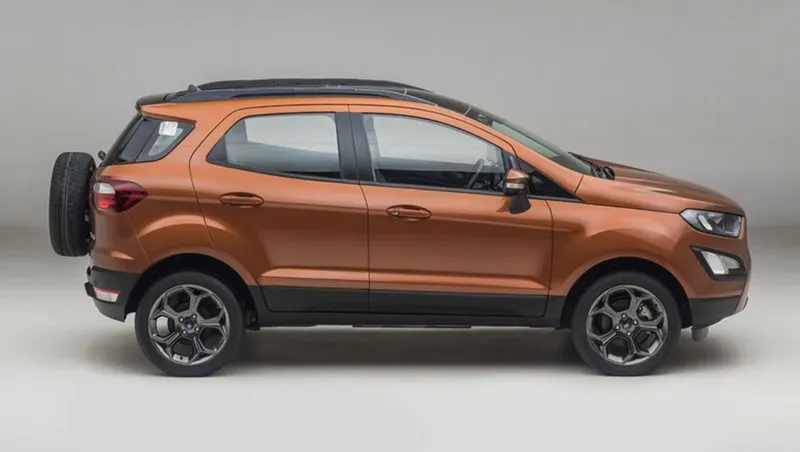
The Ford Ecosport is considered as one of the best sub-4m compact SUVs currently on sale in the Indian market. The car gets powerful and refined engines and also comes with an aggressive and appealing design language. If you in the market to buy a new compact SUV and wondering if the Ecosport is the best of all.
Pros:
- Build Quality
- Powerful and Responsive Engines
- Looks
- Driving Dynamics
- Long List Of Safety Features
Cons:
- Not So VFM
- Feels Dated
- Stiff Suspension Setup
- Narrow Second Row
- Thick A-Pillar Causes Blind Spot
|
MODELS / SPECIFICATIONS |
FORD ECO SPORT |
|
ARAI Mileage |
21.7kmpl |
|
Engine Displacement (cc) |
1498 |
|
Max Torque (nm@rpm) |
215Nm@1750-2500rpm |
|
Transmission Type |
Manual |
|
Fuel Tank Capacity |
52 |
|
Max Power (bhp@rpm) |
98.63bhp@3750rpm |
|
Seating Capacity |
5 |
|
Boot Space (Litres) |
352 |
|
Body Type |
SUV |
|
Safety |
4 stars NCAP rating |
Mahindra XUV 300 :
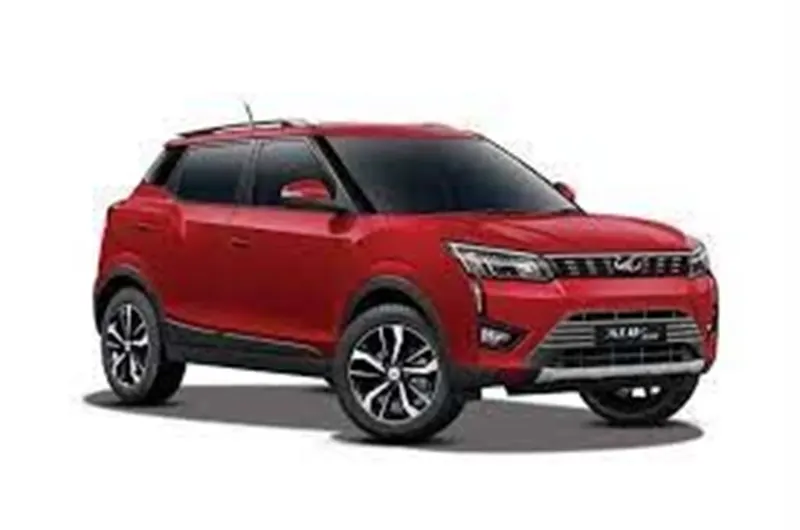
|
MODELS / SPECIFICATIONS |
Mahindra XUV 300 |
|
|
ARAI Mileage |
17kmpl |
|
|
Engine Displacement (cc) |
1197 |
|
|
Max Torque (nm@rpm) |
171.6Nm@1500-4000rpm |
|
|
Transmission Type |
|
|
|
Fuel Tank Capacity |
42 |
|
|
Max Power (bhp@rpm) |
118.35bhp@6000rpm |
|
|
Seating Capacity |
5 |
|
|
Boot Space (Litres) |
350 |
|
|
Body Type |
SUV |
|
|
Safety |
4 stars NCAP rating |
COMPARISON
|
MODELS / SPECIFICATIONS |
TATA NEXON |
HYUNDAI VENUE |
MARUTI SUZUKI VITARA BREZZA |
FORD ECO SPORT |
Mahindra XUV 300 |
|
|
0ARAI Mileage |
21.5 kmpl |
18.14kmpl |
18.76kmpl |
21.7kmpl |
17kmpl |
|
|
Engine Displacement (cc) |
1497 |
998 |
1462 |
1498 |
1197 |
|
|
Max Torque (nm@rpm) |
260Nm@1500-2750rpm |
171.6Nm@1500-4000rpm |
138Nm@4400rpm |
215Nm@1750-2500rpm |
- |
|
|
Transmission Type |
Automatic |
Automatic |
Automatic |
Manual |
|
|
|
Fuel Tank Capacity |
44 |
45 |
48 |
52 |
42 |
|
|
Max Power (bhp@rpm) |
108.5bhp@4000rpm |
118.35bhp@6000rpm |
103.26bhp@6000rpm |
98.63bhp@3750rpm |
108.5bhp@4000rpm |
|
|
Seating Capacity |
5 |
5 |
5 |
5 |
5 |
|
|
Boot Space (Litres) |
350 |
350 |
328 |
352 |
350 |
|
|
Body Type |
SUV |
SUV |
SUV |
SUV |
SUV |
|
|
Safety |
16.06/17 |
4 stars NCAP rating |
12.51/17 |
4 stars NCAP rating |
4 stars NCAP rating |
CONCLUSION:
The suggested of the best automotive car for Mr. D.S. Pughazhyendhii family is TATA NEXON. Among all the comparison it is suitable And the Five star G-NCAP Safety and it has more power (BHP),BS6 Complaint and spacious cabin compared to rivals.
- Over all it has good performance