Benchmarking
AIM : To explain about the benchmarking and suggesting a single suitable vehicle for Mr. D.S. Pughazhyendhii for his family.
BENCHMARKING :
- Benchmarking involves a structured comparison between similar products, services or processes on some dimensions of performance.
- For example it can be
used to compare the availability and delivery of features in a product and in this form often provides the basis of consumer tests and reviews. - These look at products and services and provide recommendations based on which is best or some form of ranking amongst competitors.
- It is particularly useful when comparing not only performance but also practice –in other words what do the different organizations do to enable that performance to be delivered?
- And applied in this way it is a powerful tool in process innovation sin e studying how the ‘best’ achieve their performance can provide powerful clues for changing the way processes operate.
- benchmarking of this kind can operate at several levels:
- Between similar processes in the same factory or service branch
- Between different factories or service branches
- Between different competing organizations
- Between different sectors using the same process
- Whilst if offers a significant learning opportunity benchmarking between competing organizations is harder than the other three because competitors do not want to disclose their process information since it is a source of competitive
advantage to tem. - So benchmarking of this kind often involves a third party who can collect the data, make the comparison and provide feedback but all on a confidential basis.
- A good example of this was the Automobile Industry Benchmarking Study at the heart of a long-running programme organized by MIT with other academic partners around the world called ‘The future of the automobile’.
- This programme was co-funded by most of the major auto industry players and explored a variety of aspects of the industry including product design and innovation, service delivery, retailing and supply chain management.
- Its results appeared in many books and articles and over a sustained period of time provided a powerful stimulus for change in the industry.
- The benchmarking study was the most influential, giving birth to the concept of ‘lean’ thinking which revolutionized first car making and then other manufacturing before diffusing into services and the public sector.
- The original study was published in 1991 under the title’ The machine that changed the world’.
- The project involved a systematic benchmarking study of 68 car assembly plants around the world using a standard structured framework to ensure direct comparisons were made. Researchers from the various university teams looked
in detail at all aspects of productivity and compared performance factors like labour hours to produce a car, number of defects per car, inventory levels per car, space utilization, etc. - Their findings were significant and challenging for the industry.
The vehicle benchmarking program considers 10 main attributes
- Performance
- Driveability
- Advanced Driver Assistance Systems (ADAS)
- Sound / NVH
- RDE: CO2 / Real life fuel consumption
- Pollutant emissions
- Friction
- Thermal, energy management
- Vehicle dynamics, handling
- Ride Comfort
Types of benchmarking :
- Internal benchmarking
- Competitive benchmarking
- Strategic benchmarking
8 Steps in the benchmarking
-
Select a subject to benchmark
-
Decide which organizations or companies you want to benchmark
-
Document your current processes
-
Collect and analyze data
-
Measure your performance against the data you’ve collected
-
Create a plan
-
Implement the changes
-
Repeat the process
Requirement:
Benchmark with presently available cars in the market for the following case.
The vehicle benchmarking program considers 10 main attributes scoring up to 815 single criteria. The 10 main attributes are as follows:
- Performance
- Driveability
- Advanced Driver Assistance Systems (ADAS)
- Sound / NVH
- RDE: CO2 / Real life fuel consumption
- Pollutant emissions
- Friction
- Thermal, energy management
- Vehicle dynamics, handling
- Ride Comfort
Suitable cars :
- Maruti Suzuki Vitara Brezza
- Skoda rapid TSI
- Tata Nexon
- Mahindra XUV 300
Basic characteristics of cars:
- Good seating arrangement.
- Safety.
- BS6 Engine used.
- Good Mileage.
- Good Interiors.
- Lightweight Car body.
- Specifications of cars
Model and Specifications
| Model (All are base models) | Maruti Suzuki Vitara Brezza | Hyundai Venue | Tata Nexon | Mahindra XUV 300 |
| Engine | 1462 cc, 4 Cylinders Inline, 4 Valves/Cylinder, DOHC | 1197 cc, 4 Cylinders Inline, 4 Valves/Cylinder, DOHC | 1199 cc, 3 Cylinders Inline, 2 Valves/Cylinder, SOHC | 1197 cc, 3 Cylinders Inline, 4 Valves/Cylinder, DOHC |
| Engine Type | K15B | 1.2 l Kappa | 1.2L | 1.2 |
| Fuel Type | Petrol | Petrol | Petrol | Petrol |
| Max Power (bhp@rpm) | 103 bhp @ 6000 rpm | 82 bhp @ 6000 rpm | 118 bhp @ 5500 rpm | 109 bhp @ 5000 rpm |
| Max Torque (Nm@rpm) | 138 Nm @ 4400 rpm | 114 Nm @ 4000 rpm | 170 Nm @ 1750 rpm | 200 Nm @ 2000 rpm |
| Mileage (ARAI) (kmpl) | 17.03 | 17.52 | 17.4 | 17 |
| Driving Range (Km) | 817.44 | 788 | 765.6 | 714 |
| Drivetrain | FWD | FWD | FWD | FWD |
| Transmission | Manual - 5 Gears | Manual - 5 Gears | Manual - 6 Gears | Manual - 6 Gears |
| Emission Standard | BS 6 | BS 6 | BS 6 | BS 6 |
| Seating Capacity | 5 | 5 | 5 | 5 |
| Safety | 4 Star | 4 Star | 5 Star | 5 Star |
| Pros |
|
|
|
|
| Cons |
|
|
|
|
| Images |  |
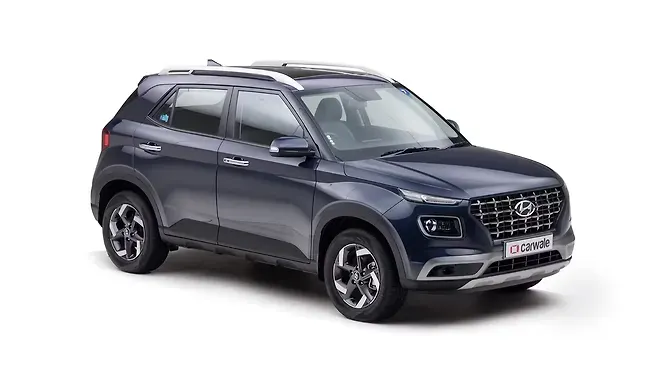 |
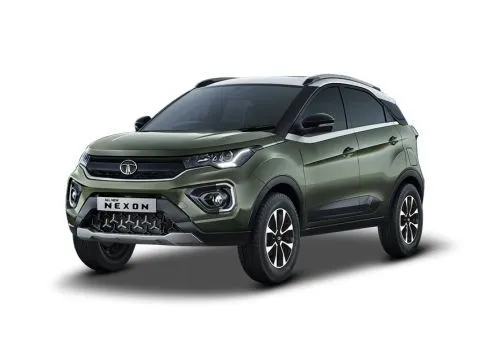 |
Conclusion :-
- I would suggest Tata Nexon and XUV 300 for Mr.D.S.Pughazhyendhii because of the Five star G-NCAP Safety and it has more power (BHP),BS6 Complaint and spacious cabin compared to rivals.
- Over all it has good performance