Benchmarking
BENCHMARKING
AIM: To write a report outlining what benchmarking is, compare at least four vehicles, and offer an acceptable conclusion for the report by recommending a car from those under consideration.
BENCHMARKING: It involves evaluating one's business operations and performance indicators against industry benchmarks and/or best practices from related industries. Studying process flows, operating systems, process technologies, and target companies' and departments' operations are all part of process benchmarking.
It can also be described as a means of learning about the greatest performance being accomplished, whether it be in a specific company, by a rival, or by altogether different industry. In order to gain a competitive edge, gaps in an organization's process can then be identified using this information.
Three primary classifications of Benchmarking :
Although there are many forms of benchmarking, they can be classified into three categories-internal, competitive and strategic.
INTERNAL BENCHMARKING: is used when a company already has established and proven best practices and simply needs to share them. internal benchmarking also may be necessary if comparable industries are not readily available.
COMPETITIVE BENCHMARKING: is used when a company wants to evaluate its position within when a company needs to identify industry leadership performance targets.
STRATEGIC BENCHMARKING: is used when identifying and analyzing world-class performance. This form of benchmarking is used most a company needs to go outside of its industry.
STEP-BY-STEP ABOUT BENCHMARKING:
Benchmarking is a simple, but detailed, five-step process.
- Choose a product, service, or external department to benchmark.
- Determine which best-in-class companies you should be benchmarking against, and which organizations you will compare your business to.
- Gather information on their internal performance, or matrics.
- Compare the data from both organizations to identify gaps n your company's performance.
- Adopt the processes and policies in place within the best-in-class performers.
In order to benchmark anything, you need to have quantitative data available to study. That means breaking down internal processes to calculate performance metrics. Quantify everything, because only quantifiable normation can be accurately compared.
BENEFITS:
Benchmarking has additional advantages besides just assisting businesses in being more productive and profitable, such as:
Your company can seek to increase execution tenfold by identifying areas in which you want to make improvements and measuring your current performance against rivals. By using benchmarking in this manner, organizations have been able to outsmart rivals and raise industry averages.
- Monitor Performance
Depending on your goals, benchmarking entails examining existing data trends and estimating future trends. Benchmarking needs to be a constant practice in order to be successful. Its very nature calls for performance monitoring.
- Continuous Improvement
Benchmarking must include continual improvement in addition to performance monitoring. This is so that a business can enhance specific aspects thanks to benchmarking. This improvement should be ongoing and continual rather than just something that happens once and then is forgotten.
- Planning and Goal Setting
Goals and performance metrics are established to boost performance after benchmarking has been completed. These objectives are new, more challenging benchmarks for a business, but they must be reachable. Teams lose motivation when goals are unachievable, and objectives are doomed to failure.
- Encourage Ownership
When businesses examine their metrics and processes, they must pose difficult questions in order to obtain all the information they require. Talking to everyone in the company and comprehending their duties are part of this. Ownership of procedures and performance is encouraged by posing these questions and better understanding everyone's role. This implies that staff members will take pride in their work and jobs. This pride translates into improved performance and better final products.
REQUIREMENTS: Benchmark with presently available cars in the market for the following case.
Mr. D.S. Pughazhyendhii is a married man who lives in Bangalore which is a highly crowded city. His Family comprises five members including his wife, his five-year-old boy, his father, and his mother. He visits his native place Madurai which is 500kms away from Bangalore once a month. Also, he will be using his car to commute to his office. His budget falls between 8 to 10 lakhs on road. Please suggest to him options so that he will buy a good car for his family.
Note: Pughazhyendhii is fond of big cars
In my view, The family of Mr. D.S. Pughazhyendhii needs a safe car that is also affordable and provides an equilibrium between mileage, upkeep, good space, features, and social status by not owning an entry-level but affordable car.
With the shift in mindset, features like safety and nice interiors are becoming more crucial factors in purchasing decisions.
Mr. D.S. Pughazhyendhii's major requirements in a car:
- 5-7 seats for his family members.
- Budget: Rs. 8-10 Lakhs/-, on-road price
- Good Mileage
- Good car for easy commuting within the city and long drives as well.
- He is also fond of big cars.
- 5-7 seats for his family members.
Suitable cars:
- Maruti Suzuki Vitara Brezza
- Skoda rapid TSI
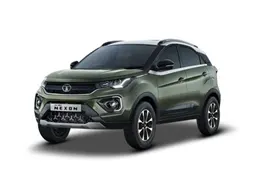
- Tata Nexon
- Mahindra XUV 300
Basic characteristics of cars:
- Good seating arrangement.
- Safety.
- BS6 Engine used.
- Good Mileage.
- Good Interiors.
- Lightweight Car body.
- Specifications of cars
Model and Specifications:
|
Model (All are base models) |
Maruti Suzuki Vitara Brezza |
Hyundai Venue |
Tata Nexon |
Mahindra XUV 300 |
|
Engine |
1462 cc, 4 Cylinders Inline, 4 Valves/Cylinder, DOHC |
1197 cc, 4 Cylinders Inline, 4 Valves/Cylinder, DOHC |
1199 cc, 3 Cylinders Inline, 2 Valves/Cylinder, SOHC |
1197 cc, 3 Cylinders Inline, 4 Valves/Cylinder, DOHC |
|
Engine Type |
K15B |
1.2 l Kappa |
1.2L |
1.2 |
|
Fuel Type |
Petrol |
Petrol |
Petrol |
Petrol |
|
Max Power (bhp@rpm) |
103 bhp @ 6000 rpm |
82 bhp @ 6000 rpm |
118 bhp @ 5500 rpm |
109 bhp @ 5000 rpm |
|
Max Torque (Nm@rpm) |
138 Nm @ 4400 rpm |
114 Nm @ 4000 rpm |
170 Nm @ 1750 rpm |
200 Nm @ 2000 rpm |
|
Mileage (ARAI) (kmpl) |
17.03 |
17.52 |
17.4 |
17 |
|
Driving Range (Km) |
817.44 |
788 |
765.6 |
714 |
|
Drivetrain |
FWD |
FWD |
FWD |
FWD |
|
Transmission |
Manual - 5 Gears |
Manual - 5 Gears |
Manual - 6 Gears |
Manual - 6 Gears |
|
Emission Standard |
BS 6 |
BS 6 |
BS 6 |
BS 6 |
|
Seating Capacity |
5 |
5 |
5 |
5 |
|
Safety |
4 Star |
4 Star |
5 Star |
5 Star |
|
Pros |
|
|
|
|
|
Cons |
|
|
|
|
|
Images |
 |
 |
 |
 |
Conclusion:-
- I would suggest Tata Nexon for Mr.D.S.Pughazhyendhii because of the Five stars G-NCAP Safety and it has more power (BHP), is BS6 Compliant, and spacious cabin compared to rivals.
- Overall it has a good performance