Benchmarking
Benchmarking:
Benchmarking is the practice of comparing business processes and performance metrics to industry bests and best practices from other companies. Aspects commonly estimated are quality, time and cost. Likewise alluded to as "best work on benchmarking" or "process benchmarking", this cycle is utilized in administration in which associations assess different parts of their cycles corresponding to best-practice organizations' cycles. This then permits associations to develop plans on the most proficient method to make enhancements or adjust explicit prescribed procedures, as a rule fully intent on expanding some part of execution. Benchmarking might be an oddball occasion, yet is many times treated as a ceaseless cycle in which associations persistently look to work on their practices.
Five barriers to effective benchmarking:[1]
- Uncooperative sources: If individuals liable for a current best practice don't need to help other people, it is improbable that their benchmarking will succeed.
- Strained personal relationships: If the manager attempting to replicate a bestpractice has a difficult relationship with expert sources, successfulbenchmarking is unlikely to occur.
- Internal competition: Assuming that an association effectively deters collaboration by pitting units against each other, nobody has a motivating force to duplicate or to be copied.
- Overemphasis on innovation: If an organization idealizes innovation and scoffsat copying, benchmarking will not occur.
- Cranky copiers:In the event that the supervisors accused of repeating a best practice are irritably unacceptable to engrossing new information, reluctant to change, or unreasonably centered around safeguarding their own status, they will likely bomb in benchmarking.
There are two primary types of benchmarking:
- Internal benchmarking: Comparison of practices and performance between teams, individuals or groups within an organization
- External benchmarking: Comparison of organizational performance to industry peers or across industries
These can be further distilled as follows:
- Process Benchmarking: Demonstrate how top performing companies accomplish the specific process in question. Such benchmarking is collected via research, surveys/interviews, and site visits. By identifying how others perform the same functional task or objective, people gain insight and ideas they may not otherwise achieve. Such information affirms and supports decision-making by executives.
- Performance Metrics: “Performance metrics” give numerical standard against which a client’s own processes can be compared. These metrics are usually determined via a detailed and carefully analyzed survey or interviews. Clients can then identify performance gaps, prioritize action items, and then conduct follow-on studies to determine methods of improvement.
- Strategic Benchmarking: Identify the fundamental lessons and winning strategies that have enabled high performing companies to be successful in their marketplaces. Strategic benchmarking examines how companies compete and is ideal for corporations with a long-term perspective.
There is no single benchmarking process that is said to be the perfect one, but the following criteria can be considered or followed for benchmarking
- Select subject
- Define the process
- Target future performance
- Communicate
- Adjust goal
- Implement
- Identify potential partners
- Identify data sources
- Collect data and select all partners
- Determine the gap
- Establish process differences
Reqiurement of Mr. D.S. Pughazhyendhii:
- 5 seater car.
- Good milage both on highway and city
- Big car, preferable SUV.
Sugesstion I would give are:
- Maruti Suzuki Vitara Brezza
- Kia Sonet
- Tata Nexon
- Mahindra XUV300
- Maruti Suzuki S-Cross
Detail Description of all Vehicle:
1. Maruti Suzuki Vitara Brezza
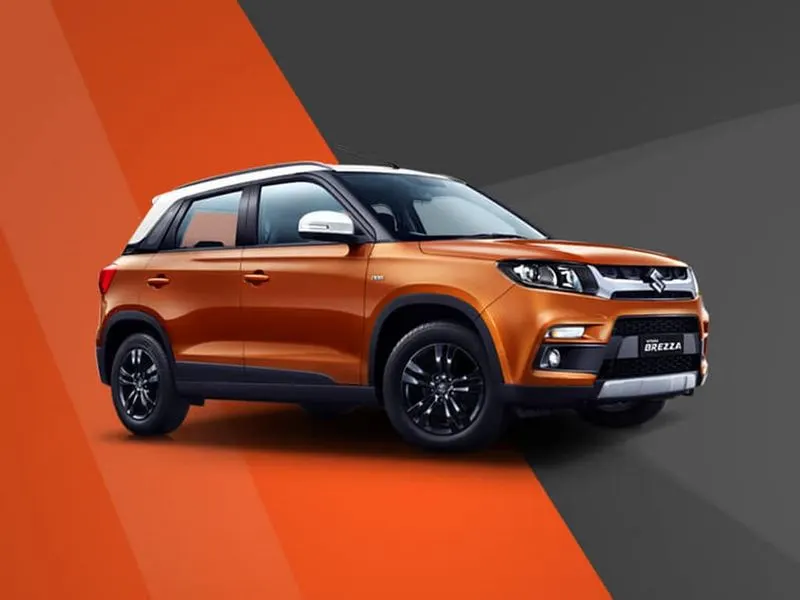
Pros
- (Looks) It looks like a proper boxy like SUV.
- (Mileage) As it has a smaller diesel engine so, you get better mileage.
- Good value for money.
Cons
- (Lack of features) Nowadays when the competition offers a lot of features, it not even got half of them.
- (Small engine) as competition (ecosport, nexon, xuv300) offers a lot of promise to performance, Brezza lacks behind.
- (Petrol) Customer who wants to buy a petrol car Brezza is not for you, didn't come with a petrol engine.
Model/Specification Maruti Suzuki Vitara Brezza
| ARAI Mileage | 18.76kmpl |
| Engine Displacement (cc) | 1462 |
| Max Torque (nm@rpm) | 138Nm@4400rpm |
| Transmission Type | Automatic |
| Fuel Tank Capacity | 48 |
| Max Power (bhp@rpm) | 103.26bhp@6000rpm |
| Seating Capacity | 5 |
| Boot Space (Litres) | 328 |
| Body Type | SUV |
| Safety | 12.51/17 |
2. Kia Sonet
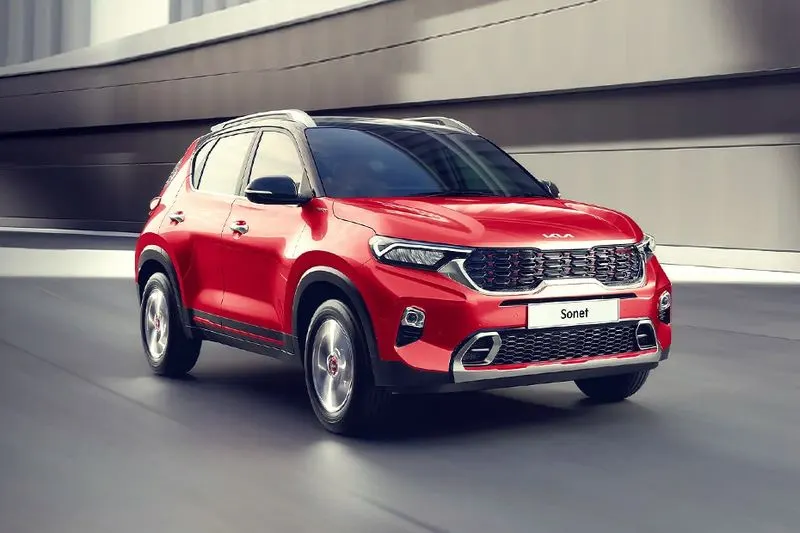
Pros
- The best-looking Compact SUV.
- Excellent spread of powertrains including a fast & enjoyable turbo-petrol.
- Top safety package includes 6 airbags, ESP, HSA, TPMS etc.
Cons
- 1.0L turbo-petrol doesn’t come with a manual gearbox.
- Rear Seat Space is less.
Model/Specification Kia Sonet
| ARAI Mileage | 18.4kmpl |
| Engine Displacement (cc) | 1493 |
| Max Torque (nm@rpm) | 250nm@1500-2750rpm |
| Transmission Type | Automatic |
| Fuel Tank Capacity | 45 |
| Max Power (bhp@rpm) | 113.43bhp@4000rpm |
| Seating Capacity | 5 |
| Boot Space (Litres) | 392 |
| Body Type | SUV |
| Safety | 3 stars in Global NCAP |
3. Tata Nexon
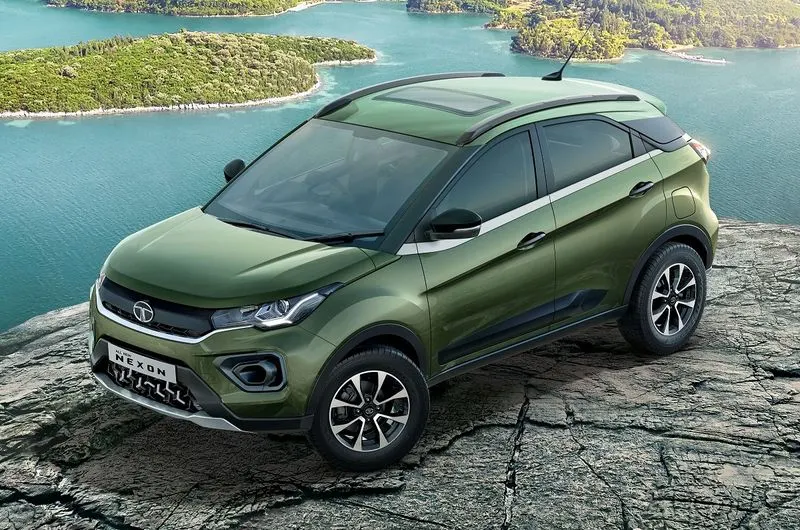
Pros
- Best in class safety package
- Powerful engines (petrol & diesel)
- Easy-to-drive with good handling
Cons
- Mediocre fuel efficiency
- Uninspiring bottom-end engine performance
Model/Specification Tata Nexon
| ARAI Mileage | 21.5 kmpl |
| Engine Displacement (cc) | 1497 |
| Max Torque (nm@rpm) | 260Nm@1500-2750rpm |
| Transmission Type | Automatic |
| Fuel Tank Capacity | 44 |
| Max Power (bhp@rpm) | 108.5bhp@4000rpm |
| Seating Capacity | 5 |
| Boot Space (Litres) | 350 |
| Body Type | SUV |
| Safety | 16.06/17 |
4. Mahindra XUV300
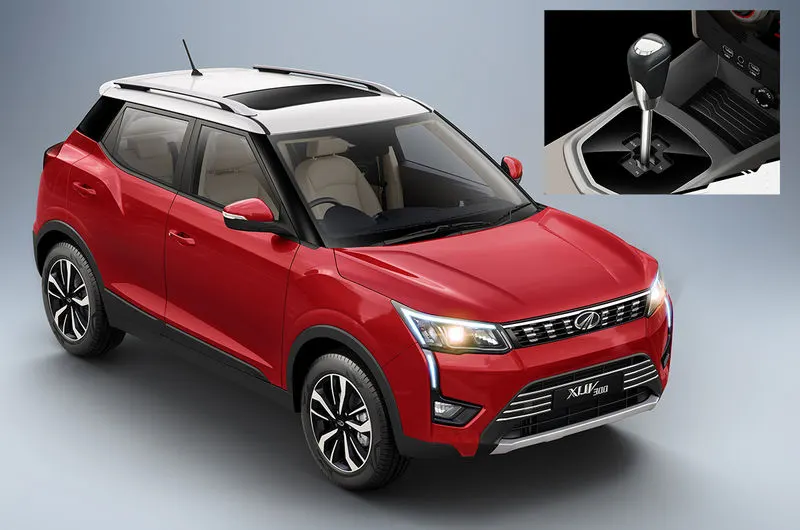
Pros
- Best comfort and safety.
- Stability control. Traction control.
- Good head and knee room
Cons
- No Petrol Automatic
- No Rear AC Vents
Model/Specification Mahindra XUV300
| ARAI Mileage | 20kmpl |
| Engine Displacement (cc) | 1497 |
| Max Torque (nm@rpm) | 300Nm@1500-2500rpm |
| Transmission Type | Automatic |
| Fuel Tank Capacity | 42 |
| Max Power (bhp@rpm) | 115bhp@3750rpm |
| Seating Capacity | 5 |
| Boot Space (Litres) | 259 |
| Body Type | SUV |
| Safety | 16.42 |
5. Maruti S-Cross
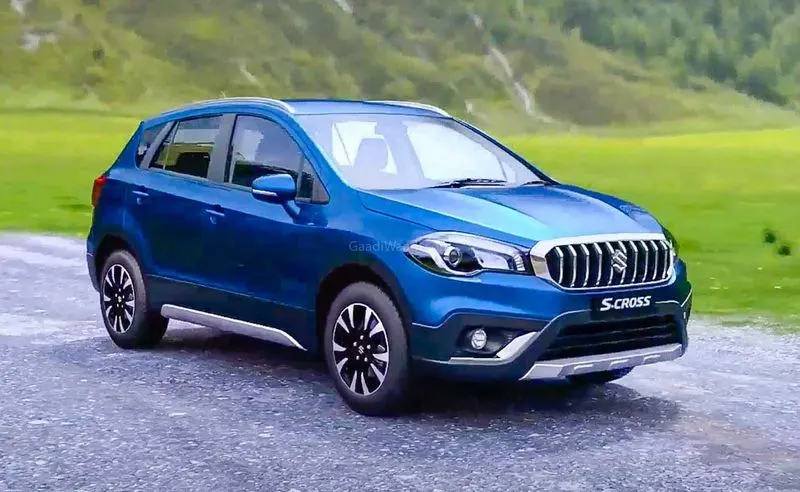
Pros
- Makes you feel comfortable
- he vehicle’s big tires have better rims which give the vehicle a crossover feel.
- It has the best road noise insulation making the engine produce less noise while driving.
Cons
- At slow speed, you may experience an S-Cross steering weight that makes the vehicle feel too heavy when making U-turns or when entering a perpendicular line.
- No rear-AC vents.
- The car has few airbags and other safety features compared to other rivals in the same segment or class.
Model/Specification Maruti S-Cross
| ARAI Mileage | 18.43kmpl |
| Engine Displacement (cc) | 1462 |
| Max Torque (nm@rpm) | 138Nm@4400rpm |
| Transmission Type | Automatic |
| Fuel Tank Capacity | 48 |
| Max Power (bhp@rpm) | 103.25bhp@6000rpm |
| Seating Capacity | 5 |
| Boot Space (Litres) | 375 |
| Body Type | SUV |
| Safety | 5-star in AOP and 4 star in COP |
All over comparision:
| Maruti Suzuki Vitara Brezza | Kia Sonet | Tata Nexon | Mahindra XUV300 | Maruti S-Cross | |
| ARAI Mileage | 18.76kmpl | 18.4kmpl | 21.5 kmpl | 20kmpl | 18.43kmpl |
| Engine Displacement (cc) | 1462 | 1493 | 1497 | 1497 | 1462 |
| Max Torque (nm@rpm) | 138Nm@4400rpm | 250nm@1500-2750rpm | 260Nm@1500-2750rpm | 300Nm@1500-2500rpm | 138Nm@4400rpm |
| Transmission Type | Automatic | Automatic | Automatic | Automatic | Automatic |
| Fuel Tank Capacity | 48 | 45 | 44 | 42 | 48 |
| Max Power (bhp@rpm) | 103.26bhp@6000rpm | 113.43bhp@4000rpm | 108.5bhp@4000rpm | 115bhp@3750rpm | 103.25bhp@6000rpm |
| Seating Capacity | 5 | 5 | 5 | 5 | 5 |
| Boot Space (Litres) | 328 | 392 | 350 | 259 | 375 |
| Body Type | SUV | SUV | SUV | SUV | SUV |
| Safety | 12.51/17 | 3 stars in Global NCAP | 16.06/17 | 16.42 | 5-star in AOP and 4 star in COP |
Conclusion:
I would suggest Mahindra XUV300 and Tata Nexon for Mr. D.S. Pughazhyendhii family. They are value for money product with class leading features.
Refrences:
- https://www.researchgate.net/publication/235261394_Evolving_benchmarking_practices_A_review_for_research_perspectives
- https://www.cardekho.com/carmodels/Maruti/Maruti_Vitara_Brezza
- www.cardekho.com/kia/sonet
- https://www.cardekho.com/tata/nexon
- https://www.cardekho.com/mahindra/xuv300
- https://www.cardekho.com/carmodels/Maruti/Maruti_SX4_S_Cross
- Agndal, H. and Nordin, F. (2009), “Consequences of outsourcing for organizational capabilities:some experiences from best practice”, Benchmarking: An International Journal, Vol. 16No. 3, pp. 316-34.