Assignment 4-RADIOSS Material Laws Challenge
AIM:- in this challenge , we will study different matrial laws in radioos and we will select the best material for the given component RUPTURE PLATE by considering below mentioned cases.
case 1 :- change the model name from FAILURE_JOHNSON_0000.rad to law2_epsmax_failure_0000.rad and run the model as it is.
case 2 :- change the model name from law2_epsmax_failure_0000.rad to law2_epsmax_crack_0000.rad
in/fail/johnson , change Ifail_sh=1, Dadv = 1, Ixfem = 1
case 3 :- delete/fail/johnson card. run the model as law2_epsmax_nofail
case 4 :- delete the value of epsmax and run the model with name law2
case 5 :- convert this material model to law1 elastic with same density,E,nu and run.check the results.
case 6 :- open new model law27_0000.rad
change shell properties to recmmended shell properties
notice the material card. johnson cook parametrs but different values for EPS based failure.
run the model with name law27
case 7 :- change the material model to law36(plas_tab) and compare results with a user defined curve and the standard curve.
PROCEDURE:-
case 1 :- law2_epsmax_failure
- import the given FAILURE_JOHNSON_0000.rad file into radioos , using import solver deck option.
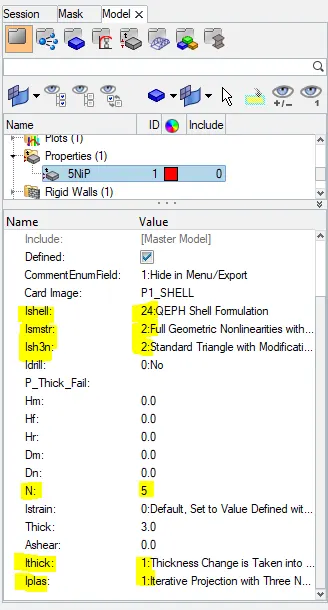
- verify below recommended shell properties
Ishell= 24
Ismstr=2
Ish3n = 2
N = 5
Ithck= 1
Iplas=1
- in this case run the simulation without changing anything
- go to- analysis - radioos
- change the input file location and rename it as law2_epsmax_failure_0000.rad
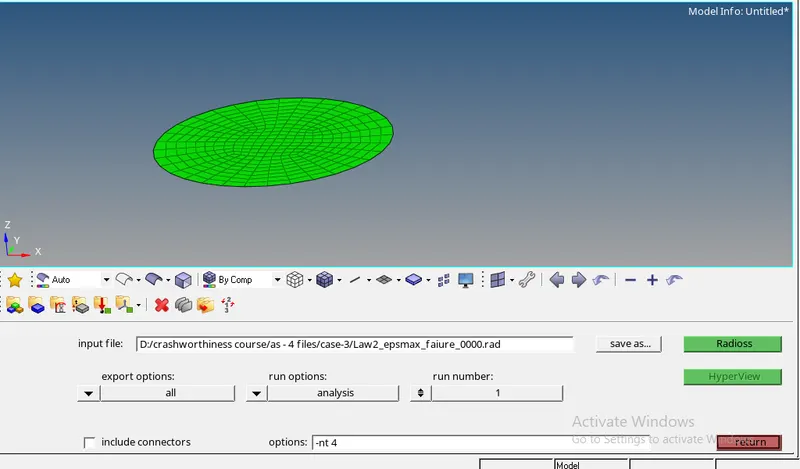
- from the above pic, -nt 4 means 4 cpus runs simuation at a single time
- click on radioos.
after running simulation open law2_epsmax_failure_0001.out file
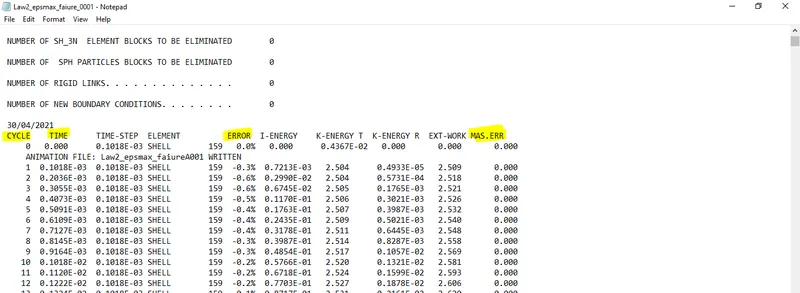
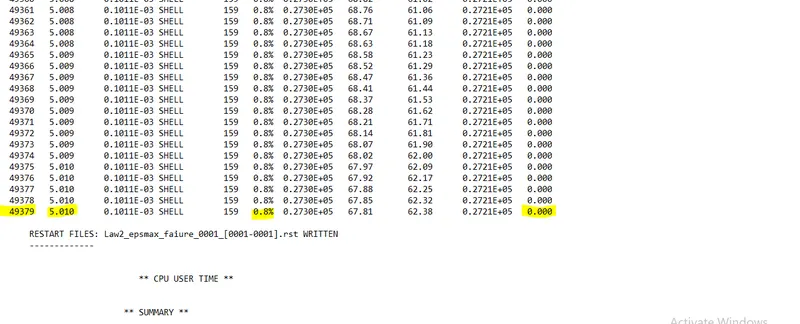
| material | no.of. cycles | energy error | mass error | time |
| law2_epsmax_failure | 49379 | -0.3 to 0.8 | 0.00 | 5.010 |
- switch to hyperview and upload .h3d file
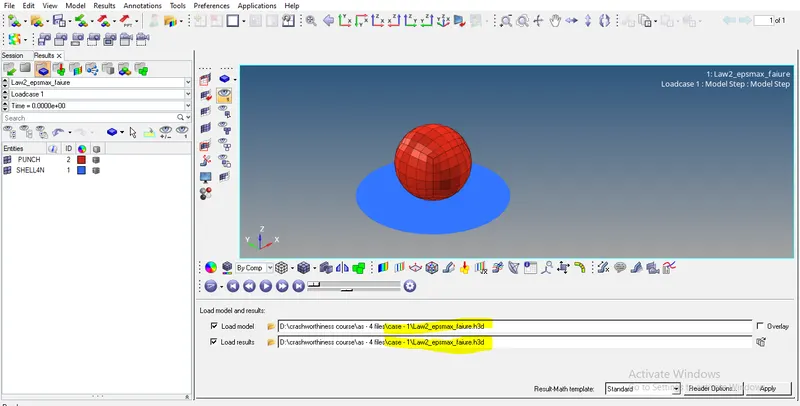
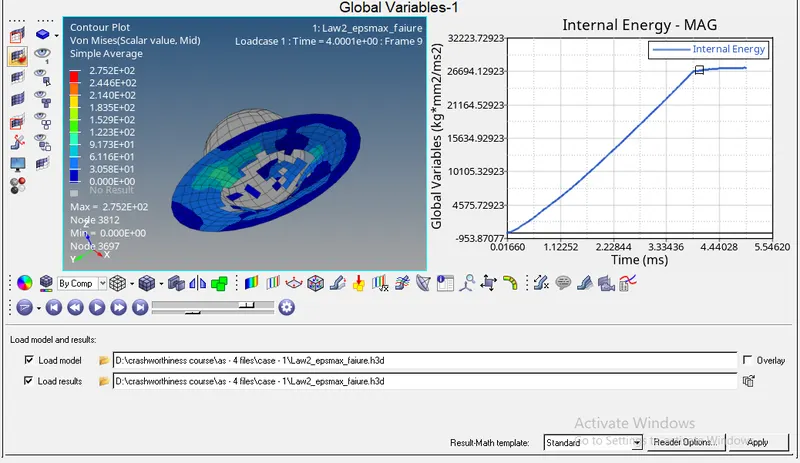
von mises stress contour plot
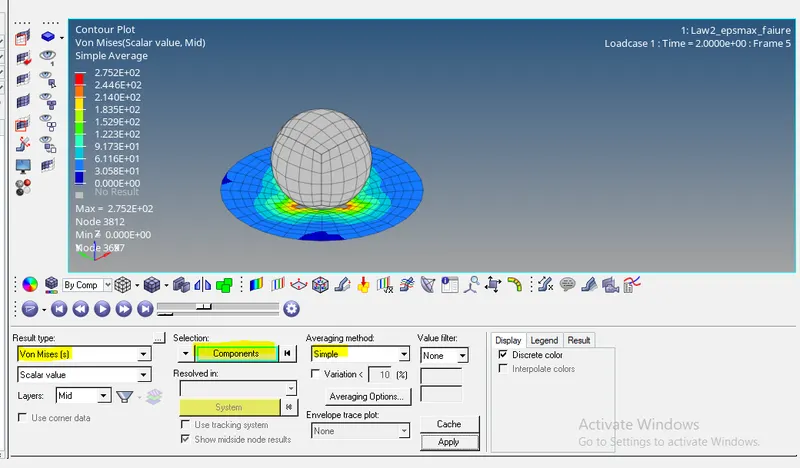
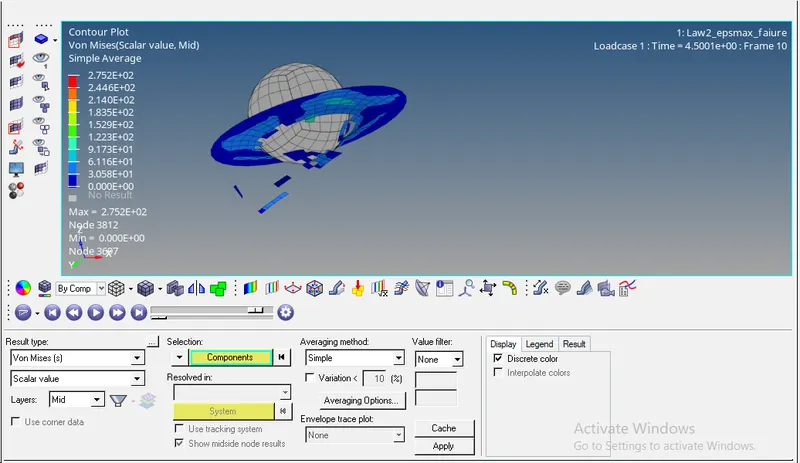
- max von misses stress is 275.2 mpa at node 3812
- in this case we taken M2_PLAS_JOHNS as card image
- M2_PLAS_JOHNS is a elasto - plastic material , so elements are deleted once it reaches the EPS_p_max value
- in this case EPS_p_max is 0.151 it means elements will deleted when plastic strain energy reaches the 15% of total strain energy
To plot graphs switch to hypergraph 2d
- upload the T01 file
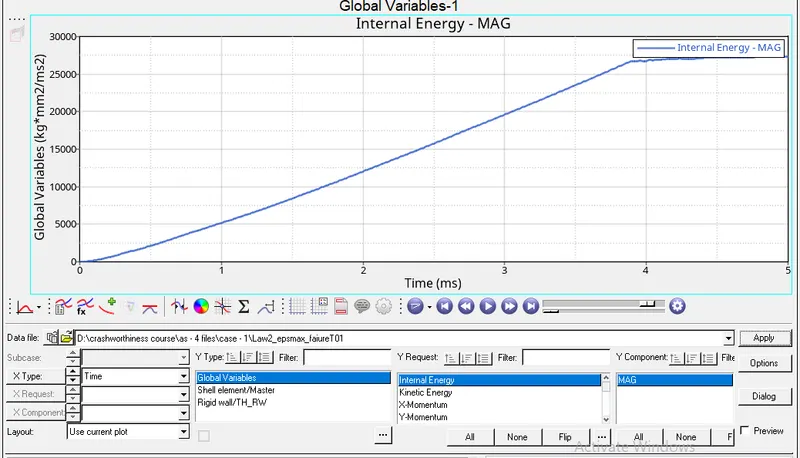
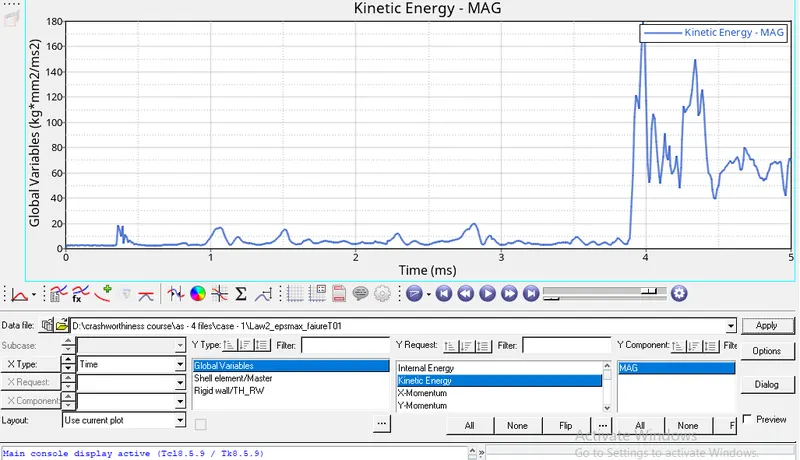
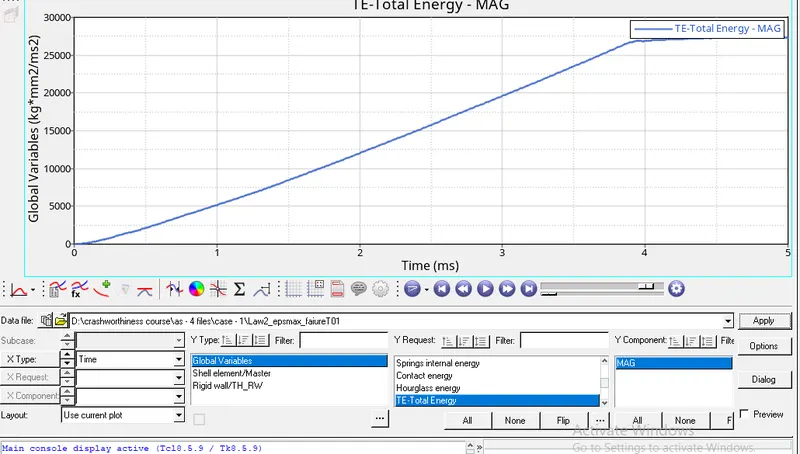
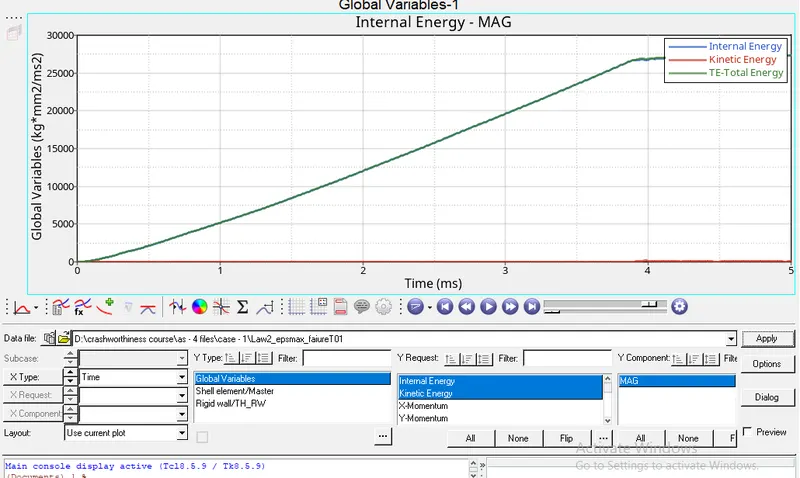
- before element deletion , internal energy increases linearly this increase due to the formation of strain energy
- max. internal energy is nearly 28000j
- max. kinetic energy is 180
- total energy = internal energy +kinetic energy + potential energy (negligible)
- compare to internal energy, kinetic energy is very less i.e. total energy curve is almost coincide with the internal energy curve
case 2 :- law2_epsmax_crack
- change the properties of fail_johnson card to Ifail_sh=1, Dadv=1, Ixfem =1
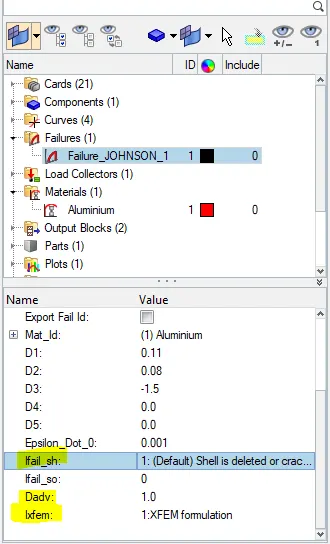
- following the above mentioned procedure to run simulation and rename it as law2_epsmax_crack_0000.rad
- after completing simuation open law2_epsmax_crack_0001.out file
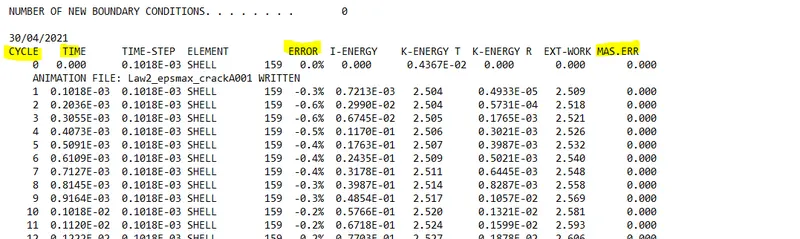
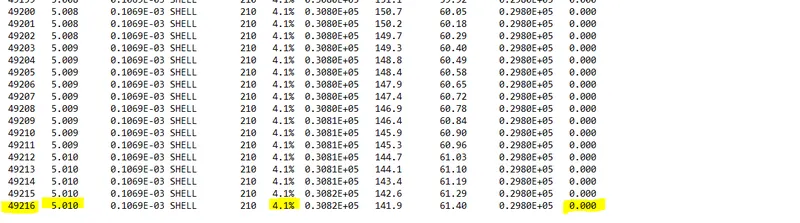
| material | no.of. cycles | energy error | mass error | time |
| law2_epsmax_crack | 49216 | -0.3 to 4.1 | 0.00 | 5.010 |
- compare to case 1, in this case no.of cycles are reduced but enrgy error is incrased and time remains constant.
von mises stress contour plot
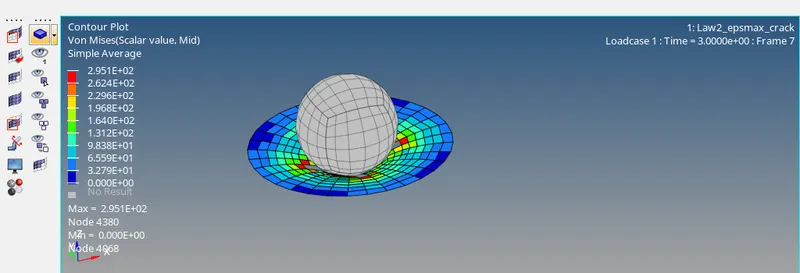
- max von misses stress is 295.1 mpa at node 4380
- in this case we taken M2_PLAS_JOHNS as card image
- M2_PLAS_JOHNS is a elasto - plastic material , so elements are deleted once it reaches the EPS_p_max value
- in this case EPS_p_max is 0.151 it means elements will deleted when plastic strain energy reaches the 15% of total strain energy
- because of Ixfem=1 element is not scattred similar to case1.
- compare to case1 , stresses are generated a little more in this case.
plot energies vs time
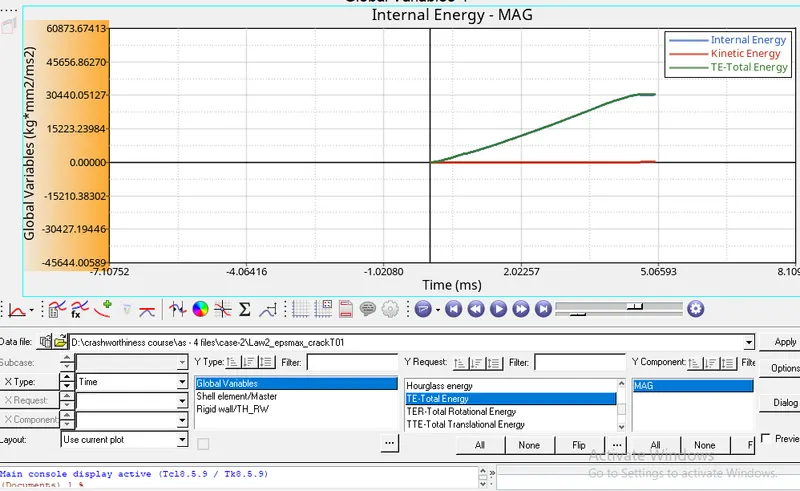
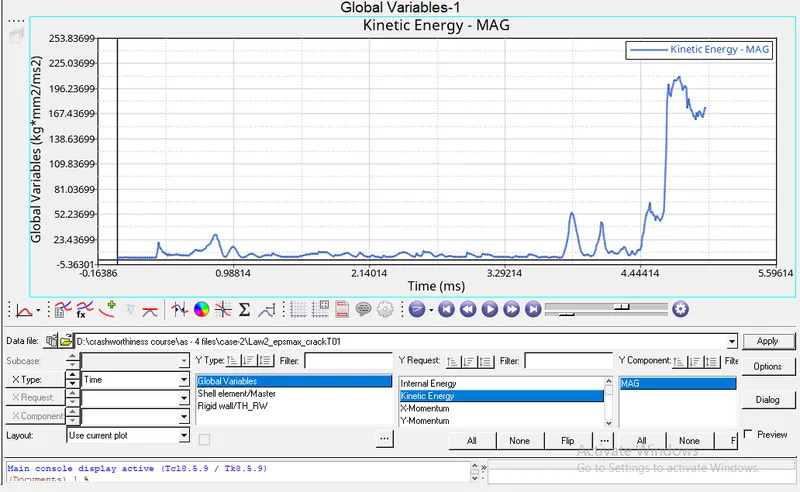
- behaviour graph is similar to case 1
- max. internal energy more than 30000j
- max. kinetic energy is 210
- compare to internal energy, kinetic energy is very less i.e. total energy curve is almost coincide with the internal energy curve
case 3 :- law2_epsmax_nofail
- in this case delete fail_johnson card and run the simuation.
- after completing simuation open law2_epsmax_nofail_0001.out file
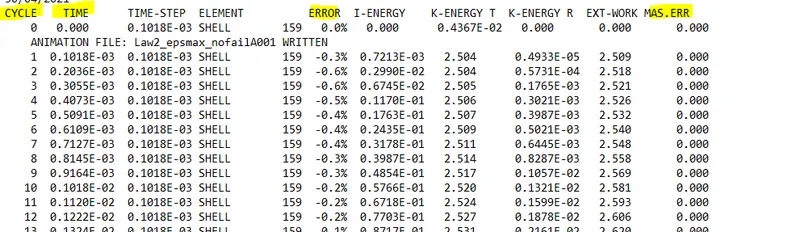
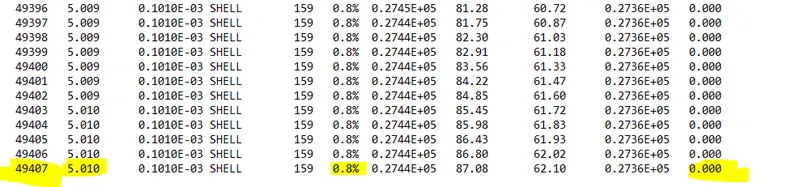
| material | no.of. cycles | energy error | mass error | time |
| law2_epsmax_nofail | 49407 | -0.3 to 0.8 | 0.00 | 5.010 |
von mises stress contour plot
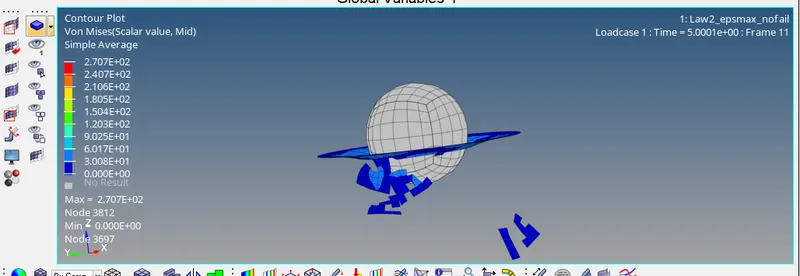
- max von misses stress is 270.7 mpa at node 3812
- in this case we taken M2_PLAS_JOHNS as card image
- M2_PLAS_JOHNS is a elasto - plastic material , so elements are deleted once it reaches the EPS_p_max value
- in this case EPS_p_max is 0.151 it means elements will deleted when plastic strain energy reaches the 15% of total strain energy
- compare to case1 , stresses are generated a little less in this case.
plot energies vs time
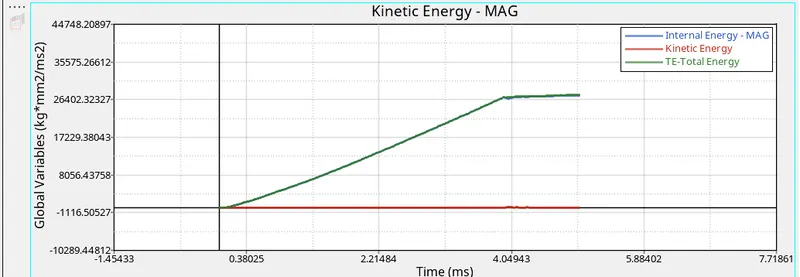
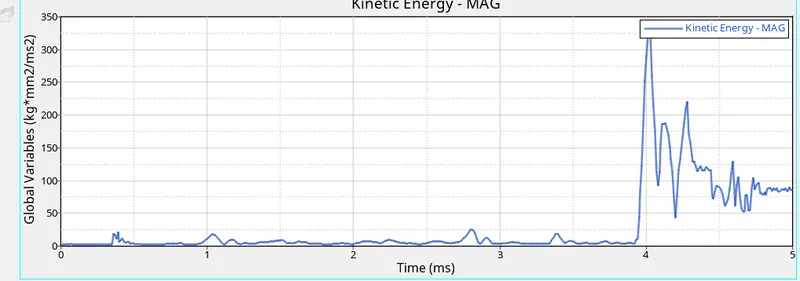
- behaviour of graph is almost similar to case1
- max. internal energy more than 27500j
- max. kinetic energy is 340
- compare to internal energy, kinetic energy is very less i.e. total energy curve is almost coincide with the internal energy curve .
case 4 :- law2
- in this case delete the EPS_P_MAX value and run the simuation with name law2.
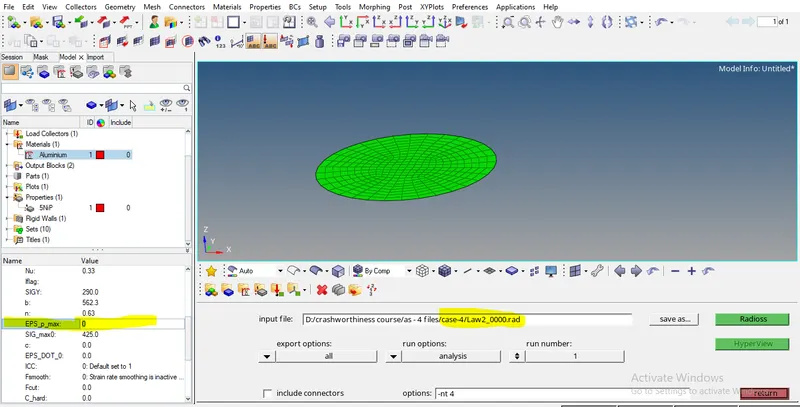
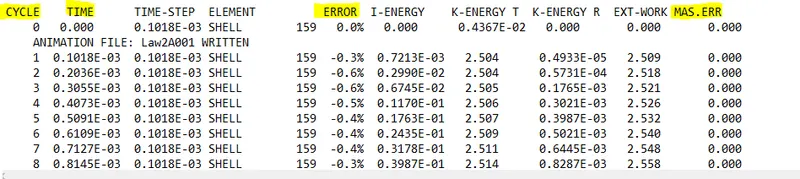
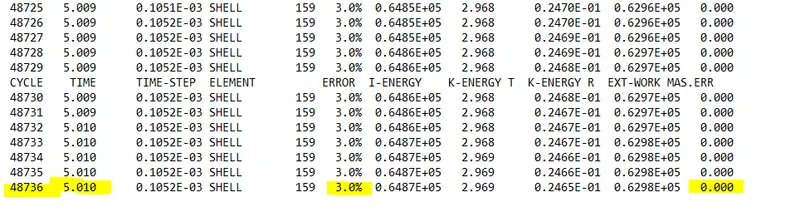
- after completing simuation open law2_0001.out file
| material | no.of. cycles | energy error | mass error | time |
| law2 | 48376 | -0.3 to 3 | 0.00 | 5.010 |
von mises stress contour plot
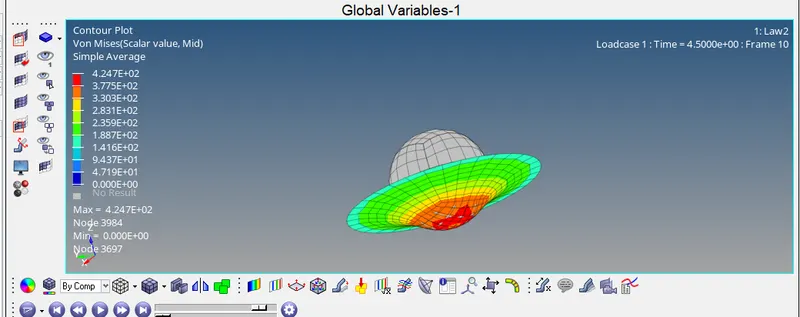
- max von misses stress is 424.7 mpa at node 3984
- in this case elements are not deleted , because of EPS_P_MAX is zero it means material will fail when it reaches its 100% strain energy
- due to elements are not getting deleted, resistance of plate is increases hence more stresses are generated.
energy plot vs time
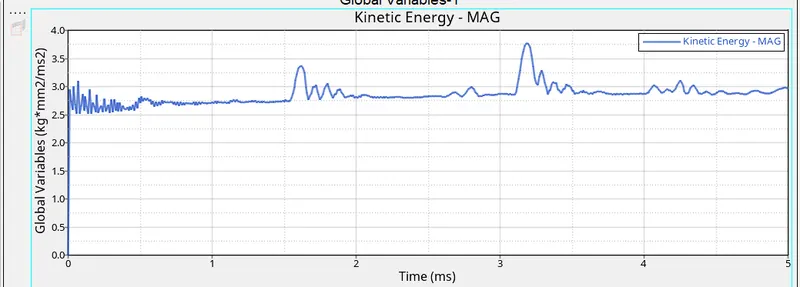
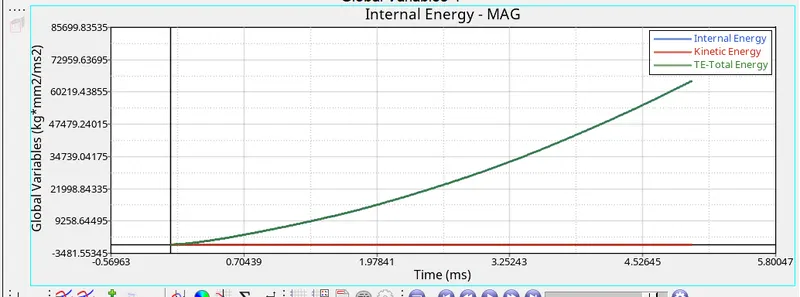
- max. internal energy more than 65000j
- max. kinetic energy is 3.75
- internal energy generated in this case is more than case 1,2,3.
- in previous cases elements gets deleted so less internal energy was generated but in this case elements are not deleted hence more internal energy developed.
case 5 :- law1_elastic
- in this case convert material model to law1 with same density , E , and nu
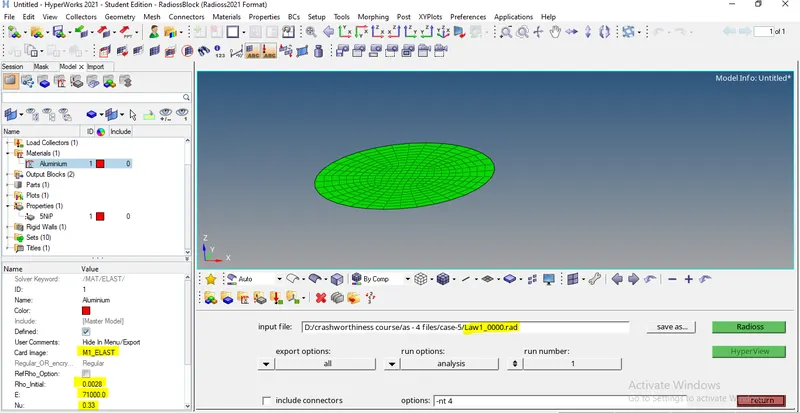
- after completing running simulation , open law1_0001.out
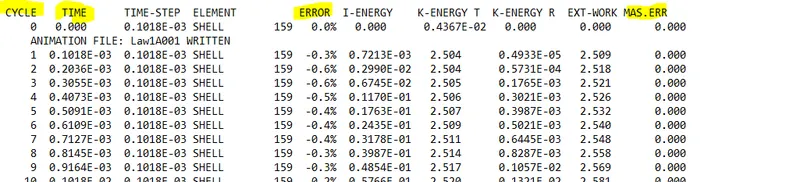
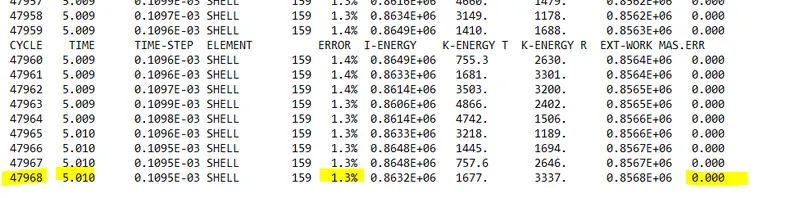
| material | no.of. cycles | energy error | mass error | time |
| law2 | 47968 | -0.3 to 1.3 | 0.00 | 5.010 |
von mises stress contour plot
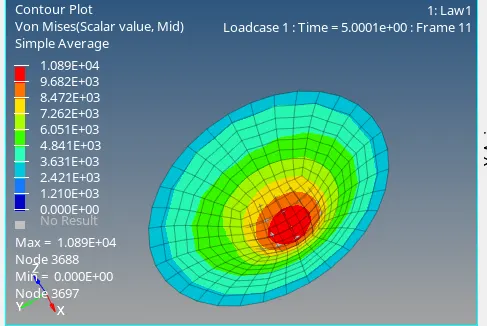
- max von misses stress is 10890 mpa at node 3688
- we taken law1 as card image , law 1 is a isotropic- eastic material
- in this elements are not deleted and high stresses are generated.
energy plot vs time
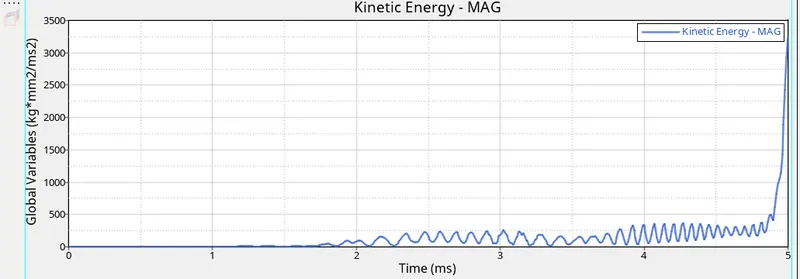
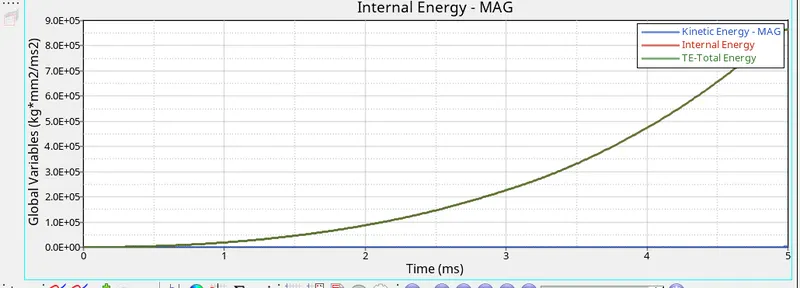
- max. internal energy more than 850000j
- max. kinetic energy is3250
- internal energy generated in this case is more than case 1,2,3,4.
case 6 :- law27
- open model law27_0000.rad and use below mat card and shell property
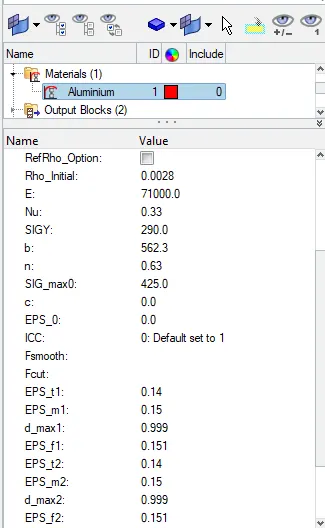
-
Ishell= 24
Ismstr=2
Ish3n = 2
N = 5
Ithck= 1
Iplas=1
- after running simuation open law27_0001.out file
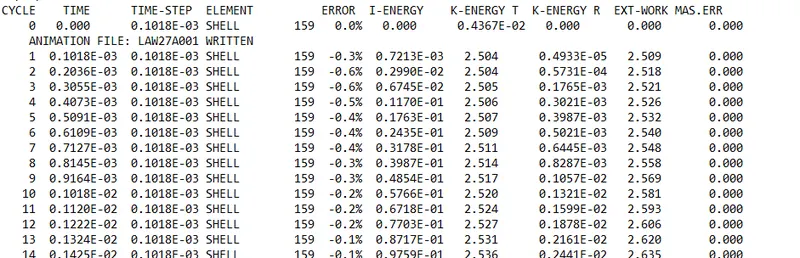

| material | no.of. cycles | energy error | mass error | time |
| law27 | 49506 | -0.3 to 0.8 | 0.00 | 5.010 |
von mises stress contour plot
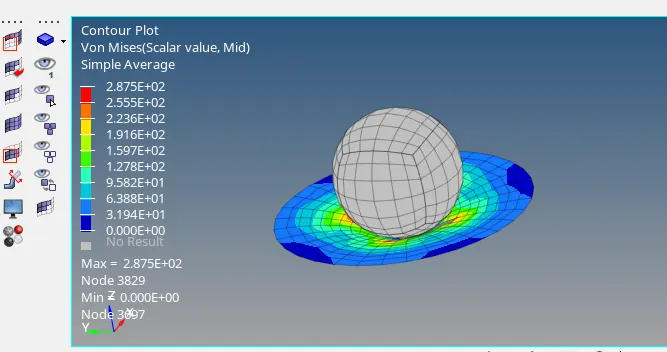
- max von misses stress is 287.5mpa at node 3829
- law 27 is a isotropic eastic - plastic brittle material , in this case elements get cracked not deleted
energy plot vs time
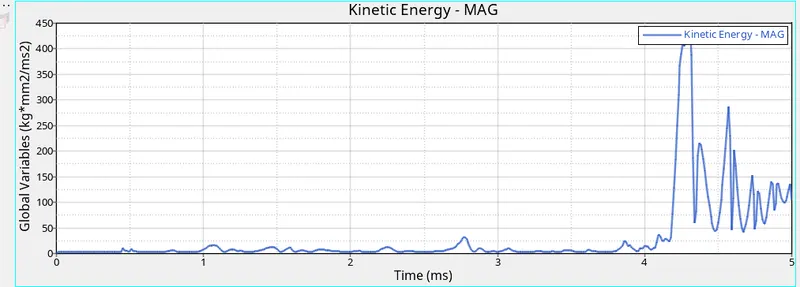
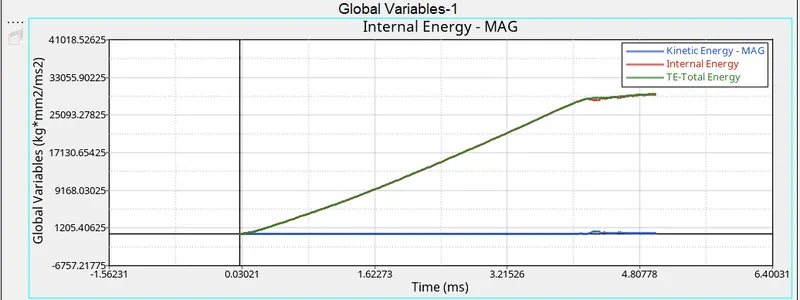
- max. internal energy is nearly 30000j
- max. kinetic energy is 425
case 7 :- law36 elasto - plastic
- select M36_PLAS_TAB card image , take values as same as in before cases
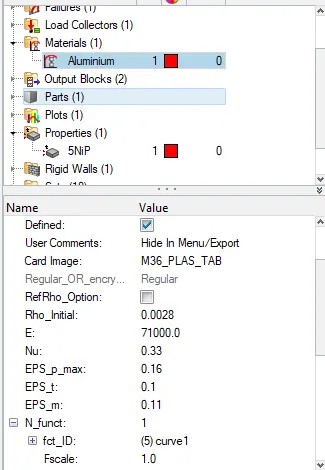
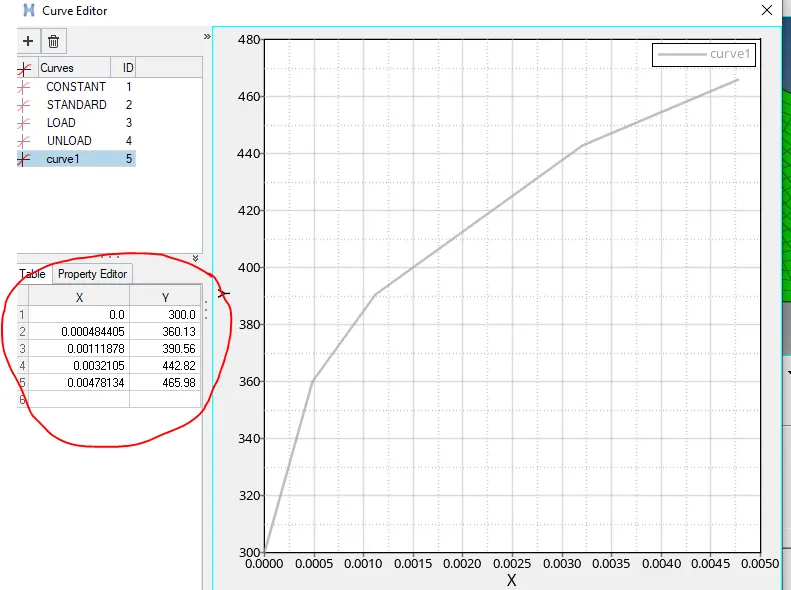
- in N_funct below data used to generate curve
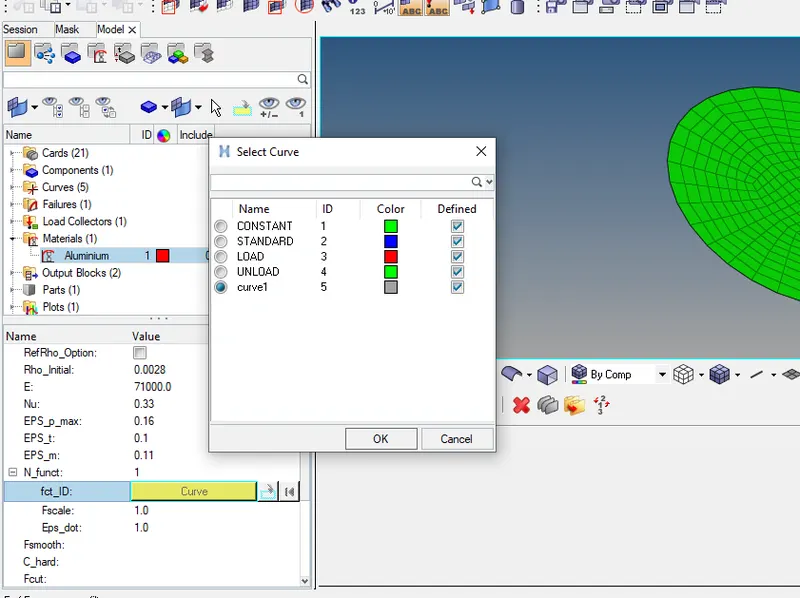
- after creating the curve assign to material
- run the simulation
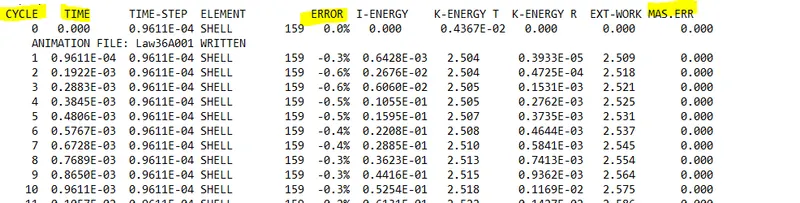
- after running simuation open law36_0001.out file
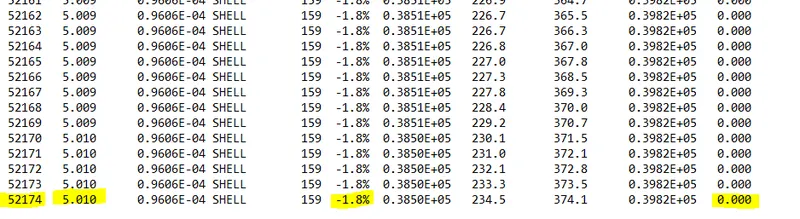
-
material no.of. cycles energy error mass error time law36 52174 -0.3 to -1.8 0.00 5.010
von mises stress contour plot
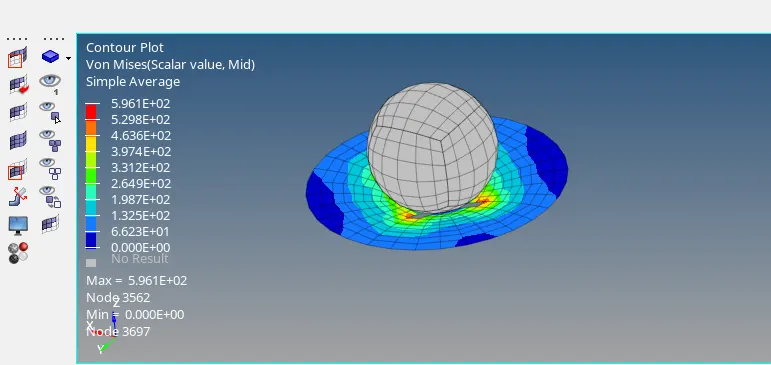
- max von misses stress is 596.5mpa at node 3562
- elements are deleted
energy plot vs time
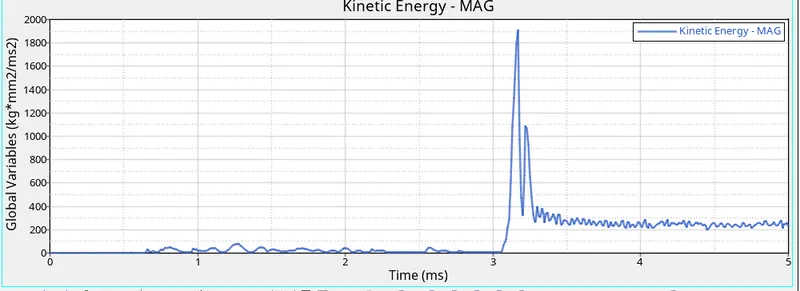
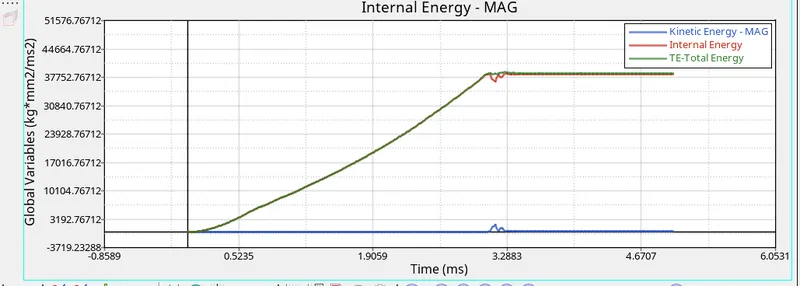
- max. internal energy is nearly 40000j
- max. kinetic energy is 1900
- total energy = internal energy +kinetic energy + potential energy (negligible)
- compare to internal energy, kinetic energy is very less i.e. total energy curve is almost coincide with the internal energy curve
comparison and conclusion
| case no | material | total no.of . cycles | energy error | mass error | simulation time | max.stress (mpa) | max.internal energy(J) |
| 1 | law2_epsmax_failure | 49379 | -0.3 to 0.8 | 0 | 5.010 | 275.2 | 28000 |
| 2 | law2_epsmax_crack | 49216 | -0.3 to 4.1 | 0 | 5.010 | 295.1 | 30000 |
| 3 | law2_epsmax_nofail | 49407 | -0.3 to 0.8 | 0 | 5.010 | 270.7 | 27500 |
| 4 | law2 | 48376 | -0.3 to 3 | 0 | 5.010 | 424.7 | 65000 |
| 5 | law1_elastic | 47968 | -0.3 to 1.3 | 0 | 5.010 | 10890 | 850000 |
| 6 | law27 | 49506 | -0.3 to 0.8 | 0 | 5.010 | 287.5 | 30000 |
| 7 | law36 elasto - plastic | 52174 | -0.3 to -1.8 | 0 | 5.010 | 596.5 | 40000 |
- elastic materials (law1) are not deleted and they produce max.stress and max. energy
- element delete is depends on EPS_P_MAX value
- if EPS_P_MAX is zero , then elements are not delete
- brittle material elements are cracked
- simulation time is constant for all materials
- law 36 material takes more no.of. cycles but energy error is minimum in this case
- selection of material card based on its application.