Assignment 4-RADIOSS Material Laws Challenge
RADIOSS Material Laws
OBJECTIVE
- Run the model , Name it Law_epsmax_failure
- In / Fail/JOHNSON Change ifail_sh=1 Dadv=1 and Ixfem=1 .Run the model asLaw_2epsmax_crack
- Delete /Fail/JOHNSON card. Run model as Law2_epsmax_nofail
- Delete the value of EPS_P_max and run the model with name law2
- Convert this material model to law1 elastic with the same density E,nu, and run it .Then check the results
- Convert the card to law36 elasto plastic based on the details given
- Open LAW27_0000.RAD
- Change the shell properties to recommend shell properties
- Notice the material card Johnson cook parameters but with different values for EPS based failure
- Run the model with name Law27
Compare 7 cases as discussed in the last 3 slides, in a tabulated format based on:
1. The Total number of cycles, Energy error, mass error, and simulation time.
2. Notice the animation of all 5 and describe the animations in brief based on whether the elements are being deleted or cracked.
3. Plot energies and notice any difference.
4. Based on all the results, which case would represent the on-field scenario.
5. Prepare a ppt/Docx and list down case by case results and your conclusion as to why the failure happened.
PRODECURE
CASE 1 Law_espmax_failure
- First import the file FAILURE_JOHNSON_0000.rad into solver
- Now go to analysis-Radioos .This will give us out files from radioos
- Now go to file FAILURE_JOHNSON_0001.out from here we will get energy and mass error
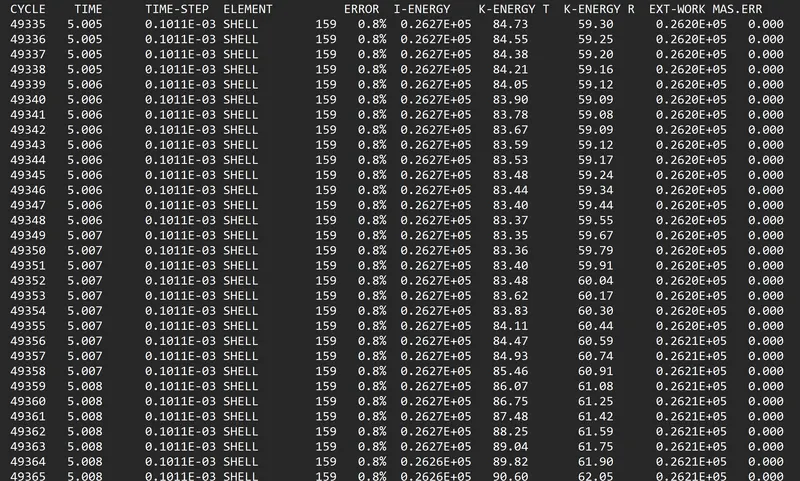
- Energy error is below 5% so it is an acceptable error
- Now to run simulation go to hyperview-import h3d file- apply contour - select von misses stress select averaging method as simple - apply
- Now run the simulation
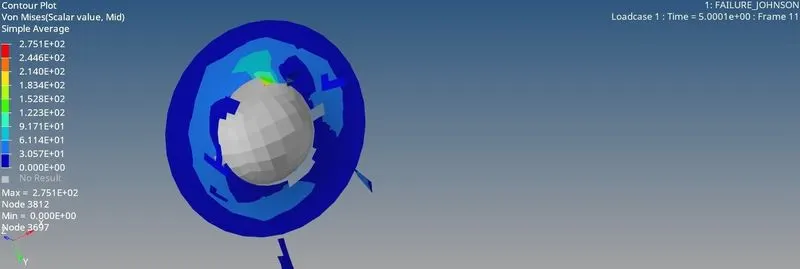
- From above fig max stress comes as 275.1 Mpa at node 3812
- As we have set EPS_p_max=0.151 it means that the element will get deleted when starin energy in rupture plate reaches 15% of total strain energy
- It can be seen in above image that elements are deleted
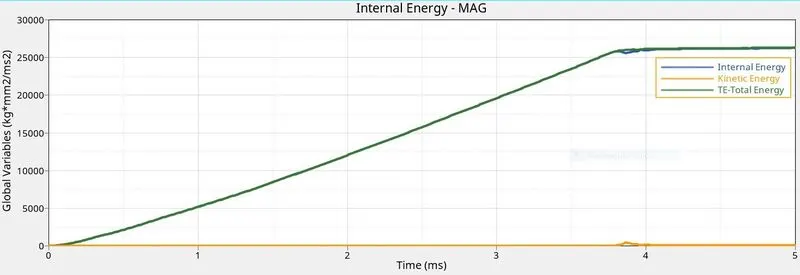
- From the above graph it can be seen that internal and total energy goes on increasing with time because plate is resisting the punch force .Max value of both is 26500J
- It can be seen that internal energy increases till 4ms it is because plate is able to absorb the force applied by punch .After 4ms energy becomes almost constant it is because plate started rupturing
- Kinetic energy is zero as there is no movement of rupture plate is involve
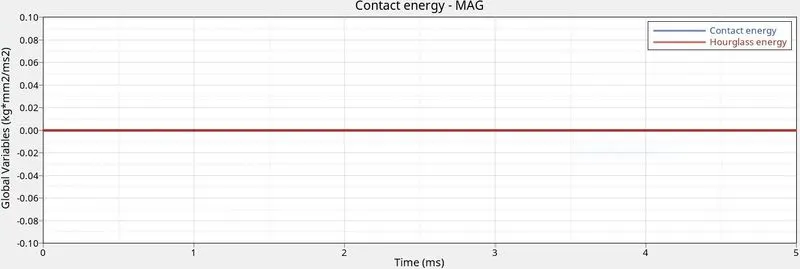
- Contact energy and Houe glass energy is zero because we have used Ishell = 24 QEPH
CASE 2 Law2_epsmax_crack
- First import the file FAILURE_JOHNSON_0000.rad into solver
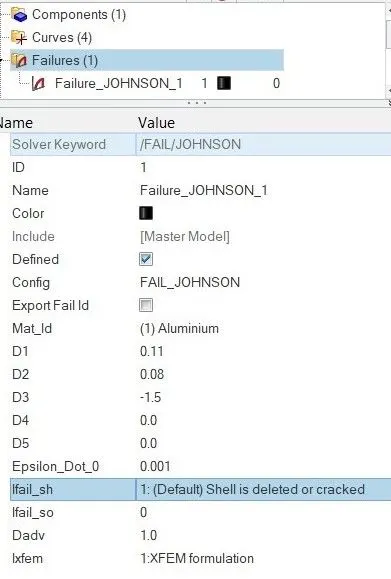
- Now go to Failure -Failure_Johnson_1-change Ifal_sh=1 Dadv=1 and Ixfern=1
- Now go to analysis -Radioos .This will give us out files from radioos
- Now go to file FAILURE_JOHNSON_0001.out from here we will get energy and mass error
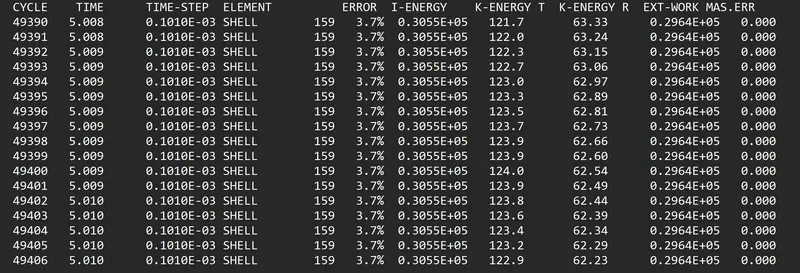
- Energy error is below 5% so it is an acceptable value
- Now to run simulation go to hyperview - import - h3d file - apply contour - select von misses stress select averaging method as simple - apply
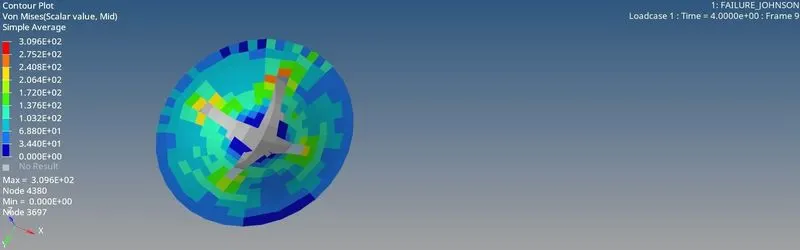
- From above max stress comes as 309.06 Mpa at node 4380 .Due to the cracking phenomenon we have observed little more stress that case 1
- As in this case we have set Ixfem=1 this failure criteria will lead to element cracking instead of element or layer deletion
- Dadv function is element cracks
- If the element has no failed neighbour and D-1 then in this case new crack intialization in element
- If the element has failed neighbour and D - Dadv then in this case crack advanced and Dadv used for crack advancement Dadv will be only used if existing crack arrives to a boundary of an element
- Element deleted if a second crack arrives to same element
- Case 2 is like first cracking and then deleting element
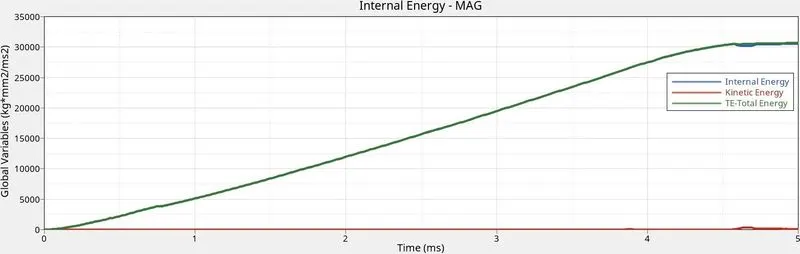
- From above graph it can be seen that internal and total energy goes on increasing with time because plate is resisting the punch force .Max value of both is 31000j .In this case max value energy is more than case1 as less energy got dissipated .This because of less no of elements got deleted as we have used Ixfem and Dadv values
- It can be seen that internal energy increases till 4.5ms it is because plate is able to absorb the force applied by punch .After 4.5ms energy becomes almost constant it is because plate started rupturing
- Kinetic energy is zero as there is no movement of rupture plate is involve
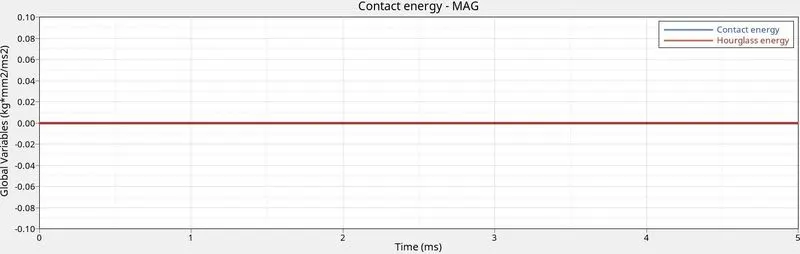
- Contact energy and hourglass energy is zero because we have used Ishell - 24
CASE 3 Law2_epsmax_nofail
- First import the file FAILURE_JOHNSON_0000.rad into solver
- Now go to model - failure - delete the Failure_Johnson_1
- Now go to analysis - Radioos .This will give us out files from radioos
- Now go to file Failure _JOHNSON_0001.out From here we will get energy and mass error
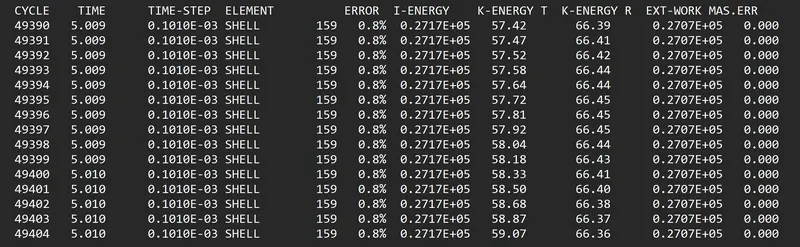
- Energy error is below 5% so it is an acceptable value
- Now to run simulation go to hyperview - import - h3d file - apply contour - select von misses stress select averaging method as simple - apply
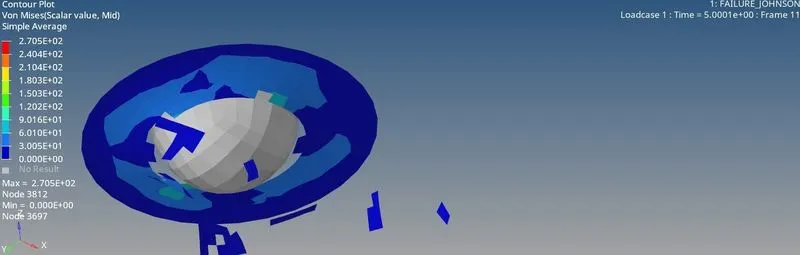
- From above fig max stress comes as 270.5 Mpa at node 3812
- As in this we havent specified any failure card so EPS_p_max is set to 0.151 and Ixfem =0 by default
- It can be seen above image that element got deleted .Max stress induced in this case is little less that case 1
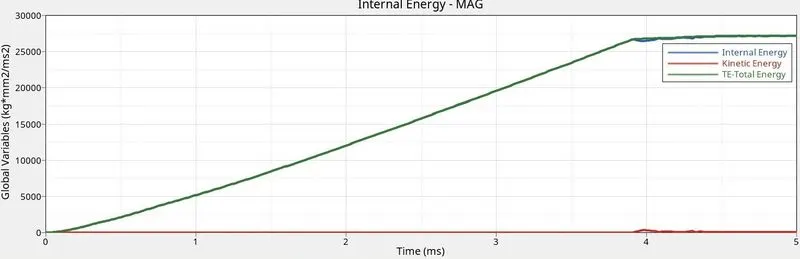
- From the above graphs it can be seen that internal and total energy goes on increasing with time because plate is resisting the punch force .Max value of both is 27000J
- It can be seen that internal energy increases till 4ms it is because plate is able to absorb the force applied by punch .After 4ms energy becomes almost constant it is because plate started rupturing
- Kinetic energy is zero as there is no movement of rupture plate is involve
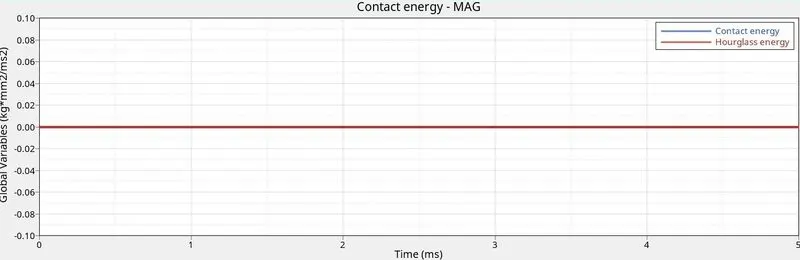
- Contact energy and Hourglass energy is zero because we have used Ishell-24
- Total energy is also little bit more than case1
CASE 4 Law 2
- First import the file FAILURE_JOHNSON_0001.rad into solver
- Now we get materials- Aluminium-set EPS_P_max zero
- Now go to analysis -Radioos -Click on radioos .This will give out files from radioos
- Now go to file FAILURE_JOHNSON_0001.out from here will get energy and mass error

- Energy error is below 5% so it is an acceptable value
- Now to run simulation go to hyperview - import - h3d file - apply contour - select von misses stress select averaging method as simple - apply
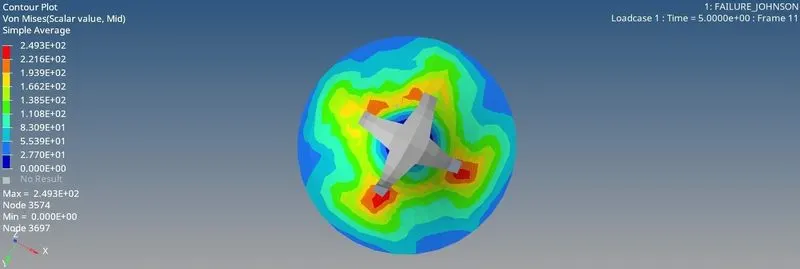
- From above fig max stress comes as 249.3Mpa at node 3574 .Which is less than all the cases
- In this case EPS_P_max is kept zero but the failure card is still present having Ifail_sh value = 2 default which means for each integration point the stress tensor is set to zero
- EPS_P_max = 0 alone will not let the element to be get deleted
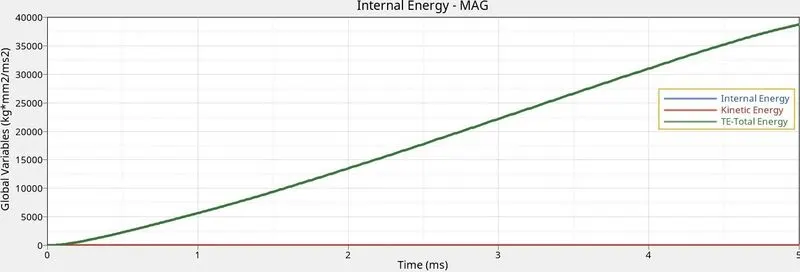
- From above graph it canbe seen that innternal and total energy goes increasing with time because plate is resisting the punch force Max value of both is 38000J
- Energy is increased till the end of the cycle
- Kinetic energy is zero as there is movement of rupture plate is involve
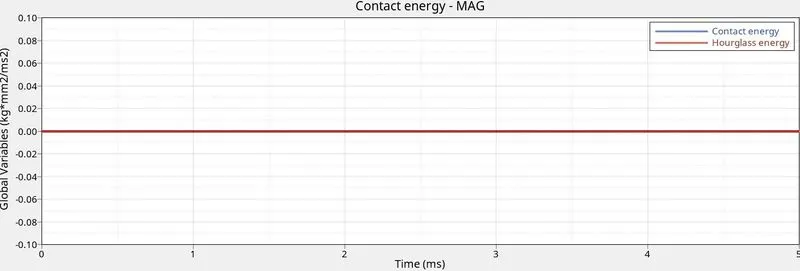
- Contact energy and Hourglass energy is zero because we have used Ishell-24
CASE 5 Law 1 Elastic
- First import the file Failure_JOHNSON_0000.rad into solver
- Now go to model-failure and delete the failure_Johnson_1
- Now go to materials - Aluminium - change the image card to M1_ELAST , Entry values of density , Poisson's ratio and young's modulus
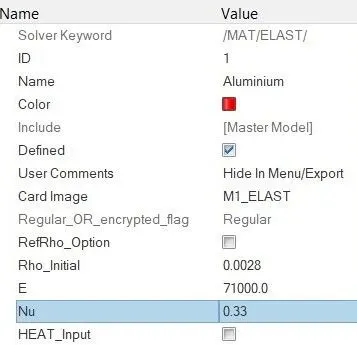
- Now go to analysis - Radioos .This will give us out file from radioos
- Now go to file FAILURE_JOHNSON_0001.out .From here we will get energy and mass error
- Energy error is below 5% so it is an acceptable value
- Now to run simulation go to hyperview - import - h3d file - apply contour - select von misses stress select averaging method as simple - apply
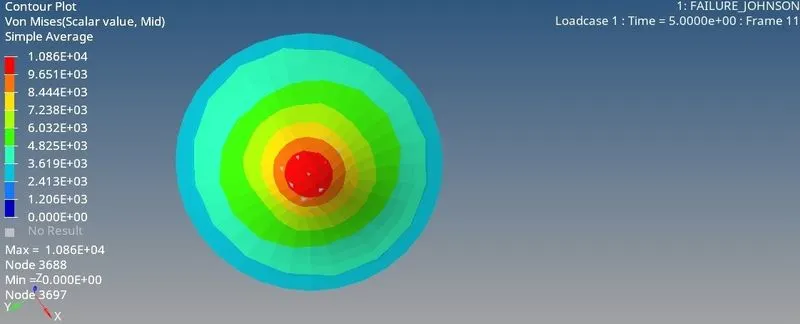
- From above fig max stress comes as 10860 mpa at node 3812
- In this case stress included is high because there is no failure criteria and we have defined the material as elastic nature .Thus the rupture plate act as elastic material as elastic material and whatever deformation is there will take place in elastic phase only .Thus more strain will cause more stress
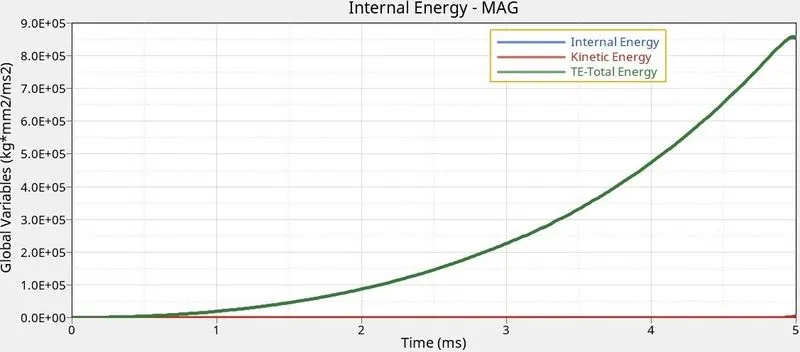
- Internal and total goes on increasing exponentially with time because plate is resisting the punch force till last travel of the punch .Max value of both 800000J
- Kinetic energy is zero as there is no movement of rupture plate is involve
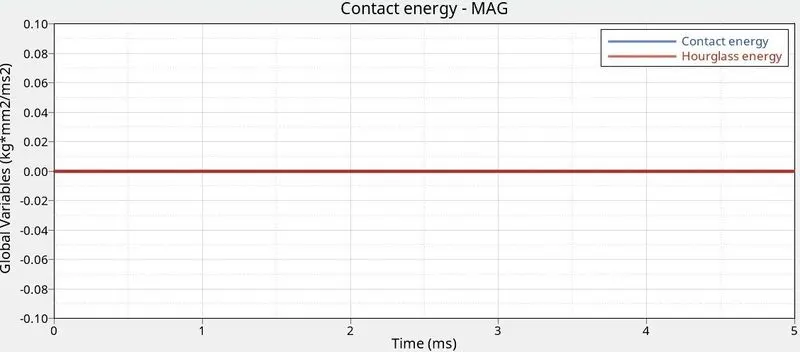
- Contact energy and Hour glass energy is zero because we have used Ishell=24
CASE 6 Law36 Elasto Plastic
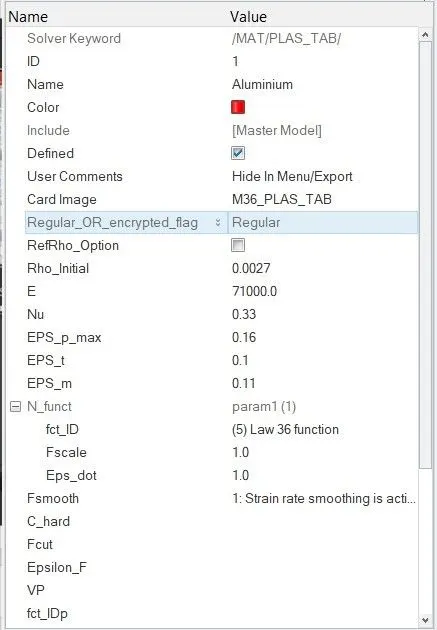
- It is a different type of law it consist isotropic elasto-plastic material using user defined function for the work hardeningportion of the stess strain curve for different strain rates
- It is widely used in industries because of its special facility to feed lab stress strain data into material card
- Results from this material card is near to actual condition
- Now first import the file FAILURE_JOHNSON_0000.rad into solver
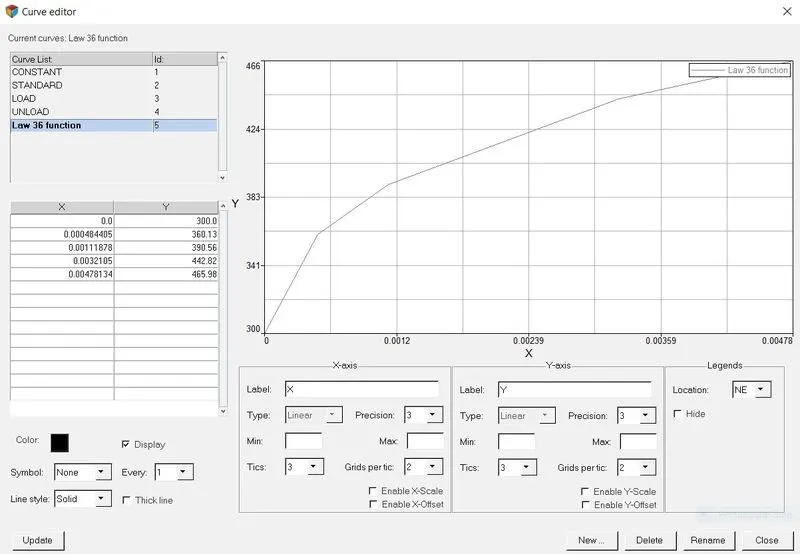
- Now select the created functionas a function 1D and set Fscale =1 and Eps_Dot=1
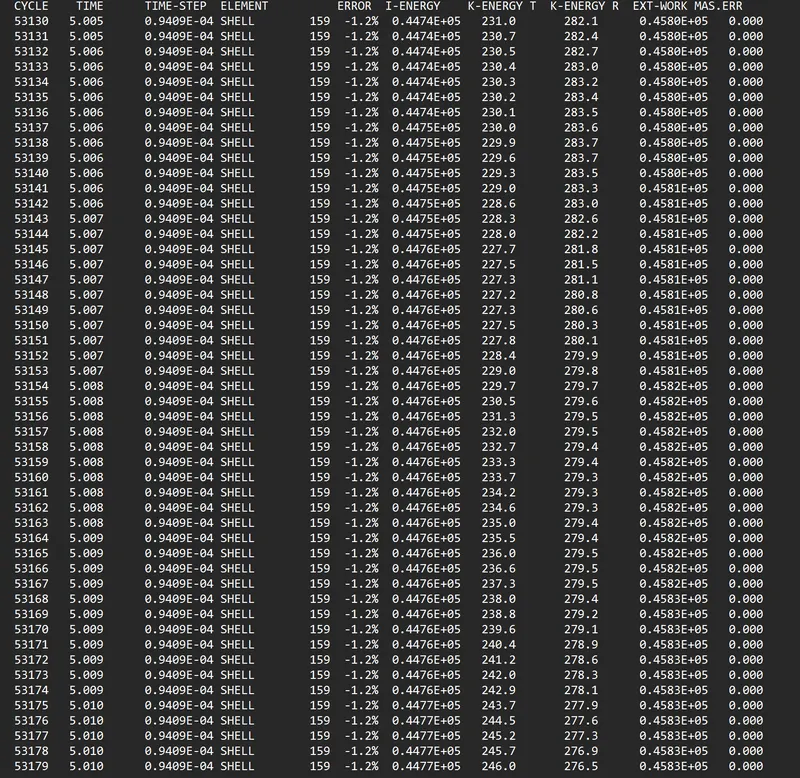
- Energy error is below 5% so it is an acceptable value
- Now to run simulation go to hyperview - import - h3d file - apply contour - select von misses stress select averaging method as simple - apply
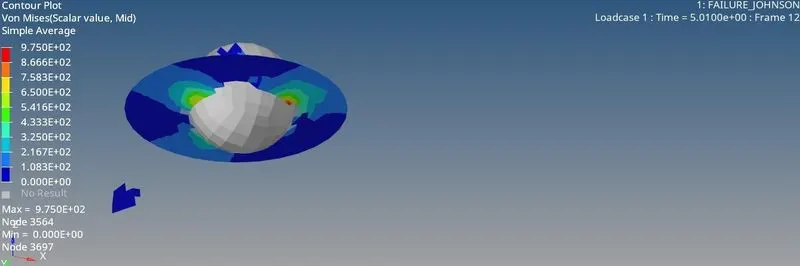
- From above fig max stress comes as 975 mpa to node 3564
- Also stress value is more than ultimate stress of 425Mpa
- In this case as we have specified the value of EPS_max = 0.16 so after this value% of strain elements have been deleted
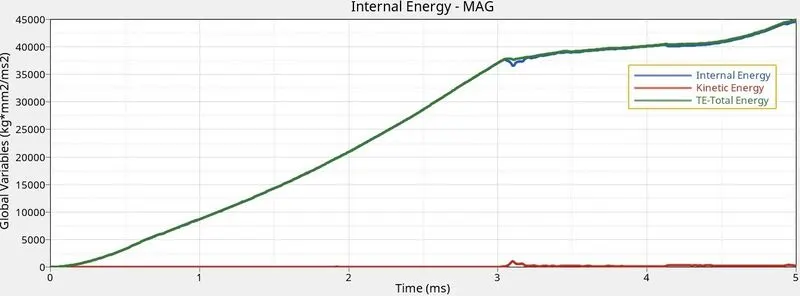
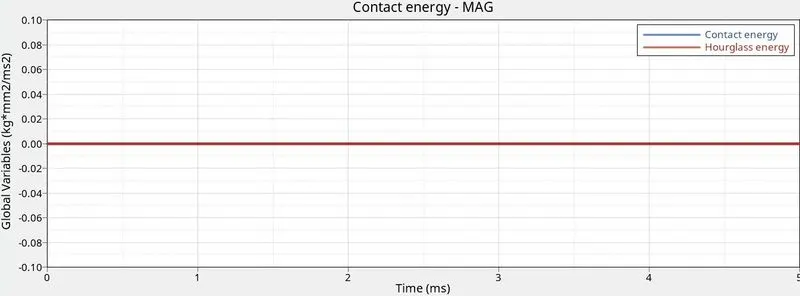
- From the above graph it can be seen that internal and total energy goes on increasing exponetially with time till 3rd ms at this point strain reaches EPS_t and value of stress starts reducing thus energy graph becomes constant after 3rd ms. Max value of energy for both is 45000J
- Kinetic energy is zero as there is no movement of rupture plate is involve
- Contact energy and Hourglass energy is zero because we have used Ishell = 24
CASE 7 LAW27
- This law combines an isotropic elasto -plastic Johnson cook material modle with an orthographic brittle material failure model .Material damage is accounted for prior to failure.Failure and damage occur only in tension .This law is only for shells
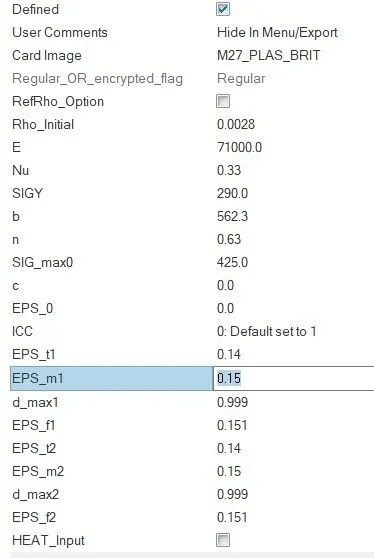
- EPS_t1 - It is a tensile failure strain at which stress starts to reduce
- EPS_m1 - Maximum tensile failure strain in prinicipal starin direction 1 at which the stess in the element is set to a value dependent on dmax1
- D_max_1 - Maximum damage factor in prinicipal strain direction 1 it controls the damage between EPS_f1 and EPS_t1
- EPS_f1 - Maximum tensile strain for element deletion in principal strain direction1
- EPS_t2 - Tensile Failure strain at which stress starts to reduce in the principal strain direction 2
- EPS_m2 - Maximum tensile strain in principal strain direction 2 at which the stress element is set to a value dependent on dmax2
- D_max2 - Maximum damage factor in principal starin direction 2 it controls the damage between EPS_f2 and EPS_t2
- EPS_f2 - Maximum tensile strain element deletion in prinicipal strain direction 2
- First set all recommended shell properties
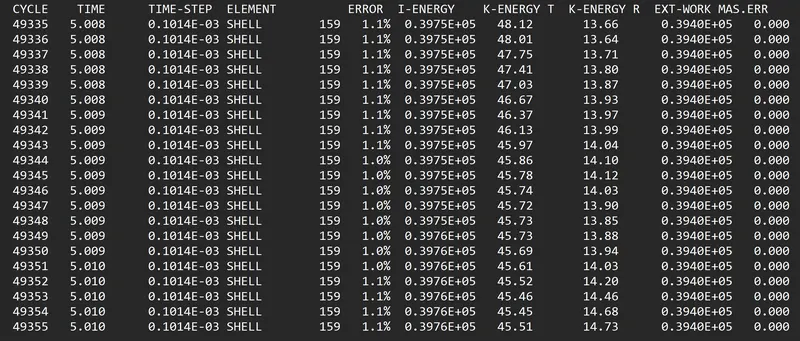
- Energy error is below 5% so it is an acceptable value
- Now to run simulation go to hyperview - import - h3d file - apply contour - select von misses stress select averaging method as simple - apply
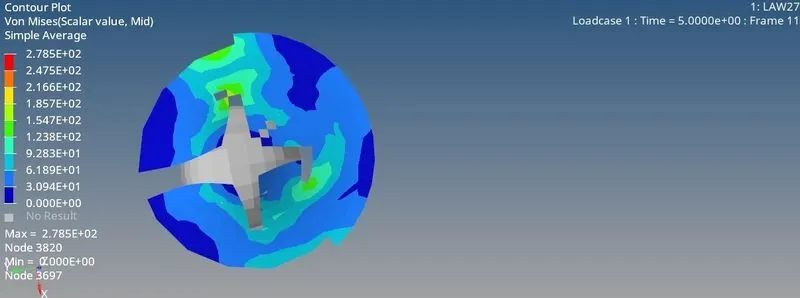
- Max stress comes as 278.5 Mpa at node 3820
- In this case it shows a brittle failure of elements
- As we have specified the value of EPS_f1=0.151 so after this value % of strain elements have been deleted
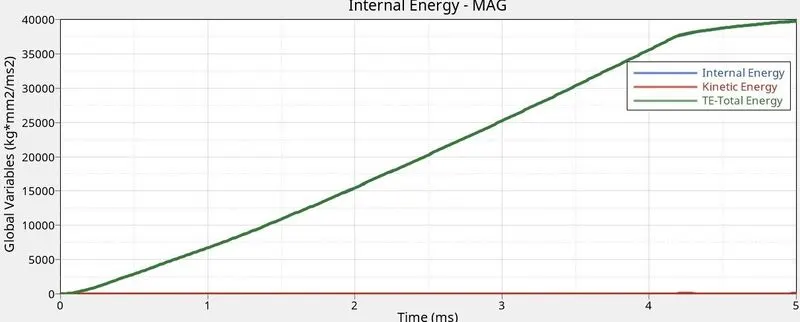
- Internal and total energy goes increasing it is most linear upto 4.2ms but after that its slope of line is reduced it may be due to starting of element failure. Max value of energy for both is 40000J
- Kinetic energy is zero as there is no movement of rupture plate is involve
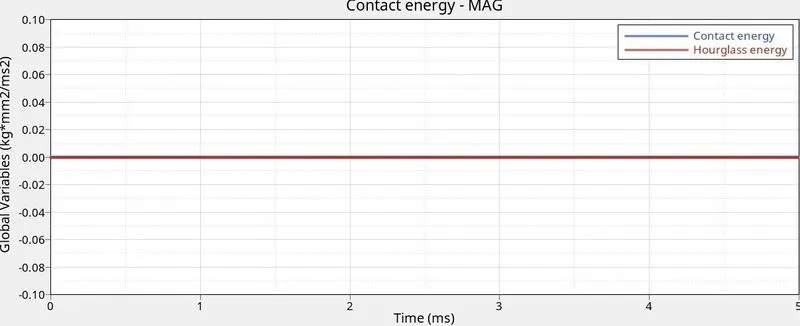
- Contact energy and hourglass energy is zero because we have used Ishell = 24
CONCLUSION
- Elements get deleted based on the value of EPS max
- If the element get cracked or deleted then the stress and internal energy induced is less
- Case 2 , 6 , 7 shows more on field scenario out of which case 6 is more realstic as wehave freedom to give inputs from lab data .Case 2 and 7 will give realstic result if the inputs given are more accurate
- Card selection is biased on its application