Assignment 4-RADIOSS Material Laws Challenge
- Objective :
- The main objective is to compairing of the Law 2 , Law 1 , Law 27 and the Law 36 with each other .
- Study of this Laws by Comparing them into the Seven different cases .
- Analysis of the Bahavior of the Energies ,deformation of the Given Model for seven different cases .
Case 1 :
Law2_epsmax_failure model :
- In this Model , The FAILURE_JOHNSON_0000.rad file is imporeted using the Import solver deck Tool .
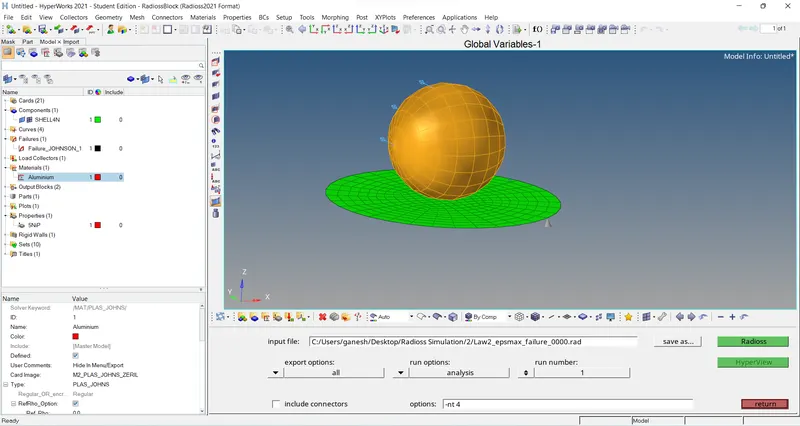
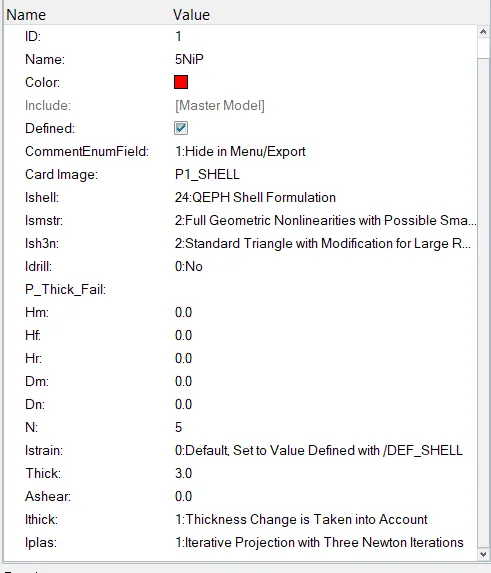
- Then its Elemental shell properties are checked and changed to the Recommonded if needed .
- Now this Model is made to run by the name of Law2_epsmax_Failure using the Analysis - Radioss Tool .
Results :
- In engine card the Simulation run time was set to the 5.01 miliseconds .
- The Total Number of the cycles are 49380 .
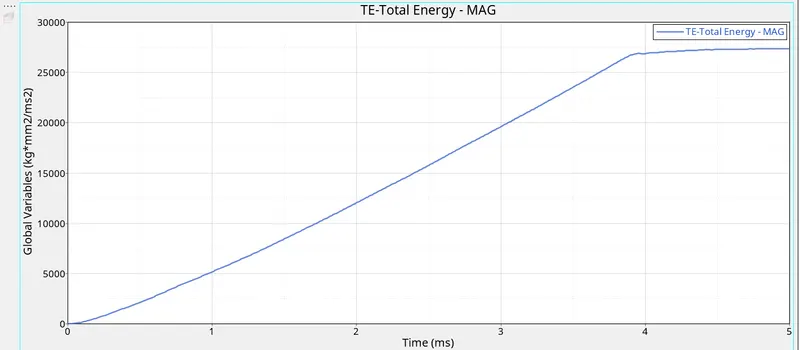
- From the Engine Out file , we can see that the Energy Error is in between -0.3 % to + 0.8 % which is acceptable for further process .
- The Energy error for the acceptance is ranges from - 15 % to + 5 % .
- The Mass Error for this model is Zero .
- The acceptable Mass Error is about max 2 % of the Total Mass of the model .
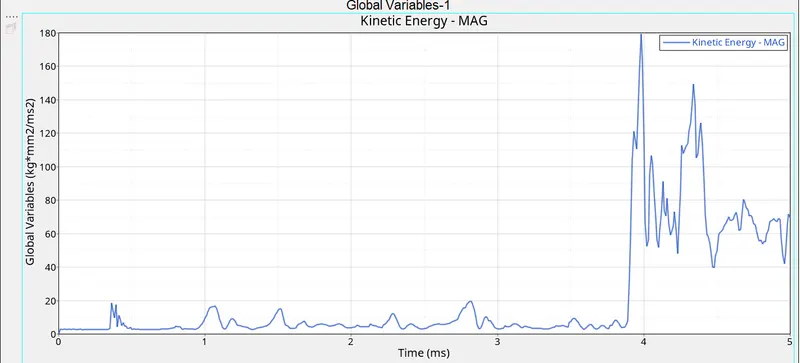
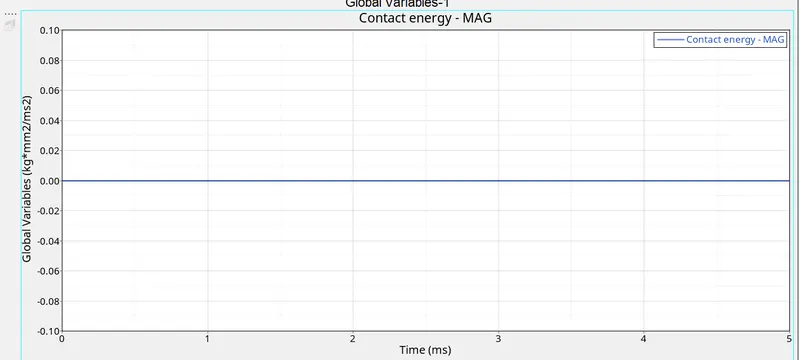
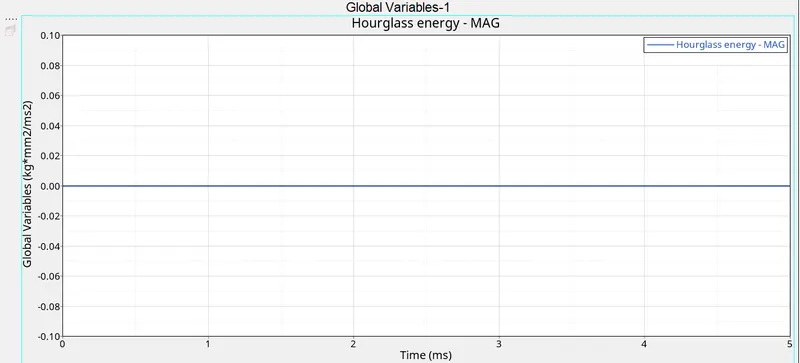
- Due to improvement in the shell properties to the recommonded , the Hourglass Energy and Contact Energy is stabalized very much to the Zero .
- Then this model Simulated in the Hyperview .
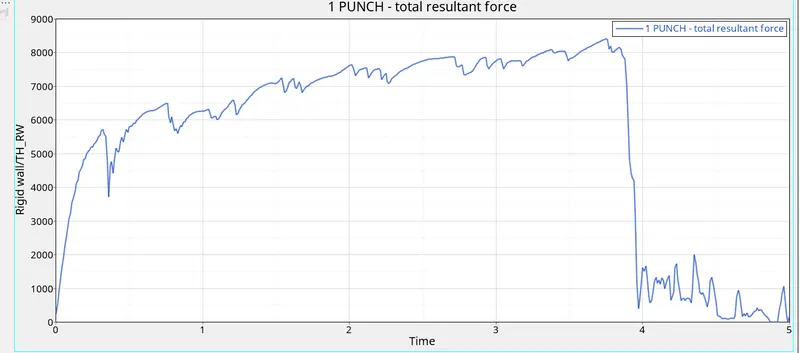
- From the simulation we can clearly see that Once the punch start to penetrate the Shell , the elements started to fail directly .
- For failure of the elements the M2_PLAS_JOHN_ZERIL / Law2 , in which the maximum Eps_max value is used for element as failing criteria .
- In Law2 the Strain rate is not taken into account .
- Once the Starin in the Elements is reaches to the Maximum Plastic Strain . It's gets deleted
- Here formation of the crack will not be happen as the values of the Ifail_sh , Dadv and Ixfem are set to zero .
Plots :
Rigid wall Resultant force
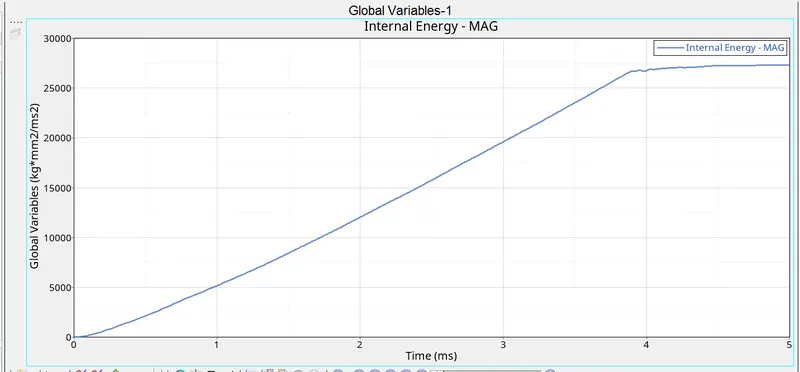
Internal energy
Kinetic Energy
Contact Energy
Hourglass Energy
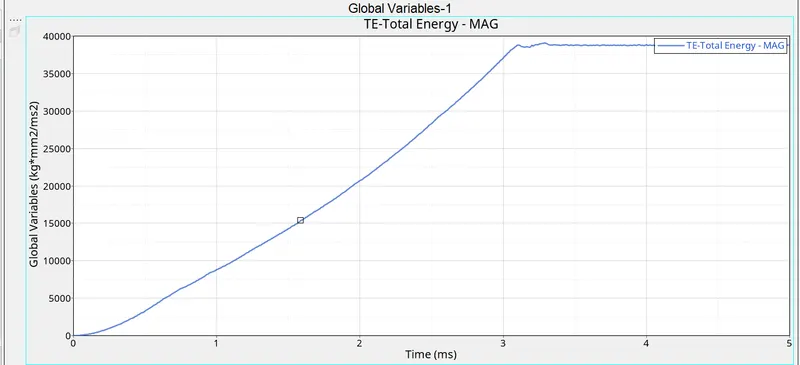
Total Energy
Case 2 :
Law2_epsmax_crack :
- For importing the model Radioss setup is done with Solver deck the FAILURE_JOHNSON_0000.rad file is imported .
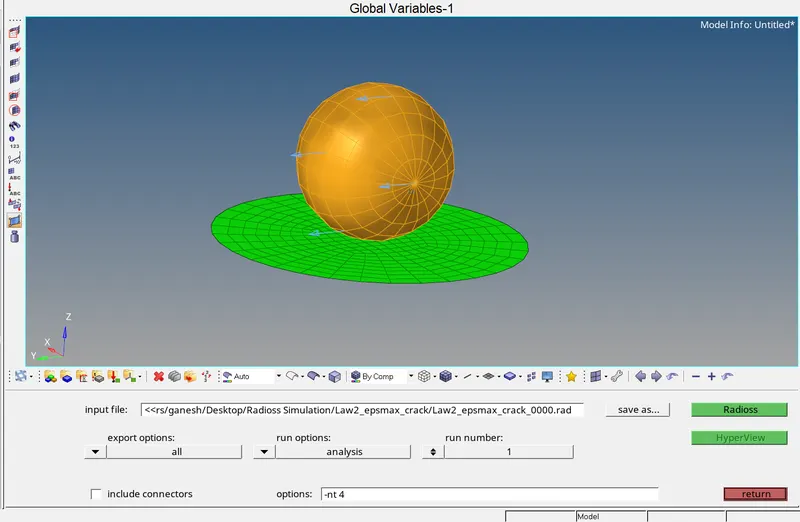
- In FAIL/JOHNSON/ failure Card , values of ifail_sh changed to 1 , Dadv to 1 and Ixfem to 1 .
- Then Model is made to run with Name as Law2_epsmax_Crack using the Analysis-Radioss Tool .
Results :
- The Run time is same as 1st case of 5.01 milisecond .
- Number of Cycles are 49217 .
- From the Engine out file The Energy Error is in between -0.3 % to +4.1 % .
- The Mass Error is about 0 .
- The Acceptable errors for energy error and the mass error are Between -15 % to + 5 % and maximum + 2% of the total mass
- Hence the Results are acceptable .
- The Crack Formation can be seen below .
- Elements are deleted when they reached to the Maximum Strain value ( eps_max ) .
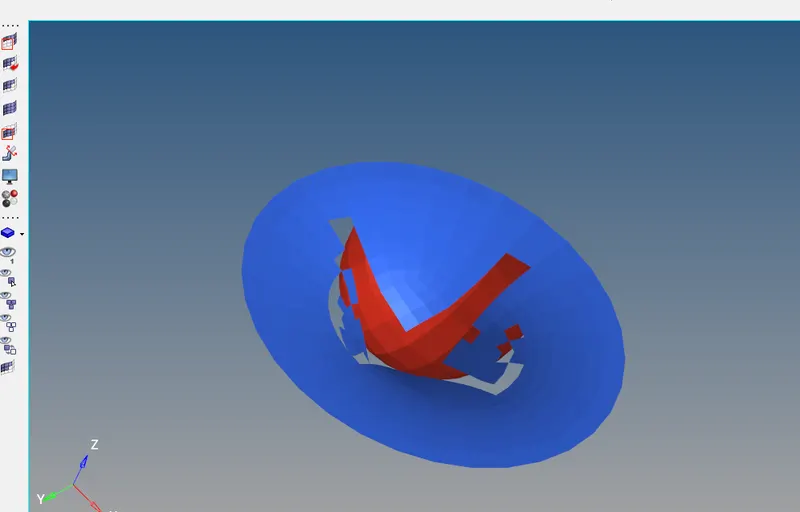
- This Crack propagation happed becuase of the change in value of the ifail_sh = This parameter is used to define the Shell failure point .
- Whether shell will crack or gets deleted is controlled by this parameter .
- Dadv is the Criteria for the Crack advancement .
- This Dadv value changes only Real between 0 and 1 .
- Maximum accumulation damage value D , is used for the Crack initiation .
- This Dadv will be active only if Ixfem = 1 .
- Ixfem is Failure Criteria for the Element Crack Formation instead of the element or layer deletion .
- This Ixfem only compitable with the with BT Q4 (Ishell=1, 2, 3 or 4), and QEPH (Ishell=24) shell elements .
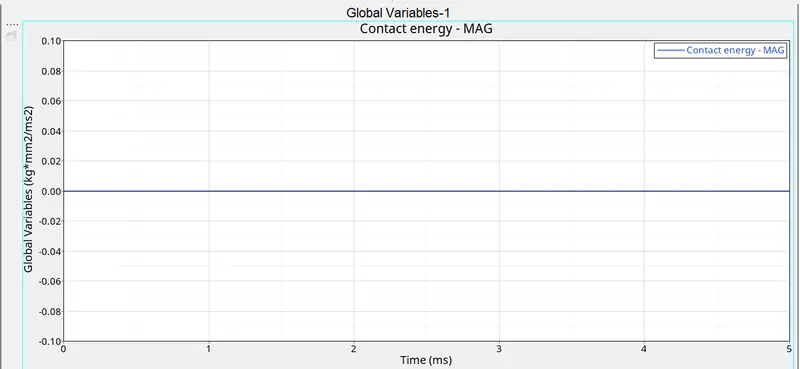
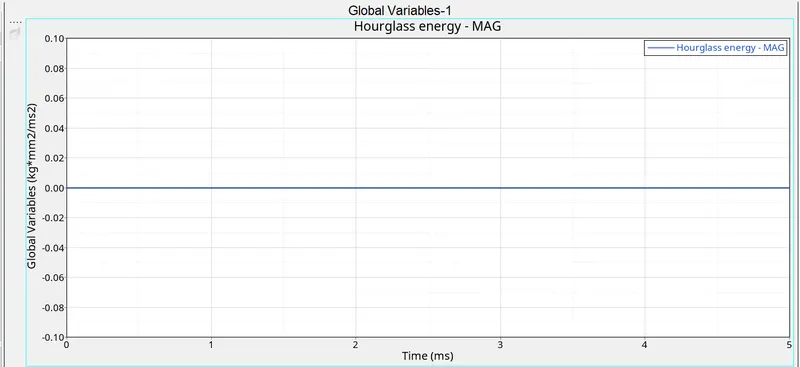
- Due to improvement in the shell properties to the recommonded , the Hourglass Energy and Contact Energy is stabalized very much to the Zero .
Plots :
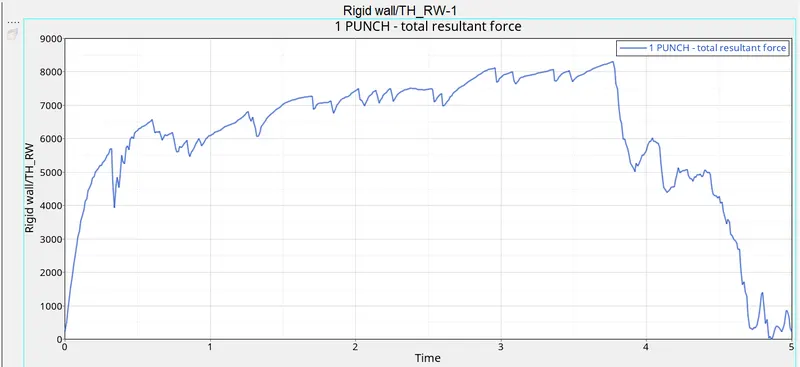
Rigid wall Resultant force
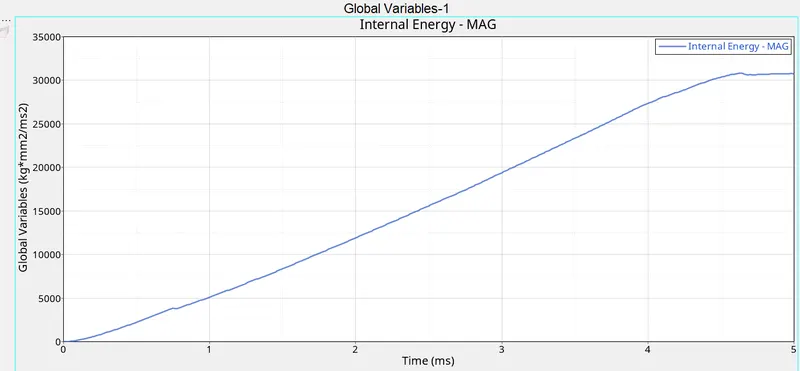
Internal energy
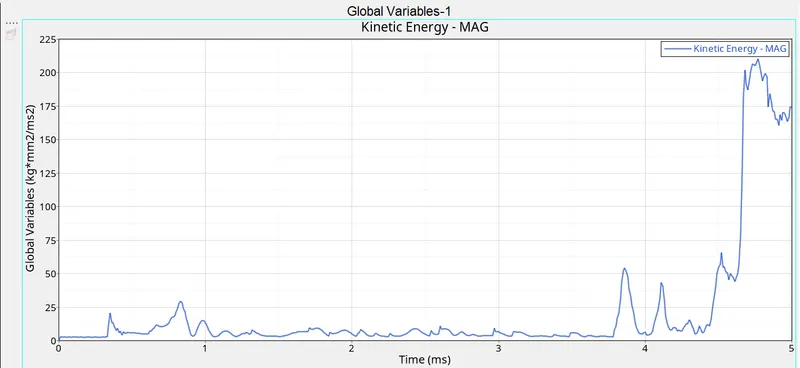
Kinetic Energy
Contact Energy
Hourglass Energy
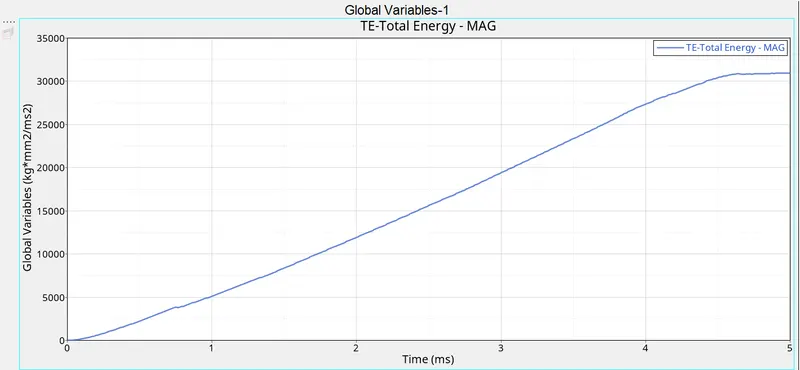
Total Energy
Case 3 :
Law2_epsmax_nofail :
- For importing the model Radioss setup is done with Solver deck the FAILURE_JOHNSON_0000.rad file is imported .
- In This case the Failure Card (/FAIL/JOHNSON card ) is Deleted and made to run the Simulation using Radioss Solver and the Hyperview
- The Run time is same as 1st case of 5.01 milisecond .
- Number of Cycles are 49408 .
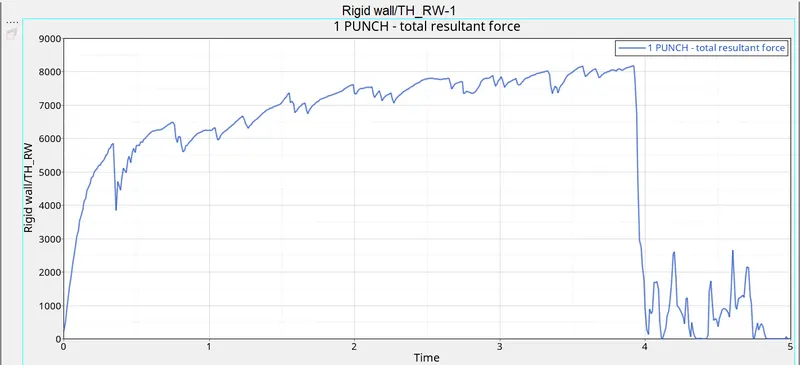
- From the Engine out file The Energy Error is in between -0.3 % to +1.2% .
- The Mass Error is about 0 .
- The Acceptable errors for energy error and the mass error are Between -15 % to + 5 % and maximum + 2% of the total mass
- Hence the Results are acceptable .
- The Crack formation cannot be seen as the Failure card is deleted in which Crack Formation and the Crack advancement was defined .
- The Element deletion is the ramained only Parameter for Failing of the Elements .
- Elements are deleted when they reached to the Maximum Strain value ( eps_max ) .
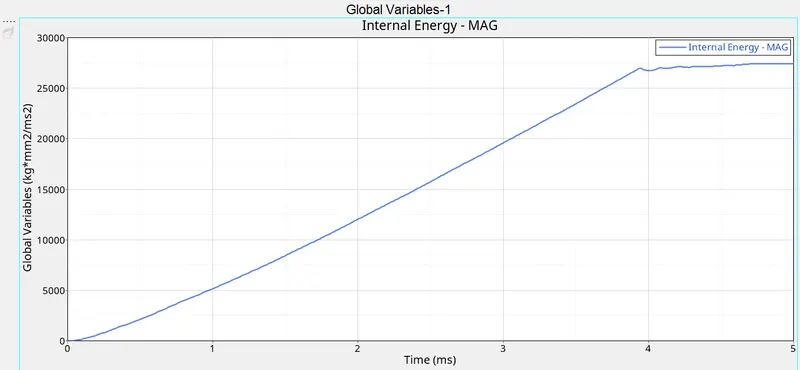
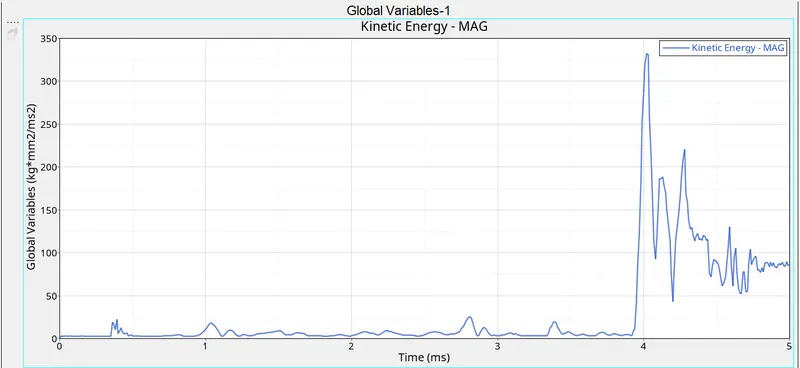
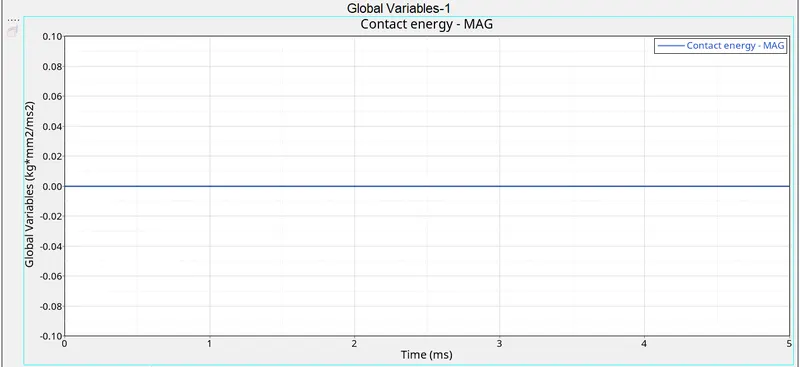
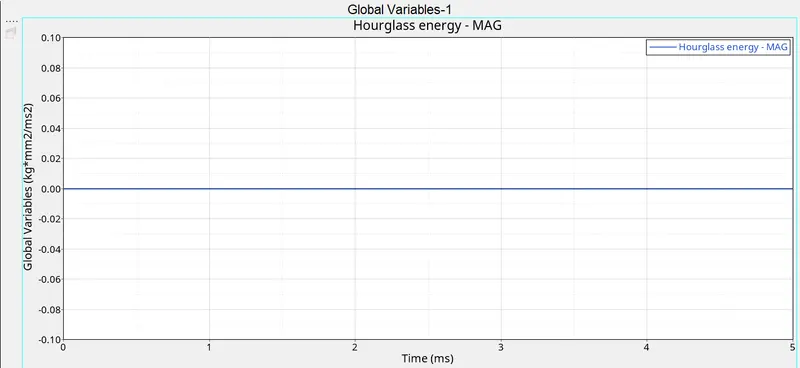
- Due to improvement in the shell properties to the recommonded , the Hourglass Energy and Contact Energy is stabalized very much to the Zero .
Plots:
Rigid wall resultant force
Internal energy
kinetic Energy
Contact Energy
Hourglass Energy
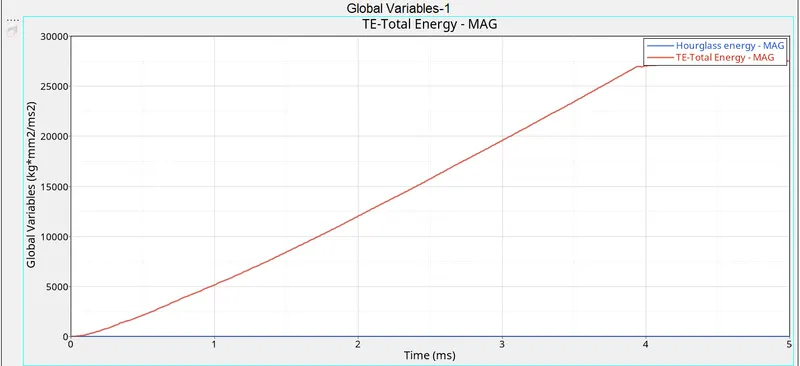
Total Energy
Case 4:
Law2 :
- For importing the model Radioss setup is done with Solver deck the FAILURE_JOHNSON_0000.rad file is imported .
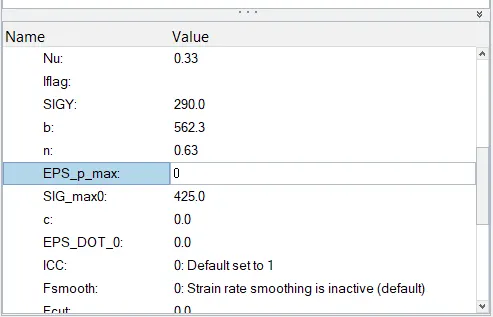
- In This case the Maximum Plastic Strain (EPS_p_max) is Deleted and made to run the Simulation using Radioss Solver and the Hyperview
Results :
- The Run time is same as 1st case of 5.01 milisecond .
- Number of Cycles are 49408 .
- From the Engine out file The Energy Error is in between -0.3 % to +11% .
- The Mass Error is about 0 .
- The Acceptable errors for energy error and the mass error are Between -15 % to + 5 % and maximum + 2% of the total mass
- Hence the Results are not acceptable .
- The only Crack formation can be seen becuase of the Failure card which Crack Formation and the Crack advancement was defined .
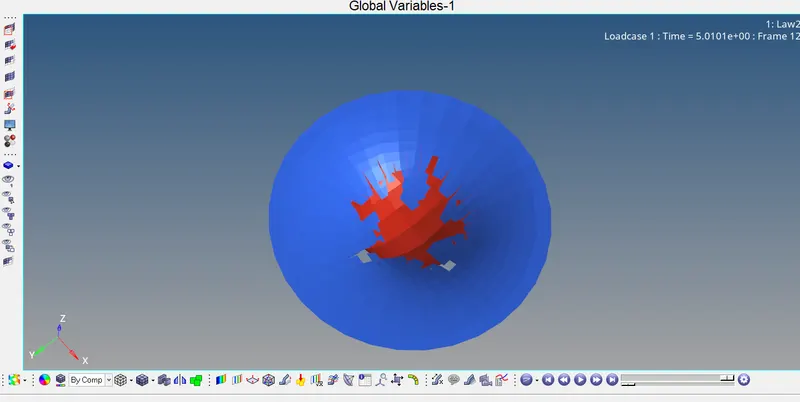
- As we deleted the maximum plastic strain value , There is no any parameter left for elements deletion criteria .
- Due to improvement in the shell properties to the recommonded , the Hourglass Energy and Contact Energy is stabalized very much to the Zero .
Plots :
Rigid wall resultant force
Internal Energy :
Kinetic Energy
Contact Energy
Hourglass Energy
Total energy
Case 5 :
Law 1 :
- For importing the model Radioss setup is done with Solver deck the FAILURE_JOHNSON_0000.rad file is imported .
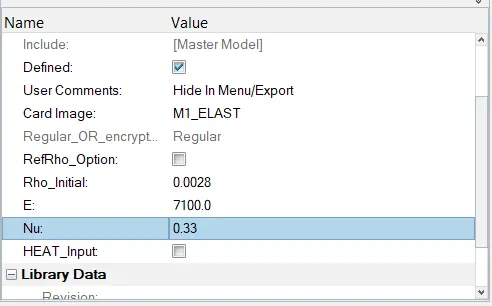
- Imported Model is with Material Of Law 2 , which is converted to the Law 1 ( Elastic Material ) with ths same Young's modeulus , Density and the Possion Ratio .
Results :
- The Run time is same as 1st case of 5.01 milisecond .
- Number of Cycles are 49408 .
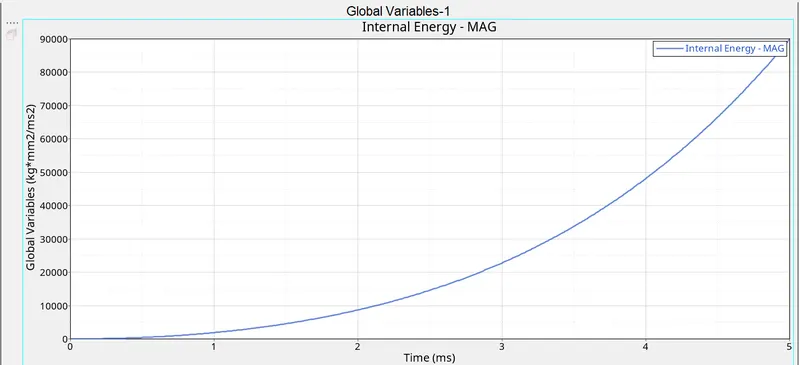
- From the Engine out file The Energy Error is in between -0.3 % to +4.9% .
- The Mass Error is about 0 .
- The Acceptable errors for energy error and the mass error are Between -15 % to + 5 % and maximum + 2% of the total mass
- Hence the Results are acceptable .
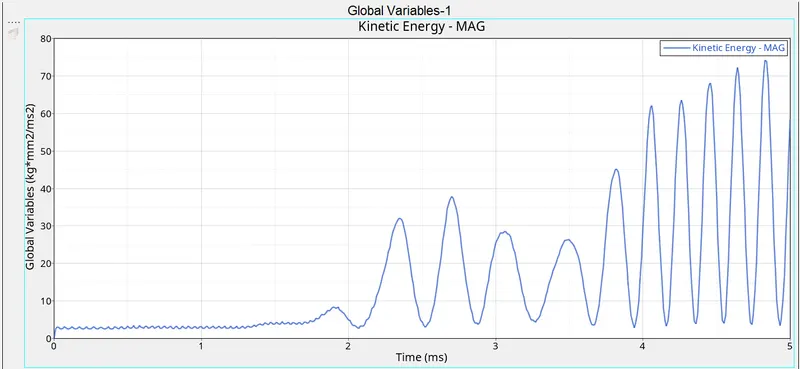
- As the Material is elastic , elements are only streched .
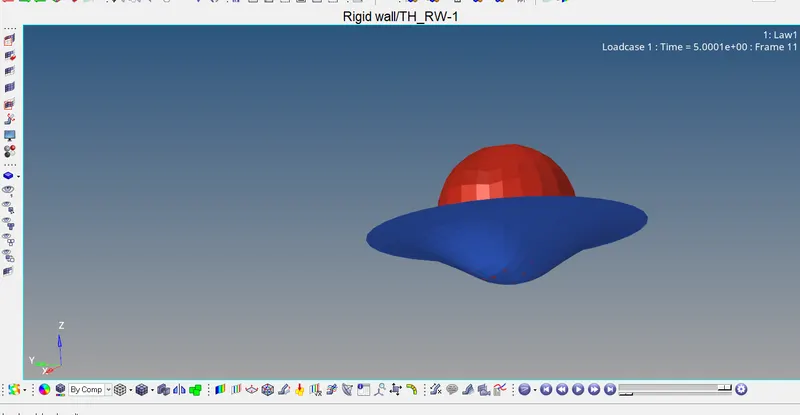
- The only Crack formation is not happing as the Material is elastic Which are deformed only in Elastic region of the Stress Strain curve accourding to the HOOks law
- As we deleted the maximum plastic strain value , There is no any parameter left for elements deletion criteria .
- Due to improvement in the shell properties to the recommonded , the Hourglass Energy and Contact Energy is stabalized very much to the Zero .
plots :
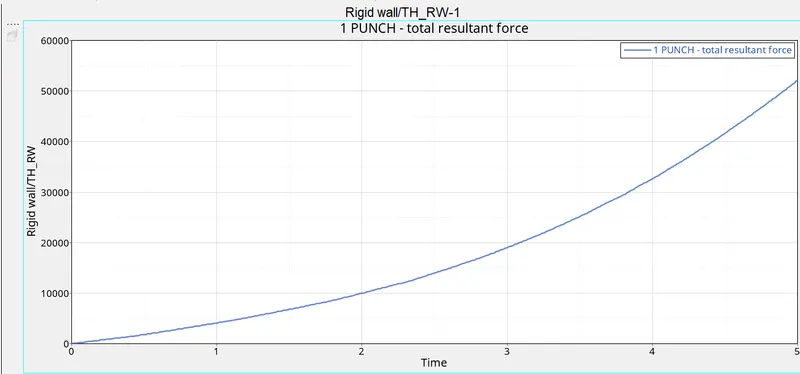
Rigid wall Resultant Force
Internal Energy
Kinetic Energy
Contact Energy
Hourglass Energy
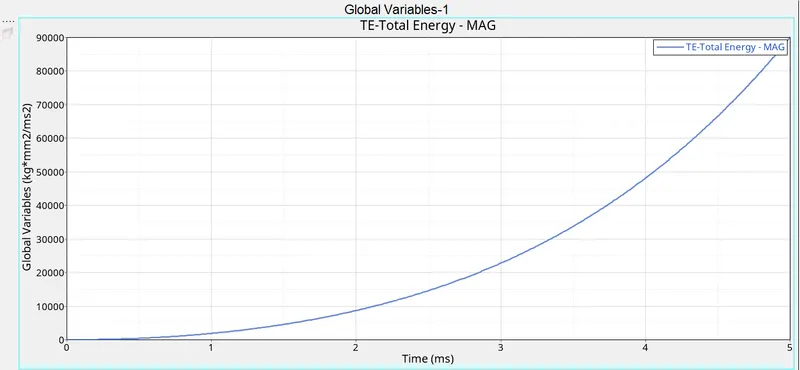
Total Energy
Case 6 :
Law27 :
- For importing the model Radioss setup is done with Solver deck the Law27_0000.rad file is imported .
- In this model the Johnson Cook material card but with different Elemental failure criteria as shown in below ,
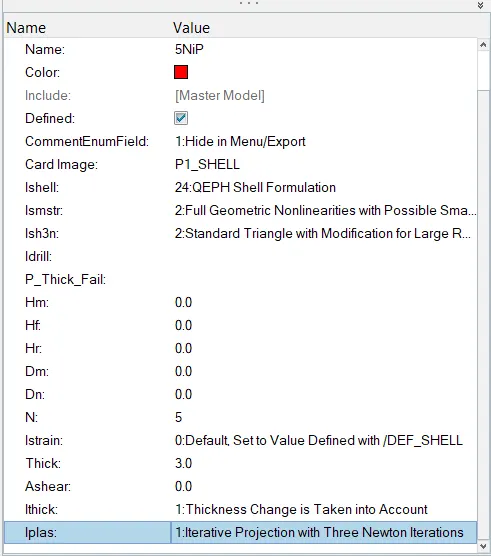
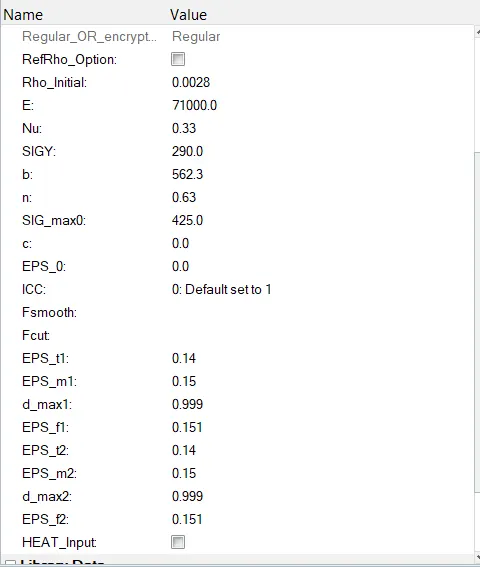
- LAW27 is used to simulate material damage using a Johnson-Cook plasticity law. A damage model is incorporated into the material law to take into account the damage evolution where stress decreases up to element rupture .
- EPS_t1 is starting strain produced in the elements , at which the elements start to damage . once the Principle stress reaches to SIGY value.
- EPS_m1 is the maximum Strain induced in the elements after which the stress in elements start to reduced , but still elements will not be deleted .
- EPS_f1 is the element failure strain value means when strain in the elements reaches to this value , elements gets deleted .
- Also The SHell elemental propertioes are improved to the recommonded values .
Results :
- The Law 27 used for the brittle material .
- Number of cycles are 49508 .
- The Run time is same as 1st case of 5.01 milisecond .
- From the Engine out file The Energy Error is in between -0.3 % to +0.8 % .
- The Mass Error is about 0 .
- The Acceptable errors for energy error and the mass error are Between -15 % to + 5 % and maximum + 2% of the total mass
- Hence the Results are acceptable .
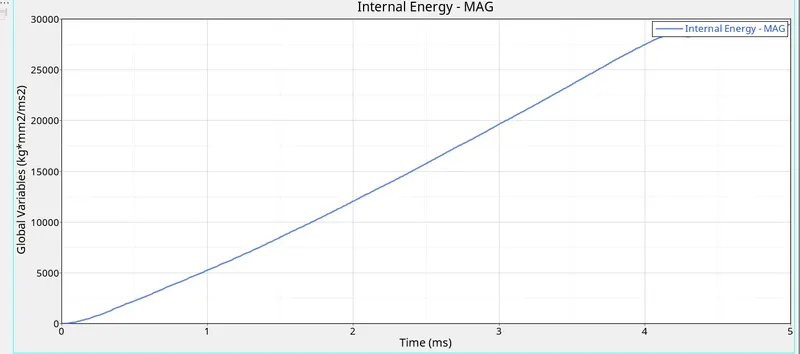
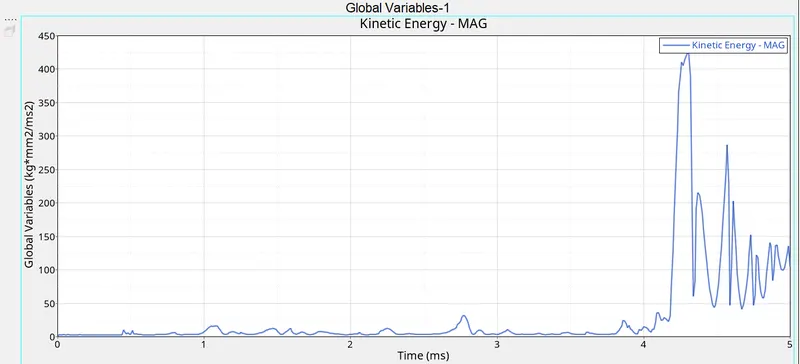
- Initially small crack formation can be seen but after some time the Elements get damaged in pieces like structure .
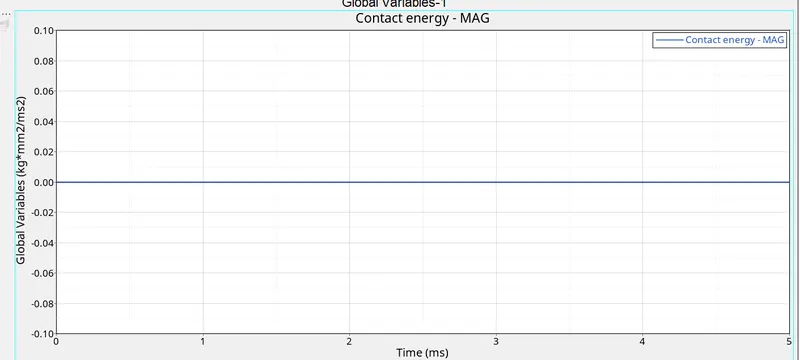
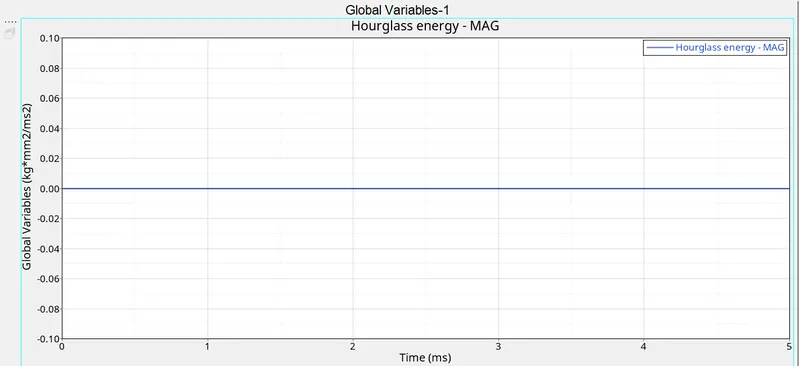
- Because of the improved shell elements , The Hourglass energy and Contact Energy are reduced to the zero .
plots :
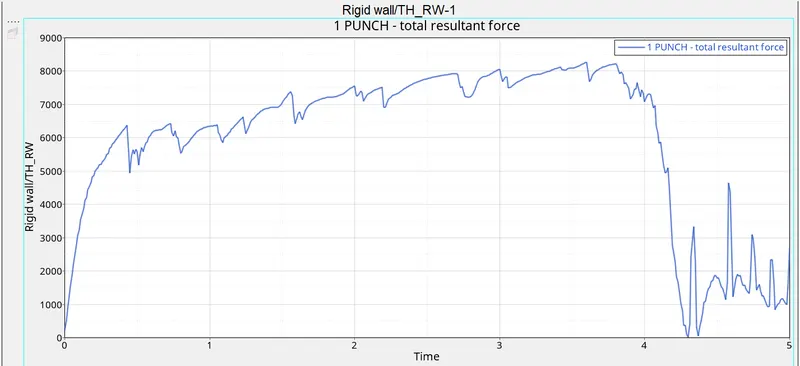
Rigid wall resultant force
Internal Energy
Kinetic Energy
Contact Energy
Hourglass Energy
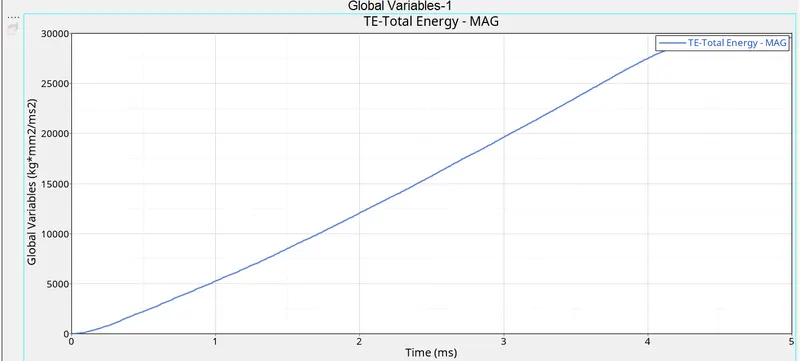
Total Energy
Case 7 :
Law 36 :
- For importing the model Radioss setup is done with Solver deck the Law27_0000.rad file is imported.
- In this Model , values of in the Material card are edited provided in the material card for the Law 36 material .
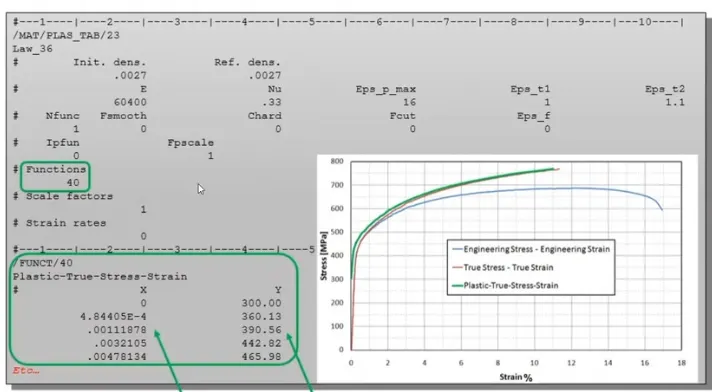
- Young's Modulus value changed to the 71000 MPa . Eps_p_max = 0.16 , Eps_t1 = 0.1 and the Eps_t2 = 0.11 .
- Function curve is created accourding to the Value of the X and Y values by the name of Plastic-True-Stress-Strain curve and assigned this to material.
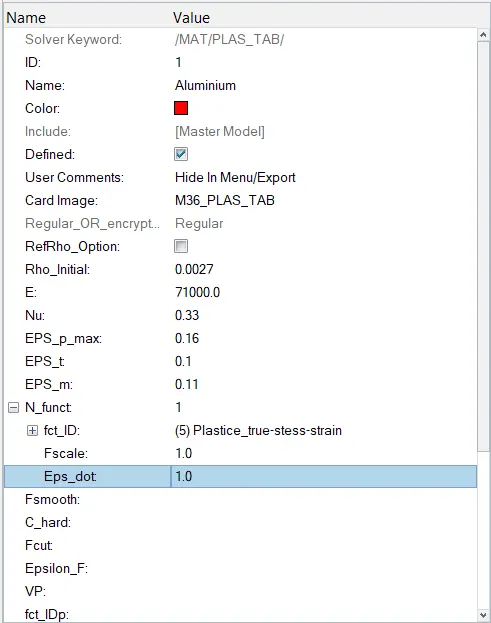
- Here the EPS_p_max is maximum Failure plastic Strain at which elements gets failed .
- EPS_t is Tensile Failure Strain at which stress in the material starts to reduce .
- EPS_m is maximum tensile failure Strain at which stress in the material becomes zero .
- The Shell elemental properties are changed to the reccomonded Properties .
- Then the Model is solved using the Radioss solver And made to run Using the Hyperview .
Results :
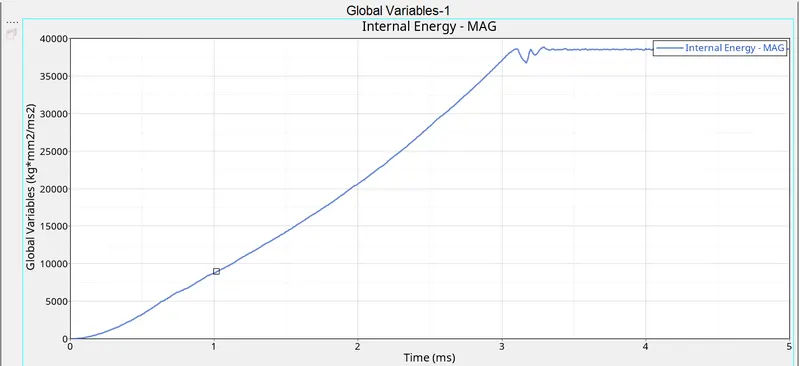
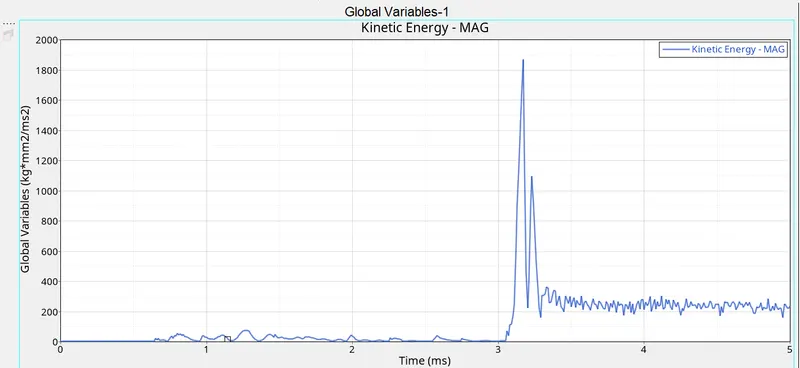
- The Law 36 used for the elasto- plastic material using the User defined Function .
- Number of cycles are 53143.
- The Run time is same as 1st case of 5.01 milisecond .
- From the Engine out file The Energy Error is in between -0.3 % to -1.9 % .
- The Mass Error is about 0 .
- The Acceptable errors for energy error and the mass error are Between -15 % to + 5 % and maximum + 2% of the total mass
- Hence the Results are acceptable .
- Initially small crack formation can be seen but after some time the Elements get damaged in pieces like structure .
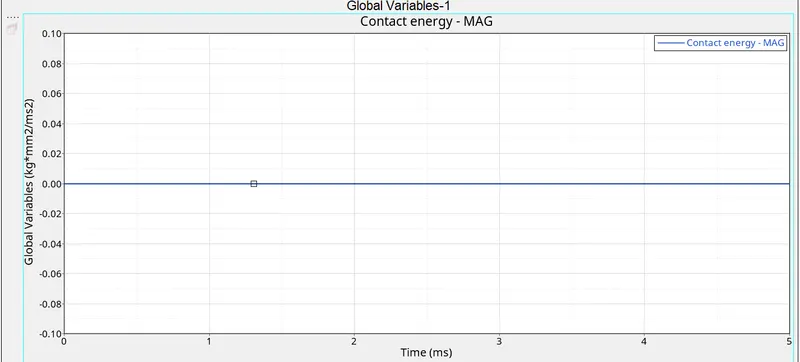
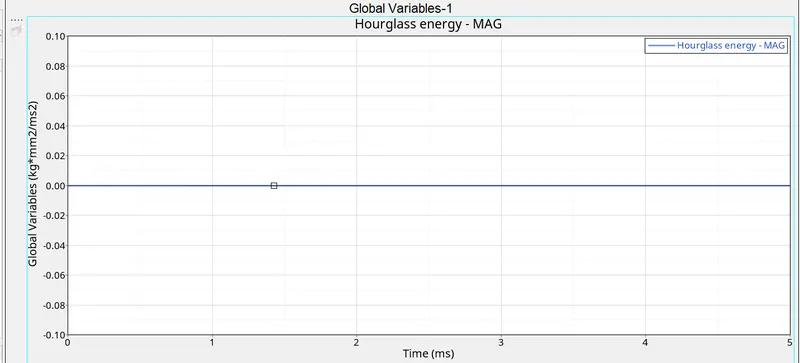
- Because of the improved shell elements , The Hourglass energy and Contact Energy are reduced to the zero .
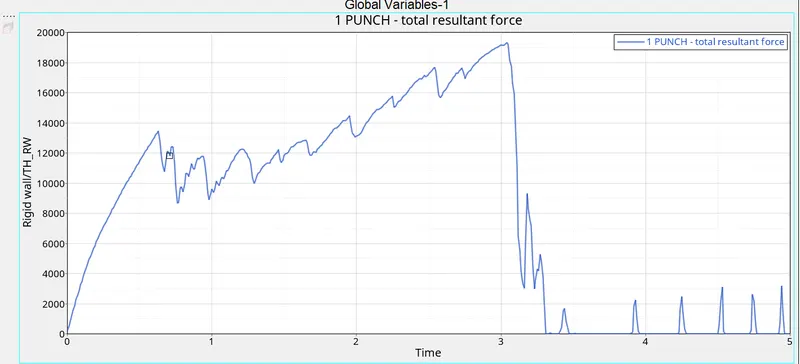
plots :
Rigid wall resultant force
Internal Energy
Kinetic Energy
Contact Energy
Hourglass Energy
Total Energy
Coclusion :
- In case 1 , the elements gets failed and deleted and crack formation is not happing , beacause of the Crack forming and advancements values are kept as 0 .
- In case 2 , The proper Crack formation and the element deltion process can be seen as values of the Ifail_sh , Dadv and Ixfem are changed to the 1 which will help to formation of the crack and propagation in the material , and Hence The crack formation and the Elements deltion is proper .
- In case 3 , Only element deltion can be seen as we have deleted the Failure Card .
- In Case 4 , Just Crack formation and the Propagation can be seen only as maximum elasti-plastic strain value is deleted .
- In case 5 , Elements are just streched as Law 1 is used , which Work accourding to the Hook's Law , Deformation happens only in the Elastic region , and hence material will be deformed but in the elastic region and once the load is removed material will be back to its original shape and size .
- In case 6 , This Model uses the Law 27 .LAW27 is used to simulate material damage using a Johnson-Cook plasticity law. A damage model is incorporated into the material law to take into account the damage evolution where stress decreases up to element rupture .
- In case 7 , in this model Law 36 is used , This law models an isotropic elasto-plastic material using user-defined functions for the work-hardening portion of the stress-strain curve (for example, stress vs. plastic strain) for different strain rates . Hence cracking the elements and deletion can be seen while simulation .