Assignment 4-RADIOSS Material Laws Challenge
AIM: Determine the effect of shell element formulation and failure parameters in the given models.
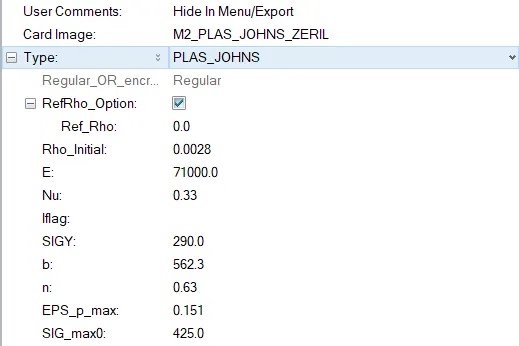
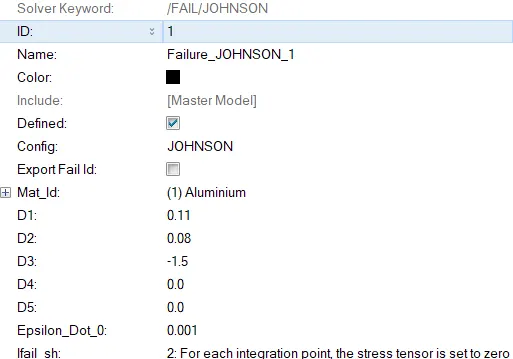
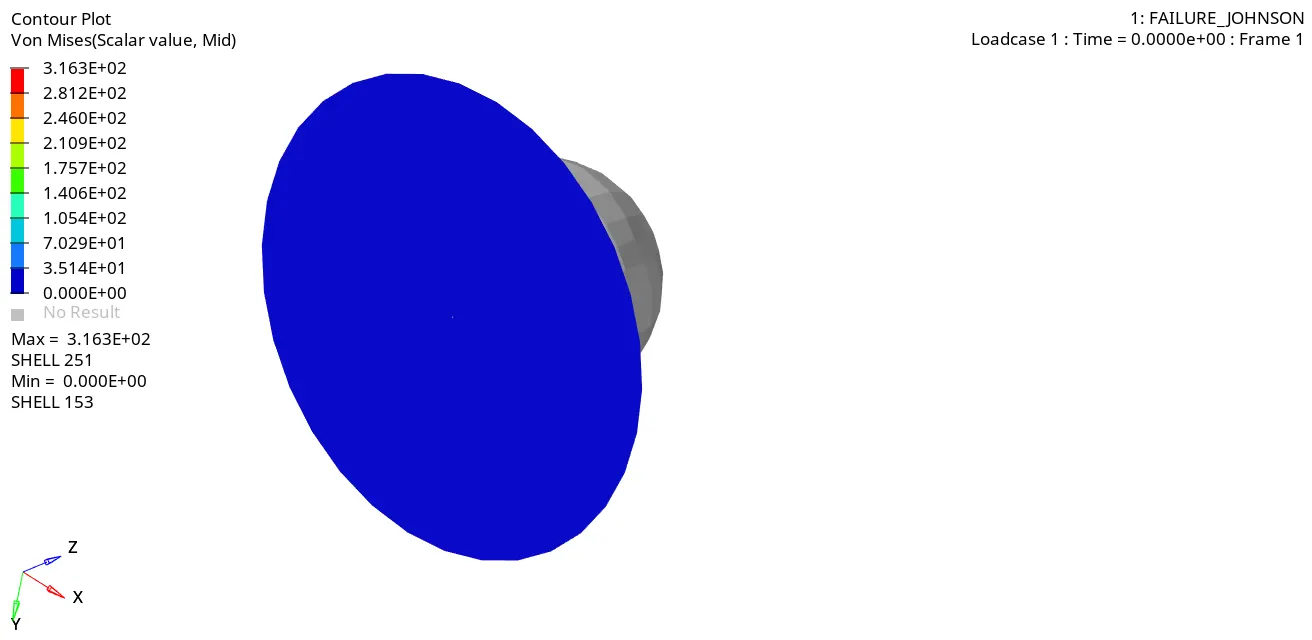
Case 1: Failure_Johnson model was imported and the defined material properties and failure values were reviewed.
Plastic Johnson-Cook material model was utilised in the given model and D1, D2, D3, D4, D5 and Epsilon_Dot_0 was defined to express the failure in the given model.
Results Determination
To Determine Total number of cycles, Energy error, mass error and simulation time.
Total Number of Cycles: 49380
Energy Error:0.8%
Mass Error:0.0%
Simulation Time: 70.71s
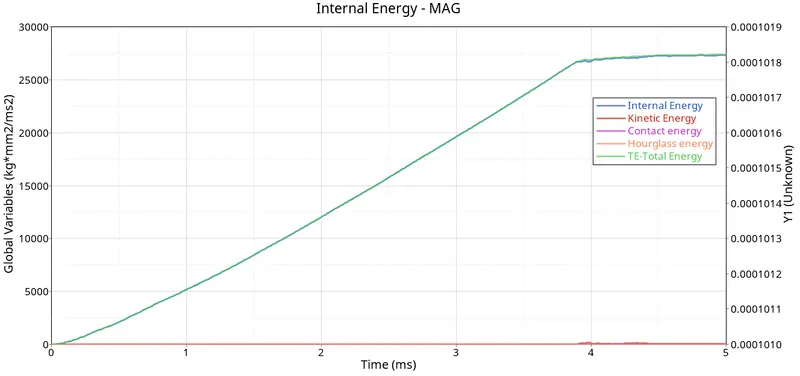
Energy Curve Comparision - negligible losses due to hourglass is observed.
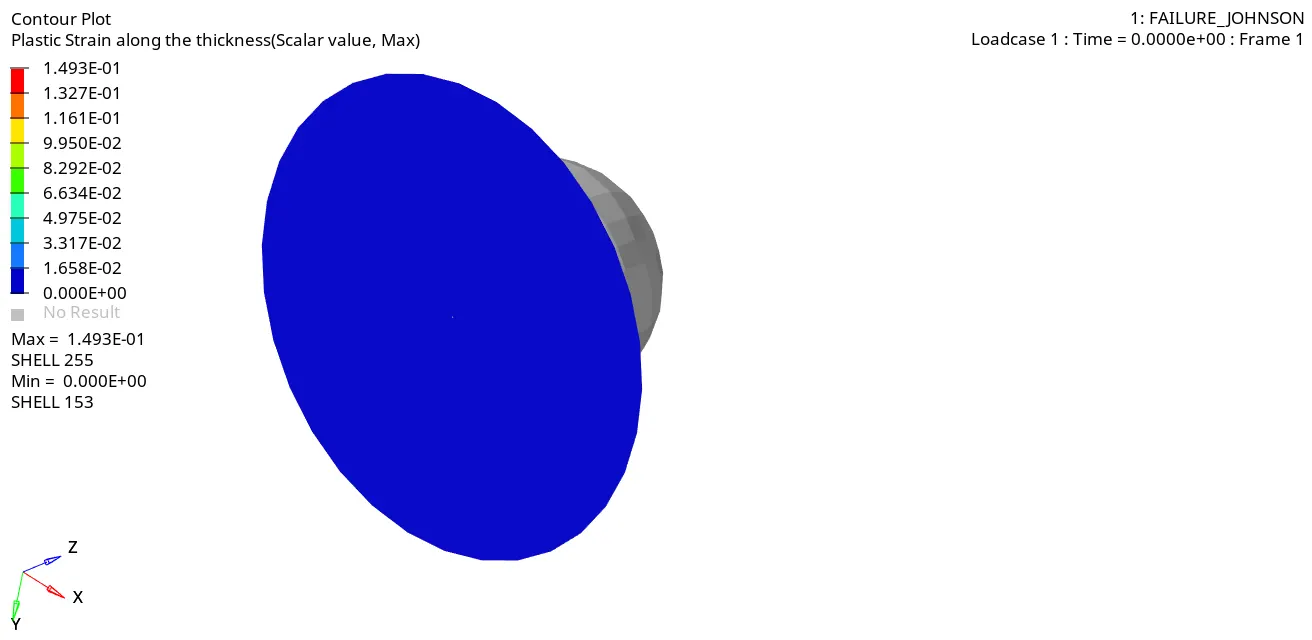
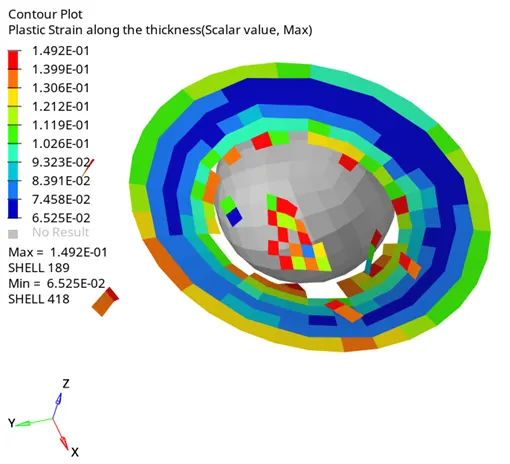
Failure Strain: at approximately 15% Strain the initiation of failure takes place in the model.
Von-Mises Stress Contour - the maximum stress obtained in the simulation is about 316.3 MPa.
Case 2: Failure_Johnson model were implemented
Ifail_sh = 1
Dadv=1
Ixfem = 1
Results Determination
To Determine a Total number of cycles, Energy error, mass error and simulation time.
Total Number of Cycles: 49217
Energy Error:4.1%
Mass Error:0.0%
Simulation Time: 115.85 s
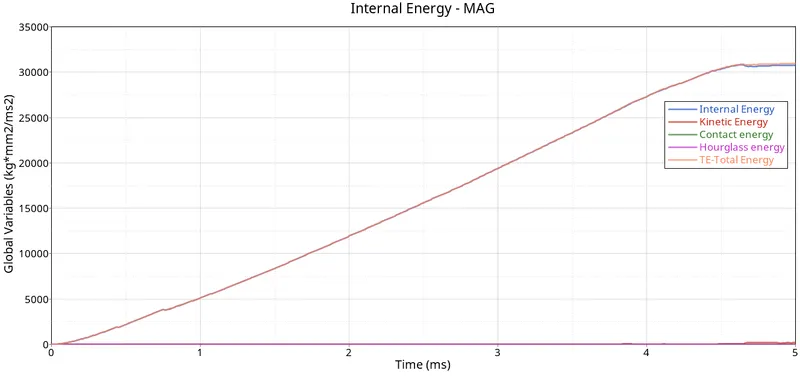
Energy Curve Comparision- negligible losses due to hourglass is observed.
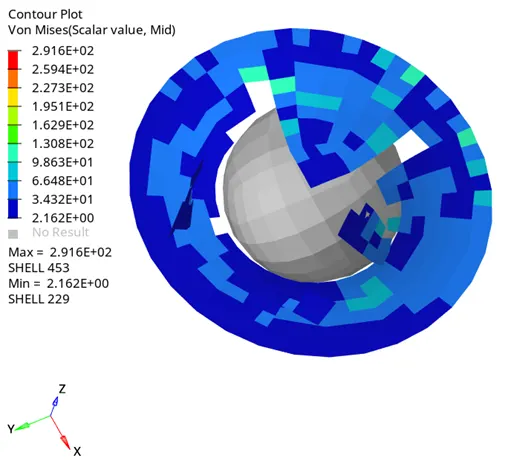
Von-Mises Stress Contour - the maximum stress obtained in the simulation is about 291.6 MPa.
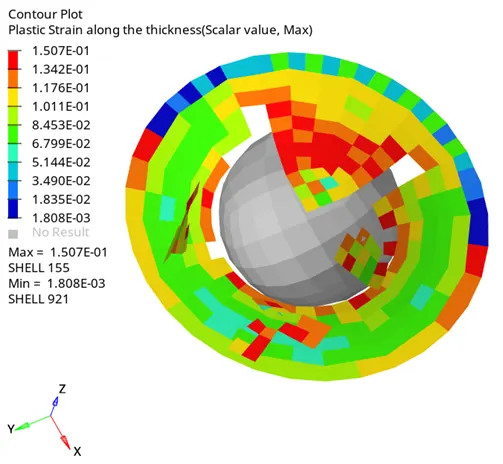
Failure Strain: at approximately 15% Strain the initiation of failure takes place in the model.
Case 3: Without Failure Model
Results Determination
To Determine the Total number of cycles, Energy error, mass error and simulation time.
Total Number of Cycles: 49408
Energy Error:0.8%
Mass Error:0.0%
Simulation Time: 73.89 s
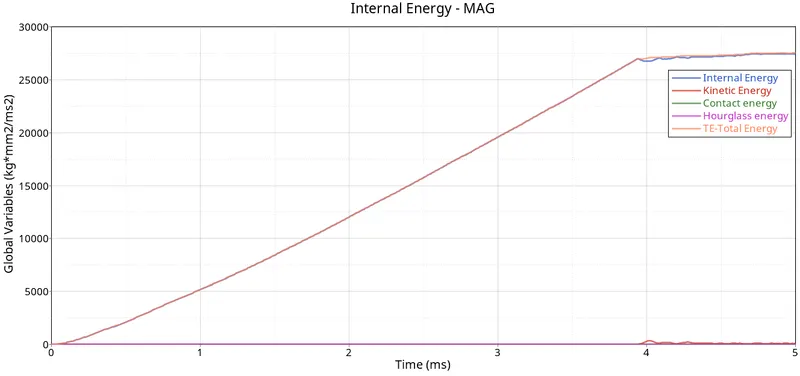
Energy Curve Comparision- zero hourglass losses are reported as Ishell was defined to be 24 - QEPH shell formulation was implemented.
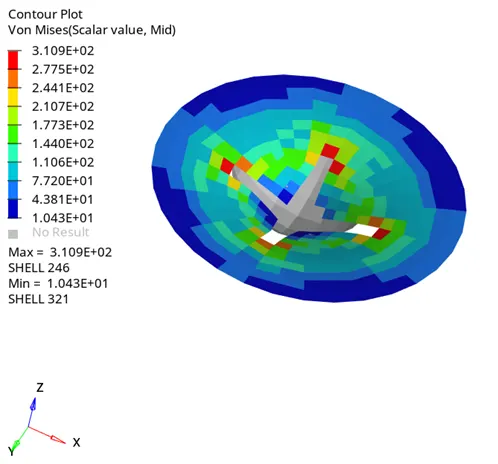
Von-Mises Stress Contour - the maximum stress obtained in the simulation is about 310.9 MPa.
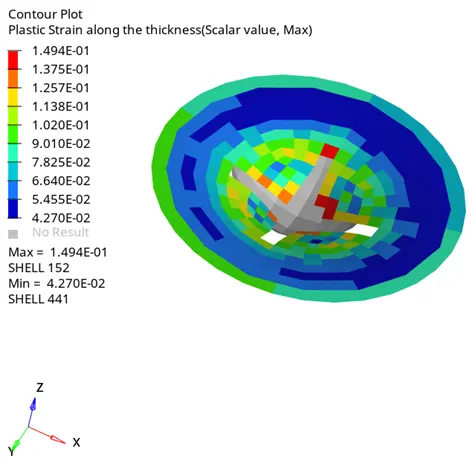
Failure Strain: at approximately 15% Strain the initiation of failure takes place in the model.
Case 4: Without EPS_p_max.
Results Determination
To Determine the Total number of cycles, Energy error, mass error and simulation time.
Total Number of Cycles: 49408
Energy Error:0.8%
Mass Error:0.0%
Simulation Time: 73.89 s
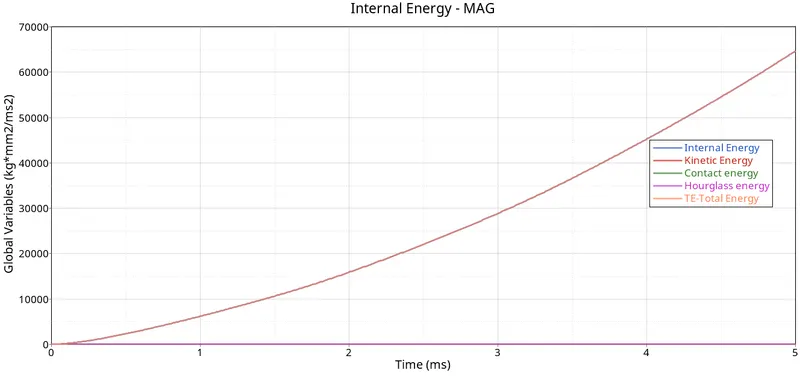
Energy Curve Comparision- zero hourglass losses are reported as Ishell was defined to be 24 - QEPH shell formulation was implemented.
Von-Mises Stress Contour - the maximum stress obtained in the simulation is about 425.0 MPa.
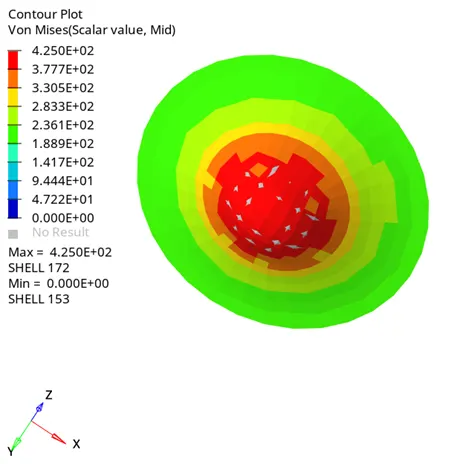
Failure Strain: at approximately 12.32% Strain the initiation of failure takes place in the model.
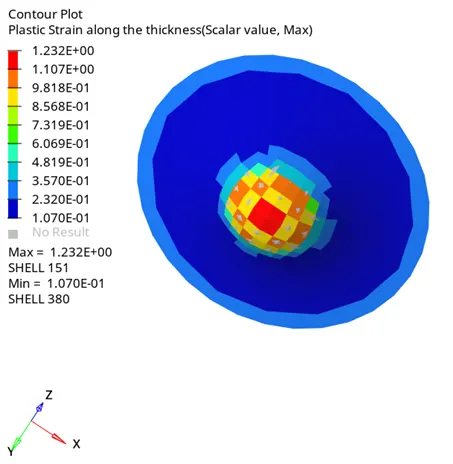
Case 5: Change of LAW 2 to LAW 1.
Results Determination
To Determine the Total number of cycles, Energy error, mass error and simulation time.
Total Number of Cycles: 47969
Energy Error:1.3%
Mass Error:0.0%
Simulation Time: 98.57 s
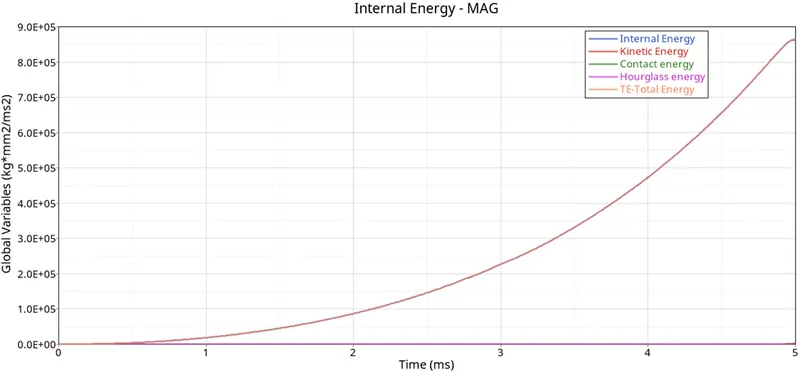
Energy Curve Comparision- zero hourglass losses are reported as Ishell was defined to be 24 - QEPH shell formulation was implemented.
Von-Mises Stress Contour - the maximum stress obtained in the simulation is about 1102 MPa.
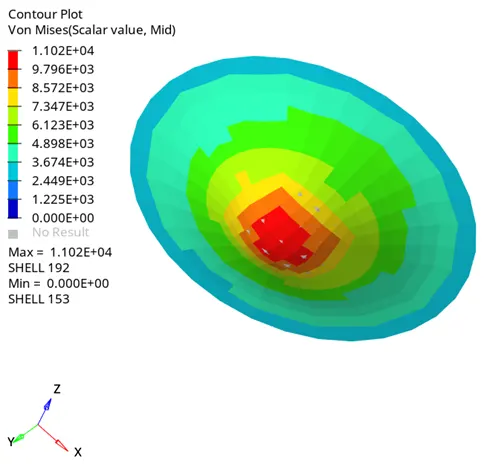
Failure Strain: no failure strain was observed as an elastic material was chosen.
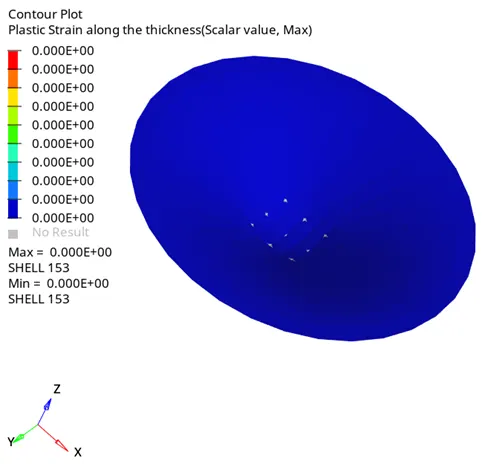
Case 6: Plast_BRIT_Material Application
Material Property definition
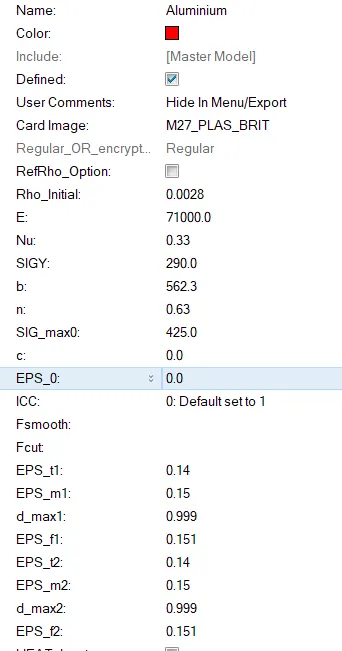
Results Determination
To Determine the Total number of cycles, Energy error, mass error and simulation time.
Total Number of Cycles: 49508
Energy Error:0.8%
Mass Error:0.0%
Simulation Time: 104.17 s
Energy Curve Comparision- negligible hourglass losses are reported as the shell elemental formulation was defined to control the hourglass energy losses.
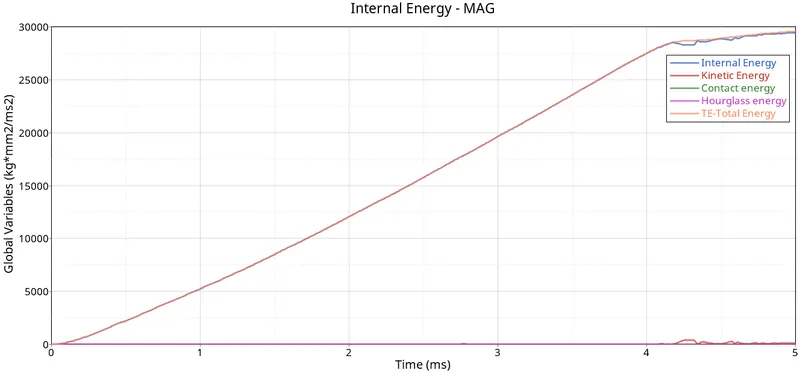
Von-Mises Stress Contour - the maximum stress obtained in the simulation is about 291 MPa.
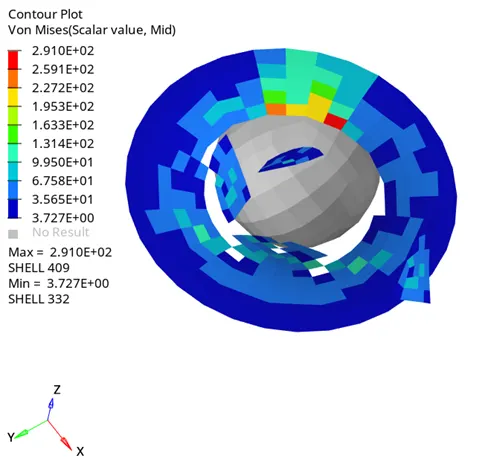
Failure Strain: at approximately 26.9% Strain the initiation of failure takes place in the model.
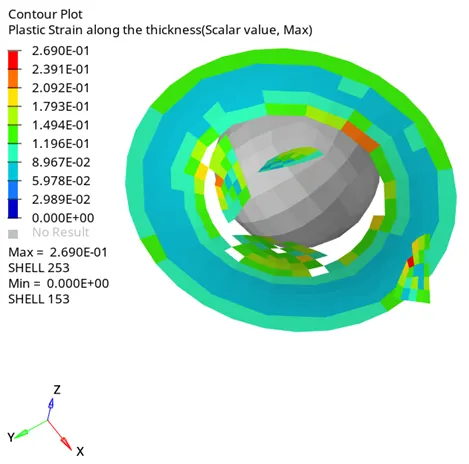
Case 7: Plast_BRIT_Material Application
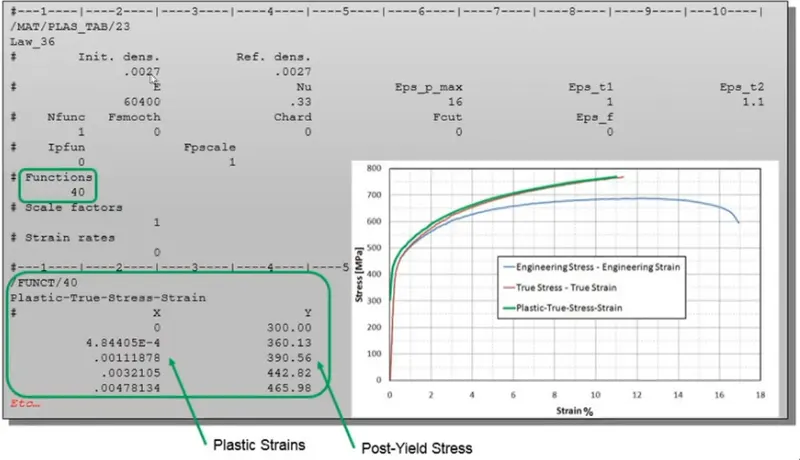
To Determine the Total number of cycles, Energy error, mass error and simulation time.
Total Number of Cycles: 49380
Energy Error:0.8%
Mass Error:0.0%
Simulation Time: 104.99 s
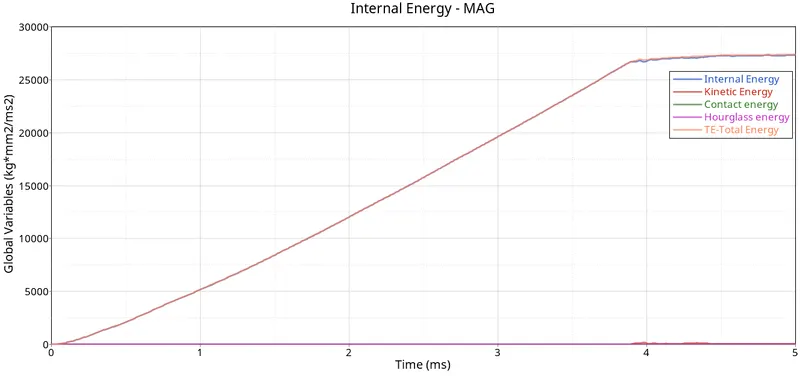
Energy Curve Comparision- negligible hourglass losses are reported as the shell elemental formulation was defined to control the hourglass energy losses.
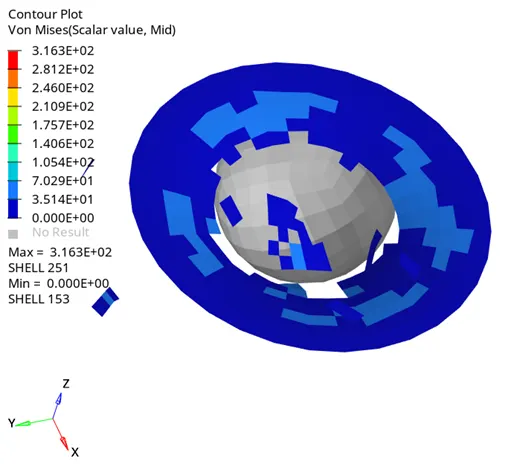
Von-Mises Stress Contour - the maximum stress obtained in the simulation is about 316.3 MPa.
Failure Strain: at approximately 14.92% Strain the initiation of failure takes place in the model.
Comparison of Results obtained from different material models
| Simulation | Number of Cycles | Energy Error | Simulation Time | Stress | Strain |
| Case -1 | 49380 | 0.8% | 70.71 s | 313.3 MPa | 15 % |
| Case -2 | 49217 | 4.1% | 115.85 s | 291.6 MPa | 15% |
| Case -3 | 49408 | 0.8% | 73.89 s | 310.9 MPa | 15% |
| Case -4 | 49408 | 0.8% | 73.89 s | 425 MPa | 12.32% |
| Case -5 | 47969 | 1.3% | 98.57 s | 1102 MPa | NIL |
| Case -6 | 49508 | 0.8% | 104.17 s | 291 MPa | 26.9% |
| Case -7 | 49380 | 0.8% | 104.99 s | 316.3 MPa | 14.92% |
CONCLUSION
- All the given material cases were simulated according to the given condition.
- It was observed that CASE 5 took the least number of cycles to solve the problem, but the stress obtained in the simulation was exceedingly high compared to other material models.
- In Case 7, Law 36 was implemented along with the given data and reasonable simulation results were obtained, with strain raining close to 15% of the strength value.