Assignment 4-RADIOSS Material Laws Challenge
MAIN OBJECTIVE;
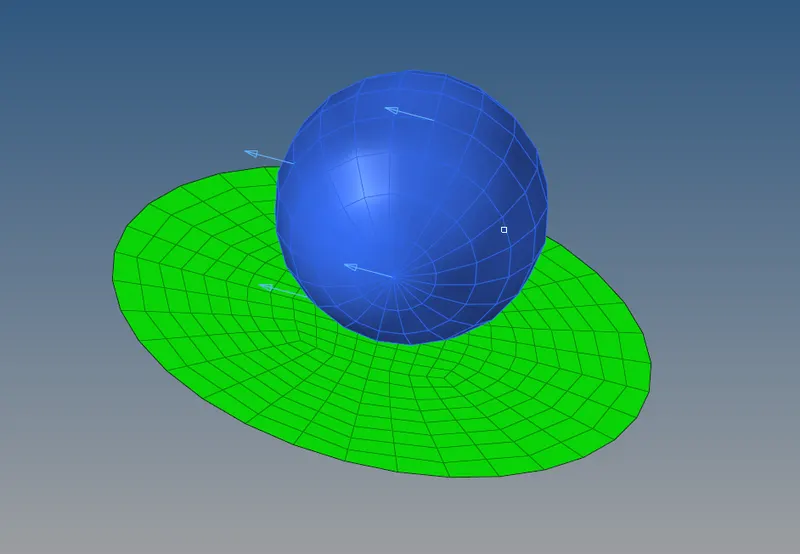
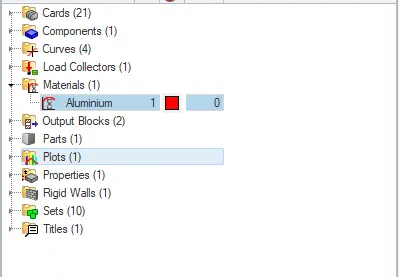
- By using the different material laws such as law1(elastic),law2(johnson cook), law36(elastic-plastic tabulated), law27(elastic-plastic brittle material), we have to analyze the plate behavior while applying these different materials.
- plots the results from the hyper view and hypergraph.
- check the energy errors, mass errors, number of cycles, simulation time, and represent which is best for the on-field scenario.
CASE1;

COMPARING THE CASE 1 AND CASE2
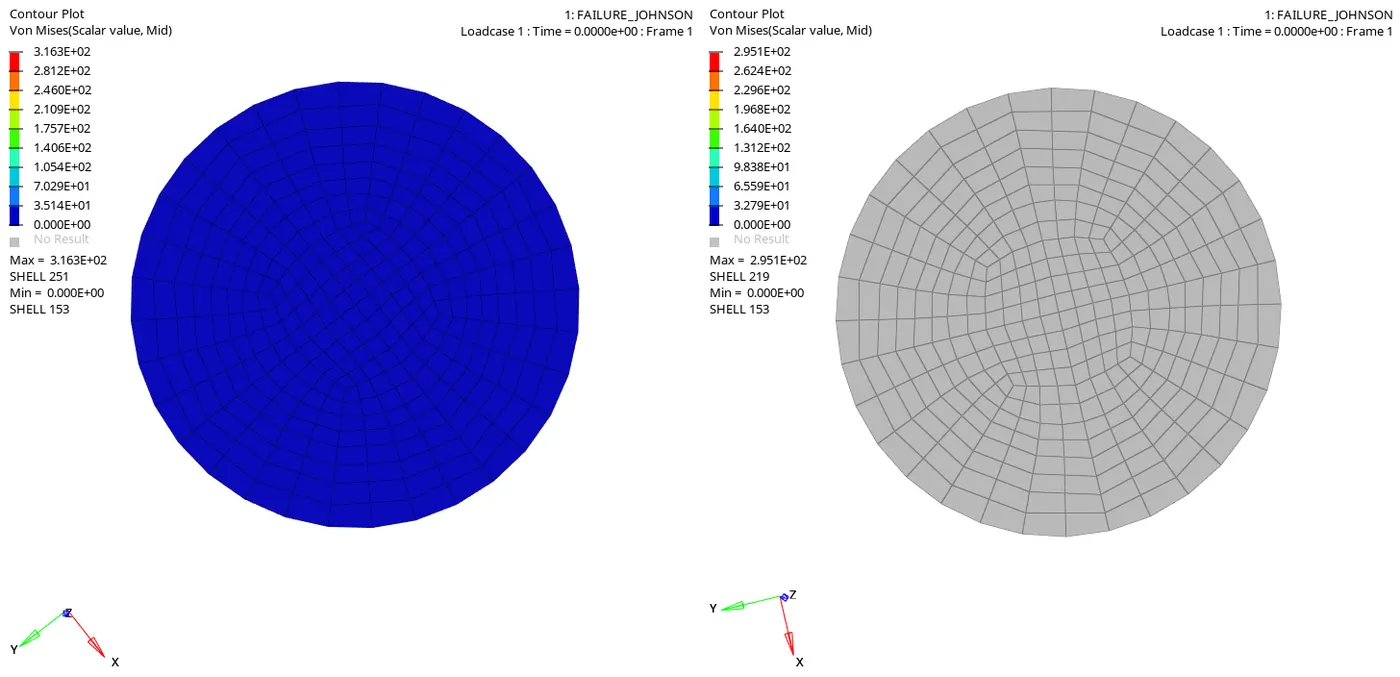
In case 1 we have to run the given johnson cook law without any changes in the failure cards.
The johnson cook law is mainly used for elastic-plastic material.
This law actually calculates the stress by using the strain rate and temperature.
The failure criterion based on the maximum plastic strain rate is available.
The johnson cook material model starts from the yield point and takes the plastic strain region into entire consideration.
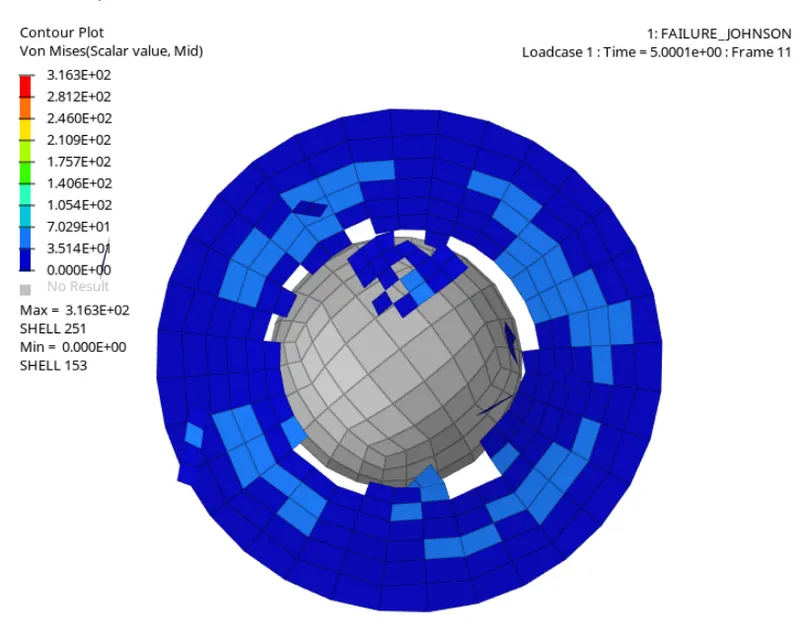
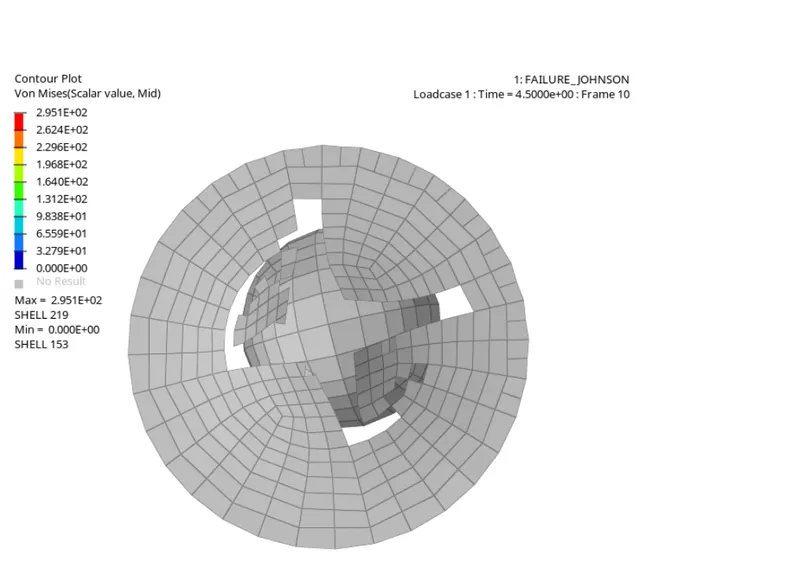
After running the simulation we open the hyper view > import h3d files >select the contour plot >set result type as von Moises and apply to the plate and there we can see the results the elements are deleting from the plate due to the rigid body generating the high stress which will be crossing the limit of a particular plate.
The elements are failing because we didn't allow any failure cards to the plate such as IXFEM- states that how to fail the particular element, if we place the value as 'o' it will delete the element and by indicating the value as '1' try to break the element, the way it should have cracked.
'Dadv' defines only if ixfem activates (ixfem as '1').
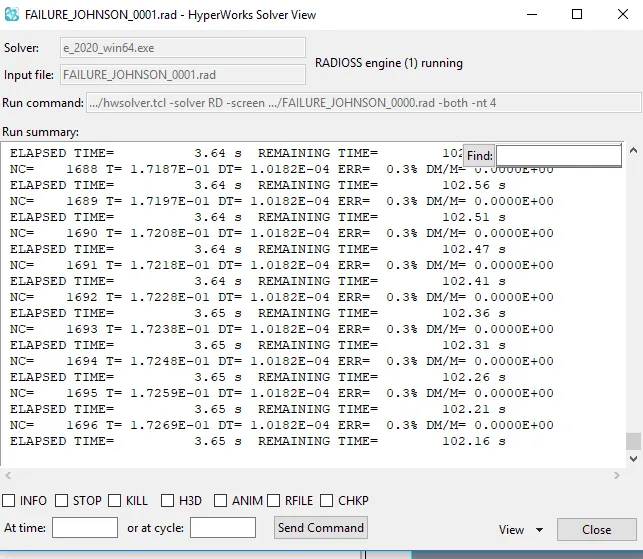
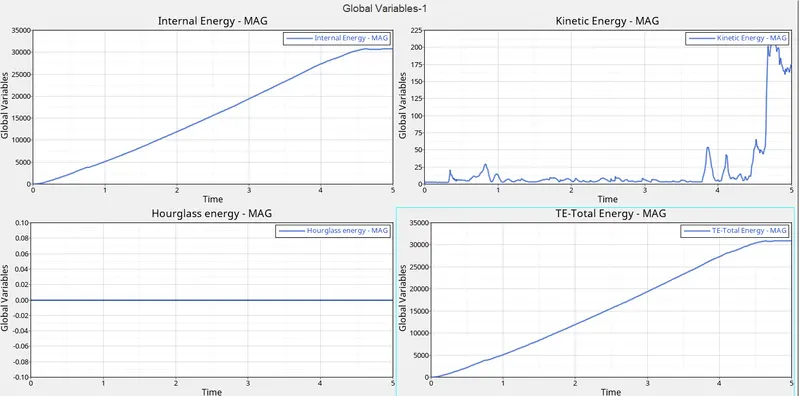
The total number of cycles, Energy error, mass error, and simulation time in the case1.
Total number of cycles; 49380
simulation time;69.84sec
mass error;0.000
energy error; 0.8%
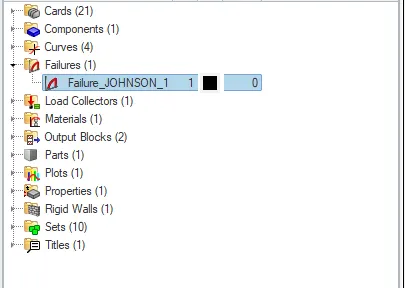
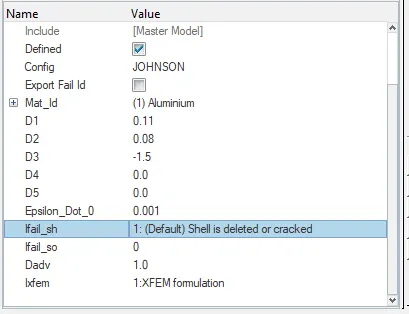
In case 2 we made some changes in the failure johnson.
I fail- sh =1 shell is deleted or cracked
Ixfem=1 tries to break the element and make them crack on the plate.
Dadv= it activates only if Ixfem is present.
Now we run the simulation of the failure johnson and plot the graphs and contour results to the component plate.
we have the stress acting on the plate were cracking the elements slowly.
By comparing to the case1 elements failures this case2 differs more and showing good results.
The total number of cycles, Energy error, mass error, and simulation time in the case2
Total number of cycles; 49217
simulation time; 95.40 s
mass error; 0.000
energy error;4.1%
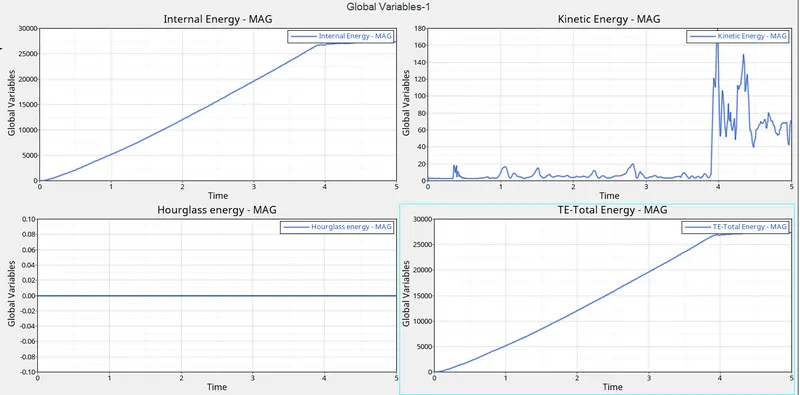
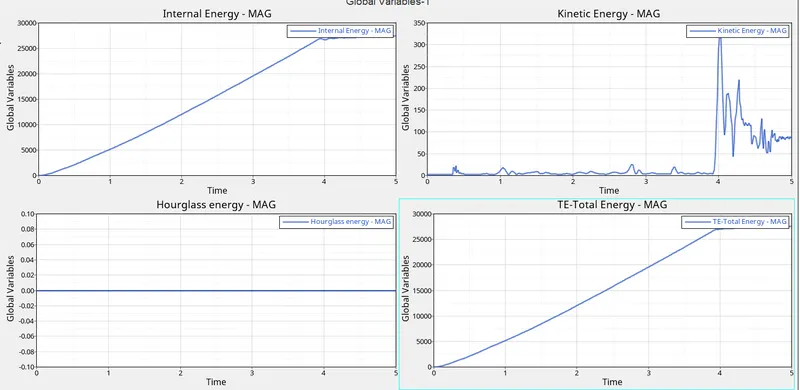
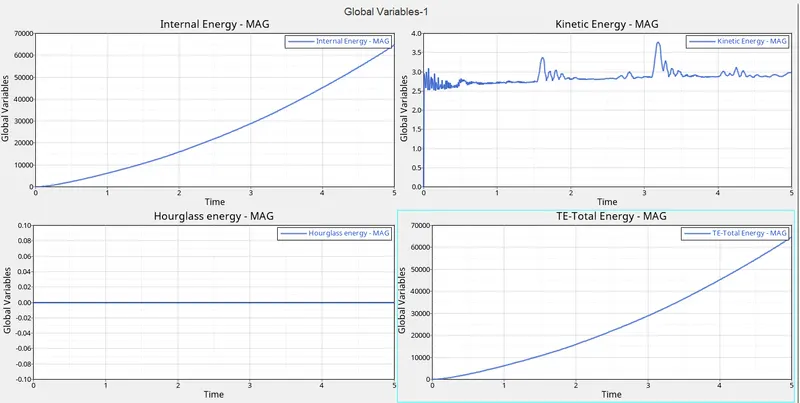
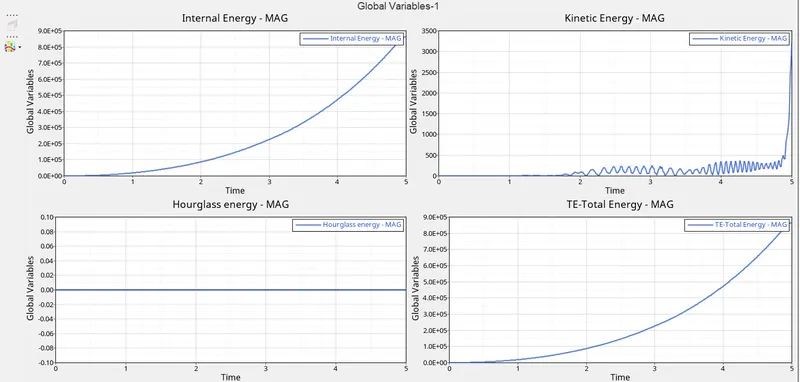
In these case1 and case2 the internal energy , hour glass energy are almost same expect the kinetic energy in the case1, the kinetic energy is higher than the case2 because the stress occur in the plate were is so high and breaks the elements suddenly.
CASE2;

CASE3;
comparing the results of the case3 case 4;
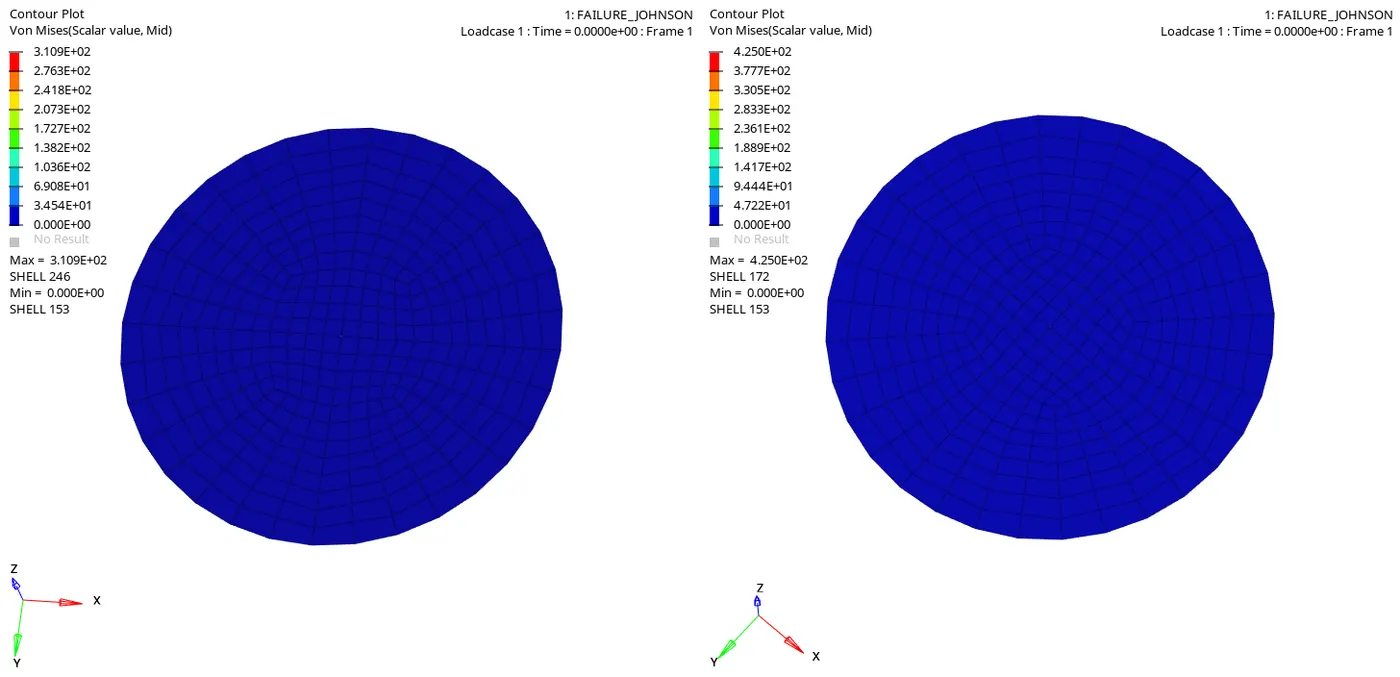
In this case3 we delete the failure johnson card and run the simulation for this entire one.
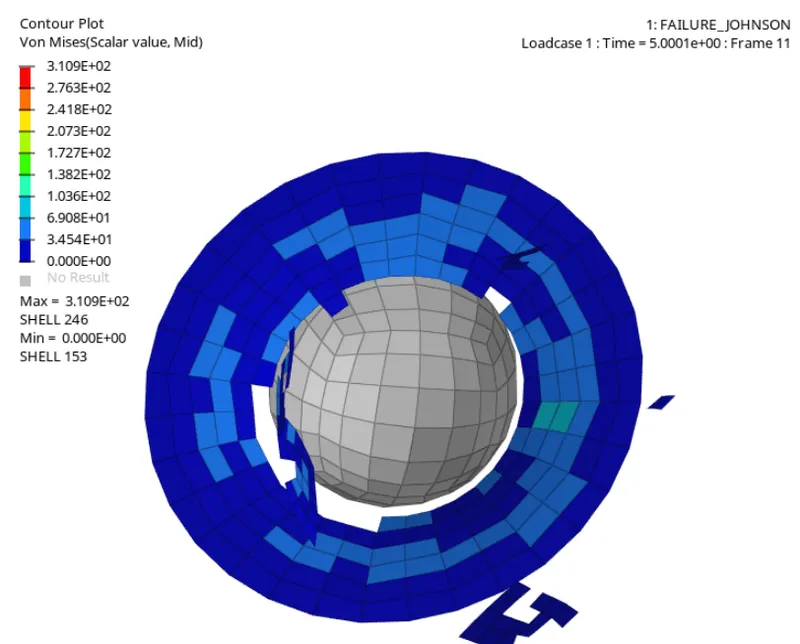
The stress applying to the plate is very high and the elements present in the plates are deleting from the surfaces because we are not mentioning any damage or rupture parameters to the model.
Total number of cycles; 49408
simulation time; 66.85 s
mass error;0.000
energy error; 0.8%
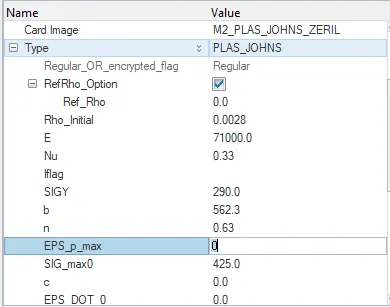
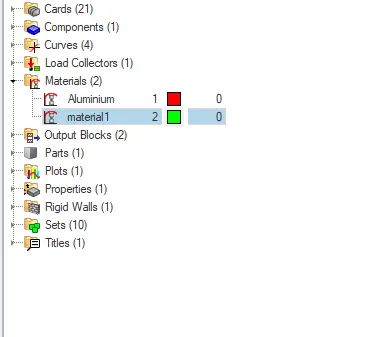
In case 4 we were making changes over the materials such as
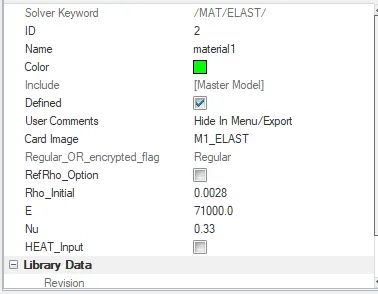
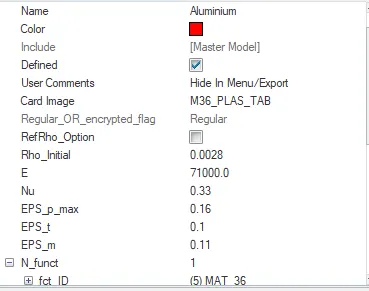
rho initial = 0.0028
young's modulus =71000
Nu =.33
SIGY or a; yield stress=290
b ; hardening modulus = 562.3
n; hardening exponent = 0.63
Eps_p_max; elastic-plastic strain at fail (tensile,compression,shear)=0
update all these material properties to the model and run the simulation.
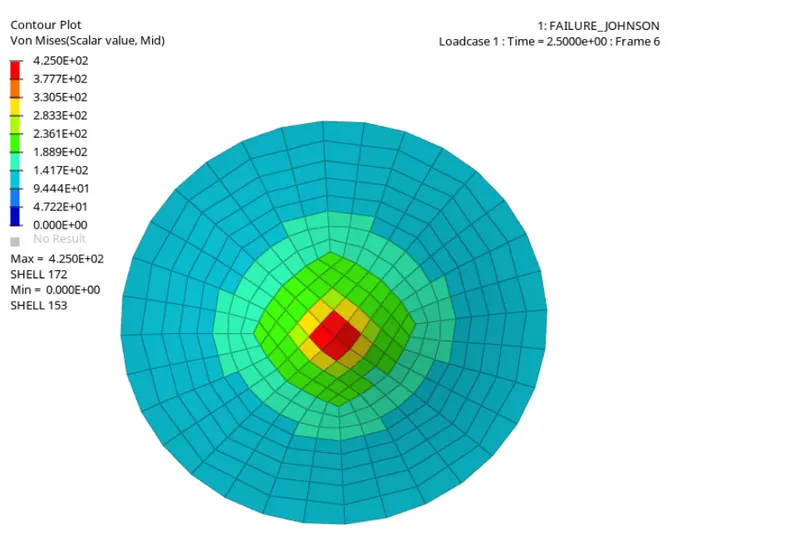
For the results, we open the hyper view > import h3d files >select the contour plot >set result type as von Moises and apply to the plate, and there we can see the results the element
Total number of cycles; 48737
simulation time; 65.50 s
mass error; 0.000
energy error; 3.0%

CASE4;
CASE5;
Comparing case5 and case6
- defines an isotropic elastic , linear elastic material using Hooke’s law.
- This law represents a linear relationship between stress and strain. It is available for truss,beam (type 3 only), shell and solid elements.
- This material law is used to model purely elastic materials. The material stiffness is determined by only two values: the
- Young’s modulus (E), and Poisson’s ratio (n).
- Can only be used for parts that are stressed below the yield strength
Total number of cycles; 47969
simulation time;66.16 s
mass error; 0.000
energy error; 1.3%
case6;
BRITTLE;
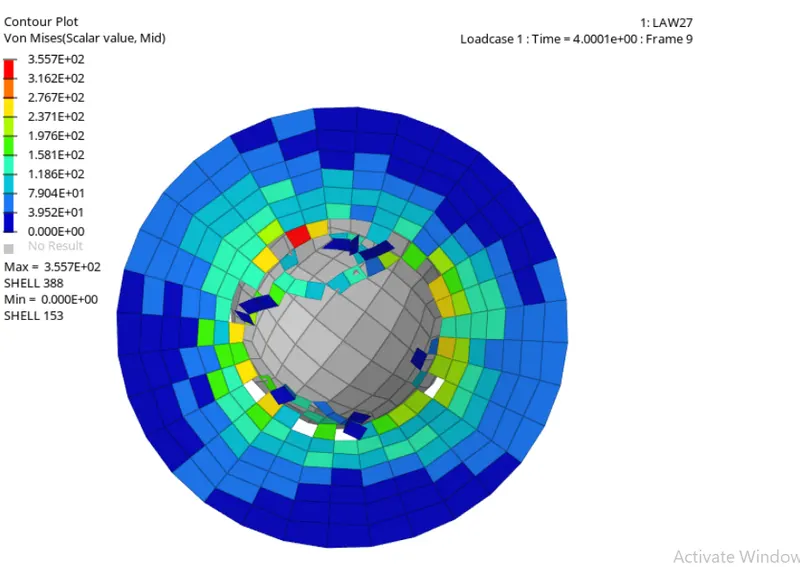
This law combines an isotropic elasto-plastic Johnson-Cook material model with
an orthotropic brittle failure model.
Material damage is accounted for prior to failure.
Failure and damage occur only in tension.
This law is applicable only for shells only.
Yield surface definition same as Johnson-Cook (Law2)
- Useful for modeling brittle failure of glass
- Damage and rupture defined with 4 parameters for each principal direction:
et = Strain at the beginning of tensile failure
em = Maximum tensile strain at which the stress in the element is set to a value
dependent on dmax1
dmax = Maximum damage factor
ef = Maximum tensile strain for element deletion
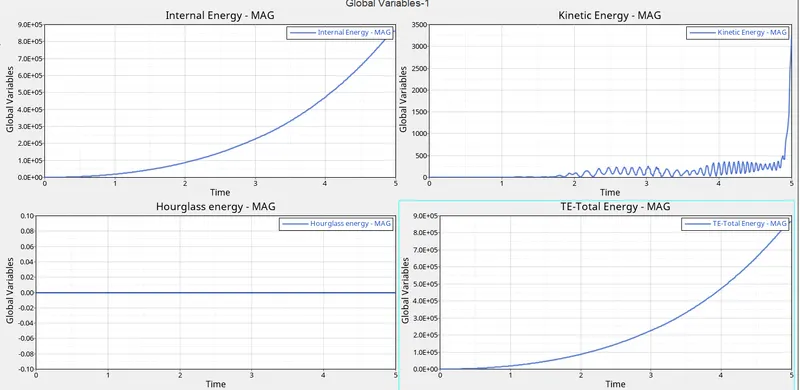
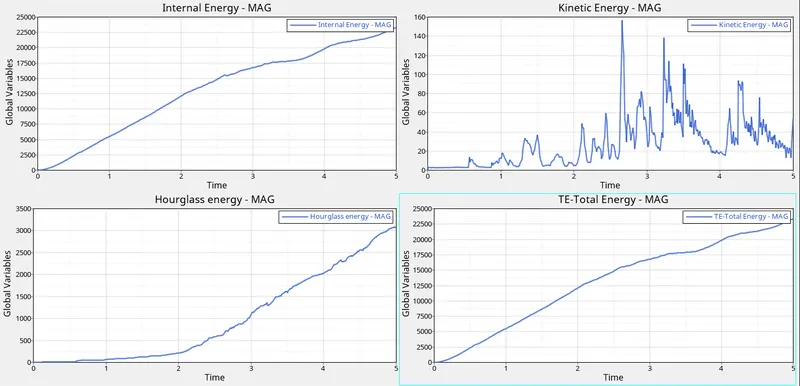
Total number of cycles; 41113
simulation time; 52.72 s
mass error;0.000
energy error;-7.1%
CASE 6;
CASE7;
This law models an isotropic elasto-plastic material used defined functions for the workhardening portion of the stress-strain curve for example, plastic strain vs stress for different strain rates.
- Isotropic elasto-plastic material
- User-defined function for the work-hardening portion of the stress-strain curve
- Available for brick and shell elements
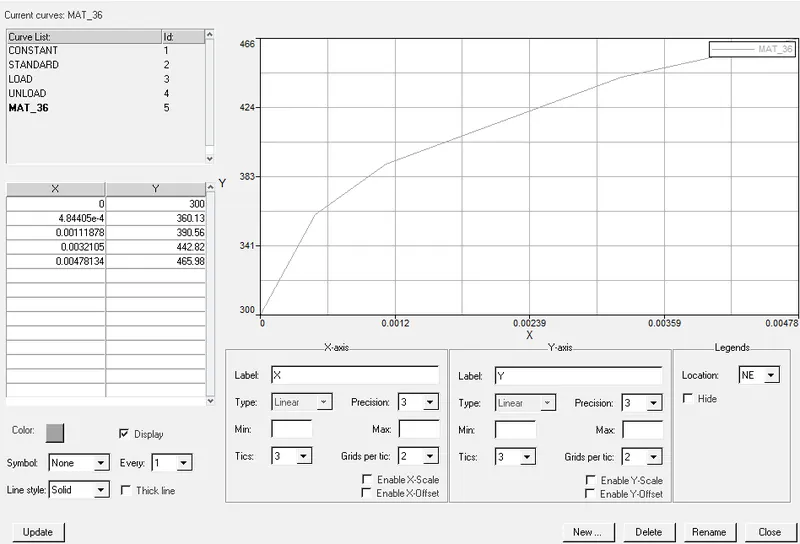
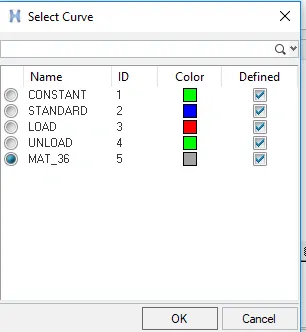
In this case we create an curve for the fun id and we edit these curve for taking values for x and y which were taken from the challange.
The curve starts from the yield point and defined for the function of work hardening portin for the plastic stress-strain curve.
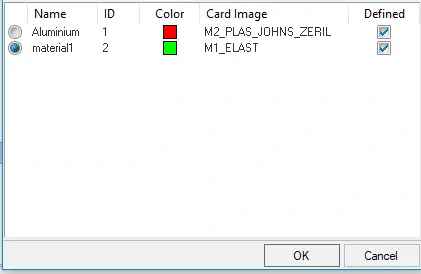
set the material card as the m36_plas_tab and also makes changes in the remaining portion.
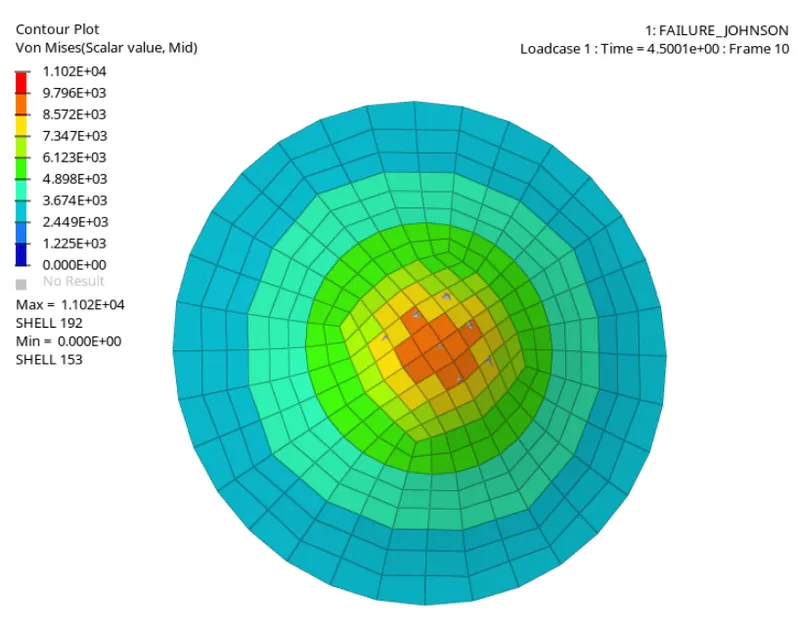
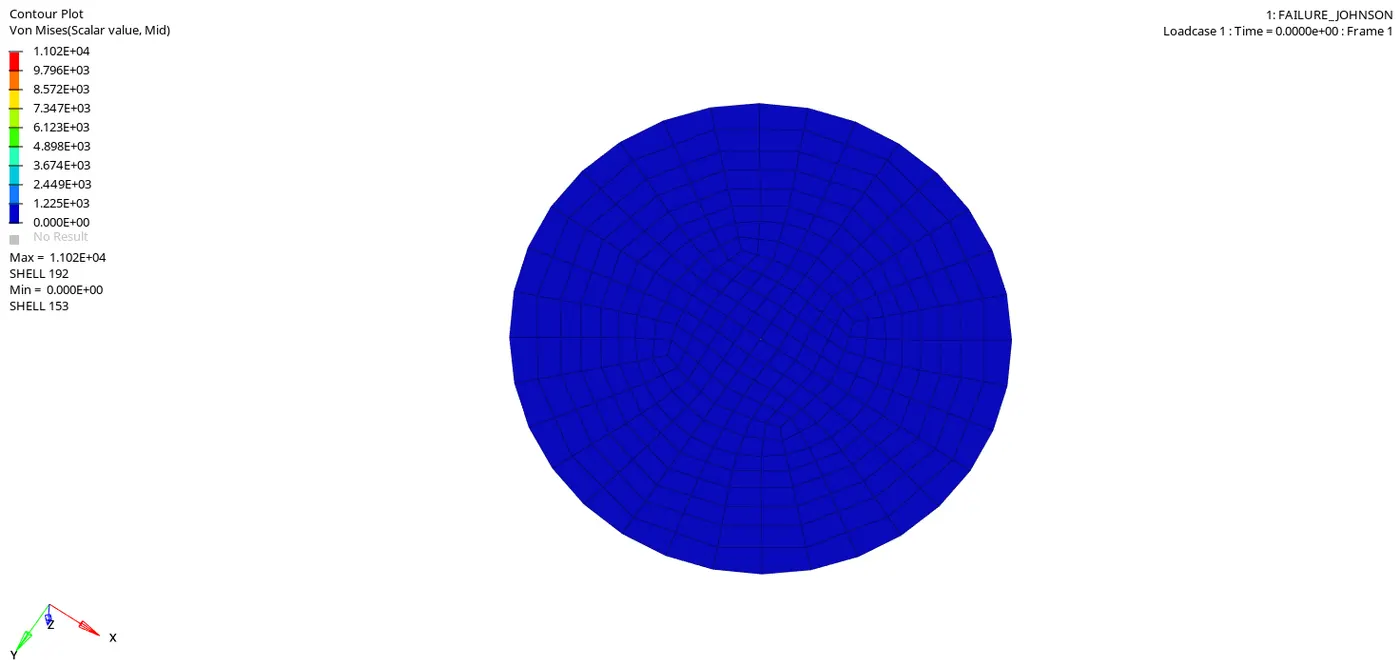
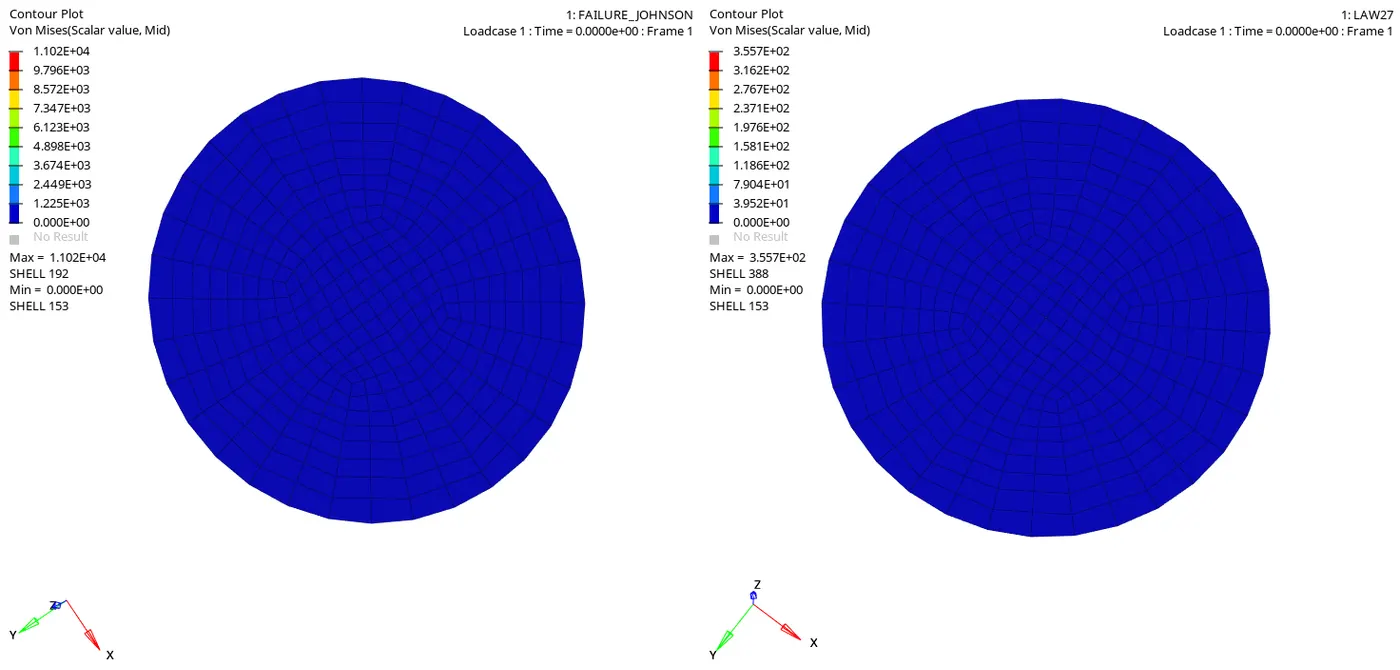
The results which coming from the contour view for von moises stress are seen in the below figures.
Total number of cycles; 47969
simulation time;63.85 s
mass error;0.000
energy error; 1.3%
The von moises stress which are produced in the contour are 1102 or 1.102E+02.
CASE1and2;
case3and 4
case5 and 6
CONCLUSION;
In this challenge learn about the different material laws and their specific applications.
mass and energy errors are also within their limits due to the recommended shell formulations.
In the all plots the hour glass remained zero almost in the all cases.
case2,case4,case7 are most relastic in the field senarios due to their special crack formulation, faiure cards and their stress formations etc,.