Study and Modeling of elasto-plastic, brittle and hyperElastic material in HyperMesh Radioss.
Objective: To study different material types in Radioss and compare the cases.
Procedure:
Choosing the right type of material for the given FE model is of paramount importance to get accurate results during FEA. In the automotive industry, elastic materials are used only for some components as most of the components are made of sheet metal and are prone to deformation after yield point has been reached. Many applications also make use of hyperelastic materials, composite and brittle materials.
To model these materials according to said application, FEA software usually incorporate all types of materials to choose from. Some of the material examples are in Radioss are:
Law 1: Elastic
Law 2: Jhonson-Cook
Law 27: Elastic-Plastic Brittle
Law 36: Elastic - Plastic tabulated
Law 42: Hyperelastic (Odgen)
For this study, different materials have been setup with minor changes in the material cards to observe the effect these changes have on the overall performance of the model
Model: A model of ball and cicular plate has been provided with all the boundary conditions set in it. The ball is to impact the plate at a certain velocity.
The below curve explains the basic stress-strain curves usually used for different applications.
MATERIAL LAWS:
LAW 1: Isotropic Elasticity:
This law defines an elastic material using Hooke's law which represents a linear realtionship between stress and strain. It is available for 1D, shell and Solid elements. This can only be used for pure elastic material. This material needs only 2 values to be defined: Young's modulus, and Poisson's ratio.
LAW 2: Jhonson - Cook: The Jhonson - Cook represents an isotropic elasto-plastic material using the Jhonson-ook material model. This model is used to express stress as a function of strain, strain rate and temperature. For this model, the temperature has not been used. While using these in FE models, failure of the element happens when 1 integration point reached EPS_max. This means if any of the tension, compression or bending strain value reach the EPS_max, the element fails.
`sigma = (a+b(epsilon^n))(1+cln(epsi/epsi_0))(1-T_m)`
Whenever the model is subjected to heating conditions, the temperature T_m is calculated using ambient temperature, applied temperature and melting temperature.
The Jhonson - Cook model does not perfectly represent real conditions. It is usually defined using Max stress or strain. A failure laew called Jhonson Failure can hence be used to define failure using D1, D2, D3, D4 constants.
LAW 27: Elastic - Plastic Brittle:
This law combines an isotropic elasto-plastic Jhonson - Cook model with an orthotropic brittle failure. Material damage is accounted for prior to failure and failure occurs only in Tension. This law is applicable only for shell elements.
Some applications of it are: glass, aluminum etc. This law allows for defining material damage and failure in 2 principal directions.
The parameters used to model it are: Strain at tensile failure begining, Maximum tensile strain where the stress goes to zero but the element does not fail, maximum tensile strain for element deletion and maximum damage factors.
LAW 36: Tabulated plastic:
This law is much closer to real conditions and is the most popular used card for plastic material in the industry. It takes in a curve, and this curve takes into account the work hardening portion of a stress - strain relationship for different strain rates.
The material failure in this case are defined using 4 parameters:
`epsilon_t =`Strain at tensile failure begining
`epsilon_m`= Strain at which the stress is brought down to zero
`epsilon_f`= Tensile strain for element deletion
`epsilon_p` = Maximum strain allowed in compression, tension and bending for element deletion.
7 cases are to be setup using the above materials.
Case 1: Run the model for a plastic material with Failure defined using Failure Jhonson card.
After importing this case into Radioss, it is observed that Jhonson-Cook plastic material is used for the first case with a failure card. This failure card is used to define the particular model's failure criteria. These inputs break the material as defined if the strain goes beyond EPS_MAX. Aluminum material properties are defined for this model with LAW2 Jhonson material.
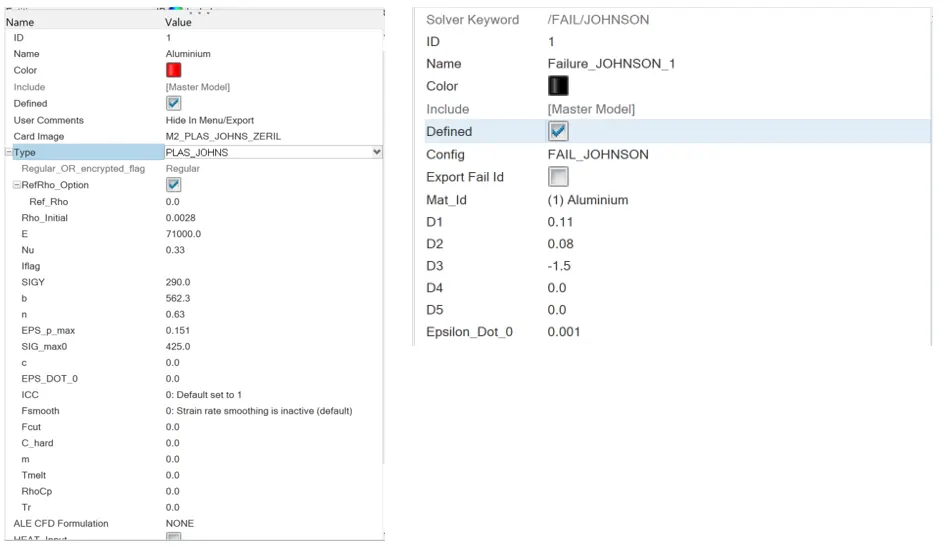
D1, D2, D3 and D4 specify the failure criteria for this model. These values can be used for failure if EPS_max is not defined. After saving and running the model as is on Radioss, the following results are observed:
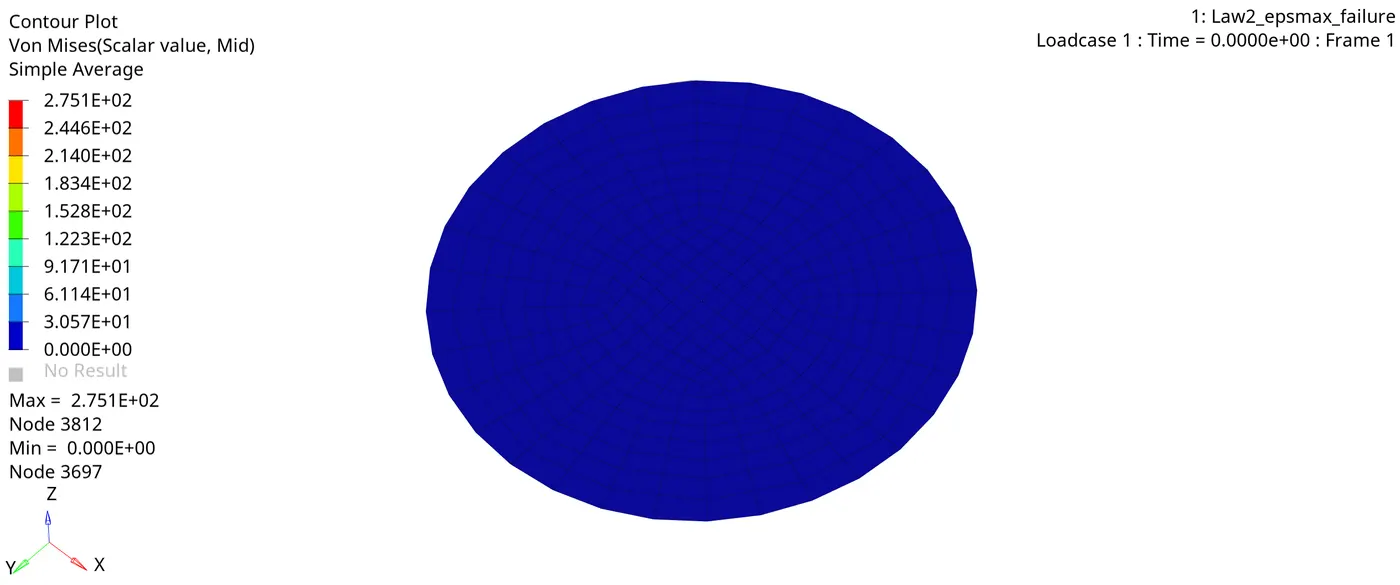
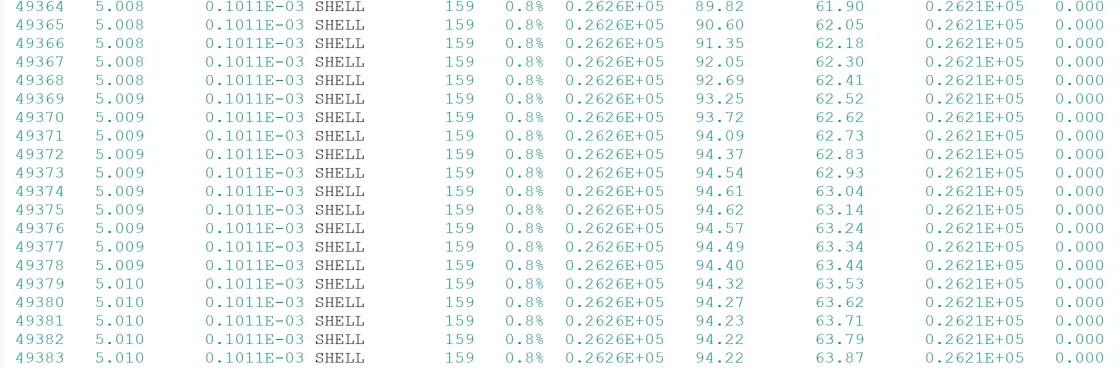
The energy error and mass error for this simulation was within the limits as the recommended shell properties were applied to the component.
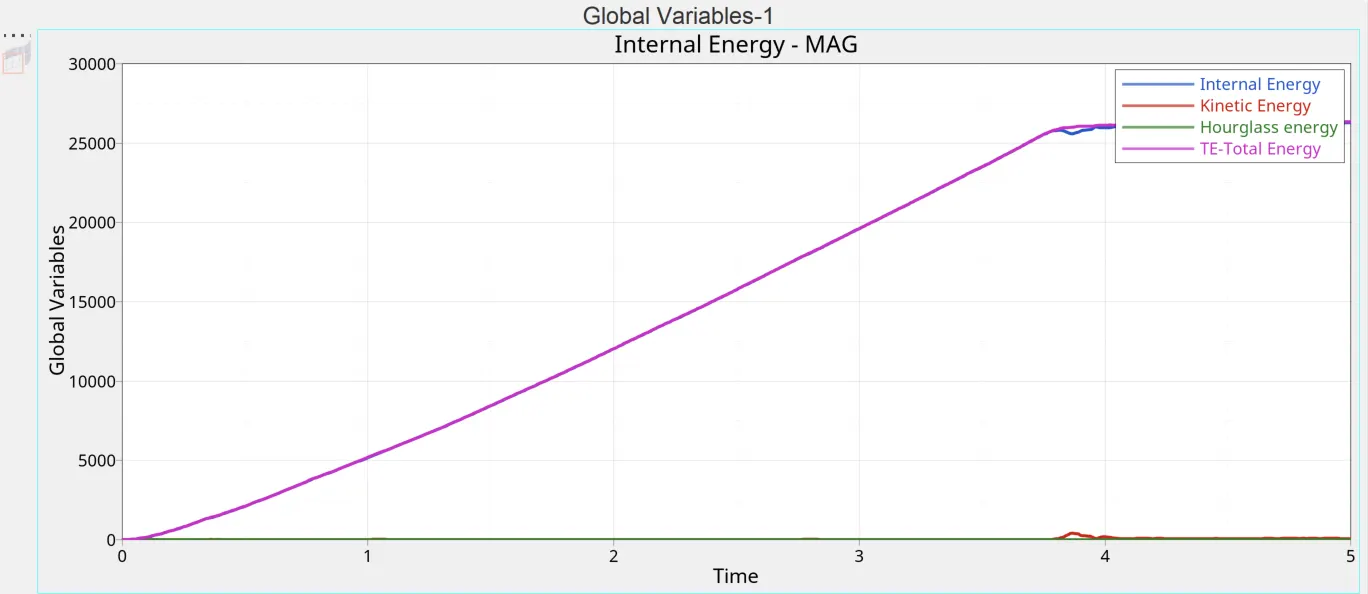
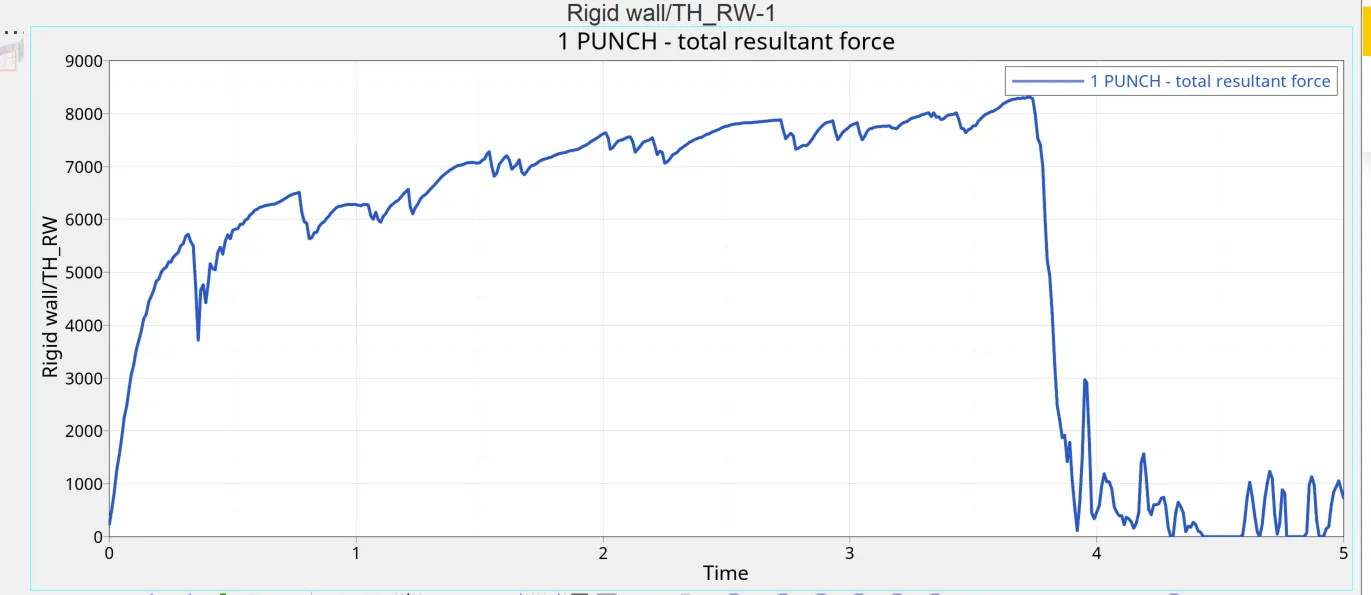
Below images show the energy plot and the rigid wall forces.
Case 2:
In the first case, the elements were deleted upon reaching a certain amount of strain value and failure criteria. But cracking was not observed within those elements. To observe cracking, certain options in the failure-jhonson have to be activated. Those options are ixfem, Dadv and lfail. These options crack the element as they should have in an ideal scenario.
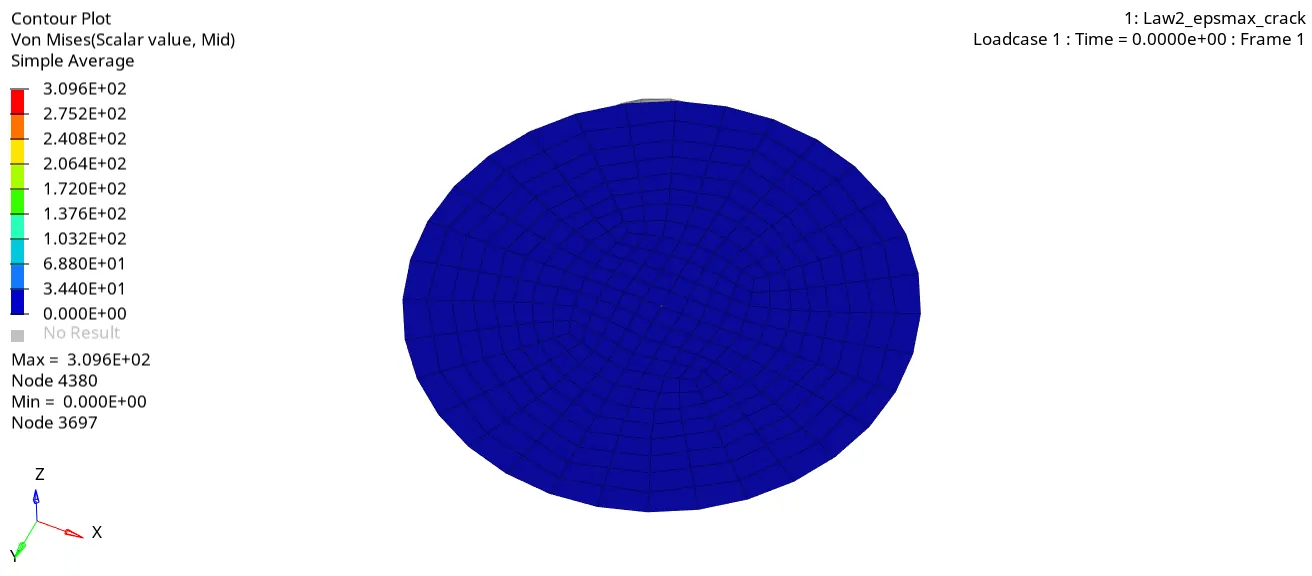
As expected, before the deletion/breaking of the elements, crack formation is observed in the structure.
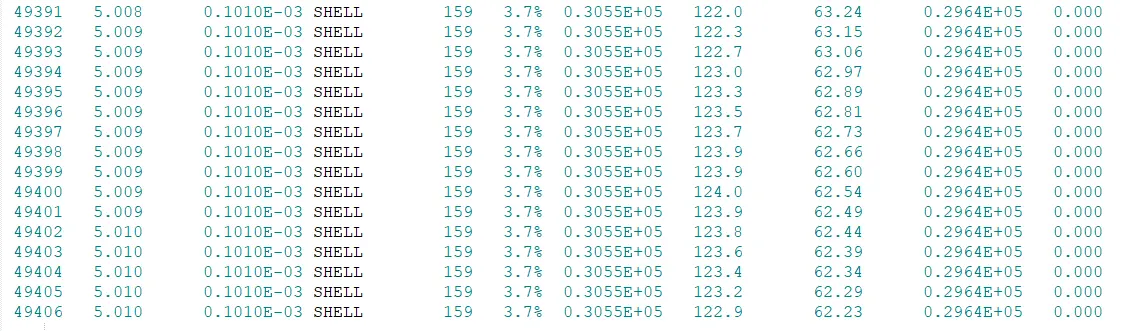
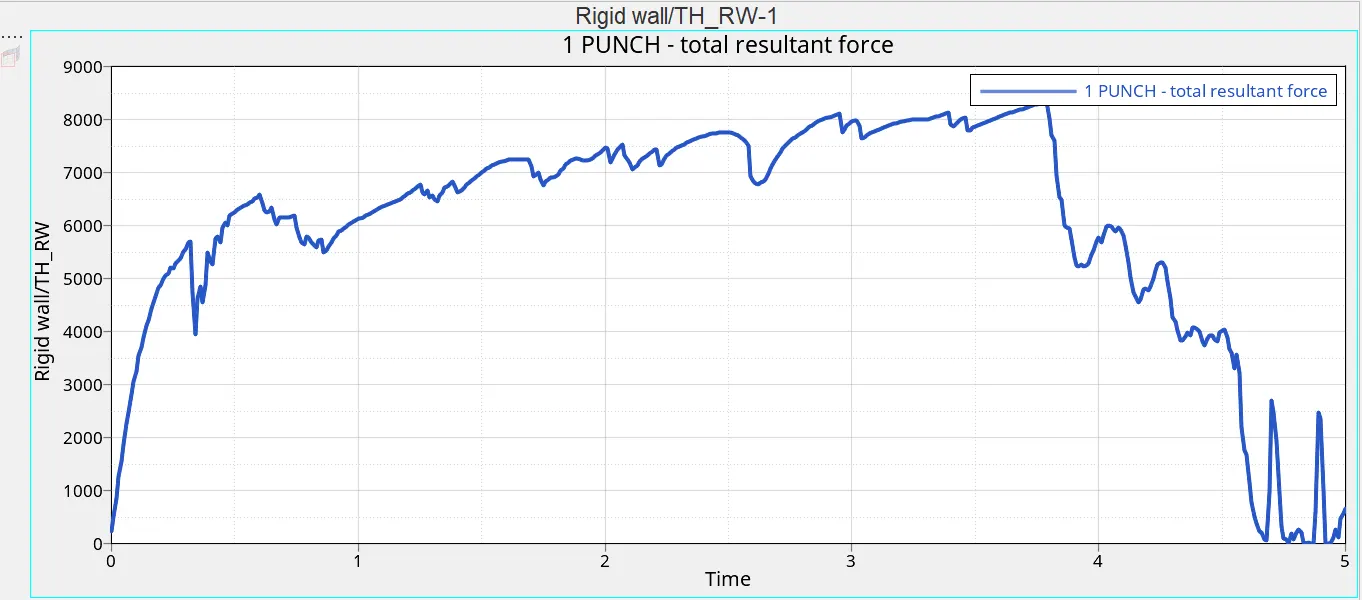
The energy error observed in this case was 3.7% while the mass error observed was 0%.
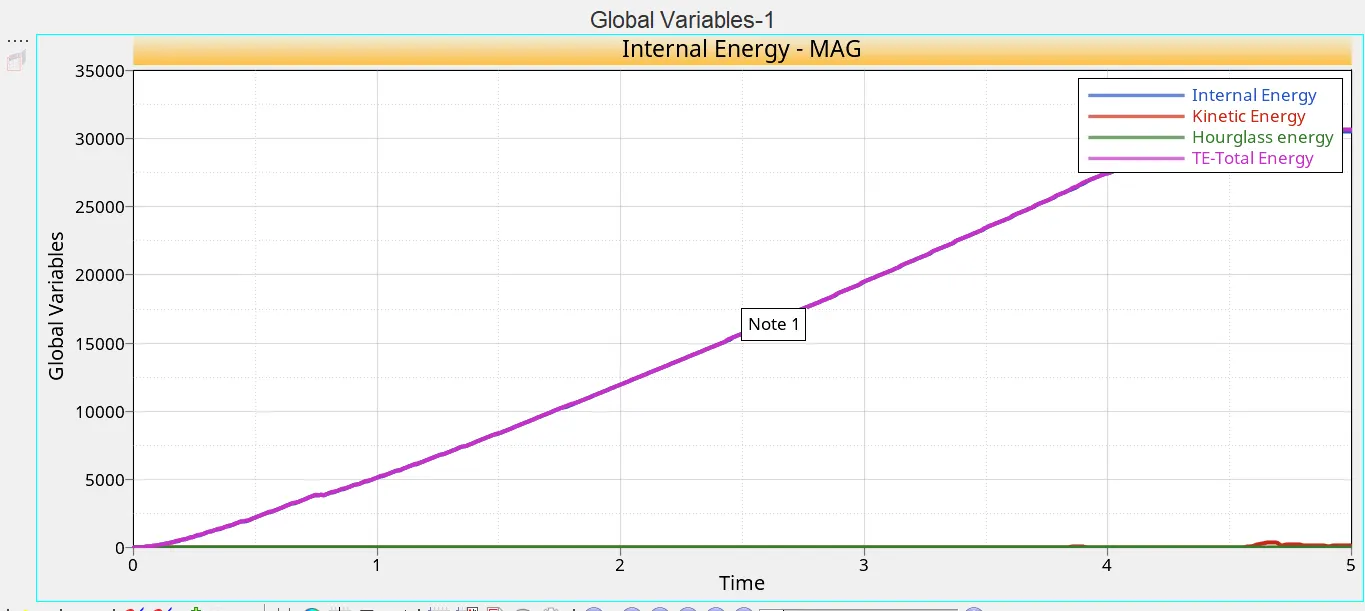
The energy and rigid wall force plots are shown below:
Case 3:
In this case, the JHONSON-FAILURE card is deleted from the model and the failure is only defined using EPS_max. Hence, there is no failure criteria set for this model.
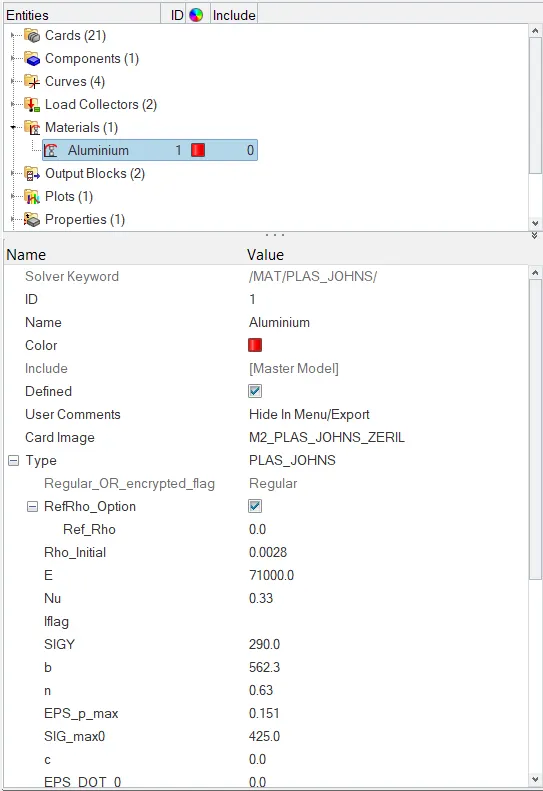
The max energy error observed for this case was 1.2%
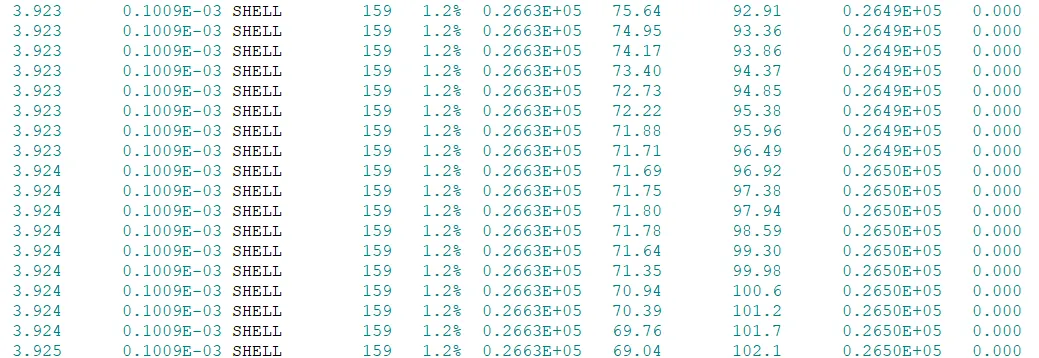
The energy plots are given below:
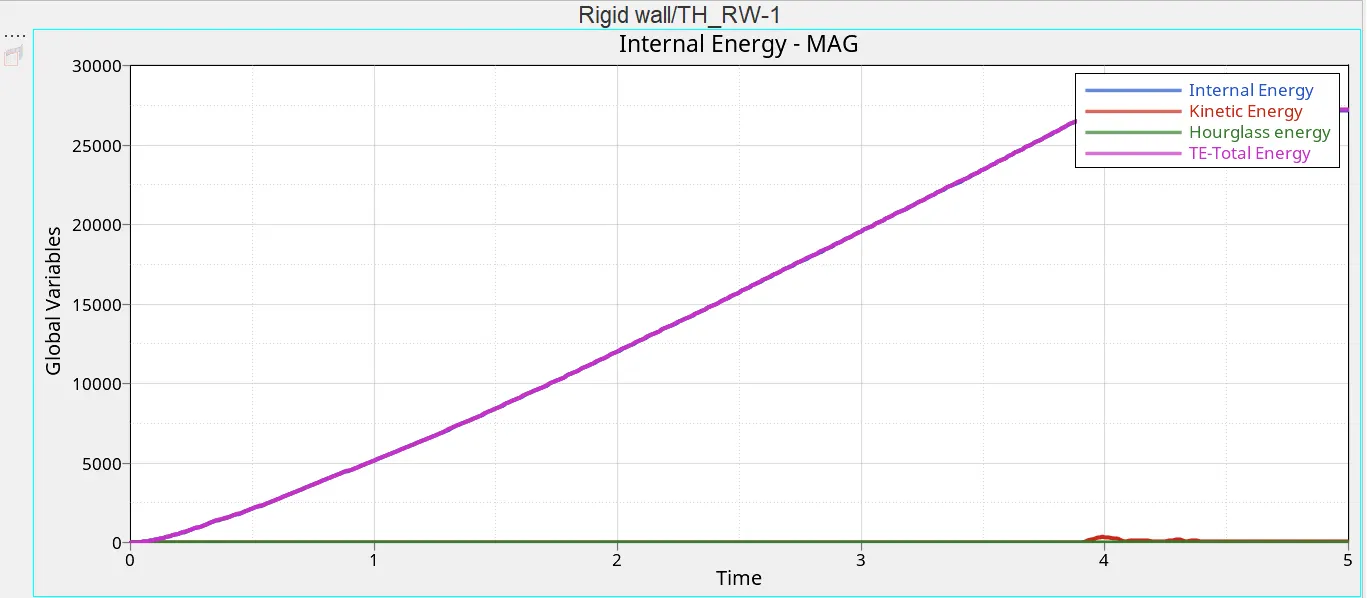
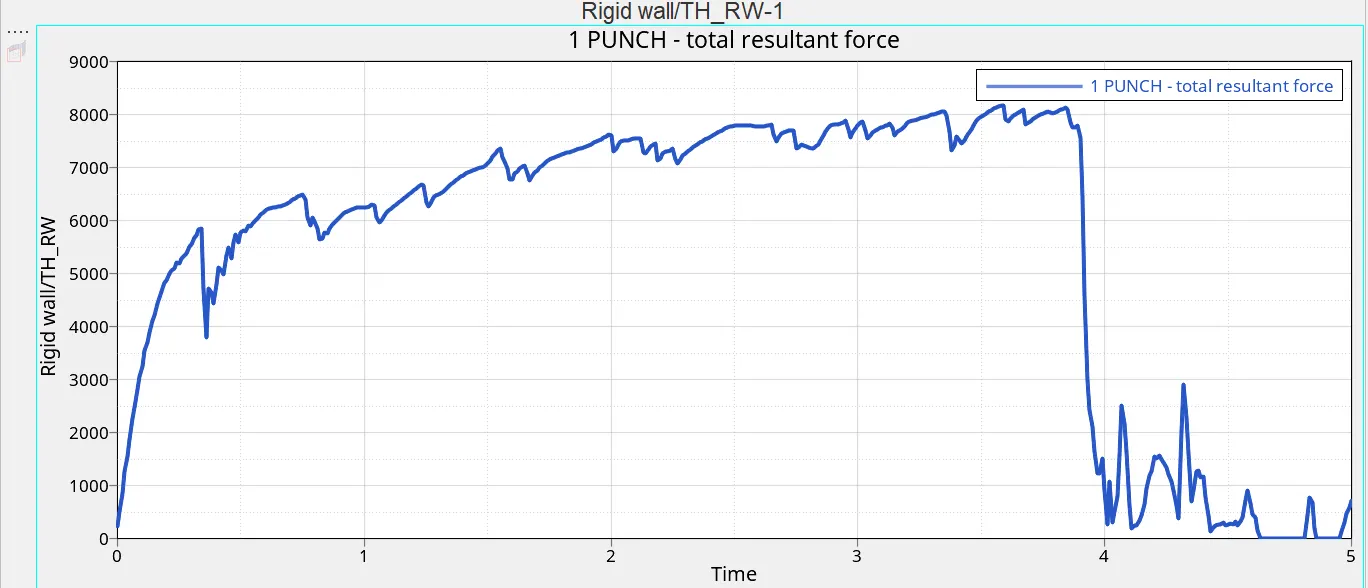
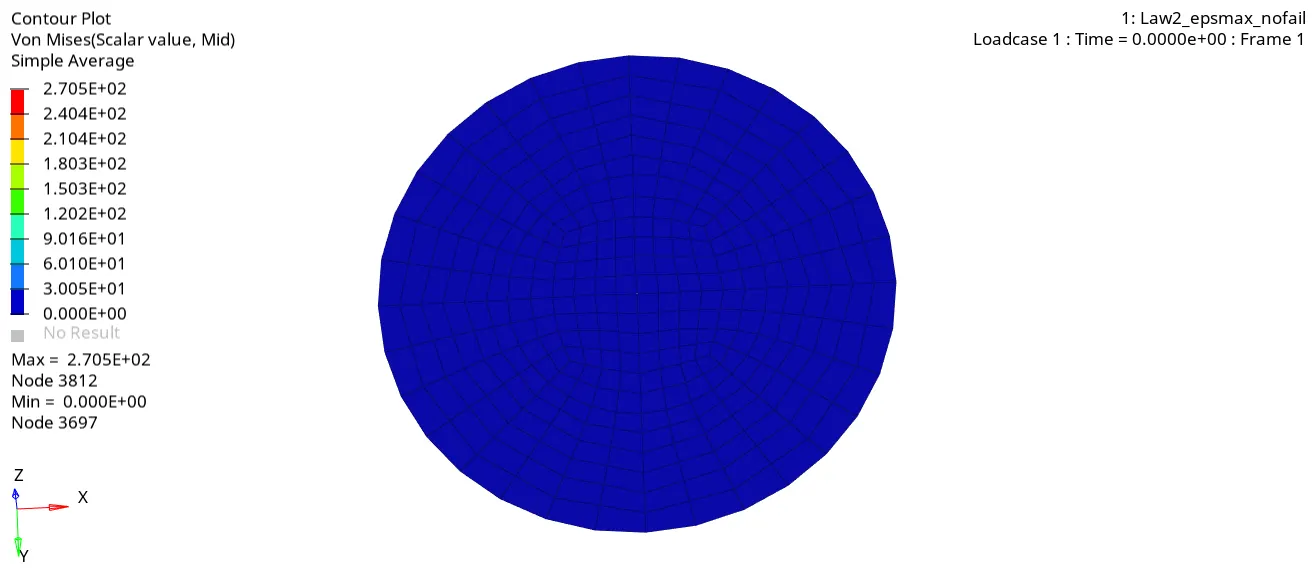
Case 4: Simple Law 2: In this case, the EPS_MAX value and the failure card has been deleted. Since there is no failure criteria defined, the elements should not fail.
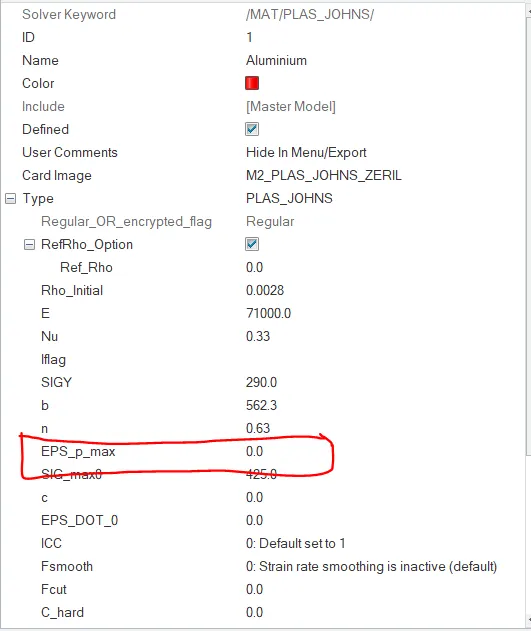
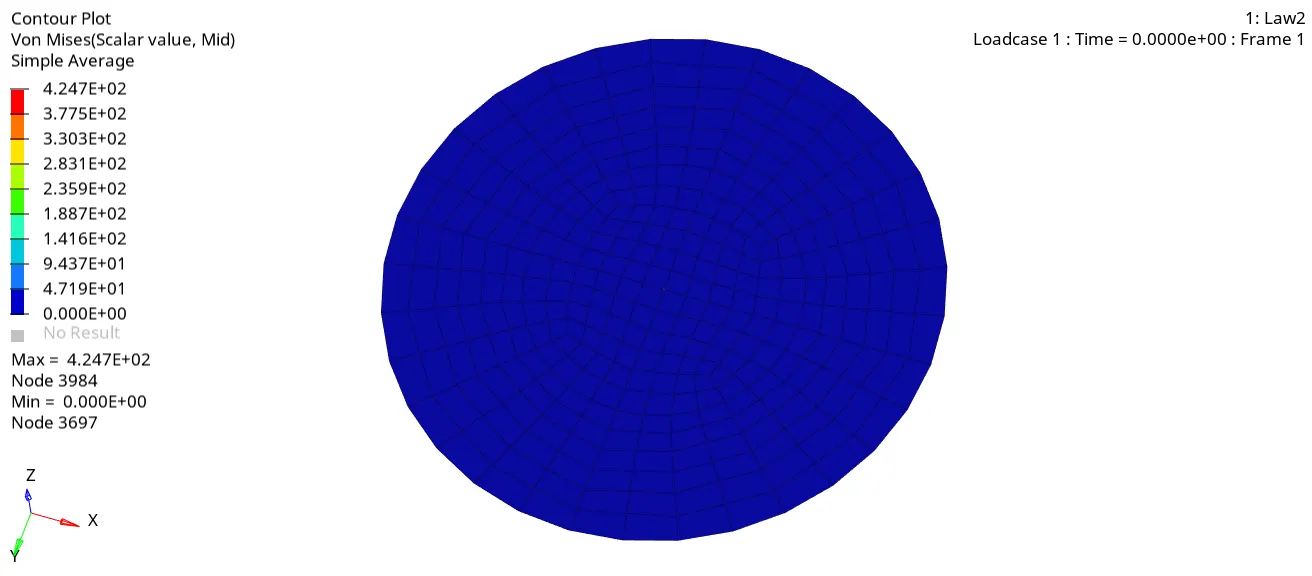
As can be seen, the circular plate does not have any elements deleted. Rather, the energy of the impact gets distributed evenly. Hence, stress gets distributed in a similar manner.
The energy error for this simulation was 3.1%, which was the highest energy observed overall for Law 2 cases.

The energy plots and rigid wall force for the same are given below:
Case 5: Elastic material modeling
The material here can be defined using the Young's modulus and Poisson's ratio.
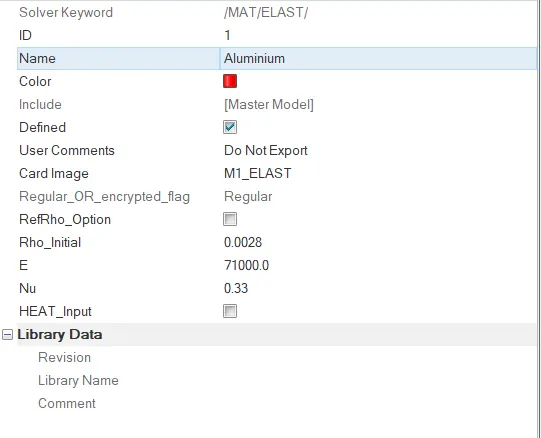
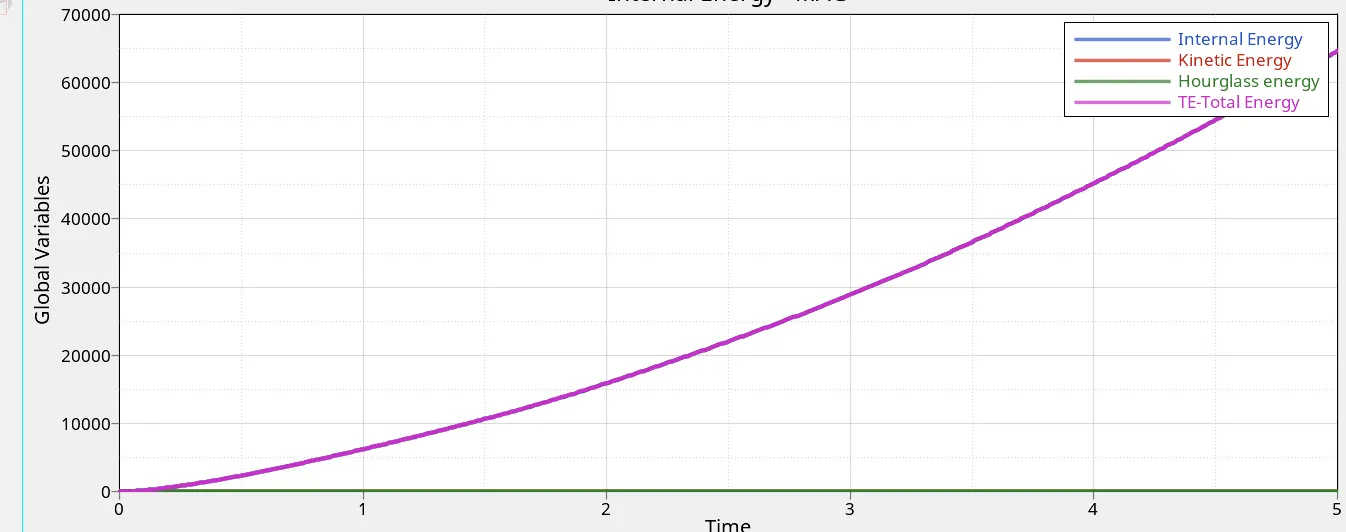
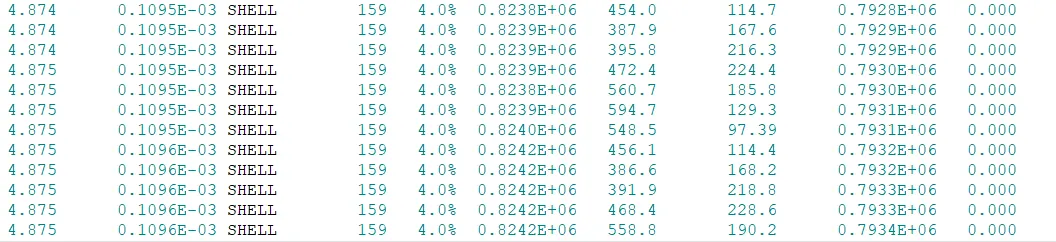
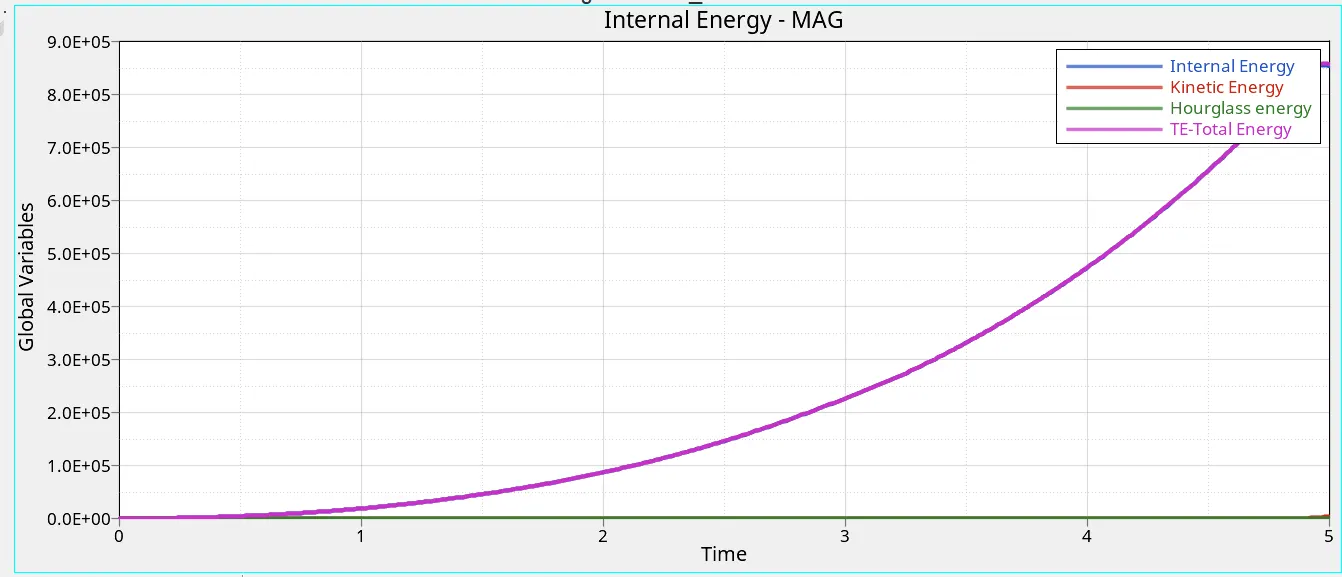
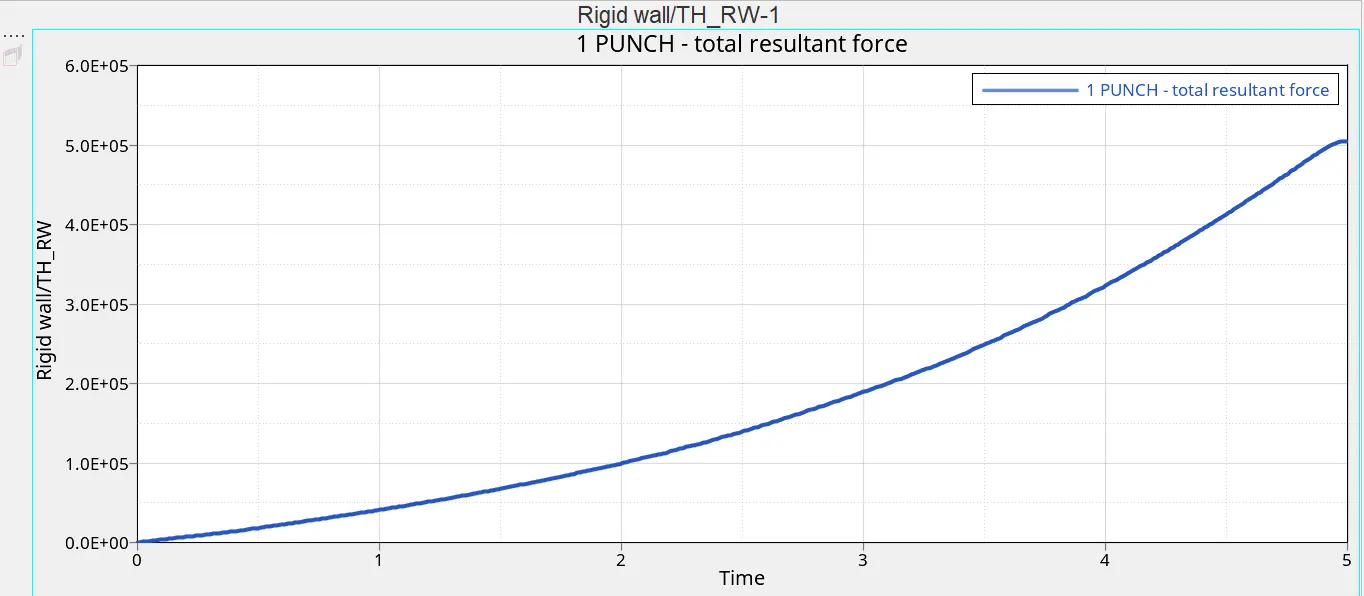
The maximum energy error observed for this case is 4%.
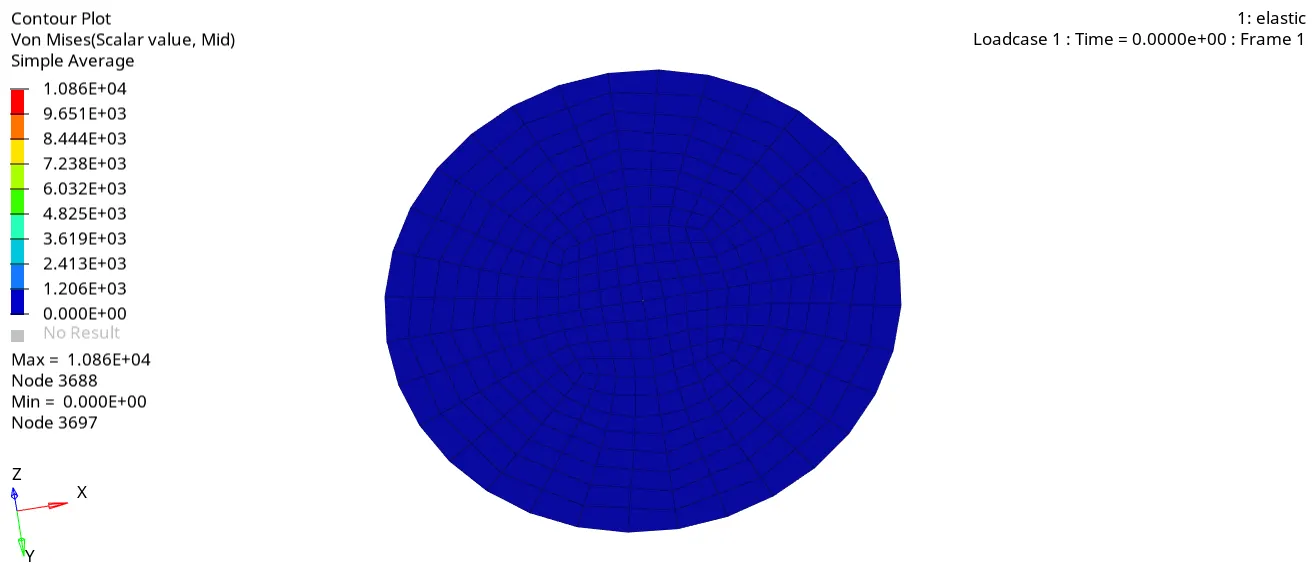
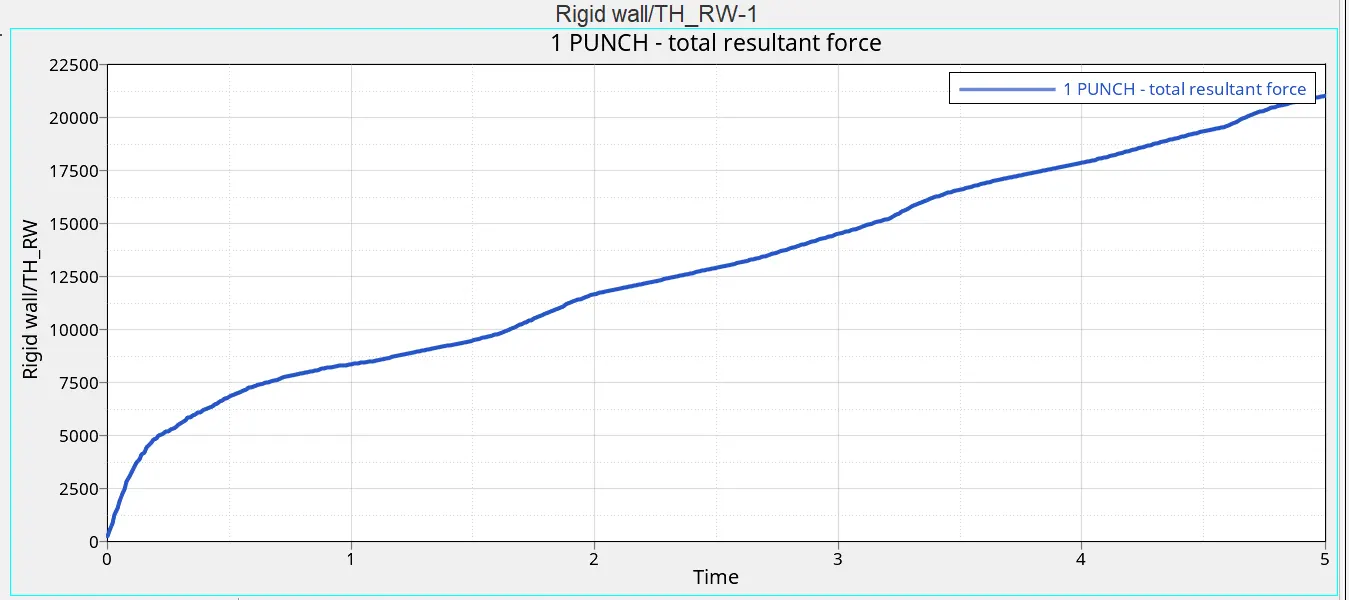
The energy plots and rigid wall force plots are shown below:
Case 6: Elastic - plastic Brittle:
As seen in the discussion above, the card for elastic-plastic material is used for this sample case.
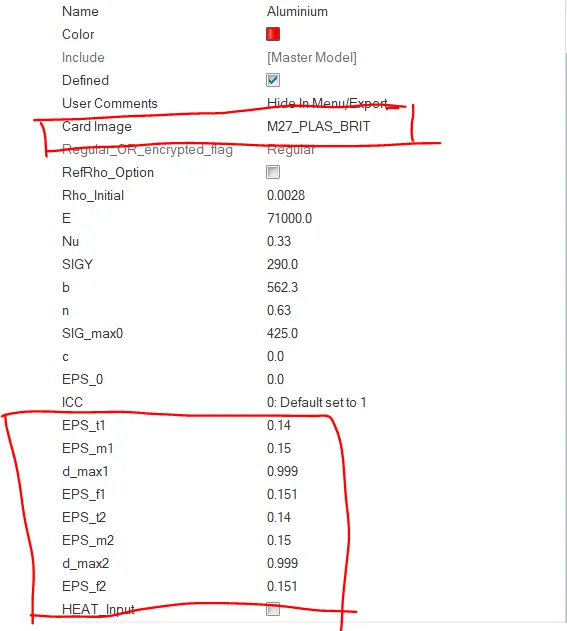
The maximum error for this case is observed as - 4.4%

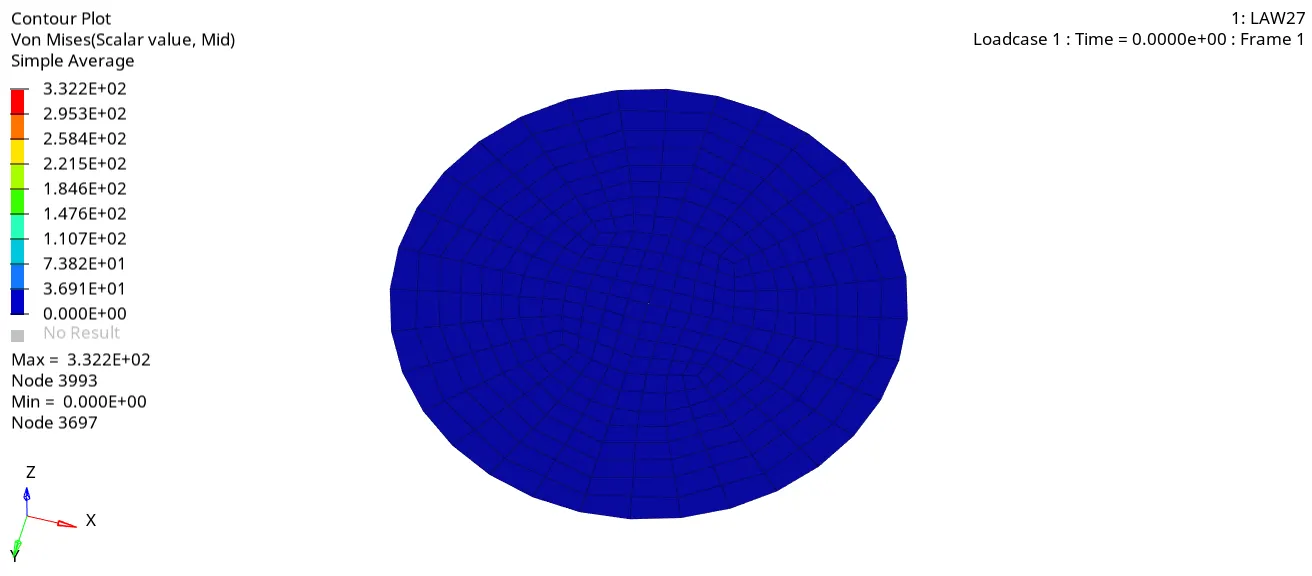
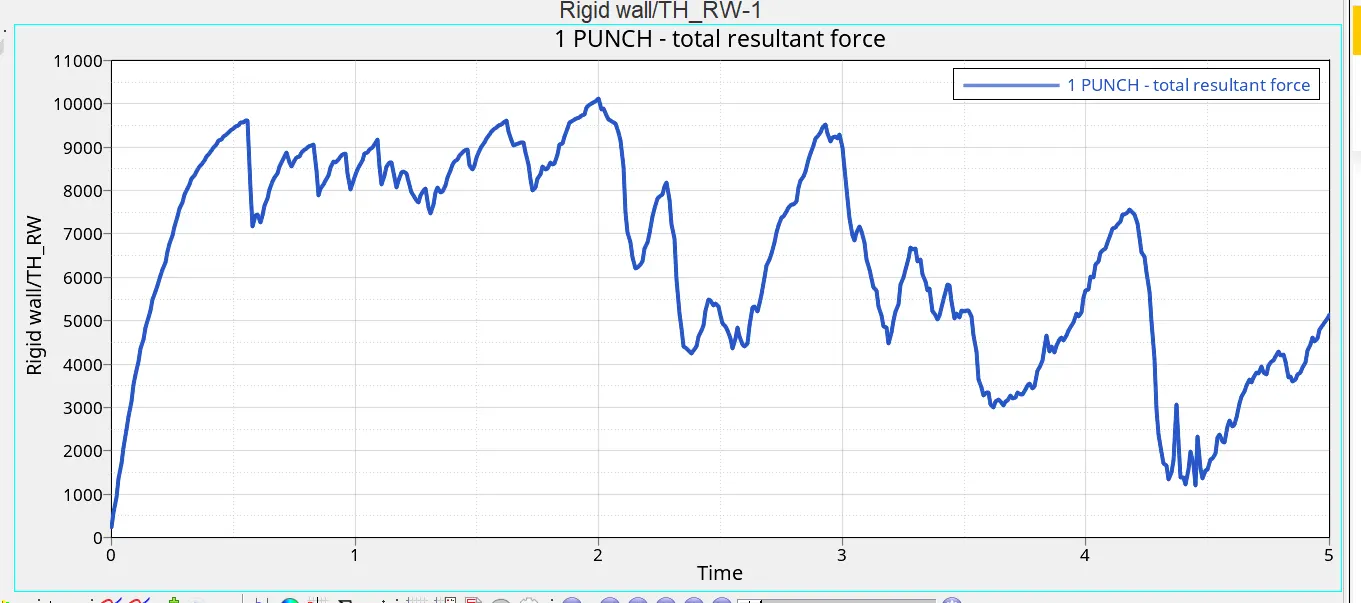
The energy plots and the resultant rigid wall force are shown below:
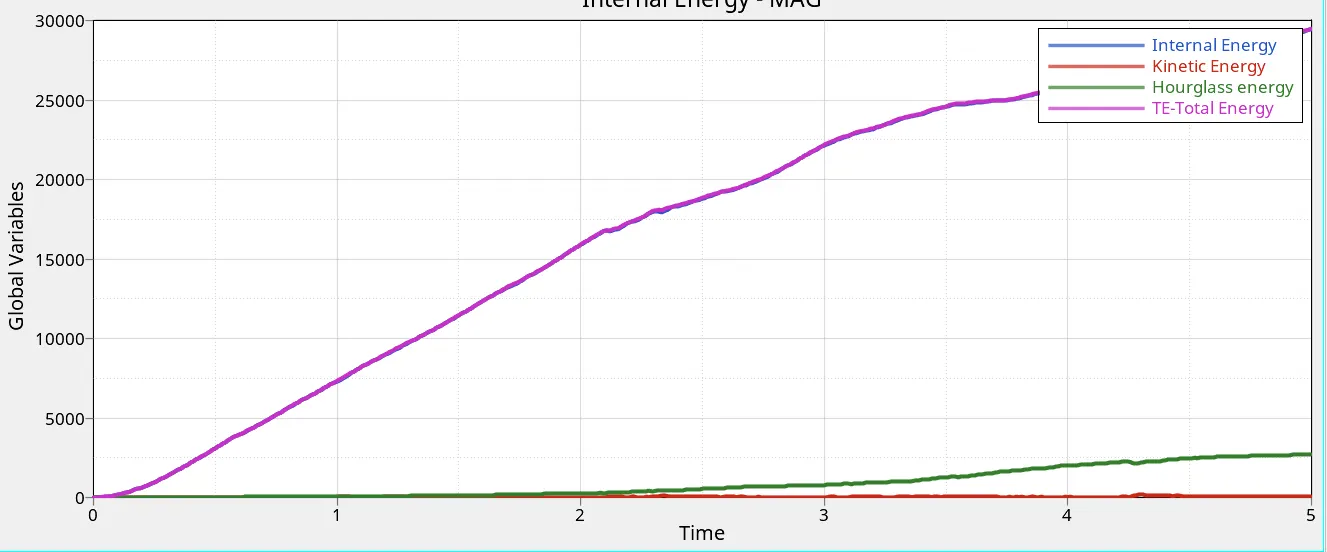
There is a certain amount of hourglass energy observed for this case.
Case 7: Plastic Tabulated:
A curve is input to depict stress-strain curve in the model.
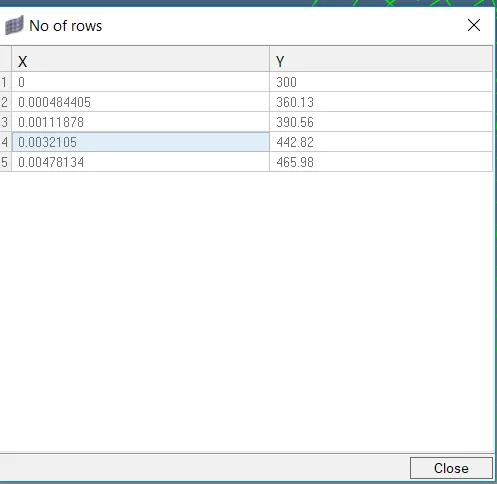
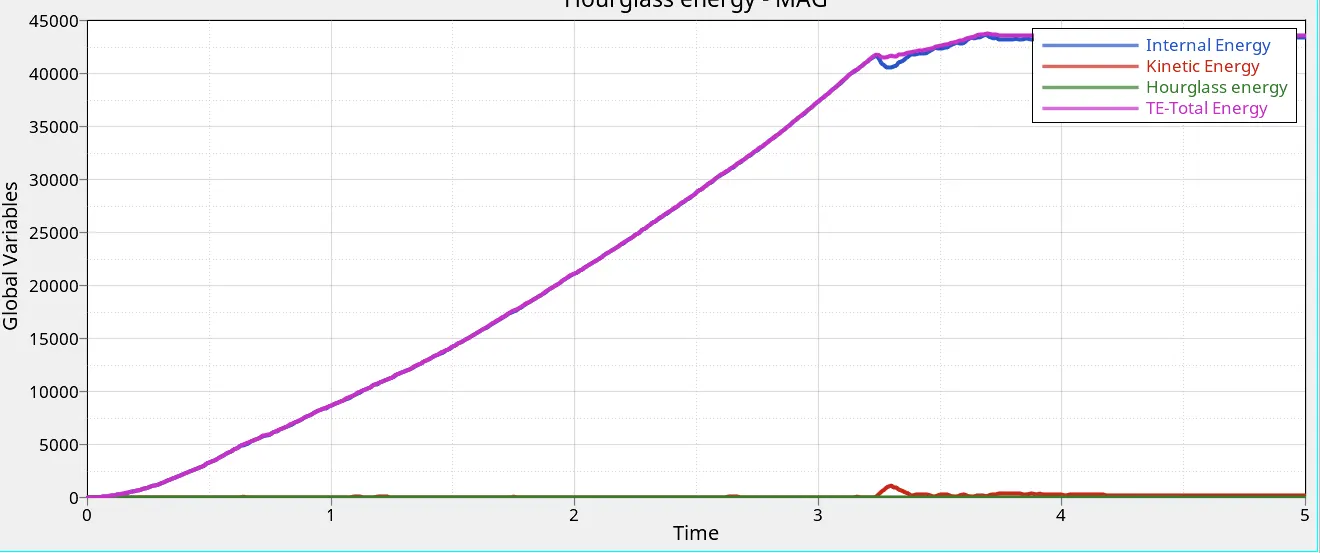
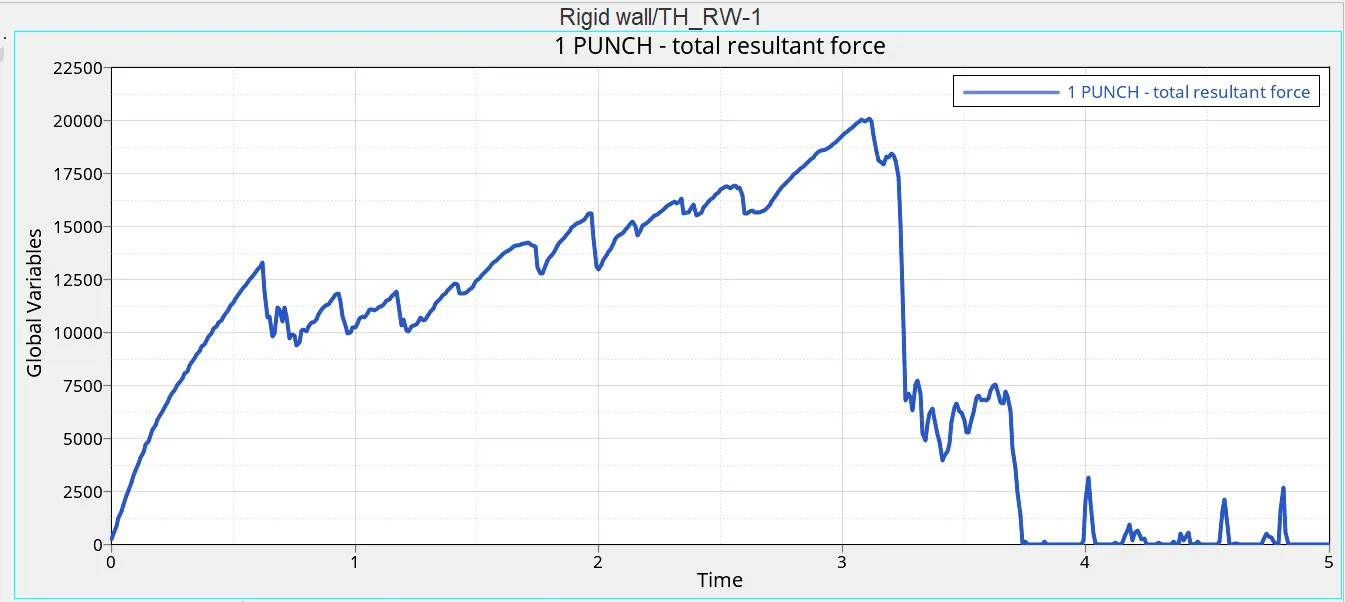
The energy error for this simulation was -1.5%

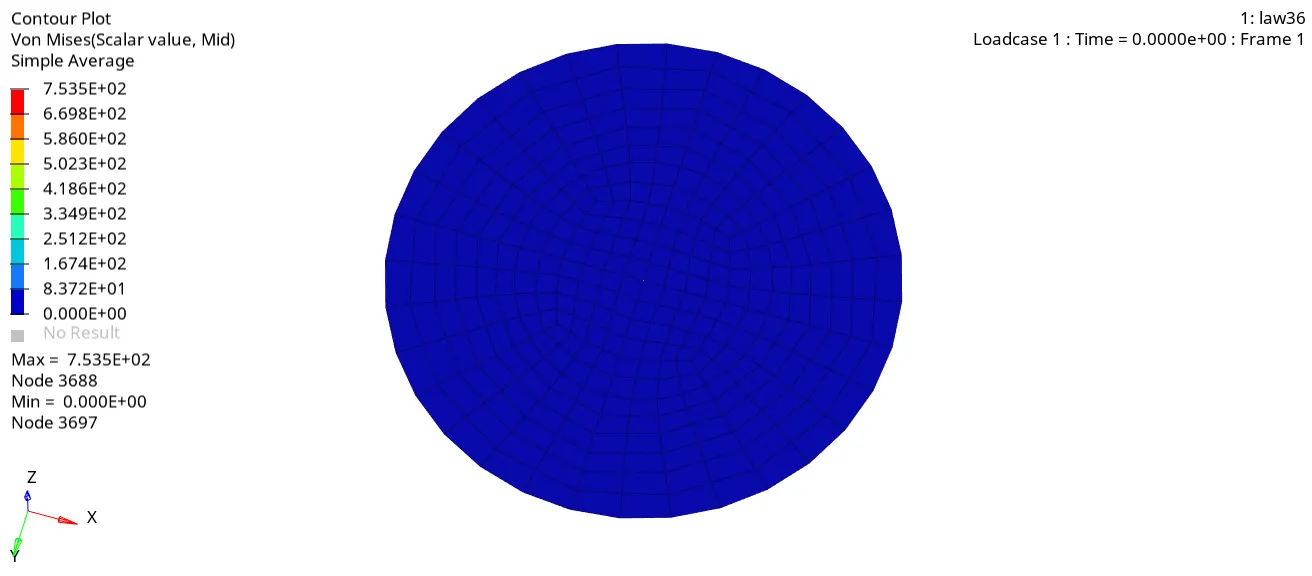
The energy pplots are shown below:
Comparison:
1) Energy error:
| Case | Energy error (%) | Mass error | Cycles |
| Case 1 | 0.8 | 0 | 49483 |
| Case 2 | 3.7 | 0 | 49353 |
| Case 3 | 1.2 | 0 | 49406 |
| Case 4 | 3 | 0 | 48736 |
| Case 5 | 4 | 0 | 47960 |
| Case 6 | -4.4 | 0 | 49344 |
| Case 7 | -1.5 | 0 | 52202 |
2) In case 2, elements of the circular plate are seen getting cracked and chipped away. Once the Failure_Jhonson card is removed (Case 3), the elements get ruptured but no cracks are observed. In the 4th Case, when the eps_max value is deleted, there are a few elements ruptured. For Case 5, when elastic material is used, no rupture is observed. In this case, the plate element behave like a fabric. When Law 27, Case 6, rupture is again observed. In case of Case 7, plastic behavior is observed and then the elements rupture.
The energy increase observed and the resultant rigidwall forces are similar for almost all cases.
So the best representation for on-field scenario would be Case 7. It's energy error is acceptable and the input data is more practical as compared to other cases.
Conclusion:The simulation for 7 cases are run and Case 7 is chosen as the most appropriate case for on-filed scenario.