Assignment 4
Assignment 4
Objective
Compare 7 cases as discussed in last 3 slides, in a tabulated format on the basis of:
1. Total number of cycles, Energy error, mass error and simulation time.
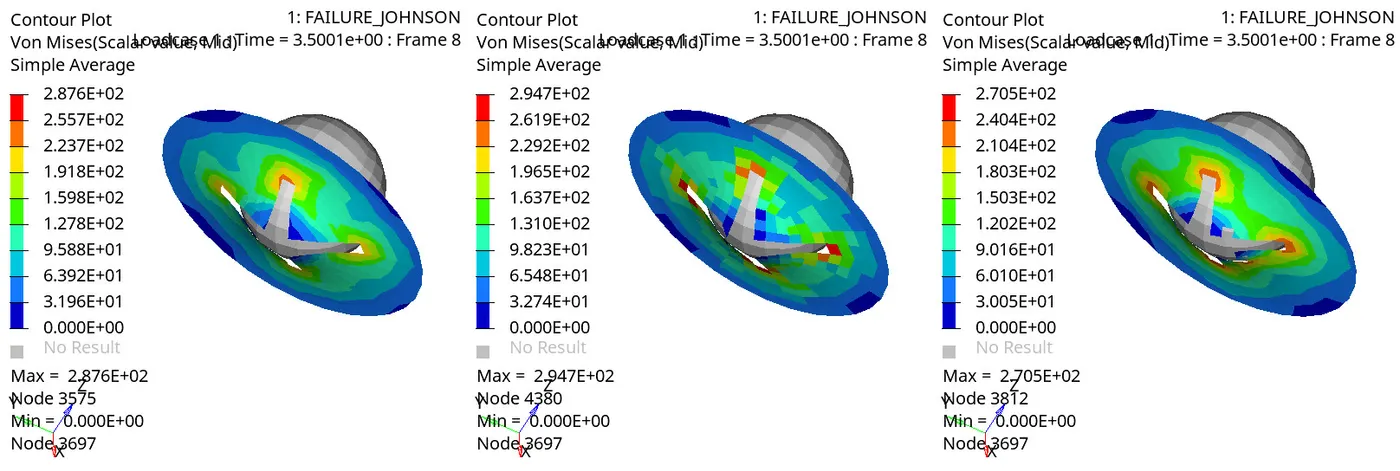
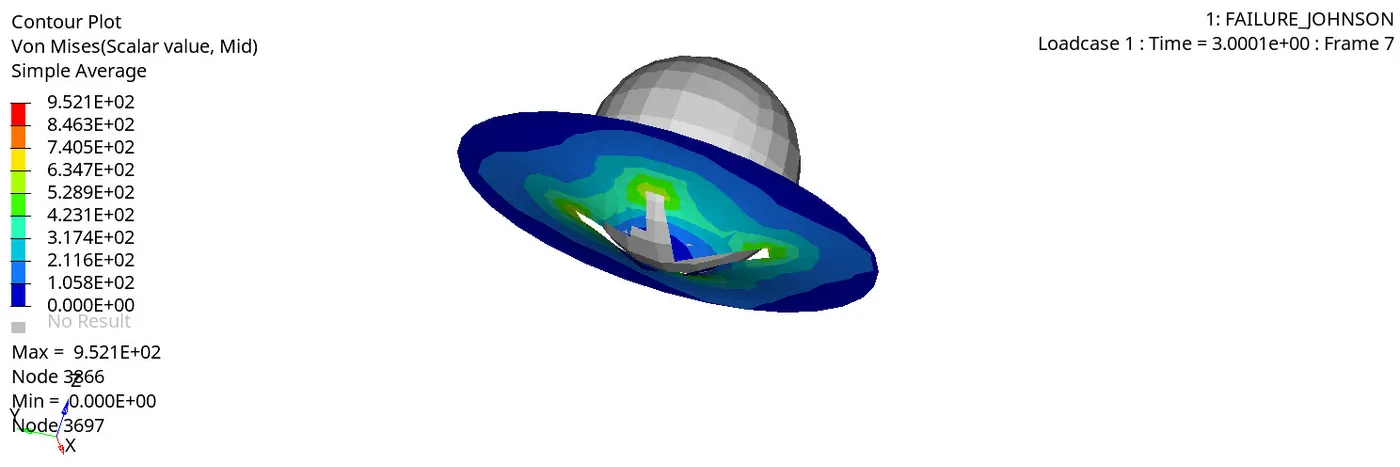
2. Notice the animation of all 5 and describe the animations in brief on the
basis of whether the elements are being deleted or cracked.
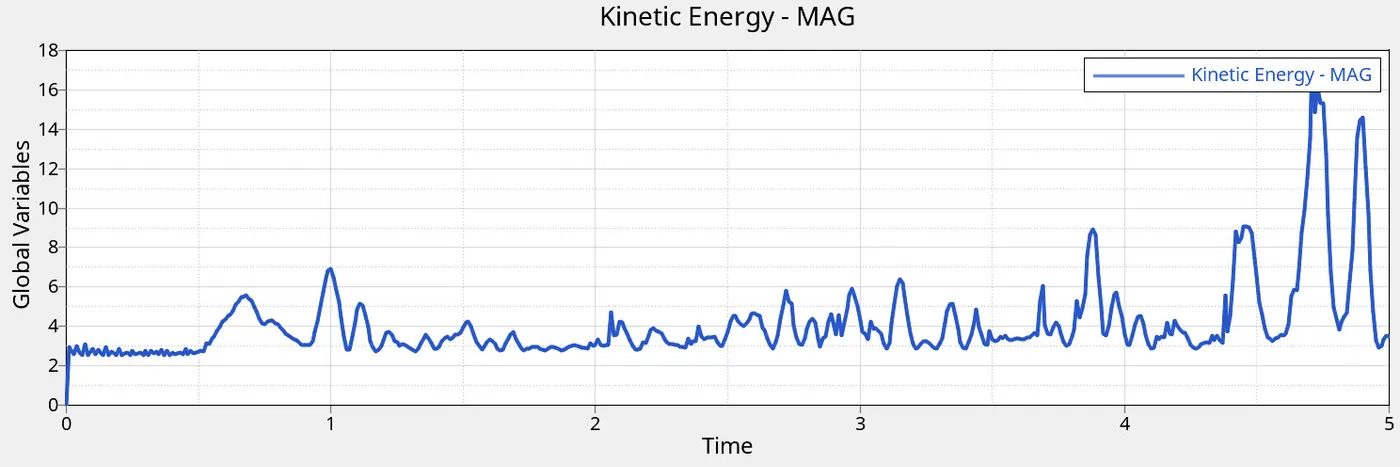
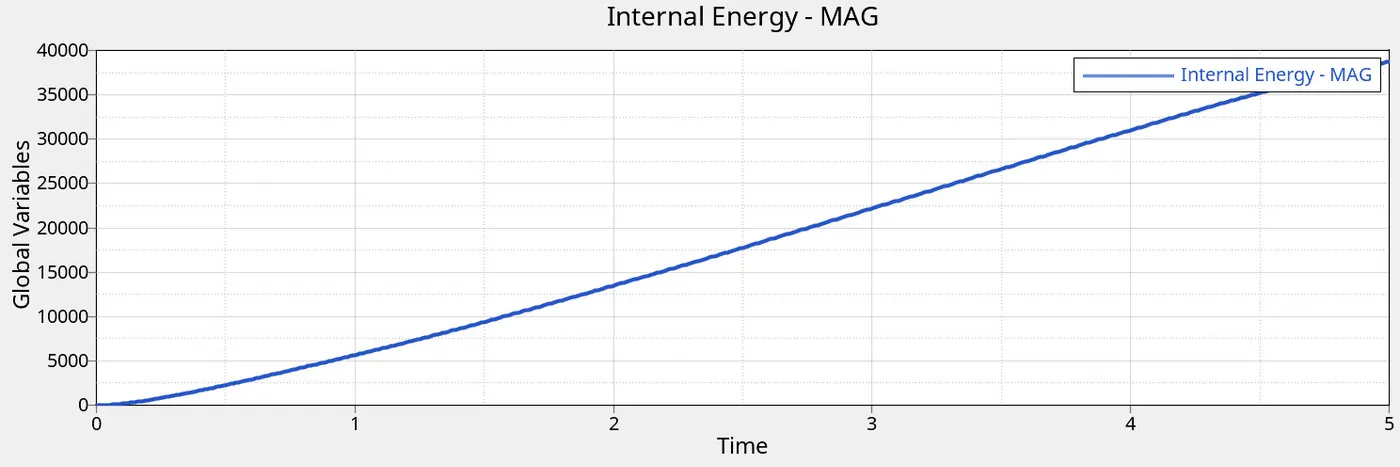
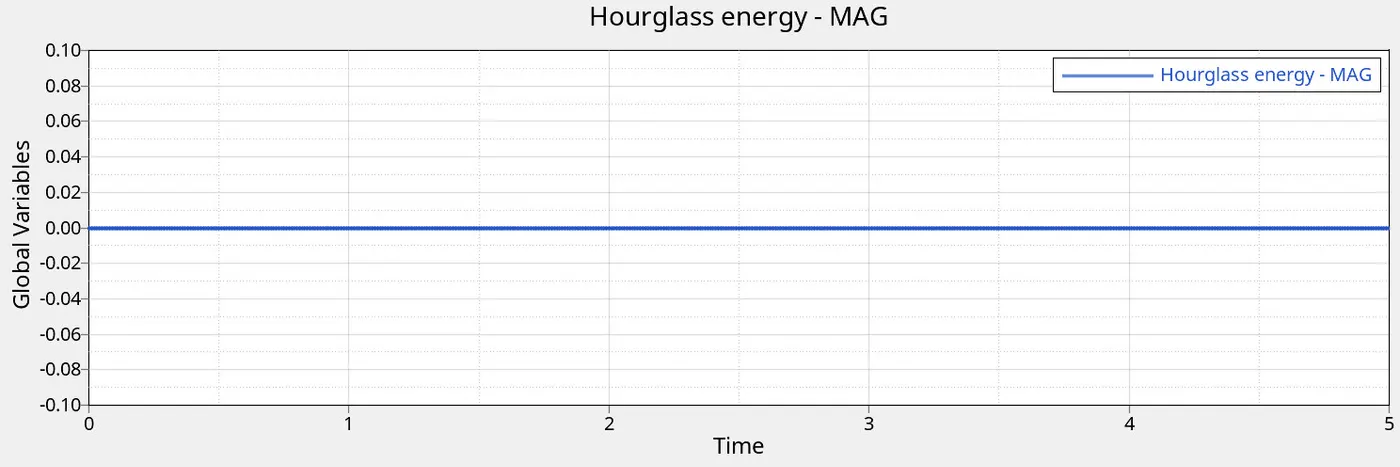
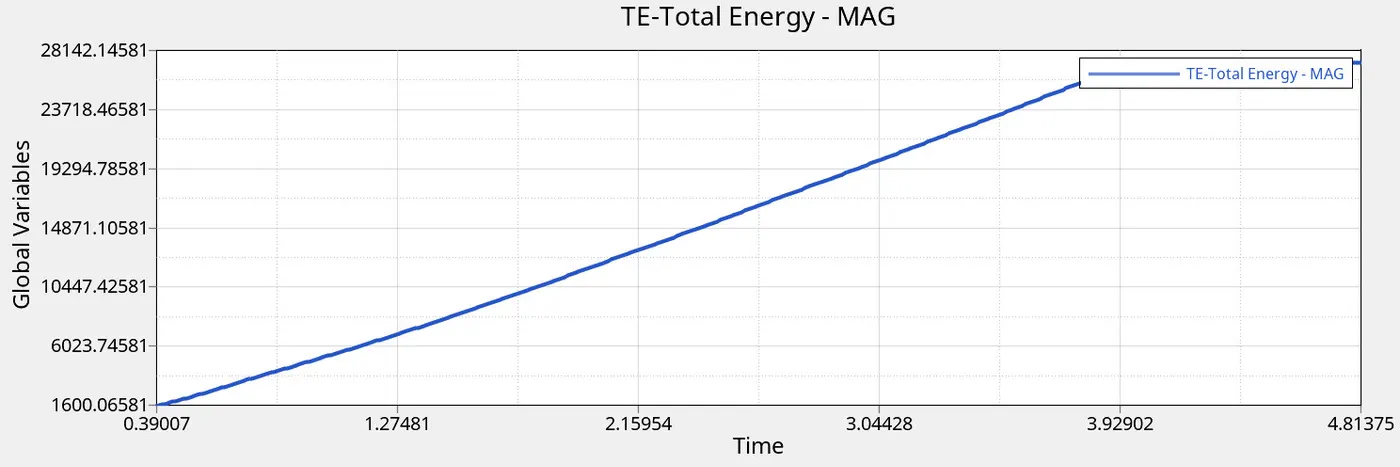
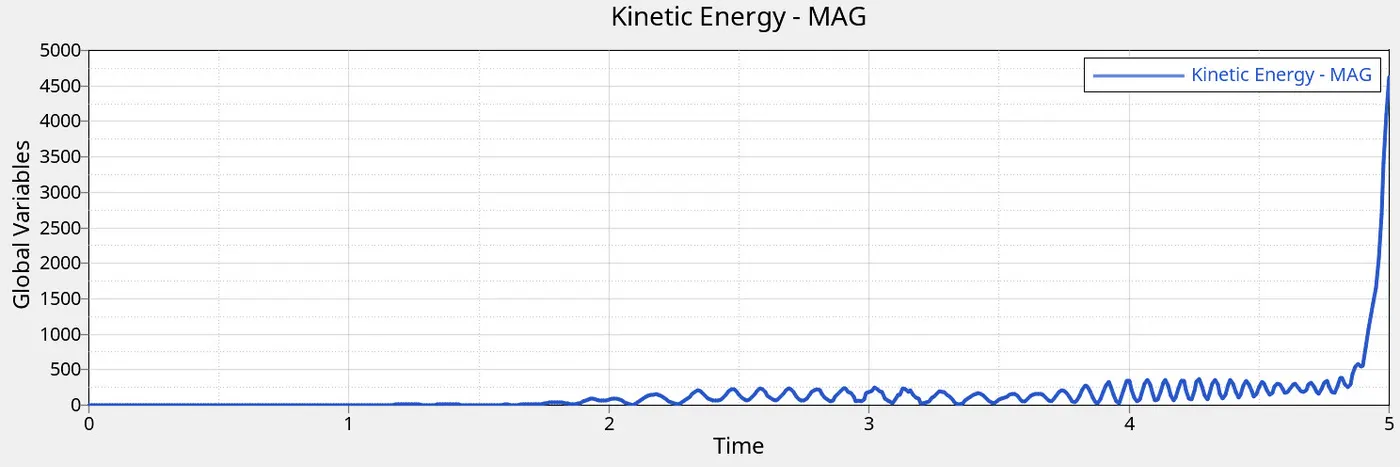
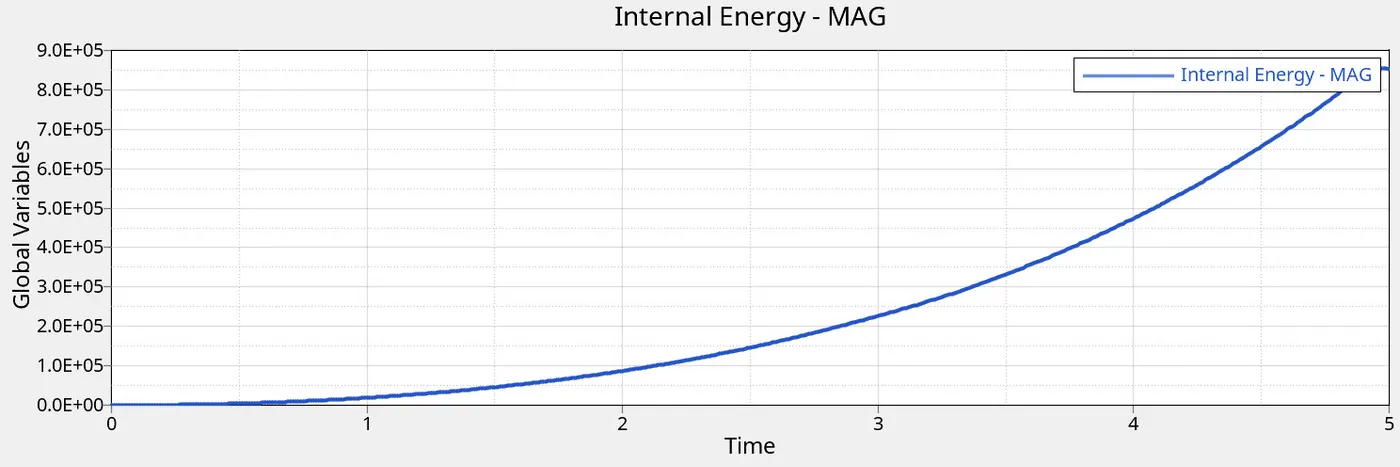
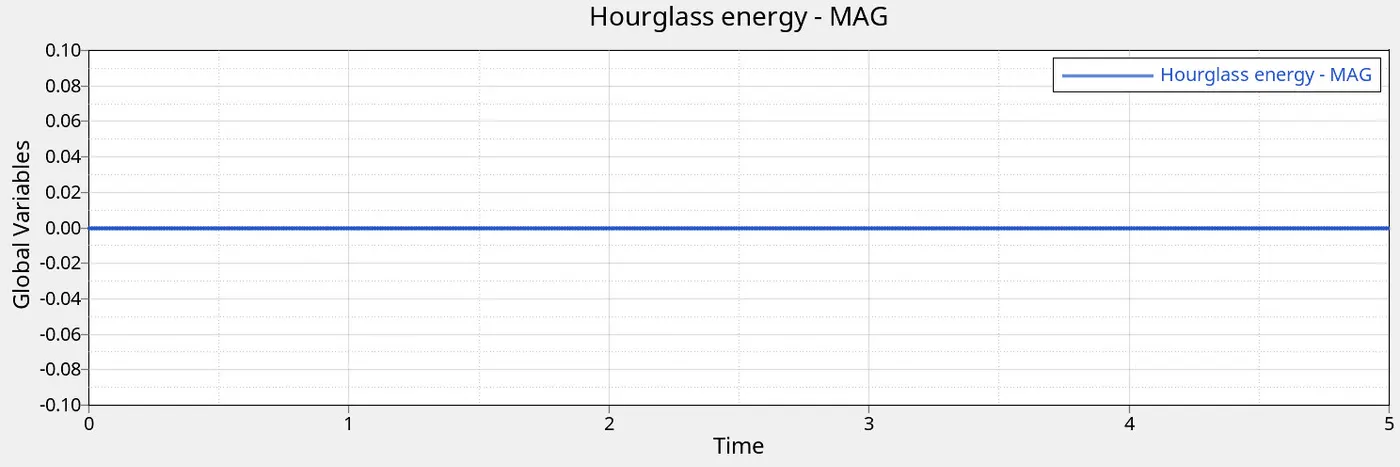
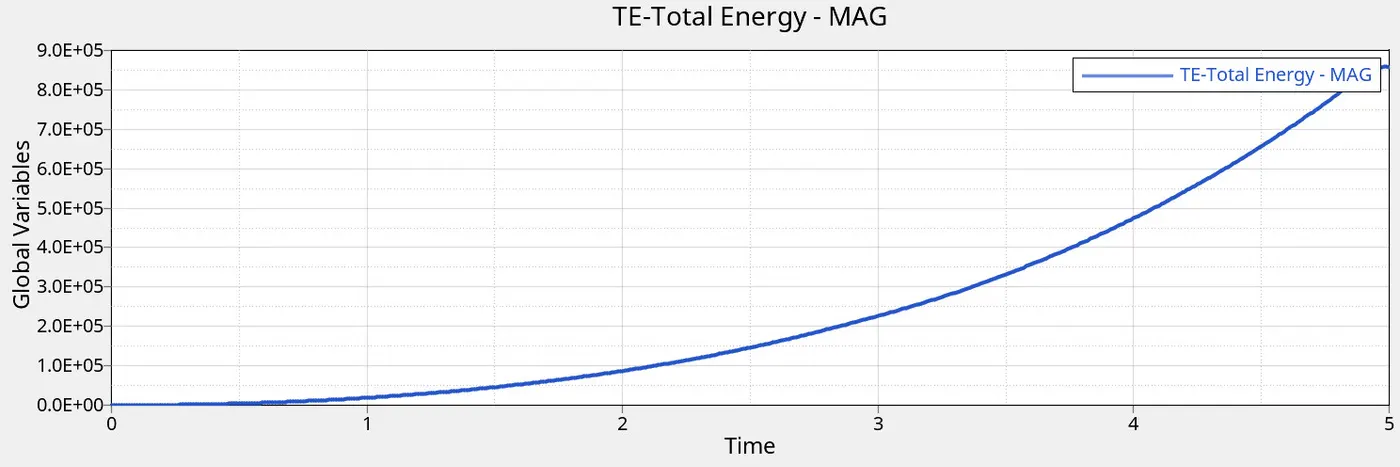
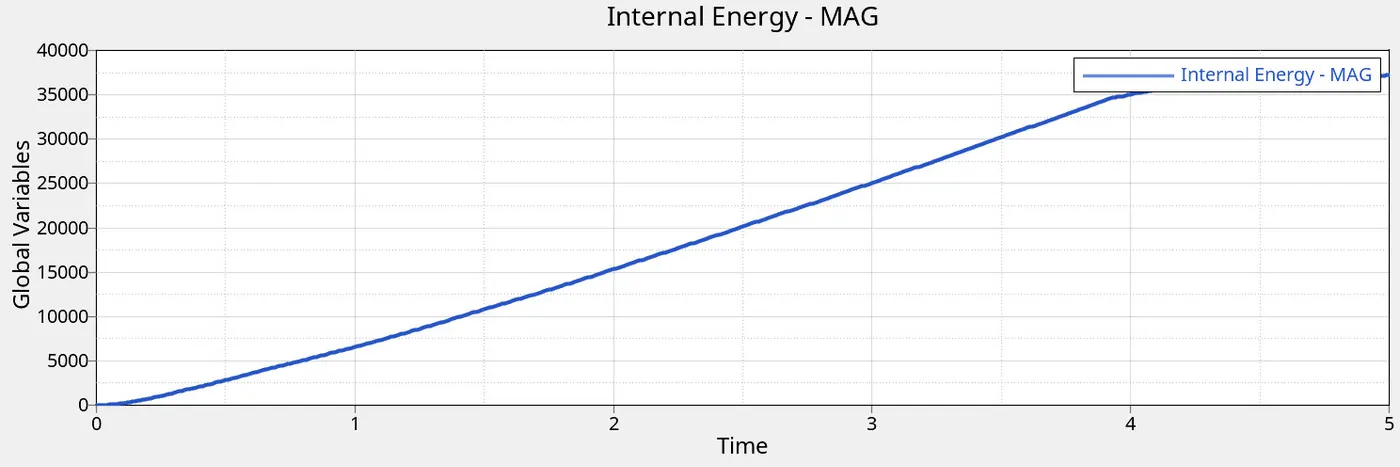
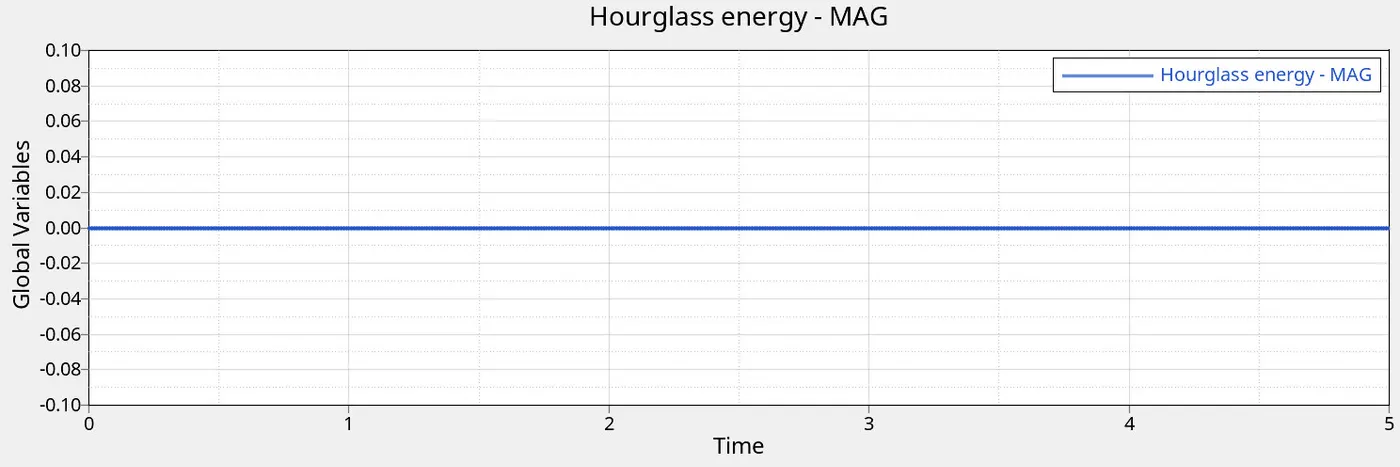
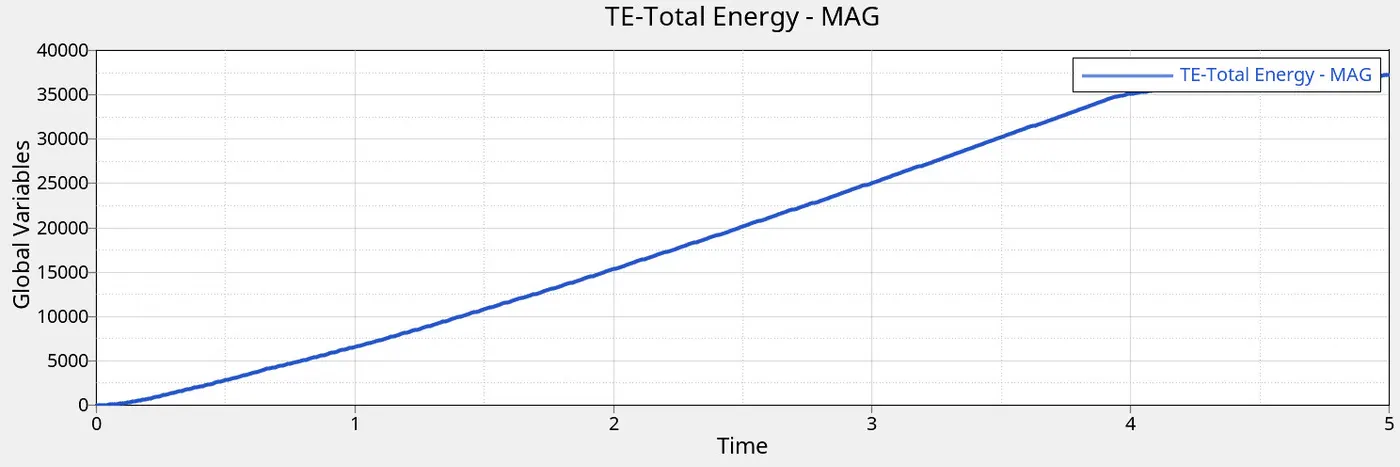
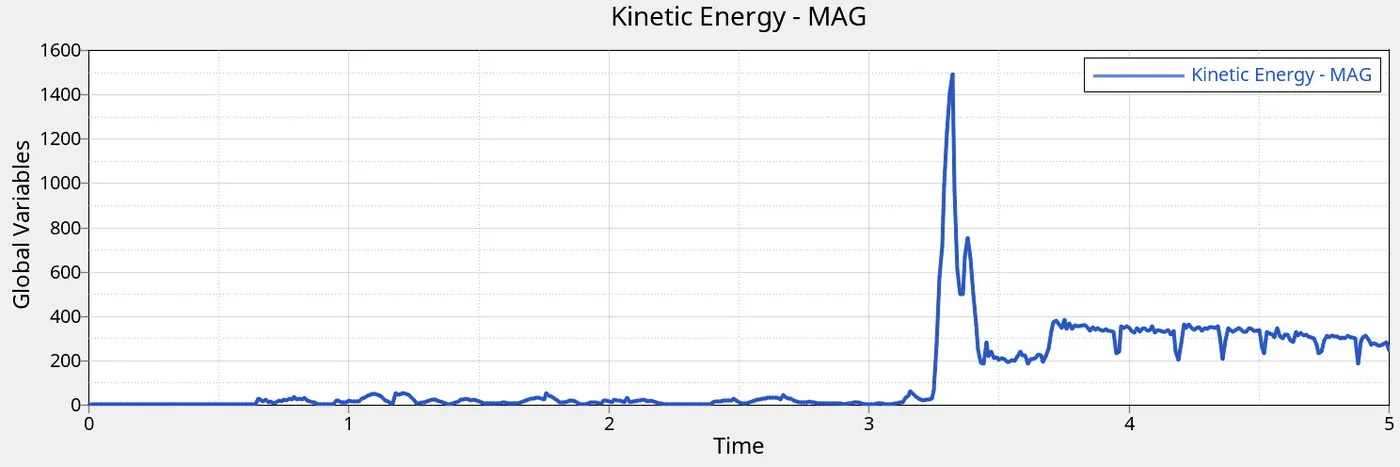
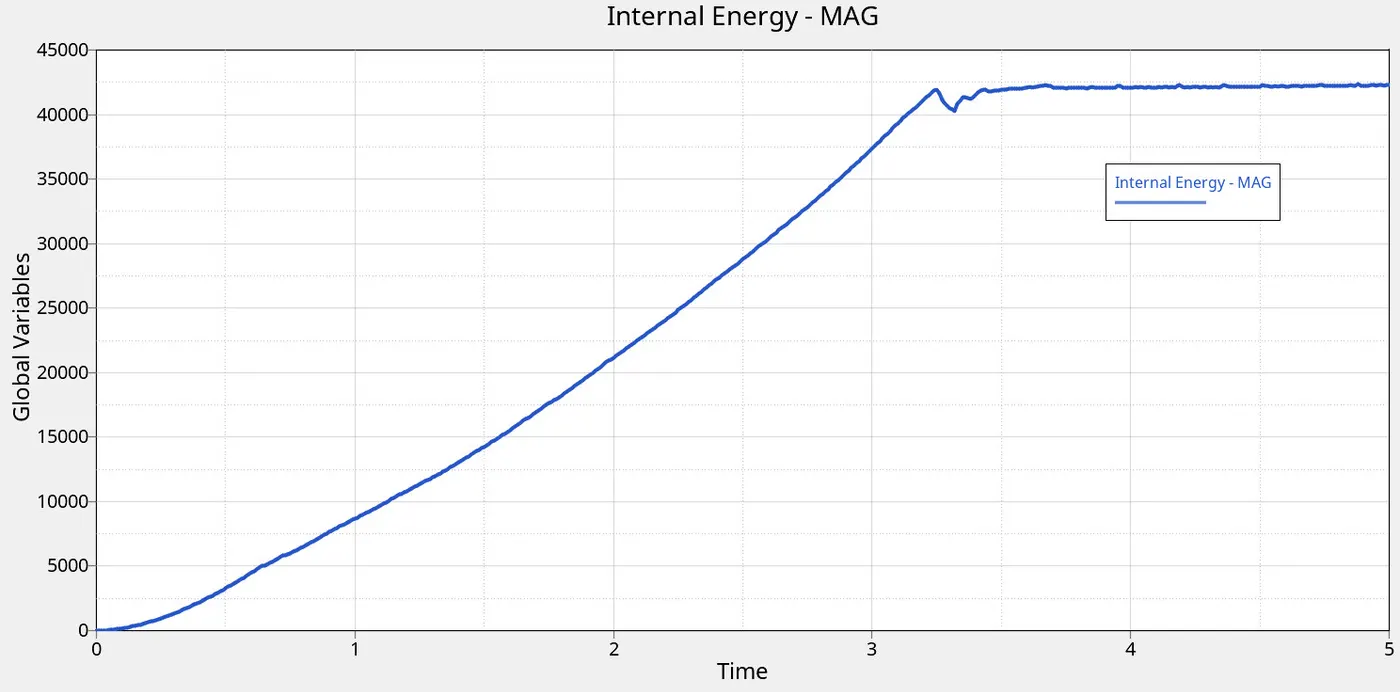
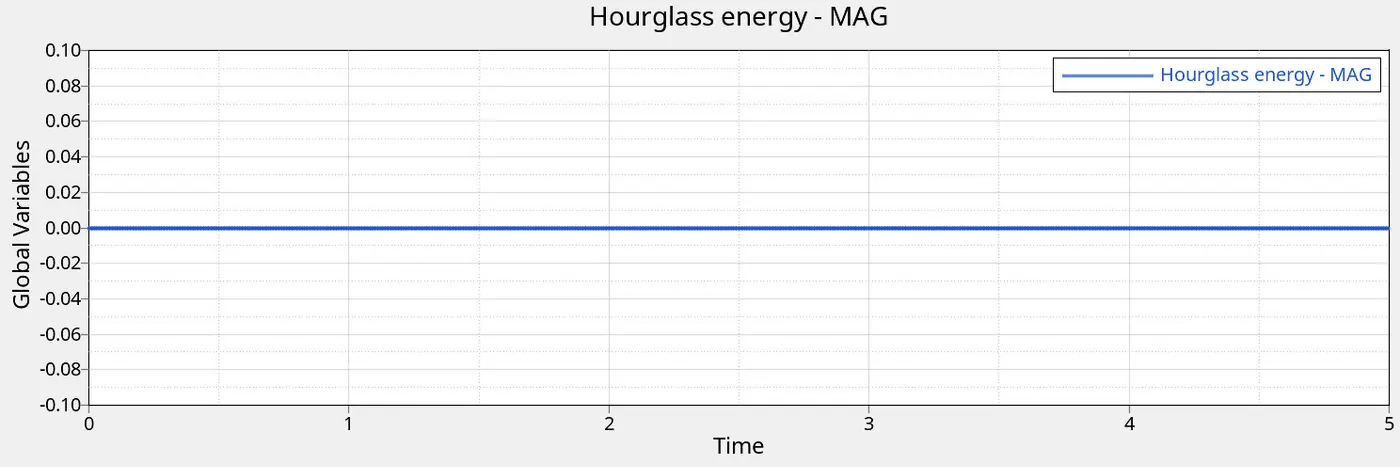
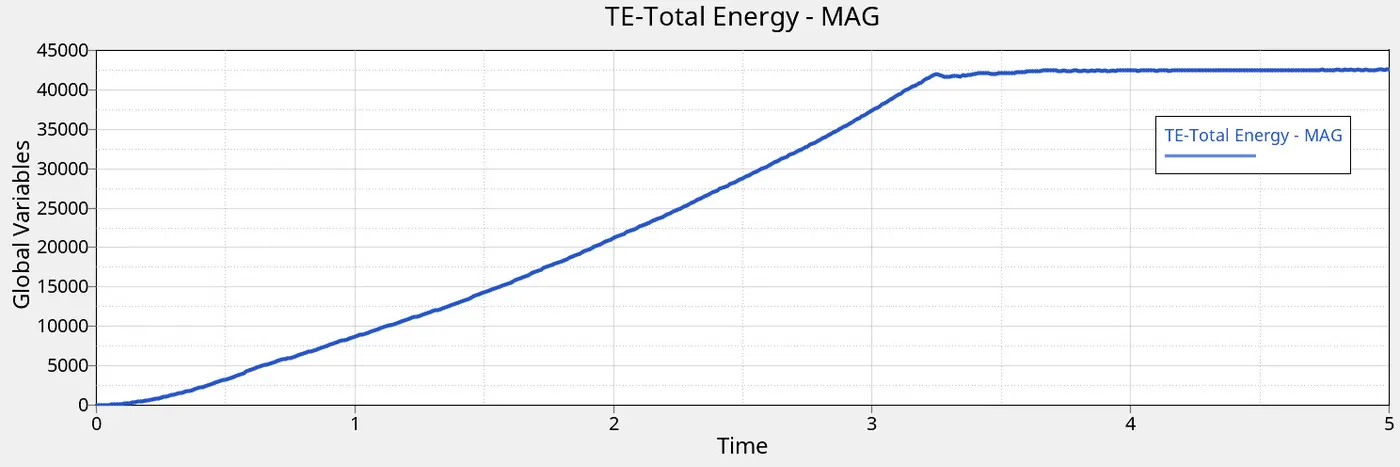
3. Plot energies and notice any difference.
4. Based on all the results, which case would represent the on-field
scenario.
5. Prepare a ppt/docx and list down case by case result and your conclusion
as to why the failure happened.
Material laws
A large variety of materials is used in the structural components and must be modeled in stress analysis problems. The choice of a constitutive law for a given material depends at first to desired quality of the model.
Radioss material library contains several distinct material laws. The constitutive laws may be used by the analyst for general applications or a particular type of analysis. You can also program a new material law in Radioss. This is a powerful resource for the analyst to code a complex material model.
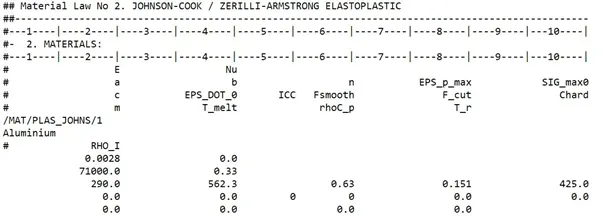
Johnson-Cook Plasticity Model (LAW2)
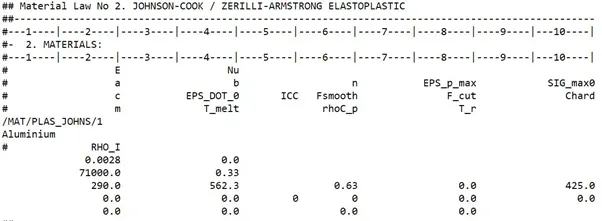
In this law the material behaves as linear elastic when the equivalent stress is lower than the yield stress. This law represents an isotropic elasto-plastic material. This law represents the stress as a function of plastic strain, strain rate and temperature.
Case setup and execution
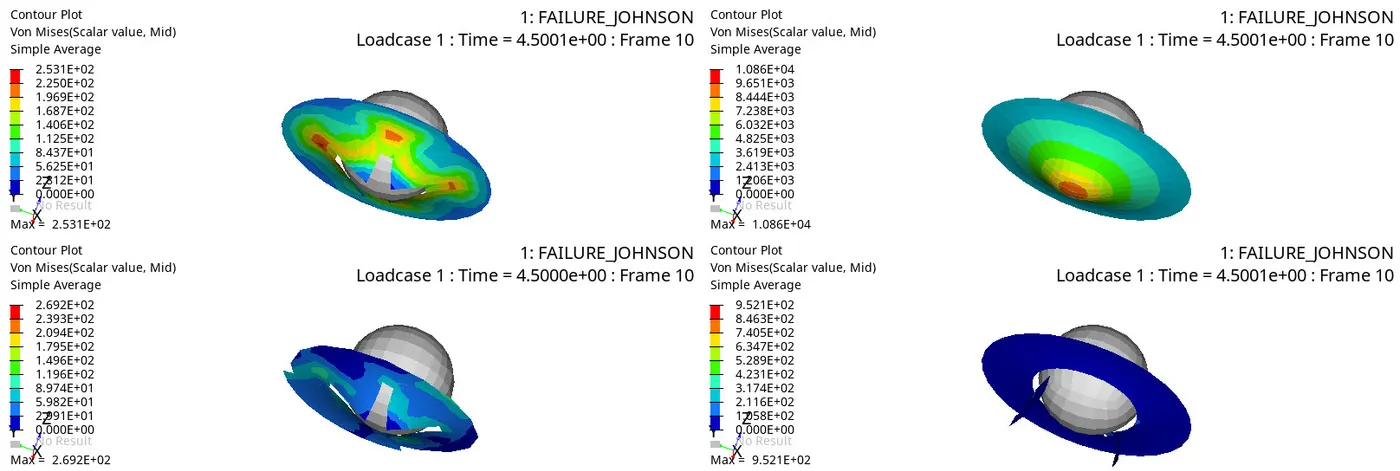
Case 1: Law2_epsmax_failure
Case 2: Law2_epsmax_crack
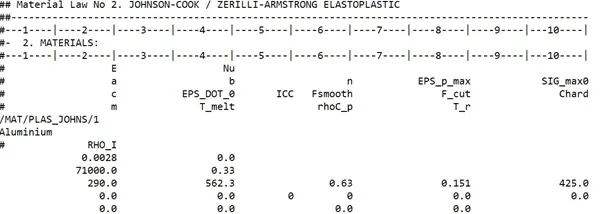
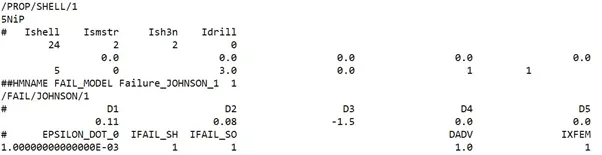
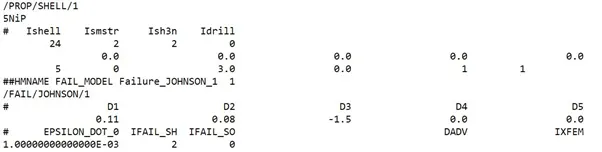
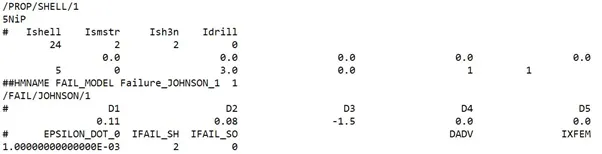
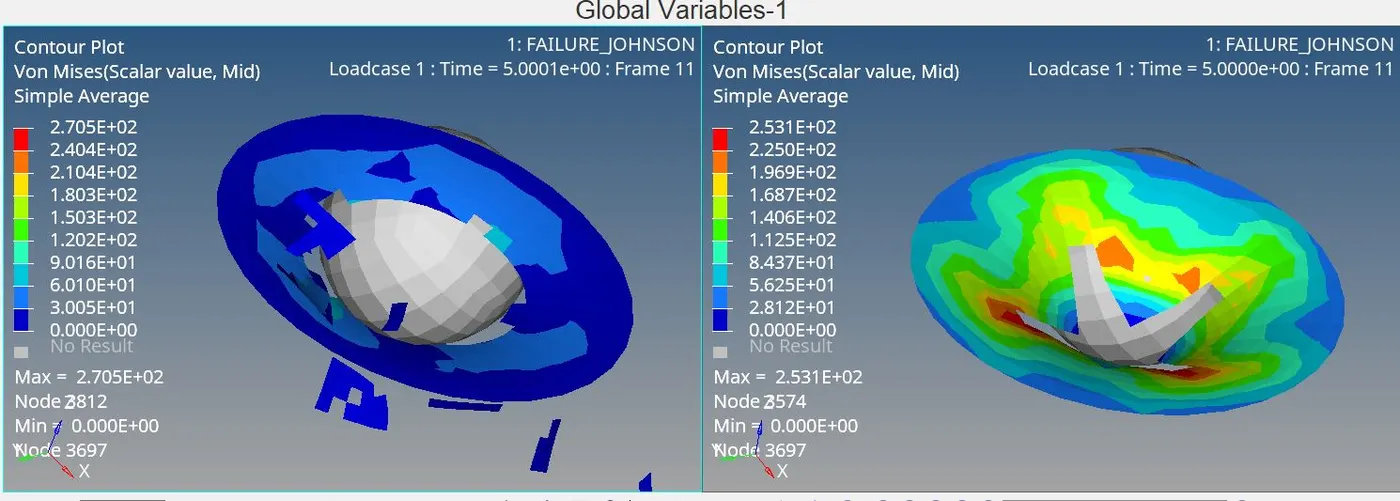
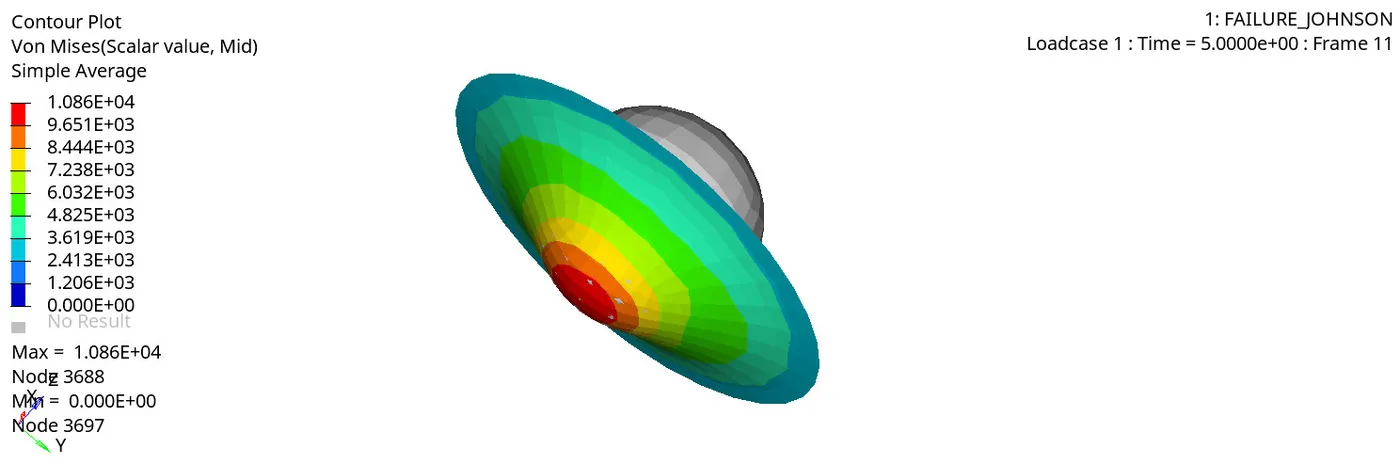
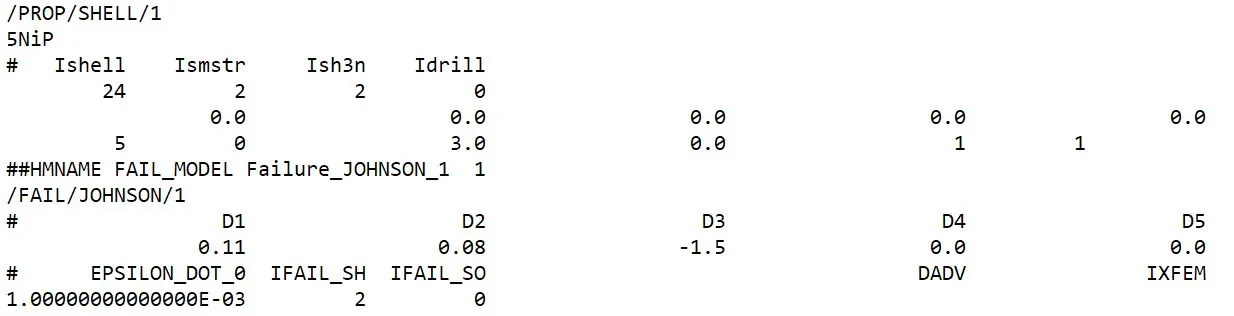
In case 1, IFAIL_SH=2, IXFEM= 0 (default), it delete the whole element without crack.
In case2, IFAIL_SH=1, IXFEM= 1 and Dadv=1, where crack initiates first.
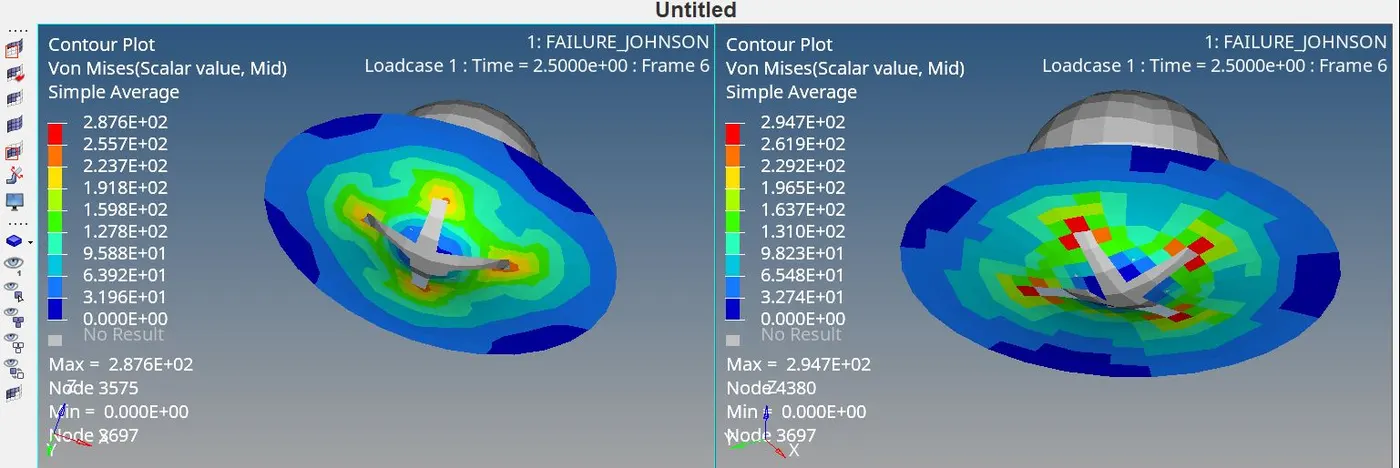
From the simulation, it is evident that crack initiation is visible in case 2 at frame 6.
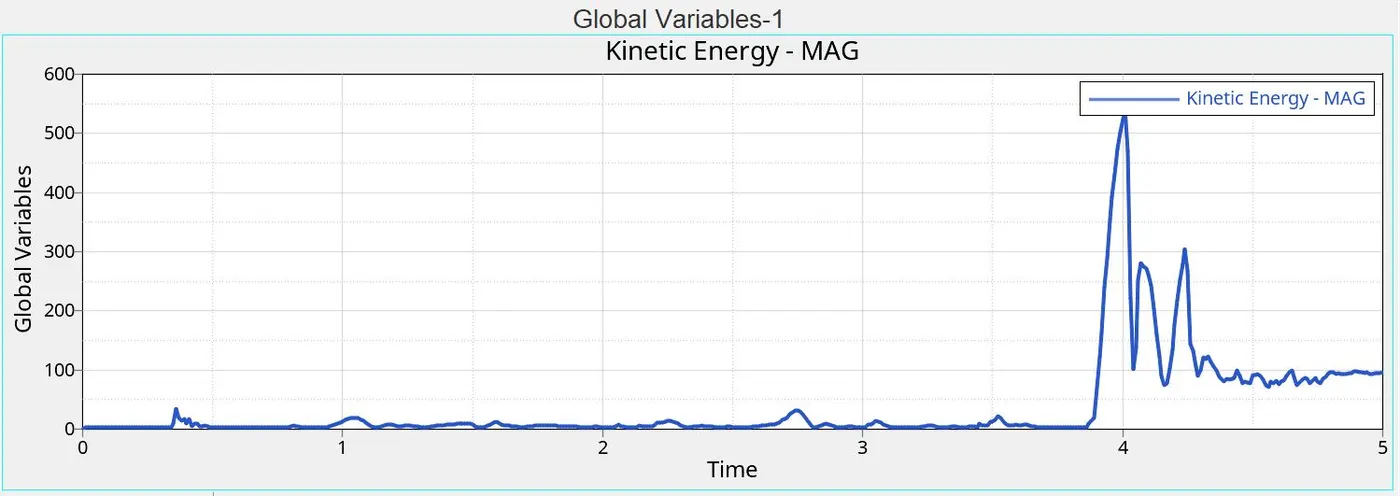
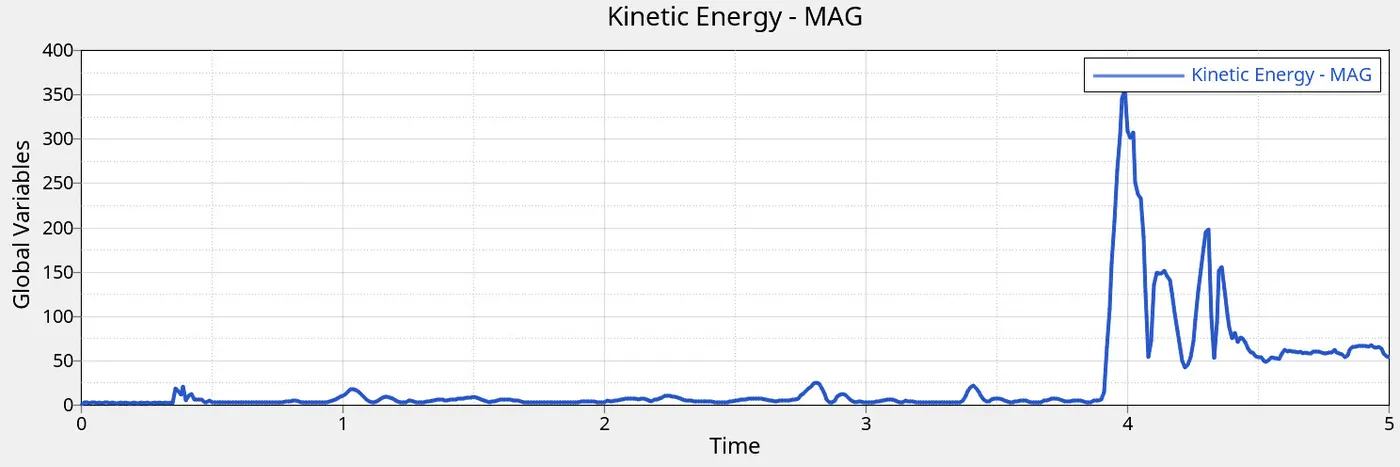
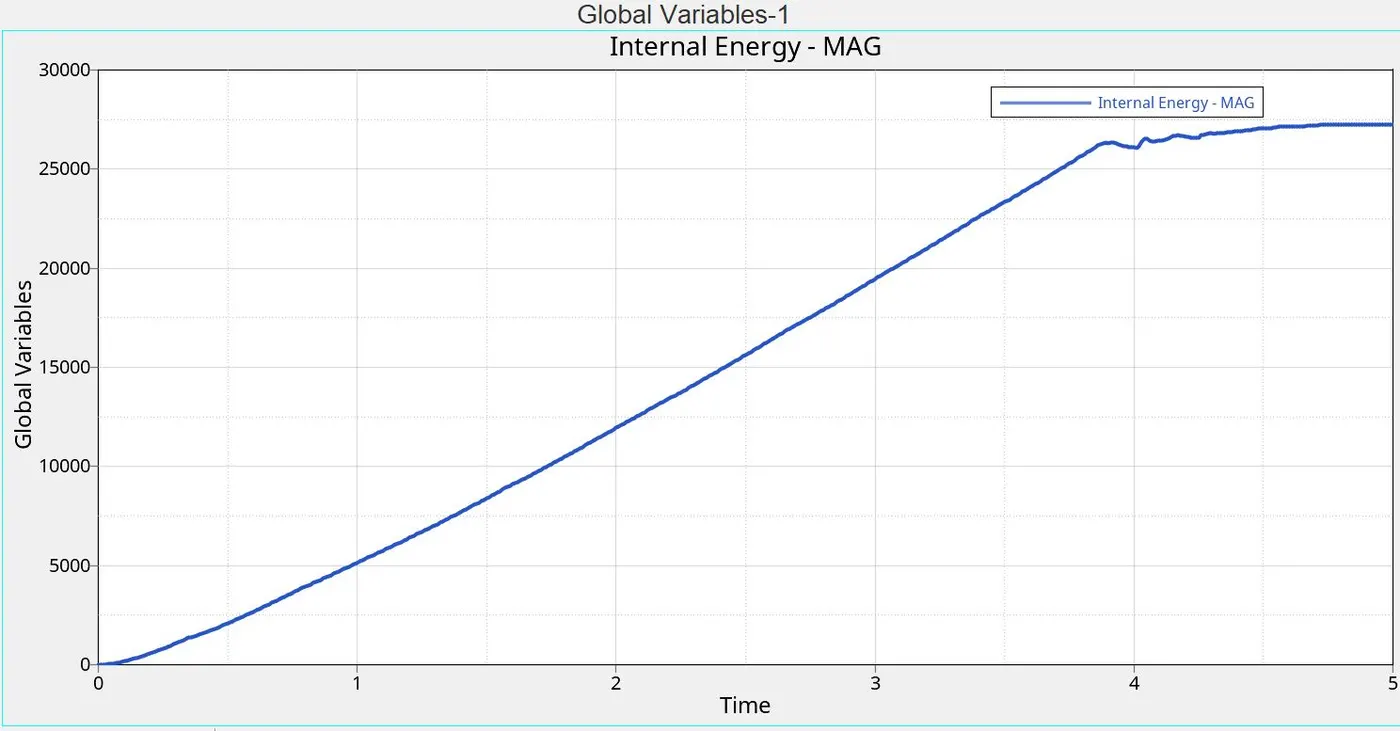
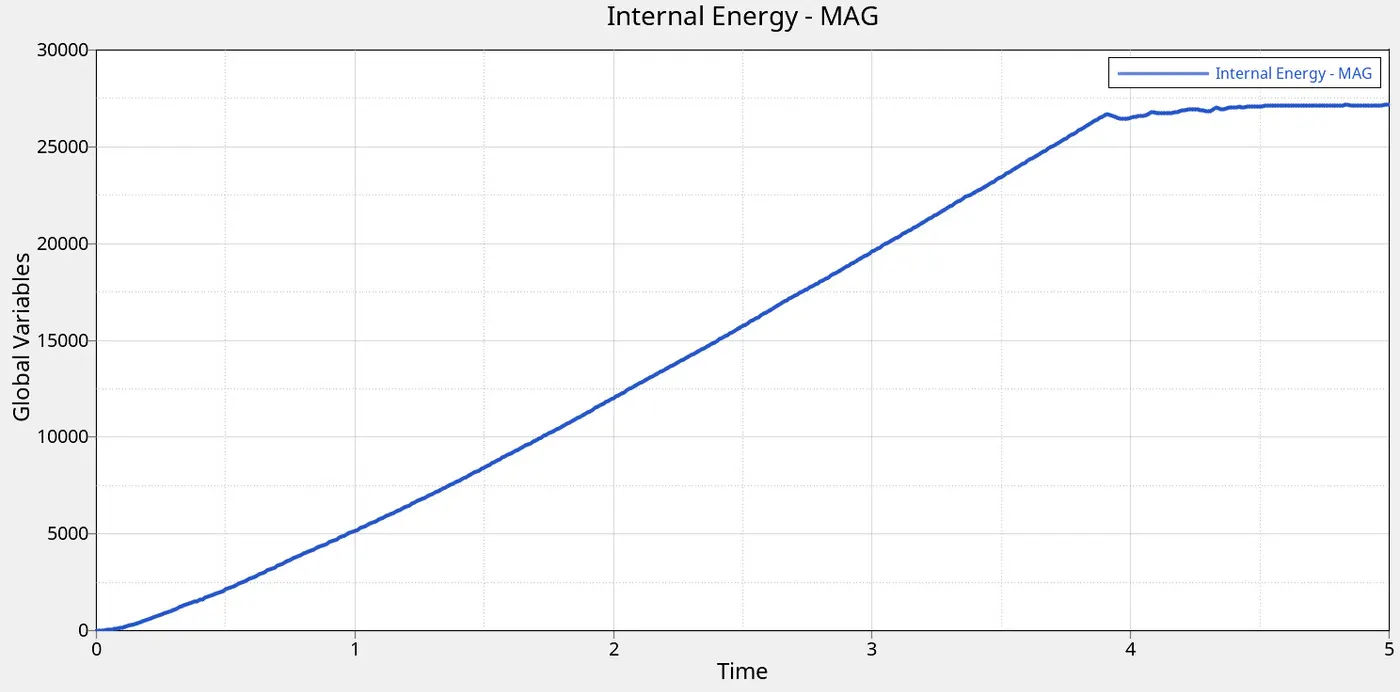
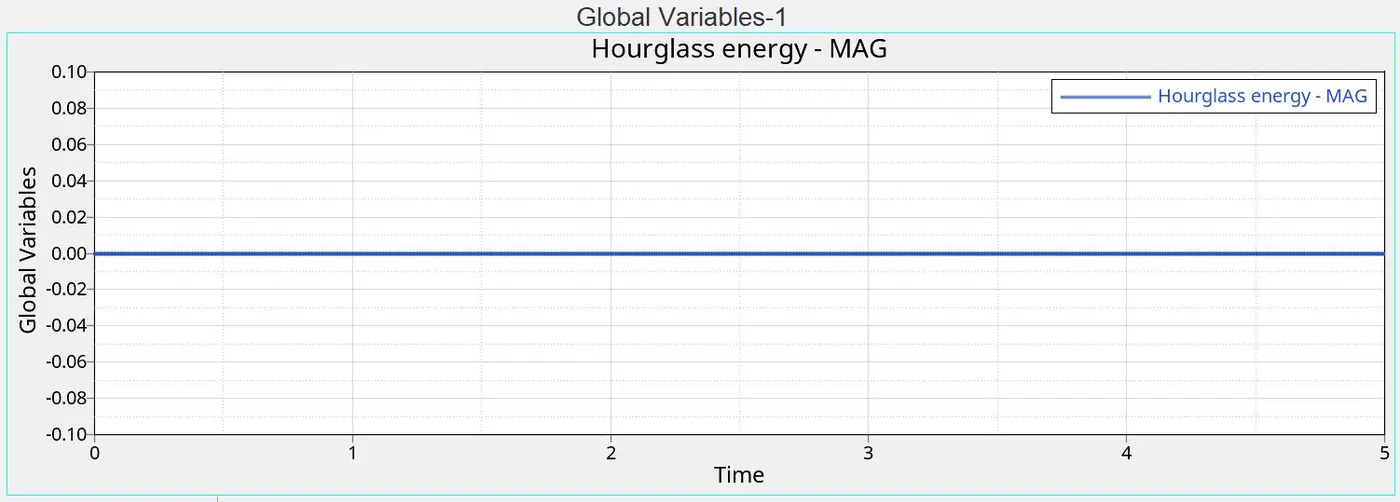
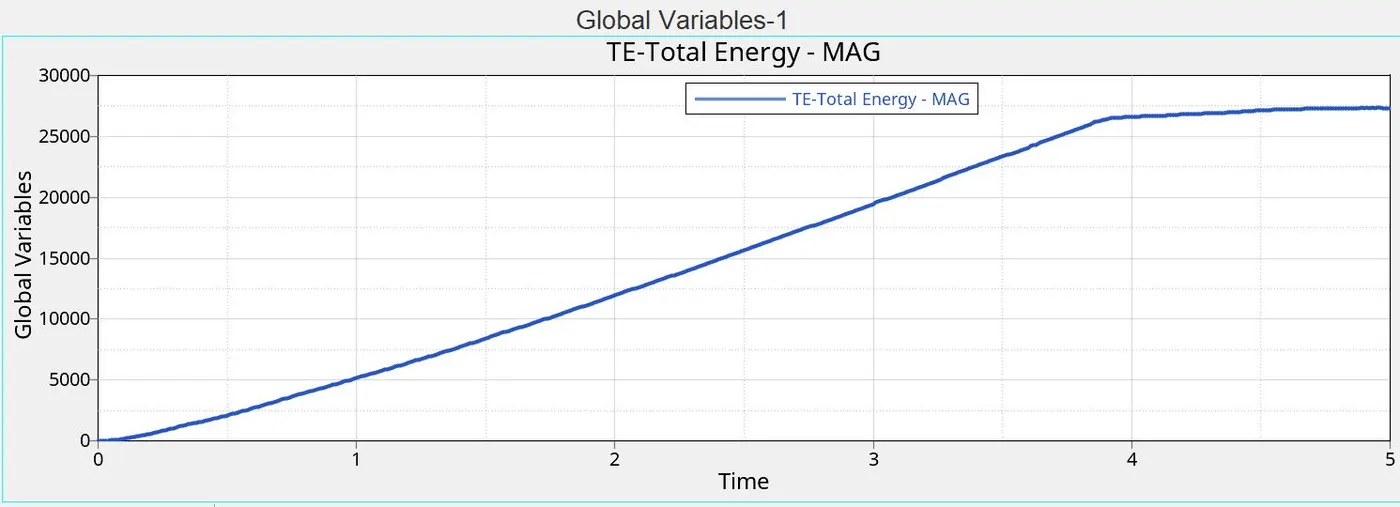
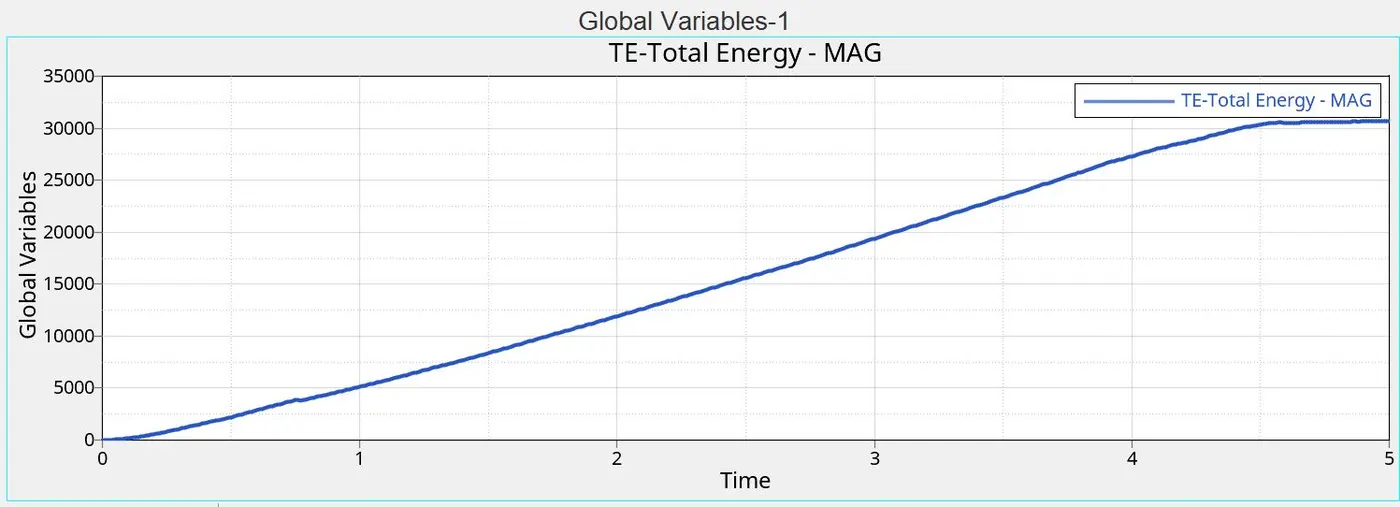
Due to crack initiation,internal energy is higher in case 2.
Case 3: Law2_epsmax_nofail
In this case, Johnson failure card is deleted.
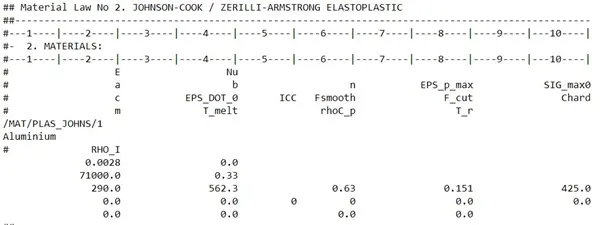
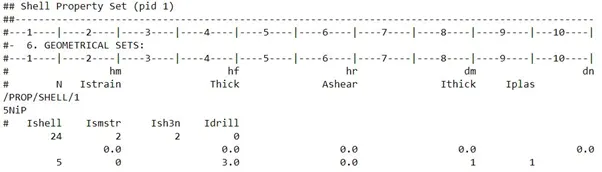
Case 4: Law2_epsmax_zero
Eps_max value = 0, undergoes infinite deformation.
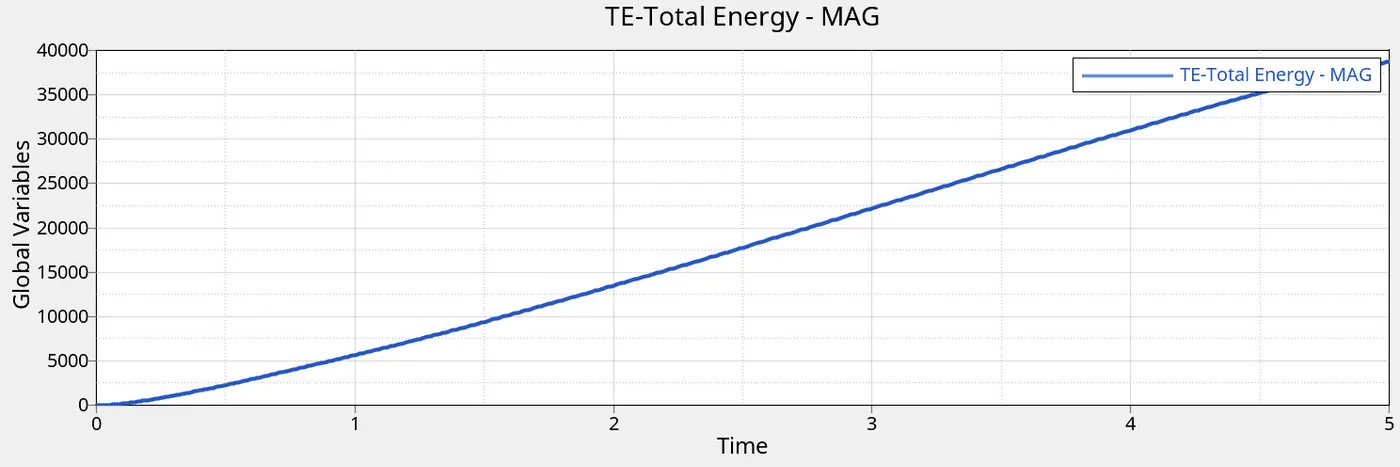
Case 5: Law1 elastic
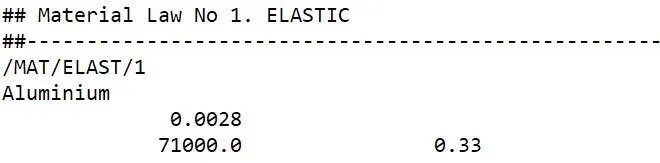
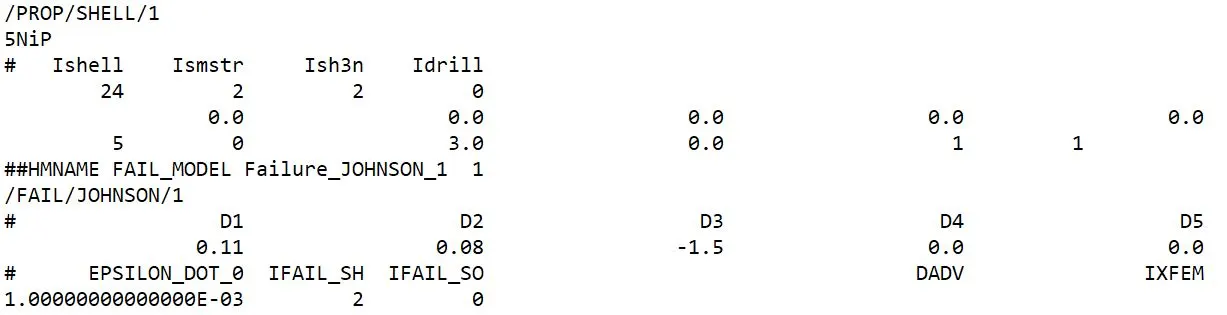
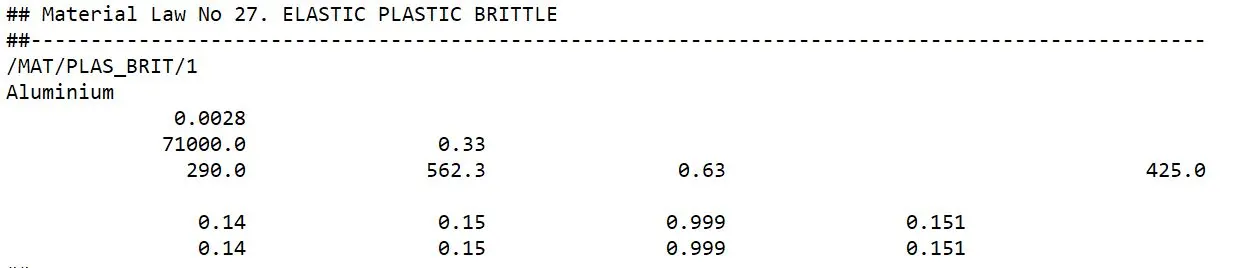
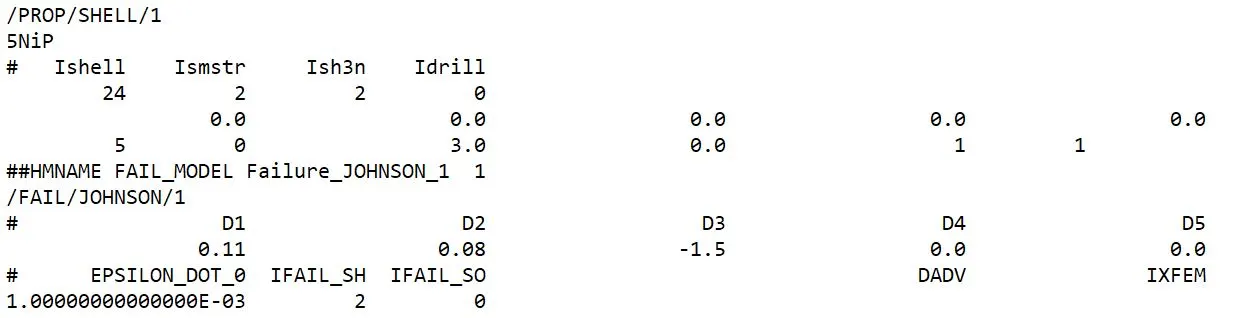
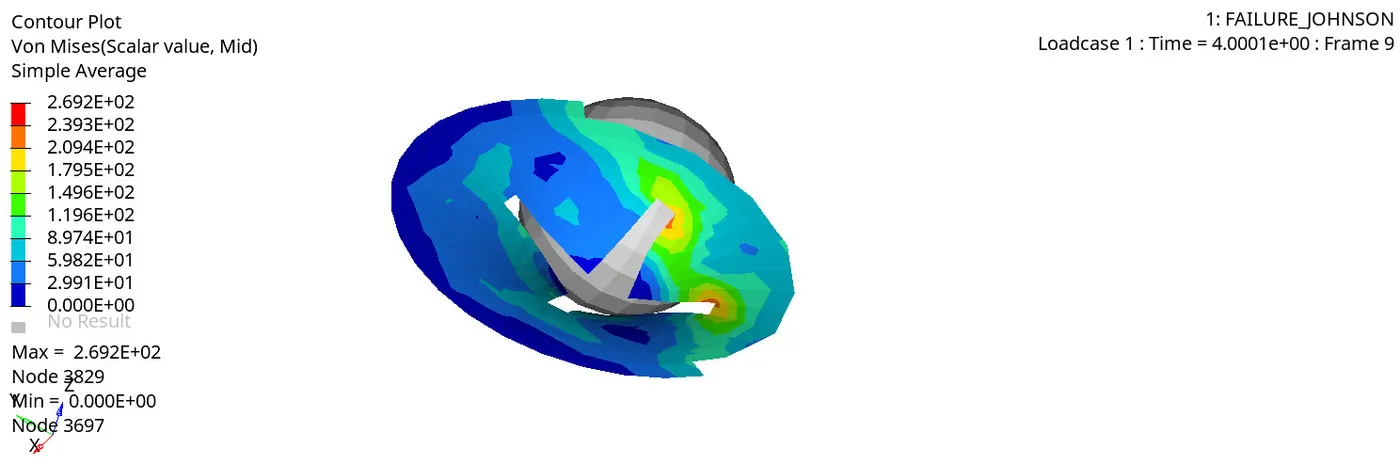
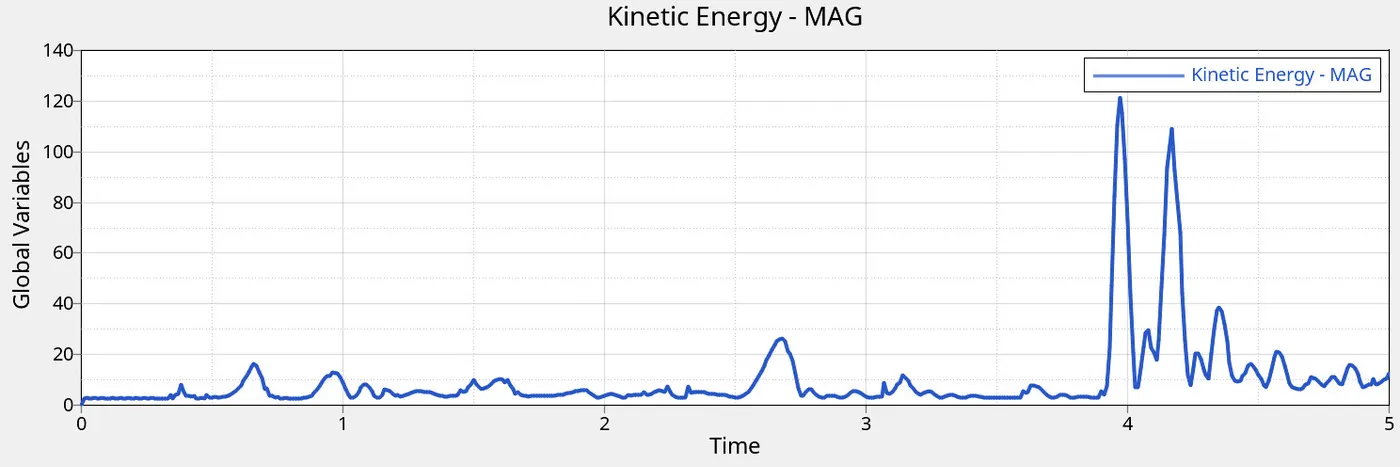
Case 6: Material card Law27
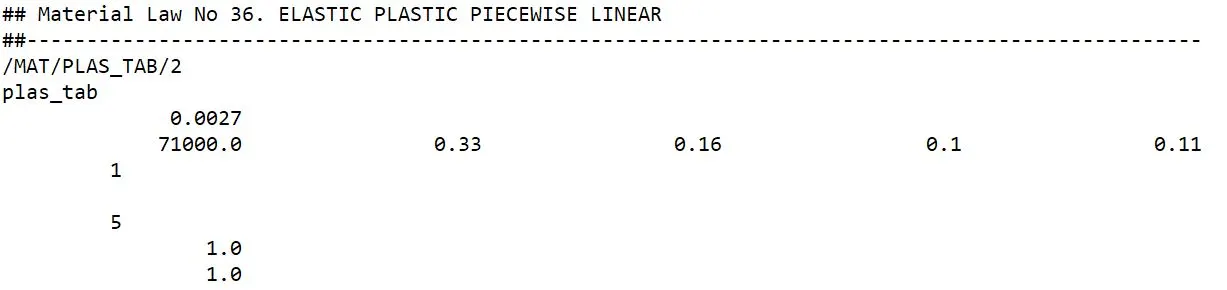
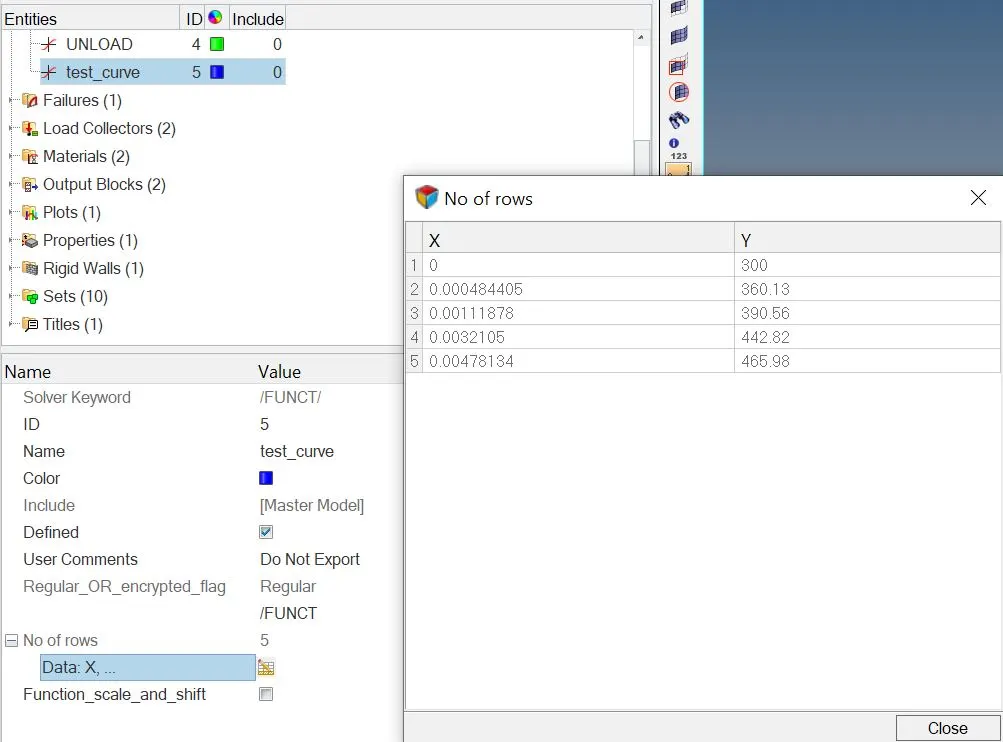
Case 7: Law36 Elastic plastic piecewise linear
|
Case type |
Material law |
Number of cycle |
Energy error |
Mass error |
cycle time (s) |
On field scenario |
|
case1 |
Law2_epsmax_failure |
49480 |
-0.3 to 1 % |
0 |
251.02 |
Elastic equivalent stress is less than yield stress |
|
case2 |
Law2_epsmax_crack |
49397 |
-0.3 to 5.8 % |
0 |
372.54 |
Elastic equivalent stress is less than yield stress |
|
case3 |
Law2_epsmax_nofail |
49405 |
-0.3 to 1.2 % |
0 |
415.24 |
Elastic equivalent stress is less than yield stress |
|
case4 |
Law2_epsmax_zero |
49304 |
-0.3 to 1.2 % |
0 |
73.77 |
Elastic equivalent stress is less than yield stress |
|
case5 |
Law1 Elastic |
47969 |
-0.3 to 4 % |
0 |
81.12 |
Pure elastic material |
|
case6 |
Law 27 Elastic plastic brittle |
49431 |
-0.3 to 1.2 % |
0 |
112.08 |
Brittle material |
|
case7 |
Law 36 Elastic plastic tabulated |
53147 |
-1.4 to 0.6 % |
0 |
87.75 |
Elasto-plastic isotropic material |
Result and conclusion
The comparison of 7 cases (with different material laws) were discussed in RADIOSS successfully.