Assignment 4
Aim : To Analyse different types of material properties and compare their results with the same boundary conditions.
Compare 7 cases as discussed in last 3 slides, in a tabulated format on the basis of:
1. Total number of cycles, Energy error, mass error and simulation time.
2. Notice the animation of all 5 and describe the animations in brief on the
basis of whether the elements are being deleted or cracked.
3. Plot energies and notice any difference.
4. Based on all the results, which case would represent the on-field
scenario.
5. Prepare a ppt/docx and list down case by case result and your conclusion
as to why the failure happened.
Case 1: M2_PLAS_JOHNS_ZERIL
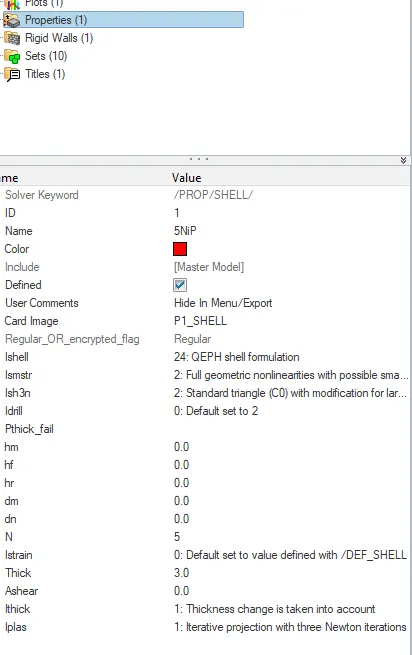
In this case, the material is considered to be elastoplastic with input parameters given to the question of that Fail_johnson card is added which helps with capturing the stresses under compression. The input parameters such as eps_p_max , sigma_maxo ,a ,b, n are already filled in here , my role is to input the improved shell element properties as we discussed previous assignment for the 2D shell elements. The recommended inputs for a non-linear analysis were added as follow:
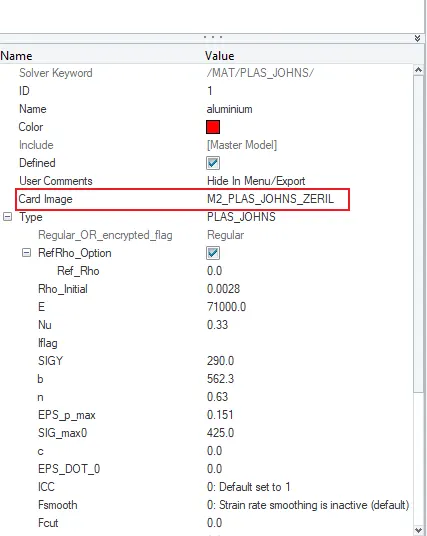
fig. material property
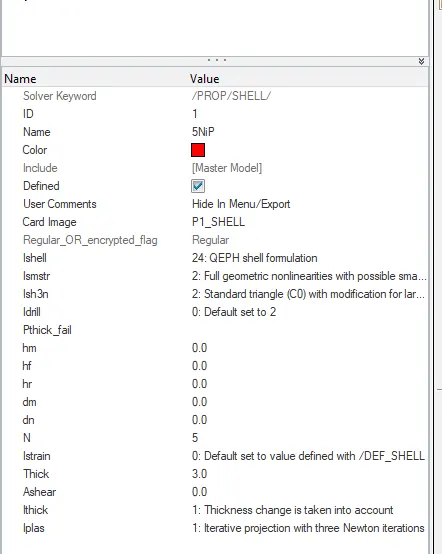
fig. shell property
Now , as per this input, I can solve this into Radioss,
First i open M2_PLAS_JOHNS_ZERIL_0000rad.file into notepad and check the material properties.
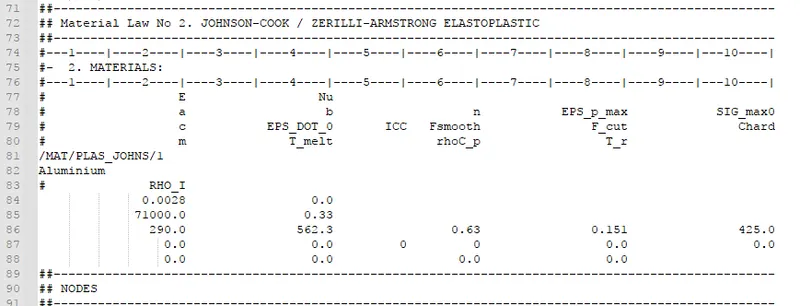
Open file in notepad 'M2_PLAS_JOHNS_ZERIL_0001.OUT'
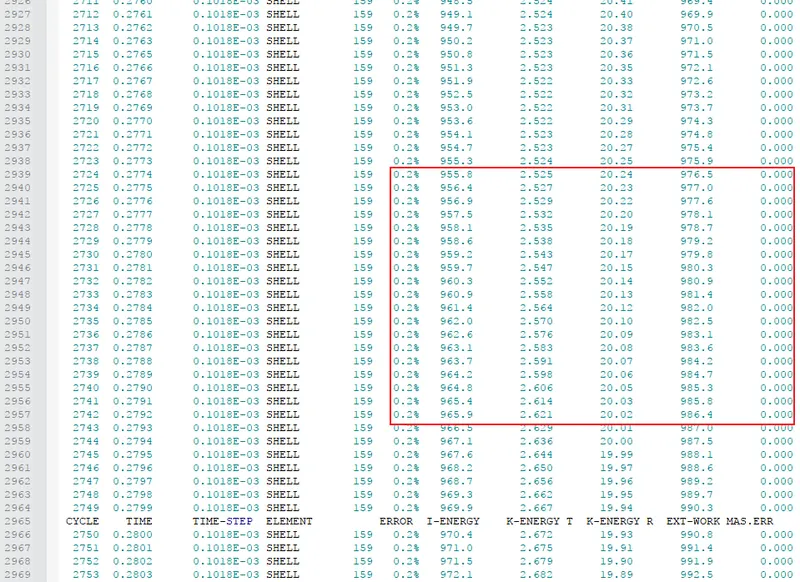
Maximum energy error in this base simulation case is 0.2%
Energy error is acceptable up to 15%
therefore positive signal for further smulation
Maximum Mass eror is 0.000
1 Displacement
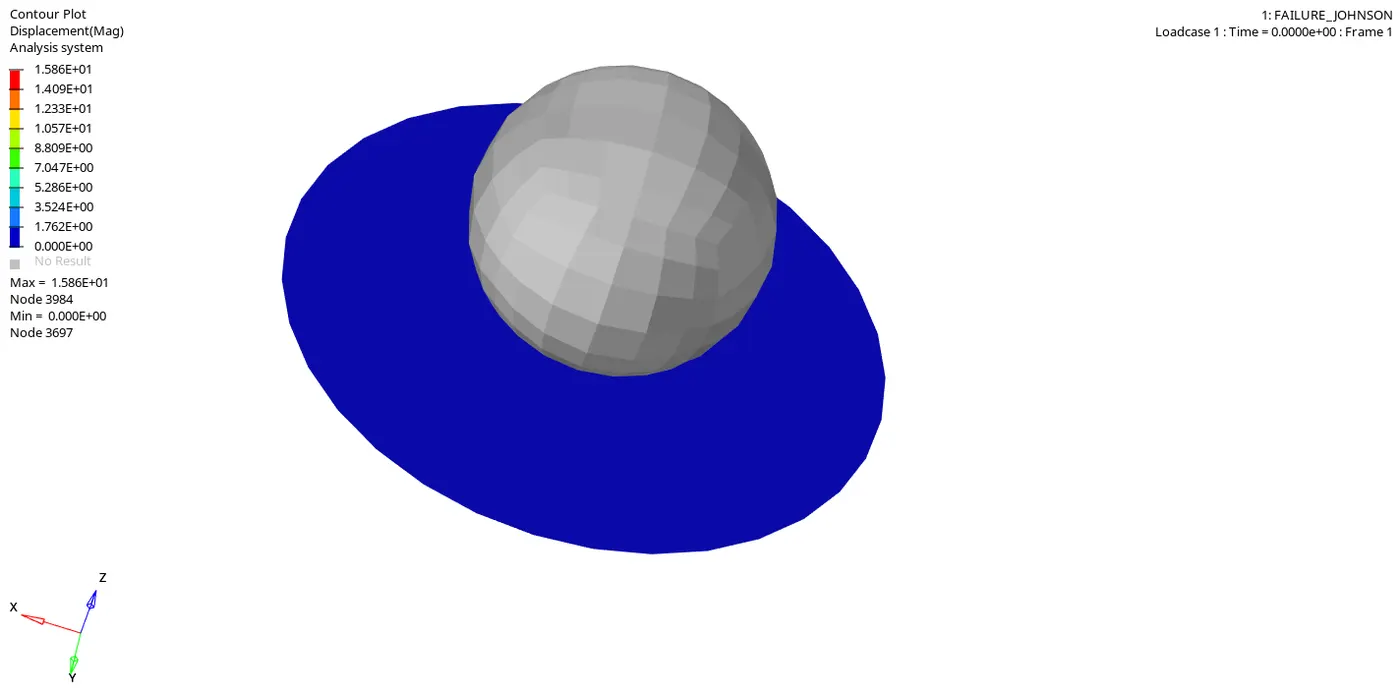
Maximum Displacement 1.58E+01 at node no. 3984
Minimum Displacement 0.00 at node no. 3697
2. Von mises yield criterion
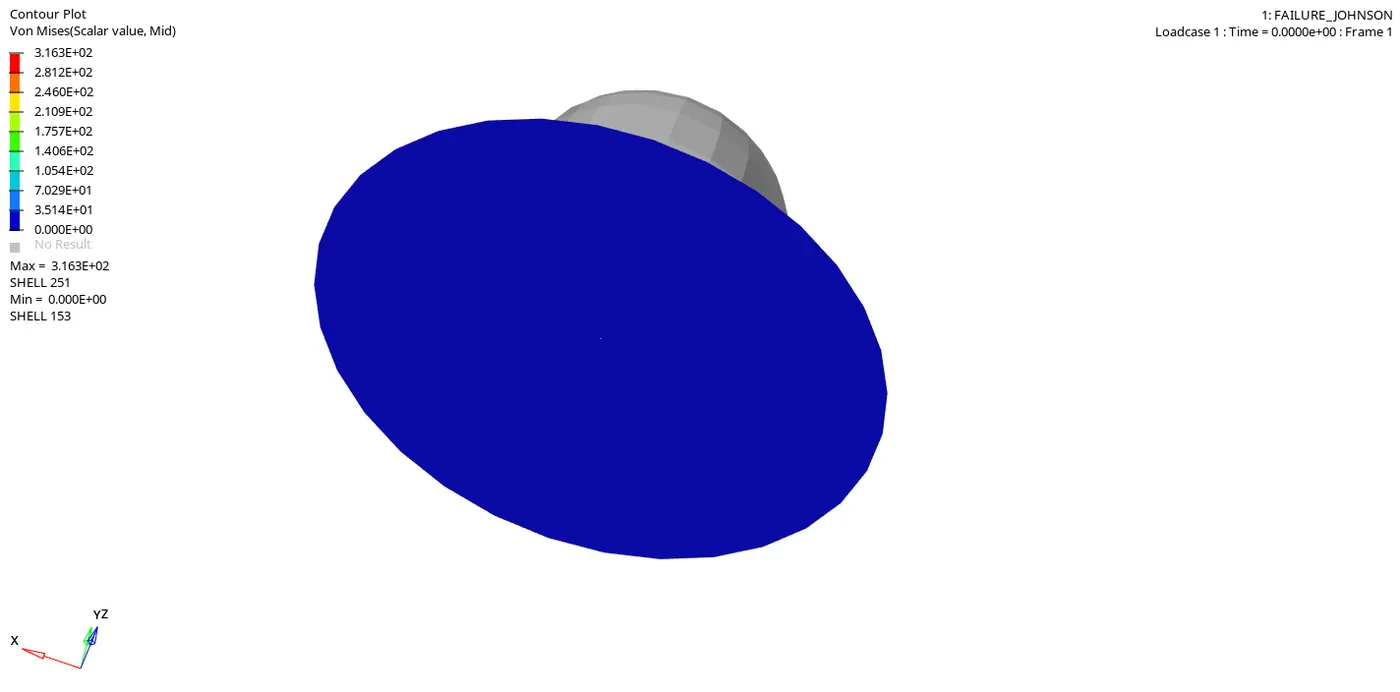
The von mises stress plot shows a peak value is 3.163E+02 at Shell 251 and minimum value is 0.00 at shell 153.
3. Velocity
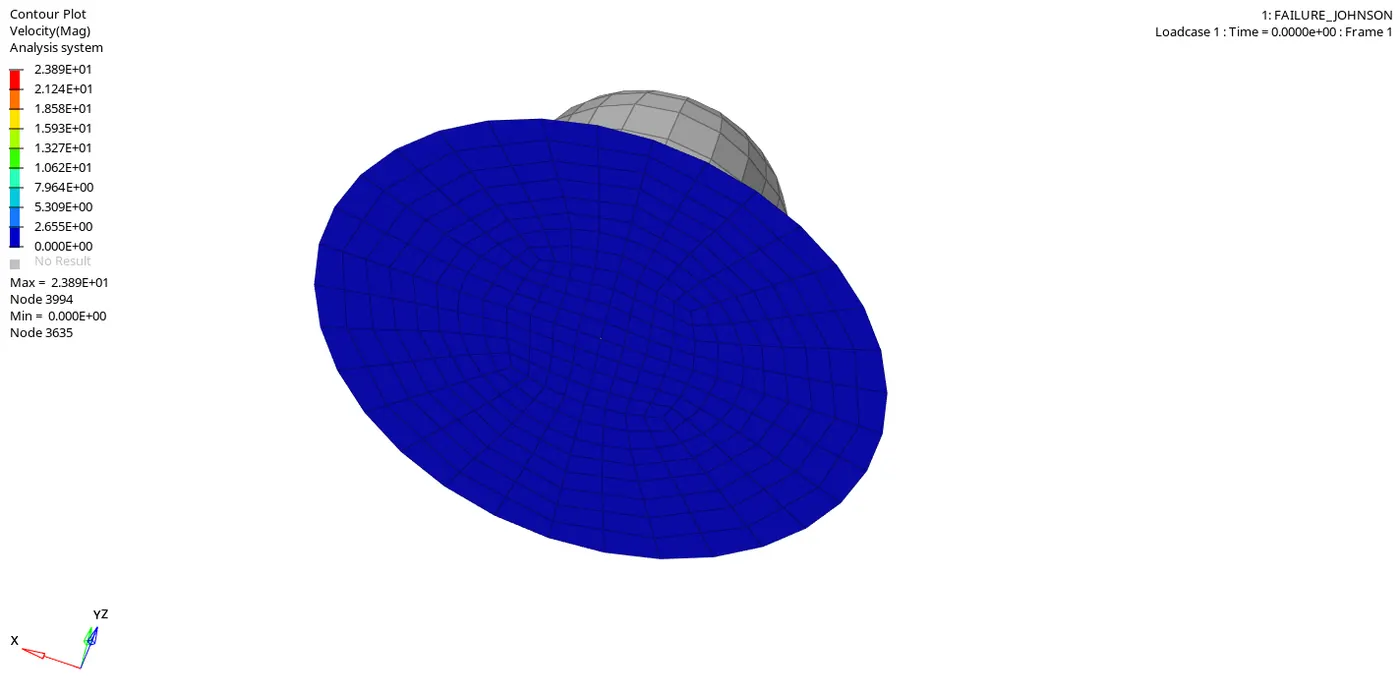
Maximum value of velocity is 2.389e+01 at node 3994 and Minimum value of velocity is 0.00 at 3635
4.% Thickness Reduction calculated
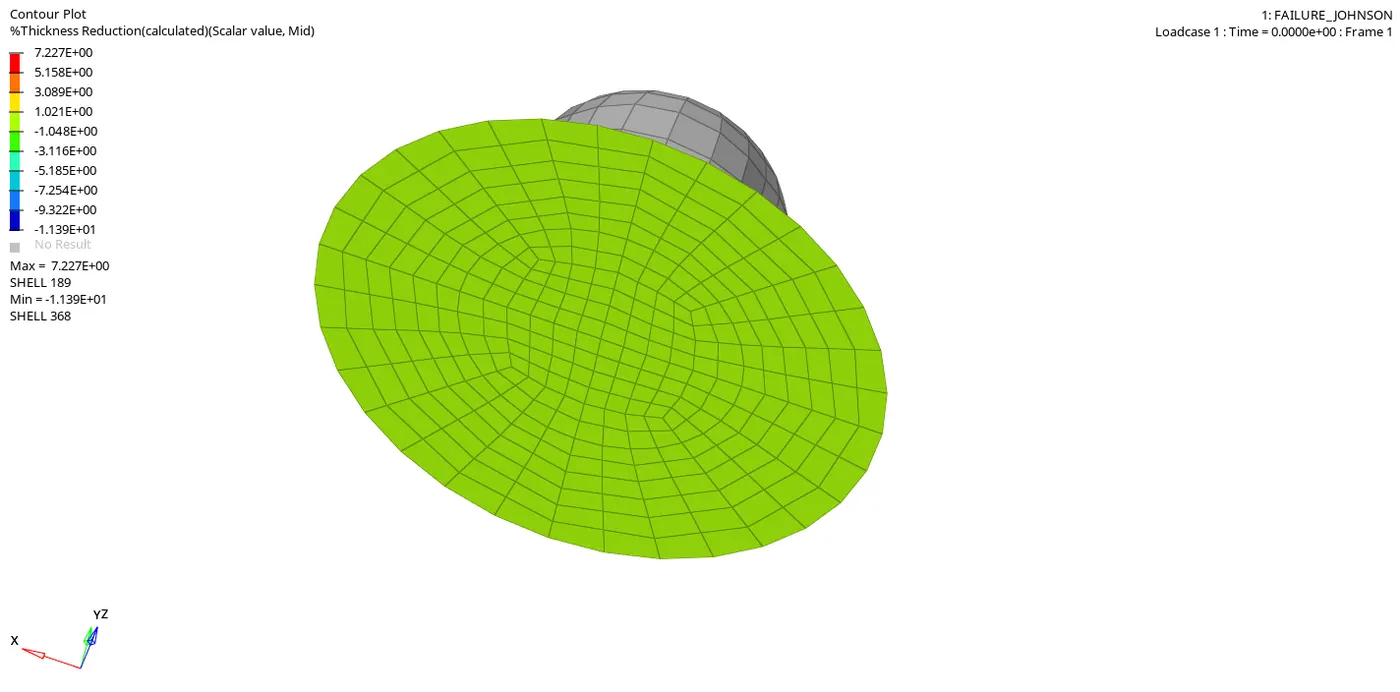
Maximum value of % thicknes reduction is 7.227E+00 at shell 189 and Minimum value is -1.139E+01
5. Plastic strain along thickness
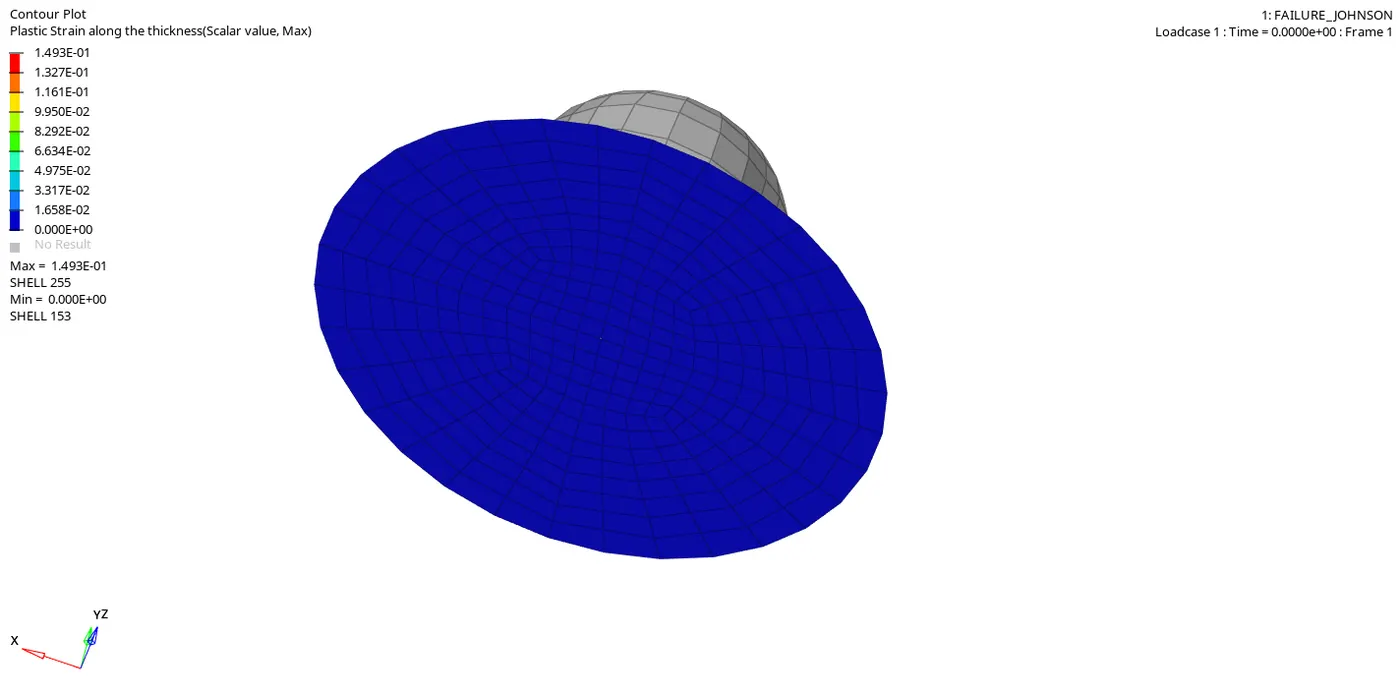
Maximum value of Plastic strain is 1.493E-01 at shell 255 and minimum 0.00 at shell 153.
5. If acceptable, plot rigid wall forces , internal energy , hourglass energy and total energy
Graph 1- Internal energy , kinetic energy, contact energy , Hourglass energy and total energy .
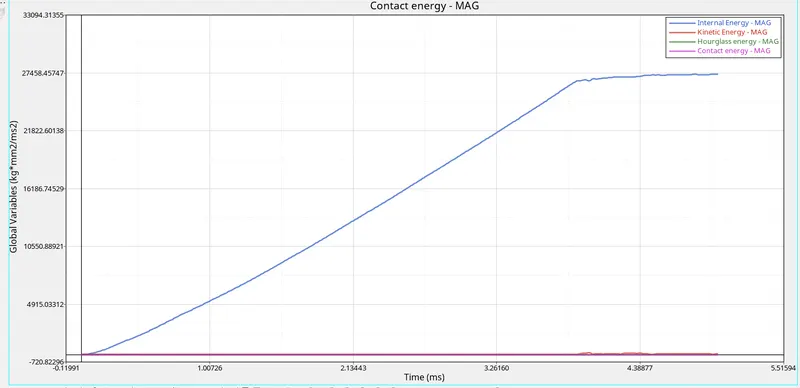
Hourglass and contact energy are almost zero. Internal energy of the system goes up with fluctuations due to element deletion(Increasing strain).
Graph 2 - Total resultant Force vs normal force
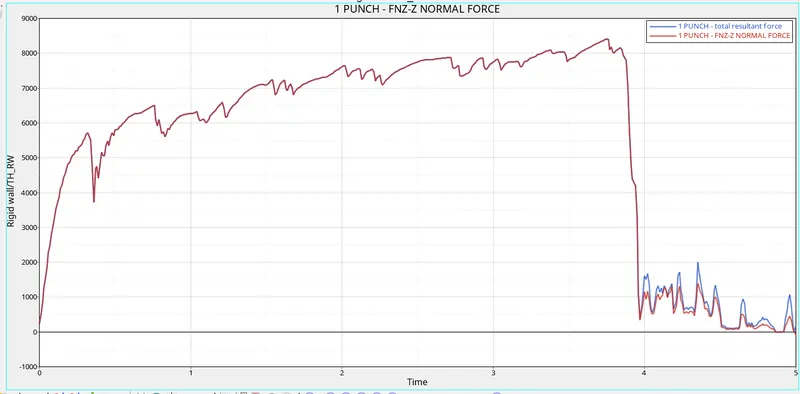
As seen from the rigid wall plot, it can be seen that elements are getting deleted periodically as and when they reach eps_p_max values. At almost 4 seconds marks as almost all the element resisting the wall get deleted ot broken off, the resistance sbruptly drops and it portrayed in the plot.
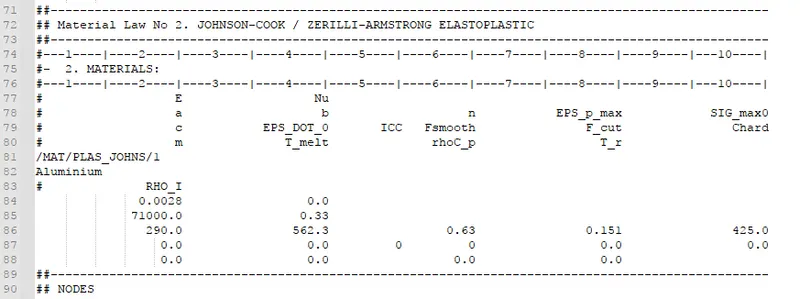
Case 2- Law 2 with fail-johnson and crack visualisation In this case, a few parameters are added to the defined case 1 to visualize checking or breaking down of element with the help of 'Ixfem' option in fail_jhohnson failure model card . The neccessary changes were made in the parameter as follow:
File Name -FAILURE_JHOHNSON_0000_0000.RAD USING NOTEPAD
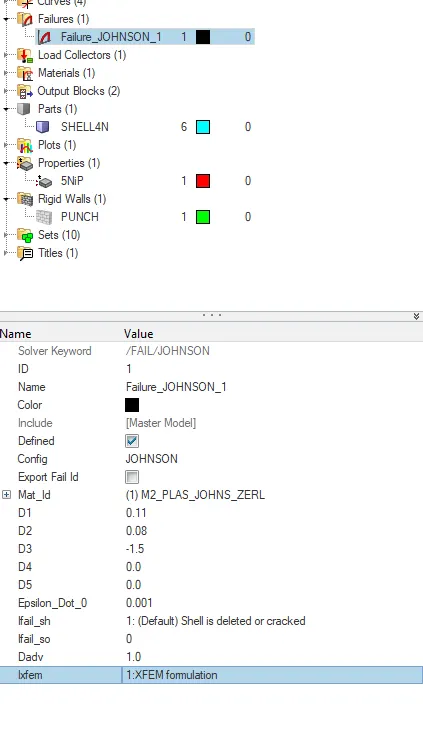
1. Displacement
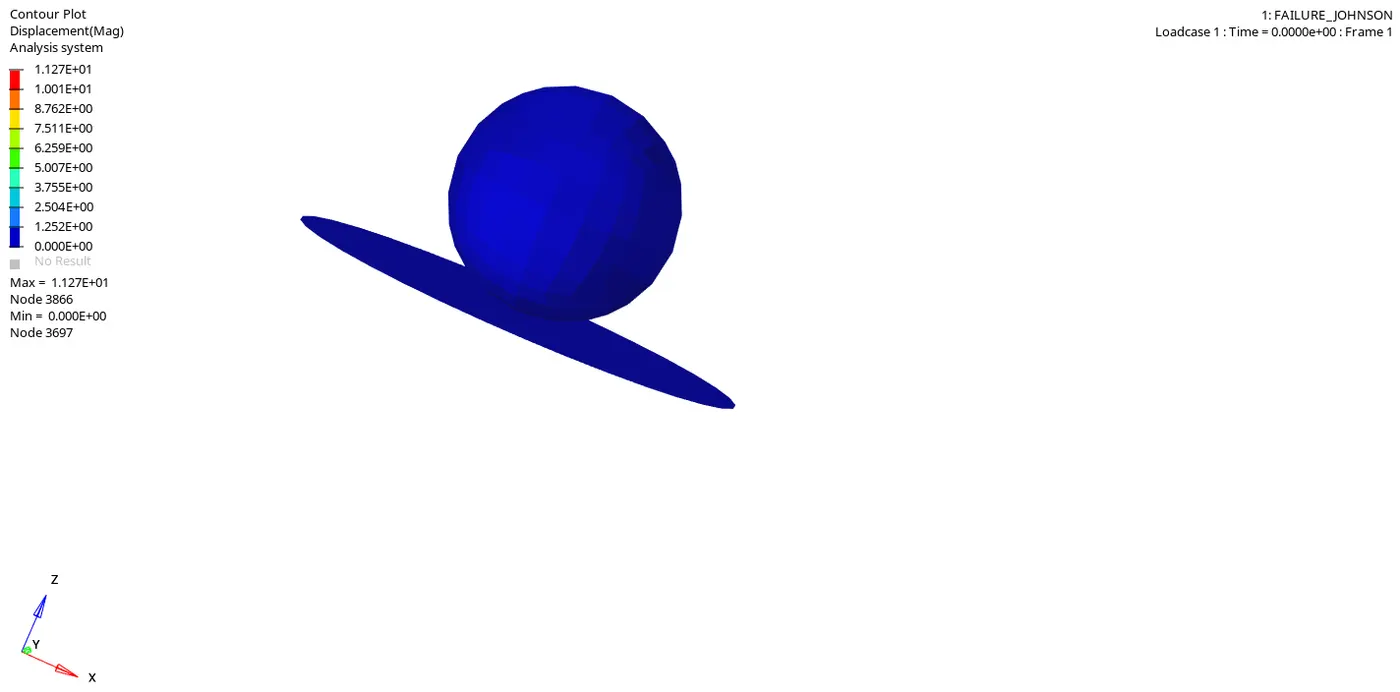
Maximum displacement at node no. 3866 is 1.127E+01 and Minimum displacement at node no. 3697 is 0.000E+00
2. Von-mises yield criterion
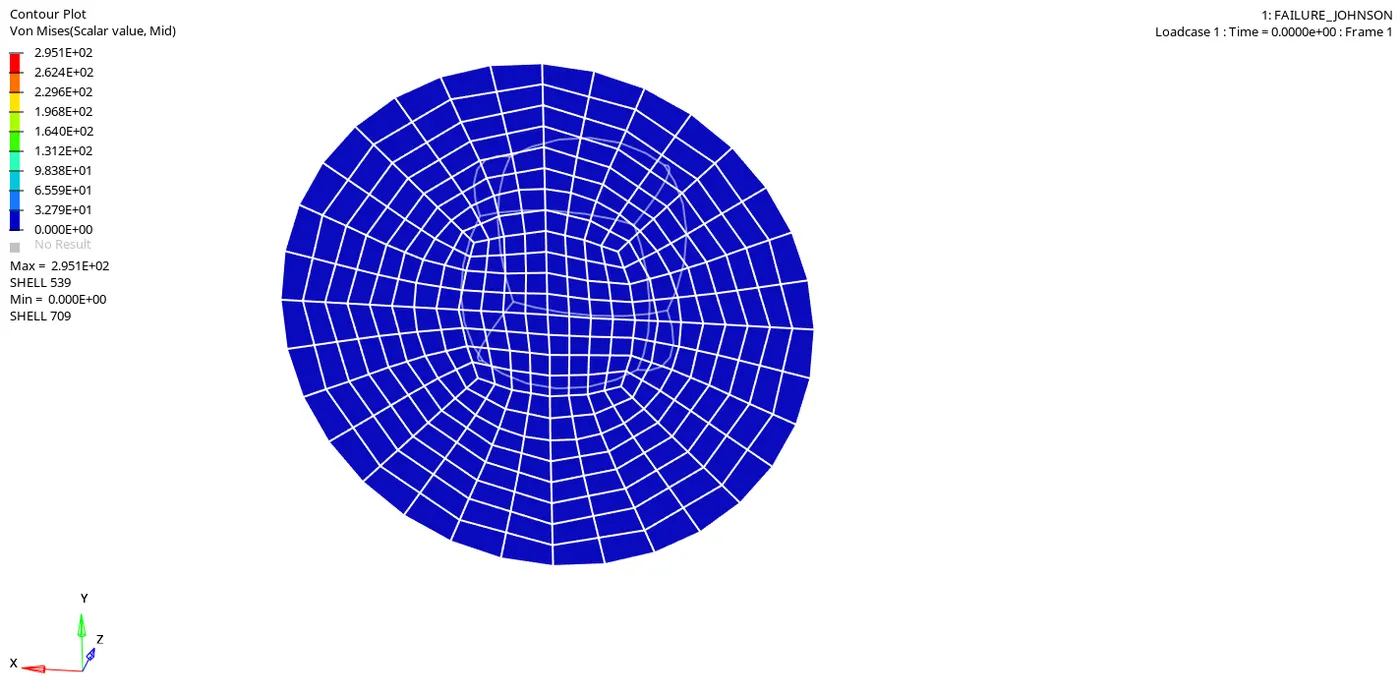
The Von-mises stress plot shows a peak value is 2.951E+02 at node 4380 and Minimum value is 0.00 at node 3697.
3.Velocity
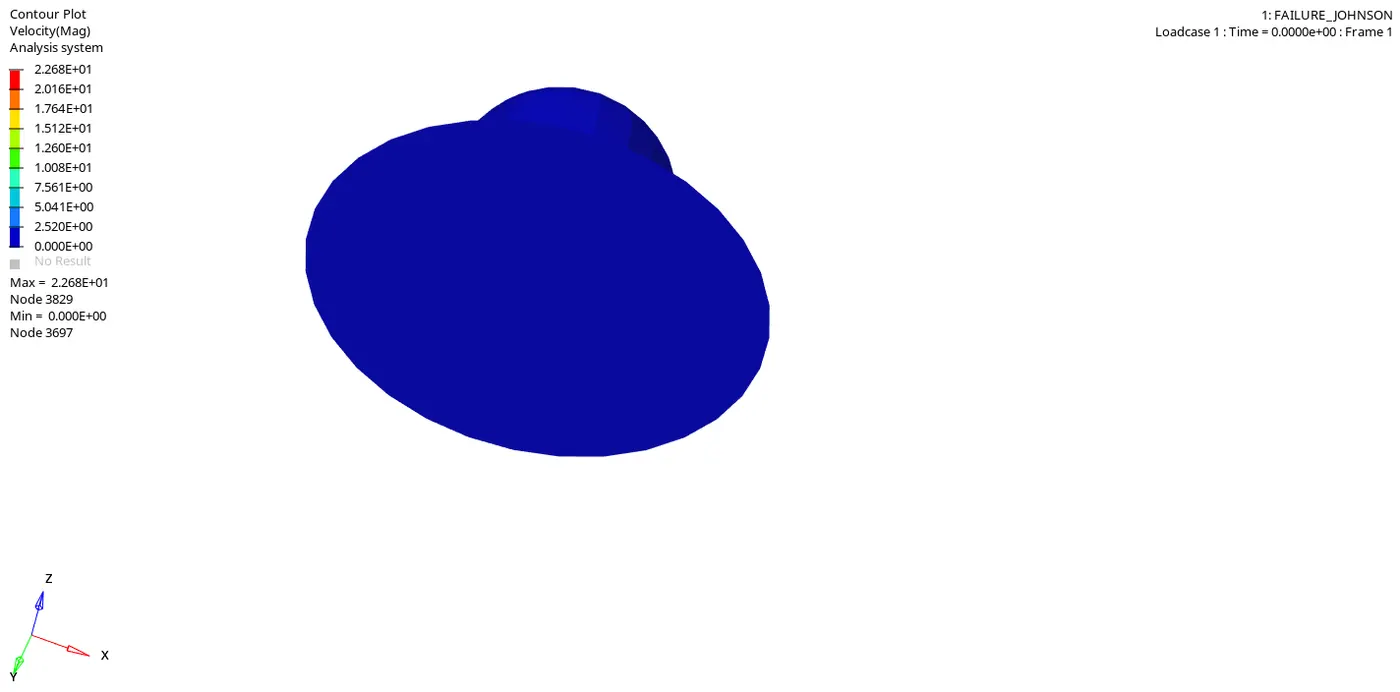
Maximum velocity is 2.268E+01 at node 3829 and minimum velocity is 0.000 at node 3697
4. % thickness reduction calculated
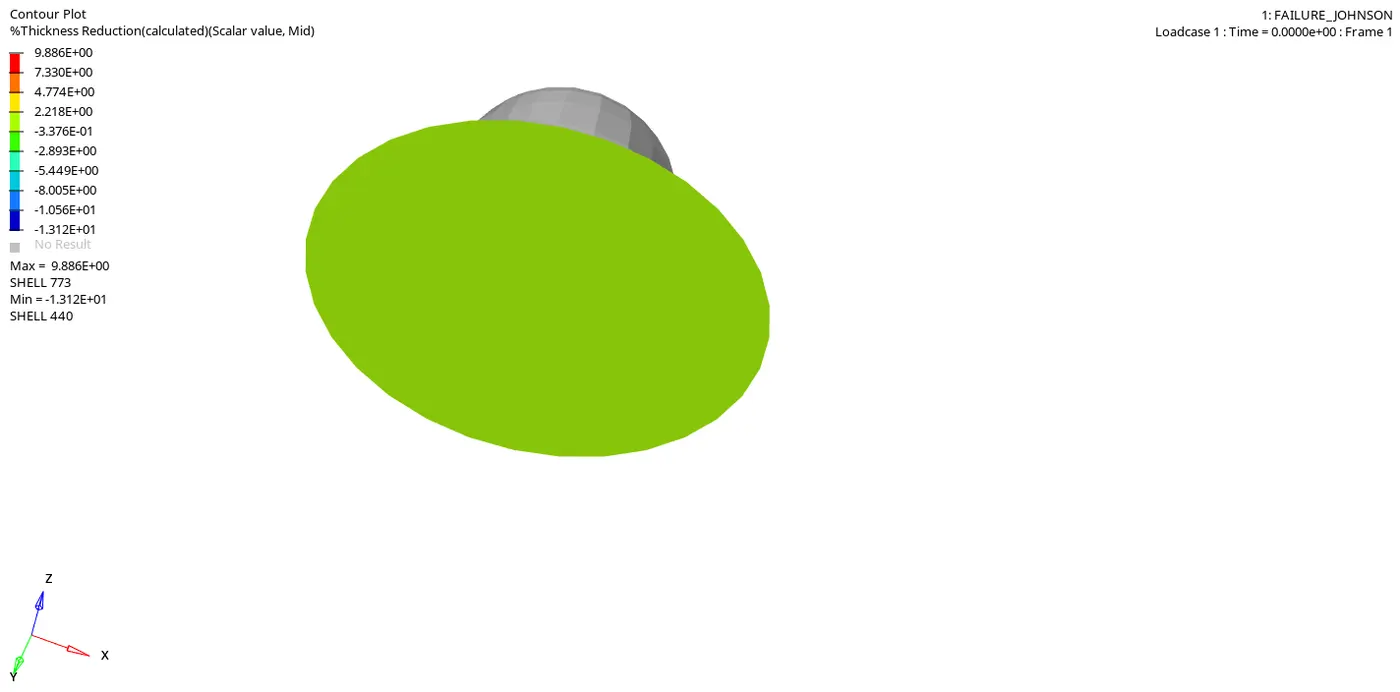
Graph 1- Internal energy , kinetic energy, contact energy , Hourglass energy and total energy
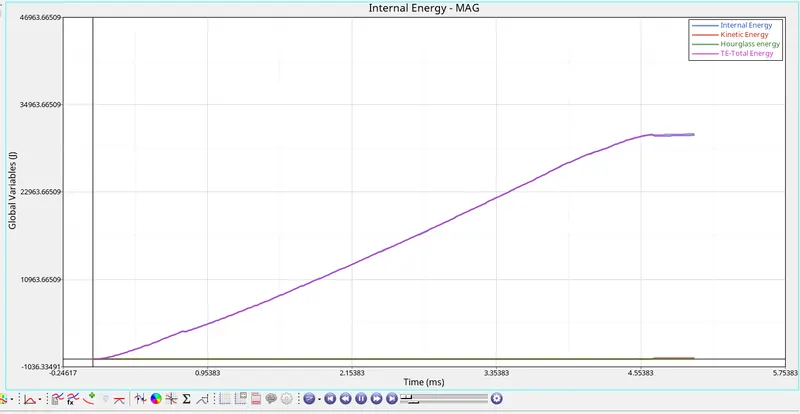
The Energy plot are same as 1st case till 0.3s After due to breaking of the element K.E Dips down but I.E goes on increasing with strain in elements.
Graph2 Total resultant force Vs normal force
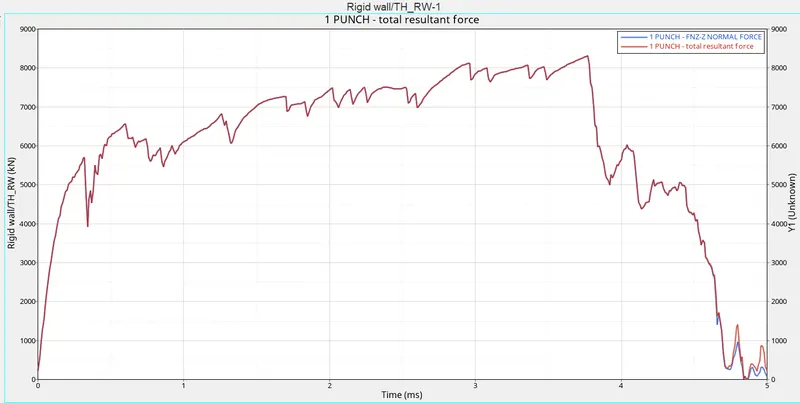
As the deformation is larger the analysis is terminated as the 'Ixfem' option isn't suitable for such case.
Case 3 Law jhohnson card without fail
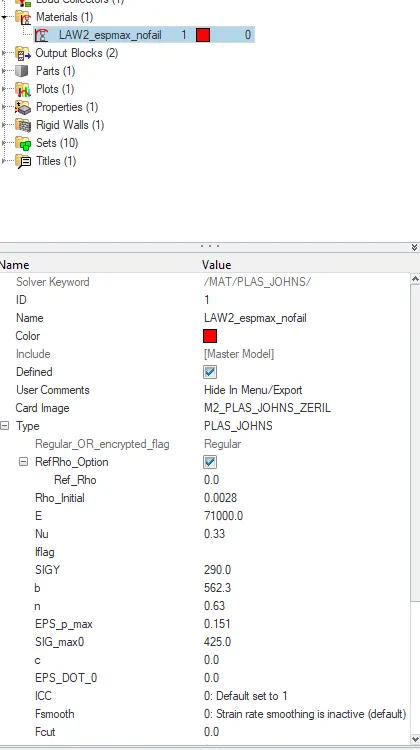
In this case , the material model is same in case elastoplastic but failure model card is removed to look for any different in result.
OPEN FILE IN nOTEPAD 'law2_espmax_nofail_0001.out'
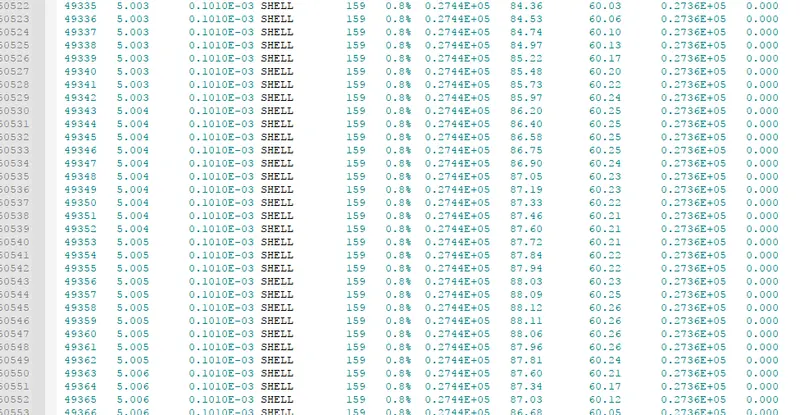
Maximum energy error in this base simulation case is 0.8%
Energy Error is acceptable upto 15%
Therefore positive signal for further simulation
Maximum mass error is 0.000
1. Displacement
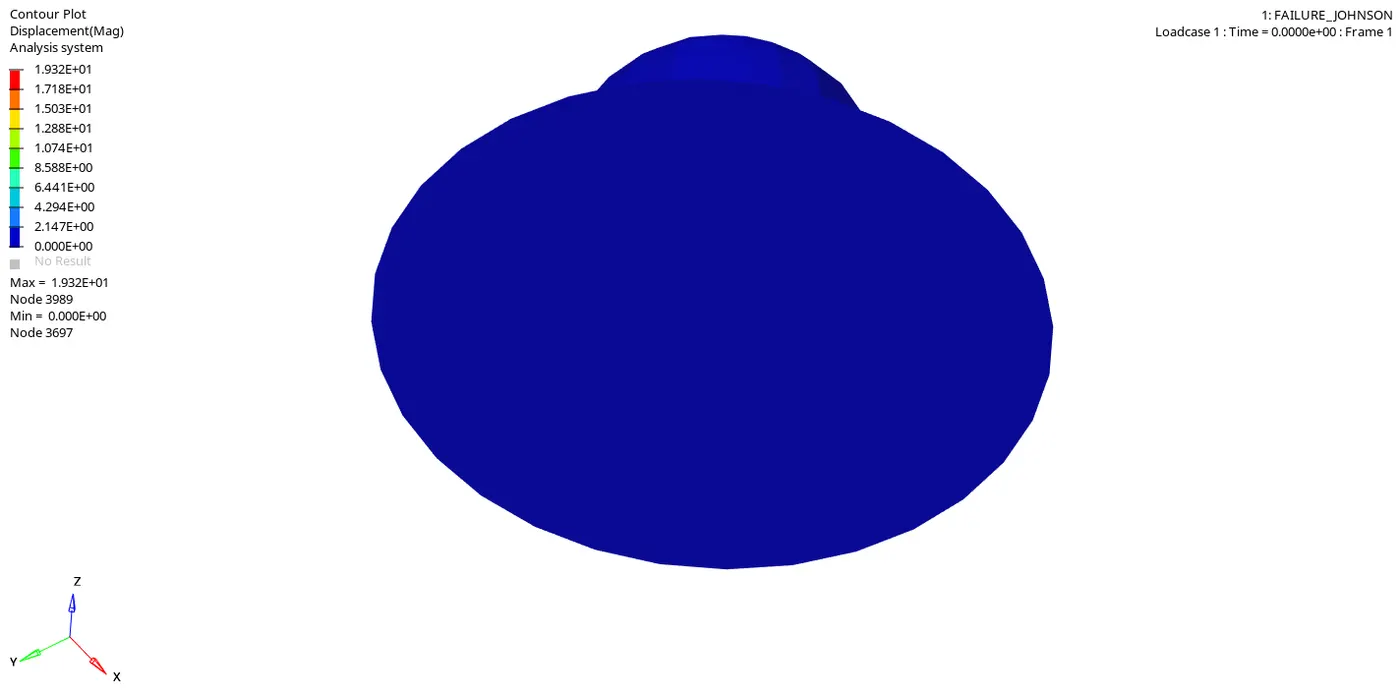
Maximum Displacement is 1.932E+01 at node 3989 and minimum displacement is 0.000 at node 3697
2. Von-mises yield criterion
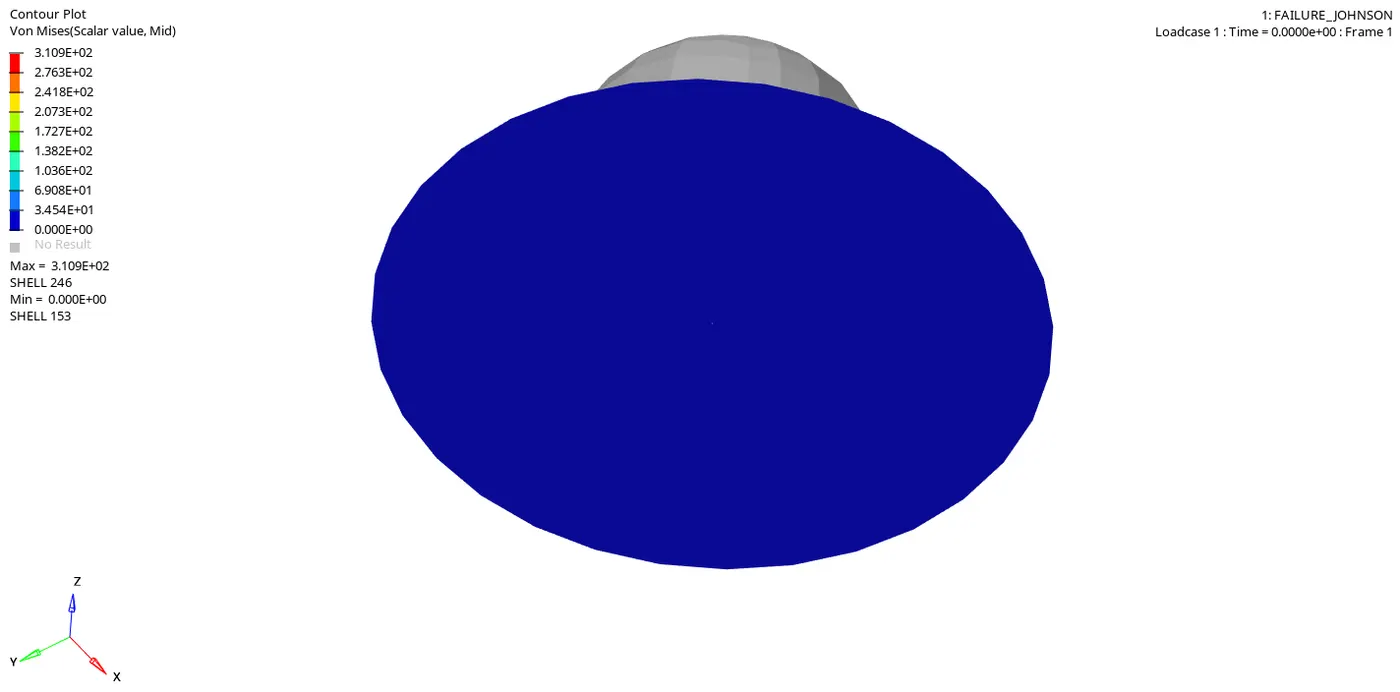
Maximum value is 3.109e+02 at shell 246 and minimum value is 0.000 at shell 153.
3. Velocity
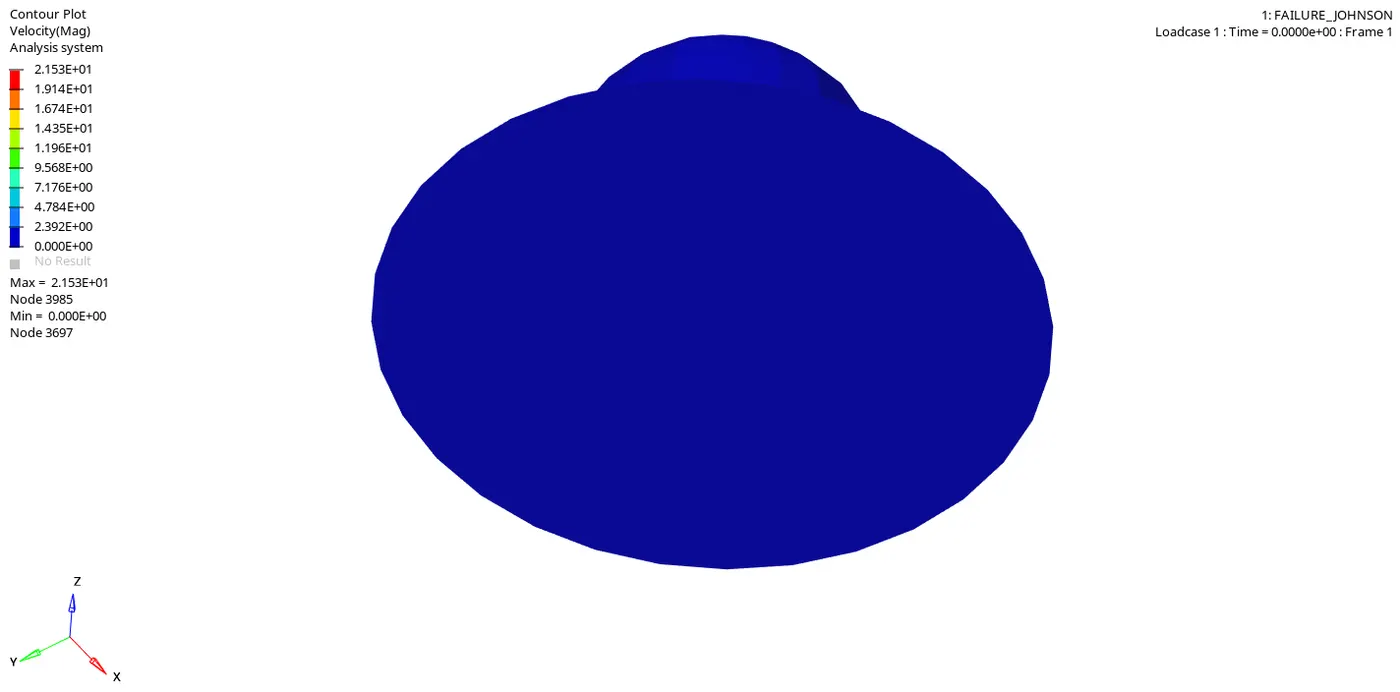
Maximum velocity is 2.153E+01 at nodes 3985 and minimum velocity at point 3697 is 0.000
4. %Thichness reduction
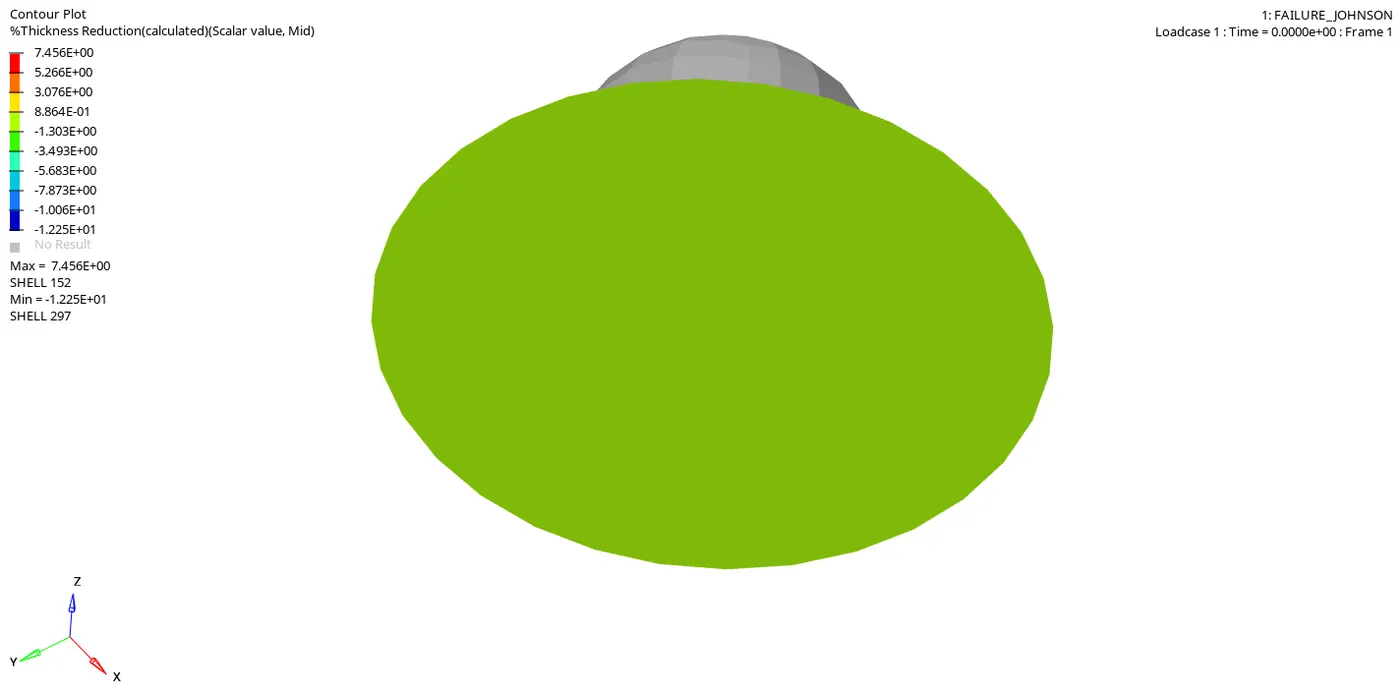
maximum value of % thickness reduction is 7.456E+00 at shell 152 and min is -1.225E+01
5. plastic strain along the thickness
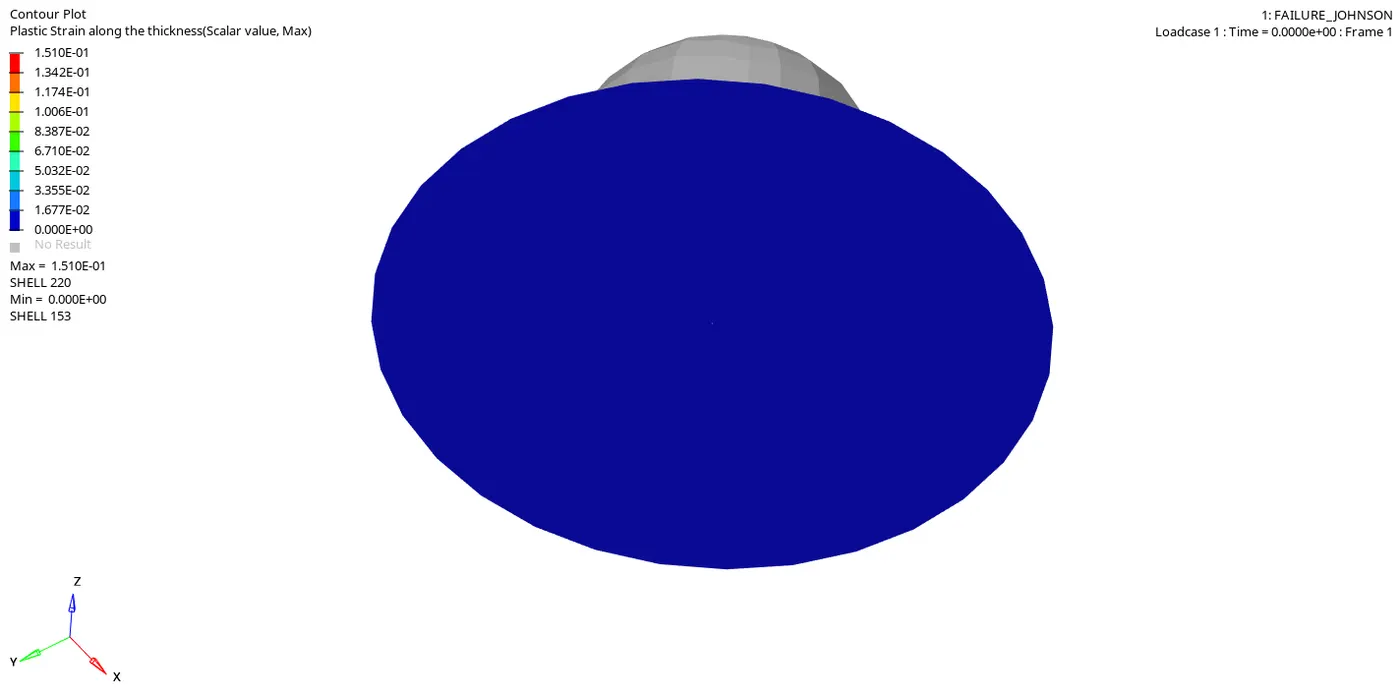
Max. value of plastic thickness is 1.510E-01 at shell 220 and min. at 0.000 at shell 153
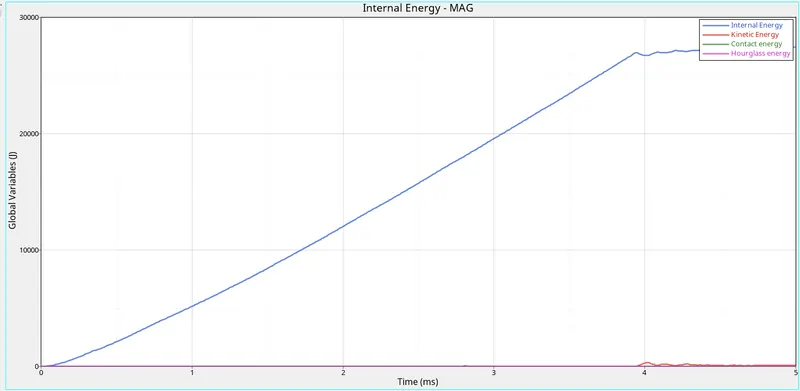
Graph 1- Internal energy , kinetic energy, contact energy , Hourglass energy and total energy
Graph 2- Total resultant force Vs Normal force
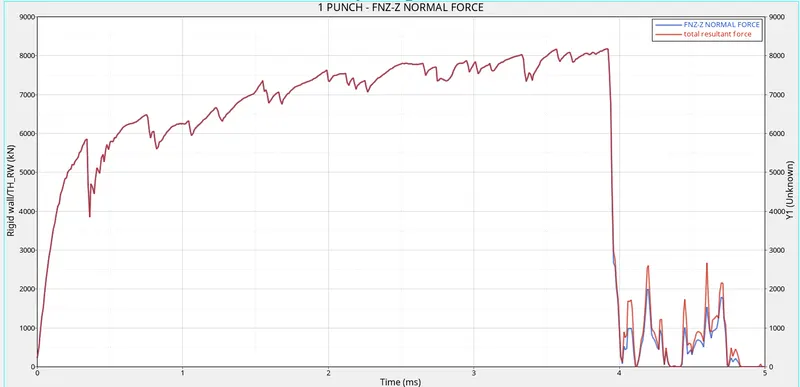
Case 4: Law 2 with infinite eps_p_max value
In this case , the eps_p_max which defines the maximum permitted plastic strain is changed to 0. This makes the material to behave like deal elastoplastic such that strain is computed but not failure due to plastic deformation beyond the limit expierenced.
Import file 0000.rad file
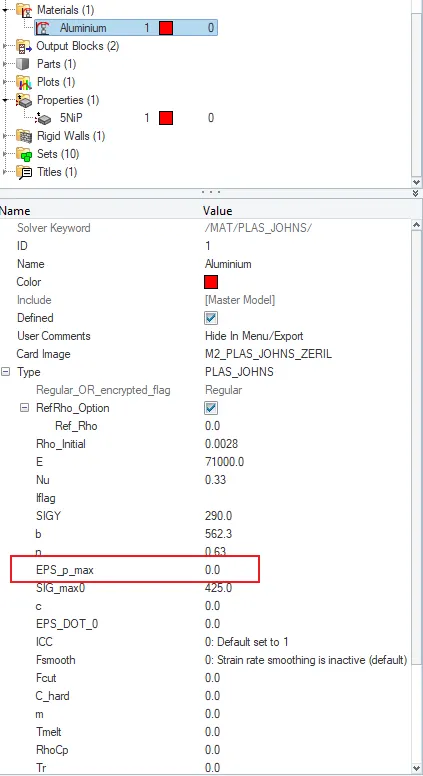
Fig. material card
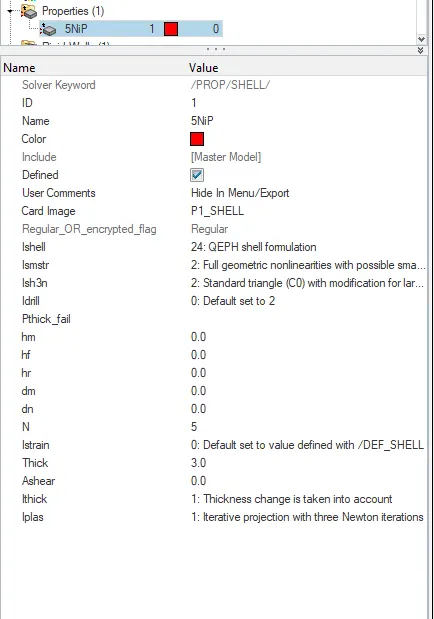
fig.property shell card
open file in notepad 'law2_0001.out
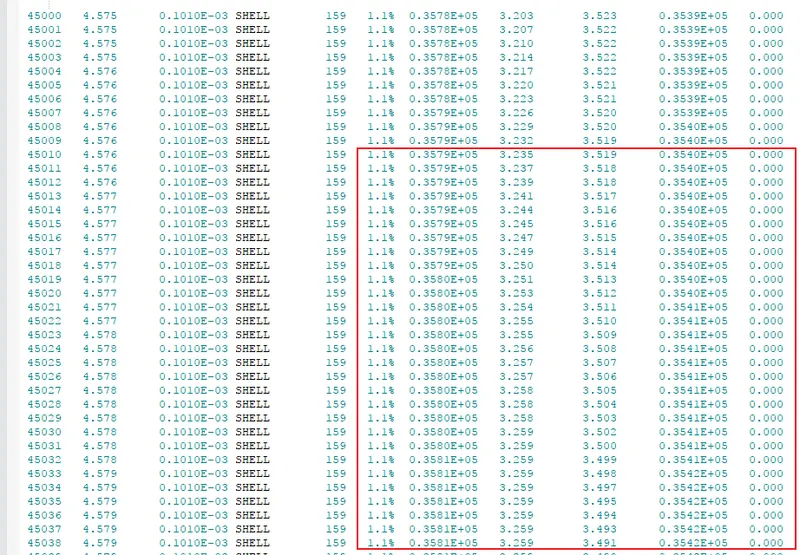
Maximum energy error in this base simulation case is 1.1%
Energy Error is acceptable upto 15%
Therefore positive signal for further simulation
Maximum mass error is 0.000
Displacement
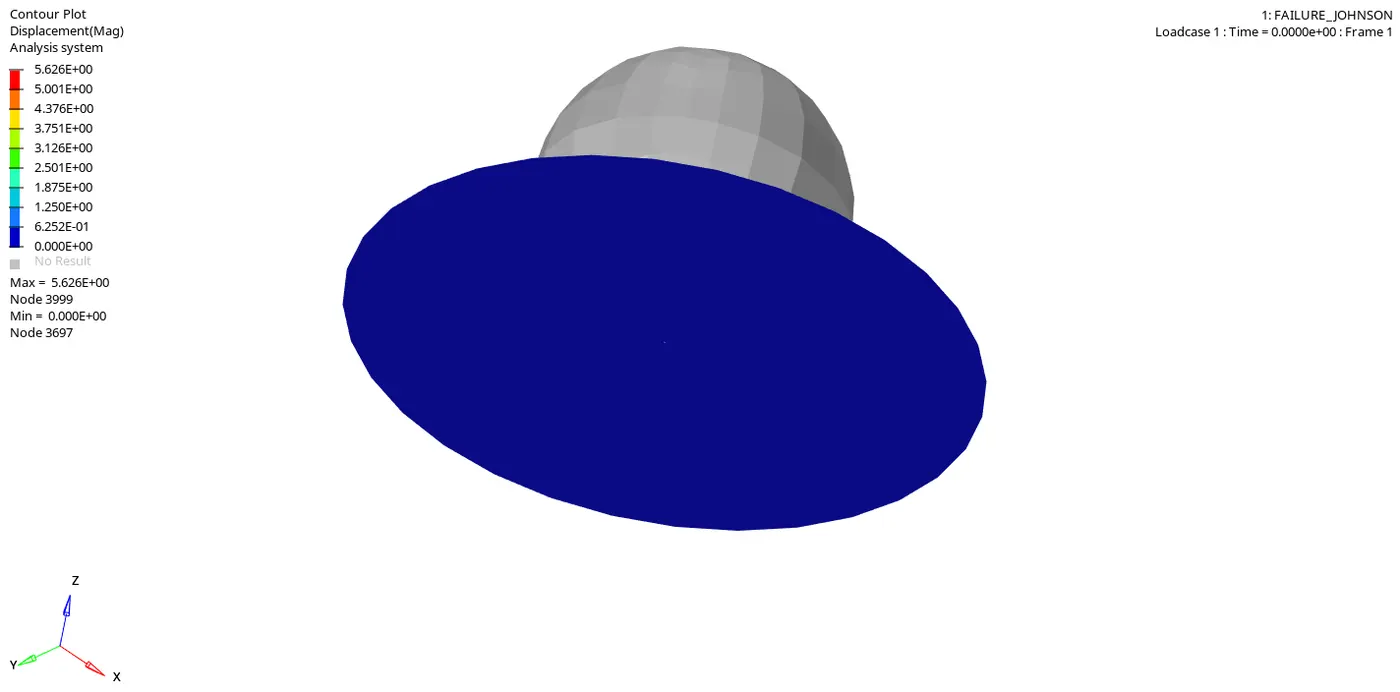
Peak value of Displacement is 5.626E+00 at node 3999 and minimum value as 0.000 at nodes 3697
2. Velocity
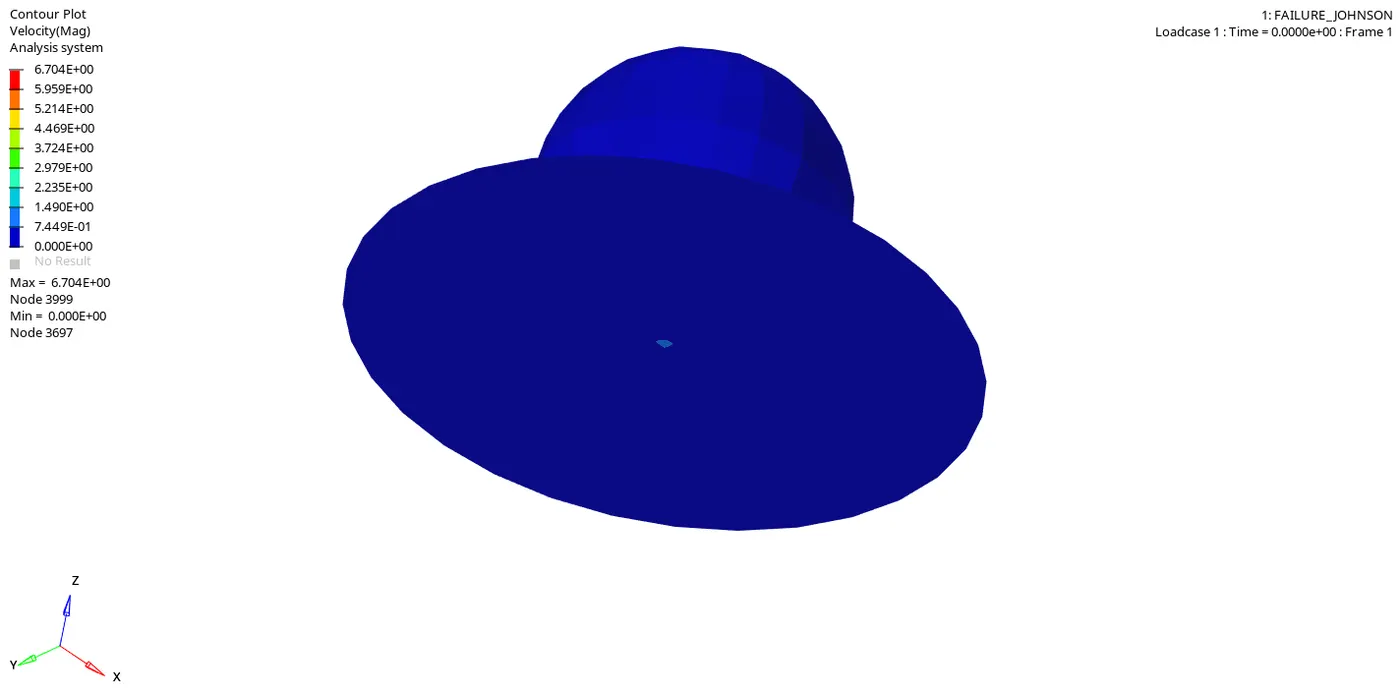
Maximum value of velocity is 6.704E+00 at node 3999 and min value at node 3697 is 0.000
3.% Thickness Reduction
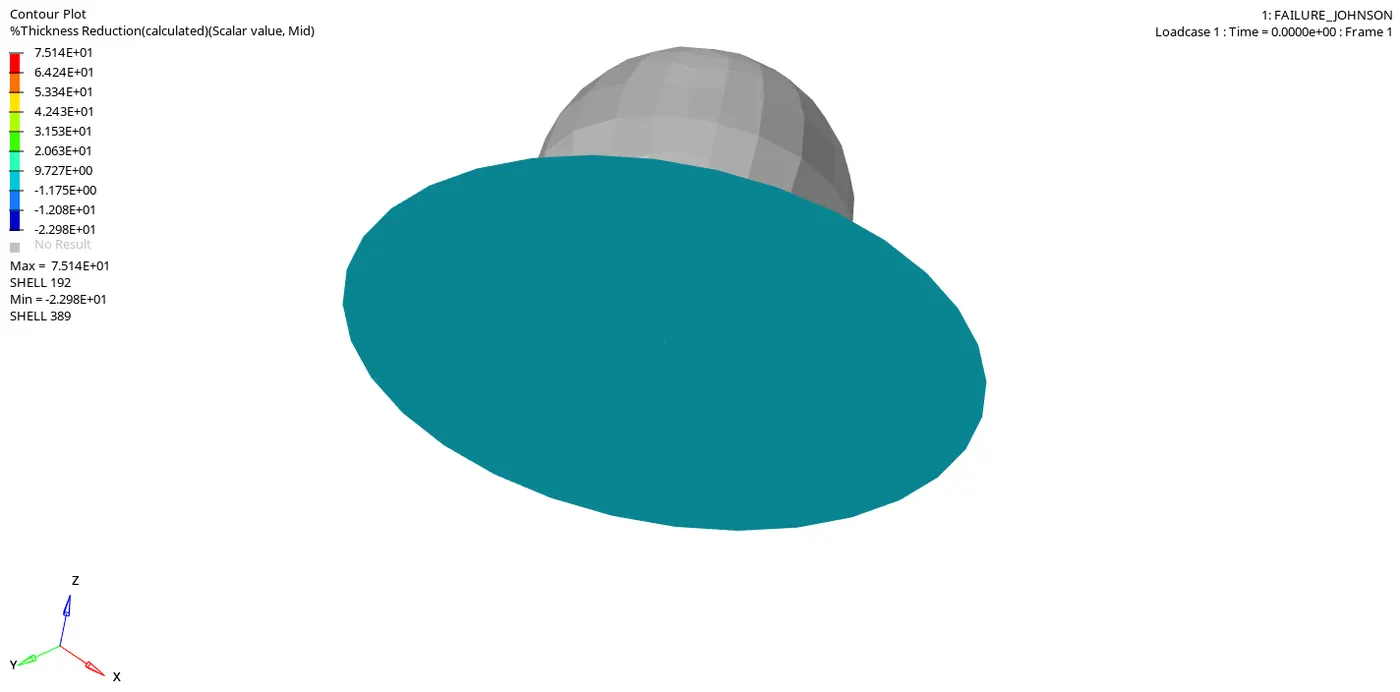
Maximum value at shell 192 is 7.514E+01 and min. value at shell 389 is -2.298E+01
4.Plastic strain along thickness
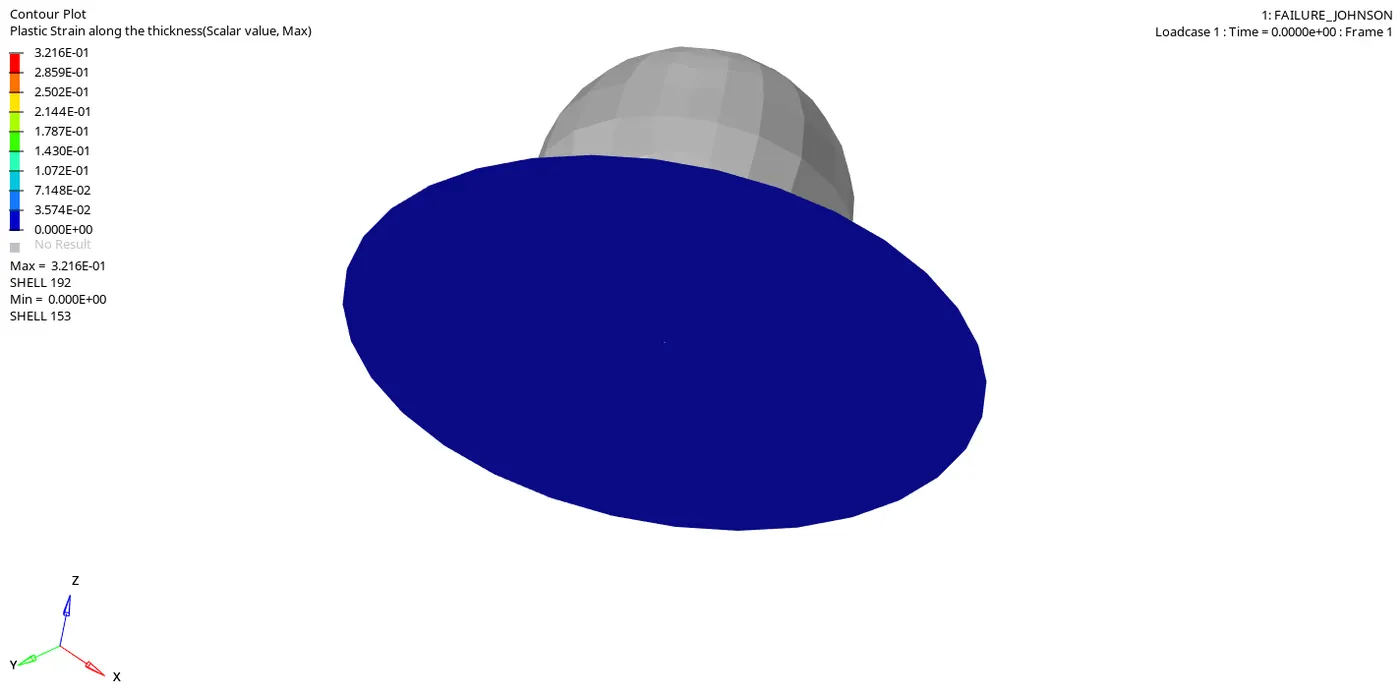
Max. value 3.216E-01 at shell 192 and min value 0.000 at shell 153
5.Von-mises
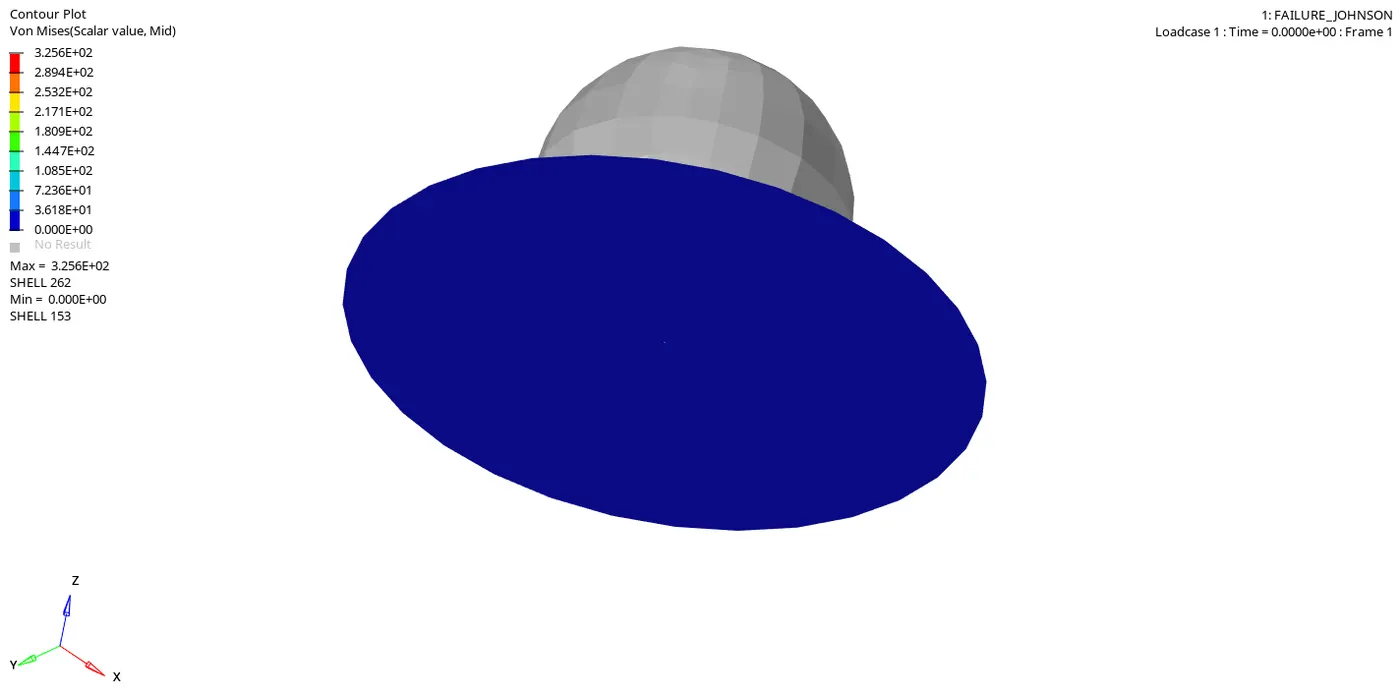
Max. value 3.256E+02 at shell 262
Min. value 0.000 shell 153
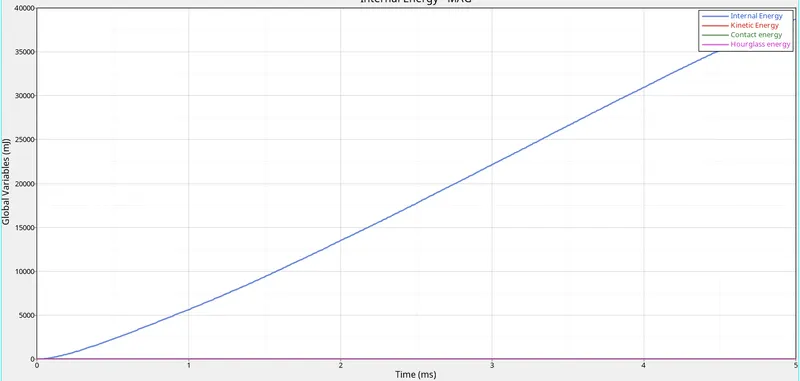
Graph 1- Internal energy , kinetic energy, contact energy , Hourglass energy and total energy
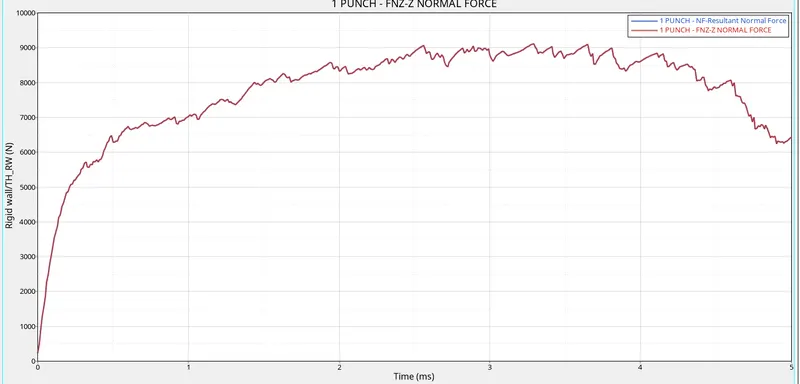
Graph 2- Total resultant force Vs Normal force
Case 5: Law 1 Elastic material
Here Material is elastic as an ideal elastic which linearly follows hooks law upto the elastic limit and when it goes a plastic stage through out any stage no matter the magnitude.
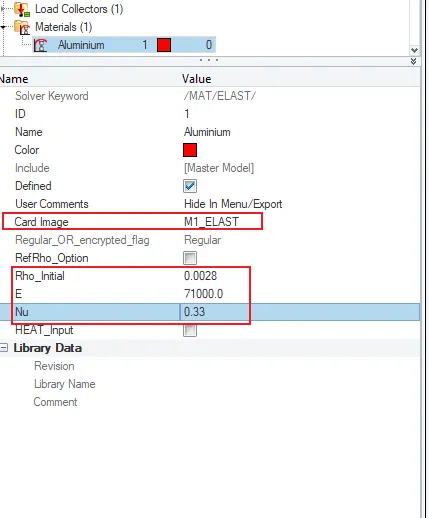
fig. material card
Fig. Property shell Card
Open file in notepad 'Law1_0001.out file
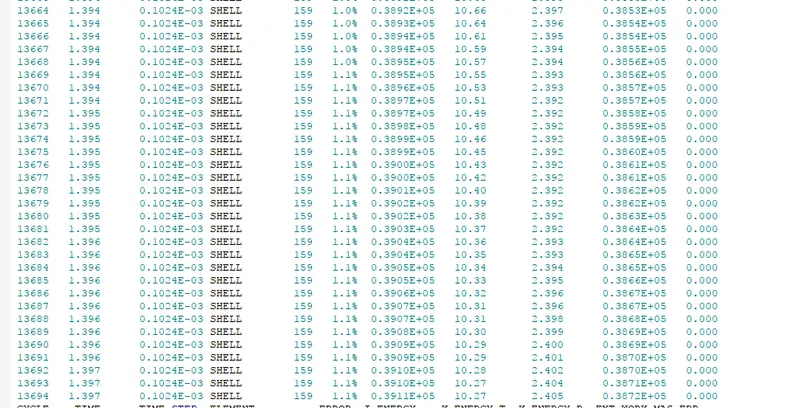
Maximum energy error in this base simulation case is 1.1%
Energy Error is acceptable upto 15%
Therefore positive signal for further simulation
Maximum mass error is 0.000
1.Displacement
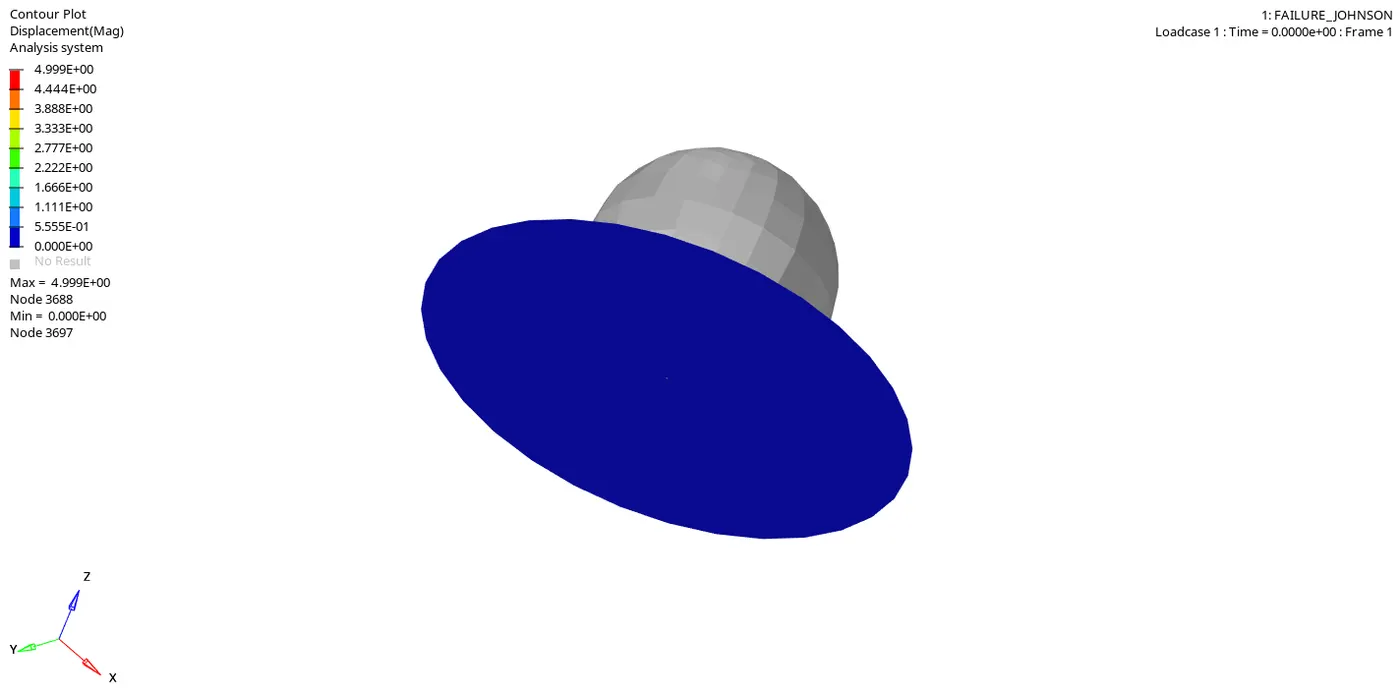
Maximum value of Displacement is 4.999E+00 at node 3688 and Minimum value is of 0.000E+00
2. Velocity
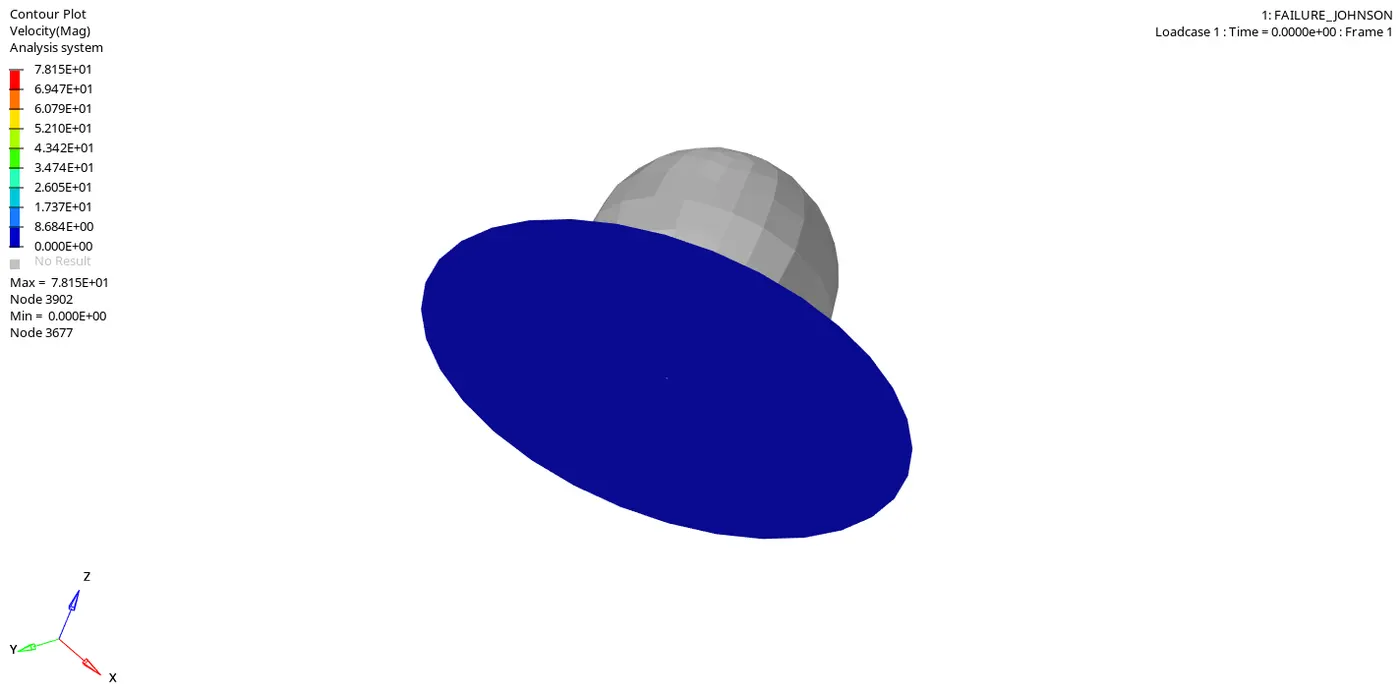
3.% thickness reduction
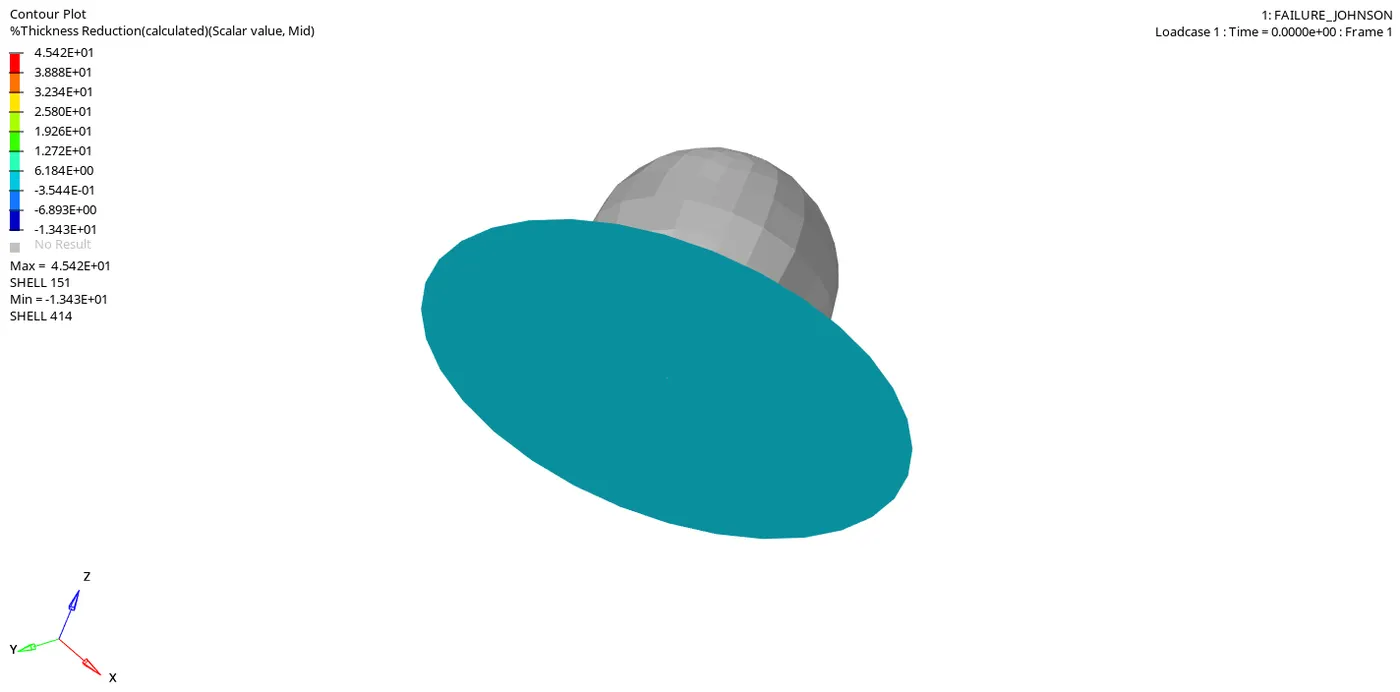
4. Von-mises
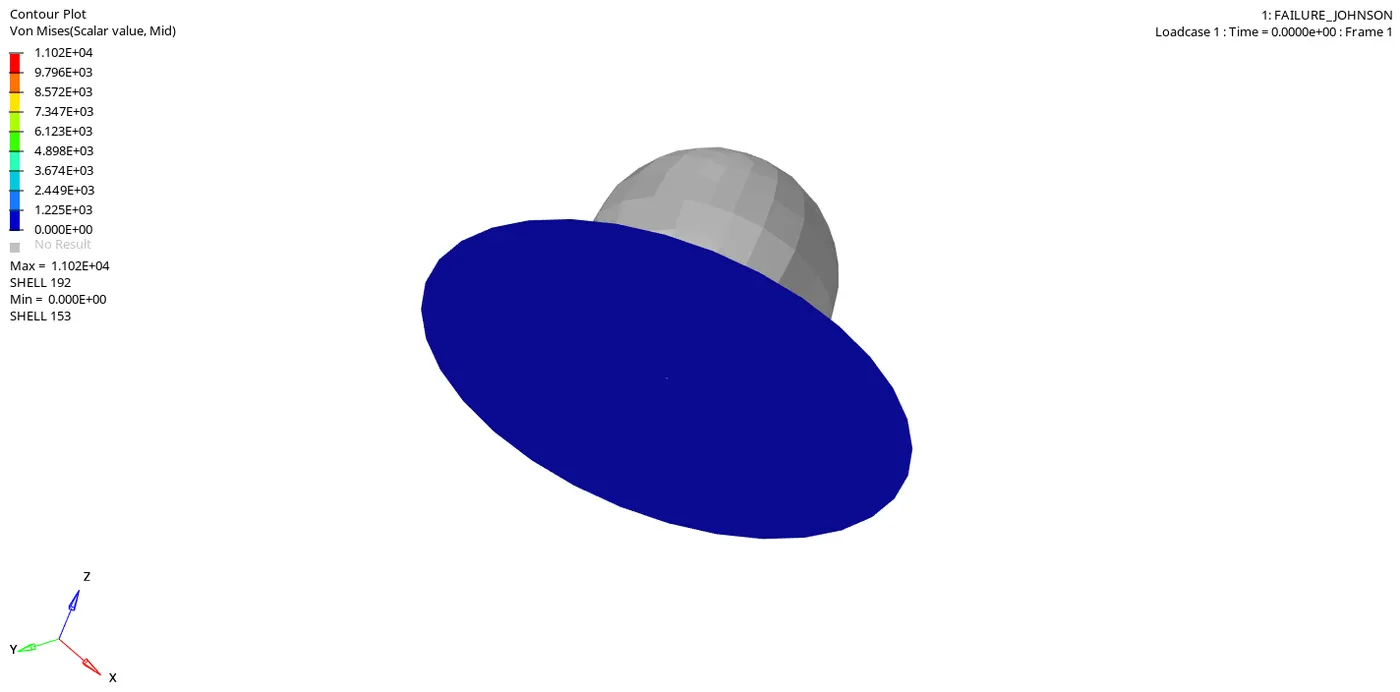
Maximum value of 1.102E+02 at shell 192
Minimum value of 0.000 at shell 153
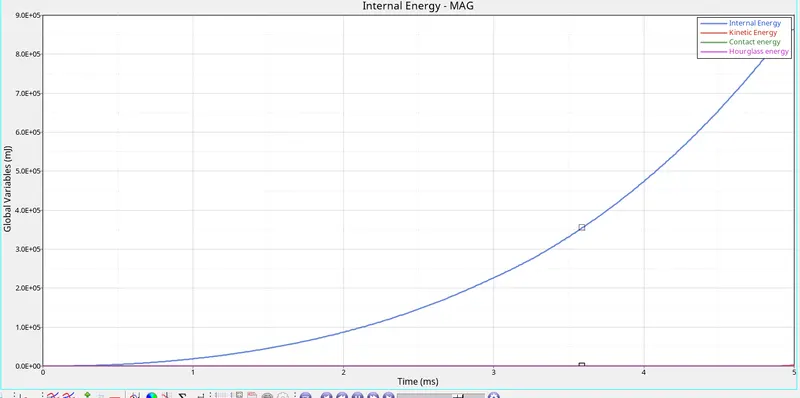
Graph-1 : graph between internal energy , kinetic energy, contact energy, hourglass energy.
Case-6 Law 36 plas_Tab Material
This law models an isotropic elasto-plastic material using user-defined functions for the work-hardening portion of the stress-strain curve (for example, stress vs. plastic strain) for different strain rates. The input parameter previously discussed eps_p_max , eps_f in a single direction are defined. The important features of the model is a user can input a stress vs strain plot as acurve and callit in the card from which the strain rate parameter is capturing also be added to give further detail for better analysis. the neccessary inputs are gatherd from video lectures 6 and 7 were added mode.
Import File' Law36_0000.rad '
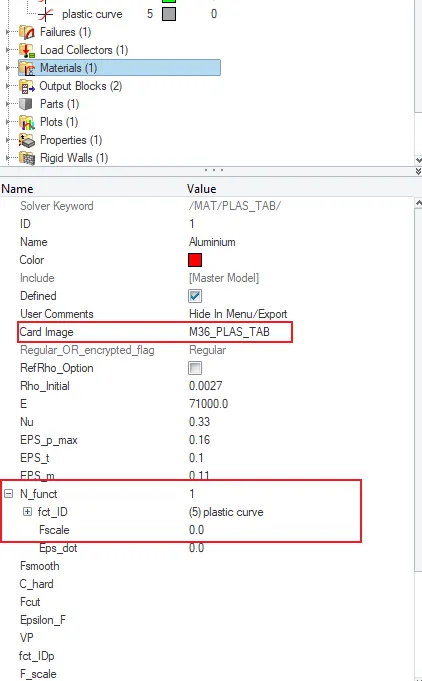
Material card
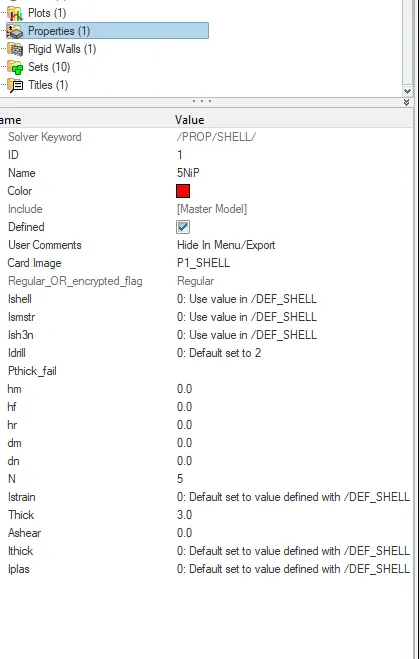
Property Card
Open file in notepad 'Law36_0001.out'
1.Displacement
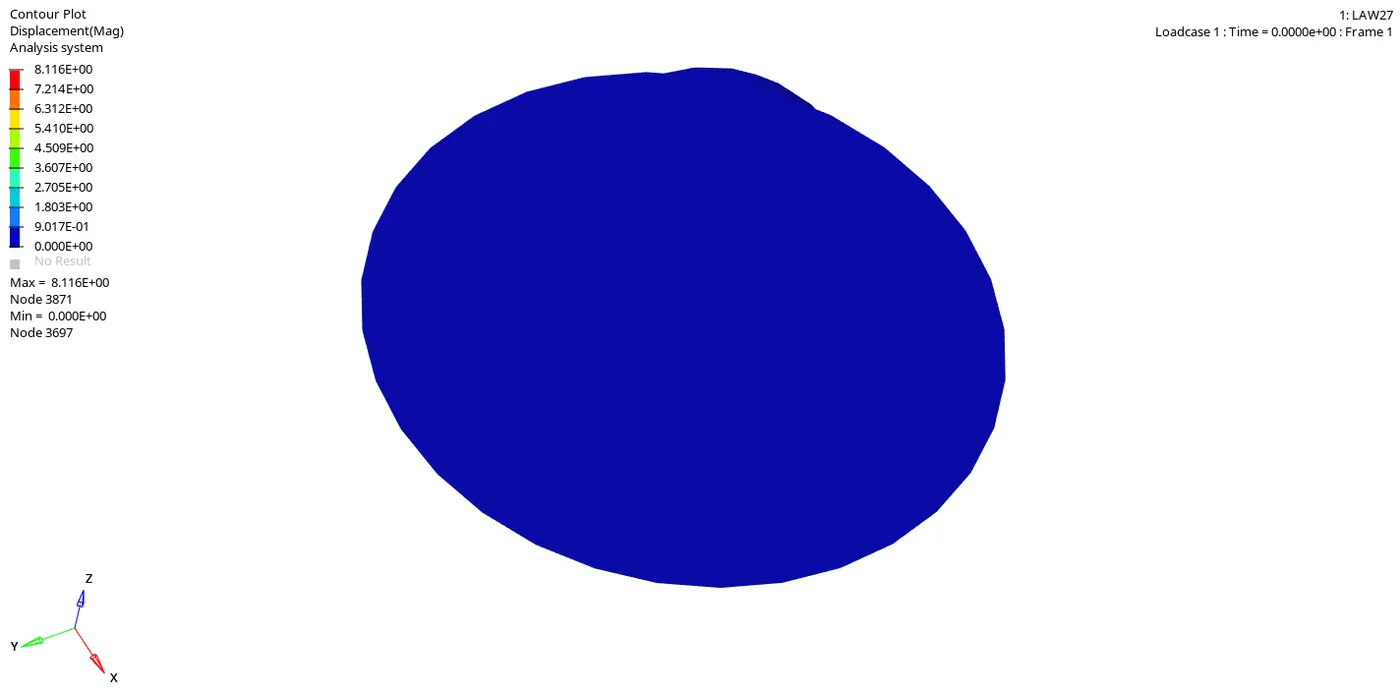
Maximum value of displacement is 8.116E+00 at node 3871 and Minimum value 0.000 at node 3697.
2.Velocity
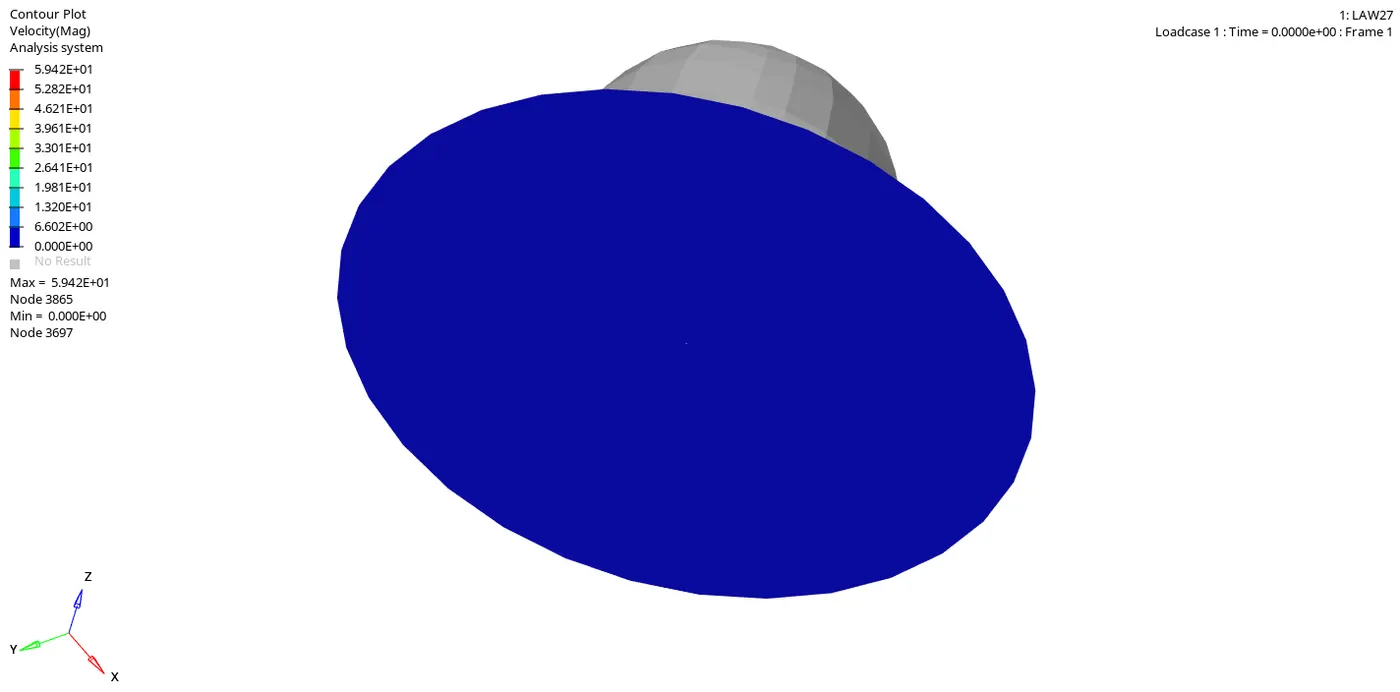
Max. value is 5.942E+01 at node 3865 and Min value is 0.000 at node 3697
3. % thickness Reduction
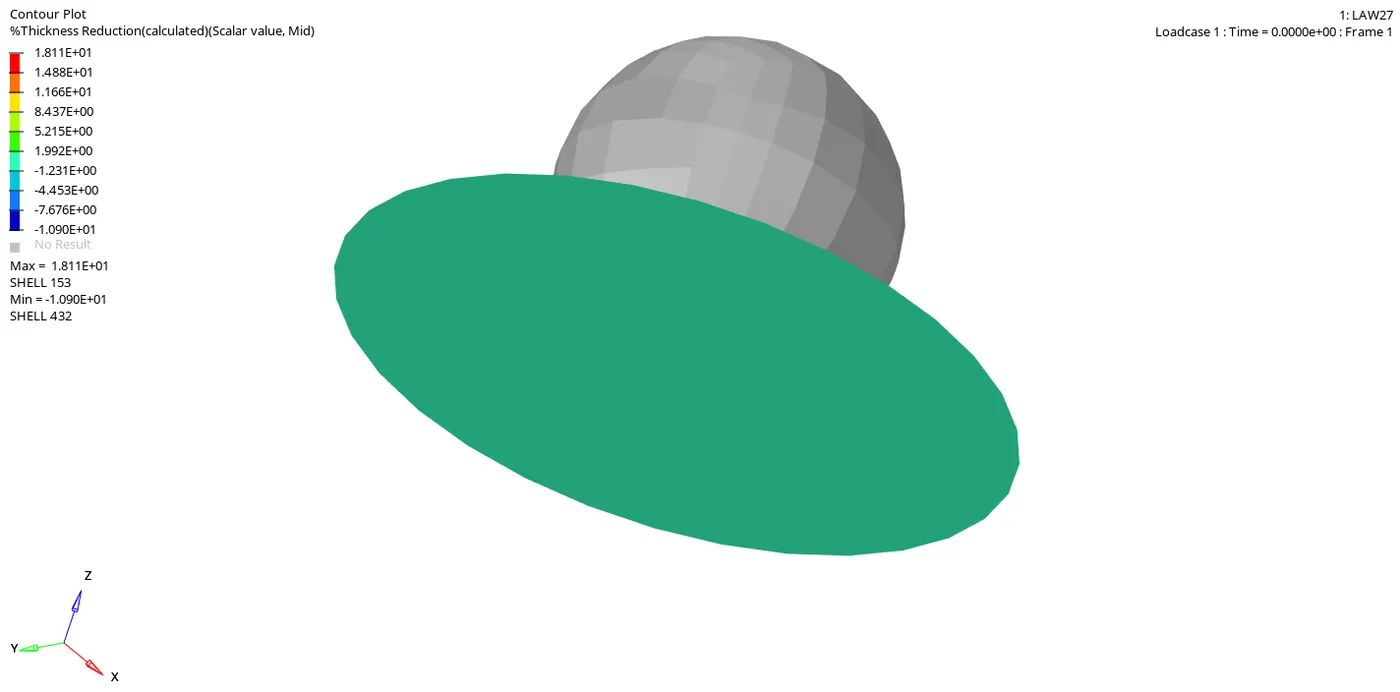
Maximum Value is 1.811E+01 at shell 153 and Min. value is -1.090E+01 at shell 432
4. Plastic strain along thickness
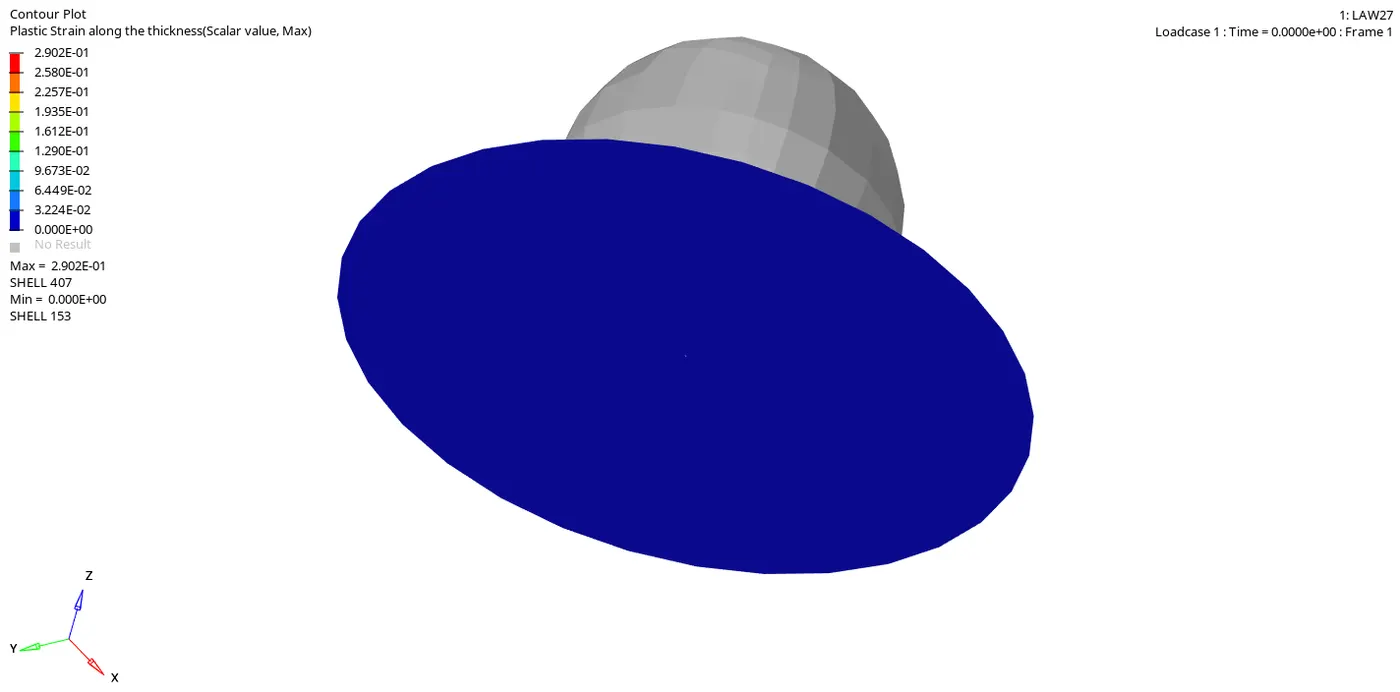
Max. value is 2.902E-01 at shell 407 and minimum value 0.000 at shell 153
5.Von-mises
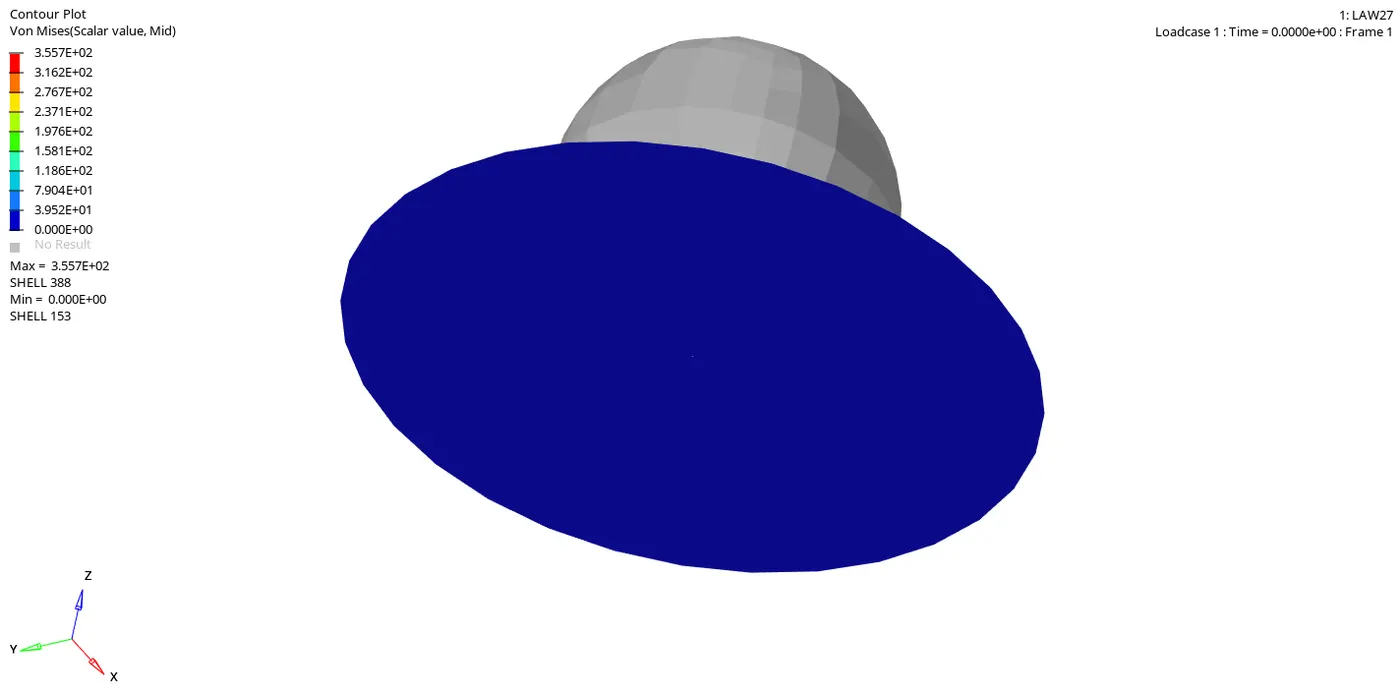
Maximum value is 3.557E+02 at shell 388 and minimum value is 0.000 at shell 153
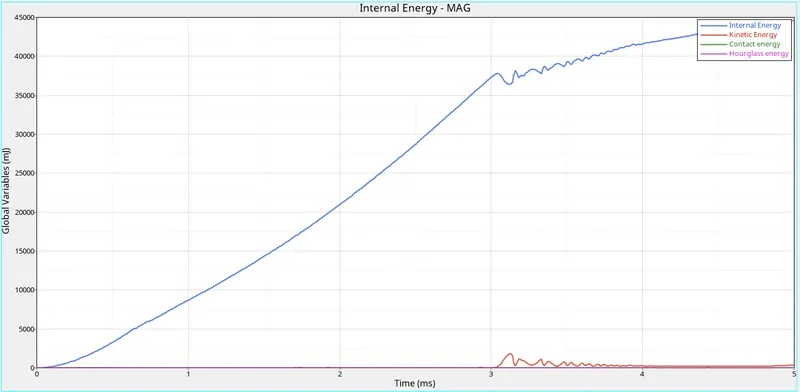
Graph-1 : the graph is between kinetic energy, internal energy, hourglass energy , contact energy.
Case7: Law 27 plas_brit material
This law combines an isotropic elasto-plastic Johnson-Cook material model with an orthotropic brittle failure model. Material damage is accounted for prior to failure. Failure and damage occur only in tension. This law is applicable only for shells. In this case , the material is Plas_brit which is an elastic-plastic material with addtional parameters to define in nature of material such as eps_t1 , eps_t2, eps_f1 , f2 eps_m1, m2 and dmax1, 2. which are tensile failure in strain. maximum tensile failure, tensile strain at element detection and maximum tensile damage to limit in two direction. To start with Law 27 is nothing but law 2 with additional parameter hence , much detail analysis can be done
Import file 'law27_0000.rad'
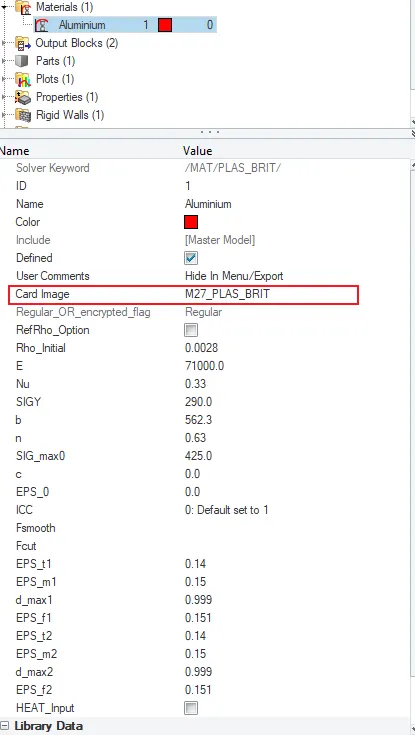
fig. material card
Fig. property Card
1.Displacement
Peak value of displacement is 8.116E+00 and node 3871 and minimum Value 0.000E+00 at node 3697
2.Velocity
Z
Maximum value 5.942E+01 of velocity at node 3865 and min value is 0.00 at node 3697
3. %Thickness reduction
Max. value of %thickness reduction is 1.811E+01 shell 153 and Min -1.090E+01 at shell 432
4. Plastic strain along the thickness
Plastic Strain along the thickness maximum value is 2.902E-01 at shell 407 and minimum Value is 0.000 at shell 153
5. Von-mises
Peak value of von-mises is 3.557E+07 at shell 388 and min 0.000 at shell 153 .
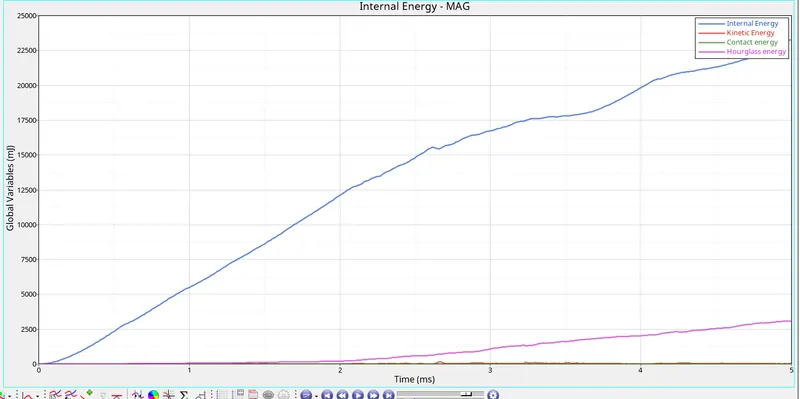
Graph 1- the graph between internal energy , kinetic energy , hourglass energy , contact energy.
Conclusion :
As stated, in sumaary for the current problem where the material in the question is aluminium alloy case 1, case7 and with proper inputs case 6 will give out realistic result. Law 27_Plas_brit material model is the best option with given inputs with more detailed results than Law-2 Elastoplastic with Fail_johnson card. At last Plas_tab material model being sensitive to its input( stress vs strain curve), Plastic strain parameter could be another option but need accurate data preferably from physical testing.