Assignment 3-2D Element Formulation Challenge
Objective:
Comparison of results with base simulation and improved shell element properties.
Procedure :
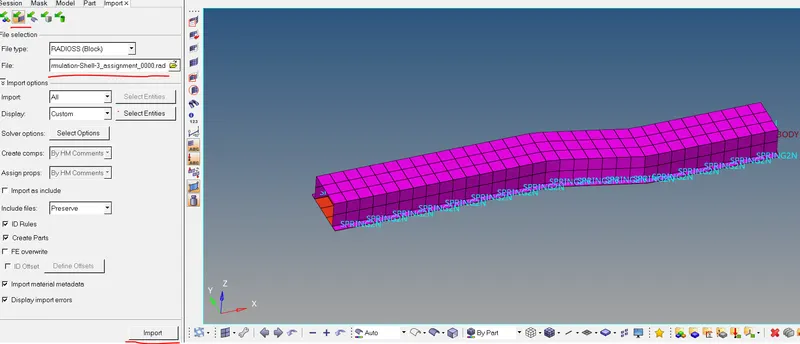
Select the solver to Radioss.Import the .rad file using import solverdeck option.
After Importing the file Edit the Card of Engine time step as 55 and Engine animation frequency to According to Tfre = Runtime/No of animation steps.
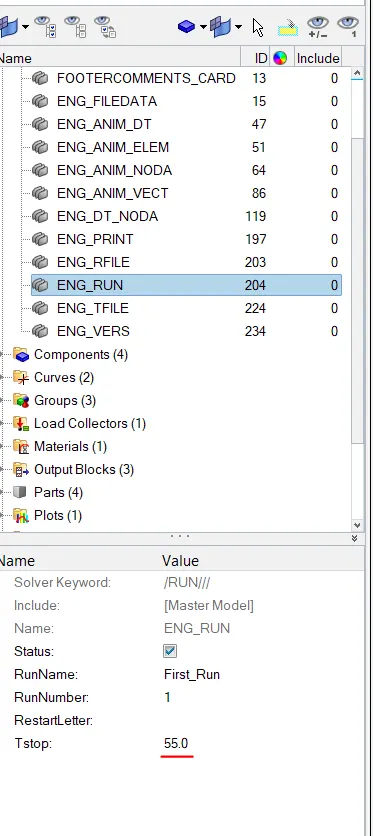
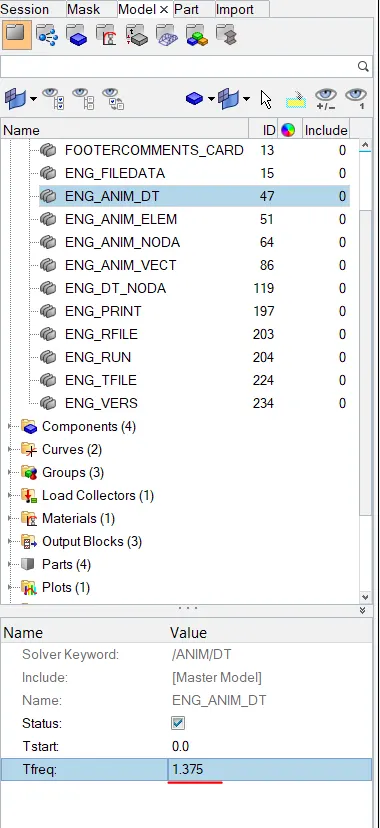
2. Change the number of animation steps during simulation to a minimum of 25 and maximum of 60.
Animation Steps considered as 40
Tfreq =Run time/No of animation steps
Tfreq =55/40 = 1.375
Now Run the simulation without anymodification to element property.
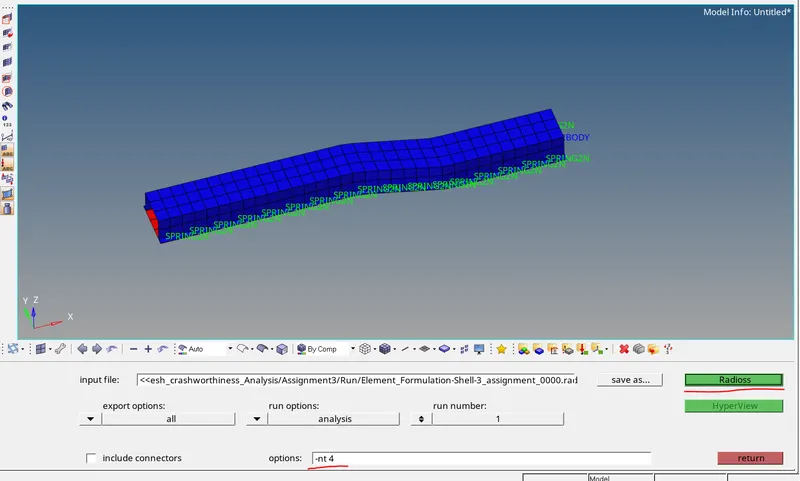
In the Option -nt 4 - that is number of threads to make simulation faster. Then run the analysis using radioss option. After completing the analysis the .OUT file can be viewed to check energy error and mass error are within acceptable range.
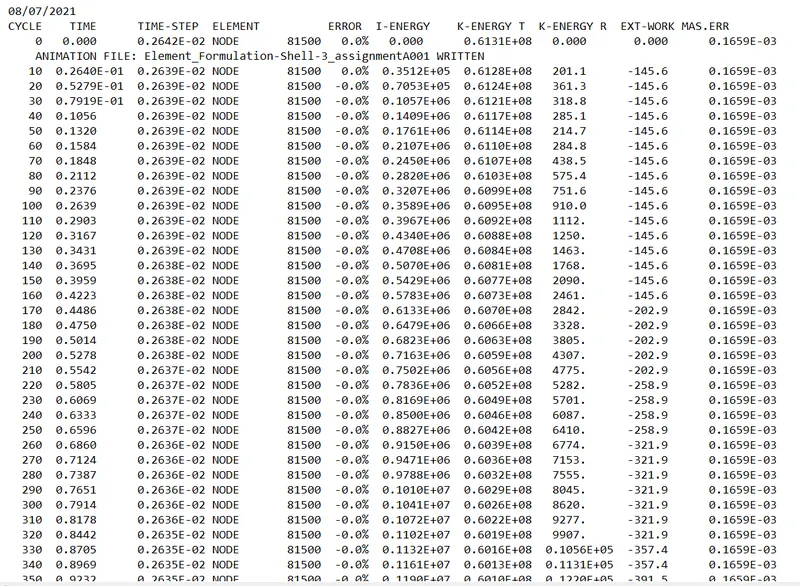
The energy error should always be in negative and +5% that is the acceptable range.In this case both energy and mass error is constant.
To view simulation goto file load-results and select .h3d file and apply.
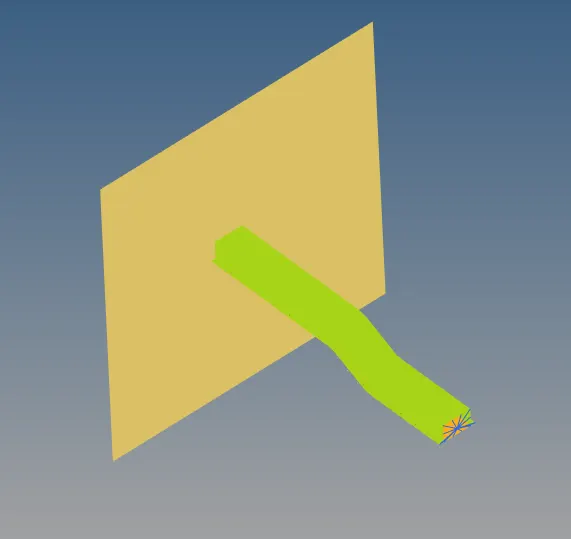
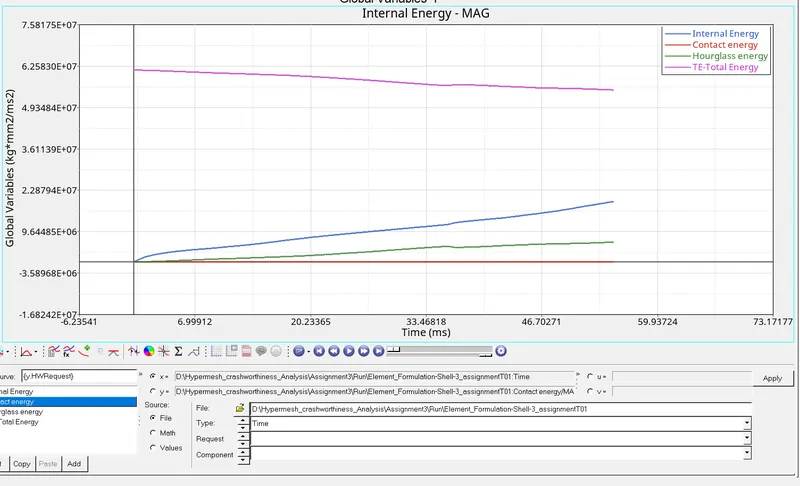
Plotting the Graph for internal energy, hourglass energy, contact energy, total energy of the simulations.
Goto Hypergraph -Select T01 file select the energy from the list and apply.
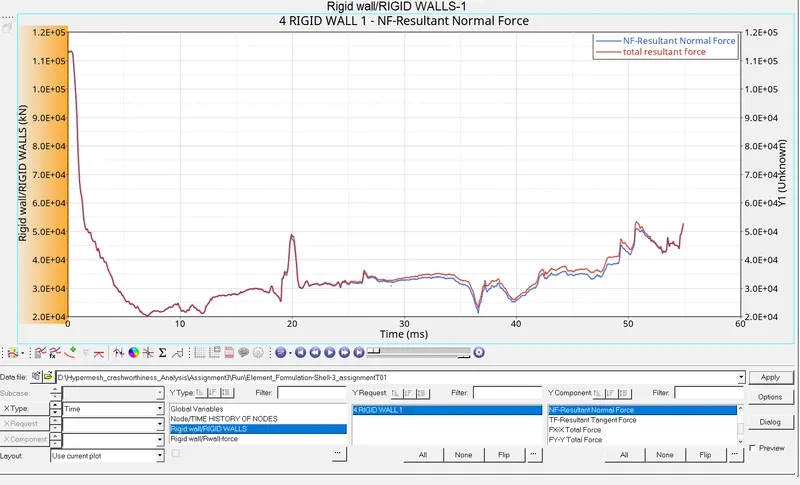
Follow the same steps to Plot rigid wall forces.
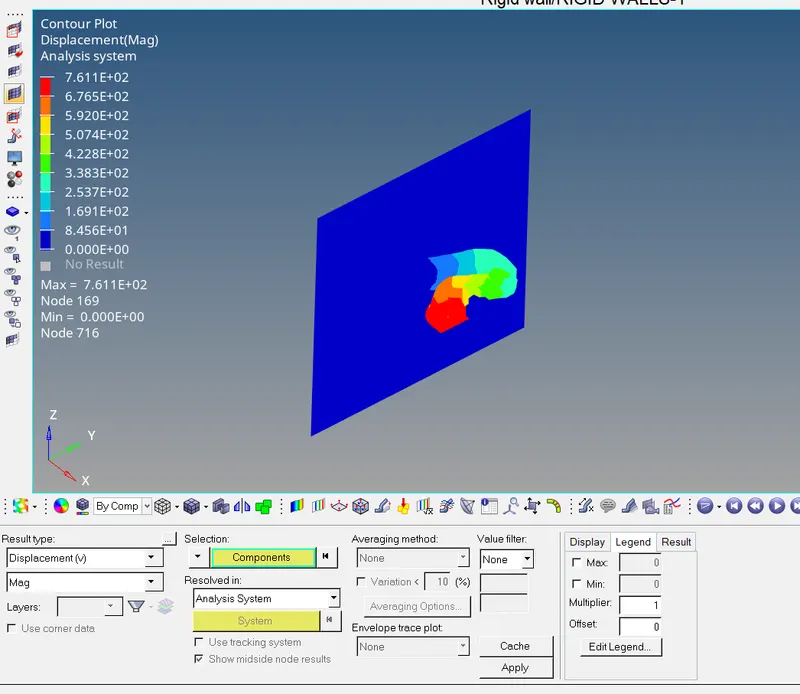
Contour Plot in Hyperview for displacement and hourglass energy.
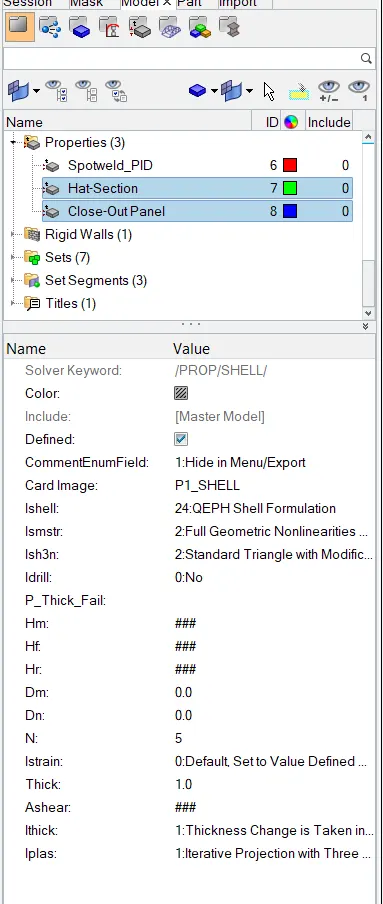
Modifying the shell Element Properties as per given input.
|
Ishell =24 |
QEPH 4 nodes shells are best combination of cost and accuracy. | |
|
Ismstr=2 |
Full geometric nonlinearities (default)with possible small strain formulation activation in RADIOSS Engine. | |
|
Ish3n=2 |
Standard 3 noded shell (C0)with modification for large rotation(default) |
|
| N=5 | Number of integration points set to 5 for accuracy bending. | |
|
Ithick=1 |
Thickness change is taken into account for accuracy. |
|
|
Iplas=1 |
Iterative plasticity for good accuracy. |
There are various methods used for defining 2D Element formulation such as Q4 Qshell QEPH etc.
For Crash simulation above are the best element properties which provides good simulation results.
After setting up the boundary conditions forces during simulation there is chance of hourglass generation which will give the inaccurate results.
For an under integrated element displacement and forces may exist for each node of elements.If the sum of these forces and displacement give null strain and stresson the integration point of the element then the elements fails to calculate stiffness for certain mode of deformation. At this stage we can say that the elements have entered hourglass.
The simulation works on the principle of strain generation with the model.During hourglass the nodes and elements are getting displaced without transmitting and forces and strain to relative node and element. This produces irregularities in strain behaviour of model during simulation.
Hour Glass can be controlled by 2 methods.
1) - Perturbation (Q4 Elemnts)
The hourglass deformation is detected with the rerlative motion (velocity) of nodes.
when hour glassing is detected a force is applied on the nodes to stabilize the deformation.
This force is defined according to the element stiffness.(young modulus, yield strss, Plastic tanget etc)
This force introduces an artificial energy - named hourglass energy.
2)- Physical Stabilization (QEPH Elements)
Hourglass yield depends on natural yield
Hourglass loading stiffness depends on natural tangent modulus
The hourglass treatment is done at the material level.
The recomended shell elements for crash application is ISHELL -24 QEPH 4 noded shell.
Ish3n - C0 is a standard triangle with the large rotation. 1 integration point on surface. No hourglass deformation. Low CPU cost.
N - Integration Points .Upto 10 Points allowed through the thickness.1 Integration point through the thickness give membrane behaviour. N= 5 integration points are recomended.
Ismstr - Small strain -usually for the problems with small deformation.strain computed based on initial element shape.
Large stain - For the problems with large displacement and strain.Strain computed based on current element shape with derivate of shape function.
Ithick - Setting it to 1 will take care of strain updating parameter. Initial thickness is used to compute strain and to intyegrate stresses but the thickness variation is still computed for post processing reason.For accurate results especially with necking or spring backit is strongly recomended to use iterative plastic projection ands thickness variation.
Iplas - If Von misses stress is bigger than yeild stress radioss will update the strain through thickness. compute the thickness of shell elements.Compute the stresses using material low plasticity surface the strain and strain rate. The projection of stress on the plactic surafce is done with Radial return.Iterative projection with Newton's method is more accurate.
Now save the file in different location so that it doesnot overwrite the previous results.
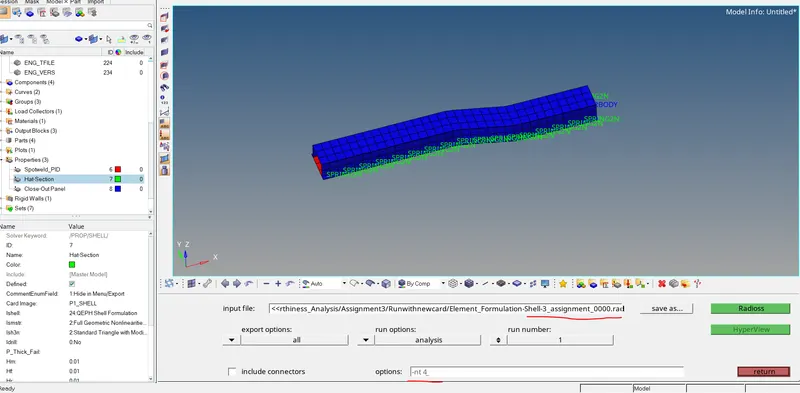
Now Run the Ananlysis.
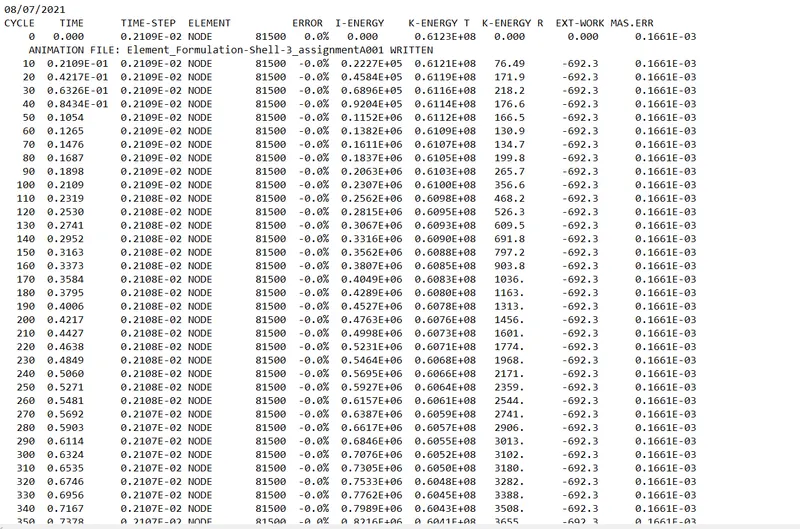
The energy error and the mass error are within aceeptable limit after changing parameters.
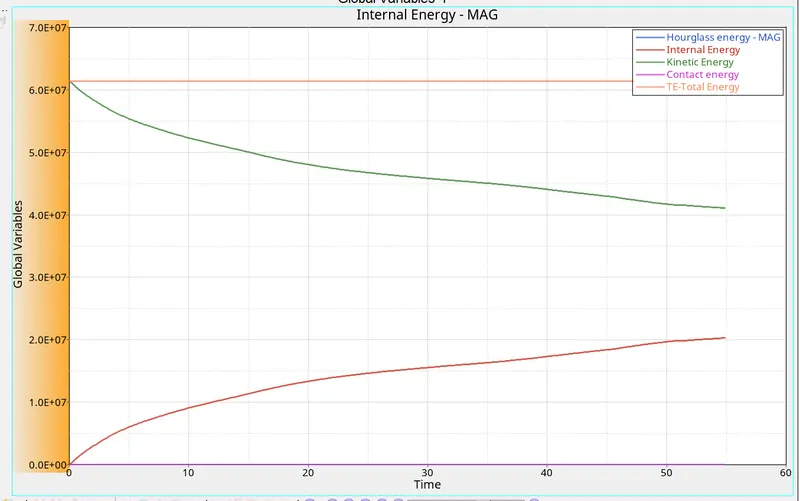
Plotting the Graph for internal energy, hourglass energy, contact energy, total energy of the simulations.
Goto Hypergraph -Select T01 file select the energy from the list and apply.
Hourglass energy and contact energy is observed as zero with respect to earlier graph with no change in parameter.
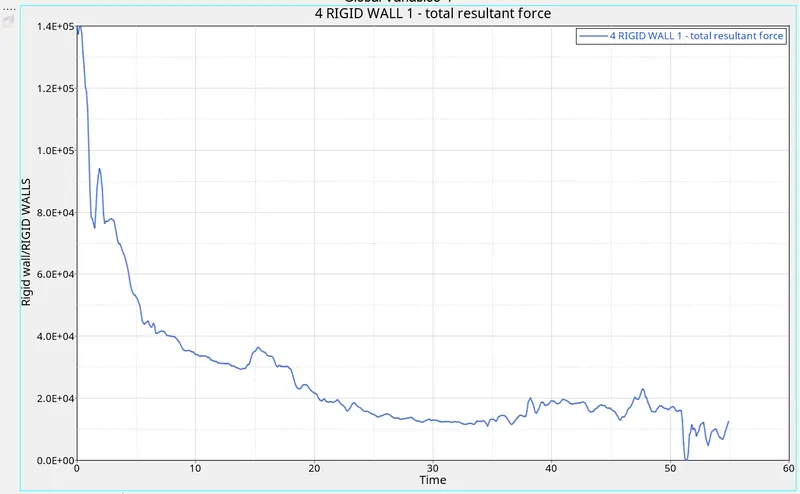
Total resultant is plottted against time is plotted and shown in below image.
Comparison:
Default Properties.
Recomended Properties.
When recomended properties are applied. Total Energy remains constant.Hourglass energy which was increasing now remain zero at recommended properties. Contact energy remains same in both cases. Internal Energy is gradually increase in both cases.Rigid wall force is decreased when recomended parameters applied.