Assignment 3-2D Element Formulation Challenge
OBJECTIVE: To study the behaviour of the model before and after changing the element property and give a details comparison for that result.
PROCEDURE:
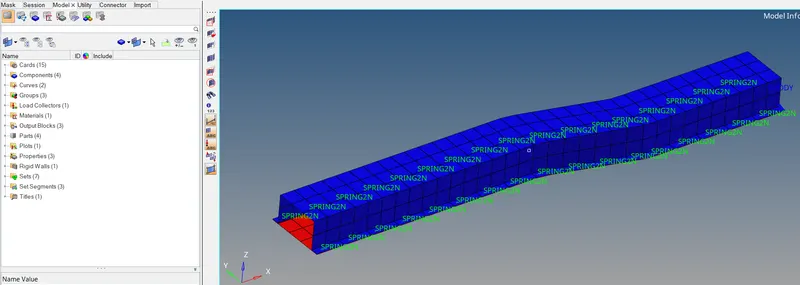
STEP 1: First import the starter file by FILE --> IMPORT --> SOLVER DECK and select the starter file to import into hyperworks.
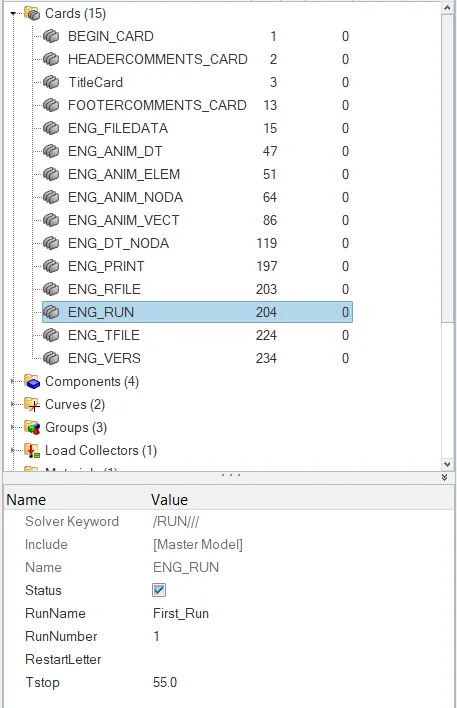
STEP 2: Now to change the run time of simulation as 55ms go to cards and click on engine run card and change the time.
STEP 3:now to run the simulation go to analysis tab and click on radioss button and select the path of the starter file and click radioss

STEP 4: Now open the output file of the engine file and check the energy error and mass error percentage.
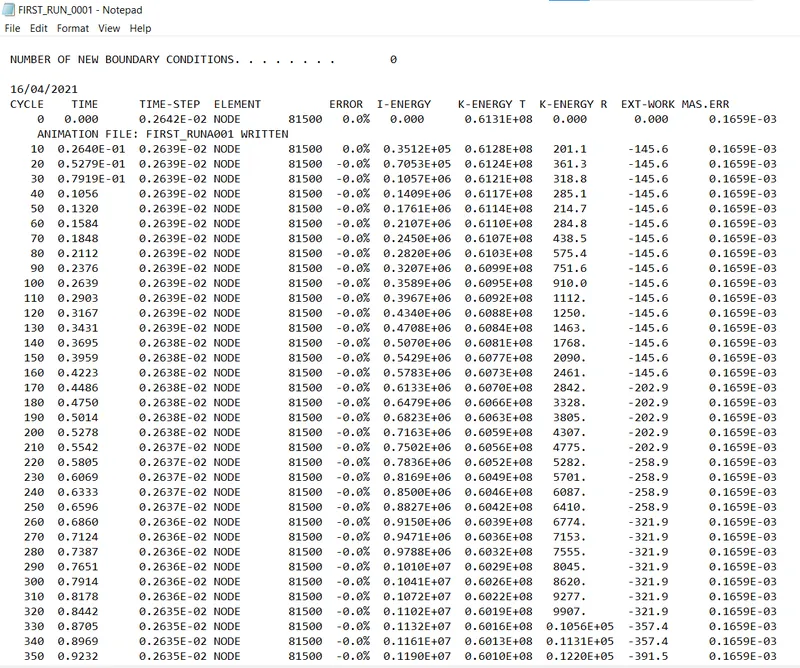
As you scroll down you can see the error percentage and upto -15% it is acceptable result and since my % error is 10.3% the result are good.I f the error is more than -15% there might be some trouble.
STEP 5: In order to plot the results you need to change to hyperview mode.

STEP 6: Now open the h3d file which is a consolidation of all the animation file.
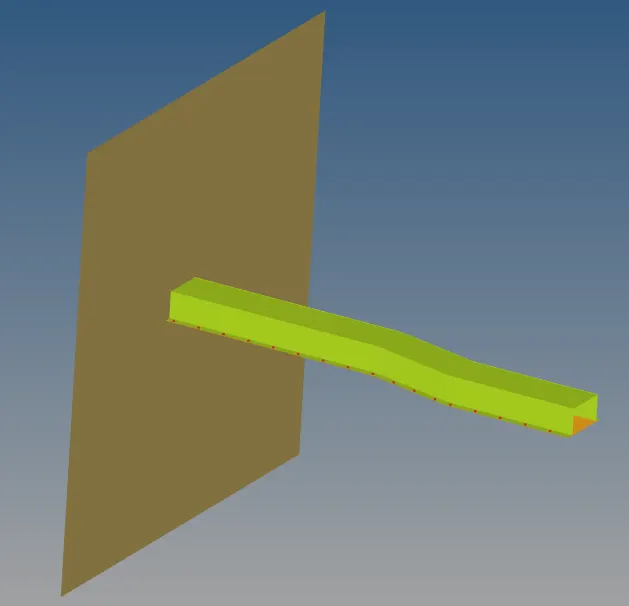
STEP 7: After importing you can play the animation by clicking on the play button
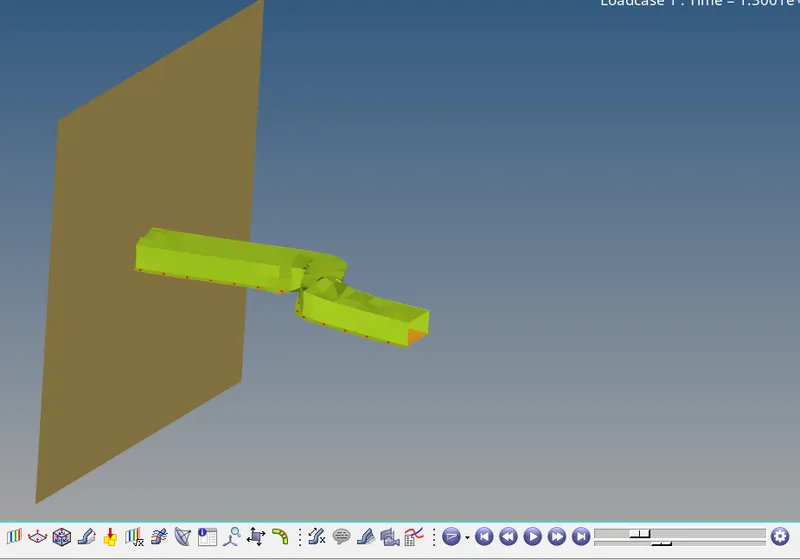
STEP 8: To plot the graph go to hyperview 2d.

STEP 9: Now import the time file to plot the graph and select the required parameters that you need to plot.
STEP 10: Now import the starter file again and now change the value of the property to the given condition and repeat the same procedure.
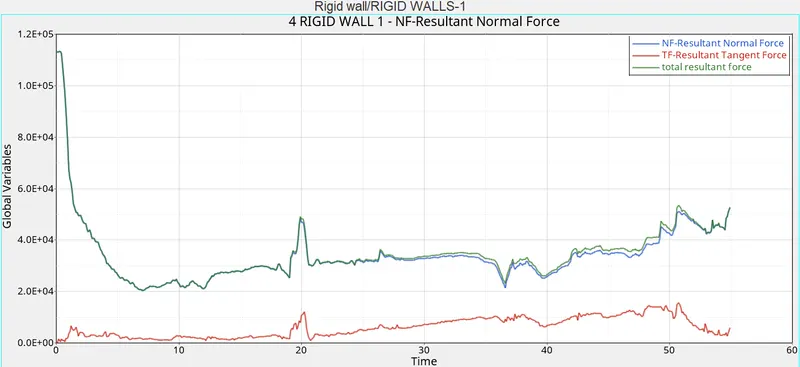
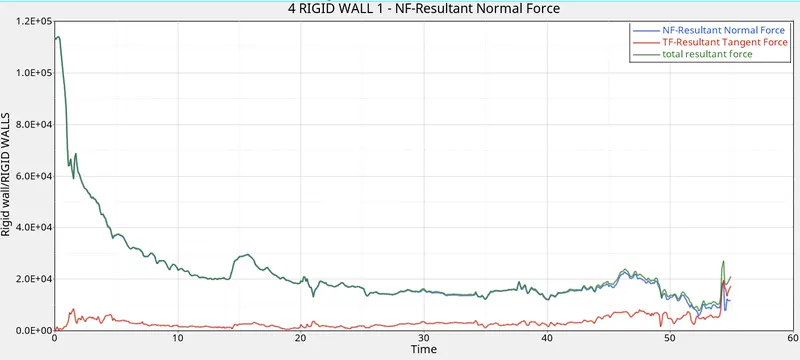
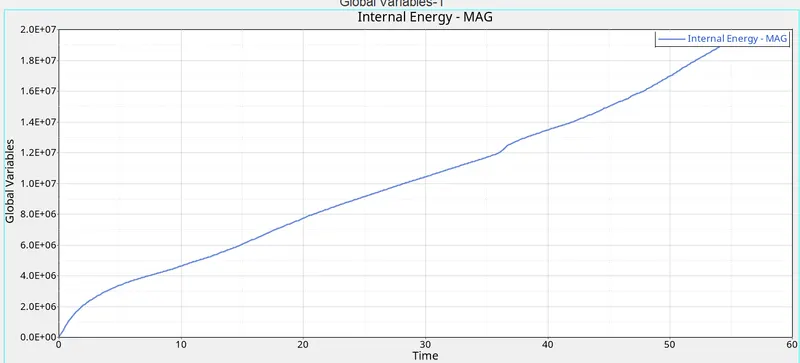
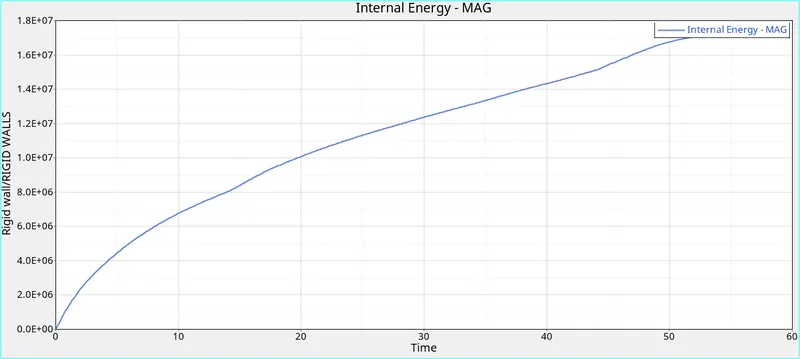
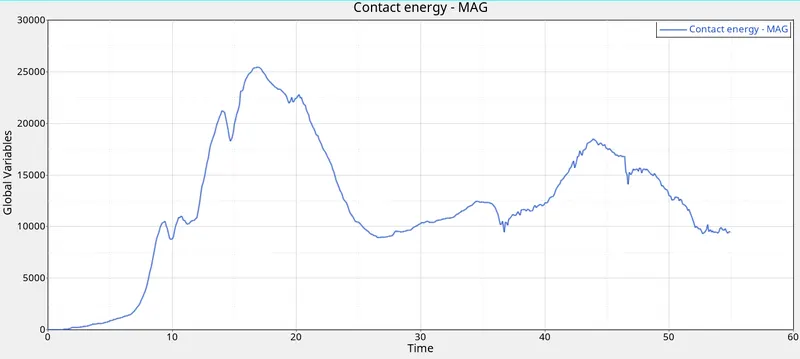
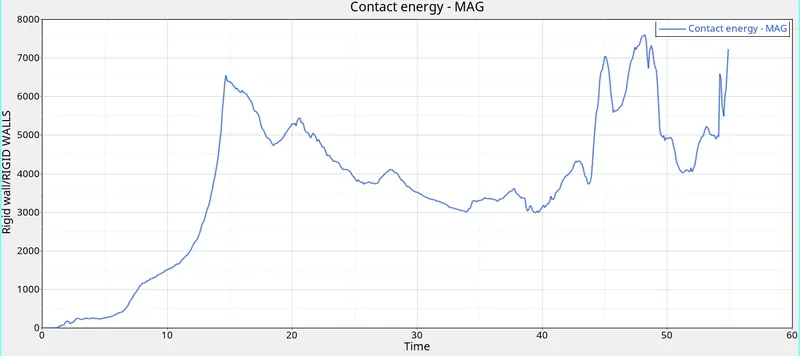
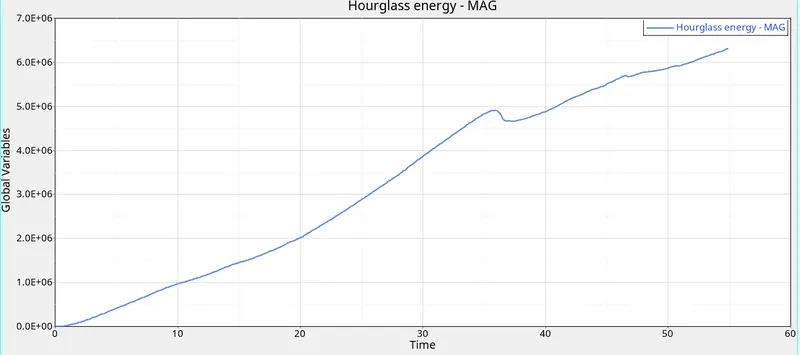
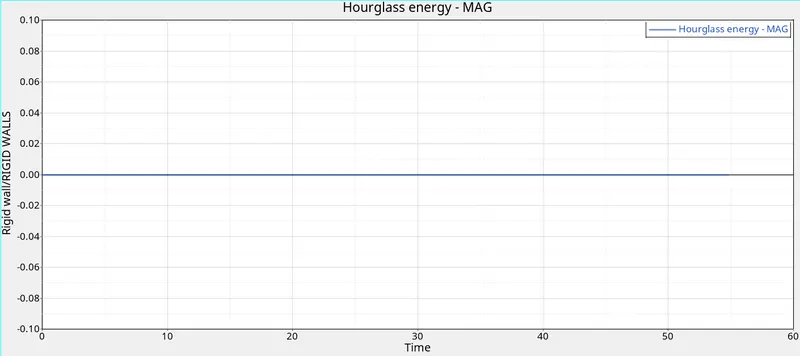
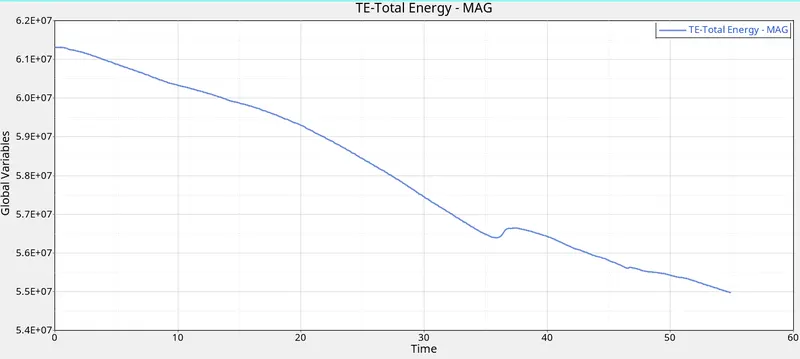
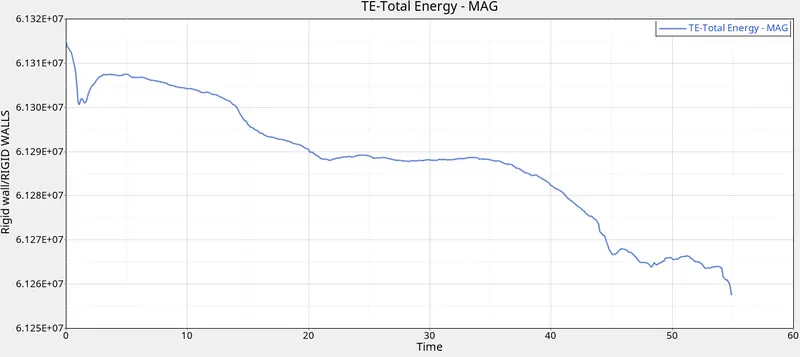
After seeing the result we come to know that there is a drastic change in hourglass energy which may lead to the changes in the other graphs. The hourglass modes of deformation are due to under integrated element that produce no stress. This may arise due to single integration point in the solid or shell element. This causes the nodes to deform largely with the adjacent nodes that does not follow the same displacement.This problem can be solved by two methods.
(1) pertubation method(Q4 element)
(2) physical stabilization (QEPH element)
Since in the element property we have assigned the element type as QEPH hence the physical stabilization method is carried.In this method as stiffness is applied to the element that alters the property of the material to some extent.Here the hourglass forces are taken care well before it is reated.
Also we came to know that higher integration points leads to higher stability for solutions. And that can be done by controlling or
improving hourglass values which will further improved results and also leads to changes in other values which we can notice in other plots as well.
CONCLUSION: Thus the plots for the two cases have been made and studied the cases.