Assignment 3
The Radios file was imported using Radios solver deck option .
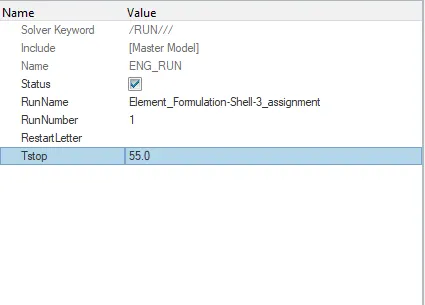
1. To change the run time to 55 secs , ENG RUN card was opened and tstop value was entered as 55 .
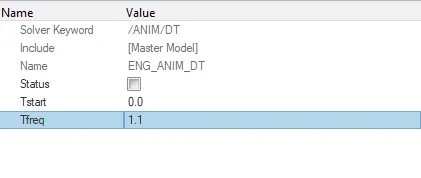
2. The number of animation steps was changed to 50 .
Hence Tfreq value under ENG_ANIM_DT card was changed to 1.1 .
3. The base simulation was run under name Initial_RUN_0000
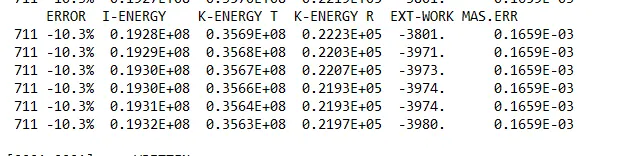
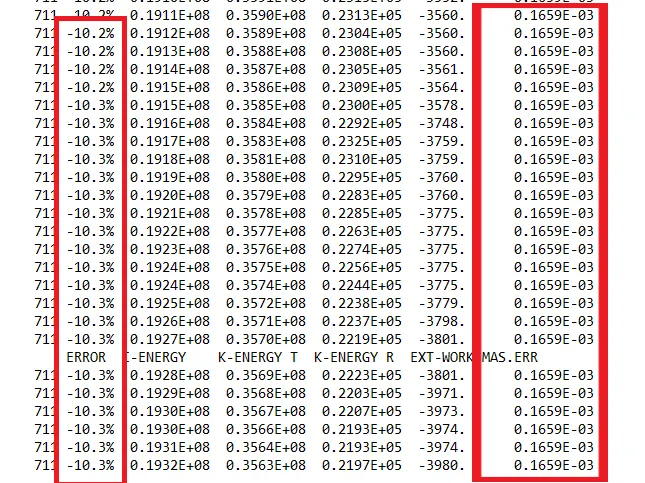
4.The energy error values were acceptable as they were under the range of -15% to 5 %.
The mass error values were acceptable as they were under <5% of total mass .
Mass error value =0.1659E-03
Total Mass = 503881.282

5. The graphs for internal energy , hourglass energy ,kinetic energy and contact energy were plotted using
Y type : Global variables
Y request : Internal energy
Hourglass energy
Contact energy
Kinetic energy
Y Component : MAG
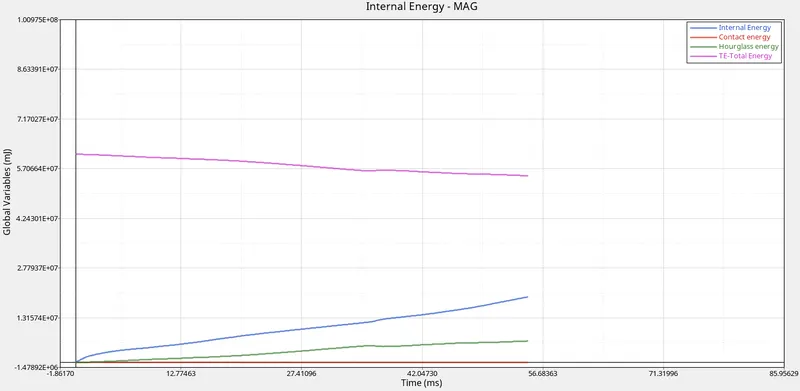
Internal energy : Here we can observe that the internal energy is increasing gradually as the kinetic energy of the body increases because of the force applied . The increase in kinetic energy takes place at molecular level or by increase in temperature . .
Hourglass energy : We can observe that the hourglass energy is increasing so as to compensate for the hourglass effect which causes deformation without any stress .
Total Energy : The total energy is decreasing as the hourglass energy which is negative in nature increases .
Contact energy : The contact energy remains constant throughout .
The graphs for resultant normal force , resultant tangent force and total resultant force were calculated by using
Y type Rigid wall
Y request 4 Rigid wall 1
Y Component Total resultant force , Resultant tangent foce , Resultant normal force .
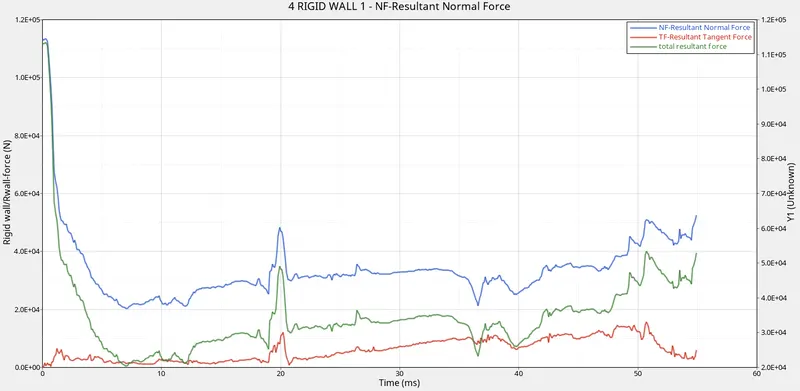
Resultant normal force : The resultant normal force is decreasing rapidly as the body absorbs this force and uses it to deform . We can see that at around 20 ms ,there is a spike in the normal force which is explained by the fromation of kinks in the body ,which requires more force to be applied so as to cause further deformation .
Total Resultant Force : The total resultant force is the sum of normal force and resultant tangent force . Hence it follows a pattern very similar to resultant normal force .
Resultant tangent force : It is the force applied tangentially to the body ,which is also the frictional force . The frictional force is minimal at the beginning , as the normal force drops rapidly , some of this force is converted to frictional force .
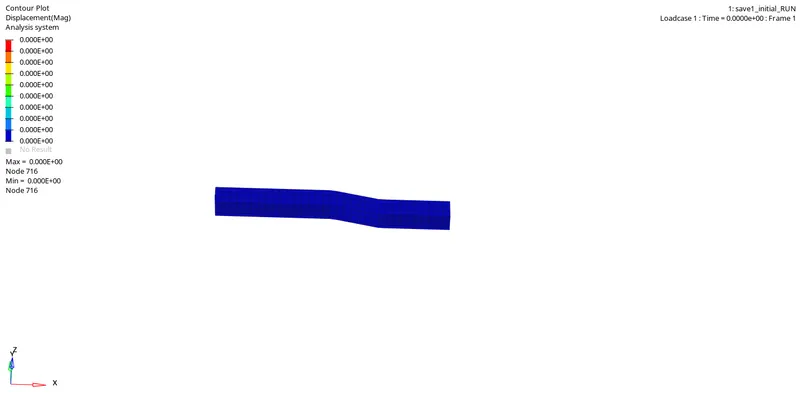
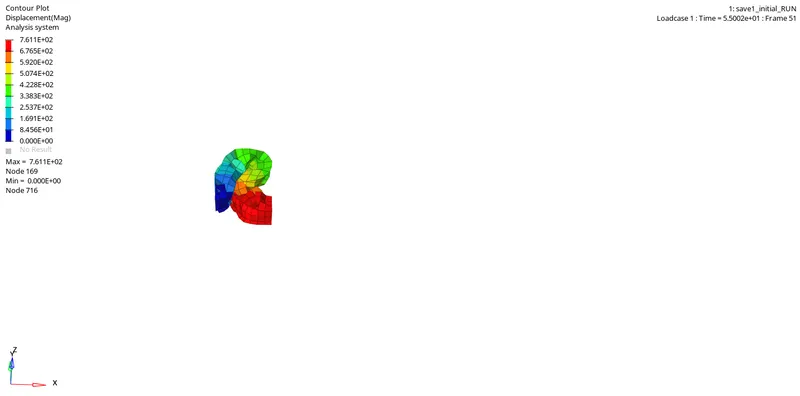
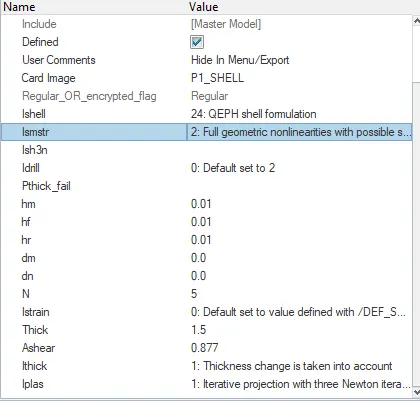
6. Intial values.
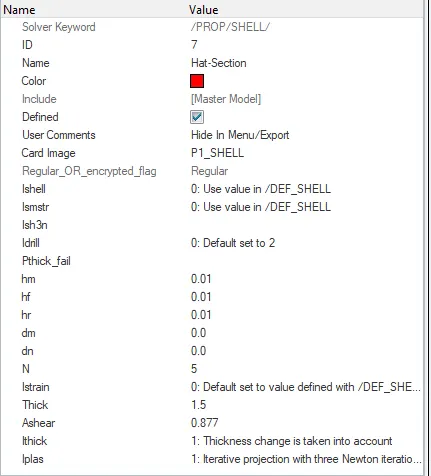
Final edited values
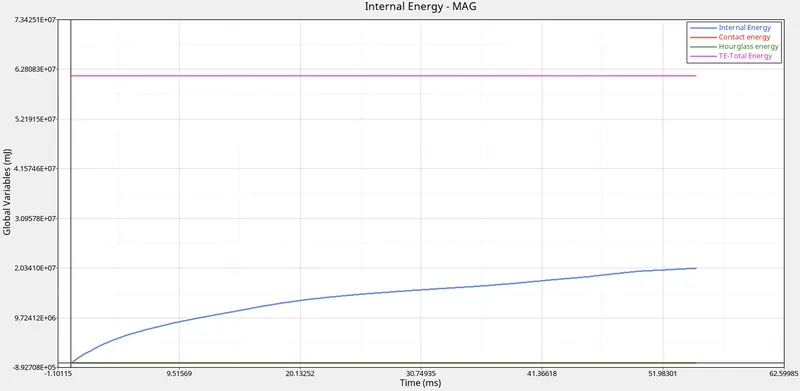
Total energy : Here we can observe that the total energy remains constant as there is no hourglass energy created .
Internal energy : Here we can observe that the internal energy is increasing gradually as the kinetic energy of the body increases because of the force applied . The increase in kinetic energy takes place at molecular level or by increase in temperature .
Contact energy : The contact energy remains constant throughout .
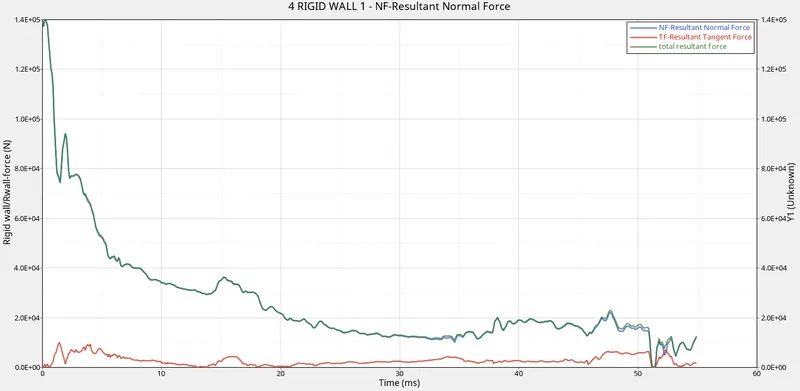
Resultant normal force : The resultant normal force is decreasing rapidly as the body absorbs this force and uses it to deform .
Total Resultant Force : The total resultant force is the sum of normal force and resultant tangent force . Hence it follows a pattern very similar to resultant normal force .
Resultant tangent force : It is the force applied tangentially to the body ,which is also the frictional force . The frictional force is minimal at the beginning , as the normal force drops rapidly , some of this force is converted to frictional force .
9. Difference
a) Difference in energy error percentage
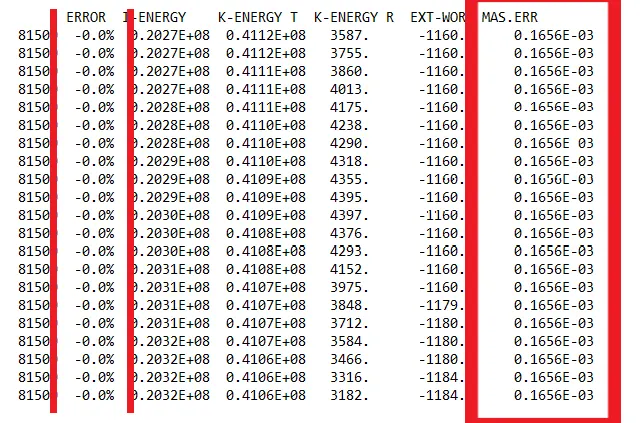
We can observe that the max percentage energy error in inital run simulation are as much as -10% whereas it is 0 % in the final run simulation . This is explained by hourglass effect which occurs in normal shell type element formulation in the initial scenario. This causes a deviation in percentage error . Whereas in final run file , instead of default , ishell24 was used which stabilizes the hourglass effect using stifness method . Hence the percentage error in final run simulation is almost zero .
b) Difference in total energy
We can observe that the total energy is gradually decreasing in the initial simulation because of the disippated hourglass energy . Whereas in final simulation , the total energy remains constant as there is no energy disippated due to hourglass effect when Ishell24 formulation is used .
c) Difference in energy spikes
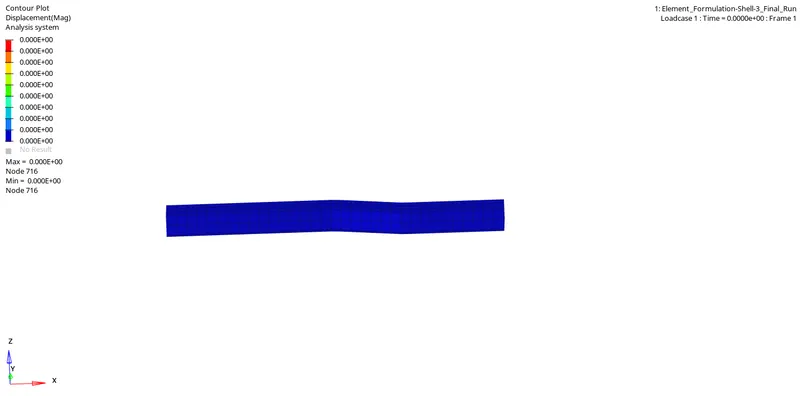
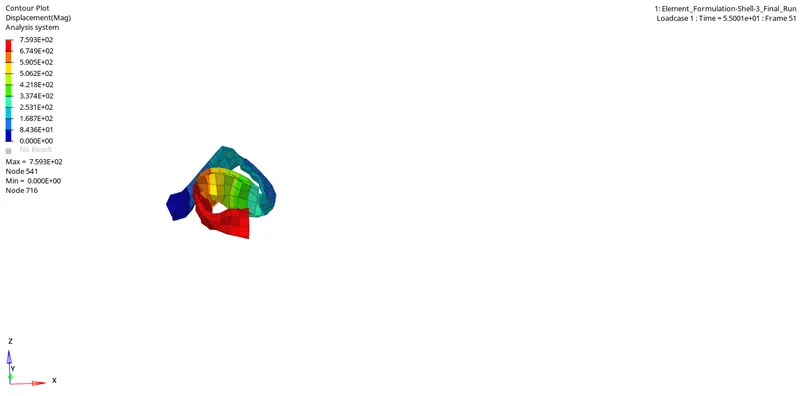
We can observe that for the inital simulation , the formation of kinks around 20 ms causes a sudden spike in resultant normal force , whereas in final simulation , as the Ishell24 formulation is used , there is no sudden spike as the elements as deformed in much better manner .