Assembly of Yacht
DESIGN OF PLEASURE YACHT
OBJECTIVE:
The foremost objective was to become an able user of Solidworks software and design a Yacht for the same.
INTRODUCTION:
Fresh off the design of the American Chopper, I took up this course. It is surely a level up in the design course. It utilized the 3d Sketch feature a lot and I believe I am more adept in using Solidworks. Let’s see the list of parts in the Yacht.
PARTS/APPROACH
The parts were designed in the following order.
PROPELLER
The propeller interacts with the ship and rudder in a variety of ways. In the case of the propeller-ship interaction, this can take place either through the coupling between the shafting system and the vessel or via pressure pulses transmitted through the water from the propeller to the hull surface. For these types of interaction, the forces and moments can be considered to comprise both a steady and a fluctuating component. The steady or constant components of the interaction originate from attributes such as propeller weight, inertia, and the mean wake field, which, in turn, influences the mean thrust and torque developed by the propeller, while the fluctuating interactions derive principally from the variations in the wake field generated by the ship and within which the propeller has to operate. Notwithstanding the wake-induced variations, there are also loading perturbations induced by the ship’s sea motions and maneuvering activities. There is a further source of variation to the induced loadings and that is where significant propeller out-of-balance forces and moments are present.
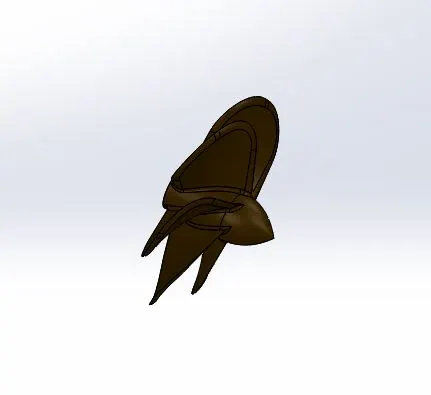
Designing propeller was pretty easy since it used pretty much the same features used in the chopper.
RADAR
Radar is used to detect objects and their position relative to your current location. It works by sending out a radio signal. When the signal hits an object, it gets reflected back to the radar, which can then calculate a rough estimate of the object. It does so by detecting other ships and land obstacles, to give bearing and distance for collision avoidance and navigation while on water. A marine radar device acts as a major navigation aid for boaters. It helps in detecting boats, birds, landmasses, and weather systems - even if the visibility is less than usual.
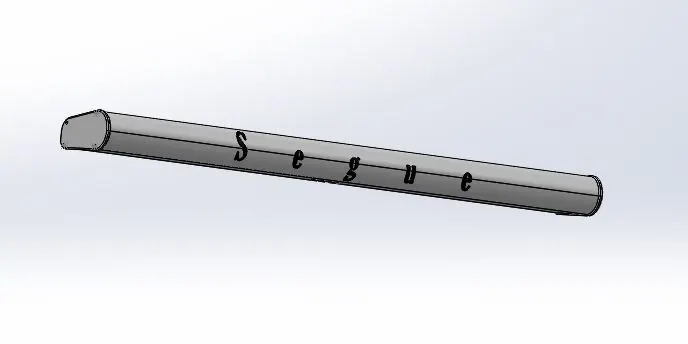
The only new feature introduced and used in this part is Sketch driven pattern. It was interesting to use.
HULL
The hull is the main body of the ship below the main outside deck. The hull consists of an outside covering (or skin) and an inside framework to which the skin is secured. The skin and framework are usually made of steel and secured by welding. However, there may still be some areas where rivets are used. The steel skin may also be called shell plating.
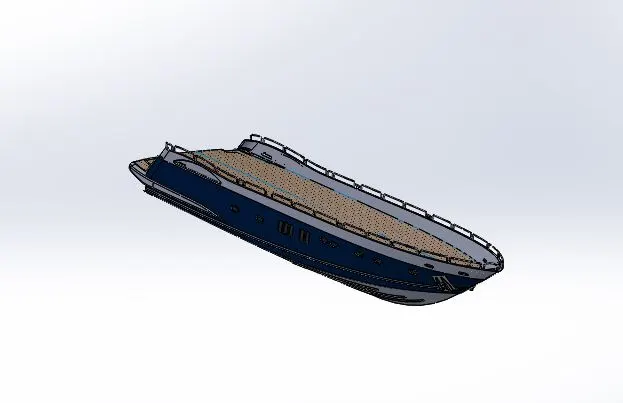
Designing Hull was very hard. It did use a couple of new features like deletion of face and thin feature in extrude but it tested the same old features of solidworks to varying extents.
GARAGE DOOR
A garage door is a large door on a garage that opens either manually or by an electric motor (a garage door opener). Garage doors are frequently large enough to accommodate automobiles and other vehicles. Small garage doors may be made in a single panel that tilts up and back across the garage ceiling. Larger doors are usually made in several jointed panels that roll up on tracks across the garage ceiling, or into a roll above the doorway.
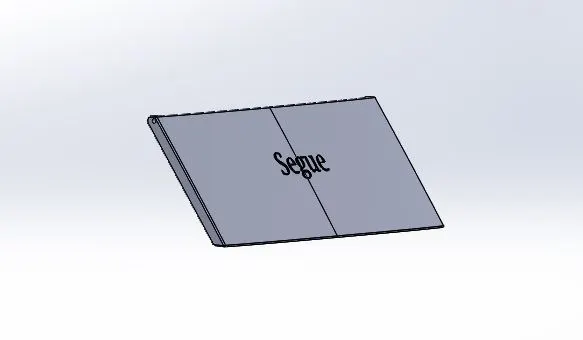
Garage door was the easiest to design because it was more or less a rip off from the Hull part.
SEATS (FRONT, MIDDLE, AND REAR):
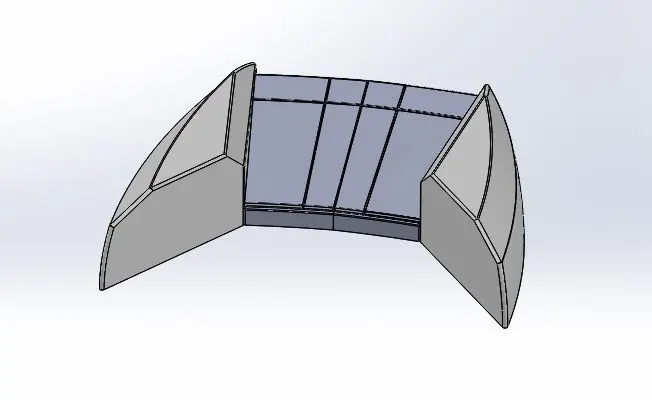
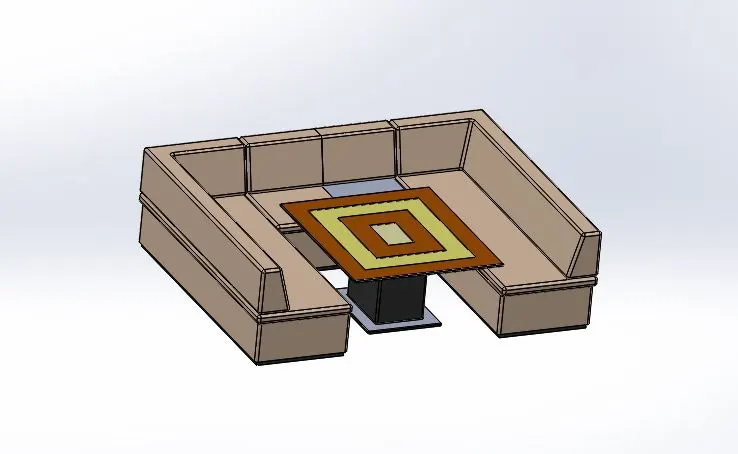
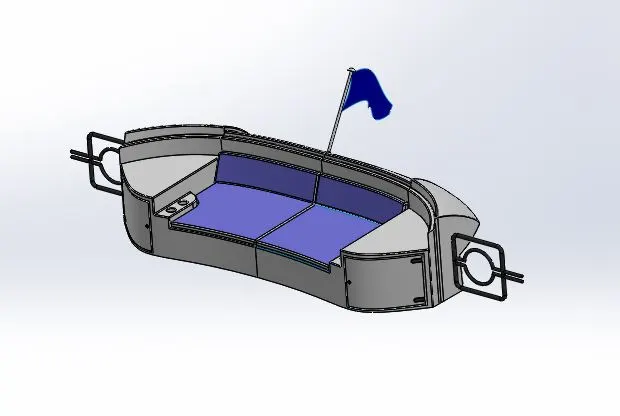
Seats used on Ships are similar to the ones used anywhere else. In this course, three seats were designed. I happened to learn about Ruled Surface and Extend Surface features.
SUPERSTRUCTURE:
A superstructure is an upward extension of an existing structure above a baseline. This term is applied to various kinds of physical structures such as buildings, bridges, or ships having the degree of freedom zero.
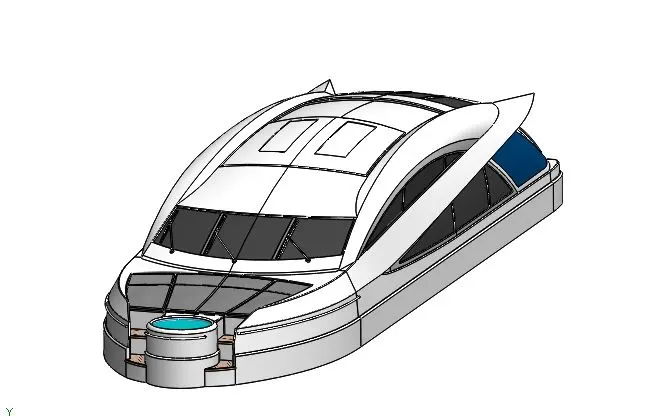
It was the most difficult part to design in the entire course. Almost every single feature was used in designing this.
RADAR MAST
Similar to our Power Mounts Plus, these mounts are constructed of high quality marine grade aluminum and treated with an anodized primer then finished with brilliant white powder coated finish. Our Standard Power Mounts have a 7” square base, with a 20° aft or 20° forward leaning profile. Each unit has a waterproof radar cable gland positioned aft and below the top plate.
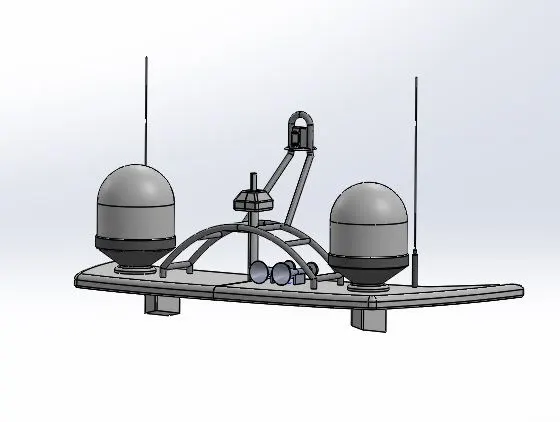
It was also an easy part to design
ASSEMBLY
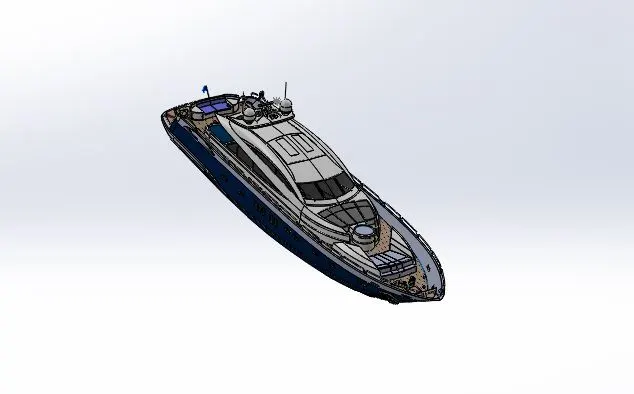
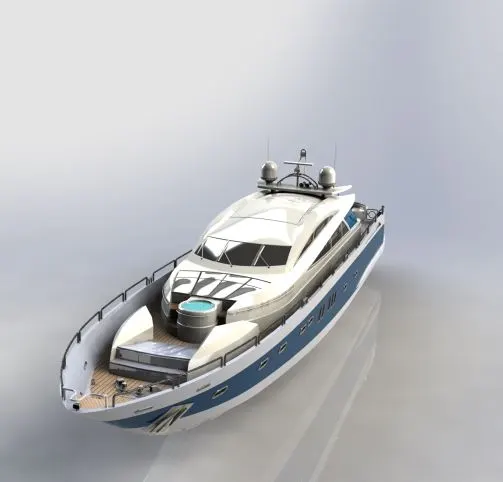
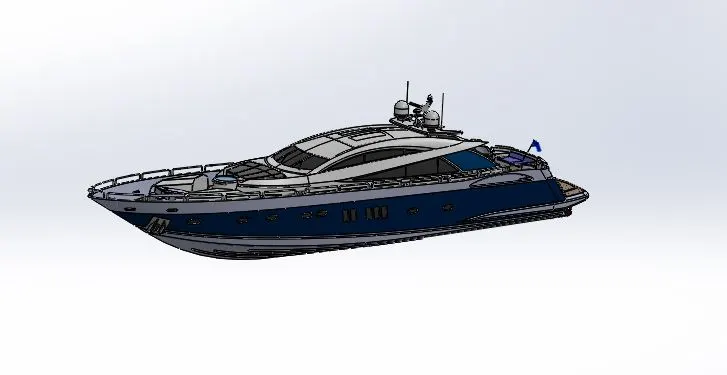
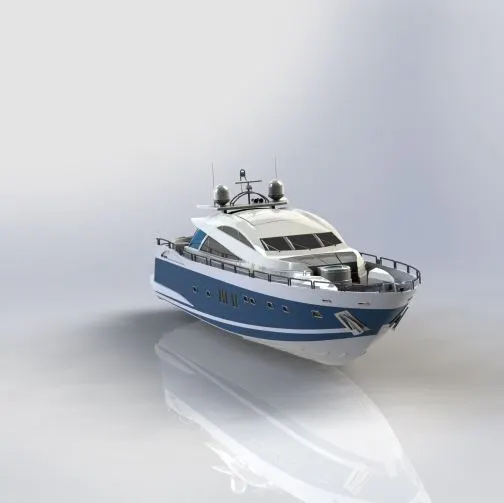
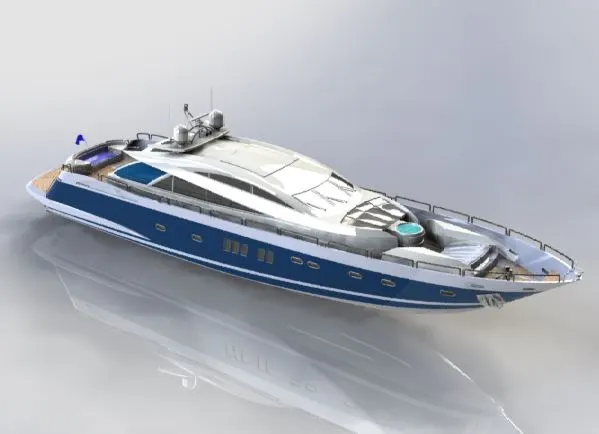
Assembling took less than 15 mins. It was very easy. The rendered images of the assembly of the Yacht are below.
CONCLUSION:
The pleasure yacht has been designed. It was an exciting course. To design an entire yacht from scratch was an eye opener. It has made me more proficient in using the SOLIDWORKS Software.